Analysis Report on Prediction Markets for the Russia-Ukraine War

marsbitPublished on 2026-02-14Last updated on 2026-02-14

Abstract

As global tensions rise due to events like the Russia-Ukraine war, the Gaza conflict, and other geopolitical risks, the demand for open-source intelligence (OSINT) has grown significantly. This report analyzes the predictive market, particularly Polymarket, as a form of OSINT that leverages public data to forecast outcomes. Initially serving blockchain users, Polymarket gained mainstream attention during the 2024 U.S. presidential election by accurately predicting Trump’s victory with 65% probability a week before results were official, reaching 90% on election night—outperforming traditional polls and media. With $3.686 billion in trading volume, the event shifted perceptions of predictive markets from mere gambling to a credible data source. The core value lies not in betting itself, but in the informational edge it provides, allowing insiders to signal outcomes—from entertainment awards to geopolitical events—through market activity. This transforms traditional information flow, enabling early insight into everything from business decisions to military movements, making market prices a powerful real-time signal.

With the international situation remaining tense in recent years and events such as the Russia-Ukraine war, the Gaza conflict, and Iran-related geopolitical risks escalating, it has become evident that geopolitical information exerts an increasingly significant impact on global capital markets. A war thousands of miles away can trigger a "flash crash" in global stock markets. Intelligence is no longer merely defense-related information; the demand among the general public for war analysis and forward-looking intelligence has also risen markedly. The concept of "Open Source Intelligence" (OSINT) is gaining traction: leveraging publicly available information from the internet—such as social media, satellite imagery, and flight trajectories—to cross-validate and piece together valuable clues. Examples include video footage posted by frontline soldiers on TikTok and the associated account login locations, or the "Pentagon Pizza Index," which infers military movements based on changes in U.S. Department of Defense food delivery orders. These are typical OSINT scenarios.

The open-source intelligence scenario we focus on is prediction markets: they allow participants to place bets on whether a specific event will occur, covering fields such as technology, entertainment, culture, and geopolitics.

Polymarket was established in 2020 and initially served primarily blockchain-native users. It truly entered the public eye during the 2024 U.S. presidential election cycle: one week before the official announcement of the election results, when mainstream media and traditional polling agencies still struggled to provide a clear conclusion, Polymarket had already placed the probability of Trump's victory at 65%. By around 10 p.m. on election night, the probability of Trump winning had risen to 90%, while many mainstream media outlets were still reporting the latest vote counts and did not announce the results until the early hours of the next morning.

The total trading volume for this presidential election bet reached $3.686 billion, with the two most profitable accounts earning $38.62 million by betting on Trump's victory. To this day, they remain the top two on the platform's all-time profit leaderboard. It was this election that fundamentally changed public perception of Polymarket and prediction markets as a whole: they are no longer simply viewed as a "blockchain casino" or a speculative game but are widely recognized as a data reference platform that is more accurate and sensitive than traditional polls. Since then, numerous mainstream media outlets have begun actively collaborating with prediction markets, systematically incorporating prediction market probability data into news reports as a supplementary perspective on market consensus.

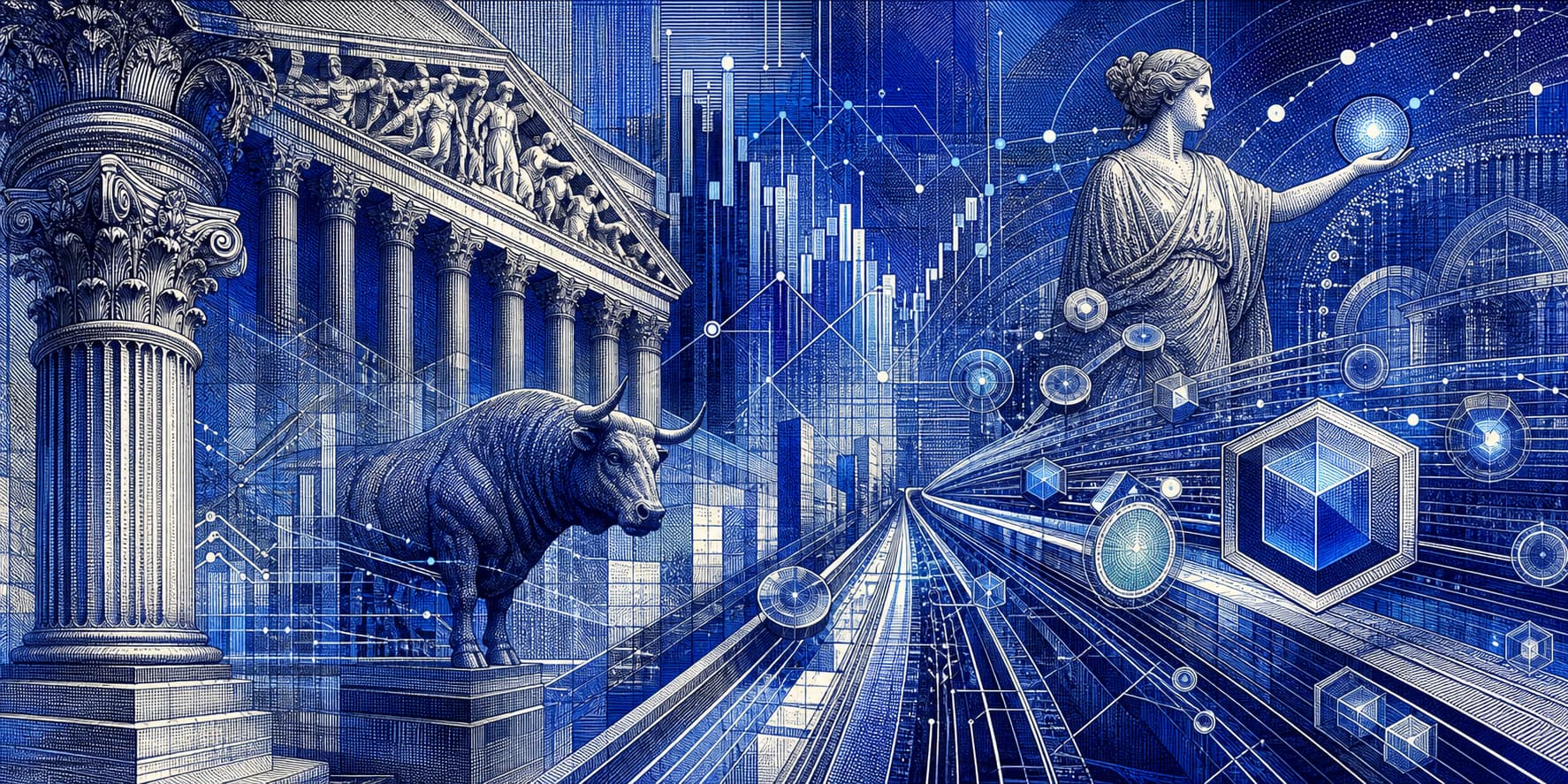
For a long time, many people have understood prediction markets as a "betting game on outcomes." However, in our view, the real value has never been the act of betting itself but the informational advantage implied behind the bets. Previously, industry secrets and critical wartime intelligence, restricted by confidentiality agreements and other barriers, have now become chips in financial markets with the support of prediction markets. The fluctuations in the probability of events occurring in prediction markets due to insider betting are themselves an undeniable real-world signal.

In other words: if we can systematically identify these accounts, we may gain前瞻性线索 (forward-looking clues) different from any traditional intelligence channels, even knowing the outcome in advance when an event occurs. The ending of a TV series has been filmed, an award has been predetermined, a regulatory outcome has been finalized... As long as someone is in the know and the platform allows betting, secrets can hardly remain completely hidden. This has also彻底改写 (thoroughly rewritten) the long-static traditional path of information flow:

In mild scenarios, this means that TV series endings, award outcomes, and business decisions become known to the market in advance; in extreme scenarios, it even touches upon war and geopolitical conflicts: people can obtain military intelligence-level information through the wagers of frontline soldiers, directly influencing the course of a war. When the outcome is already known to a few and the market allows betting on it, the price itself can become an undeniable signal of reality.

Related Questions

QWhat is the main focus of the analysis report mentioned in the article?

AThe report focuses on the analysis of prediction markets, particularly their role in aggregating information and providing insights into geopolitical events like the Russia-Ukraine war, using platforms such as Polymarket.

QHow did Polymarket gain significant public attention according to the article?

APolymarket gained significant public attention during the 2024 U.S. presidential election cycle, where it accurately predicted Donald Trump's victory with a 65% probability a week before the result and 90% on election night, outperforming traditional media and polls.

QWhat is 'open-source intelligence (OSINT)' as described in the article?

AOpen-source intelligence (OSINT) refers to the practice of using publicly available information from the internet, such as social media, satellite imagery, and flight trajectories, to cross-verify and derive valuable insights, including geopolitical and military developments.

QWhy are prediction markets considered valuable beyond mere betting, based on the article?

APrediction markets are valuable because the act of betting implies information advantage; insiders or knowledgeable participants can influence market probabilities, revealing hidden information about events like war outcomes, business decisions, or award results before they are publicly known.

QHow do prediction markets potentially alter traditional information flow in extreme scenarios?

AIn extreme scenarios, prediction markets can rewrite traditional flow by allowing insiders (e.g., soldiers on war fronts) to place bets based on confidential knowledge, making market prices a signal for real-world events like geopolitical conflicts, thus providing early insights that can influence outcomes.

Related Reads

The Tao (τ) Law Makes EDA Go Viral

In May 2026, Huawei's semiconductor division introduced the "Tao (τ) Law" at IEEE ISCAS, shifting the industry focus from Moore's Law's geometric scaling to "time scaling." Unlike traditional approaches relying on transistor miniaturization, τ Law optimizes the time constant (τ) across device, circuit, chip, and system levels to improve information processing speed and efficiency. Huawei has already applied this principle, mass-producing 381 chips across various applications, with a target to achieve performance equivalent to 1.4nm technology by 2031. The implementation of τ Law, involving techniques like Chiplet, 3DIC, and Logic Folding, places new demands on EDA tools, highlighting gaps in current offerings. Traditional 2D or pseudo-3D EDA flows lack native support for true 3D design, cross-layer co-optimization (STCO), and coupled multi-physics analysis (thermal, power, stress), which are crucial for advanced integration. Chinese EDA companies, such as Empyrean Software, Primarius Technologies, and Xpeedic, are evolving from point-tool specialists to providing full-flow, system-level solutions. For instance, Peking University has developed a prototype "true 3D" EDA tool showing significant improvements in wirelength and timing. Empyrean Software has also launched a comprehensive 3DIC design and verification platform. The τ Law framework presents an opportunity for the domestic EDA industry to transition from achieving basic functionality to developing robust, integrated toolsets essential for next-generation chip design.

marsbit1h ago

The Tao (τ) Law Makes EDA Go Viral

marsbit1h ago

It's Not Jensen Huang Who Wants to Change the PC, But the PC That's Revolting Against Itself

The 40-year-old PC industry is undergoing a fundamental transformation, driven by the rise of AI PCs. At the GTC Taipei 2026 event, NVIDIA, backed by Microsoft and major PC OEMs, announced the RTX Spark super chip for Windows PCs, marking its official entry into the PC core processor market. This move aims to redefine the AI PC by shifting its core from the CPU to an AI-focused SoC (System on Chip). NVIDIA envisions the PC evolving from a personal computer to a "personal AI"—a platform where local AI Agents can autonomously perform tasks. While Intel pioneered the AI PC concept earlier in 2026, NVIDIA's aggressive push, leveraging its vast CUDA developer ecosystem of 6 million, positions it to potentially reshape the industry's long-standing Wintel (Windows-Intel) power structure. NVIDIA's strategy extends beyond hardware; it's about embedding its CUDA, RTX, and AI software stack into the PC platform itself. The article identifies key shifts: 1) The move from a CPU-centric to an AI SoC-centric architecture, similar to Apple's approach with its M-series chips. 2) The PC's evolution from a human-operated tool to a platform for human-Agent collaboration. 3) The extension of NVIDIA's data center-centric CUDA ecosystem to personal devices via RTX Spark. Ultimately, the change is driven by the broader trend of AI moving to personal devices. Companies like Intel, AMD, Qualcomm, and Apple are all participating in this shift. NVIDIA's entry accelerates the competition, but the core driver is the technology itself finding its optimal expression in the PC. The industry is reinventing itself, with the outcome hinging on execution, ecosystem development, and the creation of compelling local AI applications.

marsbit3h ago

It's Not Jensen Huang Who Wants to Change the PC, But the PC That's Revolting Against Itself

marsbit3h ago

Trading

Spot
Futures
活动图片