After a 600% Surge, Can Zcash Really Challenge BTC?

比推Published on 2026-01-05Last updated on 2026-01-05

Abstract

This article critically examines the narrative that Zcash (ZEC), after a 600% price surge, could challenge Bitcoin (BTC) as a form of money. The author, drawing from a personal background valuing financial sovereignty and privacy, acknowledges the importance of privacy coins like ZEC, which uses zk-SNARKs to enable shielded, untraceable transactions. However, the central argument is that ZEC functions primarily as a privacy tool or "tunnel" for obfuscating funds before users exit to BTC, stablecoins, or fiat, rather than as a long-term store of value. The author asserts that Bitcoin's monetary status is unshakable due to its first-mover advantage, immense network effects, and its establishment as a dominant Schelling point for value storage. This creates a "winner-takes-all" dynamic in monetary competition, leaving no room for a "second money." Data shows ZEC's recent price surge is driven by a supply squeeze from coins moving into shielded pools, not by organic adoption as money. Furthermore, tools like chain analysis can still de-anonymize a significant portion of ZEC transactions. The conclusion is that while privacy is a crucial and growing necessity, ZEC is a utility for transactions, not money. Investors should not confuse its speculative narrative with Bitcoin's entrenched monetary premium, which is based on a fundamentally different value proposition.

Source: Pine Analytics

Original Title: ZEC Is Not Money

Compiled and Arranged: BitpushNews

My Crypto Journey and the Pursuit of Sovereignty

When I first entered the cryptocurrency space, I was filled with naive optimism, believing that this technology could fundamentally constrain government overspending and empower individuals to hold currency beyond the control of legal authorities. It represented a form of "exit," a way for the weak to resist the strong and uphold dignity and rights. This deeply resonated with my identity as a descendant of Armenian immigrants—my family fled their homeland during the genocide and turmoil of the early twentieth century. I once firmly held that governments were spiraling into uncontrollable fiscal indulgence, constantly devaluing fiat currency and eroding individual freedoms. Cryptocurrency seemed like a weapon for marginalized groups, a digital sanctuary for storing and transferring value without permission or oversight.

However, my idealism soon collided with reality.

I learned about "on-chain analysis": even if wallets are not directly named, funds can be tracked through public ledgers, and transaction patterns, exchange data, and network analysis can de-anonymize users. Although you can move funds on-chain without the explicit permission of the powerful, you remain within their sight.

This discovery fostered a lasting affinity for privacy solutions, from Tornado Cash and Monero (XMR) to Zcash (ZEC) and Secret Network. Deep down, I have always reserved a place for these tools, recognizing their role in restoring true sovereignty.

All of this reinforced my belief that on-chain privacy will become increasingly valuable in the future, especially amid the trends of intensified global surveillance in 2026, the rise of CBDCs (central bank digital currencies), and regulatory crackdowns.

While I have long cherished privacy, it is crucial to distinguish between the "utility of privacy" and the "overhyped narrative" surrounding tokens like ZEC.
Zcash and Its Current Narrative

Zcash is a PoW (Proof of Work) blockchain similar to Bitcoin, but it has a core innovation: users can natively "shield" their tokens, moving them into privacy pools where transactions occur with minimal information revealed to third parties. Using zero-knowledge proofs (zk-SNARKs), ZEC enables transfers that are nearly untraceable when executed correctly. This is a remarkable achievement, and if Bitcoin had implemented this technology from the start, it might have greatly benefited. Shielded transactions hide the sender, receiver, and amount, providing a level of privacy that transparent chains like Bitcoin lack.

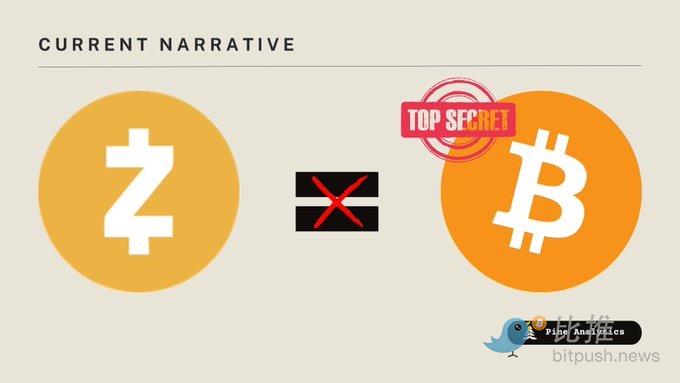
However, the current narrative driving ZEC's premium (evidenced by its staggering 661% year-to-date surge in 2025 and continued momentum in early 2026) is that it is merely "private Bitcoin," a superior version of Bitcoin. Supporters psychologically peg ZEC's value to BTC, seeking reasons to buy even after astronomical price increases.

Yet, this comparison is false. Those promoting this view are either misleading buyers or fundamentally misunderstand why BTC initially achieved a market cap exceeding $1.7 trillion.
Why Bitcoin Is Money, and Others Are Not

Bitcoin maintains dominance over all other cryptocurrencies (except fiat-pegged stablecoins) for one reason alone: it is money.

This status stems from the powerful synergy of first-mover advantage and path dependency reinforced over time. Every new ETF buyer, every day a whale holds, every nation adding BTC to its reserves strengthens Bitcoin's monetary properties. Network effects relentlessly compound: deeper liquidity attracts larger allocators, which further deepens liquidity, attracts sovereign buyers, legitimizes the asset class, and brings the next wave of adoption. This flywheel cannot be replicated; it can only be joined.

A significant portion of the altcoin market's capitalization stems from being positioned as "silver to Bitcoin's gold," but this framework fundamentally misunderstands monetary competition. Monetary properties follow a Nash equilibrium: coordination games produce "winner-takes-all" outcomes, where one asset emerges as the dominant store of value, while others trade based on discounted cash flows or utility. History offers no examples of a "second-place currency" retaining value persistently. After gold was demonetized, silver's monetary premium steadily eroded, and any crypto asset competing on the "store of value" dimension will face the same fate.

BTC established its position against a backdrop where it pioneered an entirely new asset class, just as the U.S. dollar was actively degrading its monetary properties through inflation, unprecedented monetary expansion, and policy missteps (issues beyond this article's scope but deeply felt by the generation that grew up after the 2008 financial crisis).

In essence, BTC is the best and earliest "meme coin": a cultural and economic phenomenon whose value is self-reinforcing, supported by the market's most powerful force—collective belief coalescing into a Schelling point. No other coin, regardless of its technical features or ideological purity, can dethrone it. The window for monetary competition closed years ago. Privacy-enhancing features, while ideal, are better suited as layers atop Bitcoin (via protocols, L2s, or mixers) rather than attempting to replace it. The latter strategy mistakes "feature" for "foundation."
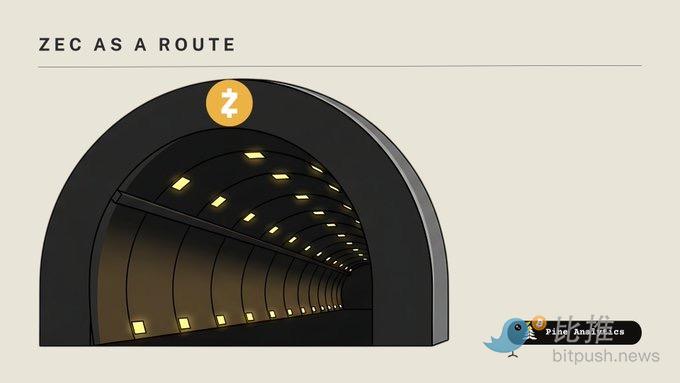
ZEC Is a Path, Not a Destination

The brilliance of privacy coins like ZEC lies in breaking the traceability of funds, whether for legitimate reasons like protecting activists, businesses, or personal finances, or for illicit purposes (though I emphasize privacy's inherent legitimacy). However, users treat ZEC as a path, not a destination. They acquire it, shield funds, and then exit to BTC, stablecoins, or fiat.

On-chain data clearly reveals this reality. Shielded supply surged significantly in 2025, growing from about 11% at the start of the year to around 30% (approximately 5 million ZEC) by the end of 2025. At first glance, this seems highly favorable to the "ZEC is money" argument. But digging deeper, the picture changes. According to Coin Metrics, the spike in shielded transactions was primarily driven by "shielding and unshielding" activity (value moving into or out of privacy pools), not fully shielded z-to-z transfers. In other words, users enter the privacy pool, complete their transactions, and then leave. They use ZEC as a privacy tunnel, not a vault.

Metrics from the transparent side further confirm this "flow" dynamic. Despite a price surge of over 900%, the average number of daily active wallets on the transparent chain remained around 11,500, showing no corresponding user explosion.

Meanwhile, transaction volume for another major privacy coin, Monero, did not rise in sync (stabilizing at 20,000–30,000 daily transactions), indicating that ZEC's movement was not due to a broad privacy sector rotation but rather a Zcash-specific supply squeeze—tokens entering shielded pools dried up exchange liquidity. CoinDesk Research noted that "traders may be paying a massive premium" precisely because visible network data couldn't explain the price action.

To qualify as "money," it must be a destination: an asset people want to accumulate and hold long-term, lowering their time preference by storing wealth in it. If ZEC is primarily a pipeline, its demand is capped by the need for de-anonymization at specific times, plus any speculative premium the market temporarily assigns. It cannot sustain the exponential, reflexive growth of true money—where holding begets more holding, deeper liquidity, institutional reserves, and cultural entrenchment. A tool used and discarded generates transaction volume, not compounding monetary premium.

While a large anonymity set (the bigger the pool, the harder to trace) has value, ZEC does not monopolize this status. Arkham Intelligence recently claimed to have labeled over 53% of ZEC transactions, linking $420 billion in transaction volume to identifiable entities. This proves that even shielded transactions can be de-anonymized through temporal analysis, endpoint monitoring, and transparent entry/exit points.

Competitors like Monero (where privacy is mandatory, not optional), emerging L2 solutions (like Aztec and Arcium), and even BTC mixers offer alternatives. Even if ZEC becomes the top anonymity hub, it will not evolve into money. Buyers chasing the "private BTC" hype may face a harsh reality: unless ZEC is competing as money, its price should not be psychologically pegged to BTC, and for monetary competition, BTC's dominance is too entrenched, and ZEC is too late to the game.

Conclusion

Privacy is not a passing fad; it is an inevitable necessity that will define the crypto space in 2026 and beyond, as evidenced by surging adoption rates from institutions to retail. My family history compels me to be an advocate for privacy, but we must be realistic about tokens like ZEC: they are powerful tools for pursuing sovereignty, but they are not money.

Bitcoin's path-dependent victory ensures that no challenger can replicate its monetary status. Invest in privacy for its utility (shield, transact, exit), but do not confuse it with the monetary throne occupied by BTC. Those who conflate the two may face a painful hangover when the narrative shifts.


Twitter:https://twitter.com/BitpushNewsCN

Bitpush TG Discussion Group:https://t.me/BitPushCommunity

Bitpush TG Subscription: https://t.me/bitpush

Original link:https://www.bitpush.news/articles/7600239

Related Questions

QWhat is the core argument made in the article regarding Zcash (ZEC) and its potential to challenge Bitcoin (BTC)?

AThe article's core argument is that Zcash cannot challenge Bitcoin as a form of money. It posits that Bitcoin's monetary status, reinforced by first-mover advantage, network effects, and path dependency, is unassailable. ZEC is viewed primarily as a privacy tool or 'tunnel' for transactions, not as a long-term store of value or monetary asset like BTC.

QAccording to the on-chain data cited in the article, how do users primarily interact with ZEC's privacy features?

AOn-chain data shows that users primarily use ZEC as a path, not a destination. They shield their funds (move them into the privacy pool) to break traceability, complete a transaction, and then unshield them to exit into BTC, stablecoins, or fiat. The surge in shielded supply is driven by 'shield and unshield' activity rather than sustained z-to-z transactions within the privacy pool.

QWhy does the author believe the 'private Bitcoin' narrative for ZEC is flawed?

AThe author believes the narrative is flawed because it mistakes a feature (privacy) for a foundation (monetary status). Bitcoin's value is a self-reinforcing cultural and economic phenomenon (a Schelling point) based on collective belief as a store of value. The window for monetary competition is closed, and no other asset, regardless of its technical features like privacy, can dethrone BTC's established monetary premium.

QWhat evidence does the article provide to suggest that ZEC's price surge is not due to it being used as money?

AThe article provides several pieces of evidence: 1) The number of active transparent wallets did not surge proportionally with the massive price increase. 2) The activity was specific to ZEC and not part of a broader privacy coin rally (e.g., Monero's transaction volume remained stable). 3) Analysis suggests the price action was likely due to a supply squeeze from tokens moving into shielded pools, reducing exchange liquidity, rather than organic demand for holding ZEC as money.

QWhat is the author's overall conclusion about the value and role of privacy coins like ZEC?

AThe author concludes that privacy coins like ZEC are powerful tools for achieving financial sovereignty and anonymity for specific transactions. However, they are not money and should not be confused with Bitcoin's monetary role. Their value is derived from their privacy utility (to shield, transact, and exit), not from a monetary premium. Investors should appreciate them for their utility but not expect them to compete with or replace BTC as a store of value.

Related Reads

First Batch of Keynote Speakers and Partners Announced! Web2+3 Summit: Defining the Next Generation of Digital Economy

Web2+3 Summit: Defining the Next Generation of Digital Economy The 6th BEYOND International Technology Innovation Expo (BEYOND Expo 2026), Asia's largest tech and ecosystem exhibition, is launching a dedicated Web2+3 stage for the first time. Co-hosted by BEYOND Expo and ChainNeXT Group, the Web3 Summit will take place from May 28–30, 2026. Against the backdrop of accelerating global tech integration, the boundaries between Web2 and Web3 are rapidly blurring. With clearer global regulations for blockchain-driven internet (Web3) and the special issuance of a Hong Kong dollar stable币 license by the Hong Kong SAR government on April 10, 2026, Web3's decentralized principles are quickly merging with traditional industries (Web2) such as e-commerce, finance, and artificial intelligence. Focused on blockchain-driven digital economy elements, the summit will center on three core principles—implementability, commercial viability, and compliance. It will bring together top Web3 experts to discuss key integration areas like stablecoin payment finance (PayFi), real-world asset tokenization (RWA), and decentralized AI (DeAI), unveiling new opportunities for industrial innovation. The first wave of confirmed speakers includes Jack Kong (Director of Hong Kong Cyberport, Chairman of Nano Labs), Yat Siu (Chairman of Animoca Brands), Michael Wu (Co-founder & CEO of Amber Group), Michael Heinrich (Co-founder & CEO of 0G), and Art Abal (Co-founder of Vana). More Web3 ecosystem pioneers, AI, and fintech experts will be announced soon. Core forum topics include: - Web2+DeAI: New AI Paradigms Driven by Decentralized Infrastructure - Web2+RWA: Real-World Asset Tokenization and Global Liquidity - Web2+PayFi: Cross-Border Payments and Financial Innovation Powered by Crypto Infrastructure - Web2+3 AI: Autonomous Agents and the Crypto Economy - Web2+3 Wealth: On-Chain and Off-Chain Integrated Investment Ecosystems - Web2+3 Commerce: A New Landscape for Global Trade Driven by Stablecoins Additional agenda details will be released in the near future.

marsbit59m ago

First Batch of Keynote Speakers and Partners Announced! Web2+3 Summit: Defining the Next Generation of Digital Economy

marsbit59m ago

Trading

Spot
Futures

Hot Articles

What is $BITCOIN

DIGITAL GOLD ($BITCOIN): A Comprehensive Analysis Introduction to DIGITAL GOLD ($BITCOIN) DIGITAL GOLD ($BITCOIN) is a blockchain-based project operating on the Solana network, which aims to combine the characteristics of traditional precious metals with the innovation of decentralized technologies. While it shares a name with Bitcoin, often referred to as “digital gold” due to its perception as a store of value, DIGITAL GOLD is a separate token designed to create a unique ecosystem within the Web3 landscape. Its goal is to position itself as a viable alternative digital asset, although specifics regarding its applications and functionalities are still developing. What is DIGITAL GOLD ($BITCOIN)? DIGITAL GOLD ($BITCOIN) is a cryptocurrency token explicitly designed for use on the Solana blockchain. In contrast to Bitcoin, which provides a widely recognized value storage role, this token appears to focus on broader applications and characteristics. Notable aspects include: Blockchain Infrastructure: The token is built on the Solana blockchain, known for its capacity to handle high-speed and low-cost transactions. Supply Dynamics: DIGITAL GOLD has a maximum supply capped at 100 quadrillion tokens (100P $BITCOIN), although details regarding its circulating supply are currently undisclosed. Utility: While precise functionalities are not explicitly outlined, there are indications that the token could be utilized for various applications, potentially involving decentralized applications (dApps) or asset tokenization strategies. Who is the Creator of DIGITAL GOLD ($BITCOIN)? At present, the identity of the creators and development team behind DIGITAL GOLD ($BITCOIN) remains unknown. This situation is typical among many innovative projects within the blockchain space, particularly those aligning with decentralized finance and meme coin phenomena. While such anonymity may foster a community-driven culture, it intensifies concerns about governance and accountability. Who are the Investors of DIGITAL GOLD ($BITCOIN)? The available information indicates that DIGITAL GOLD ($BITCOIN) does not have any known institutional backers or prominent venture capital investments. The project seems to operate on a peer-to-peer model focused on community support and adoption rather than traditional funding routes. Its activity and liquidity are primarily situated on decentralized exchanges (DEXs), such as PumpSwap, rather than established centralized trading platforms, further highlighting its grassroots approach. How DIGITAL GOLD ($BITCOIN) Works The operational mechanics of DIGITAL GOLD ($BITCOIN) can be elaborated on based on its blockchain design and network attributes: Consensus Mechanism: By leveraging Solana’s unique proof-of-history (PoH) combined with a proof-of-stake (PoS) model, the project ensures efficient transaction validation contributing to the network's high performance. Tokenomics: While specific deflationary mechanisms have not been extensively detailed, the vast maximum token supply implies that it may cater to microtransactions or niche use cases that are still to be defined. Interoperability: There exists the potential for integration with Solana’s broader ecosystem, including various decentralized finance (DeFi) platforms. However, the details regarding specific integrations remain unspecified. Timeline of Key Events Here is a timeline that highlights significant milestones concerning DIGITAL GOLD ($BITCOIN): 2023: The initial deployment of the token occurs on the Solana blockchain, marked by its contract address. 2024: DIGITAL GOLD gains visibility as it becomes available for trading on decentralized exchanges like PumpSwap, allowing users to trade it against SOL. 2025: The project witnesses sporadic trading activity and potential interest in community-led engagements, although no noteworthy partnerships or technical advancements have been documented as of yet. Critical Analysis Strengths Scalability: The underlying Solana infrastructure supports high transaction volumes, which could enhance the utility of $BITCOIN in various transaction scenarios. Accessibility: The potential low trading price per token could attract retail investors, facilitating wider participation due to fractional ownership opportunities. Risks Lack of Transparency: The absence of publicly known backers, developers, or an audit process may yield skepticism regarding the project's sustainability and trustworthiness. Market Volatility: The trading activity is heavily reliant on speculative behavior, which can result in significant price volatility and uncertainty for investors. Conclusion DIGITAL GOLD ($BITCOIN) emerges as an intriguing yet ambiguous project within the rapidly evolving Solana ecosystem. While it attempts to leverage the “digital gold” narrative, its departure from Bitcoin's established role as a store of value underscores the need for a clearer differentiation of its intended utility and governance structure. Future acceptance and adoption will likely depend on addressing the current opacity and defining its operational and economic strategies more explicitly. Note: This report encompasses synthesised information available as of October 2023, and developments may have transpired beyond the research period.

363 Total ViewsPublished 2025.05.13Updated 2025.05.13

What is $BITCOIN

Discussions

Welcome to the HTX Community. Here, you can stay informed about the latest platform developments and gain access to professional market insights. Users' opinions on the price of BTC (BTC) are presented below.

活动图片