Over the past couple of years, Strategy has sold Bitcoin at least four times, breaking an approximately four-year streak of net accumulation conducted under the motto of executive chairman Michael Saylor, "never sell a single satoshi." During the first sale, 3,588 $BTC were sold for $218.4 million to finance dividends on preferred shares. During the most recently disclosed sale, timed for the week ending August 9, the company sold 1,690 Bitcoins for $108.6 million, averaging approximately $64,262 per coin — significantly below the total cost basis of about $75,400.
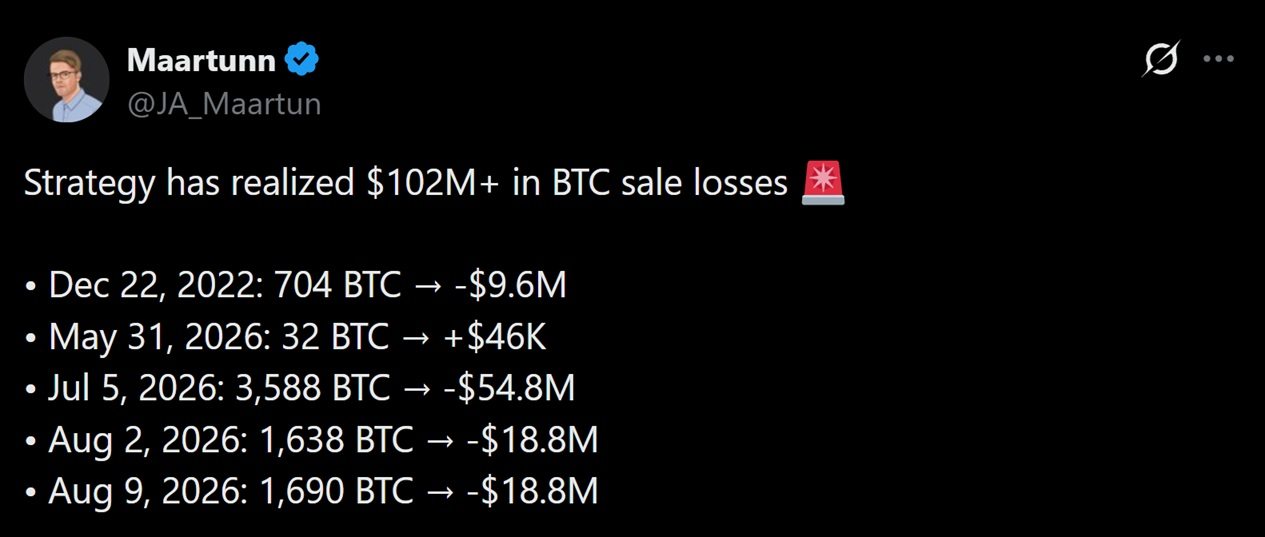
Each transaction was concluded at a price lower than what Strategy originally paid, and according to Cryptoquant's calculations, the cumulative realized losses from the monetization program this year exceed $102 million. The board of directors has authorized asset sales under the program for up to a total of $1.25 billion, meaning: the company has the ability to continue sales if it so wishes.
At the same time, the company continues parallel purchases, acquiring small batches, which analysts interpret as an attempt to maintain the narrative of asset accumulation while discreetly managing liquidity.
Why Strategy is Selling in the First Place
According to Strategy's own reports, the sales are not a reaction to a cash shortage but a deliberate choice within capital management. Since the share price to net asset value ratio is less than 1, issuing new shares to raise funds has become less attractive than monetizing part of the Bitcoin reserve. Proceeds from the recent sale were directed toward financing dividends on STRC — the company's variable-rate preferred shares — as well as directly repurchasing STRC shares.
The dividend calculation is one of the primary reasons for the pressure. According to Cryptoquant estimates, Strategy's annual dividend obligations on preferred shares have increased nearly fourfold to $1.2 billion, as the company issued more preferred shares to finance Bitcoin purchases, resulting in dividend coverage shrinking from over seven years to approximately 14 months at the current cash level. To restore even a 24-month buffer would require, by estimates, $2.8 billion in reserves, almost double the company's current reserves.
The Broader Picture of Unrealized Losses
According to Cryptoquant estimates, the company bears approximately $10.6 billion in unrealized losses on all Bitcoins acquired from 2024 to 2026, as the Bitcoin price has spent most of the year below Strategy's weighted average cost basis of about $75,400 per coin. In July, Bitcoin.com News reported that for the second quarter, the company shifted from a $14 billion profit to a net loss of $8.22 billion, almost entirely due to a fair value revaluation of its own assets, not actual sales.
This accounting reversal does not force Strategy to act as a realized cash deficit would, but it has drawn renewed attention to a strategy built almost exclusively on the price of a single asset remaining above its cost basis.
What Investors Are Watching
Strategy's stock has fallen nearly 40% this year and is trading in the low-to-mid $90 range, significantly below the highs reached when Bitcoin was trading above its cost basis. Given that three sale transactions have already occurred this year, and the board-sanctioned sales limit of $1.25 billion remains available, traders generally expect the monetization program to continue rather than be suspended.
Saylor continues to position these sales as balance sheet management measures, not a change in his convictions, and the company purchased 520 $BTC for approximately $35 million in a separate transaction, even while selling Bitcoins from other positions. Whether the company can continue to fund its dividend obligations without more significant depletion of its holdings will largely depend on what level the Bitcoin price is at by the time of the next report.
end-content