Bitcoin’s ‘greatest evolution’ lies beyond the protocol: Michael Saylor

ambcryptoPublished on 2026-07-06Last updated on 2026-07-06

Abstract

Michael Saylor predicts Bitcoin's most significant evolution over the next decade will not stem from protocol changes but from the expansion of its surrounding financial ecosystem. He emphasizes that Bitcoin's stability is a strength, and while halving events will tighten supply, future price growth will be driven primarily by institutional capital from spot ETFs, corporate treasuries, sovereign wealth funds, and other large financial entities. Saylor also cautions about risks like "paper Bitcoin," custodial centralization, and regulatory scrutiny but remains optimistic, expecting Bitcoin to be more widely held, institutionalized, and integrated by 2036. This outlook comes alongside MicroStrategy's continued aggressive accumulation of Bitcoin, growing its holdings significantly despite market volatility and criticism.

In a recent appearance on X, Strategy’s Michael Saylor shed light on the most significant shift in Bitcoin [BTC] over the next decade. Saylor noted that the shift will not happen due to frequent protocol changes, but rather to the sharp growth of the financial ecosystem that surrounds it.

He said,

Bitcoin’s greatest evolution over the next decade will come from changing less at the protocol layer and mattering more everywhere else.

AD

Saylor paints an optimistic picture for Bitcoin

Saylor claims that Bitcoin‘s resistance to change is actually one of its greatest strengths rather than a weakness. He argues that while Bitcoin’s halving events will continue to play an important role, they will no longer be the primary driver of its price.

Now Saylor believes that Bitcoin has entered a new phase where institutional adoption is becoming far more significant than miner issuance.

Instead of relying mainly on retail buyers, Bitcoin’s future growth is expected to be driven by large-scale capital inflows from spot ETFs, corporate treasuries, sovereign wealth funds, banks, pension funds, insurance companies, derivatives markets, and other financial institutions.

The halving tightens supply. Capital flows set the growth trajectory.

The other side of the coin

However, Saylor does caution about several dangers, such as the emergence of “paper Bitcoin,” in which financial institutions issue more claims to Bitcoin than they actually possess. This could in turn lead to liquidity crises akin to those observed in conventional finance.

Additionally, he draws attention to the dangers of custodial centralization, the heightened government oversight of exchanges and custodians, and whether transaction fees by themselves can keep the network afloat as block rewards diminish. Despite these obstacles, Saylor maintains his optimism, as he said,

By 2036, I expect Bitcoin to be more widely held, more deeply institutionalized, more politically important, more financially integrated, and more fiercely defended.

Current market conditions surrounding Strategy

These statements are in response to growing criticism of Saylor’s Strategy, with major players such as JPMorgan beginning to question the company’s Bitcoin sales strategy.

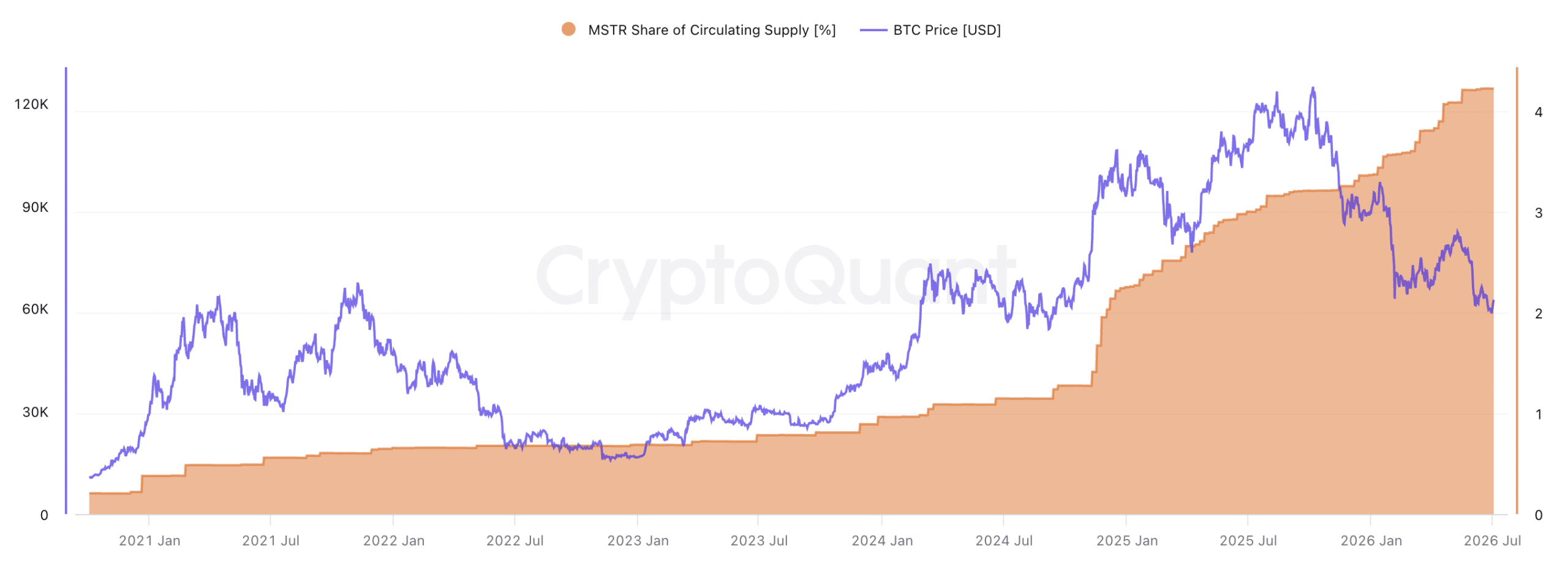
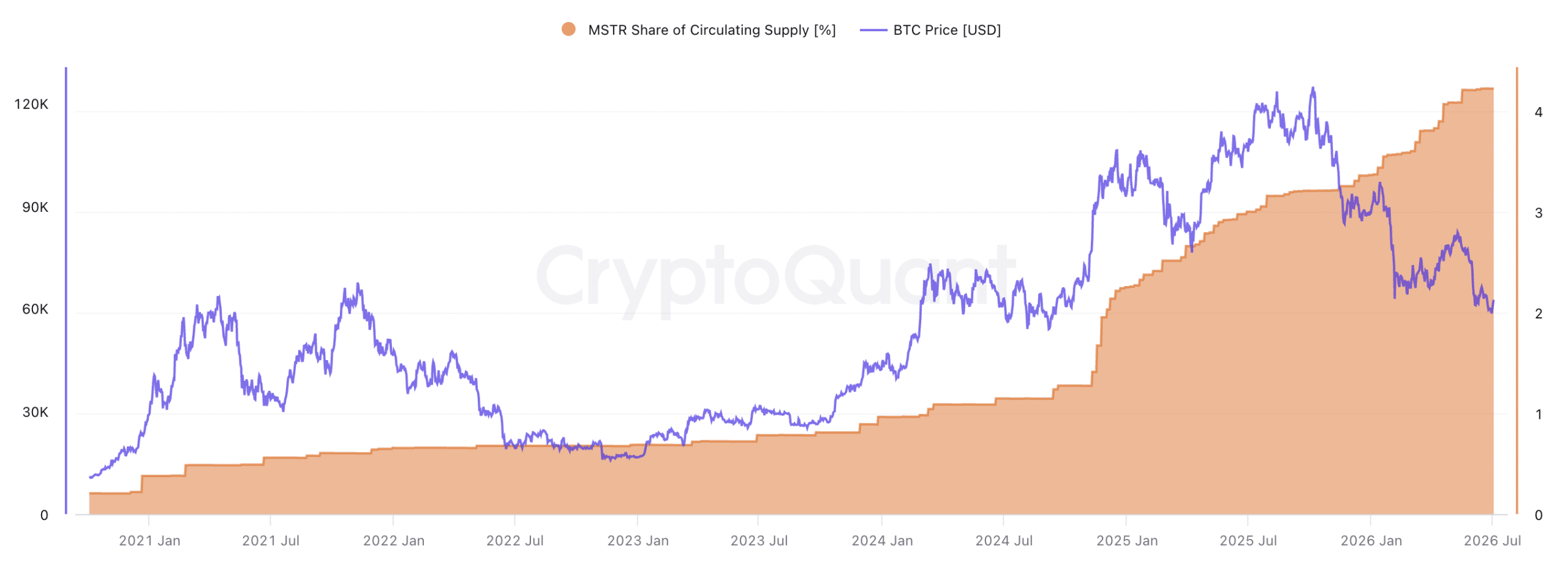
Still, by mid-2026, Strategy’s Bitcoin holdings had grown from less than 1% of the circulating supply in 2021 to over 4%, reflecting an aggressive accumulation strategy.
Source: CryptoQuant

The pace of purchases accelerated in late 2024, with the company continuing to buy even as Bitcoin traded near record highs and later corrected. In contrast, Bitcoin’s price experienced significant volatility, reaching new highs before pulling back multiple times.


Final Summary

  • Saylor argues that this time, Bitcoin’s halving events will no longer be the primary driver of its price.
  • Despite highlighting the risks surrounding Bitcoin, Saylor is eyeing an optimistic future for Bitcoin.


Trending Cryptos

Related Questions

QAccording to Michael Saylor, where will Bitcoin's most significant evolution over the next decade primarily come from?

AAccording to Michael Saylor, Bitcoin's greatest evolution over the next decade will come from changing less at the protocol layer and mattering more everywhere else, driven by the sharp growth of the surrounding financial ecosystem.

QWhat does Michael Saylor believe will drive Bitcoin's future growth instead of retail buyers?

AHe believes Bitcoin's future growth will be driven by large-scale capital inflows from institutional sources such as spot ETFs, corporate treasuries, sovereign wealth funds, banks, pension funds, insurance companies, derivatives markets, and other financial institutions.

QWhat potential risk regarding 'paper Bitcoin' does Michael Saylor caution about?

AHe cautions about the risk of financial institutions issuing more claims to Bitcoin than they actually possess, which could lead to liquidity crises similar to those seen in traditional finance.

QBy 2036, what are Michael Saylor's expectations for Bitcoin?

ABy 2036, Saylor expects Bitcoin to be more widely held, more deeply institutionalized, more politically important, more financially integrated, and more fiercely defended.

QHow did the percentage of Bitcoin's circulating supply held by Saylor's company, MicroStrategy, change between 2021 and mid-2026?

AMicroStrategy's Bitcoin holdings grew from less than 1% of the circulating supply in 2021 to over 4% by mid-2026, reflecting an aggressive accumulation strategy.

Related Reads

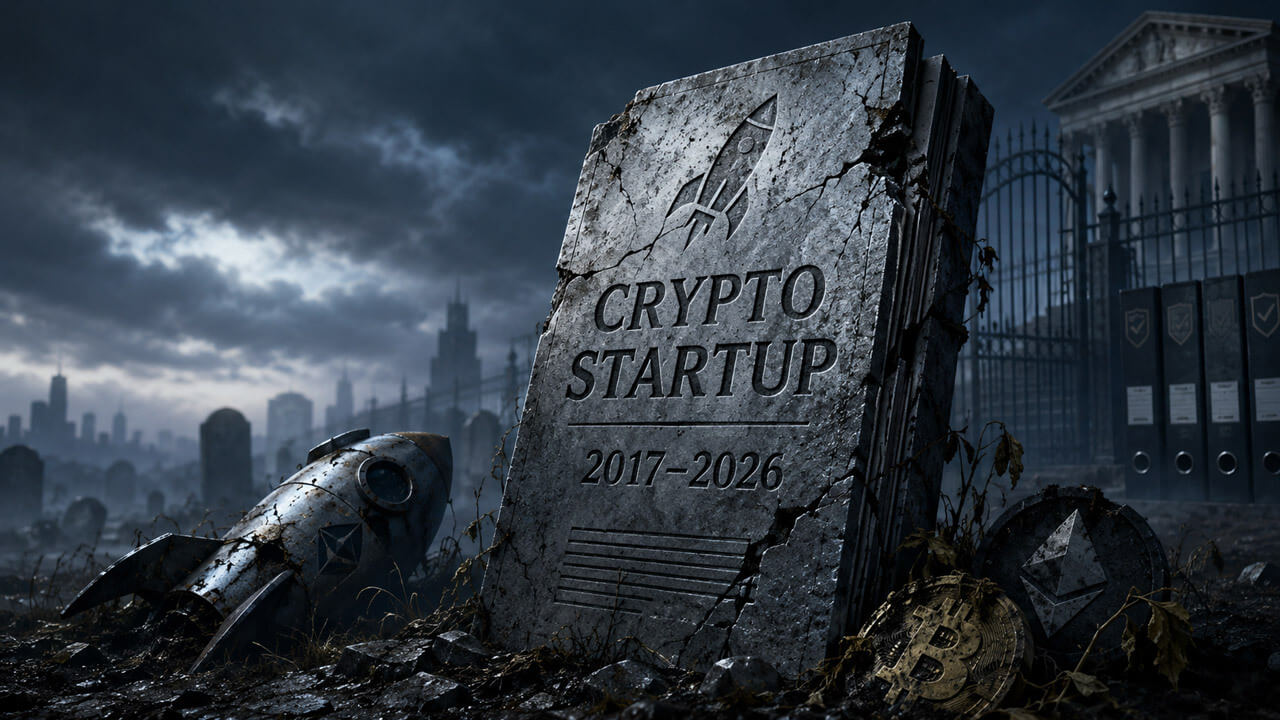
A Decade of Change: The Demise of Crypto Startups

"The Decade-Long Transformation: The Demise of Crypto Startups" The article traces the dramatic evolution of the cryptocurrency industry from its anarchic beginnings to its current highly regulated and institutionalized state. In the early days (circa 2017), launching a crypto startup was remarkably simple: a whitepaper, a GitHub repository, and a Telegram group could attract thousands of retail investors via an Initial Coin Offering (ICO). Founders operated anonymously with near-zero regulatory and financial barriers, enabling rapid, global innovation but also widespread fraud. By 2026, the landscape is fundamentally different. To operate in major markets like the US, EU, and Asia, crypto businesses must now navigate a complex web of regulations akin to traditional finance. Compliance costs are prohibitive: estimates for a US multi-state operation range from $750,000 to $1.2 million in the first three years, with annual costs exceeding $2 million thereafter. Regulations like MiCA in the EU and New York's BitLicense have created high capital and operational hurdles that act as barriers to entry. Simultaneously, venture capital investment has shifted dramatically. Following the collapses of Terra and FTX, funding has concentrated in later-stage, established companies, creating a "barbell market." Early-stage and seed funding has shrunk significantly, while mega-funds like Andreessen Horowitz's $15 billion pool dominate. Most capital now flows to trading platforms, lending infrastructure, and B2B services. This environment favors mergers and acquisitions as the primary path for growth. Companies like Coinbase and Ripple are acquiring firms like Deribit and Hidden Road not for their technology, but for their licenses, banking relationships, and institutional trust—assets far more valuable than code. Distribution channels, compliance, and brand reputation have become the new moats, overshadowing pure technical innovation. The industry's maturation brings benefits: reduced scams, increased institutional participation, and clearer regulatory frameworks. However, it comes at a cost. The low-barrier, experimental ethos that defined crypto's first decade is fading. Entrepreneurs without substantial capital, pre-existing licenses, or institutional connections face immense challenges. Funding for exploratory fields like decentralized social media or novel governance models is drying up. Ultimately, the crypto industry is replicating the consolidation pattern seen in banking and tech after the 2008 financial crisis. While this brings stability and legitimacy, it raises a critical question: in this new, resource-intensive reality, is there still room for the disruptive, from-scratch innovation that gave birth to the sector?

Foresight News32m ago

A Decade of Change: The Demise of Crypto Startups

Foresight News32m ago

Trading

Spot

Hot Articles

Discussions

Welcome to the HTX Community. Here, you can stay informed about the latest platform developments and gain access to professional market insights. Users' opinions on the price of S (S) are presented below.

活动图片