The Pioneer of AI Boomerang Job-Hopping: No Ph.D., Fought Over by Top AI Labs in Silicon Valley

marsbitPublished on 2026-08-28Last updated on 2026-08-28

Abstract

"AI's Boomerang Hire: The Unconventional Career of Barret Zoph Who is known as the first practitioner of 'boomerang hiring' in AI? Barret Zoph, now a Research VP at Google DeepMind, has an unconventional resume: former Senior Research Scientist at Google Brain, former VP of Post-Training Research at OpenAI, former co-founder/CTO of Thinking Machines Lab, former OpenAI Codex commercialization lead—all without a PhD. Zoph's career began at Google Brain in 2016 after his USC bachelor's degree. He co-authored the seminal "Neural Architecture Search with Reinforcement Learning," helping pioneer the NAS field. His later work included co-authoring the Switch Transformer, a key model for trillion-parameter scale training. He joined OpenAI in 2022, rising to VP focusing on reinforcement learning for post-training—a crucial step in aligning models like ChatGPT. USC later listed him among alumni who "paved the path for ChatGPT." In 2025, he co-founded Thinking Machines Lab with ex-OpenAI CTO Mira Murati but left under controversial circumstances less than a year later, returning briefly to OpenAI before his final move back to Google in 2026. His hiring coincides with significant talent churn at Google DeepMind. Data shows DeepMind's senior talent inflow/outflow ratio has sharply declined from 12:1 in 2023 to 2:1 in 2026, meaning for every two hires, one leaves—a stark contrast to Anthropic (22:1) and OpenAI (5.7:1). Key departures include founders and Nobel laureates moving to riva...

Who is hailed as the pioneer of "boomerang job-hopping" in the AI industry?

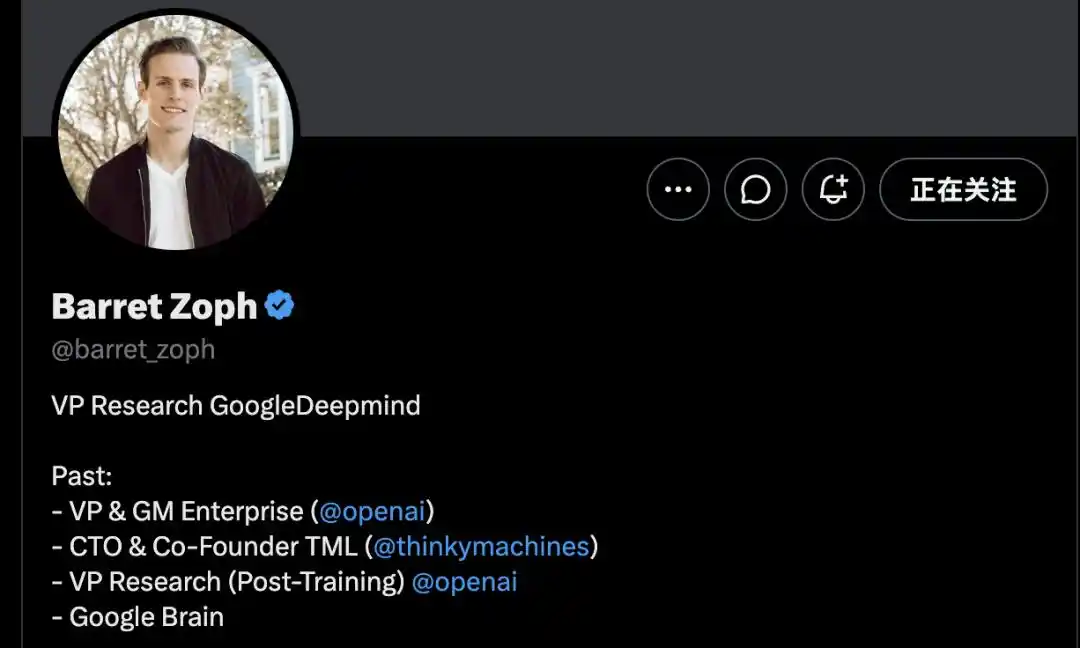
Before you stands Barret Zoph: former Senior Research Scientist at Google Brain, former Vice President of Post-Training Research at OpenAI, former Co-founder and CTO of Thinking Machines Lab, former Head of OpenAI Codex Commercialization, and current Vice President of Research at Google DeepMind.

(This space is not enough for so many people.gif)
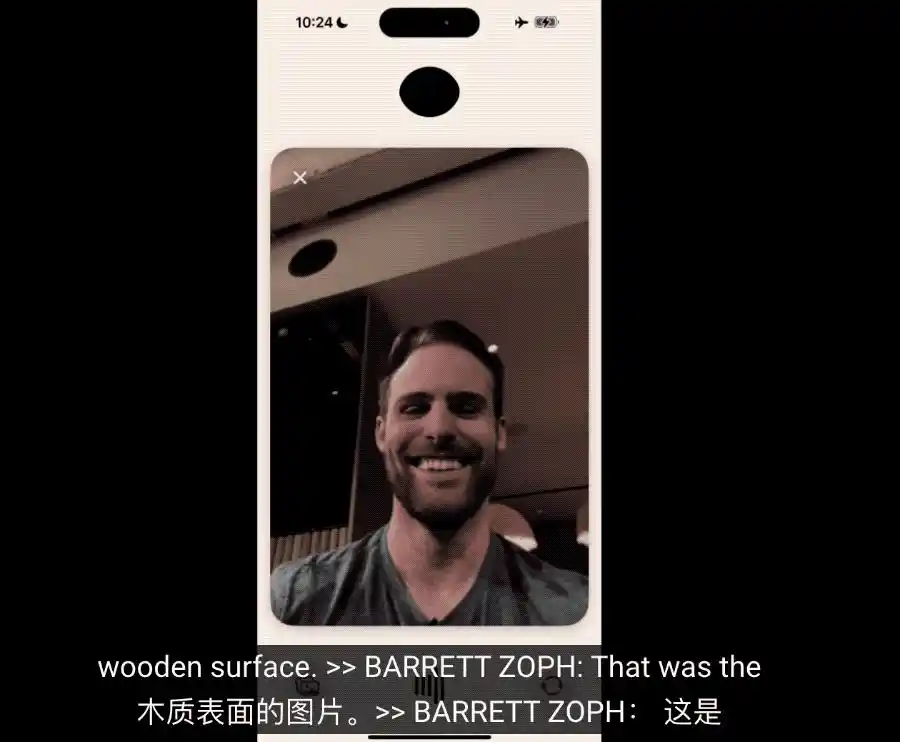
If you still don't recall who he is, he was the one who first demonstrated the video call capabilities of ChatGPT to the world during the GPT-4o "Her" launch event.

Due to network latency issues, he was even called "a wooden table" by ChatGPT.
From Pioneer of Neural Architecture Search to Head of Post-Training

Barret Zoph's career path has been unconventional. He doesn't even hold a Ph.D., yet he has risen to the positions of Vice President of Research and CTO.

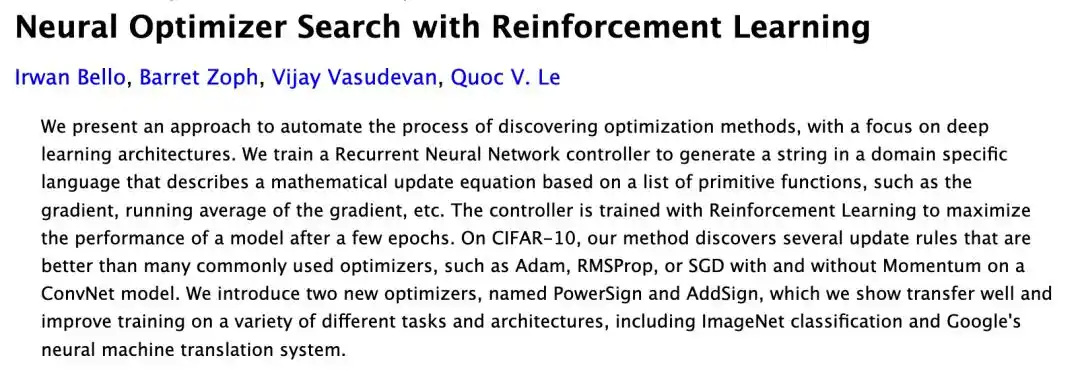
After graduating with a bachelor's degree from USC in 2016, he joined the Google Brain Residency program. Collaborating with Quoc Le, he co-authored "Neural Architecture Search with Reinforcement Learning," effectively helping to pioneer the field of Neural Architecture Search (NAS).
His contributions extended beyond architecture search.

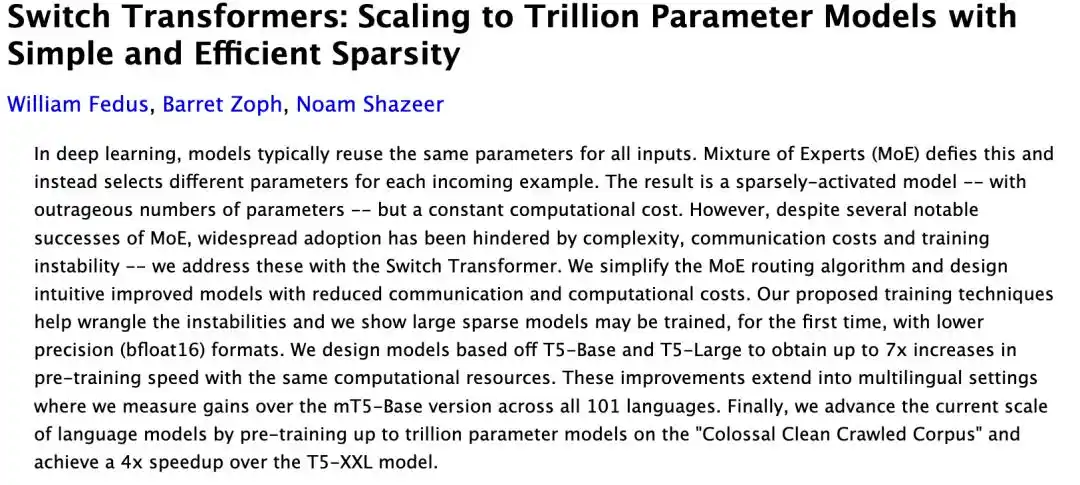
In January 2021, in collaboration with William Fedus and Noam Shazeer, he published the Switch Transformer paper. This was the first model to achieve stable training at the trillion-parameter scale and later became a standard reference for sparse Transformer designs.
After leaving Google to join OpenAI in 2022, he quickly ascended to Vice President of Research, focusing on reinforcement learning for post-training.

The post-training phase encompasses model alignment, instruction following, tool use, and refining user-facing capabilities, which are crucial steps in turning foundational models into usable products.

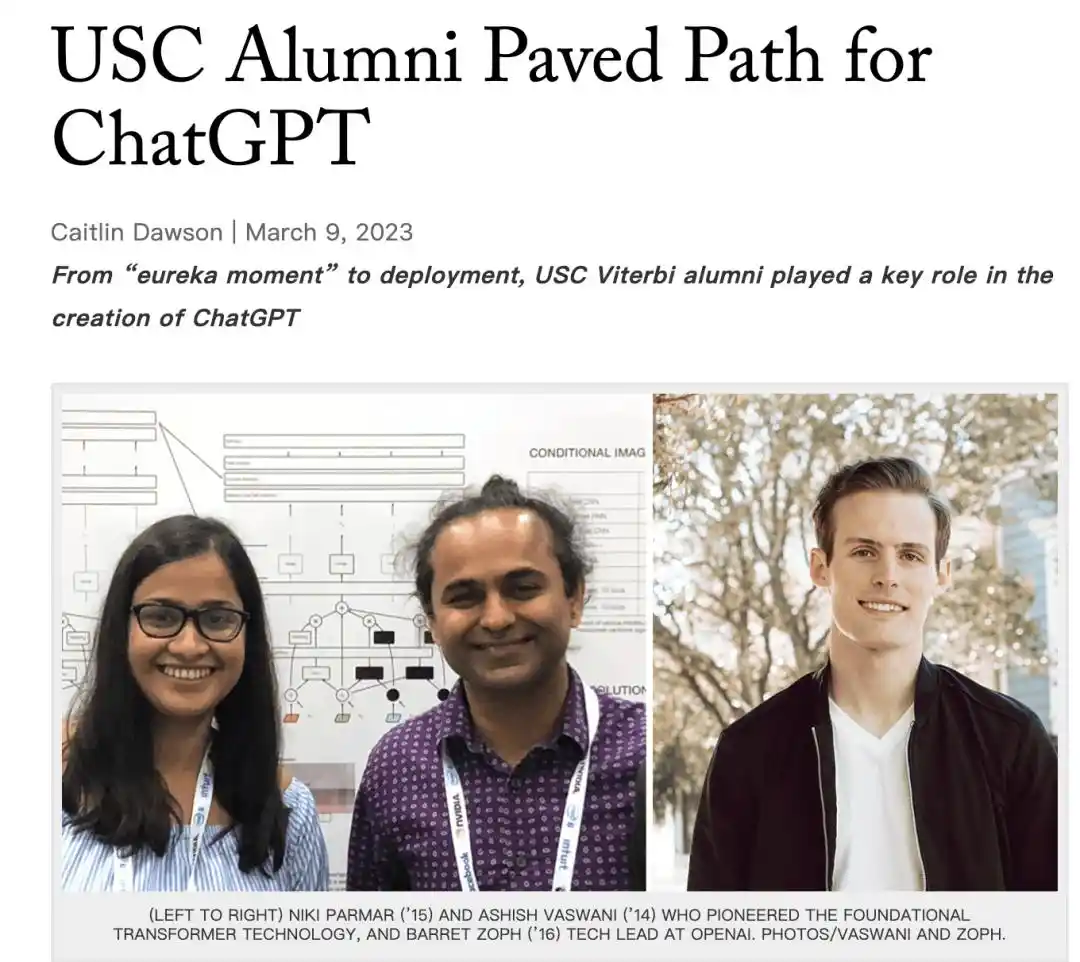
USC later listed him in official promotions as an alumnus "who paved the path for ChatGPT," alongside the two authors of the Transformer paper.
In October 2024, former OpenAI CTO Mira Murati departed. In early 2025, she co-founded Thinking Machines Lab with Zoph and four others.

Zoph served as Co-founder and CTO, but cracks appeared within less than a year.

In January 2026, Zoph, alongside another co-founder Luke Metz and early employee Sam Schoenholz, all left Thinking Machines Lab simultaneously and returned to OpenAI.

According to *The Wall Street Journal*, Murati subsequently informed employees that Zoph's employment had been terminated, citing issues related to "performance, conduct, and trust." The report also disclosed that during his tenure, Zoph had an undisclosed relationship with an employee, leading to a subsequent reduction in his responsibilities.

Zoph presented a different version of events:

He claimed that before being fired, he, Metz, and Schoenholz had personally asked Murati to grant Zoph full authority over all technical decisions. He stated that Murati announced the termination only after learning of his plans to leave and that the reduction in duties was merely a temporary arrangement.

Upon returning to OpenAI, Zoph's role shifted. He was no longer responsible for technical research but was instead tasked with promoting the use of the Codex programming product to enterprise customers.

A few months later, he left OpenAI again, this time joining Google, where he resumed responsibility for reinforcement learning and post-training research.

AI Talent Transfer Like Professional Athletes

The timing of Zoph's return to Google is somewhat intriguing.

Google DeepMind is undergoing its most significant personnel turbulence in the past three years.

In early August, co-founder Demis Hassabis stepped down from day-to-day management, transitioning to the role of Chairman of Google DeepMind and Chief Scientist at Alphabet.

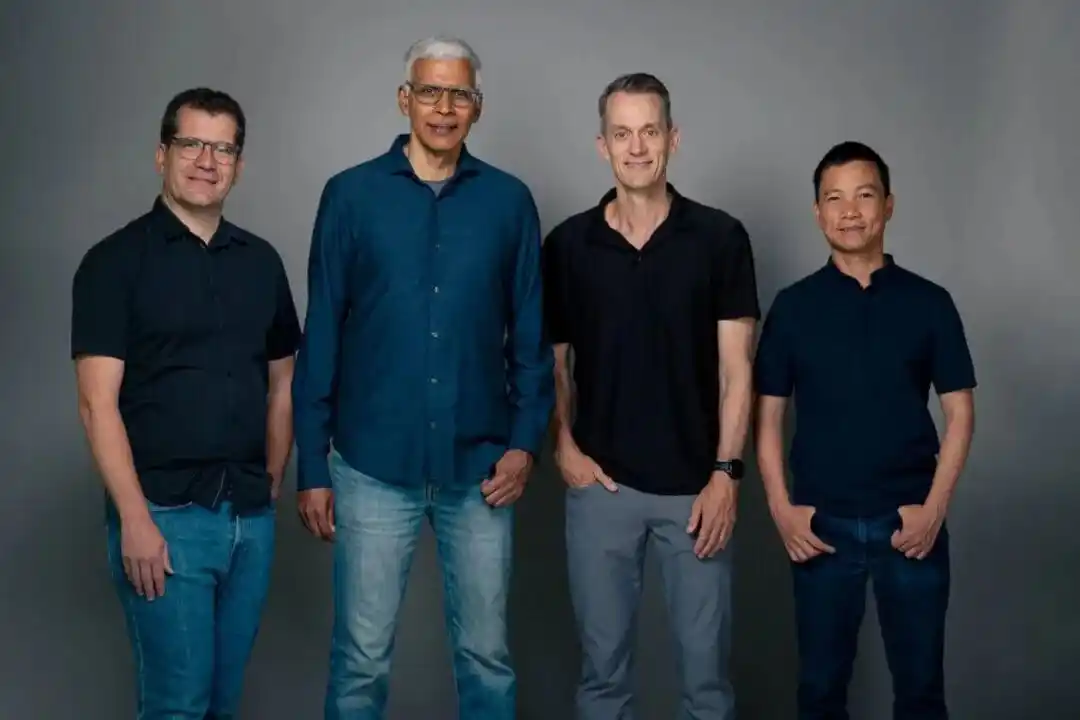
On the same day, Jeff Dean, a 27-year Google veteran, announced his departure. He, along with longtime colleagues Sanjay Ghemawat and Oriol Vinyals, as well as Quoc Le (who co-pioneered NAS with Zoph), founded the AI research company Discovery Loop.
Earlier, in June, Noam Shazeer, co-lead of Gemini and co-author of the Transformer paper, left Google for OpenAI. John Jumper, who won the 2024 Nobel Prize in Chemistry for his work on AlphaFold, went to Anthropic.
Analysis by data intelligence firm Zeki Data reveals a broader trend:

The inflow-to-outflow ratio of research and senior engineering talent at DeepMind decreased from approximately 12:1 in Q2 2023 to about 2:1 in Q3 2026. This means that for every 2 people hired, one person leaves.

In contrast, Anthropic's ratio during the same period was 22:1, and OpenAI's was 5.7:1.

Among those leaving DeepMind, about 25% went to Anthropic, 21% to Meta, and 14% to OpenAI.

Meanwhile, organizational adjustments are underway. An all-hands meeting on August 6th disclosed that some teams would be moved from DeepMind into the Google corporate structure, with Kavukcuoglu, as Senior Vice President, taking over the day-to-day operations of Gemini model development and frontier research.

This AI talent market phenomenon, which "looks more like professional sports transfers," and its unconventional hiring cycles are primarily seen among a very limited number of senior research leaders who have genuinely overseen large-scale training and post-training processes for frontier models.

The factors driving this talent mobility go far beyond compensation.

According to *Fortune* interviews with several current and former DeepMind employees, reasons for departures include:

Competitors poaching with lucrative offers, dissatisfaction with Google's position in the AI race, low internal morale, and the allure of pre-IPO equity at OpenAI and Anthropic.

As Google increasingly aligns DeepMind's focus around Gemini commercialization, some researchers feel that the open-ended, long-cycle pure scientific exploration is being squeezed out. This, however, was precisely the core asset that initially attracted academic talent to DeepMind.

References:

[1]https://x.com/barret_zoph/status/2092790775524516206

[2]https://viterbischool.usc.edu/news/2023/03/attention-is-all-you-need-usc-alumni-paved-path-for-chatgpt/

This article is from the WeChat public account "QbitAI," author: Meng Chen

Related Questions

QWho is known as the first person of "boomerang job-hopping" in the AI industry?

ABarret Zoph, the former senior research scientist at Google Brain, former VP of Post-Training at OpenAI, former co-founder and CTO of Thinking Machines Lab, former OpenAI Codex commercialization lead, and current VP of Research at Google DeepMind.

QWhat was Barret Zoph's key contribution while at Google Brain in 2016?

AHe co-authored the influential paper "Neural Architecture Search with Reinforcement Learning," helping to pioneer the field of Neural Architecture Search (NAS).

QWhat was the major project Barret Zoph co-authored in 2021?

AIn 2021, he co-authored the Switch Transformer, the first model to achieve stable training at a trillion-parameter scale, which became a standard reference for sparse Transformer design.

QWhat is the current trend in talent mobility among top AI labs like Google DeepMind?

AAI talent mobility now resembles professional sports transfers, especially for senior research leaders with experience in large-scale model training. Factors driving this include competitive salary offers, dissatisfaction with a company's position in the AI race, low internal morale, and the allure of pre-IPO equity at rivals like OpenAI and Anthropic.

QWhat was the reported talent inflow-outflow ratio for Google DeepMind in Q3 2026, according to Zeki Data?

AAccording to Zeki Data, Google DeepMind's research and senior engineering talent inflow-outflow ratio dropped to about 2:1 in Q3 2026, meaning for every two people hired, roughly one person left.

Related Reads

Websea's Third Anniversary: The Adjustments and Choices of a Mid-Sized Exchange During an Industry Shakeout Period

Websea, a mid-sized cryptocurrency exchange, celebrated its third anniversary in 2026 amid a period of industry consolidation. While the crypto landscape broadens with TradFi, RWA, and stablecoins, several established exchanges have retreated. This highlights the challenge for mid-tier platforms: growth is not automatic and depends on liquidity, compliance, security, and user retention. Websea has recently focused on strategic product adjustments. Key initiatives include enhancing risk management tools like contract insurance and copy trading, expanding its asset offerings to include TradFi CFDs (gold, silver, indices, forex), launching a Proof of Reserves (PoR) system for transparency, and engaging in regional RWA development through events like a summit in Almaty. The article analyzes these moves. Risk management products aim to improve user experience and retention, but their long-term viability hinges on clear rules and sustainable mechanisms. Offering TradFi CFDs seeks to capture user engagement during crypto market lulls, though it introduces new operational complexities. The PoR report addresses transparency concerns, but its value depends on regular updates. Regional RWA exploration offers potential access to real-world assets but faces significant hurdles in legal structuring and productization. Ultimately, Websea's three-year mark showcases a strategy to compete by broadening tradable assets, strengthening risk and transparency features, and exploring niche opportunities. The critical test will be whether these adjustments translate into sustainable trading volume, lasting user loyalty, and verifiable business growth over time.

marsbit15m ago

Websea's Third Anniversary: The Adjustments and Choices of a Mid-Sized Exchange During an Industry Shakeout Period

marsbit15m ago

iPhone Owners Will Not Be Able to Use the Digital Ruble - Vedomosti

iPhone users in Russia will face obstacles in using the digital ruble, the country's central bank's new digital currency, according to a report by Vedomosti. The Bank of Russia's website states iOS device owners can only use the digital ruble with an updated banking app containing the necessary features. However, banks cannot upload these updated apps to the App Store by the September 1st deadline. The main hurdles are sanctions and technical requirements. Apple blocks apps from sanctioned Russian banks. Furthermore, the Bank of Russia mandates that apps use Russian cryptographic standards, connect to specific central bank domains and APIs. Apple identifies these technical elements as markers of affiliation with the Russian state financial infrastructure, leading to app rejection. Certified solutions already exist for Android. Apple's review process scrutinizes not just code but also the build's origin—including developer accounts, cryptographic keys, and network requests—which can lead to blocks for apps or entire developer accounts. While "guerrilla apps" or clones sometimes appear, they are typically removed from the App Store within days or hours. For iPhone users, some banks offer web-based access to digital ruble functions as an alternative. However, major banks like VTB, RSHB, and "Russia" told Vedomosti the digital ruble is only available in their Android apps. Starting September 1st, 12 systemically important Russian banks, including Sberbank, VTB, and Alfa-Bank, are required to provide access to the digital ruble, which must be integrated as a wallet within their own banking applications, not a separate app. Also from September, all major Russian companies are mandated to begin accepting digital ruble payments, with telecom operators and marketplaces announcing the service's launch.

cryptonews.ru41m ago

iPhone Owners Will Not Be Able to Use the Digital Ruble - Vedomosti

cryptonews.ru41m ago

Trading

Spot
活动图片