May 11, 1997, New York.
IBM's supercomputer "Deep Blue" defeated world chess champion Garry Kasparov 3.5 to 2.5 in a six-game match.
This was the first time humanity lost to a machine in the highest arena of intellectual games.
The final game of that match lasted only 19 moves. Kasparov made a rare mistake in a classic opening, and Deep Blue precisely seized the opportunity, swiftly pushing the position towards an irrecoverable state.
At the end, Kasparov abruptly stood up and left the chessboard, his face filled with shock and anger. He later publicly accused IBM of using human chess players behind the scenes, refusing to accept the result.
That day, the whole world was discussing the same question—In the face of machines, does human intelligence still have dignity?
Fast forward to March 2016, Seoul.
Google DeepMind's AlphaGo defeated Korean Go 9-dan Lee Sedol 4 to 1. This impact was greater than Deep Blue's because Go was seen as "the final bastion of human wisdom." The number of possible Go board positions far exceeds the total number of atoms in the universe. Experts had previously predicted AI would need at least another decade to defeat top human Go players. Lee Sedol's "divine move" in the fourth game, with a one-in-ten-thousand chance, briefly bewildered AlphaGo, securing humanity's only win.
Later, people realized, this might have been humanity's last victory over a Go AI.
May 2017, Wuzhen. AlphaGo swept the then world number one Ke Jie 3-0. During the second game's mid-game, Ke Jie slumped over the table. After the match, he said something that silenced everyone: "Last year, I thought its style was close to a human's, but today..."
"It plays like the god of Go."
That same year, DeepMind announced AlphaGo's retirement, shifting to more "useful" scientific research fields.
The war on the board was no longer worth fighting for the machine.
From Deep Blue to AlphaGo, these human-machine duels formed a clear and tragic narrative—Machines grew stronger, humans retreated step by step, and these ancient intellectual games seemed to be sentenced to death by AI.
But the real story was as surprising as a chess game.
In 2026, nearly 30 years after chess was crushed by AI, the world's largest chess platform, Chess.com, boasted 250 million registered users, over 10 million daily active users, and annual revenue exceeding 200 million US dollars.
Chess not only didn't die but was at the absolute peak of popularity in the game's thousands of years of history.
How could a game completely "solved" by machines attract more and more players?
Heaven-Sent Traffic
Chess.com's CEO, Erik Allebest, recently recounted the story of people falling back in love with chess on a podcast.
In 2005, he and a friend bought the chess.com domain for $56,000 at a bankruptcy auction. Almost every investor told him it was an "uninvestable niche hobby." His classmates at Stanford Business School also advised him to "do something serious."
No one believed chess could become a big business.
True to expectations, Erik failed to raise a single cent. Relying on savings from selling a previous company and a small loan from a friend's mom, the two started building the product. It launched in 2007, began charging membership fees 18 months later, and quickly turned profitable.
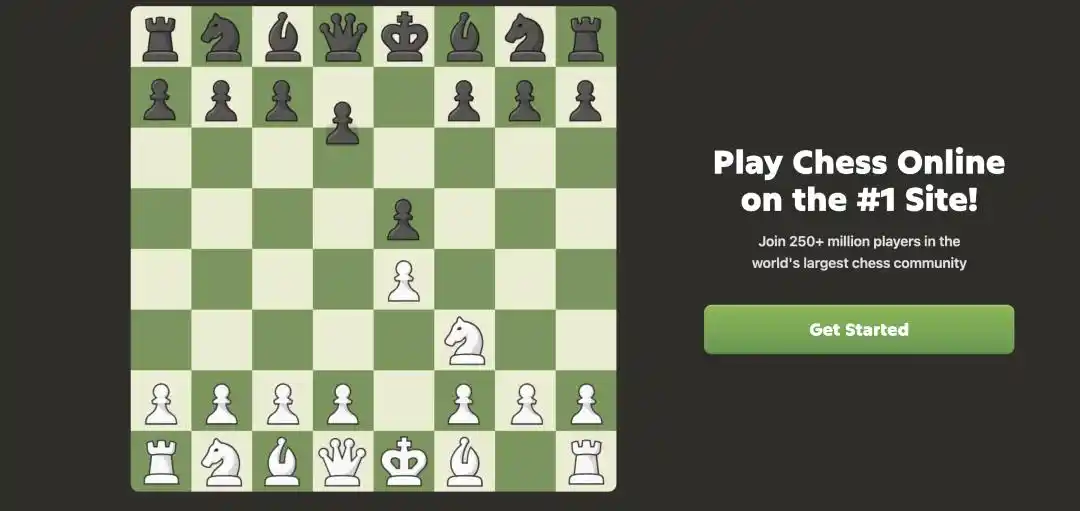
Chess.com's main business is very simple | Image source: Chess.com
For the next twenty years, Chess.com grew at a "hire as many people as we can afford" pace, never considering fundraising again.
Interestingly, three small events in the few years before this AI boom completely revitalized Erik's chess site.
The first wave was in 2020.
The COVID-19 pandemic locked everyone at home, and Netflix's hit series "The Queen's Gambit" premiered the same year. A story about a genius female chess player ignited global interest in chess, and Chess.com's registrations skyrocketed. But Allebest's initial reaction wasn't excitement; it was worry—"Will this be like buying treadmills or making sourdough during the pandemic, just a passing fad?"
The second wave was even more unexpected.
In 2023, chess exploded on short-video platforms. A large number of chess content creators emerged on TikTok and YouTube Shorts. Chess.com launched an AI bot called Mittens—an adorable-looking cartoon kitten with terrifying chess skills capable of crushing the vast majority of human players.
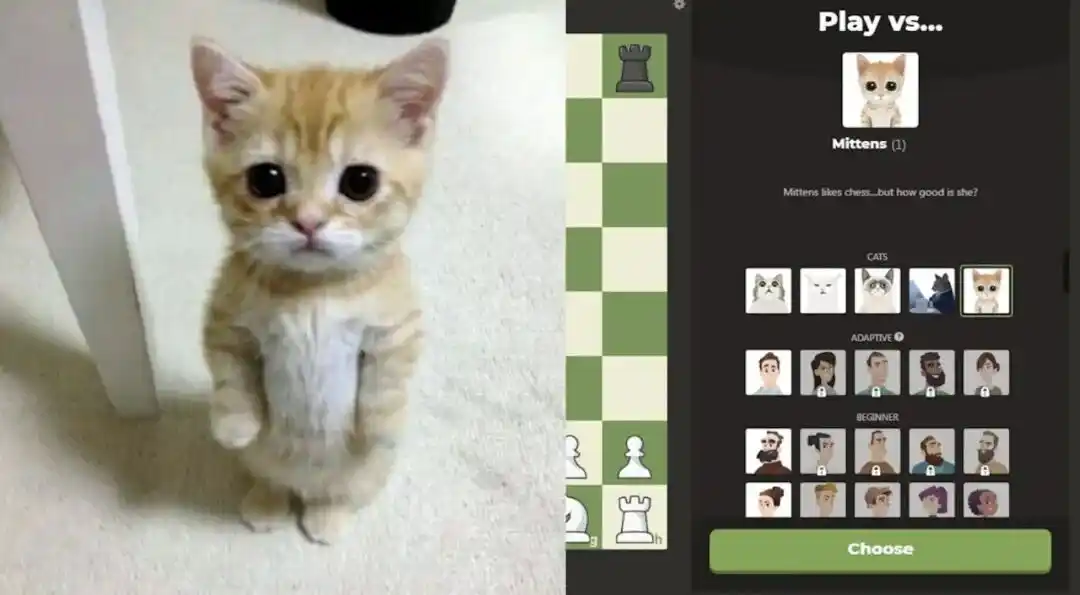
Chess.com's chess AI Mittens the cat is "cute and quiet" but a master at chess | Image source: Chess.com
This cat went viral on social media, with "I got beaten by a cat" becoming a global meme. The same year, a cheating scandal involving young player Hans Niemann made headlines in major news outlets, pushing chess into a broader public view.
A key phenomenon Allebest described was—after each wave receded, the user baseline was significantly higher than the previous one.
This wasn't a flash-in-the-pan traffic spike but step-like growth. The baseline after the 2020 surge, the baseline after the 2023 surge—each was higher than the last.
Why could the chess site retain people after each traffic explosion? Because chess isn't just something that was "recommended"; people discovered it was genuinely fun.
This leads to a more fundamental question.
Winning Isn't the Goal; Playing Is
In the podcast, Allebest said a widely quoted line—People want to acquire human skills, even if machines far surpass humans at that thing; people appreciate outstanding human artistry, even if machines can do it better.
This statement is good but can be taken a step further.
A machine's logic for playing chess is purely instrumental.
For Stockfish or any chess engine, every move is a means to an end—winning. It has no "experience." It doesn't feel excitement when conceiving a brilliant move mid-game, doesn't feel frustration when checkmated, doesn't have an "aha!" moment during post-game analysis.
Winning is just winning, merely a change in strings of numbers.
But humans playing chess is a completely different matter.
An amateur player spending 10 minutes on a blitz game on Chess.com doesn't care at all how Stockfish would rate their moves. They care about that little thrill of "I saw a tactical combination my opponent didn't," the heart-pounding tension during time pressure, the curiosity to analyze the game after a loss to figure out "which move was actually wrong."
These things are the entire meaning of the game itself, unrelated to winning or losing. Put more succinctly—the reward of the game is playing the game itself.
And the existence of AI precisely amplifies this purity.
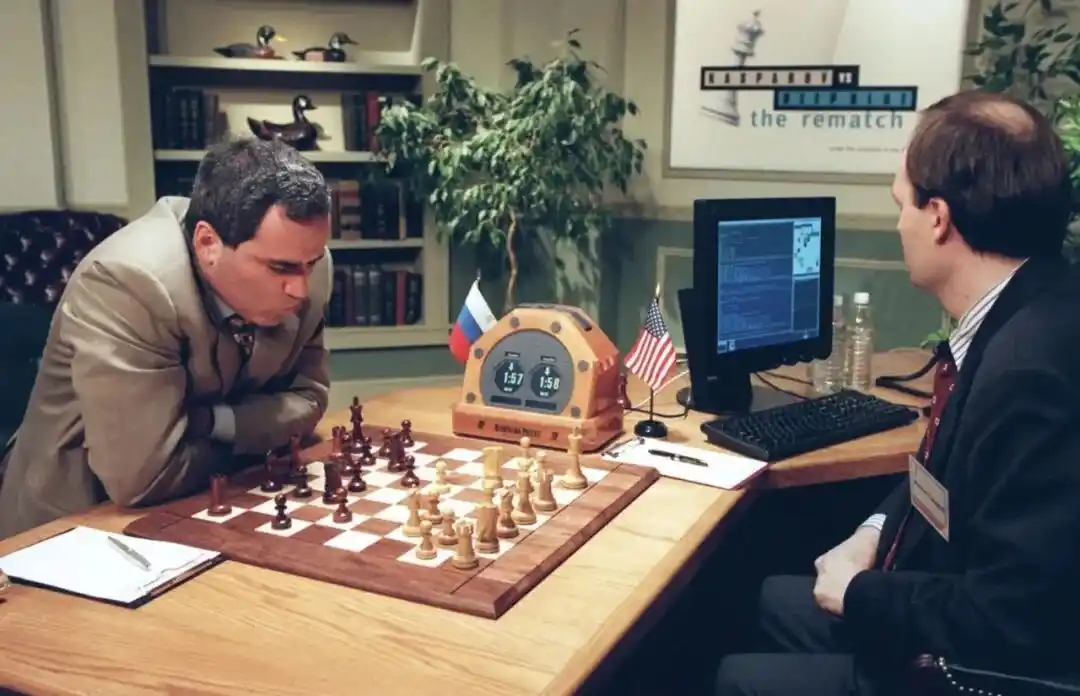
IBM's Deep Blue defeating chess master Kasparov over 30 years ago | Image source: Britannica
Before Deep Blue defeated Kasparov, the chess world was shrouded in a heroic narrative. Who was the world's best? Could humanity preserve its dignity? The chess championship matches between the US and USSR during the Cold War were even imbued with ideological weight.
The act of "winning" was overloaded with too much meaning.
But when AI completely ended the question of "who is the strongest," a strange liberation occurred.
Since humans can never beat machines, human vs. human matches are no longer about "competing for the strongest," but return to the game's most primitive state—I play a game with you simply for fun.
Once the anxiety about winning and losing is removed, the pure joy of the game is released.
Simultaneously, AI's role in the chess ecosystem is increasingly becoming like "infrastructure."
Chess.com is using AI as a "coach in your pocket"—analyzing your recent games, telling you which areas need improvement, and even allowing conversation with the AI coach. Previously, improving your game meant hiring a human coach; now, you have a teaching system ready on your phone. AI is also used for anti-cheating—analyzing move patterns to judge if a player is using engine assistance.
Even AI products like the Mittens Bot have themselves become "content" attracting new users.
AI didn't kill chess; it became a tool for more people to fall in love with chess.
Go: The Silent Mirror
Unfortunately, the same story has not repeated itself in the world of Go.
Three years after AlphaGo defeated Lee Sedol, Lee Sedol announced his retirement.
He said the paradigm shift brought by AI meant the end of Go's "art," and he could no longer find joy in it. The "joseki" (standard patterns) accumulated over two thousand years in Go, standard moves regarded as truth by generations of players, were proven by AI to be mere solidified biases. The "san-san invasion," once considered "rude" and forbidden to teach children, quickly became standard practice for professional players after AlphaGo used it without hesitation.
A deeper change occurred at the cultural level of professional Go.
Before AI, professional players had distinctive styles; fans could identify who was playing just by looking at the game record. Go was thus seen as an art. After AI, everyone is memorizing AI moves, competing to see who has a higher "AI agreement rate." The stories in Go commentary disappeared, replaced by win-rate graphs and agreement rate data.
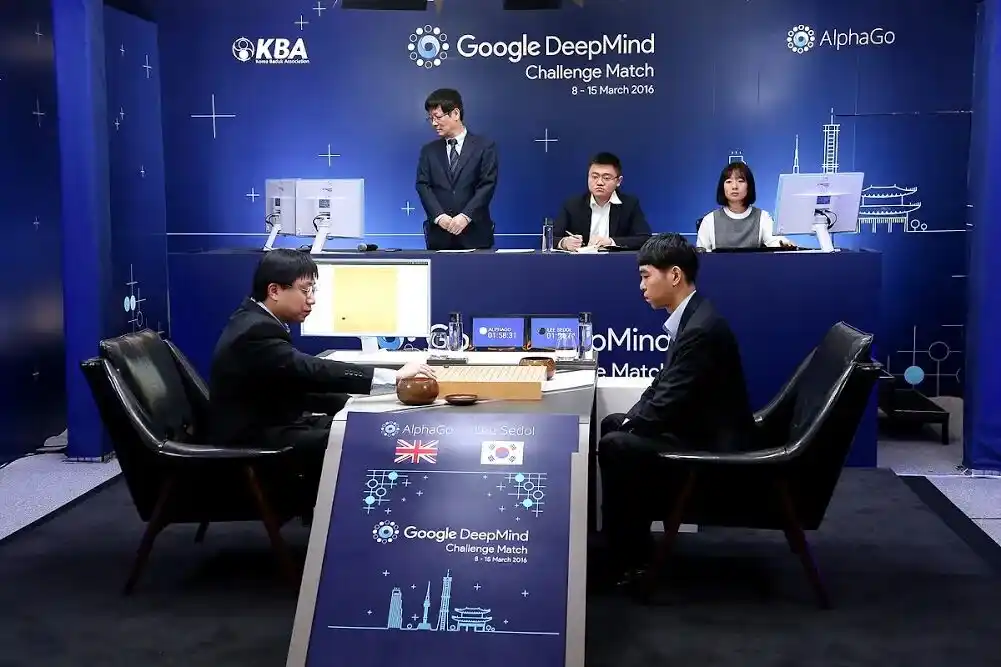
10 years ago, Google's AlphaGo defeated the then-top Korean player Lee Sedol, almost breaking Go's "backbone" | Image source: Google
Korean Go journalist Ahn Sung-moon said something poignant—"Heroic figures are no longer created; we only hear about who ranks in what position."
Similarly crushed by AI, chess is booming, while Go has experienced a "collapse of meaning" at the professional level.
The root cause isn't the difference in the games' complexity but in their community structures.
Chess in the Western world was already a popular game—old men playing in parks, school clubs, speed chess in pubs, with a base of hundreds of millions of amateur players who "just like playing." No matter how strong AI gets, it doesn't affect this group's motivation.
Go's positioning in East Asia is completely different. It's part of the "Four Arts" (qin, qi, shu, hua), an elite accomplishment and educational tool. Chinese children learning Go often follow the same logic as learning the piano—parent-driven, grading/ranking exams, with utilitarian purposes first.
When a game's users are primarily "there for the result," and AI destroys the meaning of that result, the game loses its support.
The popularity of Ke Jie and Zhan Ying on Bilibili did bring traffic to Go. But honestly, the audience is more watching the players' personal charm and "abstract" interactions than watching Go itself.
This is "the influencer-ization of players," not "the popularization of Go."
Tens of millions of games happen daily on Chess.com; that's real "people playing chess." The barrage frenzy in Go livestreams is closer to entertainment consumption.
This article isn't meant to praise chess and disparage Go, but to see some fundamental questions through Chess.com's success.
In an era where AI will crush more and more human skills, a question worth pondering repeatedly is—What is our motivation for doing something? Is it to win, or to play?
Those things where "the process itself is the reward"—chess, playing music, writing, painting, running, cooking—perhaps won't die out because AI is stronger. Instead, they might become purer once the pressure to "win" is lifted.
And those things we were only doing "for the result," AI will indeed take them away. In a sense, AI *should* take them away.
Chess's prosperity in the AI era tells us that humans won't stop doing something just because machines are better.
What truly determines whether something survives is never "who does it better," but "what humans are actually enjoying when they do it."
This article is from the WeChat public account "GeekPark" (ID: geekpark), author: Techno King, editor: Jing Yu