AI's Deceptive Perfection: How Can Crypto Users Defend Against New Scams?

Foresight NewsPublished on 2026-06-08Last updated on 2026-06-08

Abstract

AI-generated content is making cryptocurrency scams more sophisticated and harder to detect. Previously, users could spot phishing attempts through poor grammar and spelling errors. Now, AI tools allow scammers to produce flawless, professional-looking emails, websites, and social media posts, often personalized using stolen user data. This shift poses unique risks in crypto, where transactions are irreversible and self-custody wallets can be compromised by a single malicious authorization. The article advises a shift from relying on visual cues to adopting rigorous verification as the primary defense. Key recommendations include: manually checking website URLs against official sources, scrutinizing wallet permissions before approving transactions, verifying smart contract addresses directly from project websites or block explorers, and being wary of unsolicited "urgent" messages from impersonated customer support. The core message is that in the AI era, a polished appearance is no guarantee of safety; every link, request, and interaction must be independently verified before any action is taken.


Author: Dilip Kumar Patairya

Compiled by: Chopper, Foresight News


In the past, cybersecurity education often taught simple methods to identify scams: watch for spelling errors, awkward phrasing, and abnormal formatting. In early phishing attacks, this approach was indeed effective. Scam emails were often hastily written, poorly translated, and full of obvious flaws. Over time, people began to view clumsy writing as a red flag.


The emergence of artificial intelligence has completely changed this landscape.


Using advanced AI tools, fraudsters can quickly produce fluent emails, realistic customer service chats, professional-looking websites, and highly deceptive social media content. Scammers no longer need strong writing skills to create convincing traps. In the crypto space, where a single click to authorize a transaction can lead to instant asset loss, this shift presents entirely new security risks.


Today, the threat no longer comes from information riddled with errors. Instead, well-written, seemingly legitimate scam content is more likely to lower people's guard.


As AI technology continues to evolve, the mindset of crypto users regarding security must also change. Rather than obsessing over whether information itself seems suspicious, it's better to verify each operational request through independent channels.
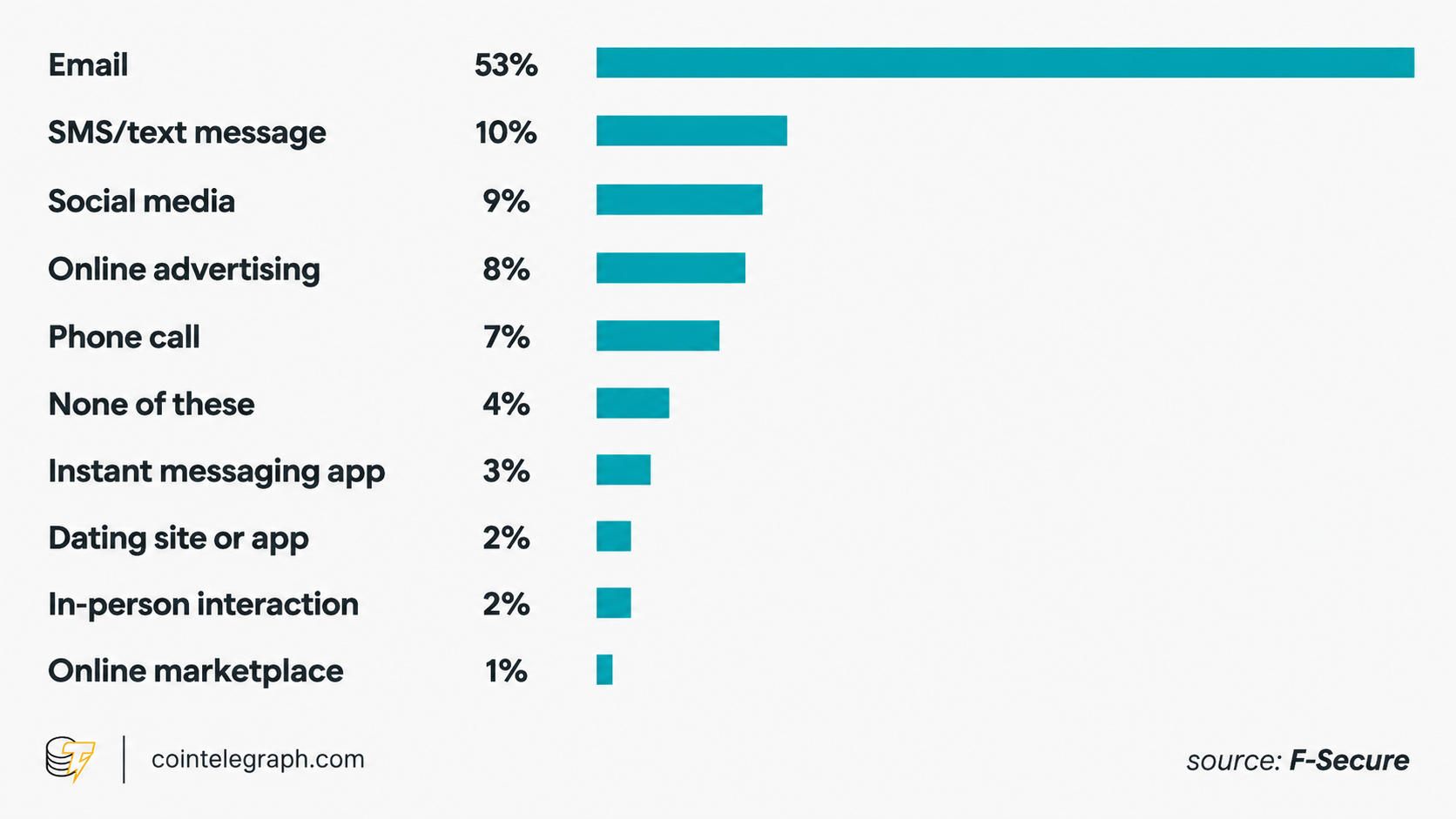

Common Scam Channels


Why Text Authentication Used to Work


Early phishing scams focused on casting a wide net, prioritizing quantity over content quality. Scammers sent out mass messages, hoping just a few people would bite.


Since most scam operations were based overseas or used simple translation tools, the sent information often contained grammatical errors, awkward expressions, and messy formatting. Users gradually learned to treat these details as warning signs.


Various cybersecurity awareness campaigns also popularized a series of basic identification techniques:


  • Check if the text contains spelling mistakes.
  • Avoid messages with poor grammar.
  • Be wary of strange or unusual phrasing.
  • Watch for abnormal formatting.


These small tricks could quickly filter out crudely made scam content.


However, this was never a foolproof defense method, serving only as a reminder. But over time, many people began to assume that professional, fluent writing equated to trustworthy content. The widespread adoption of AI has completely shattered this ingrained perception.


AI tools can generate well-formatted and eloquently phrased phishing content in bulk. Relying on spotting textual errors to prevent scams is becoming increasingly unreliable.


How AI Upgrades Scam Tactics


Large language models can generate natural, fluent text in multiple languages, allowing fraudsters to fabricate various types of false content:


  • Falsify customer service chat logs
  • Produce sophisticated phishing emails
  • Impersonate legitimate exchange notifications
  • Write highly enticing investment pitches
  • Post realistic Telegram group announcements
  • Create customized fake wallet recovery guides


Simultaneously, AI also assists in implementing precise targeted attacks. Scammers use data breach information and user data from platforms like LinkedIn, X, Discord, and Telegram to tailor scam narratives.


Information received by users might mention these details:


  • Tokens you recently purchased
  • Your exchange account information
  • The wallet service provider you are using
  • Decentralized Finance (DeFi) platforms you've interacted with
  • Customer service questions you've asked in public channels


Highly customized content significantly increases the credibility of scams.


Furthermore, AI image generation and voice cloning technologies make identity impersonation much easier. Forging executive videos, simulating customer service voices, and replicating brand visual elements can now be achieved effortlessly.


Unique Risks Faced by Crypto Users


The security logic of crypto assets is fundamentally different from traditional banking. In traditional finance, if you encounter a mistaken transfer or scam, you can usually contact your bank, payment institution, or risk control team to recover the funds. However, once a crypto transaction is confirmed on the blockchain, it is essentially irreversible.


Self-custody wallets also expand the attack surface. Scammers may not need to steal passwords or private keys; often, simply tricking users into authorizing malicious transactions or granting high-risk wallet permissions is enough to succeed.


This means that even if users never leak their seed phrase, well-crafted scam interfaces still pose a significant risk.


Common scam forms in the crypto space include:


  • Fake airdrop claim websites
  • Counterfeit NFT minting events
  • Impersonated exchange login pages
  • Inducement to connect to malicious wallets
  • Pop-ups prompting authorization of malicious tokens
  • Fake staking or mining interfaces
  • Impersonation of official customer support
  • High-imitation accounts registered on platforms like Telegram and Discord


With the help of AI, such scams can be produced in bulk while maintaining high fidelity in content and interface design.


Core Verification Methods Users Should Master


Facing increasingly realistic scams, crypto users can no longer rely on superficial judgment; verification must become the primary rule.


1) Scrutinize the Domain Name Carefully


A website's appearance can be copied, but the URL is difficult to replicate perfectly. Fraudulent domains commonly use these tricks: adding extra characters, inserting random hyphens, using look-alike symbols, tampering with subdomains, choosing obscure top-level domains.


Even if the page looks identical to a legitimate platform, do not trust it based solely on logos and visual effects. Recommended practices include:


  • Manually type the URLs of commonly used platforms.
  • For wallets and exchanges, prioritize using saved bookmarks.
  • Always verify the domain name before connecting a wallet.
  • Avoid clicking links in unfamiliar messages or promotional content.


A beautiful page does not equate to a legitimate website.


2) Prioritize Links from Official Channels


Fake announcements, impersonated influencer accounts, and scam accounts are common vectors for spreading scams. Fraudulent links primarily spread through: Telegram groups, Discord channels, X (formerly Twitter) comment sections, paid search ads, fake customer service messages.


Always confirm that links originate from the project's official website or officially announced channels. Cross-referencing information across multiple official accounts can further reduce risk.


Be highly vigilant when receiving unsolicited private messages claiming your account has an urgent issue.
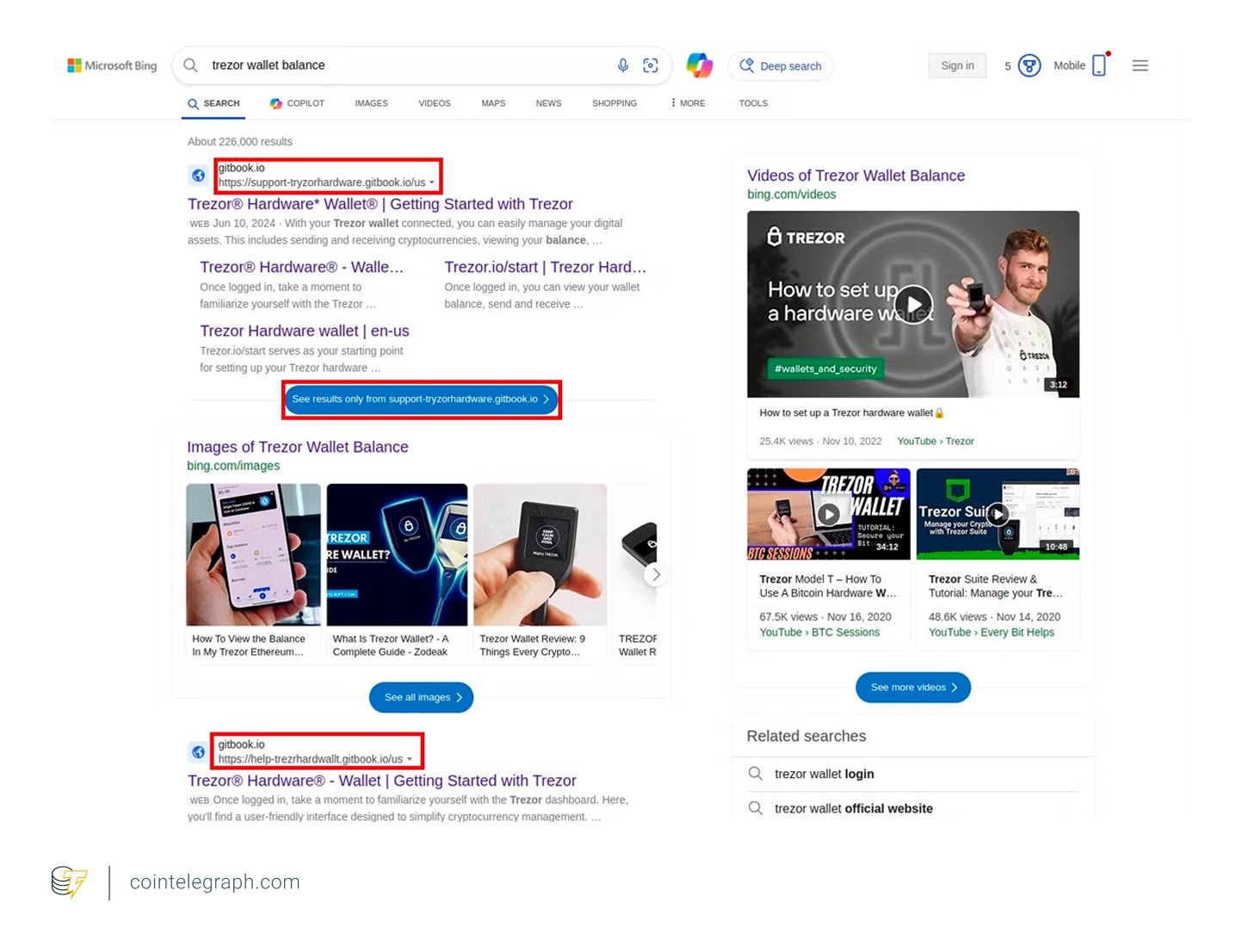

Malicious Trezor Balance Check Link Found in Bing Search


3) Understand Wallet Permissions Before Authorizing


Many users have the misconception that any request popping up from their wallet must be safe. Especially when faced with professional-looking websites, people often casually click confirm, overlooking permission details.


Wallet interactions involve various operation types: connecting a wallet, signing messages, authorizing token transfers, granting general permissions, triggering smart contract interactions, etc.


Among these, unlimited approvals carry the highest risk, allowing malicious contracts to transfer your assets arbitrarily in the future. Before approving, always verify that the token types, allowed transfer amounts, the requesting contract address, and the operation details match your expectations.


Even if a website looks flawless, it might trigger high-risk wallet operations.


4) Verify All Details Before Signing a Transaction


AI scams often exploit a sense of urgency to rush users into quick confirmation. Before signing any transaction, meticulously check the recipient address, token amount, selected blockchain, contract interaction information, fee structure, and approval scope.


If a page is labeled "Claim Reward" but requests unlimited token permissions, or labeled "Wallet Verification" but initiates an asset transfer, stop immediately and investigate the risk.


Once transaction details deviate from expectations, do not proceed.


Many wallet scams begin when users publicly complain about account issues on social media. Scammers monitor such posts and then impersonate customer support via private messages.


5) Verify Contract Addresses, Don't Blindly Trust Token Names


Scammers can copy token names and icons to create high-imitation fake tokens. A token that appears to be named "USDT" or "ETH Earnings" might be issued by a completely unrelated entity.


Verification method: Confirm the token's corresponding contract address through the project's official website, legitimate blockchain explorers, officially published materials, or mainstream exchange information. As AI scams become more convincing, relying solely on token names and icons to judge authenticity is increasingly risky.


6) Be Wary of Unsolicited Customer Service Private Messages


Impersonating official customer support remains a prevalent scam method in the crypto space. Scammers monitor users' help-seeking comments on social platforms, then send private messages posing as staff. They may induce users to perform wallet "verification," ask for seed phrases, send malicious links, recommend remote control tools, or guide users to complete dangerous authorizations.


Legitimate official customer support almost never initiates private contact first. Platforms will also never ask for private keys or seed phrases. If you encounter a problem, proactively contact support through official channels. Do not respond to unsolicited private messages.


7) Urgent Pressure is Often a Sign of a Scam


Even the most professionally crafted scams often use psychological pressure to create urgency. Common narratives include: "Your wallet has been hacked," "Tokens are about to expire, claim now," "Account will be suspended soon," "KYC failed," "Security update required immediately."


Such tactics can cloud judgment. The more someone pressures you to act immediately, the more you should slow down and verify carefully.


A simple rule for crypto security: Whenever you're asked to act on your wallet immediately, pause and calmly verify first.


Polished Appearance No Longer Equals Security


Today's scam websites can accurately replicate brand logos, color schemes, page layouts, and writing styles. AI can also help create high-fidelity FAQ pages, fake customer service replies, impersonated news articles, and complete new user onboarding flows and promotional copy.


Judging a platform's trustworthiness based on visual appeal alone is no longer possible. Attackers only need to catch a user off guard for a moment to execute irreversible asset theft.


The core of security protection remains verification: check the domain name, inspect the contract, review wallet requests, confirm support identities, clarify transaction purposes. A beautifully designed interface does not equate to trustworthiness.


Crypto Security Has Evolved into a Battle of Verification


AI hasn't created entirely new scam models; it has simply significantly upgraded the presentation and disguise of traditional scam techniques. In the past, people relied on surface characteristics to identify risks but neglected the act of verification itself. This mindset can lead to massive losses in the crypto industry.


Behind a perfectly phrased paragraph, a malicious link might lurk. Within a seemingly professional customer service reply, instructions to authorize asset transfers could be hidden. A convincingly realistic website might also request high-risk permissions.


The core takeaway is simple: fluent copy, exquisite interfaces, and familiar brand imagery cannot serve as security credentials. Faced with every link, every wallet pop-up, every customer service message: verify first, then act.


Related Questions

QHow has the use of AI by scammers fundamentally changed the nature of phishing attacks in the cryptocurrency space?

AAI has shifted phishing attacks from relying on easily identifiable signs like poor grammar, spelling errors, and awkward phrasing to generating highly polished, fluent, and contextually convincing content. This makes scams appear legitimate and professional, breaking users' long-held association of sloppy text with danger.

QWhat are some of the unique risks cryptocurrency users face compared to traditional banking users, especially in the context of AI-enhanced scams?

ACryptocurrency transactions are irreversible once confirmed on the blockchain, unlike traditional banking where chargebacks are often possible. AI can create convincing fake websites and interfaces that trick users into signing malicious transactions or granting unlimited token approvals, leading to instant asset loss even if seed phrases are never shared.

QAccording to the article, what is the most critical principle for crypto users to adopt for security in the age of AI scams?

AThe core principle is 'verification before action.' Users must move beyond judging content by its polished appearance and instead rigorously verify every request through independent channels. This includes checking domains, contract addresses, wallet permissions, and the identity of support personnel.

QWhat are three specific verification methods the article recommends for crypto users to protect themselves?

A1) Carefully verify website URLs and domain names, avoiding links from unknown sources. 2) Always check the details of any wallet transaction or signature request before approving, especially the token permissions and recipient addresses. 3) Verify token authenticity by checking the official contract address, not just the name or logo, and be wary of unsolicited private messages from 'support staff.'

QWhy is a sense of urgency often a red flag in potential crypto scams, even if the communication looks professional?

AScammers use urgency (e.g., claims of a hacked wallet, expiring tokens, or account suspension) to create psychological pressure and short-circuit a user's normal verification process. The article advises that the more a message pressures you to act immediately, the more you should slow down and perform thorough checks.

Related Reads

Farewell to Traditional Bulls and Bears: The Market Has Entered an Era of Rotating Bubbles

Farewell to traditional bull and bear markets; we have entered an era of rolling bubbles. This article uses a meteorological analogy to explain the modern market's shift from slow-moving, long-term trends to a chain of rapid, successive speculative frenzies. The old market resembled "stratiform" weather—slow, broad cycles lasting years. Today's market is like a "mesoscale convective system," where isolated storms (bubbles in sectors like AI, GLP-1 drugs, or crypto) form in sequence. Each is triggered by the outflow of capital and sentiment from the previous one, creating a self-perpetuating chain of booms and busts. This structural change is driven by eight permanent shifts: the democratization of speculation (zero-commission trading, retail options activity), perpetual buying from defined-contribution retirement plans, the dominance of passive investing (creating price-insensitive flows), the rise of multi-strategy funds and high-frequency trading (weakening price discovery), suppressed volatility that erupts violently, an index composition now dominated by long-duration, narrative-driven tech stocks, the elimination of information delays, and a permissive fiscal/monetary backdrop. These conditions ensure that rolling bubbles are the new normal. To navigate this environment, investors should either become deep-sector experts who understand the underlying technologies and business models or become adept observers of trends and capital flows. While chaotic from within each "storm," a higher-altitude view reveals a predictable pattern of serial booms. The key is to avoid being emotionally swept up in any single narrative and to recognize the market's new, permanent structure.

marsbit7m ago

Farewell to Traditional Bulls and Bears: The Market Has Entered an Era of Rotating Bubbles

marsbit7m ago

The Right Way to Use Skills: 5 Reflections After Anthropic Publicly Shared Its Internal Methodology

A deep dive into Anthropic's internal methodology for building effective AI "Skills" reveals five key insights for maximizing their value. First, Skills should focus on capturing "Gotchas" and tacit organizational knowledge—like common pitfalls and undocumented rules—rather than restating general information the AI already knows. Second, think of Skills as a form of "Context Engineering"; they are best structured as folders, not monolithic documents. A core `SKILL.md` file should act as a navigational index, progressively pulling in detailed references, examples, and assets only as needed to avoid overwhelming the model's context window. Third, whenever possible, automate repetitive tasks with scripts. This preserves the model's reasoning capacity for judgment and analysis, while scripts reliably handle the execution, saving tokens and improving accuracy. Instructions within a Skill provide the "why" and the expert judgment, while scripts provide the concrete "how." Fourth, a Skill's description is critical and often misunderstood. It should not be a list of features but a routing rule that clearly signals *when* the Skill should be triggered based on user intent and common phrasing. Finally, as Skills scale from personal tools to team-wide assets, management is crucial. Anthropic advocates for a lightweight, organic approach: let new Skills spread organically within small groups first. Those that prove genuinely useful through adoption naturally graduate to a formal marketplace, ensuring the curated library contains only high-value, battle-tested tools.

marsbit24m ago

The Right Way to Use Skills: 5 Reflections After Anthropic Publicly Shared Its Internal Methodology

marsbit24m ago

Vying for the AI Payment Track: Traditional Card Networks Face Off Against Coinbase

As AI agents increasingly conduct commercial transactions, a battle for control over the underlying payment infrastructure is unfolding. The competition centers on two divergent and incompatible technical approaches for autonomous AI payments. One camp, led by traditional card networks Visa and Mastercard, relies on tokenized card credentials within the established banking rails. Visa's "Intelligent Commerce" and Mastercard's "Agent Pay" services extend their existing tokenization technology to authorized AI agents for consumer retail transactions, leveraging decades of fraud protection and dispute resolution systems. Their partners include major AI firms like Anthropic, OpenAI, and Microsoft. The opposing camp, spearheaded by Coinbase, advocates for an open internet protocol using stablecoins. Coinbase's x402 protocol utilizes the HTTP 402 status code to enable direct, machine-to-machine micropayments with USDC on-chain. This model eliminates card fees and is designed for high-frequency, low-value transactions between AI agents, such as paying for API calls or data streams, where traditional card costs are prohibitive. Currently, application scenarios are clearly divided. Mainstream consumer-facing AI shopping services (e.g., ChatGPT's "one-click checkout," Amazon's AI-assisted shopping) predominantly use card channels due to their mature consumer protections and merchant networks. Conversely, the stablecoin channel dominates machine-to-machine payments, as seen in Amazon Bedrock's core payment service using Base blockchain. Significantly, traditional card networks are not solely defending their turf; they are also investing in the stablecoin arena. Visa has rapidly expanded its stablecoin settlement volume and partnered with Coinbase on interoperability, while Mastercard moved to acquire stablecoin platform BVNK. This dual-strategy indicates their intent to become the fee-collecting gateway for all payment flows, regardless of the underlying rail. The short-term outlook is for coexistence: cards for personal retail, stablecoins for machine transactions. The long-term outcome hinges on whether AI-driven commerce will resemble traditional retail or evolve into a vast network of machine micropayments. Visa and Mastercard's hedging strategy suggests they are prepared for either future, while companies betting on a single channel face greater risk.

Foresight News26m ago

Vying for the AI Payment Track: Traditional Card Networks Face Off Against Coinbase

Foresight News26m ago

For the First Time, Pure Human Video Pretrained VLA for Dexterous Manipulation: Deployable with Minimal Fine-Tuning Data

For the first time, a purely human-video-pretrained Vision-Language-Action (VLA) model for dexterous manipulation requires only a small amount of data for fine-tuning to achieve successful real-world deployment. Achieving human-level dexterous manipulation remains a core challenge in robotics. While multi-fingered hands offer hardware potential, Visual-Language-Action (VLA) models lag behind due to the high cost of collecting diverse, high-quality robot data. A novel framework, VITRA, developed by Microsoft Research Asia and Tsinghua University, addresses this by automatically transforming massive, unlabeled real-world human activity videos into a structured V-L-A training dataset. Key innovations include precise 3D hand motion annotation from monocular video, atomic action segmentation based on hand-speed minima, and automated instruction generation using VLMs combined with 3D trajectory visualization. This process created a massive dataset of 1 million clips. Pretrained exclusively on this human video data, the VLA model (combining a VLM backbone with a Diffusion Transformer action expert) demonstrates strong zero-shot hand motion prediction in unseen environments. Crucially, it requires minimal fine-tuning (~1.2k demonstrations) on real robot data to achieve high-success-rate dexterous manipulation tasks like grasping, placing, pouring, and sweeping on hardware like the Realman robot with the XHAND1 dexterous hand. The model shows exceptional generalization to novel objects and environments. The research also observes promising scaling behavior, where performance improves with more pretraining data, paving the way for more generalized embodied intelligence.

marsbit36m ago

For the First Time, Pure Human Video Pretrained VLA for Dexterous Manipulation: Deployable with Minimal Fine-Tuning Data

marsbit36m ago

Trading

Spot
Futures

Hot Articles

Discussions

Welcome to the HTX Community. Here, you can stay informed about the latest platform developments and gain access to professional market insights. Users' opinions on the price of S (S) are presented below.

活动图片