SpaceX released its first public financial report.
In the report, SpaceX officially announced a collaboration with NVIDIA to launch the orbital AI computing network — Starmind.
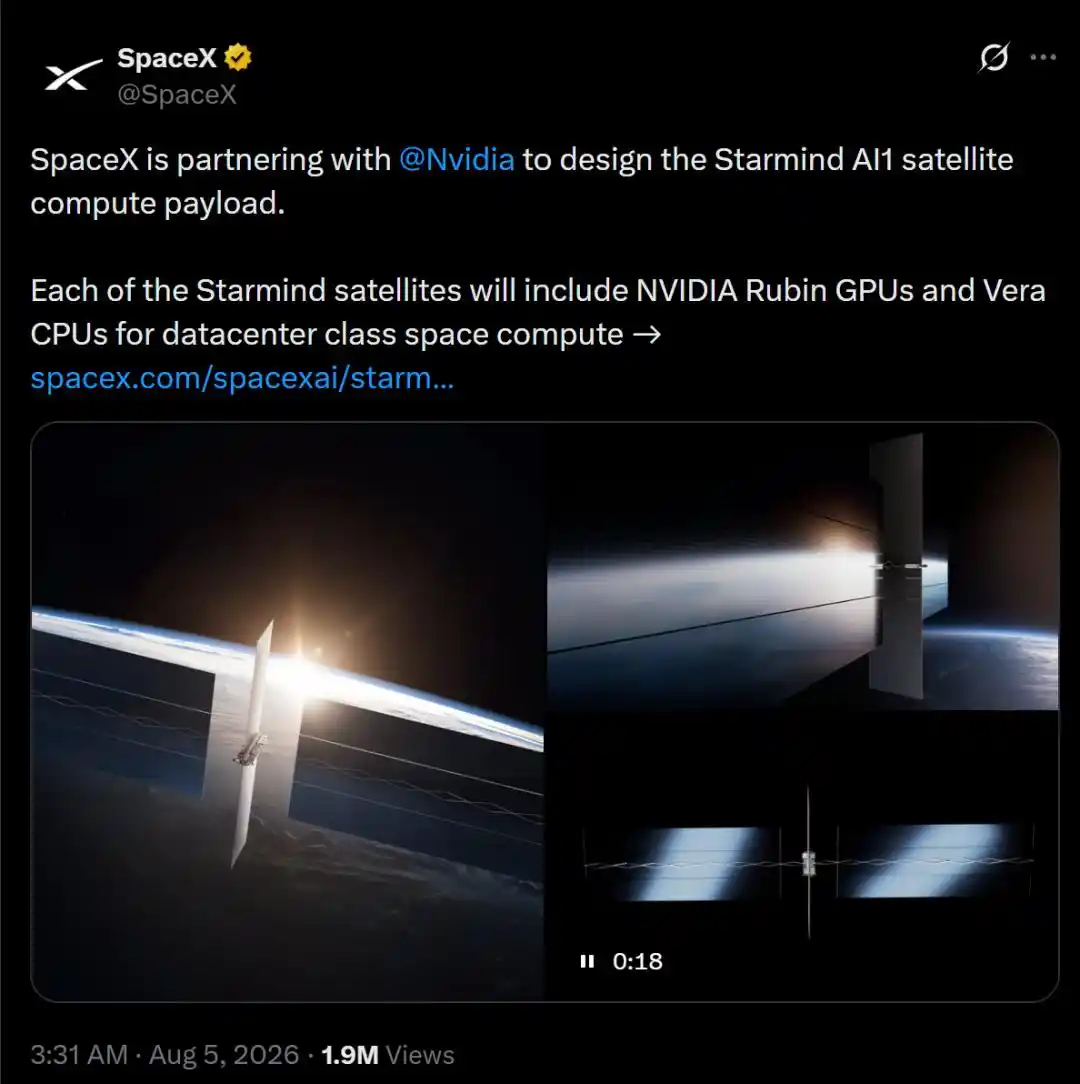
This time, Musk plans to use a massive satellite matrix to build an infinitely expandable, infinitely energized, absolute-zero cooling 'Space AI Brain' beyond Earth's atmosphere!
Starmind directly relocates the computational foundation of AI from the Earth's surface to space.
Musk intends to use this interstellar computing network to completely solve AI's power consumption and cooling anxieties. Indeed, Earth can no longer contain him.
Everyone thought Musk's ultimate goal was Mars, but on the way to Mars, he is incidentally reshaping the entire landscape of human AI computing power.
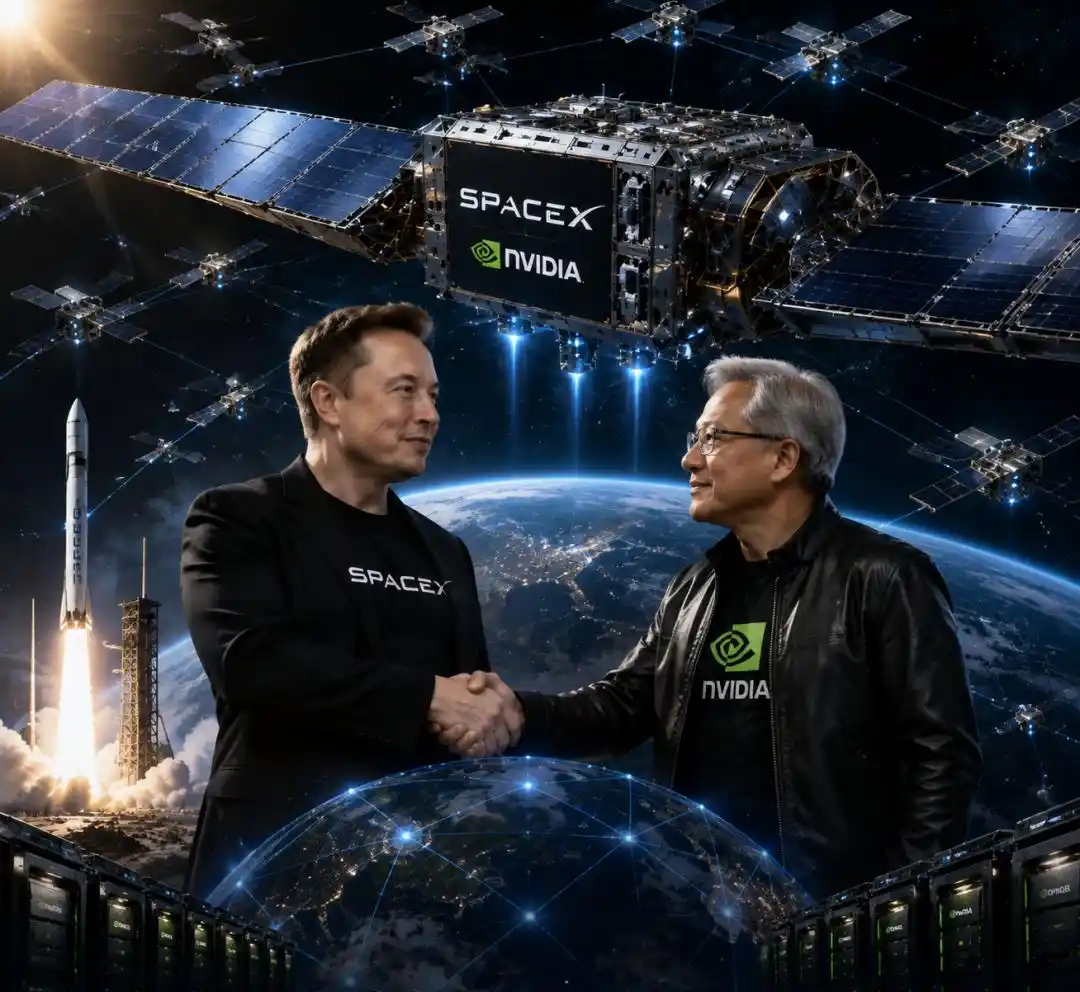
This image is AI-generated.
Escaping Earth: Breaking the 'Deadlock' of AI Computing Power
The data in this leaked financial report is impressive: revenue surged by 92%, reaching $7.8 billion. Starlink users have more than doubled, breaking the 12 million mark.
However, none of this data is as captivating as the interstellar computing network.
Today's AI development faces a deadlock—shortage of electricity, water, and land.
A large AI data center consumes as much electricity as a medium-sized city. Earth's energy grid is almost unable to support AI's evolution.
Musk says: Since Earth can't contain it, let's put it in space!
In SpaceX's latest blueprint, the Starmind project proposes a genius solution—
Directly launch data centers equipped with NVIDIA's most advanced chips into sun-synchronous orbit!
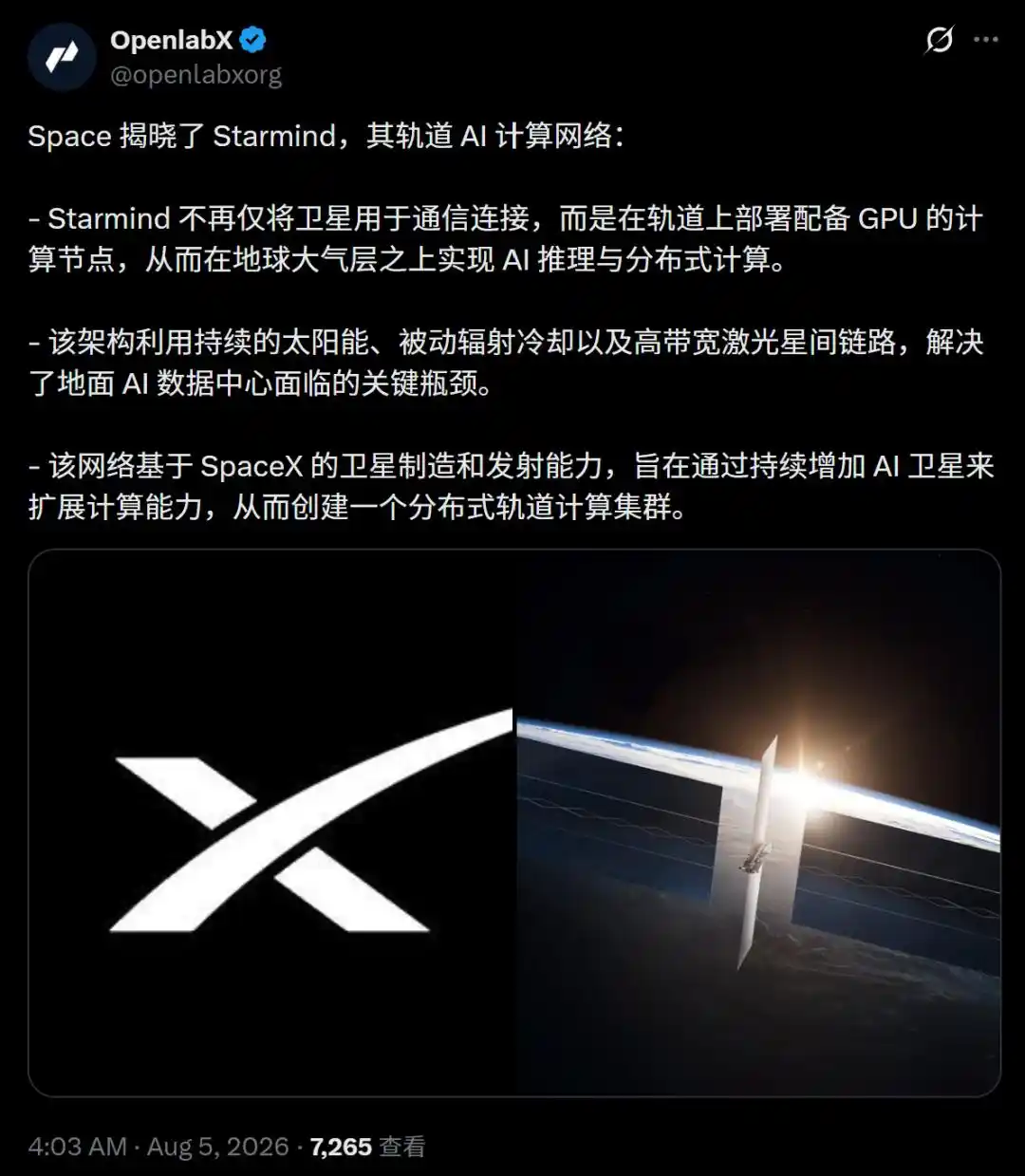
Why space? Musk gave a bold explanation in an interview.
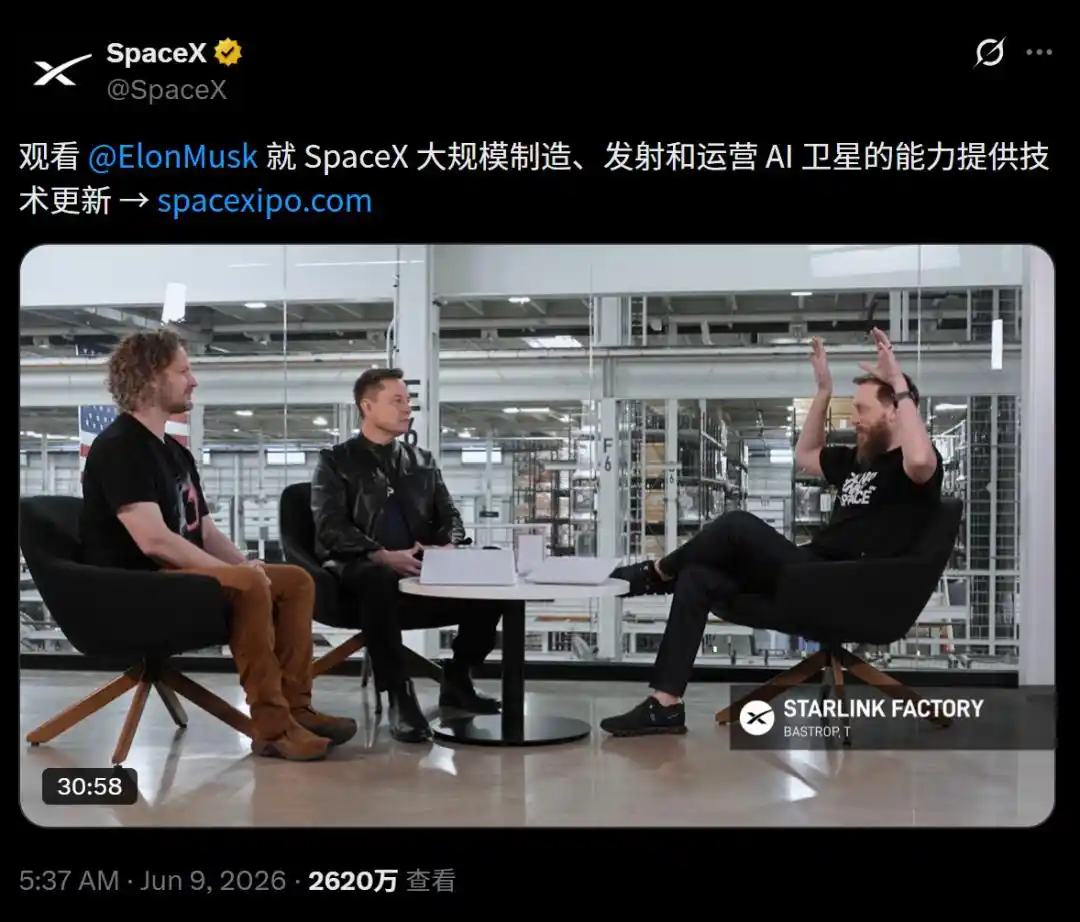
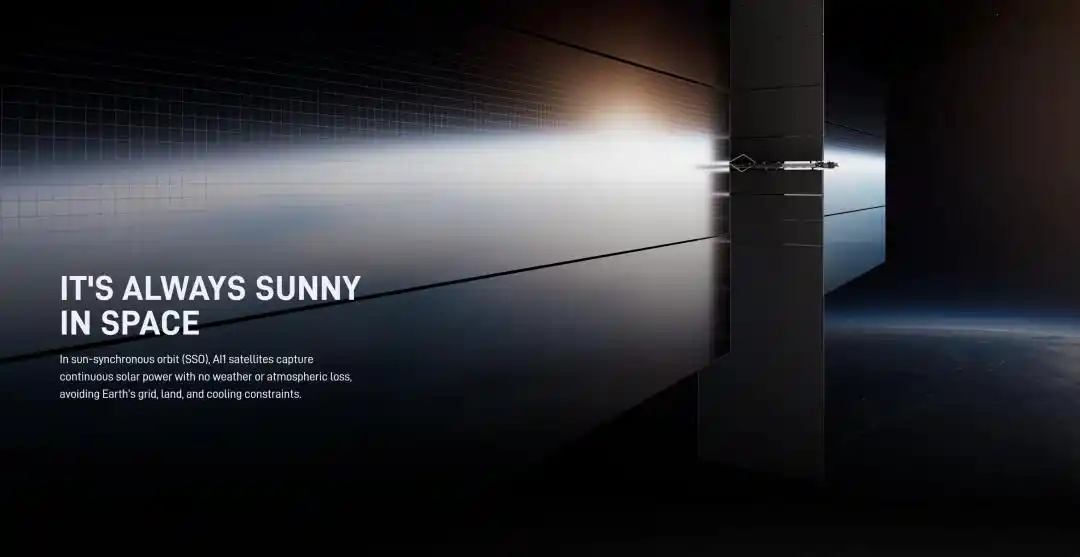
First, space always has sunlight.
70% of Earth's surface is water, and even on the remaining land, high-quality areas for solar panels are scarce.
"If aliens came here, they'd probably wonder why it's called Earth when it's mostly water," Musk quipped.
But in sun-synchronous orbit in space, there is no night, no weather interference, and no atmosphere to weaken the sunlight. AI satellites can continuously bathe in pure solar energy 24/7, receiving energy densities several times higher than on Earth.
The second reason is perfect vacuum cooling.
Data centers on Earth spend astronomical amounts of energy on liquid cooling and air conditioning systems. In space, the cooling problem is solved—it can directly radiate waste heat into the deep, cold vacuum of the universe!
Thus, Starmind satellites don't require Earth's energy-intensive cooling towers, fans, or dry coolers.
Even more impressive, leveraging its extensive experience operating vehicles in space, SpaceX has designed deployable liquid radiators covering an area of up to 160 square meters, directly reducing the cooling energy consumption of computing clusters by an order of magnitude.
Additionally, building a large computing center on Earth requires land approvals, dealing with environmental protests, and the grid might not even support it.
But in space, Musk smiles—no land leasing fees, no one protesting at your doorstep. Solar energy is free, vacuum cooling is free, and operating costs are nearly zero!
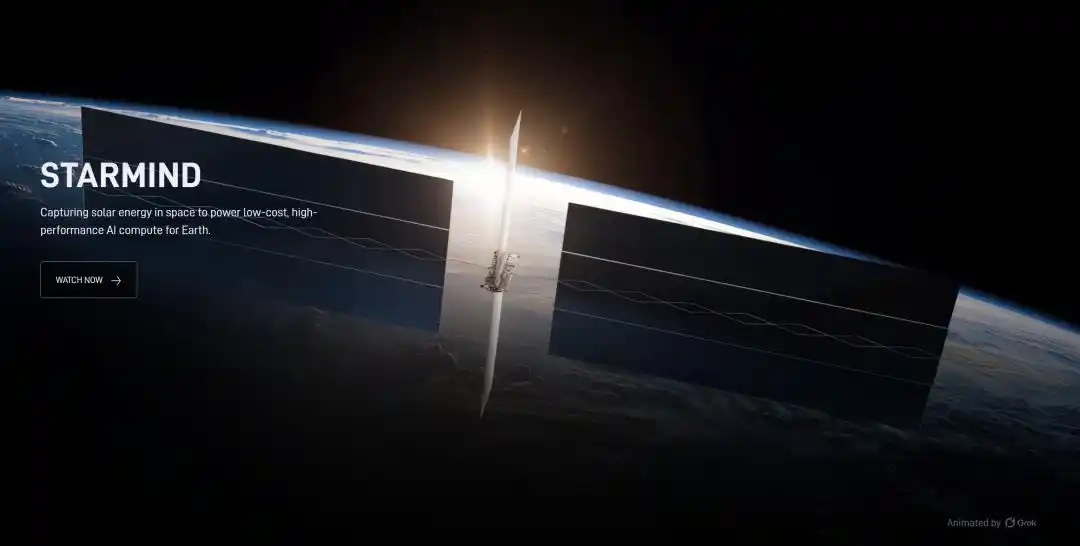
Starmind AI1: A 'Space Computing Behemoth' with a 75-Meter Wingspan
Is a space data center just an Earth server room stuffed into a metal shell and launched? Obviously not.
The first computing node jointly created by SpaceX and NVIDIA—the Starmind AI1 satellite—is a veritable masterpiece of space industrial art!

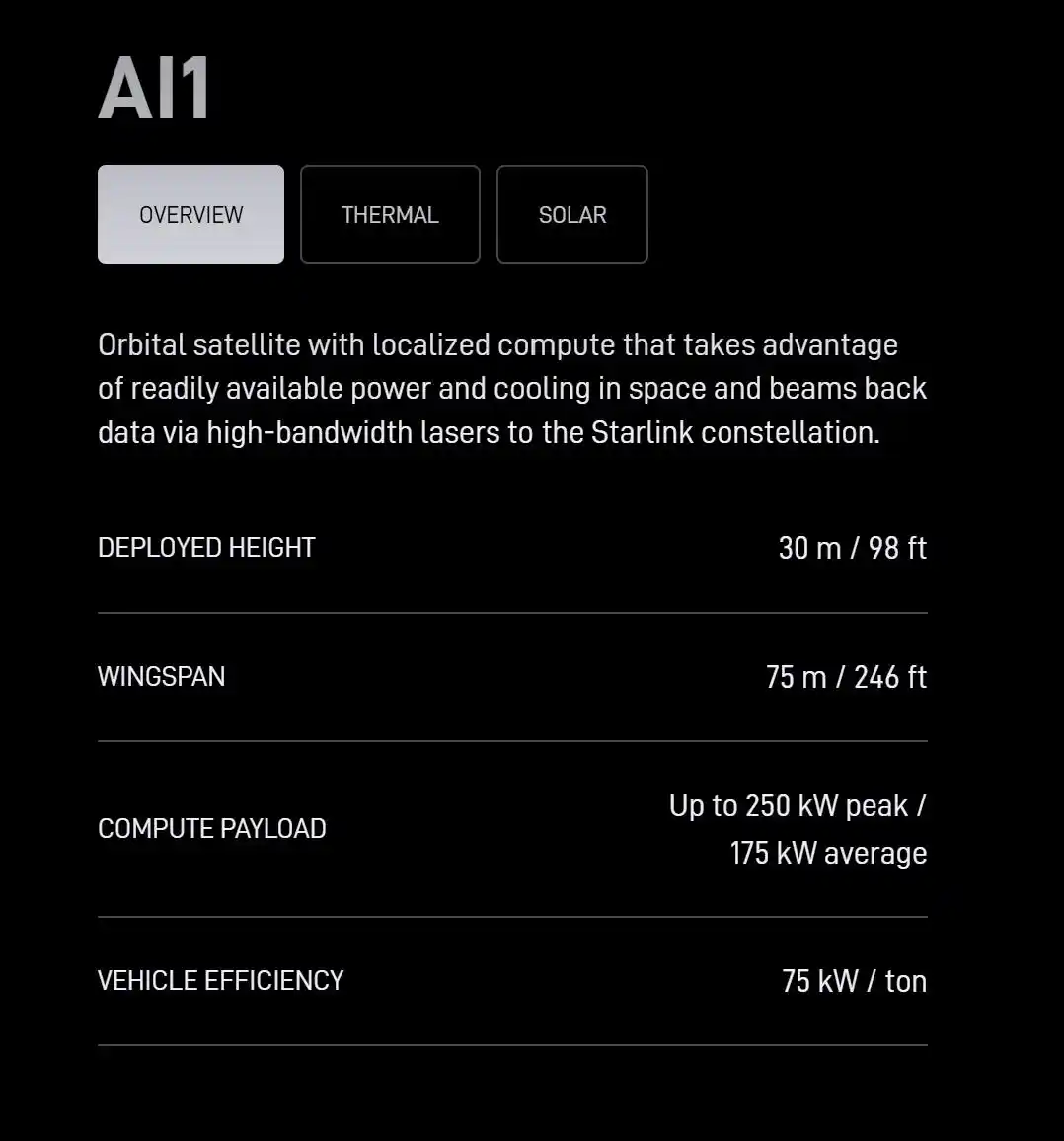
According to the published technical details, this satellite is an absolute behemoth.
Its wingspan reaches 75 meters (nearly the length of a football field).
The solar array outputs a whopping 210 kilowatts of power.
The computing payload's peak power is 150 kilowatts, with an average power of 120 kilowatts.
150 kilowatts perfectly matches the power consumption of an entire NVIDIA GB300 supercomputer cabinet!
Musk has clearly stated: "SpaceX is currently committed to using NVIDIA GPUs exclusively because they are the best."
These satellites will carry NVIDIA's not-yet-fully-deployed Rubin GPUs and Vera CPUs, embarking on a frenzy of computation in space.
Some might ask: Won't network latency be crippling with servers so high up?
This is precisely SpaceX's real moat—the Starlink network.
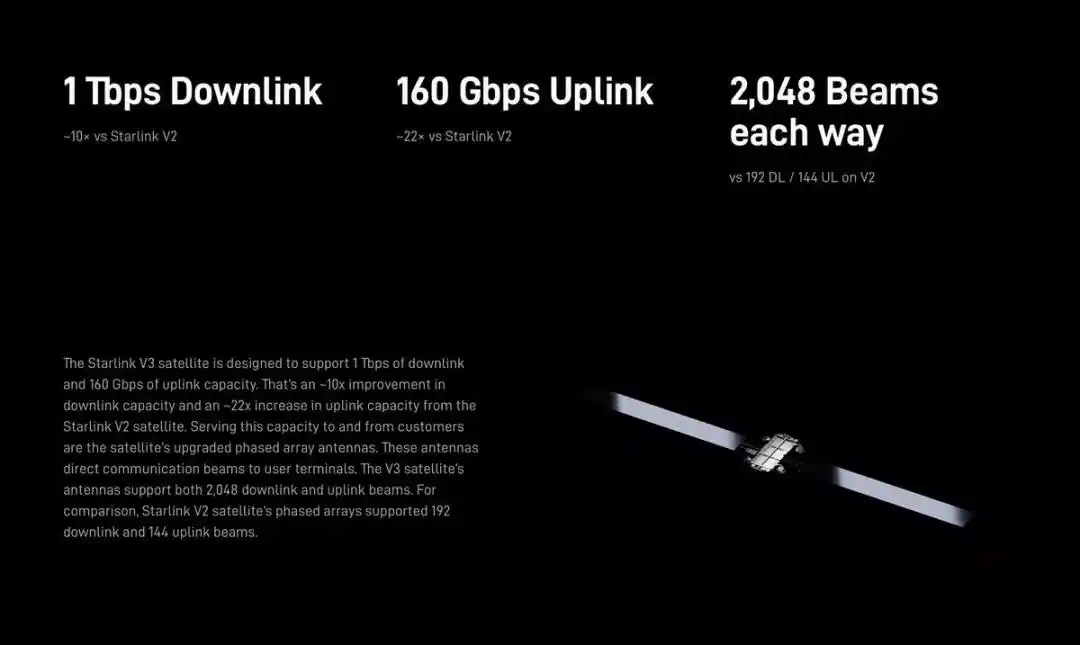
Starmind satellites don't have the complex phased array antennas of Starlink; they are purely 'computing satellites.' They network directly with the existing Starlink constellation via terabit-level ultra-fast laser links.
"People always worry about high latency with space computing," Musk said dismissively in an interview. "But the speed of light is very fast."
AI satellites are only 600 to 800 kilometers from Earth's surface, and light travels 300 kilometers per millisecond. This means the physical latency from a space computing center to your phone or computer is a mere 3 milliseconds!
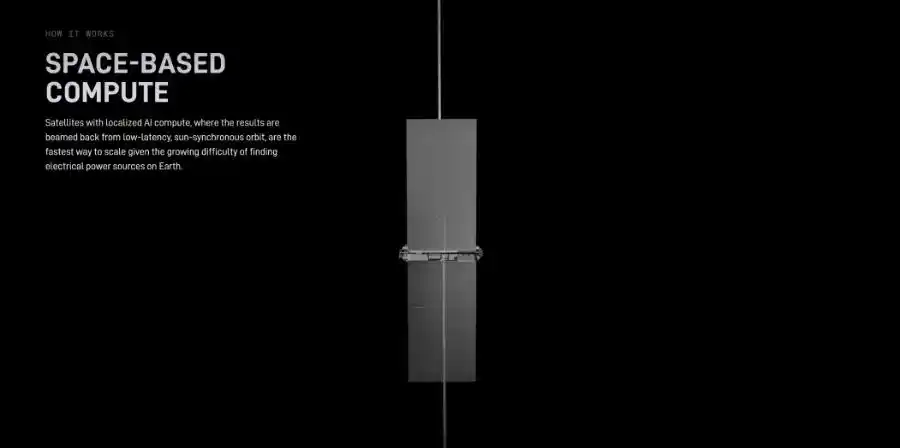
At this speed, distance is not an issue.
In the future, you could directly ask xAI's Grok large model a question on your phone. Your query would travel via Starlink to NVIDIA computing clusters in space, complete the inference, and instantly return to your screen.
And all of this operates completely independent of Earth's power grids and fiber optic cables!
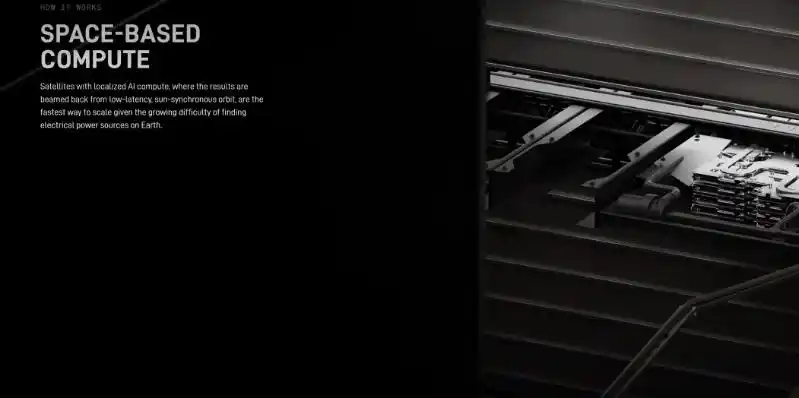
Musk's Confidence: Starship and the Trillion-Level Manufacturing Titan
Why can only Musk pull this off? Why are other tech giants stuck competing fiercely on Earth?
SpaceX CFO Bret Johnsen hit the nail on the head: "Without an extremely low-cost, fully and rapidly reusable heavy-lift rocket, a space AI brain is pure fantasy."
The most critical piece of Musk's puzzle is Starship.
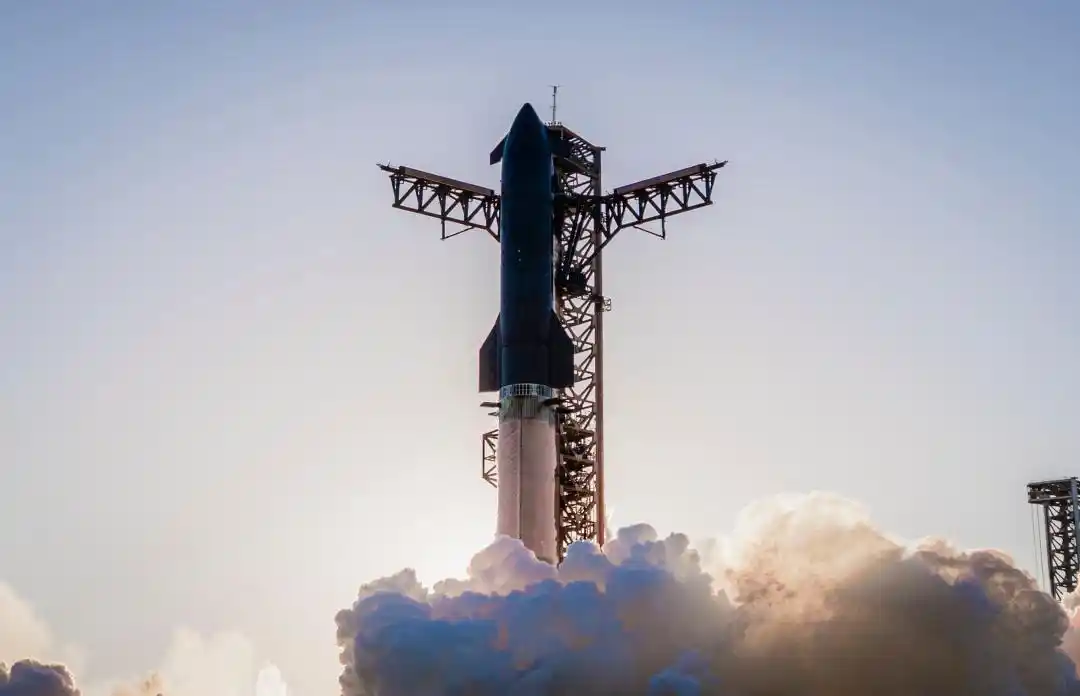
In the recently concluded V3 test flight, Starship demonstrated its capabilities. It is the largest, heaviest, and most powerful vehicle ever built by humans (with more than twice the thrust of the Apollo-era Saturn V).
The cost of sending materials into space with traditional rockets is prohibitively high. Starship's goal is to launch, land, and relaunch within a day, just like commercial airliners.
Today, nearly 90% of global mass reaching orbit is delivered by SpaceX's Falcon rockets. With Starship, SpaceX's goal is to increase its annual orbital delivery capacity from 2,500 tons to a staggering 1 million tons per year within about three years!
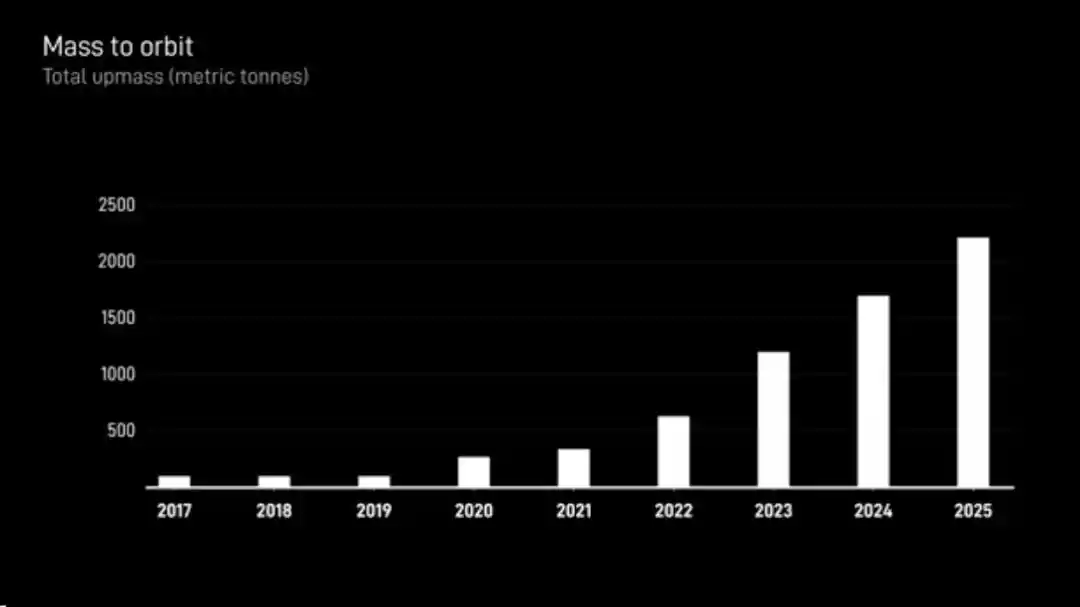
Without Starship's massive payload capacity, launching tens of thousands of multi-ton AI satellites into orbit would be impossible.
To support this 'space city-building' effort, SpaceX's manufacturing capabilities are undergoing an epic expansion—they are building the Gigasat mega-factory in Bastrop, Texas, planning to mass-produce thousands of AI satellites by the end of 2027.
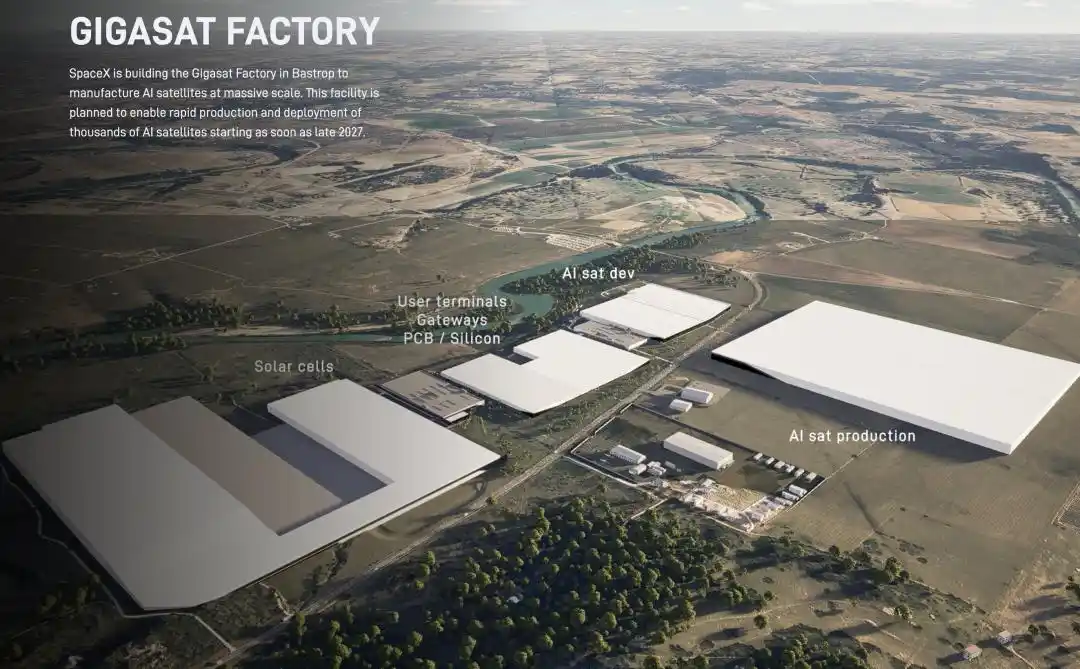
But that's not enough. To support the annual demand for hundreds of gigawatts (GW) and ultimately one terawatt (TW, equal to 1000 GW) of space AI computing power, SpaceX, in partnership with Tesla, has planned an astonishing project called Terafab (terawatt-level chip fabrication plant).
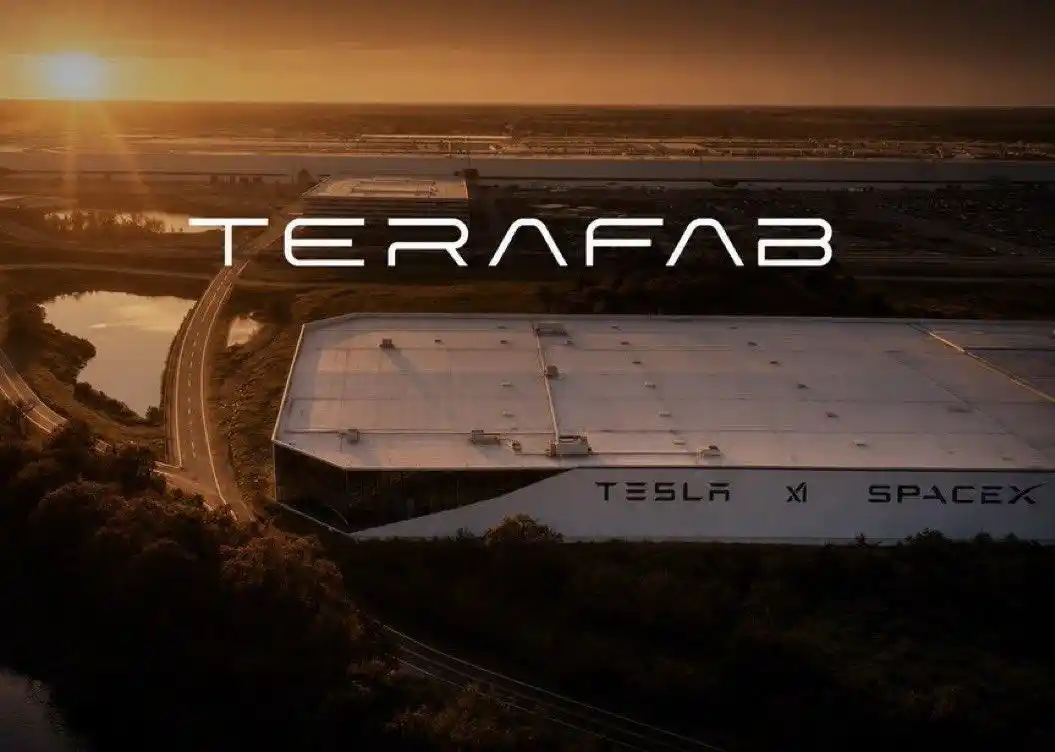
Its footprint will reach an astonishing 100 million square feet—a full 10 times the size of the massive Tesla Gigafactory Texas.
Musk's business closed loop is vividly displayed here—
Massive cash flow from Starlink -> funds Starship R&D -> Starship launches massive numbers of Starmind satellites into space -> builds the space AI brain to empower xAI -> generates higher-dimensional profits.
A perfect, interlocking cycle. No competitor can replicate it; only he can achieve it.
And what's even more terrifying—every link of this chain is open to competitors.
Competitors can buy SpaceX launch services, use Starlink communication, and even rent computing power on Starmind. But Musk doesn't care, because when you are the infrastructure for all tracks, you *are* the track itself.

Musk's Ambition:
Climbing the Kardashev Scale, Advancing Toward a 'God-Level Civilization'
Is Musk doing this to sell AI services and make money? That's underestimating him.
In internal discussions, Musk proposed a grand, almost sci-fi, even religiously sacred narrative—the Kardashev scale.
This is an objective standard in cosmic sociology to measure a civilization's level of development.
Type I Civilization: Can harness all the energy of its home planet (Earth).
Type II Civilization: Can harness all the energy of its home star (the Sun).
Type III Civilization: Can harness the energy of its entire galaxy.
Musk pointed out: "Where are we on the Kardashev scale today? The answer is, we don't even register. The energy we utilize is less than a trillionth of the Sun's output. If we were an object of study for an alien civilization, our performance would be completely failing."
The Starmind interstellar computing network is the substantive first step for human civilization toward becoming a 'Type II Civilization.'
Musk's goal is: within two and a half years, deliver 10 gigawatts (GW) of annualized computing power to space; within three and a half years, reach 100 GW.
And his ultimate goal is one terawatt (1 TW, i.e., 1000 GW) of space computing power! To put that in perspective, that's about twice the current annual electricity consumption of the entire United States!
At the end of the interview, SpaceX executive Dan Huot asked Musk a seemingly sci-fi question: "After we've done our absolute best on Earth, what's next?"
Musk's answer stunned everyone: "Why stop at one terawatt? That's too small."
His vision is to establish a mass driver and chip factory on the Moon.
To achieve computing power a thousand times greater than one terawatt, launching from Earth is no longer sufficient. He plans to mine resources locally on the Moon, using lunar surface materials to manufacture solar panels, radiators, and even AI chips on-site.

Because the Moon has no atmosphere and only one-sixth of Earth's gravity. SpaceX would use large linear motors similar to electromagnetic railguns, requiring no rocket fuel, to literally 'shoot' completed AI satellites from the lunar surface into deep space!
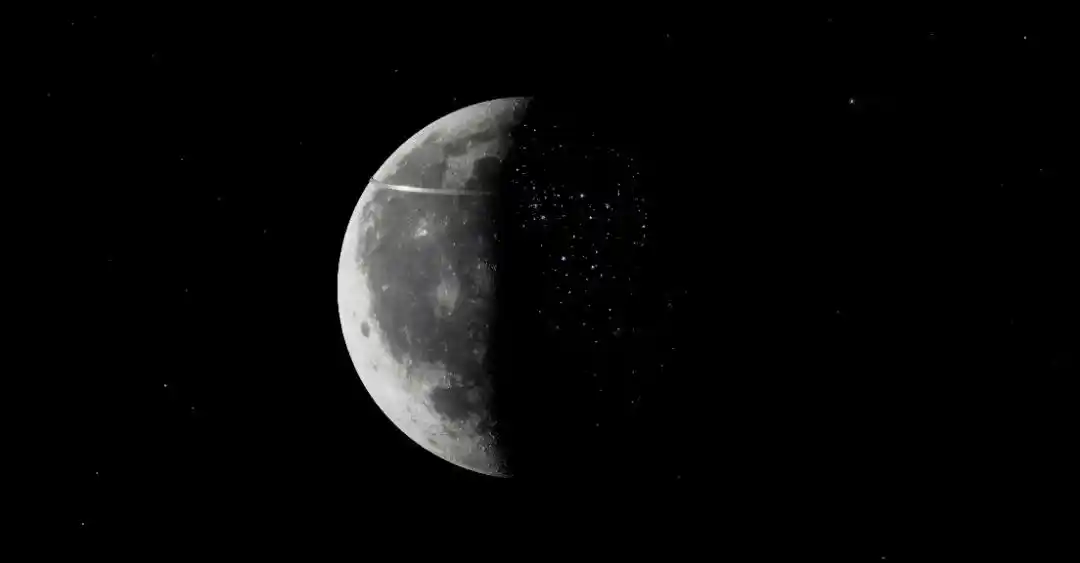
"If we can send that much mass to the Moon, it means—anyone can go to the Moon."
This is Elon Musk.
While many are still fearing 'will AI replace humans?', he is already thinking—
How to extend human consciousness throughout the solar system, how to elevate humanity on the Kardashev scale from that 'utterly insignificant' speck of dust to a species at least worthy of a glance from an alien civilization.
Musk, Sowing Civilization into the Cosmos
Whether it's Mars colonization, Neuralink, AGI, or now the 'Space AI Brain,' every goal Musk proposes sounds crazy at first.
But as SpaceX CFO Bret Johnsen said—
After working with Elon for 15 years, the most amazing thing is: he sets those seemingly audacious goals, then he gets down in the trenches with you to solve the hardest technical bottlenecks. Step by step, you find you're actually moving toward that goal. And, everything he's promised, he's delivered.
In 122 days, he built the world's largest xAI supercomputer 'Colossus'; Starship achieved the awe-inspiring 'chopstick' rocket catch; Starlink weaved an impenetrable net across the global sky.
Now, he has unfurled the blueprint for Starmind.
As NVIDIA's computing power takes wing on SpaceX's Starship, the most hardcore, most spectacular revolution in human technological history is already unfolding thunderously beyond the atmosphere.
Earth, perhaps, is truly just the cradle of human civilization.
And Musk is personally building that 'super brain' capable of illuminating the stars and seas for all humanity.
As Musk said: "Humanity, which hasn't even reached one micro-sol yet, is time to start thinking like a civilization worthy of the universe." Starmind is just the first step.
2027, see you in space.
References:
https://x.com/SpaceX/status/2084723854534951218
https://x.com/openlabxorg/status/2084732002645987402
https://www.spacex.com/spacexai/starmind
Editor: Aeneas
This article is from the WeChat public account "New Zhiyuan", author: ASI Apocalypse