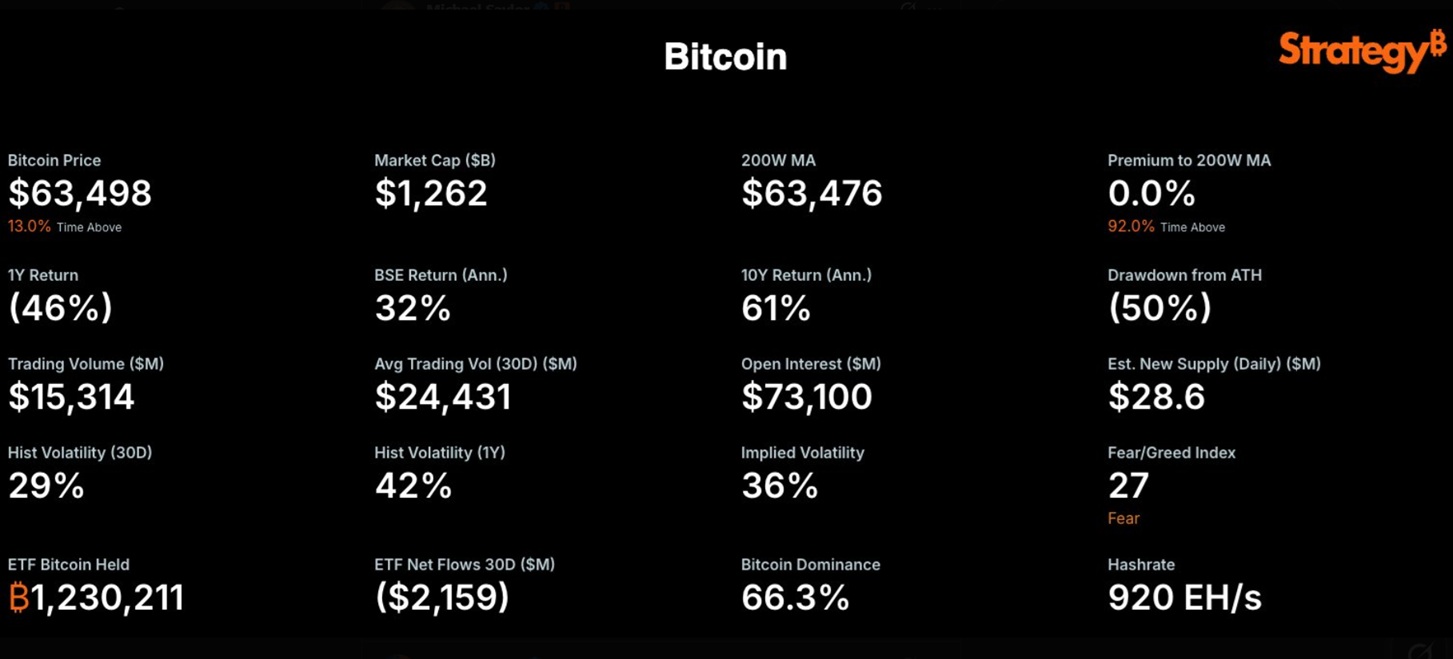
The Executive Chairman of Strategy noted that the company is now tracking Bitcoin's 200-week moving average and its premium above this level on the company's public dashboard. Saylor reported that since the emergence of the 200-week metric, Bitcoin has traded above it 92% of the time, and today the price is sitting almost exactly on that line.
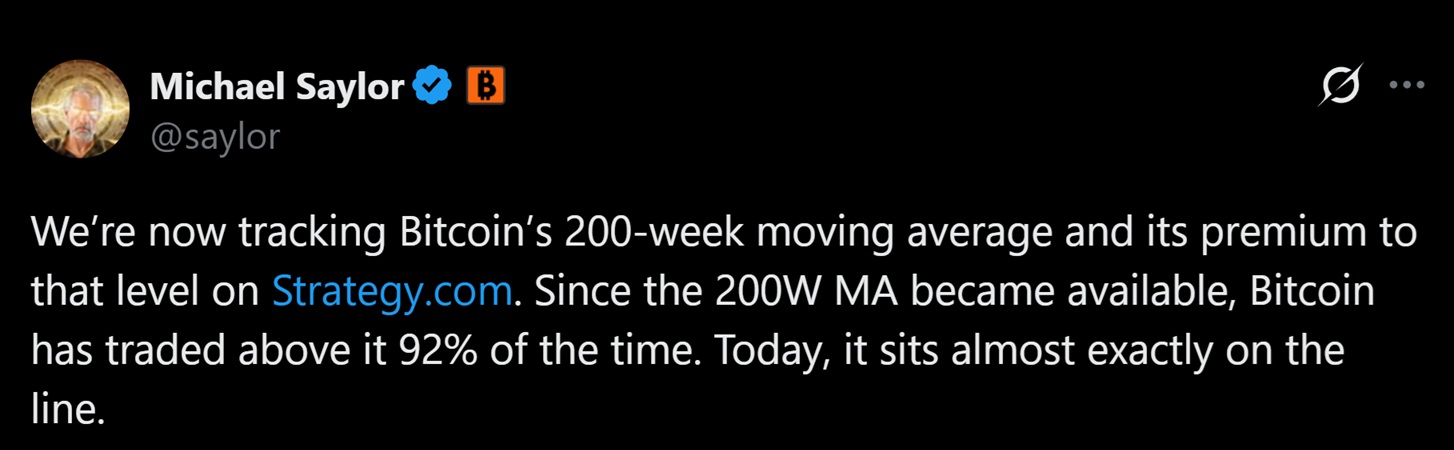
This innovation follows a trend where Saylor and his team have introduced new metrics, such as Net $BTC and $BTC Hurdle ARR, to change how the market and Strategy's own shareholders perceive the company's $64 billion bet on Bitcoin. The 200-week average has long served as a support signal for Bitcoin bulls, as this metric marked the end of past bear markets and is rarely broken down for an extended period.
Why Timing Matters
Earlier this year, Bitcoin fell below its 200-week moving average for the first time since 2022—a move possibly linked to an employment report that revised expectations for the Federal Reserve to cut rates. Since then, Bitcoin has gradually been recovering, approaching this line, and at the time of publication was trading around $62,500, roughly the level Saylor mentioned, noting the price is "almost exactly on the line."
Strategy's "Bitcoin Math"
It is worth noting that the appearance of this tracker comes as Strategy's own Bitcoin calculations have become more complex, given that the company owns 843,775 $BTC, acquired for a total of $63.69 billion at an average price of $75,476 per coin (meaning: at the current price of around $62,500, Strategy's overall position remains at a loss from a cost basis perspective, even though the 200-week average signals long-term support).
Additionally, Bitcoin.com News reported that Strategy's second-quarter reporting showed the company transitioning from a $14 billion profit to an $8.2 billion loss as Saylor sold Bitcoin for the first time since 2022 to fund shareholder payouts.
This turn of events also ended Saylor's four-year public promise to "never sell," as in early July Strategy sold 3,588 $BTC for approximately $216 million—a step the company stated was related to funding dividends for the STRC perpetual preferred stock, not a change in long-term positioning. Saylor continues to reject claims that these sales signal a shift in strategy, telling journalists throughout the year that the company remains a buyer in the long term.
Saylor Still Signals Further Purchases
Despite the unfavorable cost-basis calculations, Saylor continues to signal buying alongside the new tracker. Yesterday he posted "Bitcoin Drive engaged" next to Strategy's purchase tracker, fueling speculation that the company would announce another Bitcoin purchase—a similar cryptic post had appeared before the company disclosed a larger cash reserve at the end of July.
Saylor also directly refuted widespread claims that Strategy recently authorized $5 billion in Bitcoin sales, telling journalists that this authorization was old news related to the company's existing "Digital Credit Capital Framework," not a fresh decision to sell.
Analysts are cautiously assessing Bitcoin's further movement from the 200-week line, while Saylor himself pointed to a number of factors holding back the price this cycle, including weaker institutional flows and macroeconomic uncertainty ahead of the Federal Reserve's next rate decision. Nevertheless, he still believes the long-term trendline remains favorable for buyers testing this level.