一位年轻加密VC的寒冬展望:22的起伏与23的晨光

SevenUP DAOPublished on 2022-11-22Last updated on 2022-11-22

Abstract

又到了一年尾声,我们来尝试总结2022发生的故事,并来看看2023可能发生什么。

又到了一年尾声,我们来尝试总结2022发生的故事,并来看看2023可能发生什么。2022是一个高开低走的一年。年初时以太坊虽然跌到3800,我们依旧能看到链上的交易热情以及NFT市场的火爆。但是经历了Luna崩盘和FTX崩盘以后,整个市场开始萎靡不振,并且没再出现很新的叙事方向。

文章分为三个部分,主要讲解今年看好的什么被打脸了,明年看好什么以及明年还需要观察什么。

1.今年看好的什么被打脸了?

1.1NFTFI

NFTFI其实是大家在年初给予厚望的一个赛道。基于NFT在年初时的狂热,无数圈外人前仆后继的冲向NFT这个火热的赛道。年初无数大佬们为BAYC豪掷千金(100E+);猴地的gas war恐怖到一次mint NFT的价格要2E以上。在单个蓝筹NFT地板价10E以上时,人们开始思考,如此高昂的价格,怎么才能让普罗大众们参与呢?
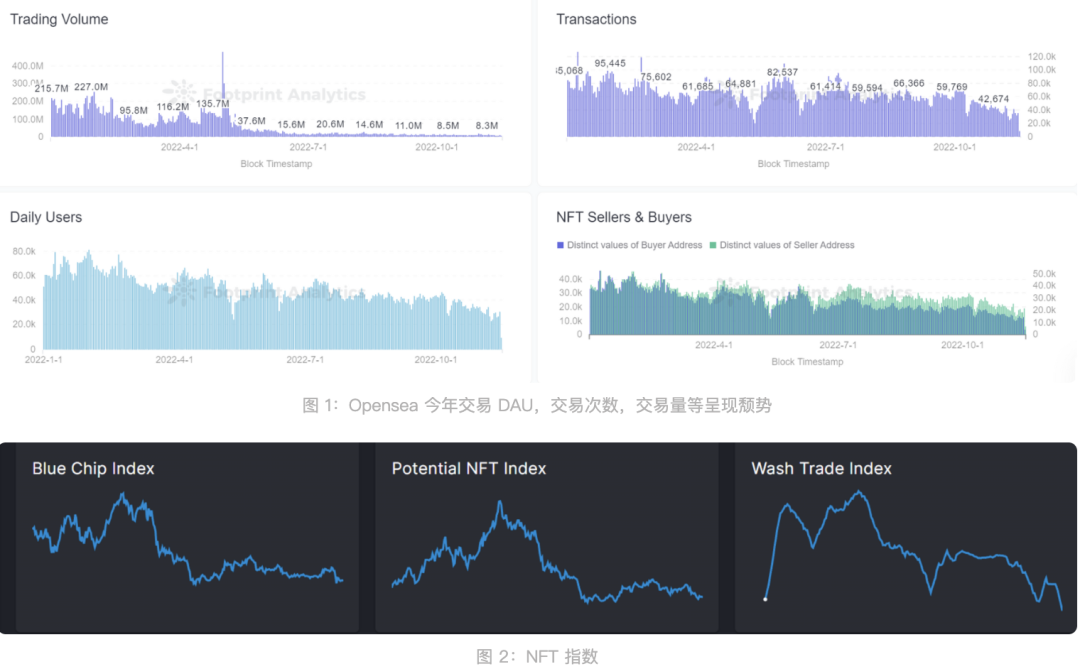
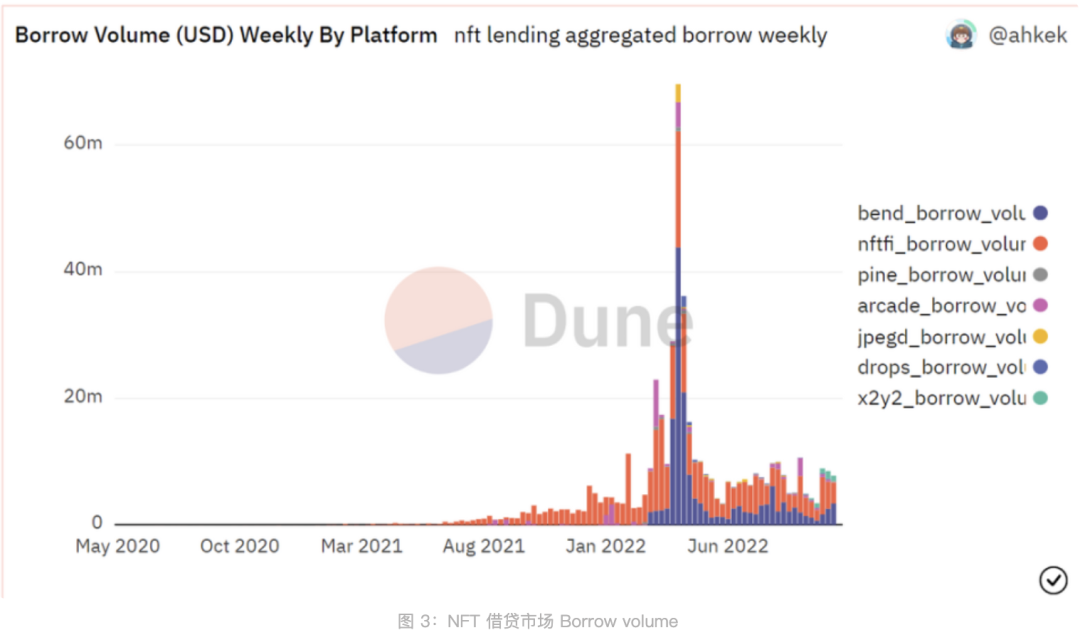
因此在年初时,大家对于NFTFI这个赛道充满了热情与期待。大家希望这个赛道不止出现P2P, P2Pool等借贷交易,降低加入门槛也成为了大的方向。因此我们在今年也看到了指数交易,碎片化,众筹,先买后付等新概念。今年上半年partybid等开始出现众筹模式,Cyan等开始出现NFT的BNPL。让我们以相对市场空间较大的NFT借贷为例。如果单看借贷量,整体的借入量在下5月后基本不变,其中BnedDAO和NFTFI贡献了一半以上的借入量。但实际上,让我们观察一下平台的使用人数,这个市场加起来的日活也才是100左右,覆盖的人数还是太太太小了。日活和交易量的受限部分来源于NFT市场的热度下降。

再讲个冷笑话,为什么BAYC的E本位从ATH到至今的跌幅(66%)会比ETH的U本位跌幅低(75%)呢?原因是流动性不好,都没人愿意频繁买卖体现市场上的真实价格,当然价格跌不下去。那为什么最近会从70ETH的地板价跌到50ETH呢?是因为有些holder要变现,只能压低价格希望有人买,最终预言机投喂价格触发清算点,导致一堆大猴子清算,所以死亡螺旋开始了。都已经到需要靠连环清算才能有效下跌,产生足够大的交易量,足以见得流动性差。

因此人们今年对于NFTFI的发展过于乐观,但今年的Sudoswap确实让市场感到焕然一新。
1.2SocialFi/MusicFi等偏C端应用

我们暂且先不谈区块链的基础设施现在到底是否足够支撑链上的社交/音乐产品。过去已经出现了例如deso这类专门支持社交的底层公链,但其发展不尽如人意,核心还是在于生态和用户侧并没有搭建起来。

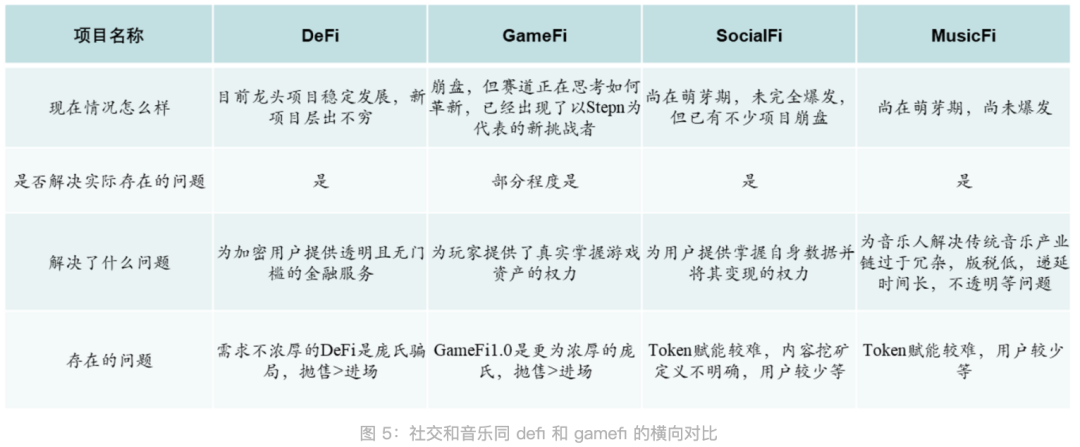
SocialFi的逻辑不同于DeFi和GameFi,但和MusicFi部分有异曲同工之处,均是基于对大V/音乐人的用爱发电从而购买相关粉丝Token/NFT。SocialFi的逻辑简化成——大V想要变现自己的社会资本(获得token),那么就需要耗费时间和金钱成本证明自己社会资本的价值(POW工作量证明)。类似于BTC/ETH的逻辑,这也说明基于区块链的Web 3是非常适合SocialFi发展的。即SocialFi的本质可以理解为大V(或者是个人)通过自身的影响力在基于区块链技术下,一方面打造自己的社交资本(也就是个人的品牌名声),另一方面为自己的粉丝们谋取福利。

但正是因为上述的逻辑,导致SocialFi现在也存在较大的问题:

1.想要去中心化的社交,但是本质上做不到去中心化(少数名人能带来非常强大的社交垄断)

2.对于社交平台来说,内容挖矿非常难定义。

3.对于社交平台以及代币发放平台而言,平台代币价值的赋能比较重要。

4.用户较少。目前SocialFi要发展依然需要很长的道路要走,其赛道规模还小,机制还相对原始,Web3的原住民也较少,愿意使用产品体验不太好的SocialFi用户少之又少。

MusicFi赛道的问题依旧存在:

1.从用户端来看,整个Web 3的用户还是较少,愿意花本就有限的时间听Web 3音乐的用户更少,愿意花真金白银购买没有版税的NFT的用户就少之又少。本质上要依靠限制的内容抢夺用户有限的时间还是非常困难。

2.从IP端来看,缺乏以Taylor Swift、周杰伦等头部明星的带动,目前的Web 3音乐家相对长尾。但我们今年也看到了以汪峰为代表的个别头部明星尝试涉足web3音乐。

3.从项目端来看,不少项目方的经济模型不够完善,token的赋能很弱,整个项目更像是“我创造了这个环境,用户要这个需求,所以我发了个币”。具有强社交性质的音乐项目类似于SocialFi。当SocialFi的项目代币赋能很差并采取内容挖矿开始冷启动时,后果就是用户开始无限制的创造垃圾内容,陷入挖提卖的死亡螺旋。因此当音乐项目开始Listen to earn和Create to earn时,如果不赋予token合理的价值,死亡螺旋也会是最后的结果。
1.3 跨链桥

去年市场上普遍把跨链桥当成核心的基础设施来看待,这也非常显然,毕竟去年的公链格局是一超多强,新公链层出不穷。市场上存在BSC, Luna, Solana, Tron, Avalanche, Polygon, Harmony等众多公链。由于中心化的官方跨链桥存在信任问题,且可拓展性相对较差。因此高可拓展性的Anyswap, cbridge为代表的第三方跨链桥开始在去年和今年年初蓬勃发展。

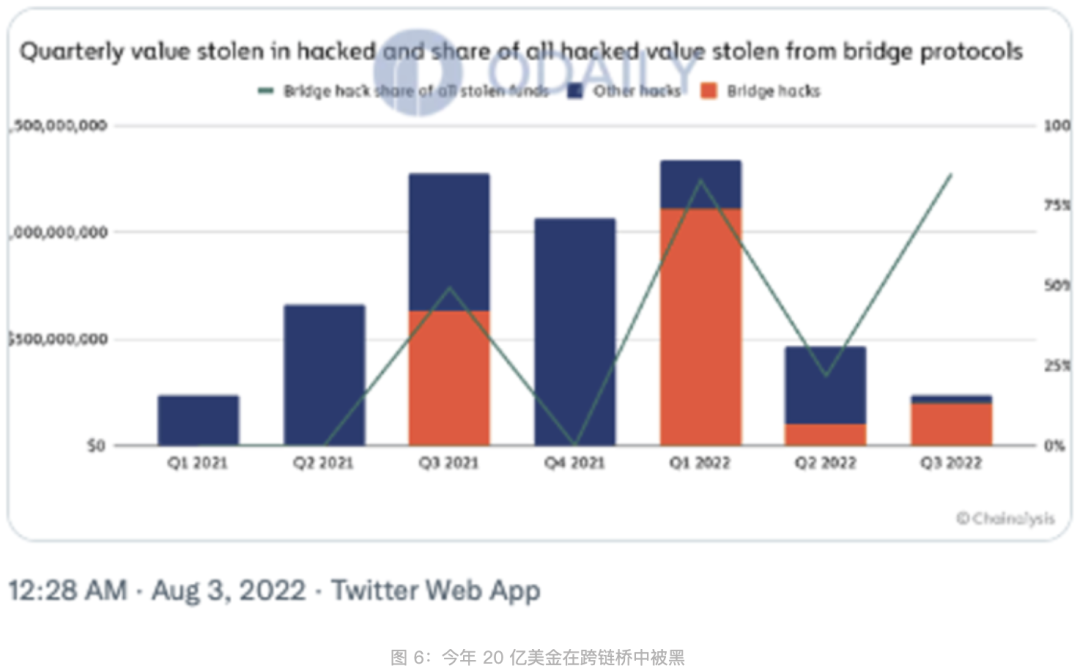
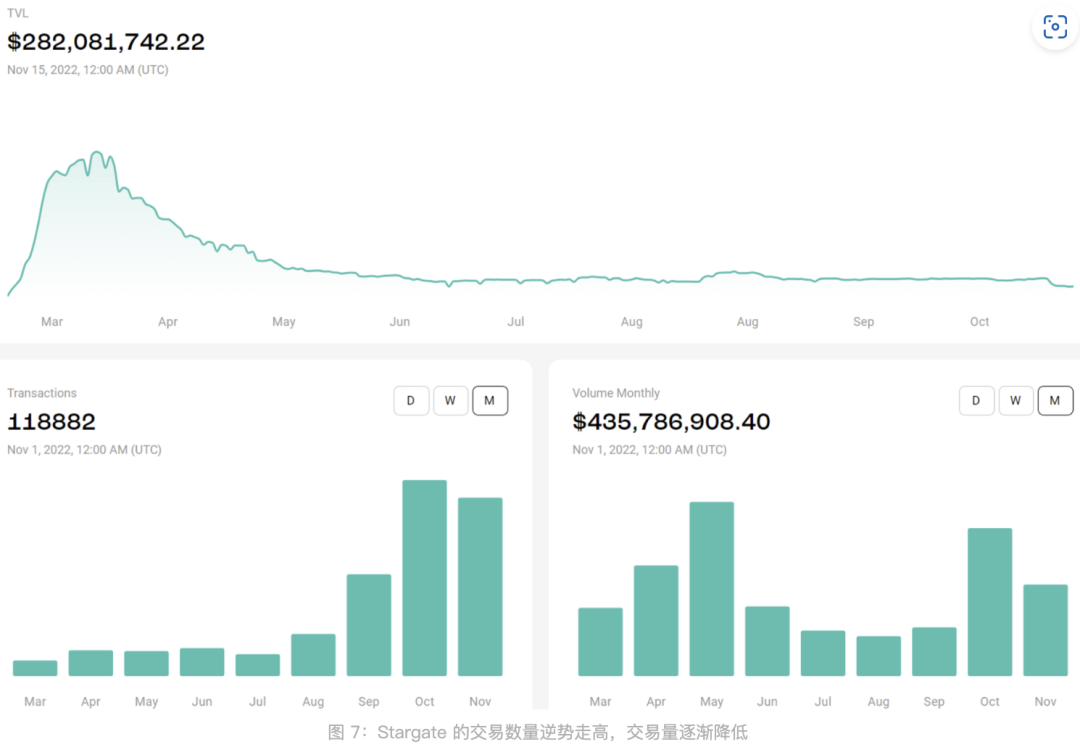
但今年发生了什么呢?Luna崩盘,Terra公链没了;FTX崩盘,Solana受创;Aptos和Sui并不受玩家买单;链上TVL下降,一来受token价值下跌,二来大跌,开始清算(另一方面竟然还存在着Solana上近七成的TVL重复计算这么抽象的故事)。再加上跨链桥天生的合约复杂,导致成为黑客的温床。再看一组有意思的数据,根据Chainalysis近日发布的报告显示,跨链桥攻击事件被盗金额占2022年被盗加密货币总数的69%,损失达20亿美元。今年已经发生13起跨链桥攻击事件,包括最近损失1.9亿美元的Nomad跨链桥攻击事件,以及今年3月损失高达6.24亿美元的Ronin跨链桥攻击事件。多链从去年共存,一超多强的竞争格局,逐渐变成了ETH+BSC+Tron寡头垄断格局。

跨链桥是公链中最重要的基础设施之一,但是对于投资者而言,由于黑客的存在,因此可能并不是一个很赚钱的生意。但不否认,市场上出现了LiFi, Chainge,Dbridge等优秀的跨链聚合器,降低了用户和投资者的使用和投资风险。但(跨链)聚合器这类较低门槛,竞争激烈的生意,但又是高频度使用的工具,能否给投资人带来超额收益?值得大家思考。
2.明年我看好什么?

2.1合规监管

在讲合规和监管的问题之前,我先分享一个小故事。

在今年3 4月的时候看了一个项目,做的是跨链桥,这个跨链桥有一个特点就是需要KYC。年初的时候我没办法理解链上dapp需要KYC这件事情,毕竟区块链是一个抗监管的世界, 加上KYC总觉得失去了区块链的精神。但是当面谈过以后,我理解到了项目方为什么需要KYC。这是一个大的传统金融做市商做的跨链桥项目。他们在传统股票等市场做市的资金体量极其庞大。他们在近期也非常看好整个crypto赛道,开始尝试用一部分资金在链上和链下做市。链下做市已经很卷了,因此他们尝试开拓链上做市空间,但是多链会导致资金分散。在他们的日常做市中,需要流动性在不同链上移动。如果使用CEX,那么庞大的资金体量会导致每日充提币达到上限,且中心化的跨链存在些许信任问题(结合FTX的事件来看,这真是深谋远虑)。如果使用跨链桥的流动性跨链,跨链桥的池子很小,跨链存在较大的滑点和磨损;如果自己往池子里添加流动性,把自己干净的钱和不知道哪里来的可能是黑钱的池子混在一起,且不定期被黑客盯上割一把,必然会受到监管的问题——大的传统做市商受到SEC的强监管,他们完全没必要为了目前crypto做市的蝇头小利而被监管的铁拳顶上。

那么有没有一种方法既能让我继续在crypto里面做市,又能避免上述讲的所有问题且符合监管呢?

KYC

通过KYC后,做市商可以自己扔钱进去做流动性,同时也欢迎其他KYC后的机构和个人一起和进来放流动性。一方面降低跨链磨损,另一方面也迎合了监管的需求,可以让更大体量的传统金融做市商进场一起开拓链上做市这块暂未完全开发的土地,把蛋糕一起做大。今年6月Tornado cash被美国财政部制裁以后,我更加坚信了合规和监管的必要性。到了现在这个阶段,区块链整个市值没有一半的苹果公司大,我们不仅是需要完善infra,更多的是把C端和Old Money的传统金融机构带进来,一同把市场做大。

因此伴随监管这个方向,市场上开始出现了以KYC服务为导向的项目。例如通过ZK DID的方式,用户利用自己的信息在链下通过自己的设备以ZK的方式生成ZK-Proof,随后只需要通过Proof即可验证是否为白名单的用户。例如某一天监管的铁拳砸向Uniswap,要求Uni不得为俄罗斯,伊朗以及朝鲜的用户提供服务。某种可行的办法就是Uni和KYC服务商合作,用户必须出示自己的zk proof证明自己不是以上国家的公民,才能使用Uni。一方面ZK proof保护了用户的私人信息,另一方面也获得监管的认可,让Uni的钱更干净,更合规,更可能吸引传统机构进场。

2.2开发者工具

先分享一个案例。2021年Alchemy得益于牛市的狂欢,2021年4月B轮估值仅5.05亿美金,从这轮披露的数据来看,客户数量8个月增长97倍,企业数量在2021Q1一个季度翻倍,来自于NFT业务增长超过13倍;2021年10月获得C轮投资,估值$35亿,创始人表示“业务增速远高于估值增速”;仅3个月后,2022年2月估值达到$102亿美元,团队表示“从10月份close到现在,user base增加了50%”。Alchemy在一年之内估值翻了近20倍,且客户、业务、服务的开发者和社区均体现大规模增长。

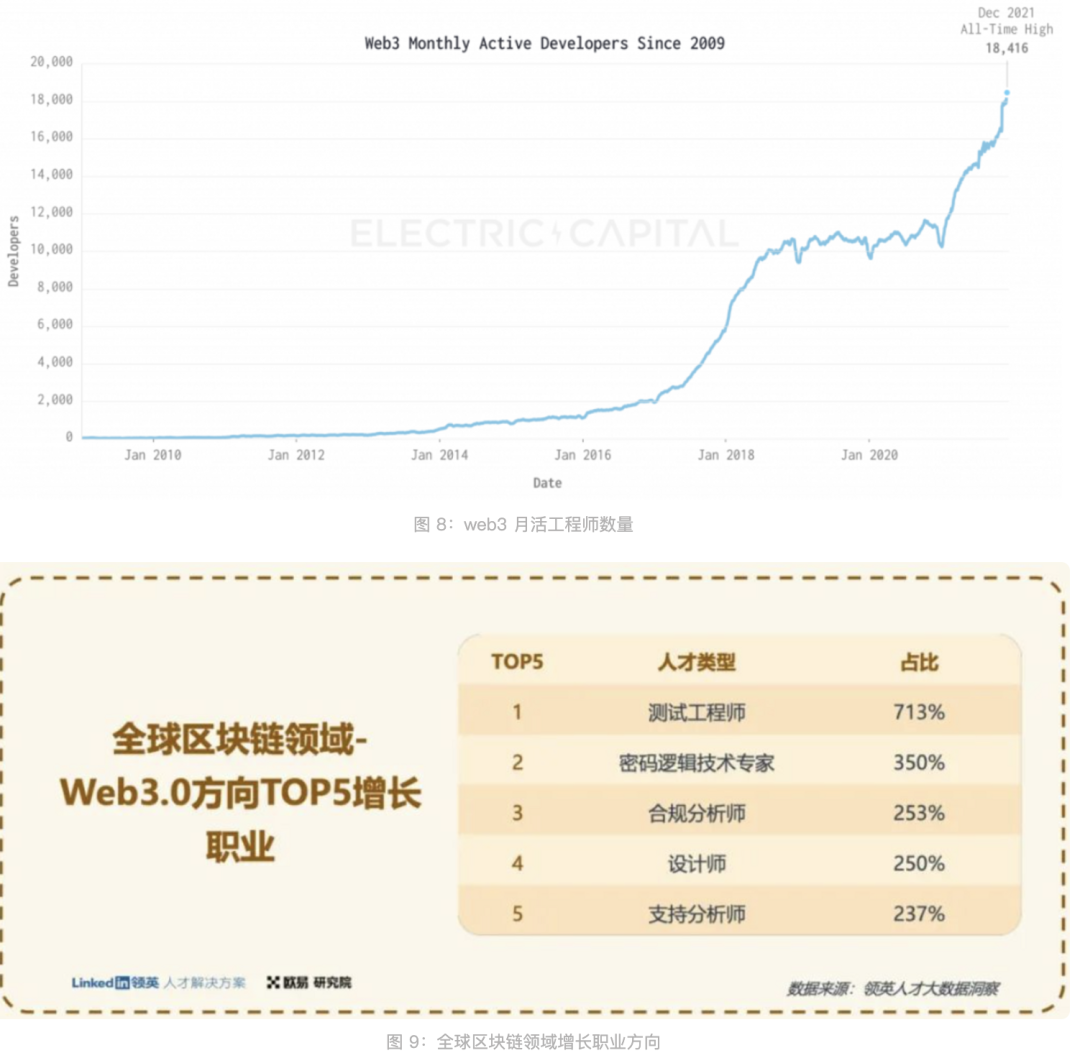
在2021和2022,我们看到了很有意思的现象——越来越多的web2开发者对crypto/web3世界产生了很大的兴趣。根据Github统计,2021年底全世界web2工程师大约是7300万。而根据Electric Capital数据,截止2021年底,web3月活工程师仅有1.8万,渗透率不到0.025%。

从2021年的领英和ok的统计数据来看,测试工程师和密码技术专家是增长最快的两个职业之一。叠加目前美中印新等地互联网大厂开始慢慢裁人的现象,越来越多的web2工程师开始寻求下一个风口。根据相关传闻,“仅在湾区,目前就有3000名左右的华人web2工程师寻求新机会”;由于国内经济形势下行,国内越来越多的互联网大厂工程师,尤其出自字节和腾讯,开始了自己的web3之旅。因此从数据上来看,2 dev的市场,是一个可能比2C更性感,方向更确定的增量市场。
我们以JSONRPC和API,这个开发者和Dapps打交道最多的市场之一举例子。RPC本来就不是一个有壁垒的市场,任何项目方或者是个人都可以自建全节点,为自己的项目提供全链数据。但这就伴随着高昂的固定成本以及每个月的运维成本,对于项目方而言就是每月起步10000U,而且自建节点可能还面临维修等复杂的运维问题,得不偿失。因此RPC业务会不断中心化,这也解释了Alchemy,infura等节点提供商的规模快速扩大,这本质上就是一个马太效应会非常高的市场。

此外,市场上还有quicknode,Infstone等优质的节点供应商。RPC就是一个很卷的赛道。此外,在RPC的基础之上,服务商可以利用自己强大的工程落地能力提供云数据库(datacloud)以及API。在提供云数据库方面,在今年已经出现了去中心化/中心化的多链实时数据库,开发者们不再需要花很大的成本和时间来解析链上数据,只需要用SQL调出,专注开发产品即可。此外,开发者们还存在着众多的千奇百怪的API需求,在很大程度上影响了产品的进度开发。如果有一款产品拥有多链实时数据库,开发者能够自主调用数据组合API,那将满足开发者们的长尾需求,且极大降低众多开发者们重复造轮子的时间。在今年下半年,该类产品在今年年中开始融资,新派Infra竞争者——海外的Space and time, Goldensky和国内的Chainbase等,正在同老牌Infra-Alchemy Infura Instone The Graph等逐鹿中原。

此外,市场上出现了一批数据分析工具产品,除了比较全能的dune, footprint等,还有更细分领域的数据分析工具,例如专门针对于defi,NFT,gamefi,公链,融资数据,链上黑白名单等,如defillama以及tokenterminal等,其变现手段无非是SaaS订阅亦或是API接口调用,均或多或少存在商业化变现的问题。细分领域的数据库可以将自己的细分领域清洗好后的数据库接入space and time, chainbase等更general的数据库。一来general的数据库可以完善自己的数据,二来精细化/细分赛道的数据库可以增加自己的变现渠道,相当于精细化数据库把拥有更多开发者和生态对接的general的数据库变成一个API Marketplace,随后进行收入分成。

3.明年还在观察什么

3.1 DeFi

受到FTX和Babel等的影响,CeFi再一次成为众矢之的。我们先举一个例子,来阐述黑盒子操纵的资管类CeFi到底存在什么问题。CeFi吸引用户本质上是依靠APY。如果市场上两家大机构X和Y,X打出5%APY的收益吸引用户,Y打出6%的APY。如果X和Y的branding都差不多,且背后backer也差不多,用户大多都会去选择Y存款,毕竟APY高。但是X就会因为市场竞争和收入等问题,为了获客,只能加大到6.5%或者是7%吸引客户。看似不高昂的APY在牛市期间其实无伤大雅,CeFi机构内强大的trading,quant和结构化产品会让机构获得远高于5%-7%的收益。但问题在于一旦市场变化过大,且CeFi机构不例外存在着加杠杆的情况,遇到312,519,以及Luna事件,交易员还没来得及调整仓位就容易被市场暴跌带走。这就导致了近期市场FTX和Babel的巨星陨落。如果用户知道高昂的APY来自哪里,那上述获客问题能解决吗?

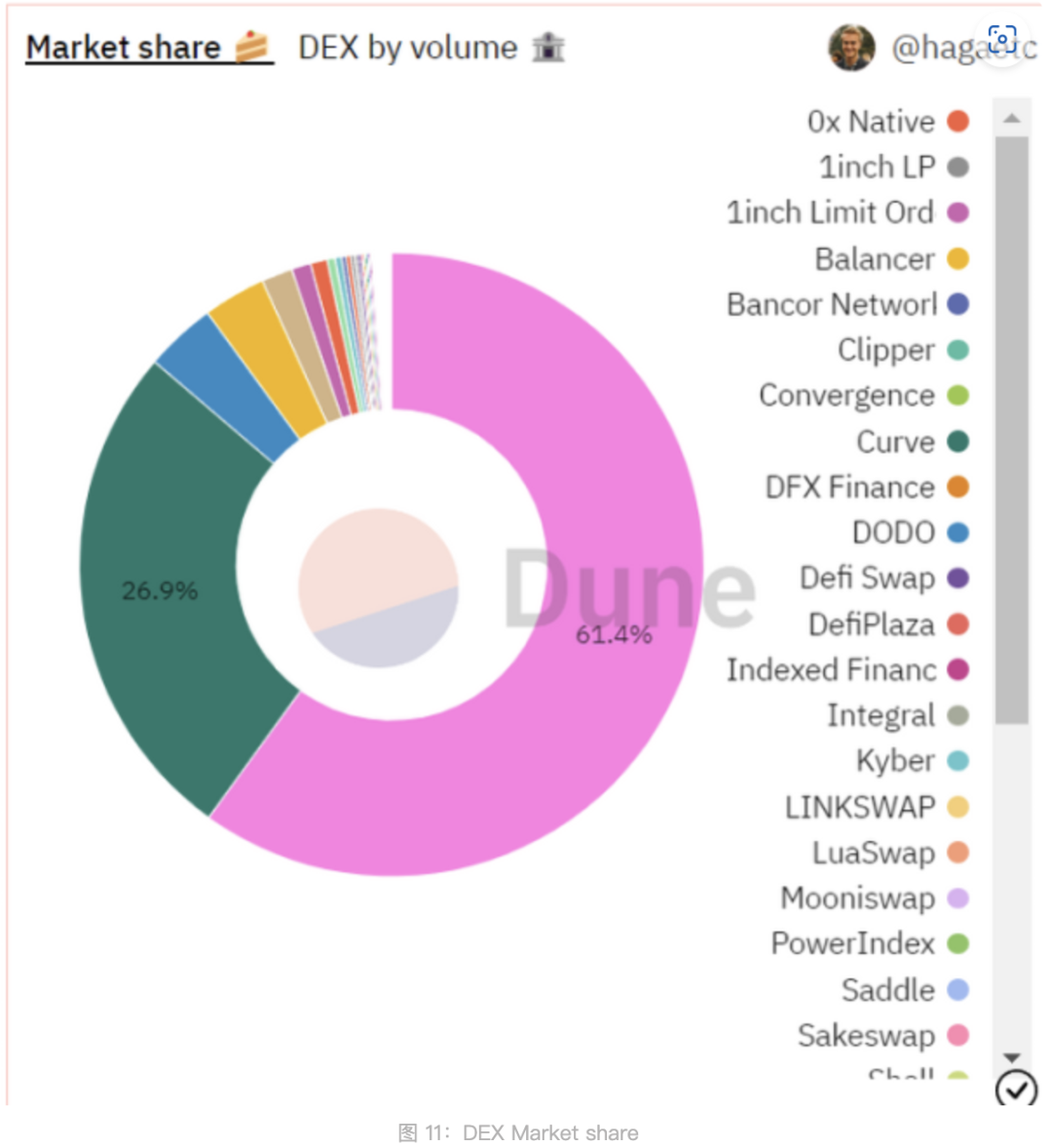
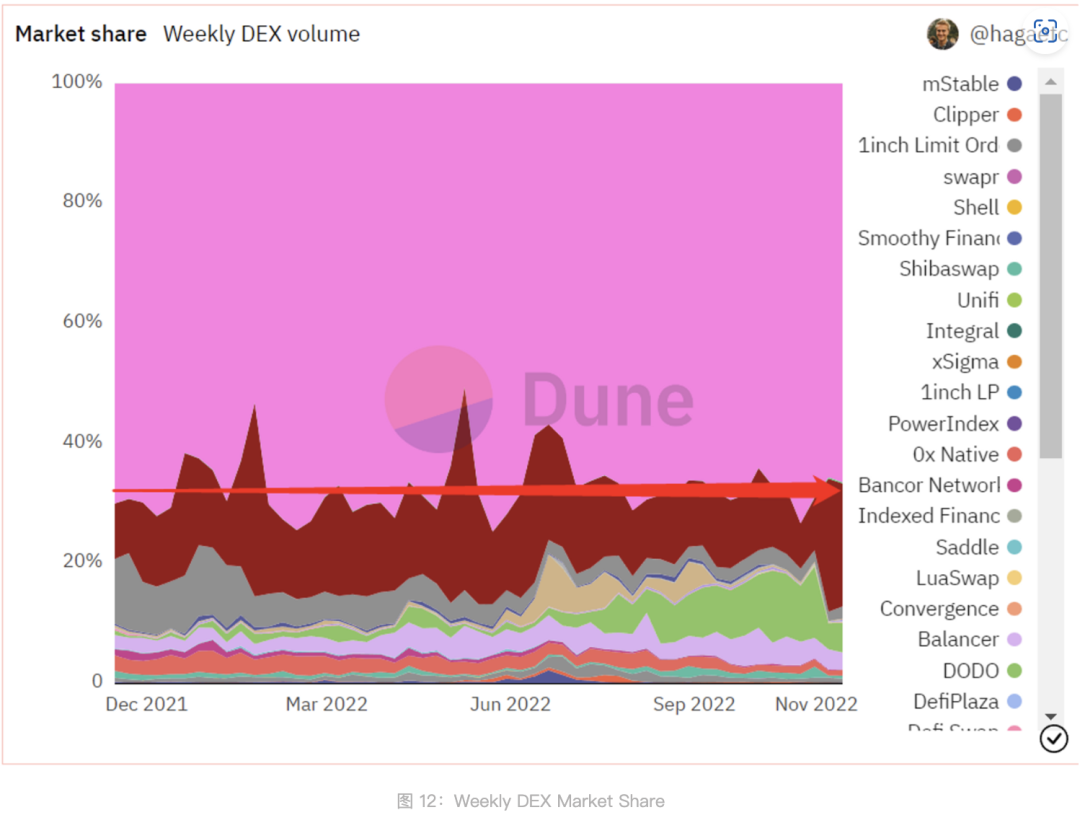
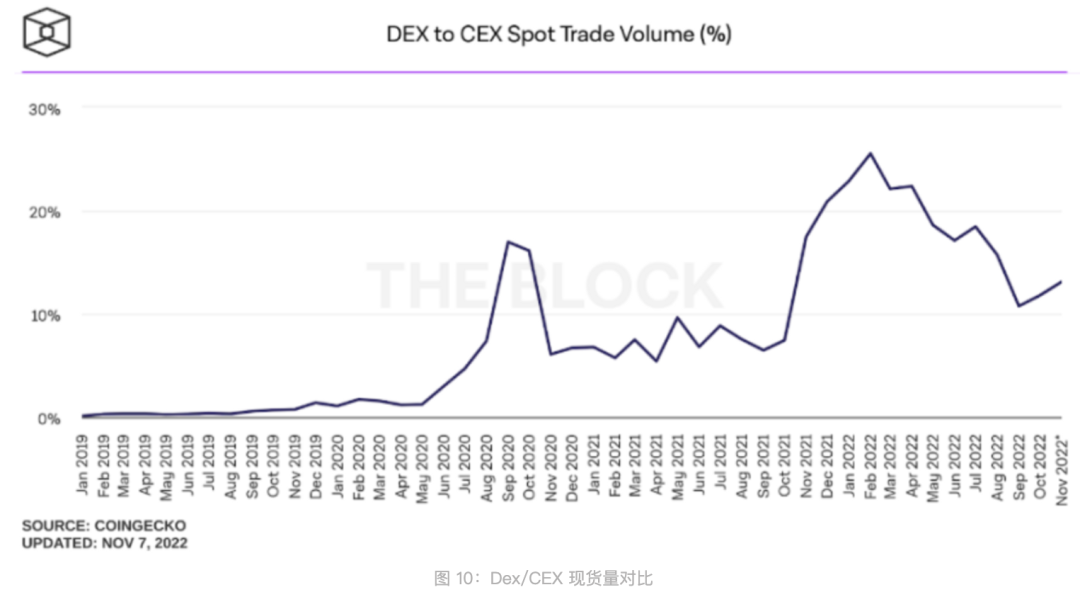
因此DeFi在近期又重回人们的视野。我们看到在近期,DEX/CEX现货交易量之比稳定在了15%,相对于年初牛市时回落了40%左右,毕竟现在深熊,整体链上活跃度很差。但现在从链上交易量来看,61%来自Uni,27%来自Curve,9%来自Dodo。从衍生品交易价格的投喂来自Dex,衍生品交易的流动性来自于Dex等角度来看,现在DEX更像是整个DeFi的基础设施。虽然Dex模型在不断创新,但不可否认的事实是Uni的市占比在今年一直稳定在70%左右。这可能来源于用户/链上做市商/trading bot交易路径的依赖以及uni的深度优势。

受益于CeFi今年的风评,政治正确的DeFi明年是否能有明新方向跑出?这还需要观察。
3.2企服赛道

企服赛道也是一个很有意思的方向。现在区块链的startup越来越多,在早期靠excel管理问题还不大,但是伴随人员的增加,收入支出的增长,精细化的管理愈发重要。而和实体公司不同,crypto start up很多收入支出均是在链上进行,导致传统的SaaS工具并没有很好的适配。在北美市场,已经出现了区块链企服公司,例如流支付协议Zebac(2022年3月获得了2800万美金的融资),开发人员管理Convex(2022年4月获得了2600万美金的融资),财务管理Meow(2022年7月获得了2200万美金的融资)。虽然方向很有趣,但是这是一个大的赛道吗?一个月月费1000U,假设干了一段时间市场上有1000家区块链早期公司使用产品,那么收入也才1,000,000美金每月。一年收入顶了天2000万美金,拿纳斯达克SaaS公司的PS标准15-20来计算,那么也才是4亿美金的天花板。且不谈要花多长时间才能BD下1000家公司,以及是否能有1000U每月每家的收入。Convex一次拿了2600万美金的融资,估值最少在1.3亿美金-2.6亿美金,那么对于投资人的回报可能还是有限。

企服赛道的天花板还需要观察。

3.3流量赛道

流量赛道是一个老生常谈的话题了,通常指游戏、钱包、音乐以及社交等流量进入的赛道。

在游戏赛道,今年众多大厂(Funplus,光子游戏,育碧等)已经开始慢慢布局探索web3游戏,但至于玩家是否愿意买单,还需要进一步观察。

对于社交而言,我们已经看到了腾讯,Meta,Twitter等大胆探索web3社交,一些新的web3社交产品,例如debox等以及一些社交搜索协议例如lens, rss3,mask等。我们很期待在下一个牛市,web3能有自己的社交平台,这个社交平台能够吸引足够多的新人进圈,慢慢转化用户。

对于钱包而言,今年出现了AA,ERC4337为代表的“新概念”。但仔细一想,社交恢复,补贴gas等这不就是炒冷饭吗?argent,loopring等钱包几年前其实就已经实现了现在4337 AA 合约钱包的类似能力,但依旧没跑出来。本质上还是由于创建钱包需要gas费,社交恢复逻辑上就是有bug且麻烦,不兼容其他DAPP需要BD等特点,所以发展的举步维艰。但大家相信钱包作为流量入口这个事实,因此我还是想观察到底是什么样的钱包能在明年后年的市场恢复中占据一定的市场空间。

3.4 layer2

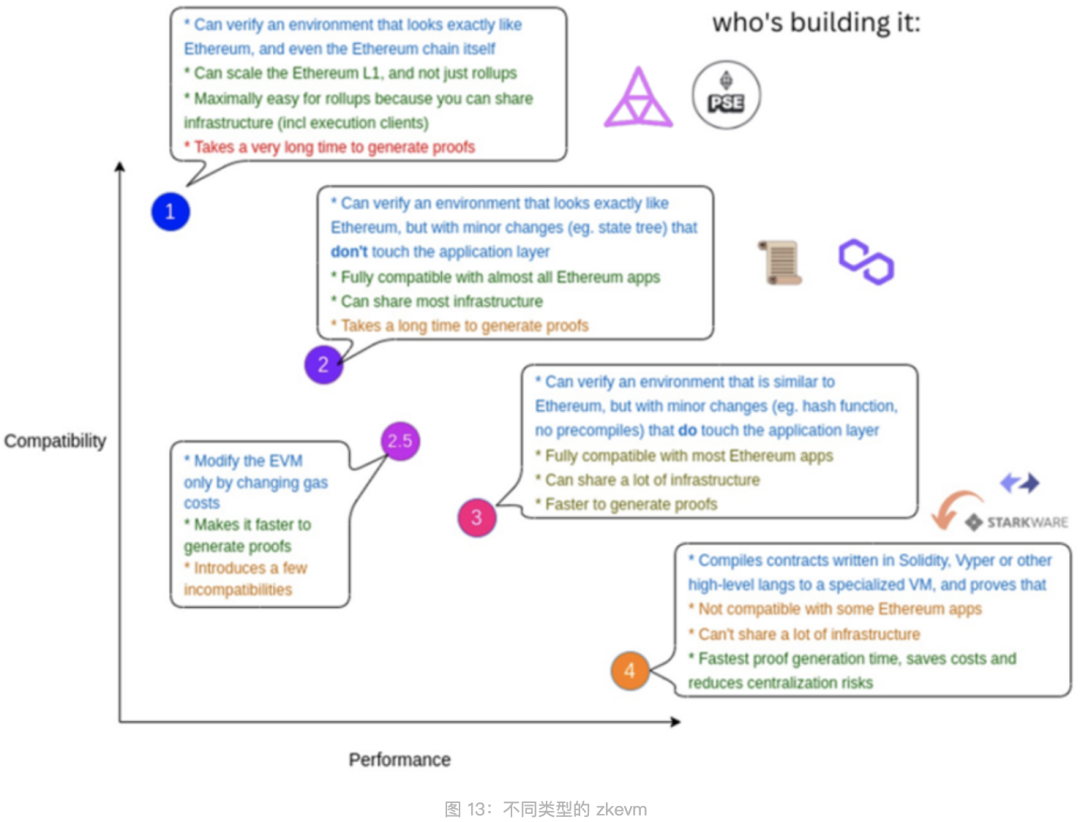
layer2在2022年是一个很棒的方向。我们今年看到了type3 zkevm的Scroll正在努力转向type 2.5或者是type2;type4的zksync开始逐渐转向type3 zkevm,并推出了zksync 2.0; type1 zkevm的Taiko的测试网也上线。但实际上,一个真正好用,能使用的zkevm离我们还有点距离。之前在NTU V神的讲座中,我曾向Vitalik提问过关于zkevm离我们真正的距离。如果我们要做到真正的type 1 zkevm,可能还需要10年,期间我们不仅要克服算法上的不足,大量优化电路算法,我们还要依靠稳定后的电路算法来设计Asic矿机,加速proof的生成。目前生成一个type1 zekvm的proof的时间在一个小时左右,虽然不影响正常使用,但一旦涉及到跨链以及提币时,就会影响用户体验。

总而言之,在目前模块化公链逐渐成为共识的情况下,L2的定位越来越重要。在Starkware的基础上,我们还可以迭代出针对于L3和L4的app chain。虽然理论很美好且以太坊市占率逐渐走高,但是l2的技术落地还需要时间,生态建设也需要时间。
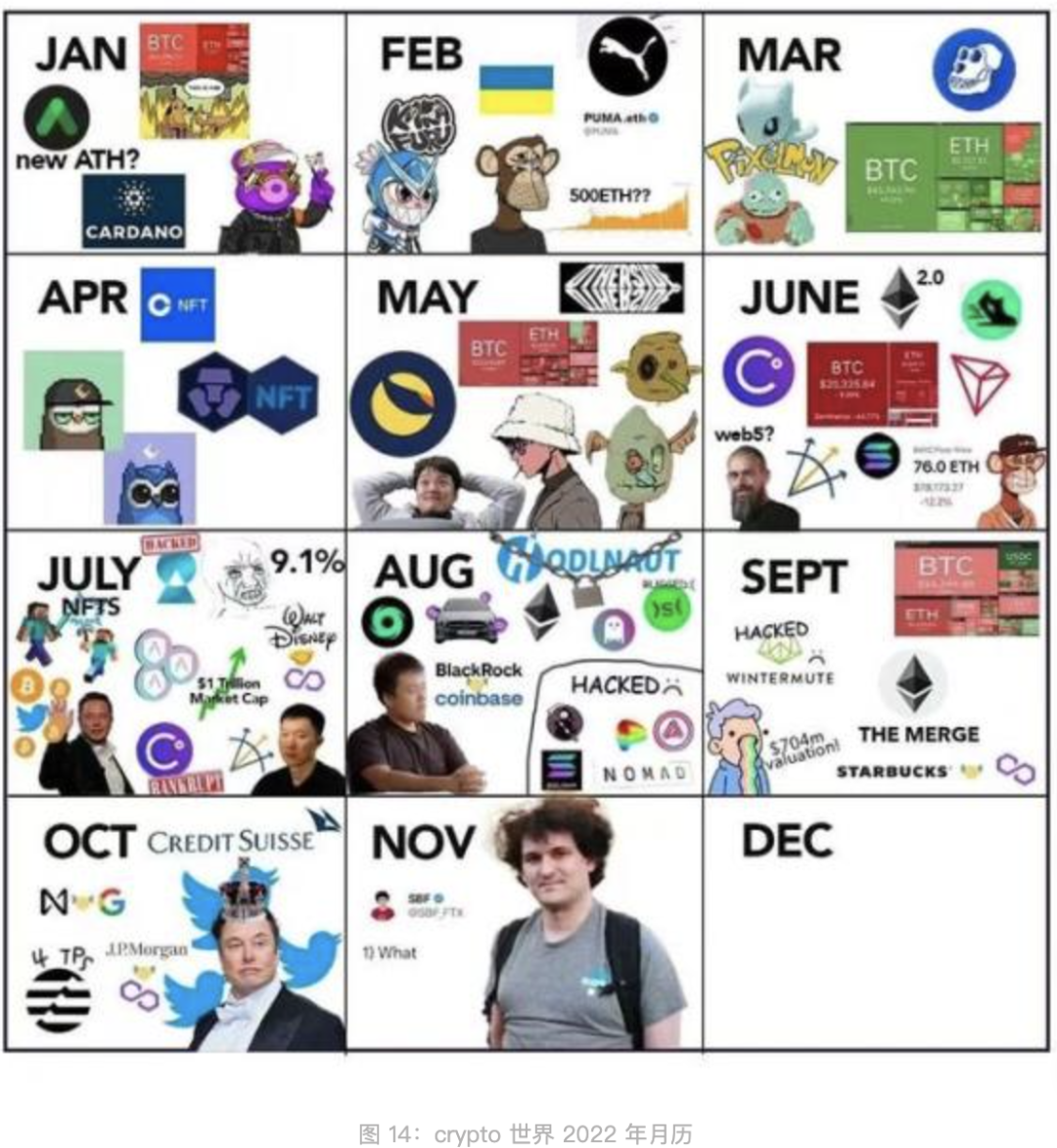
最后再放一张今年的加密世界的月历,哀民生之多艰。
受限于篇幅大小,不再后续做过多赘述。其实还有很多的可能性,例如以知识图谱为代表的的新赛道——可以用来追溯entity而不再是地址,这是一个新思路;链上广告,通过激励用户投喂数据给ML/AI来生成模型,最后用算法精确分配广告给用户(web3字节);随着web3游戏和音乐爆发,web3通过散户闲置的机器提供算力的云渲染是否能成立;新的decentralized wireless能否改变传统运营商的模式。

但今年的不少故事其实都绕不开炒冷饭,近半年已经没有太多新概念,希望2023年能出现新的叙事方向。

Trending Cryptos

Related Reads

Report Interpretation: J.P. Morgan Details Micron's Pre-Earnings Sentiment, Current Hardware Sector Dynamics

Morgan Stanley analyst Joshua Meyers' report (June 21, 2026) highlights key trends in the hardware and semiconductor sector ahead of Micron's earnings. The core takeaways are: 1. **Micron & Memory:** Memory remains a high-conviction long theme, driven by strong AI demand and rising ASPs. However, investor focus is shifting to the sustainability of Micron's >80% gross margins and the specifics of potential new long-term supply agreements (SCAs). 2. **Hardware Supply Chain:** AI-related demand for servers, networking, and storage remains robust, but company performance is diverging. Celestica (CLS) shows improved margin confidence, Western Digital and Seagate benefit from pricing, Fabrinet (FN) sees predictable AI optics growth, and Teradyne (TER) anticipates a new Google customer. 3. **AI Capex & WFE Forecasts:** JPMorgan increased its Wafer Fab Equipment (WFE) market growth forecasts to 28% in 2026 and 29% in 2027. AI infrastructure financing is evolving, with higher project-level debt reducing constraints on capex expansion. The report signals that while the AI-driven hardware cycle is strong, the market is entering a phase focused on execution verification (e.g., Micron's SCA details, Fabrinet's ramp with Amazon) and valuation sustainability. Key near-term signals include Micron's guidance, Arista Networks' outlook, and the pace of demand normalization post potential tariff-related pull-ins.

marsbit3h ago

Report Interpretation: J.P. Morgan Details Micron's Pre-Earnings Sentiment, Current Hardware Sector Dynamics

marsbit3h ago

Research Report Analysis: The Fed's New Chair's Debut – New Leader, But Same Script?

Report Analysis: Federal Reserve's New Chair Debut – A New Captain, But the Same Script? Morgan Stanley's chief global economist Seth B. Carpenter analyzes the first FOMC meeting under new Fed Chair Kevin Warsh in a June 21 report. Warsh deliberately avoided providing forward guidance on interest rates, aligning with his philosophy. However, market expectations for a rate hike this year were reinforced. Key signals lie elsewhere: inflation may fall more than expected, and quantitative tightening (QT) could be more aggressive than anticipated. The FOMC's "dot plot" suggests only one rate hike in 2026. Carpenter argues that if inflation undershoots forecasts, the logic for even a single hike weakens, especially as projections indicate potential rate cuts in 2027. On QT, Warsh's stance is clear. Carpenter notes that measures like halving the Treasury's account balance could shrink the Fed's balance sheet by around $500 billion with minimal market impact. Combined with adjustments to reserve interest and liquidity rules, the ultimate QT scale may exceed expectations, though its market effect might be less disruptive unless the Fed actively sells Mortgage-Backed Securities (MBS). While Warsh initiated a review of the Fed's policy framework, the 2% inflation target remains intact for now. The report concludes that the market may be overestimating the significance of reduced forward guidance and the near-term rate hike risk, while potentially underestimating the scope and manageable nature of the coming balance sheet reduction. The key debates will hinge on upcoming core PCE data, the specifics of the QT path, and the framework review's findings.

marsbit3h ago

Research Report Analysis: The Fed's New Chair's Debut – New Leader, But Same Script?

marsbit3h ago

Critical Game Week: BTC Retracement Confirmation vs. HYPE Support Battle | Guest Analysis

This weekly analysis outlines a critical juncture for BTC and HYPE markets, focusing on key price level confirmations. **BTC Analysis:** BTC is at a pivotal point after a five-wave rally from the June 5th low of $59,100. The price has broken below a short-term rising channel's lower boundary, with the current move seen as a pullback to test this breakdown. Failure to reclaim this level could lead to a retest of the $59,000-$60,000 support zone. The core scenario hinges on this channel retest outcome. * **Key Levels:** Resistance at $64,500-$65,000 (channel boundary) and $69,500-$70,500. Support at $59,000-$60,000 and $55,000. * **Strategy:** A core bearish stance is maintained (20% short from last week), with short-term plans for tactical trades. Three detailed contingency plans (A/B/C) are provided for short positions on resistance tests or breakdowns, emphasizing strict stop-loss discipline. **HYPE Analysis:** HYPE shows strong momentum but is currently in a corrective phase after hitting a new high of $76.94. The price is retesting the crucial $64-$66 support area. * **Key Levels:** Resistance near $77 and $80-$82. Support at $64-$66 and $52-$54. * **Strategy:** The short-term approach is "buy on dips, avoid chasing rallies." A long position is considered only if clear stabilization signals appear at the $64-$66 or deeper $52-$54 support zones, with tight risk controls. **General Risk Management:** A standardized trailing stop-loss protocol is emphasized: set initial stop, breakeven at +1% profit, then trail stops upward to lock in gains. *Disclaimer: All analysis is presented as a personal trading framework, not investment advice. Market conditions are complex and require dynamic adjustment.*

marsbit4h ago

Critical Game Week: BTC Retracement Confirmation vs. HYPE Support Battle | Guest Analysis

marsbit4h ago

Trading

Spot
Futures

Hot Articles

How to Buy NFT

Welcome to HTX.com! We've made purchasing AINFT (NFT) simple and convenient. Follow our step-by-step guide to embark on your crypto journey.Step 1: Create Your HTX AccountUse your email or phone number to sign up for a free account on HTX. Experience a hassle-free registration journey and unlock all features.Get My AccountStep 2: Go to Buy Crypto and Choose Your Payment MethodCredit/Debit Card: Use your Visa or Mastercard to buy AINFT (NFT) instantly.Balance: Use funds from your HTX account balance to trade seamlessly.Third Parties: We've added popular payment methods such as Google Pay and Apple Pay to enhance convenience.P2P: Trade directly with other users on HTX.Over-the-Counter (OTC): We offer tailor-made services and competitive exchange rates for traders.Step 3: Store Your AINFT (NFT)After purchasing your AINFT (NFT), store it in your HTX account. Alternatively, you can send it elsewhere via blockchain transfer or use it to trade other cryptocurrencies.Step 4: Trade AINFT (NFT)Easily trade AINFT (NFT) on HTX's spot market. Simply access your account, select your trading pair, execute your trades, and monitor in real-time. We offer a user-friendly experience for both beginners and seasoned traders.

7.1k Total ViewsPublished 2024.03.29Updated 2026.06.02

How to Buy NFT

What is Altura NFT?

Altura: Providing One-Stop NFT Solutions for Game Developers

56.0k Total ViewsPublished 2024.06.12Updated 2024.06.12

What is Altura NFT?

What is AINFT

EternaFi Agents and $AINFT: A Comprehensive Analysis of AI-Powered NFT Infrastructure in the Web3 Ecosystem The intersection of artificial intelligence (AI) and blockchain technology is rapidly evolving, establishing innovative platforms that redefine ownership models and economic participation. EternaFi Agents, along with its native token $AINFT, exemplifies a groundbreaking approach to the tokenization of AI infrastructures through the means of non-fungible tokens (NFTs). Launched in July 2025 by the development team at Nova Club, EternaFi merges the advancements of AI with the decentralized financial mechanisms of blockchain, presenting a unique investment opportunity for participants within the web3 ecosystem. This article aims to provide an in-depth assessment of EternaFi Agents, covering its core components, functionality, and significance within the crypto landscape. Introduction and Project Overview EternaFi Agents stands as a salient example of how blockchain technology can democratize access to advanced AI capabilities. The project endeavors to reshape the paradigm of AI ownership by diversifying economic participation, making sophisticated AI systems accessible to a larger pool of stakeholders. At its core, the project tokenizes a proprietary large language model (LLM) developed by Nova Club, allowing NFT holders to gain fractional exposure to the model's economic performance. By utilizing NFTs representing stakes in the LLM, EternaFi Agents fosters a model wherein stakeholders not only participate in AI service consumption but also enjoy sharing in the economic rewards generated by the platform. This transformative approach enables the development of sustainable revenue models for AI services, all the while promoting broad community engagement and facilitating transparent governance. What is EternaFi Agents? EternaFi Agents represents an AI-NFT infrastructure project that aims to blend the capabilities of AI with blockchain technology in a coherent ecosystem. The essential feature of this project is the creation of NFTs that serve as financial instruments, representing fractions of ownership in Nova Club's proprietary AI infrastructure. Each NFT symbolizes direct exposure to the economic performance of the underlying AI system, providing a lucrative opportunity for investors. The project operates on the Base blockchain, known for its scalability and efficiency, thus ensuring manageable transaction costs while facilitating a seamless operational experience. One of the notable features includes a revenue-sharing mechanism, wherein NFT holders can receive portions of subscription income generated by the AI services provided on the platform. This innovative approach establishes a connection between the success of the AI services and the economic dividends distributed among the holders, thus ensuring an alignment of interests across the community. Who is the Creator of EternaFi Agents? The creative force behind EternaFi Agents is Nova Club, a development team based in Singapore proficient in the amalgamation of AI and blockchain technology. Their prior experience in AI development and cryptocurrency analysis gives credence to the project, contributing a breadth of expertise to the creation of EternaFi Agents. Nova Club’s mission centers on democratizing access to cutting-edge AI technologies while building sustainable economic models that benefit users alongside developers. Their commitment to transparency, community governance, and innovation is reflected in the design and implementation of the EternaFi platform, aiming to establish a unique ecosystem that fosters positive engagement and long-term value creation. Who are the Investors of EternaFi Agents? The specific details concerning investors or investment organizations backing EternaFi Agents are not publicly available. However, EternaFi has adopted an inclusive approach to funding its development through the sale of NFTs to the public, allowing a wide array of participants to invest in the ecosystem. The project’s architecture ensures that core infrastructure is funded responsibly while allowing community members to partake in the ownership and economic returns generated from the AI services. This model emphasizes community engagement by aligning the interests of investors and project developers, creating a collaborative environment where long-term participation is incentivized. How Does EternaFi Agents Work? EternaFi Agents operates through a multifaceted ecosystem where NFTs serve as a primary means of ownership representation within the project. Each NFT holder is entitled to a share of the monthly subscription income produced by the underlying AI-powered platform, thereby positioning NFT ownership as a lucrative investment vehicle. Revenue Generation Mechanism The primary source of revenue generation for the EternaFi platform stems from subscription fees related to the AI services provided. Users can access various tiered services, ranging from basic market analysis tools to comprehensive AI-assisted trading solutions. These services are monetized and form the basis for the revenue-sharing framework, which distributes profits to NFT holders through automated smart contracts. An innovative feature of the EternaFi ecosystem is the revenue-sharing mechanism that operates transparently, ensuring that rewards are allocated based on verifiable metrics from the AI platform's operations. This creates a direct link between the performance of AI services and the returns available to community investors, establishing a sustainable economic model. Staking and Vesting Mechanisms Participants within EternaFi can engage in staking their NFTs to unlock additional economic benefits. The vesting schedule is designed to promote long-term commitment among participants, rewarding those who exhibit ongoing support for the project. This ensures a robust alignment of interests and fosters a sense of community engagement essential for achieving the project's long-term goals. Transparent Governance EternaFi Agents embraces decentralized governance, allowing NFT holders to play an active role in decision-making regarding the platform's development and future directions. The governing structure includes community voting mechanisms, providing NFT holders with the opportunity to influence significant decisions and contributing to a collaborative approach to project growth. Timeline of EternaFi Agents The development trajectory of EternaFi Agents showcases a systematic approach toward building a sustainable AI infrastructure while meeting the needs of community participants. Below is a timeline of important milestones in the project’s history: July 2025: Launch of EternaFi Agents, including the public sale of NFTs and deployment of the $AINFT token on the Base blockchain. Q4 2025: Establishment of market infrastructure including liquidity pools and launch of staking dashboards for NFT holders. 2026: Initiation of community engagement programs, expanding AI capabilities, and integration with cross-chain technologies. Q4 2026: Implementation of the dividend distribution system, allowing NFT holders to reap economic benefits from their investments. These milestones signify the focus on establishing a functional and participative ecosystem while ensuring continuous evolution to meet market demands. Technological Infrastructure and Blockchain Integration EternaFi Agents is anchored in an advanced technological framework combining AI systems with blockchain capabilities. Operating on the Base blockchain, the project leverages the advantages of scalability and low transaction costs. The underlying smart contract architecture governs the NFT ownership, revenue sharing, and community management features, ensuring efficiency and transparency. AI System Development The proprietary large language model underpinning EternaFi Agents has been independently developed and designed to cater to revenue-generating applications without reliance on proprietary external frameworks. This endeavor reflects a commitment to creating a versatile and adaptable AI infrastructure capable of delivering meaningful services to users, thus generating economic value for investors. Security Measures The robustness of EternaFi’s security infrastructure is paramount. Regular audits and stringent security measures ensure the integrity of the AI systems and blockchain mechanisms, safeguarding against potential vulnerabilities while fostering confidence among participants. Conclusion EternaFi Agents signifies a landmark innovation within the realm of artificial intelligence and blockchain technology, opening avenues for community ownership and economic participation in advanced AI capabilities. The project’s comprehensive strategy to tokenize AI infrastructure via NFTs establishes a precedent for future decentralized ecosystems. By harmonizing technical sophistication with user-centric economic models, EternaFi not only fosters engagement but also generates a sustainable revenue-sharing framework for community participants. The significance of EternaFi extends well beyond its operational success as it exemplifies how blockchain can democratize cutting-edge AI technologies, paving the way for future ventures in this intersectional space. The evolution of EternaFi Agents may herald a new era of AI development characterized by participant-driven governance, sustainable economic models, and transparent verification, ultimately contributing to the broader democratization of AI and technology accessibility across industries.

4.1k Total ViewsPublished 2025.08.14Updated 2025.08.14

What is AINFT

Discussions

Welcome to the HTX Community. Here, you can stay informed about the latest platform developments and gain access to professional market insights. Users' opinions on the price of NFT (NFT) are presented below.

活动图片