AAA级MMORPG GameFi Bless Global有何潜力?

区块律动Published on 2022-10-19Last updated on 2022-10-19

Abstract

《Bless Global》限量推出的「Whispering Barren」系列游戏盲盒,上线后短时售罄并引发市场的关注。

导读

《Bless Global》限量推出的「Whispering Barren」系列游戏盲盒,上线后短时售罄并引发市场的关注。在熊市背景下,《Bless Global》能取得如此成绩,本质上在于市场对游戏生态的认可,而强大的生态、潜在的海量忠实、粘性玩家是游戏内资产具备市场价值潜力的一个护城河。
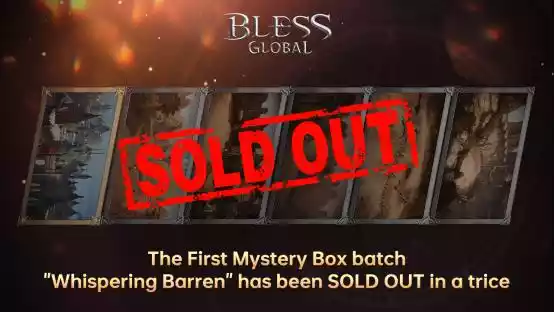
10 月 18 日,由韩国上市公司 LongtuKorea 的子公司 TigonMobile,基于《Bless》链改的 GameFi 游戏《Bless Global》,在 NFT 发售平台 PocketBuff 上,发售了首批 2000 个沙漠主题盲盒「Whispering Barren」,售价为 19.9USDT。

虽然目前在熊市背景下,GameFi 赛道整体处于下行趋势,但我们看到该「Whispering Barren」系列盲盒上线即售罄。《Bless Global》「Whispering Barren」系列盲盒的发售,短时间内就得到了加密市场的高度关注。

虽然很多玩家在首轮盲盒售卖中并没有成功参与抢购,但《Bless Global》官方也在官方推特上表示,即将开启第二轮的售卖,不久后将在官媒宣布新一轮的发售计划。

「Whispering Barren」系列盲盒在熊市下仍能如此抢手,是目前市场环境下难能可贵的,而究其原因,一方面在于该系列盲盒所开出的资产,具备一定的价值属性并有望在游戏中持续的获得可观的收益,而更深层次的原因则在于行业对《Bless Global》游戏市场地位的认可与肯定。

1. 聚焦「Whispering Barren」系列盲盒,具备哪些潜在收益?

据悉购买「Whispering Barren」盲盒的用户将会随机获得两种类型 NFT:明信片和 VIP Pass 卡,这意味着购买盲盒的用户开启盲盒后,会获得上述两种资产中的一类。
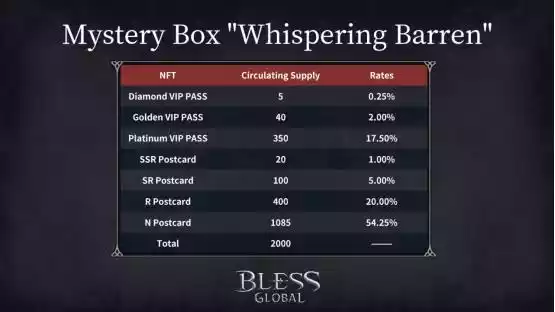
如果你获得了明信片

第一期售卖的盲盒明信片中,每个盲盒含有了 5 张沙漠系列明信片(可能存在重复的明信片),以及 1 张隐藏款雕塑主题明信片(随机出现)。

当玩家集齐 5 张不同沙漠场景的明信片时,可在特定时间点兑换限量版游戏坐骑 NFT—王狮,作为游戏中的稀缺资产,其本身具备一定的市场价值(可在市场交易),并在游戏中扮演着重要的作用(大幅提供攻击和血量等属性,同时可骑乘并获得移速增加)。

而幸运的玩家则有机会获得 1 张雕塑主题的明信片,该明信片是隐藏款 SSR 限量版明信片,雕塑系列卡片数量稀少,在「Whispering Barren」盲盒中,将会有一款雕塑明信片随机掉落。

集齐全套不同场景的雕塑明信片,可获得一张增益最高的钻石 VIP Pass 卡一张,并同时拥有 Beta Test 测试资格和更多权益。

如果你获得了VIP Pass

当然,除了获得明信片外,还有玩家可以直接开出 VIP Pass 卡。VIP Pass 卡分为白银、黄金、钻石 3 个等级,三个等级的稀缺性为钻石>黄金>白银,其中钻石 VIP Pass 卡总量仅 200 张(极度稀缺资产),第一期盲盒售卖仅 5 张。

VIP pass 卡的作用在于提升打金效率,比如加速元晶的开采,游戏内消耗元晶可进一步获得钱包资产 BLEC,用于在 PocketBuff 平台购买相应 NFT,不同的 Pass 卡享有不同的权益与收益加成。

所以玩家对上述游戏资产的收益预期,以及潜在的财富效应,是推动本轮盲盒销售火爆的一个重要因素。当然,更深层次的,则是行业对《Bless Global》游戏市场地位的认可与肯定。

2. 《Bless Global》具备成为现象级AAA GameFi的潜质

《Bless Global》是由韩国上市公司 LongtuKorea 的子公司 TigonMobile,基于 Web2 PC 游戏《Bless》的 IP 以及游戏叙事,与 Game Space 合作进行链改后的一款 AAA 类 MMORPG 游戏。

LongtuKorea 公司是 AAA 类型游戏领域中的标杆式厂商,在该领域具备相当高的市场地位,旗下曾储备了大量 3A 级游戏大作,曾发行的代表作《剑与魔法》和《热血江湖》等,一经推出便在全球获得了超过 1000 万用户的青睐和支持,公司十余年来累计为超过 2 亿的用户提供了游戏服务。

LongtuKorea 此前曾在链游领域进行过探索,比如 Tigon Mobile 发行的 P2E 游戏《Yulgang Global》,在正式上线后场面较为火爆,仅亚洲地区游戏就开启了 50 个服务器,并在北美地区开设了 20 个服务器,上线即获得超过 500 万玩家好评,并仅在谷歌商店下载次数就超过 100 万+。而《Bless Global》在上线前期(目前阶段)预约用户就突破了 100 万,这意味着 Tigon Mobile 在链游的设计、推广、营销上都具备丰富的经验和能力,同时这也为《Bless Global》在不久后的上线打下了良好的基础。

与此同时,Bless Global 的 NFT 发售交易平台 PocketBuff 采用主流社交账号进行登陆,并且集成了第三方支付系统,帮助 Web2 用户无缝跨入 Web3 世界,为充分发挥 LongtuKorea 在传统游戏行业积累的大量游戏用户资源、获得忠诚用户打下基础。

从 GameFi 赛道的发展看,虽然在去年整年其经历了一个短暂的爆发期,但在市场遇冷后其难以延续此前的火爆热潮,就目前 GameFi 板块整体看,其仍旧保持着早期的状态。一方面在于现有的 GameFi 玩家投机性过重,主要以加密投资者为主,这类「玩家」与传统 Web2 游戏玩家存在两种意识形态,前者更注重游戏的收益且缺乏忠诚度、粘性,而后者通常具备成熟的游戏价值观、重体验。

从另一方面看,目前的 GameFi 游戏整体制作精良度较差,粗制滥造且可玩性较低,所以对于游戏品质较高的 Web2 玩家并不具备吸引力,同时加密投资者以及潜在的 Web3 玩家难以从中获得游戏体验。

Bless Global 整体采用以 NFT 为核心的 GameFi3.0 经济模型,避免了熊市环境下 Token 下行所带来的负面影响,让用户从 Play to Earn 的动机回归到游戏性本身,并且以资产在游戏内的稀缺性和用户的喜好度来进行价值锚定,让整个交易场景的基础更加夯实。

所以《Bless Global》具备将海量 Web2 用户、资源导入生态的潜力,以对现有行业实现革新。

从 AAA 特性上看,《Bless Global》沿袭了《Bless》精良制作的 AAA 特点,《Bless Global》基于先进的开发引擎,构建了多元的场景设计丰富了玩家的视觉体验,包括多维游戏场景、环境设计、生物体系、模型面数以及真实的材质表现等,为《Bless Global》游戏本身构建了十分庞大、宏观的游戏叙事。
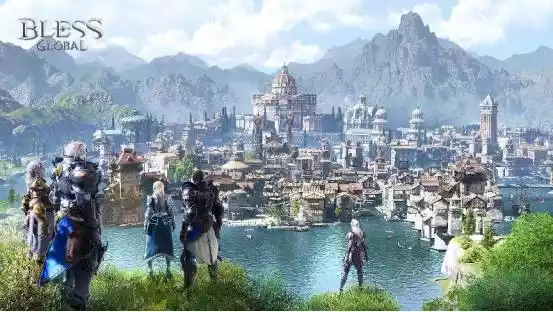
除了场景外,《Bless Global》也设计了较为丰富的玩法元素。

游戏设计了包括游侠、神秘使、战士、圣骑士和魔法师等主要角色供玩家进行选择,不同的职业具备不同的特性,并能通过坐骑等具备加成属性的 NFT,为角色增加战力,进一步提升游戏体验。

《Bless Global》也构建了包括 PVP、PVE 以及养成玩法等丰富的游戏模式,基于上述角色,玩家可以通过养成系统来不断的对角色进行升级、合成以提升游戏角色的战斗力,并通过 PVP、PVE 等游戏方式,对《Bless Global》这个崭新的世界进行探索,并基于策略与其他玩家进行对战,甚至进行团战等,不断的提升游戏体验、沉浸感、成就感以及激励。

《Bless Global》正在以自己的方式,为玩家带来极致的感官享受,兼具最佳舒适度和冲击力的感官享受品质,在此基础上进一步带来极致的游戏乐趣,包括极致的核心可玩性和长期耐玩性,同时为玩家赋予情感体验,具备深度且让玩家产生值得玩味而令人难忘的情感经历。

相对于传统 AAA 游戏,P2E 特性则有望成为上述感官特性所产生的催化剂,同时引入 NFT、构建在链上等特性为游戏赋予了新的意识形态,同时增加了游戏世界的深度、叙事品质、玩家自由度以及内容的拓展。

目前 GameFi 赛道缺乏现象级应用,具备链游性质的 AAA 类游戏则有望挑起大梁(目前行业几乎没有这类游戏)。所以我们看到当一款叙事宏大、制作精良且来自于知名传统游戏厂商,通过将知名游戏链改后,得到的新链游,一定是具备相当的市场前景的,这是《Bless Global》十分重要的优势。

总的来看,《Bless Global》推出「Whispering Barren」系列盲盒的火爆,本质上是市场对 LongtuKorea 公司、《Bless Global》游戏生态的认可。而强大的生态、潜在的海量忠实、粘性玩家是游戏内资产具备市场价值、潜力的一个护城河。《Bless Global》有望弥补 AAA 类游戏在 GameFi 赛道的空缺,也具备成为现象级应用的潜质,并有望推动链游板块向下一个阶段的发展。


Trending Cryptos

Related Reads

Preferred Stock Is Not the Trigger for Corporate Bankruptcy, MicroStrategy's Dollar Reserves Can Cover Dividend and Interest Payments Until February 2027

Preferred Shares Are Not the Catalyst for Corporate Bankruptcy; MicroStrategy's Dollar Reserves Can Cover Dividend and Interest Payments Until February 2027. This article analyzes the nature of preferred shares used by MicroStrategy (MSTR). Legally equity but economically similar to debt, these shares, including its Bitcoin-linked STR convertible preferred notes (STRC), offer fixed or floating dividends. Crucially, MicroStrategy's preferred shares lack rigid redemption clauses, meaning they are not classified as traditional debt. This eliminates principal repayment pressure and means missed dividends do not constitute default or trigger bankruptcy, creating a "self-contradictory virtuous cycle." The article clarifies that if funds are short, MicroStrategy can defer or suspend preferred share dividends (except for non-cumulative types like STRD) without immediate risk. The real potential crisis point lies with its convertible bonds. If a prolonged bear market prevents conversion, MicroStrategy might need to sell Bitcoin to repay these bonds starting from the earliest maturity in September 2027, potentially creating a downward spiral. Preferred dividend suspensions would only exacerbate market panic in such a scenario. Recent financial activity shows MicroStrategy strengthened its position through four weeks of common stock (MSTR) issuances, raising over $851 million without issuing new preferred shares. It increased its dollar reserves to approximately $1.4 billion, which is sufficient to cover all preferred share dividends and interest until around March 2027. While Bitcoin purchases slowed recently, this prioritization of cash reserves enhances the company's near-term financial safety. The analysis concludes that if the Bitcoin bear market ends by early 2025 as anticipated, MicroStrategy can resume issuing MSTR stock in a rising market to replenish reserves and manage future dividend obligations, thereby reducing the long-term pressure from its preferred share structure.

marsbit43m ago

Preferred Stock Is Not the Trigger for Corporate Bankruptcy, MicroStrategy's Dollar Reserves Can Cover Dividend and Interest Payments Until February 2027

marsbit43m ago

Giants Wage the Context War, Reconstructing AI Moats

The article "Giants Launch the Context War, Reconstructing AI's Moat" discusses how leading AI companies—OpenAI, Anthropic, and Google—are shifting their competitive focus from model size to acquiring, managing, and utilizing user context (Context). Initially, Context referred to the length of text a model could process, leading to a "arms race" for longer context windows. However, the competition has evolved through three key phases: expanding text capacity (long context windows), enabling memory across sessions, and finally, integrating AI into real user environments like browsers and desktops to capture dynamic task states. Each company is pursuing a distinct strategy. OpenAI is building Context around the ChatGPT account, turning it into a central hub that accumulates user understanding across various integrated applications and tools. Anthropic, lacking a major user base, focuses on high-value verticals like coding, empowering its Claude model to actively gather Context through GUI interaction (Computer Use) and system connections (MCP protocol). Google, with vast existing user data from products like Search and Gmail, faces the challenge of restructuring this data into actionable, AI-understandable Context for its Gemini model within its ecosystem. The core argument is that the nature of competitive advantage in AI is changing. The internet era prized network effects—connecting more users. The AI era values "individual depth": the ability to build deep, task-specific understanding of a user. This creates a new moat through 1) the compounding value of accumulated Context, 2) deep integration with user tools and permissions, and 3) the establishment of trust for complex tasks. Therefore, the battle for Context is fundamentally about capturing "task entry points" and converting existing digital ecosystems into environments where AI can effectively understand and act, rather than merely scaling user numbers.

marsbit1h ago

Giants Wage the Context War, Reconstructing AI Moats

marsbit1h ago

Foundation Steps Back, Ethlabs Steps Forward: Ethereum Undergoes Its Largest Restructuring in History

On June 23rd, the Ethereum ecosystem witnessed two major shifts, signaling a significant governance realignment. First, former Ethereum Foundation researchers established Ethlabs, a new independent non-profit. Backed by major ETH holders like Bitmine and SharpLink, Ethlabs aims to address practical needs for institutional adoption, including faster settlement, native asset issuance, cross-chain transactions, and mainnet scaling. Secondly, the Ethereum Foundation announced a major restructuring, laying off 54 employees (20% of its staff) to become a leaner entity focused on protocol governance and maintenance rather than being the primary builder. This move represents a pivotal correction. Criticisms had mounted over the Foundation's perceived slowness, lack of clear strategy, and over-reliance on Vitalik Buterin's influence. Ethlabs emerges as a more execution-oriented, "industrialized" layer focused on market adoption—bridging the gap between research and real-world use. Notably, Vitalik Buterin is absent from its list of supporters, interpreted as an intentional step to avoid excessive personal endorsement and allow the organization to build independent credibility. The Ethereum Foundation's downsizing and redefinition mark a retreat from its former central coordinating role. It now aims to share the "privilege of stewarding Ethereum" with other emerging groups like Ethlabs, the Ethereum Applications Guild, and The Ethereum Economic Zone. Analysts frame this dual shift as the Foundation ensuring Ethereum remains "correct" (credibly neutral), while Ethlabs must prove it remains "effective" (competitive and attractive for capital and adoption). This addresses community "shareholder-like anxiety" about ETH's market performance. While risks exist—such as concerns over shifting from Foundation centrality to large-holder influence—the consensus is that the greater risk for Ethereum was inaction, caught between technical idealism and organizational inertia. These steps aim to create a more multi-stakeholder, execution-driven future for the network.

链捕手8h ago

Foundation Steps Back, Ethlabs Steps Forward: Ethereum Undergoes Its Largest Restructuring in History

链捕手8h ago

Second Half of U.S. Crypto Policy: The Clarity Act Aims for 60 Votes, CFTC's "One-Person Commission" Becomes Biggest Variable

In a pivotal year for US crypto policy, the "CLARITY Act" is advancing in the Senate but faces a high hurdle, needing 60 votes to pass. Key challenges include bridging partisan divides on ethics and swaying undecided Republican senators within a tight legislative calendar of only about 40 working days. The policy "second half" involves intense negotiations on a broader framework for Web3 and DeFi, including crypto tax reforms and the Blockchain Regulatory Certainty Act. A significant uncertainty is the understaffed CFTC, operating with four commissioner vacancies, which complicates regulatory clarity. Meanwhile, the departure of key "crypto champions"—SEC Commissioner Hester Peirce and Senator Cynthia Lummis—will impact ongoing policy efforts. Industry experts are cautiously optimistic but realistic. Sara K. Weed notes that while progress is being made, CLARITY is unlikely to pass this Congress, pushing agencies like the SEC and CFTC to provide more guidance. Sulolit Mukherjee suggests meaningful crypto tax legislation is more likely to be attached to larger must-pass bills. Rashan Colbert discusses the jurisdictional debate over prediction markets, emphasizing the need for a regulatory framework that fosters their development as financial tools rather than treating them broadly as gambling. The clock is ticking, but opportunities remain for substantive progress through continued bipartisan dialogue and pragmatic efforts.

marsbit11h ago

Second Half of U.S. Crypto Policy: The Clarity Act Aims for 60 Votes, CFTC's "One-Person Commission" Becomes Biggest Variable

marsbit11h ago

Trading

Spot
Futures

Hot Articles

What is $BITCOIN

DIGITAL GOLD ($BITCOIN): A Comprehensive Analysis Introduction to DIGITAL GOLD ($BITCOIN) DIGITAL GOLD ($BITCOIN) is a blockchain-based project operating on the Solana network, which aims to combine the characteristics of traditional precious metals with the innovation of decentralized technologies. While it shares a name with Bitcoin, often referred to as “digital gold” due to its perception as a store of value, DIGITAL GOLD is a separate token designed to create a unique ecosystem within the Web3 landscape. Its goal is to position itself as a viable alternative digital asset, although specifics regarding its applications and functionalities are still developing. What is DIGITAL GOLD ($BITCOIN)? DIGITAL GOLD ($BITCOIN) is a cryptocurrency token explicitly designed for use on the Solana blockchain. In contrast to Bitcoin, which provides a widely recognized value storage role, this token appears to focus on broader applications and characteristics. Notable aspects include: Blockchain Infrastructure: The token is built on the Solana blockchain, known for its capacity to handle high-speed and low-cost transactions. Supply Dynamics: DIGITAL GOLD has a maximum supply capped at 100 quadrillion tokens (100P $BITCOIN), although details regarding its circulating supply are currently undisclosed. Utility: While precise functionalities are not explicitly outlined, there are indications that the token could be utilized for various applications, potentially involving decentralized applications (dApps) or asset tokenization strategies. Who is the Creator of DIGITAL GOLD ($BITCOIN)? At present, the identity of the creators and development team behind DIGITAL GOLD ($BITCOIN) remains unknown. This situation is typical among many innovative projects within the blockchain space, particularly those aligning with decentralized finance and meme coin phenomena. While such anonymity may foster a community-driven culture, it intensifies concerns about governance and accountability. Who are the Investors of DIGITAL GOLD ($BITCOIN)? The available information indicates that DIGITAL GOLD ($BITCOIN) does not have any known institutional backers or prominent venture capital investments. The project seems to operate on a peer-to-peer model focused on community support and adoption rather than traditional funding routes. Its activity and liquidity are primarily situated on decentralized exchanges (DEXs), such as PumpSwap, rather than established centralized trading platforms, further highlighting its grassroots approach. How DIGITAL GOLD ($BITCOIN) Works The operational mechanics of DIGITAL GOLD ($BITCOIN) can be elaborated on based on its blockchain design and network attributes: Consensus Mechanism: By leveraging Solana’s unique proof-of-history (PoH) combined with a proof-of-stake (PoS) model, the project ensures efficient transaction validation contributing to the network's high performance. Tokenomics: While specific deflationary mechanisms have not been extensively detailed, the vast maximum token supply implies that it may cater to microtransactions or niche use cases that are still to be defined. Interoperability: There exists the potential for integration with Solana’s broader ecosystem, including various decentralized finance (DeFi) platforms. However, the details regarding specific integrations remain unspecified. Timeline of Key Events Here is a timeline that highlights significant milestones concerning DIGITAL GOLD ($BITCOIN): 2023: The initial deployment of the token occurs on the Solana blockchain, marked by its contract address. 2024: DIGITAL GOLD gains visibility as it becomes available for trading on decentralized exchanges like PumpSwap, allowing users to trade it against SOL. 2025: The project witnesses sporadic trading activity and potential interest in community-led engagements, although no noteworthy partnerships or technical advancements have been documented as of yet. Critical Analysis Strengths Scalability: The underlying Solana infrastructure supports high transaction volumes, which could enhance the utility of $BITCOIN in various transaction scenarios. Accessibility: The potential low trading price per token could attract retail investors, facilitating wider participation due to fractional ownership opportunities. Risks Lack of Transparency: The absence of publicly known backers, developers, or an audit process may yield skepticism regarding the project's sustainability and trustworthiness. Market Volatility: The trading activity is heavily reliant on speculative behavior, which can result in significant price volatility and uncertainty for investors. Conclusion DIGITAL GOLD ($BITCOIN) emerges as an intriguing yet ambiguous project within the rapidly evolving Solana ecosystem. While it attempts to leverage the “digital gold” narrative, its departure from Bitcoin's established role as a store of value underscores the need for a clearer differentiation of its intended utility and governance structure. Future acceptance and adoption will likely depend on addressing the current opacity and defining its operational and economic strategies more explicitly. Note: This report encompasses synthesised information available as of October 2023, and developments may have transpired beyond the research period.

436 Total ViewsPublished 2025.05.13Updated 2025.05.13

What is $BITCOIN

Discussions

Welcome to the HTX Community. Here, you can stay informed about the latest platform developments and gain access to professional market insights. Users' opinions on the price of BTC (BTC) are presented below.

活动图片