Consensys:网络活动数据逆势增长,以太坊正在蓄势待发

深潮TechFlowPublished on 2022-09-08Last updated on 2022-09-08

Abstract

以太坊的用户数量和流动性是其他 L1 网络无法比拟的。

以太坊是世界上最大的可编程区块链。它是互联网(Web3)的未来,以及金融(DeFi)未来的基础。

目前,整个 DeFi 生态系统的一半以上都存在于以太坊上,尽管受到了市场波动和宏观经济的不确定性的影响,以太坊的参与度仍然很高。

本文将带您一起了解以太坊生态系统是如何进行长期建设,并确保做好准备迎接网络增长的。

与任何高效的技术一样,以太坊的路线图充满了对其基础设施的升级,使其能够更好地面向未来。

第一个我们称之为「合并」的升级,将在 2022 年 9 月中旬发生。

对于新生的加密货币行业来说,这将是一个历史性的时刻,合并将为以太坊增加安全性、可持续性和可扩展性做好支撑。

目前,以太坊网络有两个并行运行的区块链层——运行工作证明(PoW)的层,称为执行层(以太坊的历史状态和区块生产),以及运行权益证明(PoS)的层,称为共识层。

合并是指将这两层合并的事件,有效地结束 PoW,并将以太坊主网完全过渡到 PoS。

为什么以太坊在 DeFi 中占主导地位?

今天的 DeFi 生态系统价值 626 亿美元,而以太坊占整个 DeFi 生态系统的大部分,总价值锁定(TVL)为 367 亿美元。

以太坊在 DeFi 中占主导地位的部分原因是:

大多数流行的 DeFi 应用都是在以太坊上建立的,如 MakerDAO、Aave、Uniswap 和 Curve 。

以太坊还受益于强大的开发者和用户社区,特别是以太坊 CoreDevs,他们致力于通过创建文档和定期推出网络更新来改善网络。

这些资源有助于维持一个强大的、去中心化的网络,并推动其进一步的采用。

该网络的采用率和利用率都出现了暴涨的数字,这是网络成熟度的强烈信号。

要了解以太坊的用户采用率如何增加,让我们看一下一些统计数据。

网络活动

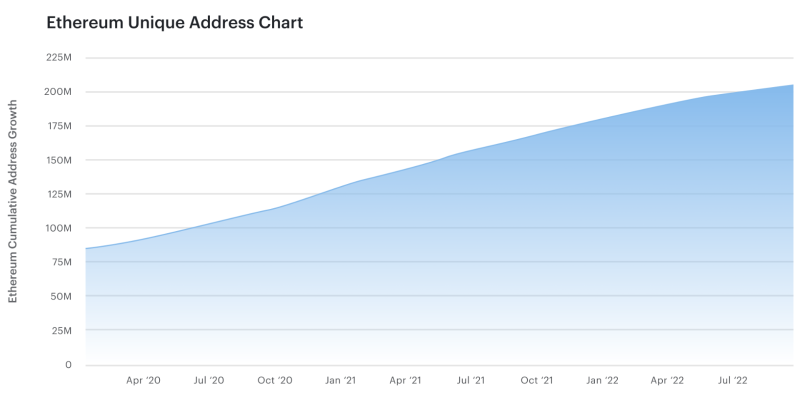
自 2020 年 1 月以来,以太坊网络上的唯一地址总数已经增加了一倍多,超过了 2 亿,这表明了以太坊网络在 Web3 用户中的受欢迎程度。

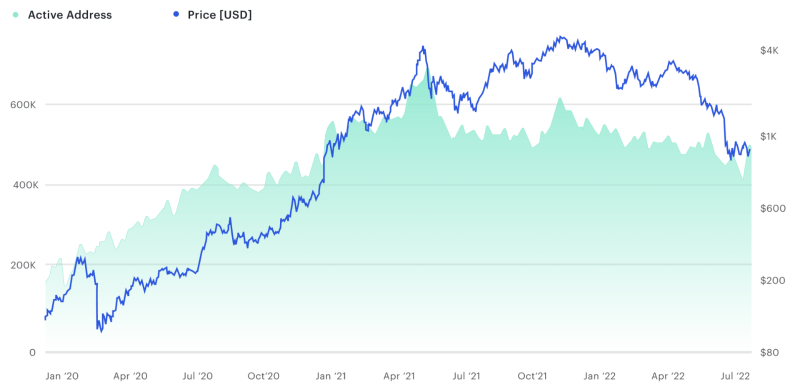
自 2020 年 1 月以来,活跃的以太坊地址数量也呈上升趋势,尽管最近市场低迷,目前仍在 504K 以上。

尽管市场剧烈波动,用户仍参与网络表明以太坊的用例超越了价格活动。

相比之下,自 5 月市场崩溃以来,Fantom 上的增长下降了 70%。

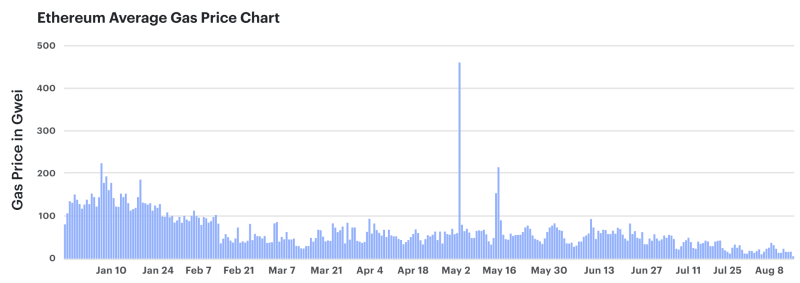
作为以太坊网络成熟的一个标志,Gas 费用自今年 1 月以来稳步下降。

即使网络活动增加,它们也变得更加可预测。

较低的 Gas 费用使以太坊交易具有成本效益,并且不受网络活动的影响。

因此,用户不需要担心在网络拥堵的时候支付 100 美元来完成交易。

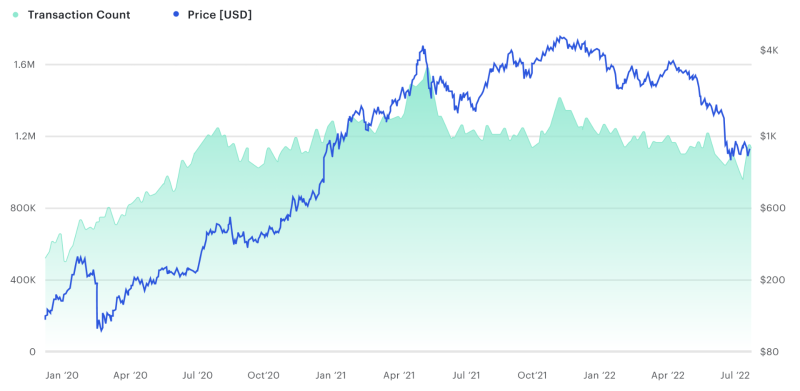
自 2020 年 1 月以来,以太坊的每日交易量呈上升趋势,并已趋于稳定。

在过去的 12 个月里,平均每天在以太坊上完成超过 100 万笔交易。

因此,尽管 Web3 和全球宏观市场波动,用户仍继续使用着网络。

这也是一个信号,表明具有现实世界用例的有意义的应用程序正在以太坊上构建。

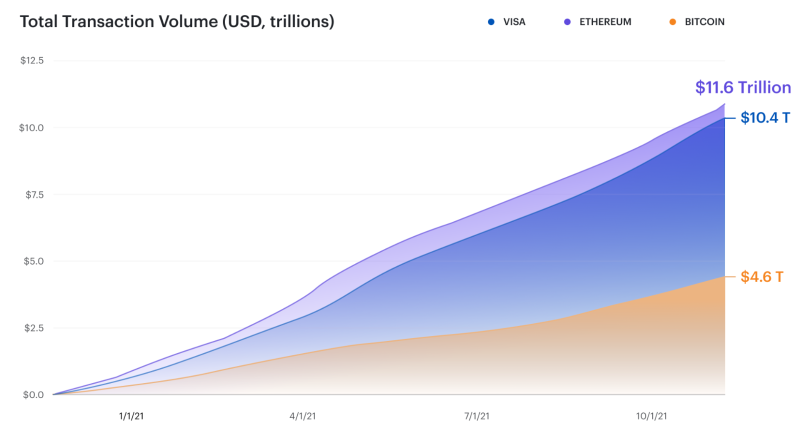
为了了解在以太坊上发生的交易数量的规模,我举了例子:2021 年,以太坊处理的交易量超过了世界上最大的支付处理器 Visa。

以太坊处理了价值 11.6 万亿美元的交易,而 Visa 处理了 10.4 万亿美元。

确定区块链网络需求的一个强有力的指标是协议收入——即用户愿意为在区块链上进行的交易而支付的金额。

区块链通过出售区块空间来赚取收入,矿工(或共识层的验证者)购买区块空间来完成交易。

另一方面,区块链的主要支出是围绕着它在巩固网络完整性和维护安全方面所花费的资源。

目前,几乎每一个区块链花在保障网络安全上的钱都比他们从出售区块空间获得的钱要多。

因此,收入比简单地依赖交易总数提供了更好的网络需求感知。

虽然使用 Tron 或 Solana 可能比以太坊便宜,但由于网络的安全性和可靠性更好等因素,用户可能愿意支付溢价来使用以太坊。

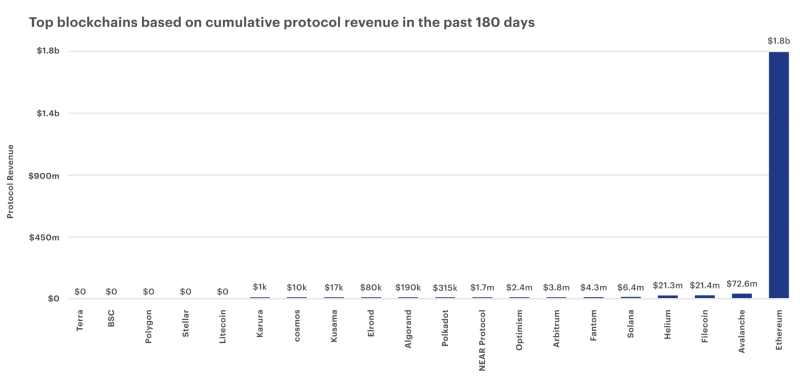
自今年 3 月中旬以来,ETH 产生了 18 亿美元的协议收入,是 Avalanche、Solana、Polkadot 和 Polygon 等 20 个顶级区块链中最高的。

作为比较,以 Avalanche 为例:它在同一时期产生了第二高的协议收入,也只产生了 7260 万美元。

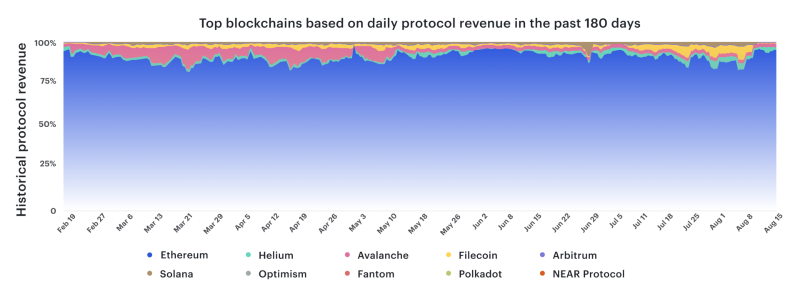
在同一时期,与其他第 1 层 (L1) 网络相比,以太坊占据了协议总收入的 90% 以上。

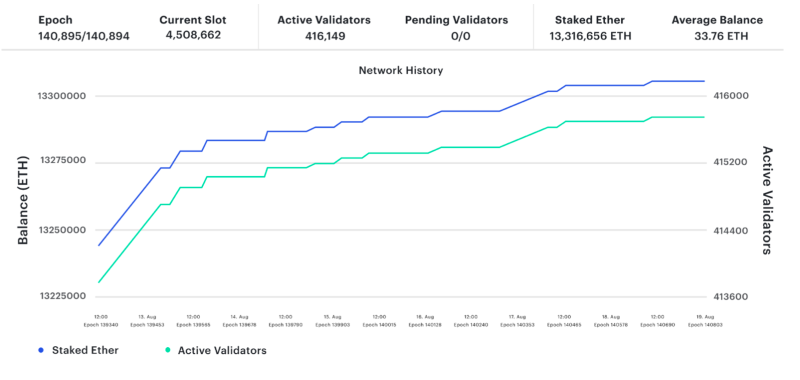
自 2020 年 12 月以来,对以太坊的质押获得了巨大的吸引力。

截至 2022 年 8 月 19 日,超过 1330 万个 ETH 被质押,占所有 ETH 供应量的近 11%。

总结

正如我们在上面看到的,来到以太坊的用户数量和流动性是其他 L1 网络无法比拟的。

由于这种高流动性和庞大的用户群,以太坊对那些在不同区块链之间选择建立的开发者来说变得很有吸引力。

这种受欢迎程度有助于为以太坊建立一条流动性的护城河。

大多数具有高 TVL 和 Web3 使用率的去中心化应用程序(dApps)都是以太坊上的原生产品。

因此,有大量的价值在网络中流动,机构参与者可以挖掘这些价值并从中获益。

Related Reads

Where Is the AI Infrastructure Industry Chain Stuck?

The AI infrastructure (AI Infra) industry chain is facing unprecedented systemic bottlenecks, despite the rapid emergence of applications like DeepSeek and Seedance 2.0. The surge in global computing demand has exposed critical constraints across multiple layers of the supply chain—from core manufacturing equipment and data center cabling to specialty materials and cleanroom facilities. Key challenges include four major "walls": - **Memory Wall**: High-bandwidth memory (HBM) and DRAM face structural shortages as AI inference demand outpaces training, with new capacity not expected until 2027. - **Bandwidth Wall**: Data transfer speeds lag behind computing power, causing multi-level bottlenecks in-chip, between chips, and across data centers. - **Compute Wall**: Advanced chip manufacturing, reliant on EUV lithography and monopolized by ASML, remains the fundamental constraint, with supply chain fragility affecting production. - **Power Wall**: While energy demand from data centers is rising, power supply is a solvable near-term challenge through diversified energy infrastructure. Expansion is further hindered by shortages in testing equipment, IC substrates (critical for GPUs and seeing price hikes over 30%), specialty materials like low-CTE glass fiber, and high-end cleanroom facilities. Connection technologies are evolving, with copper cables resurging for short-range links due to cost and latency advantages, while optical solutions dominate long-range scenarios. Innovations like hollow-core fiber and advanced PCB technologies (e.g., glass substrates, mSAP) are emerging to meet bandwidth needs. In summary, AI Infra bottlenecks are multidimensional, spanning compute, memory, bandwidth, power, and supply chain logistics. Advanced chip manufacturing remains the core constraint, while substrate, material, and equipment shortages present immediate challenges. The industry is moving toward hybrid copper-optical solutions and accelerated domestic supply chain development.

marsbit57m ago

Where Is the AI Infrastructure Industry Chain Stuck?

marsbit57m ago

Autonomy or Compatibility: The Choice Facing China's AI Ecosystem Behind the Delay of DeepSeek V4

DeepSeek V4's repeated delay in early 2026 has sparked global discussions on "de-CUDA-ization" in AI. The highly anticipated trillion-parameter open-source model is undergoing deep adaptation to Huawei’s Ascend chips using the CANN framework, representing China’s first systematic attempt to run a core AI model outside the CUDA ecosystem. This shift, however, comes with significant engineering challenges. While the model uses a MoE architecture to reduce computational load, it places extreme demands on memory bandwidth, chip interconnects, and system scheduling—areas where NVIDIA’s mature CUDA ecosystem currently excels. Migrating to Ascend introduces complexities in hardware topology, communication latency, and software optimization due to CANN’s relative immaturity compared to CUDA. The move highlights a broader strategic dilemma: short-term compatibility with CUDA offers practical benefits and faster adoption, as seen in CANN’s efforts to emulate CUDA interfaces. Yet, long-term over-reliance on compatibility risks inheriting CUDA’s limitations and stifling native innovation. If global AI shifts away from transformer-based architectures, strict compatibility could lead to technological obsolescence. Despite these challenges, DeepSeek V4’s eventual release could demonstrate the viability of a full domestic AI stack and accelerate CANN’s ecosystem growth. However, true technological independence will require building an original software-hardware paradigm beyond compatibility—a critical task for China’s AI ambitions in the next 3-5 years.

marsbit1h ago

Autonomy or Compatibility: The Choice Facing China's AI Ecosystem Behind the Delay of DeepSeek V4

marsbit1h ago

Trading

Spot
Futures
活动图片