Semikonduktor Separuh Jalan, Seberapa Besar Sisa Perjalanan yang Tersisa?

marsbitPublished on 2026-08-20Last updated on 2026-08-20

Abstract

Penulis membandingkan tren semikonduktor saat ini dengan pola saham Nvidia pada 2024. Nvidia mengalami penurunan 33% dari Juli hingga Agustus 2024, dipicu oleh rumor penundaan produk Blackwell, investigasi anti-monopoli, dan aksi jual aset berisiko global akibat kenaikan suku bunga Bank Jepang. Puncak sementara dicirikan oleh formasi puncak ganda atau kegagalan menembus level resistan di chart, sentimen pasar yang terlalu padat dan digerakkan oleh leverage tinggi, serta reaksi negatif terhadap berita fundamental sekecil apa pun. Praktiknya, jika sinyal teknis terbentuk di tengah kondisi leverage tinggi, sebaiknya lakukan pengurangan eksposur. Sinyal dasar terbentuk pada awal Agustus 2024, dengan pola candlestick bullish yang dikonfirmasi oleh volume perdagangan tertinggi, disertai indikator panik ekstrem di pasar (seperti VIX). Penurunan itu lebih disebabkan faktor makroekonomi global yang tidak merusak fundamental bisnis inti Nvidia. Pemulihan kemudian didukung oleh pengumuman produksi penuh Blackwell dan pemotongan suku bunga Fed, mendorong harga ke rekor baru pada November. Kesimpulannya, puncak pasar seringkali ditandai oleh euforia, kepadatan, dan leverage, sementara dasar dibentuk oleh kepanikan ekstrem yang tidak terkait fundamental, diikuti konfirmasi teknis dengan volume tinggi.

Penulis: XinGPT

Kondisi pasar semikonduktor saat ini agak mirip dengan skenario Nvidia di tahun 2024, mari kita tinjau kembali apa yang terjadi saat itu:

Pada 11 Juli hingga 5 Agustus 2024, saham Nvidia turun dari sekitar $134 menjadi $90.94, penurunan sebesar 33%.
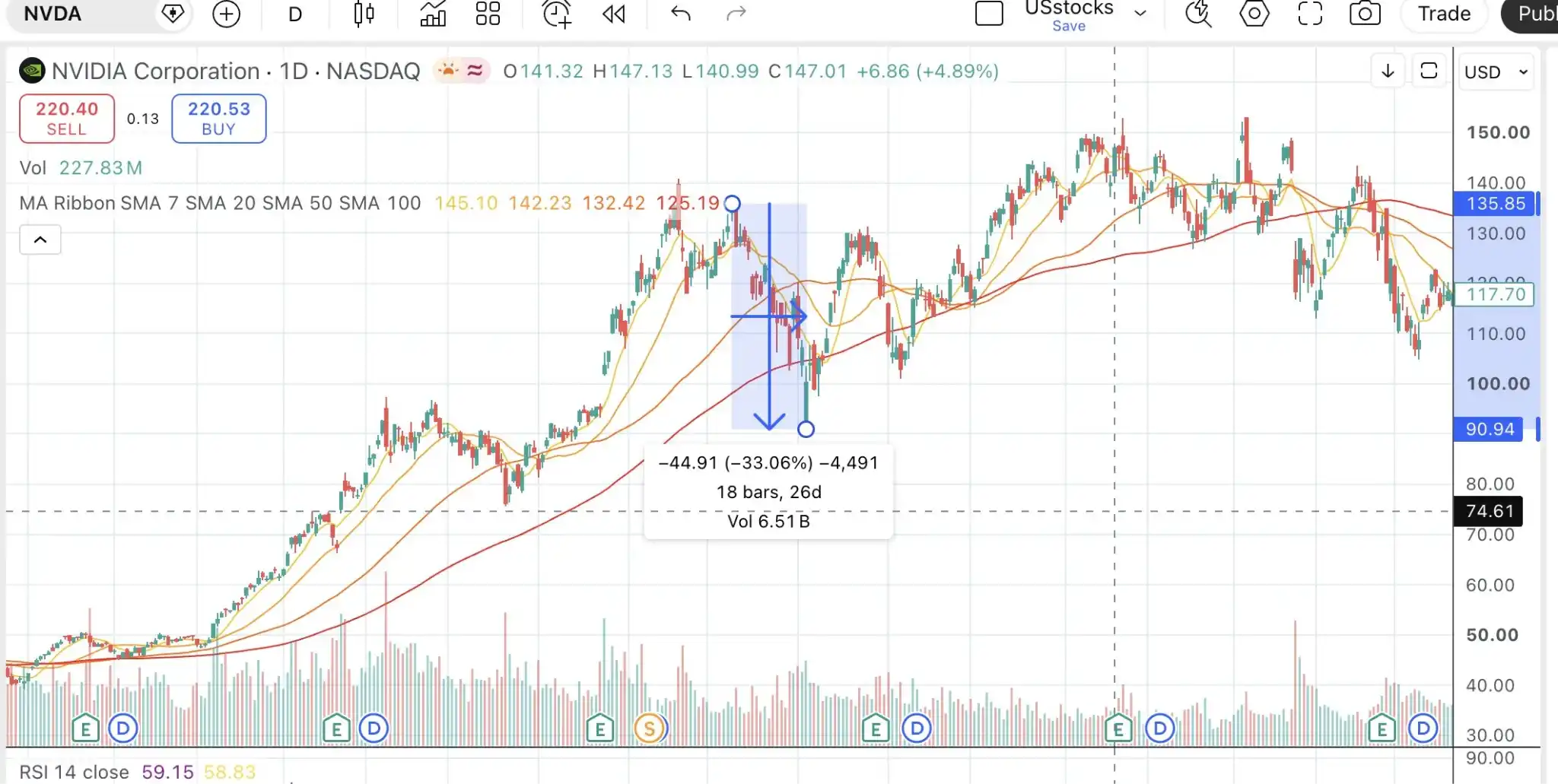
Dari sisi berita, pemicu penurunan termasuk rumor penundaan Blackwell yang dimulai Juli, laporan investigasi antimonopoli Departemen Kehakiman AS, dan akhirnya pada 5 Agustus, kenaikan suku bunga Bank Jepang memicu pelikuidasian perdagangan carry (carry trade), sehingga aset berisiko global terjual dalam kepanikan dan mencapai titik terendah, atau dengan kata lain "berita kecil fundamental + pelepasan aset akibat pengaruh makroekonomi".

Dalam sebulan dari 8 Agustus hingga 6 September, terjadi pemulihan dari oversold, diiringi dengan beberapa pelonggaran kebijakan makroekonomi; namun tidak menembus level tertinggi sebelumnya, laporan keuangan Nvidia yang "baik tetapi tidak sempurna" memicu penurunan.

Kemudian, pada 11 September, Nvidia mengumumkan Blackwell telah mulai diproduksi penuh dan akan mulai dikirim pada Q4, saham Nvidia naik 8% dalam sehari. Ditambah dengan pemotongan suku bunga pertama Fed dalam 4 tahun sebesar 50bp, saham Nvidia kembali mencapai rekor tertinggi baru pada 8 November.

Apa yang bisa kita pelajari dari sejarah?

1. Apa ciri-ciri puncak sementara?

Teknikal: Pola puncak ganda atau gagal menembus level resistensi tertinggi sebelumnya; bersamaan dengan munculnya pola kandil bearish engulfing;

Kepadatan aliran dana + leverage tinggi: Pada Juni 2024, 70% manajer dana menganggap long Mag7 sebagai transaksi paling padat, sementara posisi short saham small-cap mendekati rekor historis. Seluruh pasar berkumpul di sisi kapal yang sama;

Dalam lima hari perdagangan sebelum 27 Agustus 2024, di rentang puncak lainnya harga saham Nvidia, investor ritel membeli bersih NVDA senilai $1,4 miliar, sementara peringkat kedua Tesla hanya sekitar $100-200 juta, selisih hampir sepuluh kali lipat. NVDL (ETF 2x Long NVDA) mengalami inflow bersih $3,5 miliar sepanjang tahun, dan berkali-kali menjadi instrumen paling aktif di pasar intraday.

Fundamental: Pada 28 Agustus, laporan keuangan Nvidia melampaui ekspektasi untuk pendapatan dan panduan, namun karena margin laba kotor turun 3%, harga saham turun hampir 7% setelah jam perdagangan.

Jadi tidak sulit ditemukan, ciri puncak sementara adalah munculnya karakteristik formasi puncak di sisi teknikal, bersamaan dengan meningkatnya kerapuhan dari sisi aliran dana (konsentrasi tinggi, leverage tinggi). Segala angin segar atau kabar buruk dari sisi fundamental dan berita akan langsung memicu penurunan tajam harga saham.

Praktik operasionalnya adalah, begitu karakteristik teknis identifikasi muncul, dan jika kondisi aliran dana menunjukkan leverage berlebihan dan konsentrasi terlalu besar, segera kurangi posisi untuk menghindari risiko, dan konfirmasi tren turun berarti menjual.

2. Ciri-ciri dasar

Teknikal: Pada 5 Agustus, candlestick bearish dengan tubuh panjang (gap down, lalu naik signifikan), volume juga cukup, 553 juta saham adalah volume harian tertinggi pada periode itu, melampaui semua hari perdagangan sebelum dan sesudahnya; Pada 6 Agustus, harga bertahan di atas tubuh hari sebelumnya, konfirmasi pola engulfing bullish; Pada tanggal 7, pullback tidak menembus titik terendah sebelumnya.

Tiga hari ini membentuk sinyal pembentukan dasar dari sisi teknis.
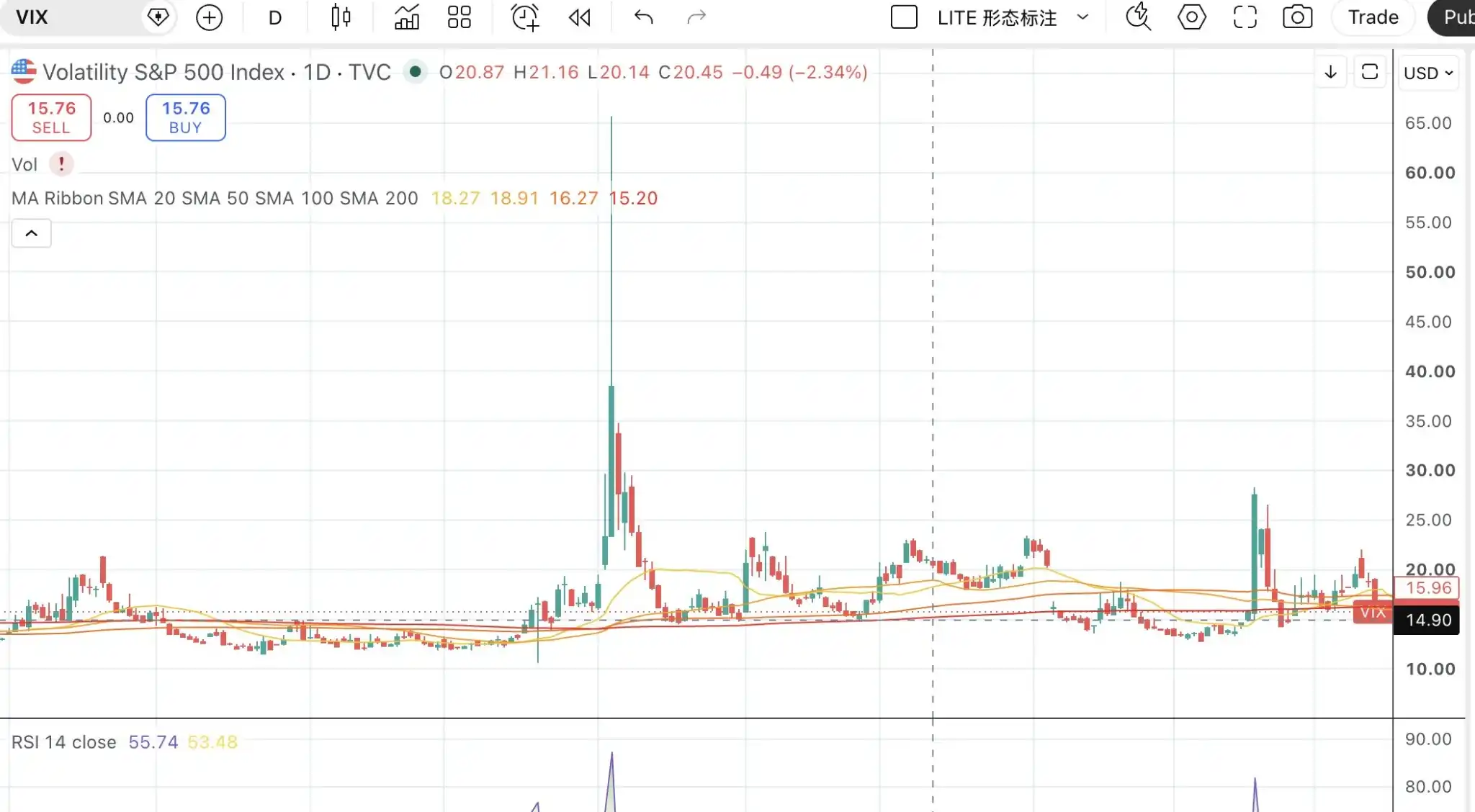
Kami konfirmasi lagi melalui aliran dana: Indeks VIX mencapai rekor hari itu, intraday 65 (tertinggi ketiga dalam sejarah); Pasar luar negeri Nikkei -12.4% (terbesar sejak 1987), KOSPI -9% memicu circuit breaker, semua indikator kepanikan di tingkat pasar meledak, yang juga berarti tekanan jual mencapai titik ekstrem;

Fundamental, rantai pemicu bearish utama adalah kenaikan suku bunga Bank Jepang 31 Juli, likuidasi perdagangan carry yen, data non-farm payrolls AS bulan Juli 114 ribu jauh di bawah ekspektasi. Ini termasuk penurunan makroekonomi yang bersifat menyeluruh, tidak terkait dengan fundamental Nvidia.

Logika rebound pada 6 September juga serupa, hanya saja tidak seekstrem 5 Agustus.

Dari dasar kita juga dapat menemukan karakteristik, pertama adalah mulai munculnya formasi dasar dari sisi teknis, khususnya konfirmasi volume, dan logika penurunan lainnya tidak menyentuh fundamental operasional perusahaan, lebih merupakan kejadian sekali waktu dan guncangan jangka pendek makroekonomi secara keseluruhan. Pada akhirnya, perusahaan unggul akan memperbaiki kesalahan penilaian harga.
Trending Cryptos

Related Questions

QApa kemiripan antara pasar semikonduktor saat ini dan kinerja Nvidia pada tahun 2024 menurut artikel ini?

AMenurut artikel ini, pasar semikonduktor saat ini sedikit meniru skenario Nvidia tahun 2024, yaitu mengalami penurunan signifikan setelah mencapai puncak, dipicu oleh kombinasi 'kabar angin fundamental + dampak makro dan penjualan aset'.

QApa saja ciri-ciri puncak sementara (stage top) dalam pasar saham berdasarkan analisis artikel terhadap Nvidia?

ACiri-ciri puncak sementara meliputi: sisi teknis menunjukkan pola puncak seperti double top atau kegagalan menembus level resistensi sebelumnya dengan pola candlestick bearish; sisi permodalan menunjukkan kepadatan dan leverage tinggi (seperti perdagangan yang ramai dan masuknya dana retail/ETF besar-besaran); serta sisi fundamental yang rentan dimana berita atau laporan keuangan sedikit di bawah ekspektasi dapat memicu penurunan harga drastis.

QBagaimana ciri-ciri atau sinyal pembentukan dasar (bottom) yang dijelaskan dalam artikel?

ASinyal pembentukan dasar meliputi: pola candlestick teknis seperti long-bodied bullish candle dengan volume tinggi yang menandakan permintaan kuat, diikuti konfirmasi pembalikan; serta indikator panik pasar (seperti VIX) mencapai level ekstrem yang menunjukkan tekanan jual telah habis. Dasar sering terbentuk ketika penurunan disebabkan oleh kejutan makro atau peristiwa sementara yang tidak menyentuh fundamental bisnis inti perusahaan.

QPeristiwa makro apa yang disebutkan sebagai pemicu penurunan tajam Nvidia pada Agustus 2024?

APenurunan tajam Nvidia sekitar awal Agustus 2024 dipicu oleh serangkaian peristiwa makro: pertama, kenaikan suku bunga Bank of Japan yang memicu penutupan posisi carry trade yen; kedua, data non-farm payrolls AS yang jauh di bawah ekspektasi. Kombinasi ini menyebabkan kepanikan dan penjualan aset berisiko global.

QApa pelajaran praktis (panduan operasional) yang diberikan artikel untuk menghadapi puncak pasar sementara?

APelajaran praktisnya adalah: begitu sinyal teknis pola puncak muncul, dan kondisi permodalan menunjukkan konsentrasi atau leverage yang terlalu tinggi, sebaiknya segera mengurangi posisi (reduce position) untuk menghindari risiko. Tren penurunan yang dikonfirmasi harus diikuti dengan menjual.

Related Reads

Just Now, Sam Altman Blasts Dario Amodei as 'Anti-Human', Secret Model Exposed the Same Day

Just now, Sam Altman strongly criticized Dario (Amodei, co-founder of Anthropic), denouncing his "doomsday marketing" as "anti-human dictator rhetoric." This came alongside the accidental exposure of OpenAI's next-generation model, codenamed "gpt-nathree," hinting at the imminent release of GPT-6 Astra. The leak occurred when an OpenAI employee's public GitHub commit mentioned the codename. Combined with previous leaks of "gpt-mewfour," it suggests these are iterative checkpoints for OpenAI's upcoming agent model, Astra. Astra is known for multi-agent collaboration and long-duration task handling, having reportedly solved previously unsolved mathematical problems. Meanwhile, two new Anthropic model codenames, "claude-marshmallow-eap" and "claude-melon-eap," were also exposed but are believed to be iterations of the Claude 5 series, not a new flagship. In a wide-ranging podcast interview, Altman admitted he was wrong about the speed of AI-driven disruption, acknowledging societal inertia slows adoption. He fiercely criticized rivals' marketing that simultaneously promises immense benefits (like curing cancer) and warns of existential risk, calling it a dangerous "benevolent dictator" narrative that seeks to concentrate power. He emphasized that people are the ultimate purpose of AI. Altman also revealed OpenAI's unconventional, consensus-defying path: spending four and a half years in the "dark" without a public product before ChatGPT's breakthrough, driven by scaling laws rather than early customer feedback. He concluded that even with superintelligent AI, genuine human connection will remain irreplaceably valuable.

marsbit36m ago

Just Now, Sam Altman Blasts Dario Amodei as 'Anti-Human', Secret Model Exposed the Same Day

marsbit36m ago

The 'Saving U.S. Treasuries' Baton Pass: Bessent Fumbled Last Week, This Week It's Wash's Turn

"Rescuing US Treasuries" Relay: After Bessent's Miss, All Eyes Are on Walsh Last week, US Treasury Secretary Bessent's announcement to at least double long-term Treasury buybacks failed to sustainably lower yields, which quickly rebounded. The market response saw a drop in the dollar alongside surges in gold and Bitcoin, interpreted as a "pressure release valve" for anxiety. The focus now shifts to Fed Chairman Walsh's upcoming Jackson Hole speech. Markets are highly sensitive to his message, seeking clarity on the Fed's policy response to stubborn inflation and worsening fiscal conditions. Analysts warn that a lack of new guidance could disappoint markets and worsen the sell-off in long-dated bonds. Analysts question the scale of Bessent's operations, noting they are too small relative to the overall debt market and do not constitute quantitative easing. A key issue is the Fed's massive holdings of long-term bonds, which distorts the market. With the Fed holding low-yielding short-term bonds that are losing money relative to its policy rate, discussion is growing around a potential Fed-led "Operation Twist." This would involve selling short-term bonds to buy long-term ones, aiming to lower long-end yields without expanding the balance sheet. The upcoming PCE inflation data will set the stage for Walsh's speech. However, the window for action is narrowing amid political pressures. A critical threshold is the 30-year yield at 5%; holding above it could increase stress on the dollar and leveraged sectors. Overall, the article suggests that without coordinated Fed action to anchor inflation expectations, Treasury interventions may ultimately fail, with investors increasingly looking to assets like gold as hedges.

marsbit1h ago

The 'Saving U.S. Treasuries' Baton Pass: Bessent Fumbled Last Week, This Week It's Wash's Turn

marsbit1h ago

Hyperliquid's Compliance Journey: From Permissionless to Permissioned via HIP-3

Hyperliquid’s Compliance Path: From Permissionless to Permissioned HIP-3 Hyperliquid currently blocks U.S. access because its permissionless, on-chain infrastructure conflicts with U.S. market structure laws, which restrict futures trading to registered exchanges, clearinghouses, and brokers. Through its Hyperliquid Policy Center (HPC), the project is advocating for regulatory modernization, proposing that regulated entities be allowed to build products on HyperCore (its exchange and clearing layer) while fulfilling their compliance obligations. The platform’s modular stack separates roles like a traditional exchange (DCM), clearinghouse (DCO), and broker (FCM), but reconstructs them on-chain with code. This enables permissionless access, self-custody, and 24/7 global trading, but clashes with U.S. rules requiring KYC, specific margin models, and custodial arrangements. To resolve this, HPC is engaging with U.S. regulators (CFTC, SEC) to seek clarity that deploying on-chain software does not itself trigger licensing, and to establish exemptions allowing non-custodial wallets to route users to regulated derivatives. Recent political signals suggest openness to this approach. On the technical side, Hyperliquid Labs has introduced permissioned HIP-3 deployers on testnet. These allow regulated entities to launch markets, perform KYC, and whitelist compliant users. While these create separate order books, whitelisted market makers can bridge liquidity between them, ensuring deep, shared liquidity across the same L1. Features like payload-based “PA” permissions enable DEX-level account controls (e.g., reduce-only orders), mirroring traditional broker authorities. The strategy is not to open the native, permissionless front-end to U.S. users, but to position Hyperliquid as neutral infrastructure that U.S. regulated firms can use while meeting their legal duties. This paves a compliant path for U.S. investor access while preserving the protocol’s core, permissionless nature.

marsbit1h ago

Hyperliquid's Compliance Journey: From Permissionless to Permissioned via HIP-3

marsbit1h ago

Two Funding Rounds in Three Months: The Chinese Version of Palantir is on Fire

Investment Community AI has learned that Beijing Zhongshu Ruizhi Technology Co., Ltd., a domestic industrial-grade causal intelligence and high-reliability decision-making AI company, has recently completed a strategic financing round worth hundreds of millions of RMB. This round saw participation from China Internet Investment Fund, Suzhou Chuangtou National Social Security Fund, Financial Street Capital, ICBC Capital, Kunlun Capital, among others, with existing shareholders also increasing their investment. This follows a Series B funding round in the hundreds of millions completed just three months prior. The rapid succession of two major funding rounds signifies strong market recognition of the company's underlying original technology and scaled commercial implementation. Often referred to as the "Chinese version of Palantir," Zhongshu Ruizhi is entering a new phase of accelerated technological iteration, widespread scenario replication, and scaled performance release, mirroring the explosive growth of China's AI market. Founded in April 2020 by Dr. Han Han, a Tsinghua University Ph.D. and former core drafter of national AI policies, the company is mission-driven to "move AI from the digital world to the physical world." It focuses on the high-reliability, strong-decision industrial AI track and enterprise-grade AI Agent full-stack infrastructure. The team tackles the challenge of applying AI to China's vast and complex industrial and energy systems by developing a new intelligent operating system from scratch. Its core technological breakthrough lies in three proprietary底层 technologies: meta-causal cognitive theory, causal models, and a dynamic ontology engine. These address critical pain points of generative large models in industrial settings—such as AI hallucinations, insufficient reasoning, lack of temporal logic, unverifiable decisions, and multi-source rule conflicts—thereby providing trustworthy, explainable, and executable智能决策 capabilities. Commercially, Zhongshu Ruizhi has achieved scaled deployment, serving over 50 central state-owned enterprises and industrial groups in sectors like power, petroleum, and aerospace, with implementations in more than 800 highly complex production scenarios. The company reported doubled revenue in 2025, demonstrating strong self-sufficiency and a viable business model—a rarity among new-generation AI firms. The latest funds will be allocated towards advancing foundational theoretical research, replicating successful application models to expand market presence (including overseas), and attracting top-tier talent. Lead investor China Internet Investment Fund highlighted that in the current shift from general AI capability contests to deep industrial empowerment, industrial-grade causal intelligence is crucial for building China's modern digital foundation and fostering new quality productive forces. They expressed support for the company's efforts to define decision-making paradigms and trustworthy standards for industrial intelligence, aiming to secure a rule-making voice in the global physical AI arena.

marsbit1h ago

Two Funding Rounds in Three Months: The Chinese Version of Palantir is on Fire

marsbit1h ago

Trading

Spot

Hot Articles

How to Buy CHECK

Welcome to HTX.com! We've made purchasing Checkmate (CHECK) simple and convenient. Follow our step-by-step guide to embark on your crypto journey.Step 1: Create Your HTX AccountUse your email or phone number to sign up for a free account on HTX. Experience a hassle-free registration journey and unlock all features.Get My AccountStep 2: Go to Buy Crypto and Choose Your Payment MethodCredit/Debit Card: Use your Visa or Mastercard to buy Checkmate (CHECK) instantly.Balance: Use funds from your HTX account balance to trade seamlessly.Third Parties: We've added popular payment methods such as Google Pay and Apple Pay to enhance convenience.P2P: Trade directly with other users on HTX.Over-the-Counter (OTC): We offer tailor-made services and competitive exchange rates for traders.Step 3: Store Your Checkmate (CHECK)After purchasing your Checkmate (CHECK), store it in your HTX account. Alternatively, you can send it elsewhere via blockchain transfer or use it to trade other cryptocurrencies.Step 4: Trade Checkmate (CHECK)Easily trade Checkmate (CHECK) on HTX's spot market. Simply access your account, select your trading pair, execute your trades, and monitor in real-time. We offer a user-friendly experience for both beginners and seasoned traders.

5.2k Total ViewsPublished 2026.01.19Updated 2026.06.02

How to Buy CHECK

Discussions

Welcome to the HTX Community. Here, you can stay informed about the latest platform developments and gain access to professional market insights. Users' opinions on the price of CHECK (CHECK) are presented below.

活动图片