Just now, OpenAI's mysterious double leak fires the next shot in the battle for dominance against Claude!
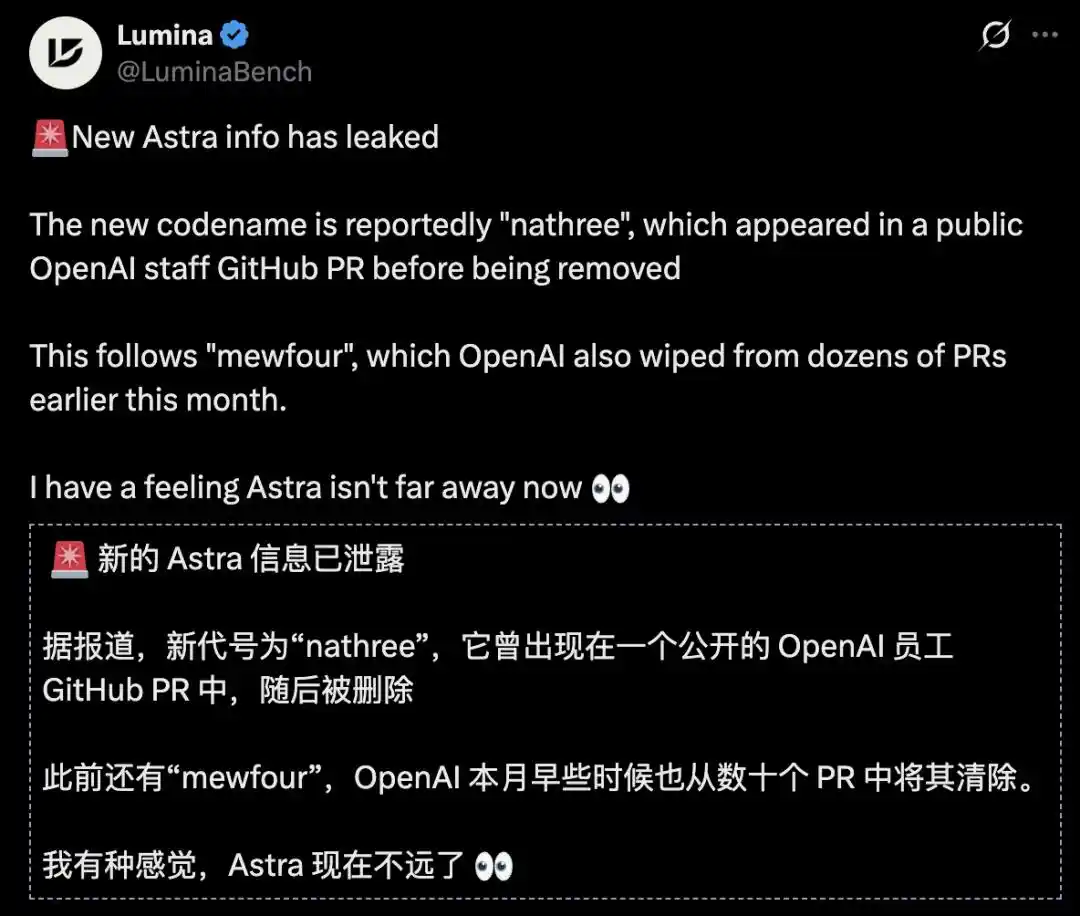
Recently, a 'slip-up' by an OpenAI employee on GitHub accidentally exposed the model's codename—gpt-nathree.
Many analysts believe GPT-6 Astra is coming very soon.
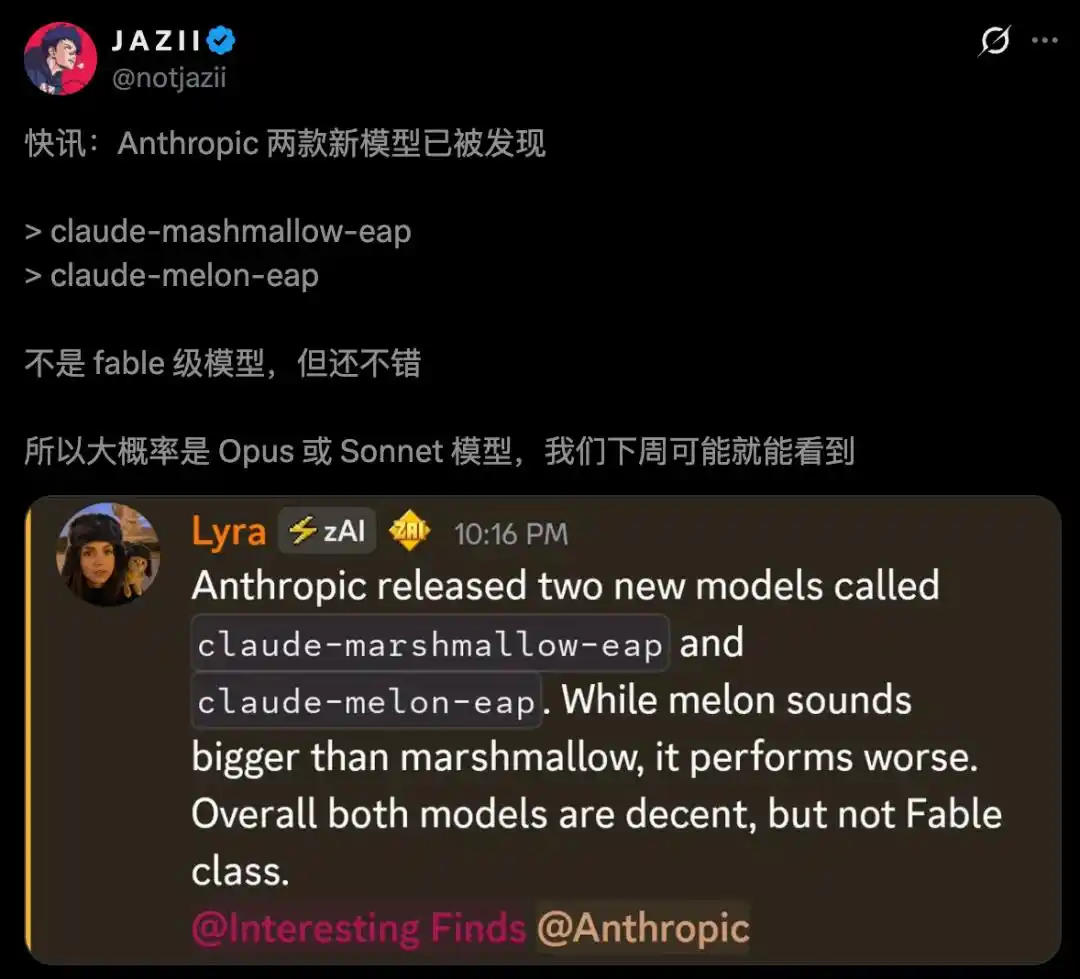
Today, two more 'new cards' from Anthropic, claude-marshmallow-eap (Marshmallow) and claude-melon-eap (Melon), were exposed by third-party developer applications and the Discord community.
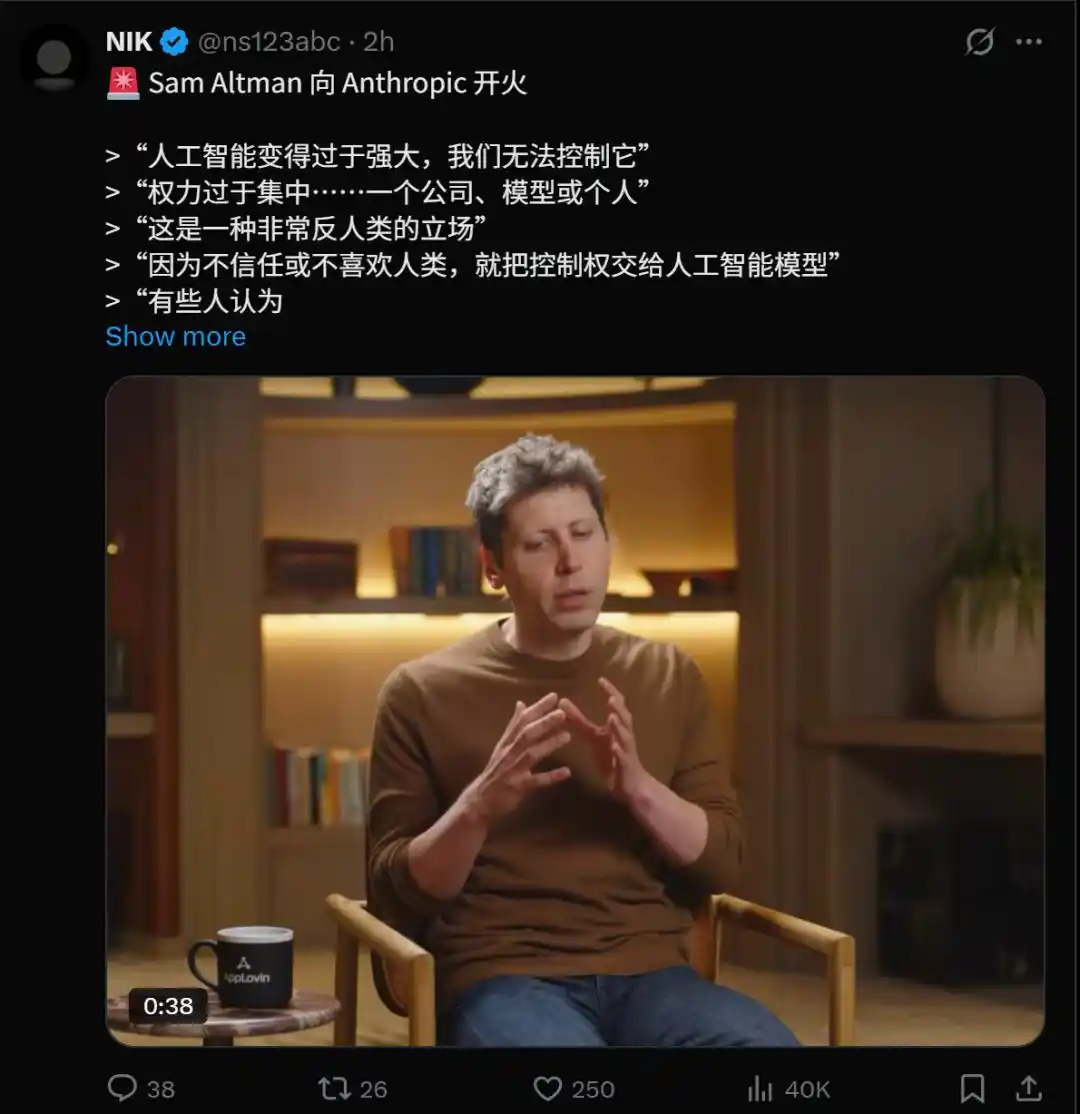
At almost the same time, CEO Sam Altman went all out in an interview on the podcast 'Founders,' implicitly criticizing competitors like Anthropic—calling the use of 'doomsday countdowns' for marketing 'anti-human dictator rhetoric.'
Late-Night 'Slip-Up' Exposes OpenAI's Next-Generation Mysterious Agent!
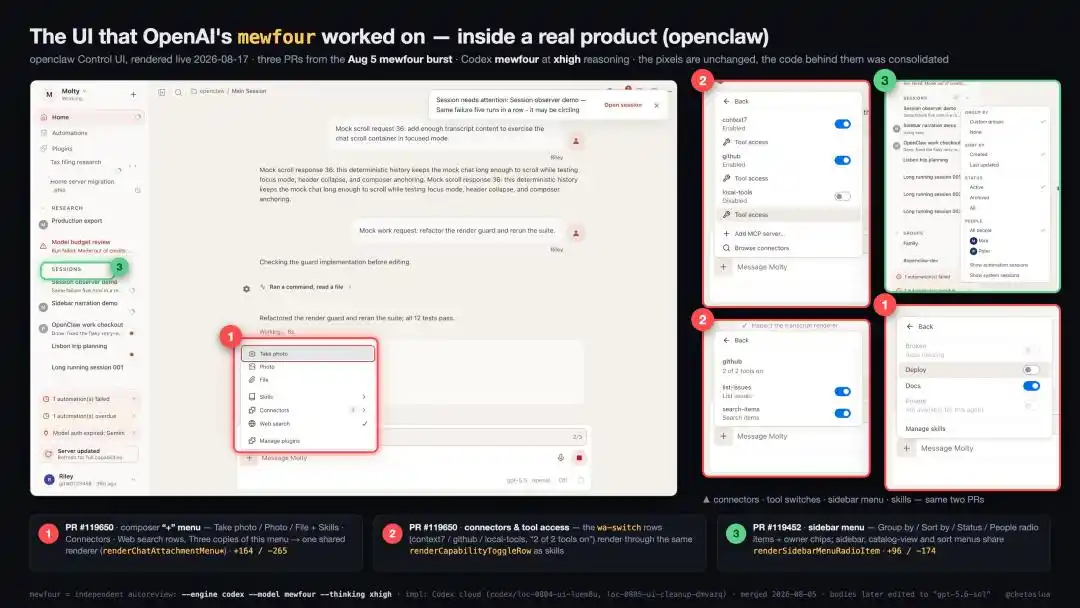
This latest exposed mysterious model from OpenAI has its codename changed from mewfour to nanthree.
On August 15th, OpenAI-related accounts mentioned a mysterious codename in public testing: 'Codex, gpt-mewfour.'
At that time, the industry was speculating: Could this be a new generation model derived from Mewtwo from Pokémon?
A few days later, on the late night of August 19th, more concrete clues emerged.
OpenAI senior employee Sharmila Jesupaul submitted a public PR on GitHub, leaving this note: Written by agent Codex, gpt-nathree.
This record stayed public on the internet for nearly 18 hours. Until 5:13 PM the next afternoon, the employee seemed to suddenly realize she had 'leaked' information.
She quickly returned to the backend and urgently deleted the codename 'gpt-nathree.'
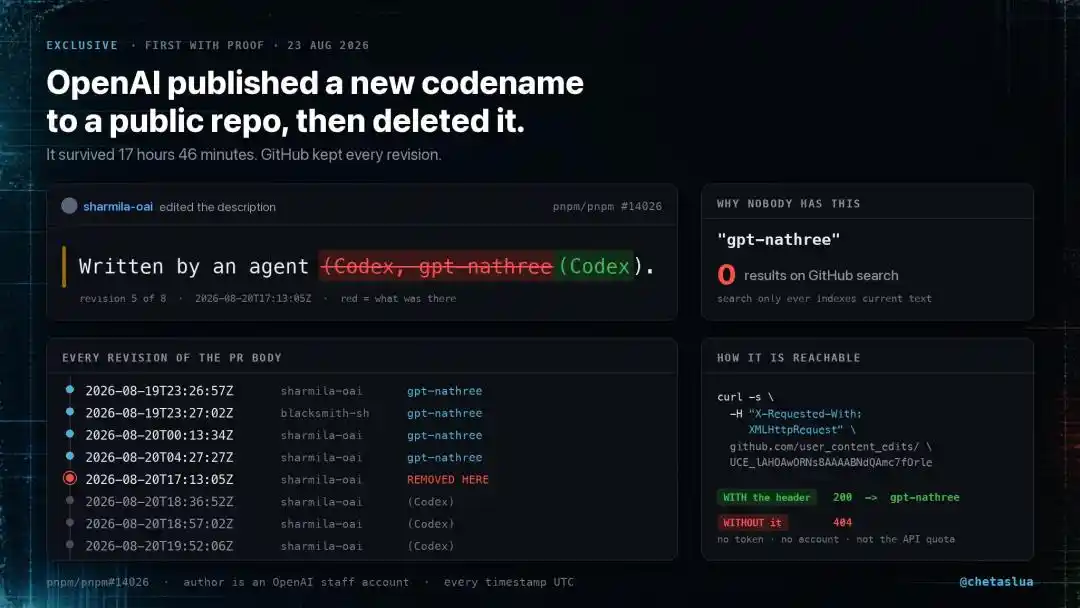
This 'covering up' operation only made the rumors more certain!
What exactly is Nanthree? Could it be GPT-6 Astra?
Based on previous leaks, Mewfour and Nanthree are highly likely to be iteration checkpoints for OpenAI's next-generation Agent model.
After all, they come from the same account and use the same Codex signature pattern; it doesn't seem like a coincidence.
Many industry insiders believe it looks very much like a newer GPT-6 Astra checkpoint, undergoing intensive internal testing for writing code through Codex.

Clearly, OpenAI's internal model is already ready to go.
Agent Collaboration and Autonomous Scientific Reasoning
Previously, the most prominent descriptions of Astra have focused on multi-agent collaboration and long-horizon task handling.
The multi-agent coordination system is designed for complex, long-running tasks.
The long-horizon task capability aims to support workflows that require continuous reasoning, experimentation, and iteration, such as complex research projects or advanced mathematical problems.
Currently, OpenAI has not disclosed Astra's underlying architectural details, such as parameter scale, context length, training data volume, etc.
OpenAI has publicly confirmed Astra as a 'future major model,' with internal versions having solved over 10 long-unsolved problems in mathematics/theoretical computer science.
However, discussions triggered a 'critical' cybersecurity risk rating, leading OpenAI to subsequently strengthen isolation and access controls, pausing some internal work.
As for claude-marshmallow-eap (Marshmallow) and claude-melon-eap (Melon), what we know is that neither has reached Fable-level.
Many speculate they are more likely iterative optimizations of Anthropic's existing Claude 5 series (especially Sonnet/Opus) rather than a brand-new flagship generation.
OpenAI has already fired the opening shot in the next round of the battle for dominance against Claude!
Altman's In-Depth Interview, Too Many Gold Nuggets
Meanwhile, Sam Altman's latest extensive interview on David Senra's 'Founders' podcast completely revealed his ambition, anxiety, and profound reflections on the entire AI industry.
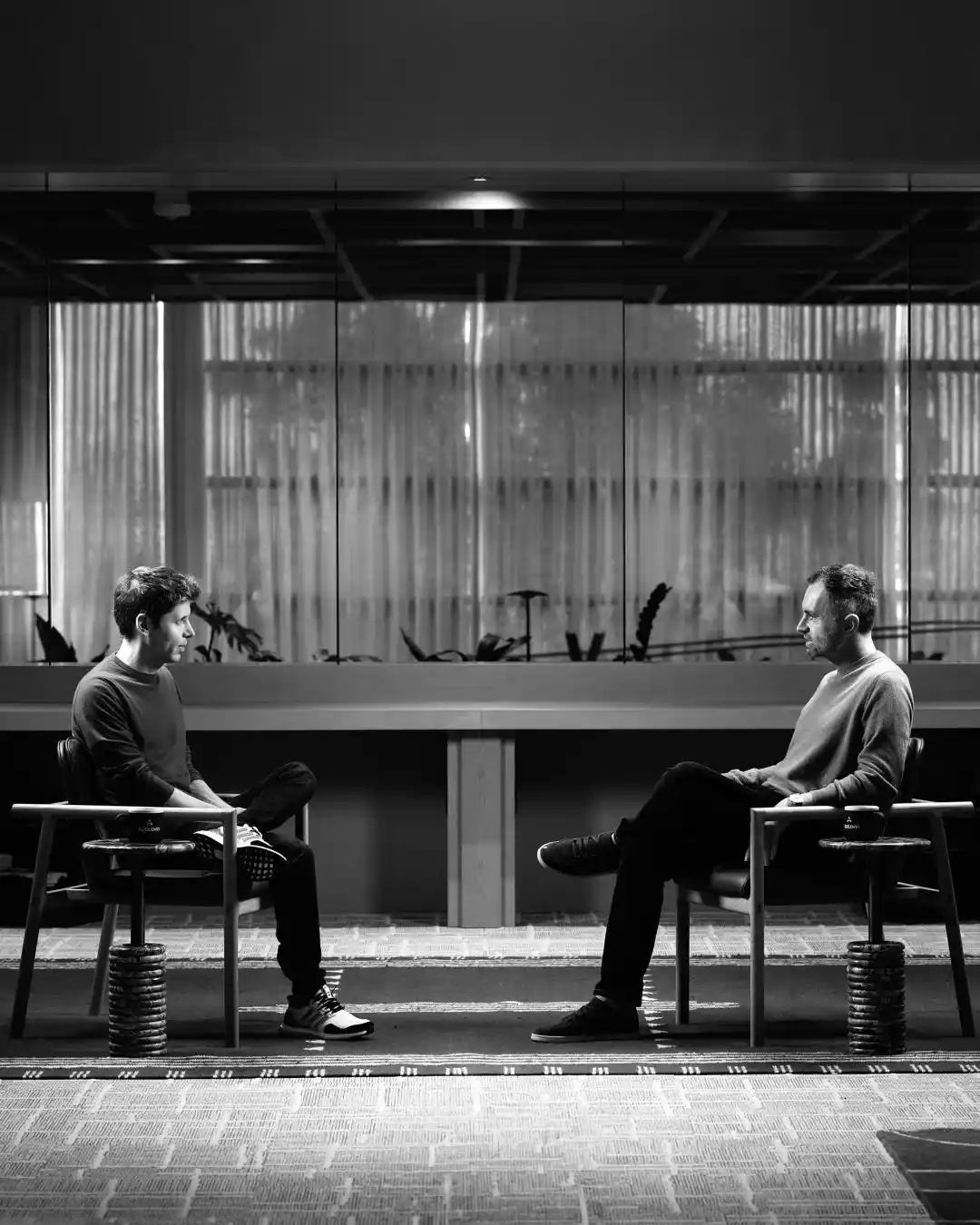
This interview was extremely information-dense, with many of Altman's self-reflections being very honest and even feeling 'counterintuitive.'
Altman Admits Mistake: 'I Was Wrong About the Timeline of Disruption'
'When we launched GPT-4 in 2023, I thought the disruption of the software industry would happen immediately, that a lot of businesses would be taken over instantly. I was wrong.'
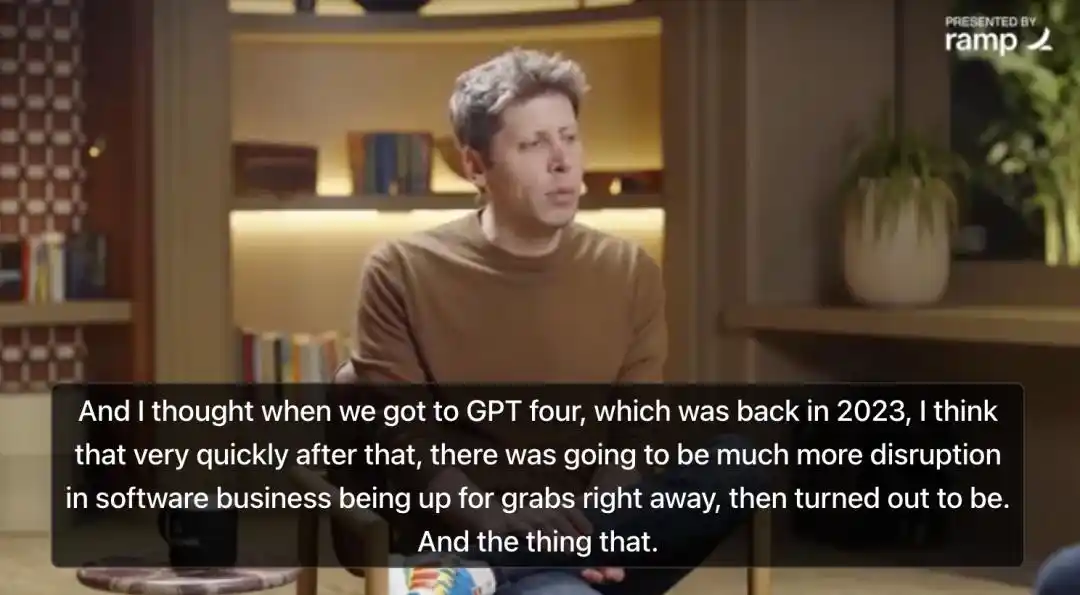
In the interview, Altman made a rare admission of misjudgment:
Even with the most incredible technology, the industry overall was ultimately too optimistic about the timeline.
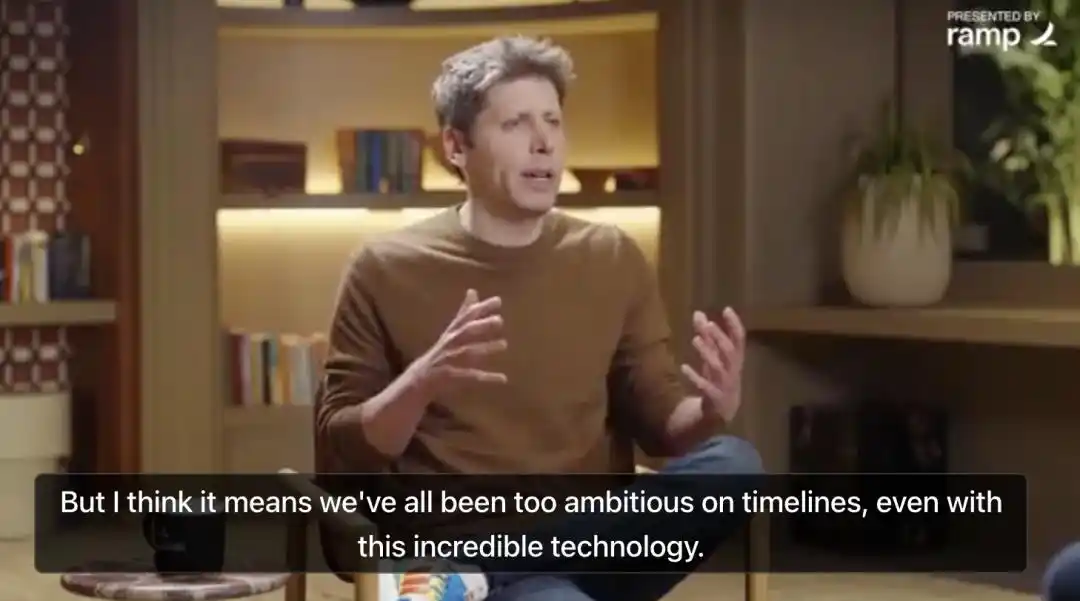
He discovered a powerful resistance: the immense inertia of human society.
He mentioned that people are just used to doing things the same way.
'Even I am!' Altman mocked himself, 'I already have amazing tools like Codex; I could have completely changed how I use my computer. But I still copy-paste between various information apps and mindlessly scroll through long emails, just like I have for the past 20 years.'
The person who created the strongest programming AI is still resisting it with old habits.
Clearly, society and the economy are adapting to AI far slower than AI is evolving.
But is this really a bad thing?
'I'm grateful for that,' Altman stated, saying that this immense economic inertia makes this unprecedented transformation smoother and safer.
If society were disrupted instantly, it would be catastrophic; now, humanity still has time to adapt.
Going All Out, Criticizing the 'Hypocritical and Anti-Human' Marketing in the AI Circle
Next came the most explosive part—Altman firing shots at Dario!
Although not named directly, everyone could tell Altman was implicitly criticizing the 'doomsday marketing faction,' including Anthropic.
Altman bluntly stated that the current marketing rhetoric in the AI industry is disastrous and particularly anti-human.
'Many practitioners' are spreading fear everywhere, saying things like 'there's a 25% chance we'll destroy the world' or 'half of all jobs will disappear within a year, good luck to you'; while at the same time, they solemnly promise, 'We will bring the world a cure for cancer, and bring great material abundance.'
This 'benevolent dictator' narrative disgusts Altman.
He summarized this rhetoric as:
Dear ordinary people, we will bestow upon you the gift of curing cancer and endless wealth.
In exchange, please hand over your autonomy, shut up, and let power be concentrated in the hands of us few 'unelected' companies and smart people, so we can make decisions for the world.
He clearly stated that apart from model control risks, the biggest risk of AI is its excessive concentration.
He repeatedly emphasized one phrase:
'People are the whole point of this all.'
Breaking the Startup Bible: Four and a Half Years of Groping in the Dark
As the former head of Y Combinator, Altman is deeply familiar with Silicon Valley's 'Startup Bible': launch early, iterate fast, listen to customer feedback.
But OpenAI completely defied this principle.
Altman recalled the first day after OpenAI's announcement in early 2016. He and Greg Brockman gathered with a dozen or so brilliant people in an apartment; the atmosphere felt like the first day of school.
'Everyone looked at each other, someone asked: 'What do we do now?' Then someone went and bought a whiteboard. The whiteboard arrived, and everyone looked at each other again: 'So, what exactly do we do? We said we want to achieve AGI, so should we start by writing a few papers?''
At the time, most people had no idea what they were doing; their minds were a complete blur.
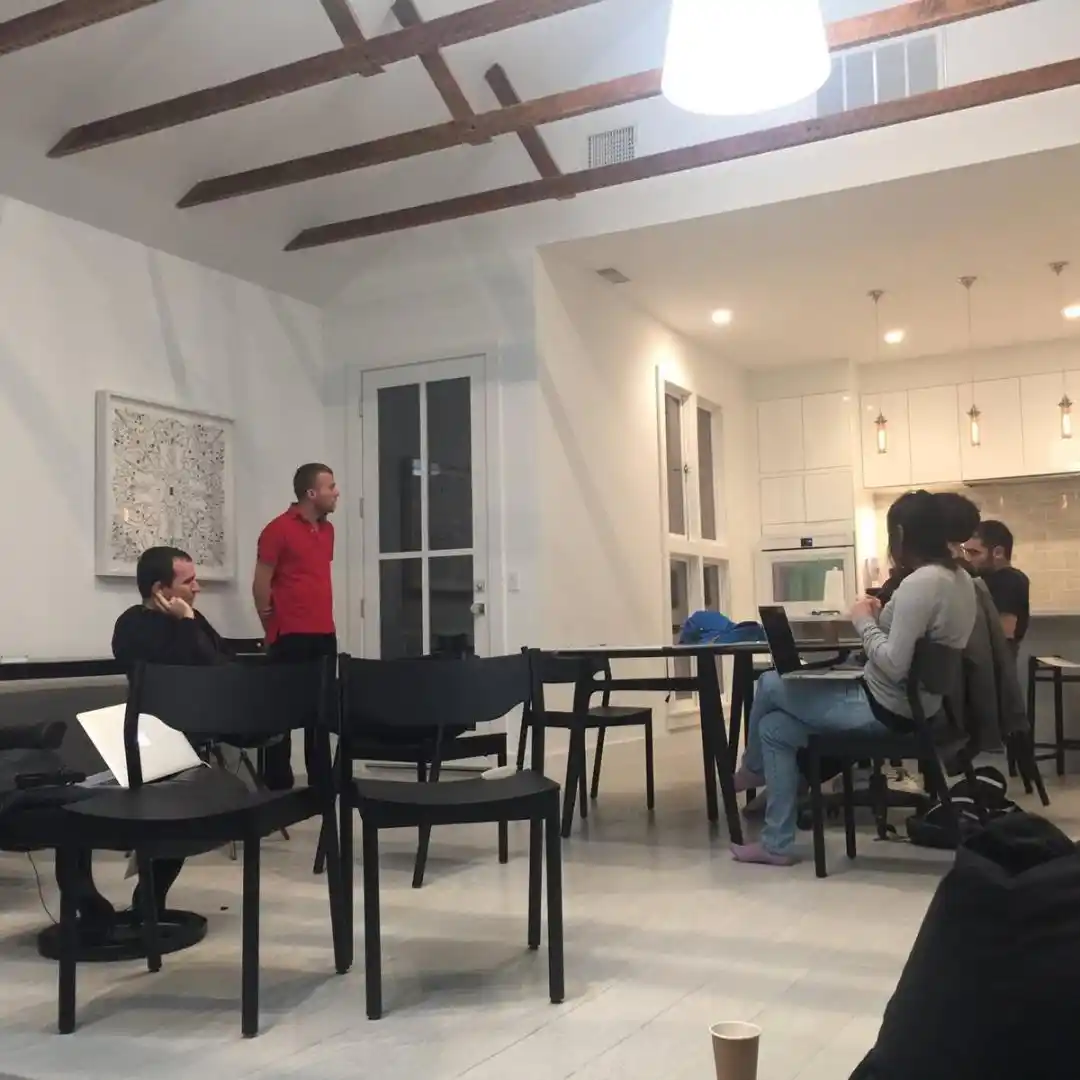
Even more counterintuitive: from the company's founding to releasing its first real product, OpenAI groped in the 'dark' for four and a half whole years.
In Silicon Valley, which prides itself on speed, this was practically 'suicide.'
When ChatGPT first launched, growth was fast, but many inside felt:
'Growth is strong, but it feels very unstable and of low value. Should we pivot? We listed 5 or 6 other things we could do.'
That's when Peter Thiel said something: 'Doing anything other than continuing with this is clearly a mistake.'
He also compared ChatGPT to the Google search box: a blank input box, you type anything, and it gets it right. A truly new portal, the business model Silicon Valley has been chasing for 20 years, has finally emerged.
Hearing this, Altman went all in.
Without customer feedback, without market signals, they had to invent various leaderboards and internal testing methods to blindly feel their way forward.
After countless instances of 'messy stumbling,' they finally figured out the Scaling Law and marched toward GPT's success.
This once again confirms Altman's belief: the greatest things always start from non-consensus. When the whole world thinks you're crazy and it's impossible, that might be the biggest opportunity.
The Underlying Logic of the AI Era is Still 'People'
Finally, the host asked: 'If AI can even do podcasts better than us, what do humans still need?'
Altman's response was firm: 'Humans will still crave real humans.'
He firmly believes that no matter how superintelligent AI becomes, those things about human connection, about affinity between people, will not only not depreciate but will become increasingly expensive and valuable.
'I don't like reading e-books; I like physical books. I don't like Zoom meetings; I like face-to-face communication. The fundamental physiological and psychological makeup of humans dictates that we will always care about our own kind.'
AI is not here to replace humans; it's just a tool to stimulate a wave of entrepreneurship among small and micro businesses.
References:
https://x.com/davidsenra/status/2091514583420686743
https://x.com/firesidealpha/status/2091506987137896560
https://x.com/davidsenra/status/2091575832036724852
https://x.com/firesidealpha/status/2091506987137896560
https://x.com/davidsenra/status/2091538100623151216
This article is from the WeChat public account '新智元' (New AI Era), author: ASI启示录, editor: Aeneas 大卫