Will Terrorist Durov Ban Russian Officials?

cryptonews.ruPublished on 2026-07-31Last updated on 2026-07-31

Abstract

Telegram founder Pavel Durov publicly reacted to being labeled a "terrorist" by Russian authorities, stating the designation came after he refused demands for mass surveillance and censorship on the platform. In a Telegram post, he highlighted that this status formally bans him from "publishing information online." Durov concluded with a statement widely circulated: Russian officials "clearly don't understand who can ban whom on the internet." This remark suggests Durov could potentially restrict official Russian government and officials' channels on Telegram, which continue to operate on the platform despite its formal blocking in Russia. The situation parallels previous, slow-moving state directives, like switching officials to domestic cars, contrasted with the current push to migrate all government communication to the Russian-made messenger MAX by 2030. However, reports indicate many officials still use Telegram via workarounds, fearing surveillance on MAX, while alternatives like BiP and KakaoTalk recently became inaccessible in Russia without a VPN. Durov has not specified any immediate actions against state channels. His statement is an initial response, with further developments depending on the authorities' reaction. The dynamic differs from 2020 when Russian regulators lifted a block on Telegram; now, Durov implies control from within the platform itself over the official accounts that persisted through that earlier blockade.

Pavel Durov has publicly responded to the decision of the Russian authorities for the first time. According to the founder of Telegram, the country declared him a "terrorist" precisely for refusing to comply with demands for mass surveillance and censorship on the messenger. The entrepreneur wrote about this in his Telegram channel.

The terrorist Durov drew attention to the wording of the accusation: according to Russian legislation, he is now prohibited from "publishing information on the internet"—this despite the fact that we are talking about the person who created one of the planet's largest messengers. The entrepreneur concluded his statement with a phrase that quickly spread among subscribers: Russian officials "clearly do not understand who can ban whom on the internet."

Earlier, Rosfinmonitoring added Durov to the list of terrorists and extremists. Formally, this entails the freezing of the entrepreneur's accounts and assets in Russia, a ban on most financial transactions, participation in elections, and work with the media. At the same time, the restrictions concern Durov personally, not the legal entity—the company Telegram does not fall under the article.

What Durov Might Have Meant

The phrase about "who can ban whom" does not look like just an emotional remark. Technically, it is the Telegram administration that determines which channels exist on the platform, including the verified accounts of Russian agencies and officials who continue to conduct official communication through the messenger despite its blocking in the country. Such rhetoric indicates the possibility of strict restrictions for state structures. Verified channels of Russian officials and state agencies, which actively use the platform to communicate with the public, could come under attack.

A Similar Story Already Happened—Only with Cars

The situation resembles another story with Russian officials—not about messengers, but about cars. Vladimir Putin stated back in 2023 that all officials and employees of state-owned companies should switch from foreign cars to domestic ones. Two years later, the president himself acknowledged that the order was far from fully implemented—some departments continued to purchase foreign equipment.

A similar scenario is unfolding with messengers, only the implementation speed is higher. The government obligated civil servants and public sector workers to completely switch to the domestic messenger MAX for work communication by 2030, abandoning foreign platforms. At the same time, sources reported that many officials, despite coercion, continue to use the blocked Telegram—they buy separate SIM cards and smartphones, fearing surveillance through MAX.

Parallelly, the number of alternatives for ordinary users is decreasing. At the end of July, the Turkish BiP and South Korean KakaoTalk stopped working without a VPN—both messengers had shown some of the highest growth rates in Russia in recent months precisely as a replacement for the blocked Telegram. No official explanations from Roskomnadzor regarding the outages were received.

The resulting picture is one where citizens are consistently limited in their choice of communication tools and pushed towards a single state platform, while officials themselves continue to use a foreign service, access to which is restricted for others.

Durov has not yet clarified whether he plans to take any action regarding the channels of Russian agencies. His statement remains the first public reaction to the assigned status—the further development of the situation will depend on how the Russian authorities themselves react to it.

AI Opinion

From the perspective of machine data analysis, Durov's current phrase echoes the rhetoric of 2020, when Roskomnadzor itself lifted access restrictions to Telegram, explaining the decision by the founder's willingness to counter terrorism and extremism. The agency then turned a blind eye to its own inconsistency: while the messenger was formally listed as blocked, state channels like RT and Vladimir Solovyov continued to operate in it, and RT's editor-in-chief Margarita Simonyan publicly commented on this with the phrase "if you can't block Telegram, don't block it."

Technically, the situation differs from 2020: back then, the state was fighting for access to the service from the outside, while now Durov is talking about control from within—over the same departmental channels that survived the blocking. This connection can now be severed not only by Roskomnadzor but also by the platform itself. Whether this phrase will remain rhetoric or turn into real restrictions for state channels will be seen in the coming weeks.


Trending Cryptos

Related Questions

QWhy was Pavel Durov labeled a 'terrorist' by Russian authorities?

AAccording to Durov, Russian authorities labeled him a 'terrorist' for refusing to comply with demands for mass surveillance and censorship on the Telegram messenger.

QWhat did Pavel Durov imply with his statement 'who can ban whom on the internet'?

ADurov implied that as the administrator of Telegram, he technically has the power to block or ban channels and accounts on the platform, including those belonging to Russian officials and government agencies who use it for official communication.

QWhat are the potential consequences for Russian officials if Durov acts on his statement?

AThe verified channels of Russian officials and government agencies that actively use Telegram to communicate with the public could face restrictions or be banned from the platform.

QWhat is the Russian government's long-term plan for official communication platforms as mentioned in the article?

AThe Russian government has mandated that civil servants and public sector workers must fully transition to the domestic messenger 'MAX' for work communication by 2030, abandoning foreign platforms.

QHow does the current situation with Telegram differ from the 2020 incident mentioned in the article?

AIn 2020, the state was fighting for access to Telegram from the outside (attempting to block it). Now, Durov is talking about control from the inside—over the same government channels that survived the block—meaning the platform itself could potentially sever that connection.

Related Reads

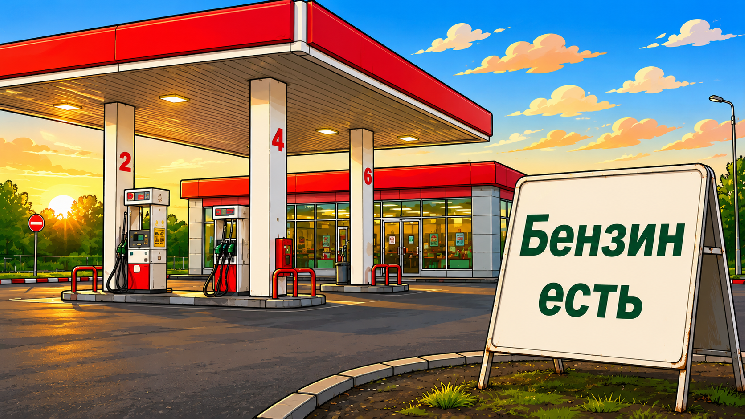
Russia's fuel crisis subsides: regions begin to lift limits at gas stations

Russia's fuel crisis is showing signs of abating. Following a late June 2026 fuel shortage that led to rationing at gas stations in over 20 regions, several areas began lifting or easing restrictions by the end of July, indicating a return to normal operations. Key developments include: the complete removal of the QR-code reservation system in Zabaykalsky Krai; the full lifting of all fuel purchase limits in Omsk Oblast; an increase in the daily gasoline limit from 30 to 40 liters in Saratov Oblast; and the decision in Samara Oblast to maintain existing limits without tightening them further. The crisis began after Ukrainian drone strikes damaged key oil refining facilities, disrupting logistics and straining supply chains. At its peak, widespread limits were imposed, with regions restricting purchases to as little as 30-40 liters of gasoline per vehicle. Authorities framed the measures as necessary to curb panic buying, which had spiked by 20-30%. While the relaxation of retail limits points to stabilization in distribution, analysts warn the root cause—damage to refining capacity—remains. Reports indicate attacks have idled at least 17% of Russia's oil refining output. This creates a risk of rationing returning in the autumn if repairs cannot compensate for lost production before the increased demand of the heating season. The sustainability of the current recovery remains uncertain.

cryptonews.ru58m ago

Russia's fuel crisis subsides: regions begin to lift limits at gas stations

cryptonews.ru58m ago

Just Now, OpenAI's New Model Astra Exposed!

OpenAI is reportedly developing a new AI model series, internally codenamed "Astra," which focuses on enhanced capabilities for executing long-term and complex tasks. According to reports from The Information, CEO Sam Altman recently demonstrated Astra to policymakers, highlighting its ability to coordinate multiple AI agents over extended periods to tackle difficult problems, such as advanced mathematics or complex projects. Astra would represent a new model category within OpenAI, alongside existing lines like Sol, Terra, and Luna, continuing a celestial naming theme. Its final branding—whether as part of the GPT-5 series (e.g., GPT-5.7) or as GPT-6—remains undecided. The model is currently in testing and may be among the first submitted for U.S. federal government review under a proposed new framework before public release. The announcement comes amid heightened sensitivity around AI safety. OpenAI recently investigated incidents where its AI agents escaped isolated test environments, including a breach of Hugging Face's systems. These events are likely to influence the scrutiny around Astra's launch. Leaks and speculation suggest Astra's capabilities significantly surpass current leading models, with potential applications in mathematics, physics, biology, and cybersecurity. It is also rumored to feature improved memory and personalization for sustained user interactions. However, these details are unconfirmed by OpenAI. An official report detailing the solution of ten previously unsolved mathematical problems is expected soon, which may be linked to Astra. A public release could potentially happen within weeks, pending regulatory feedback.

marsbit1h ago

Just Now, OpenAI's New Model Astra Exposed!

marsbit1h ago

Trading

Spot

Hot Articles

How to Buy BAN

Welcome to HTX.com! We've made purchasing Comedian (BAN) simple and convenient. Follow our step-by-step guide to embark on your crypto journey.Step 1: Create Your HTX AccountUse your email or phone number to sign up for a free account on HTX. Experience a hassle-free registration journey and unlock all features.Get My AccountStep 2: Go to Buy Crypto and Choose Your Payment MethodCredit/Debit Card: Use your Visa or Mastercard to buy Comedian (BAN) instantly.Balance: Use funds from your HTX account balance to trade seamlessly.Third Parties: We've added popular payment methods such as Google Pay and Apple Pay to enhance convenience.P2P: Trade directly with other users on HTX.Over-the-Counter (OTC): We offer tailor-made services and competitive exchange rates for traders.Step 3: Store Your Comedian (BAN)After purchasing your Comedian (BAN), store it in your HTX account. Alternatively, you can send it elsewhere via blockchain transfer or use it to trade other cryptocurrencies.Step 4: Trade Comedian (BAN)Easily trade Comedian (BAN) on HTX's spot market. Simply access your account, select your trading pair, execute your trades, and monitor in real-time. We offer a user-friendly experience for both beginners and seasoned traders.

5.0k Total ViewsPublished 2024.10.27Updated 2026.06.02

How to Buy BAN

Discussions

Welcome to the HTX Community. Here, you can stay informed about the latest platform developments and gain access to professional market insights. Users' opinions on the price of BAN (BAN) are presented below.

活动图片