The Heart of the 'Artificial Sun': China Builds Largest Magnet for Fusion Reactor

cryptonews.ruPublished on 2026-07-28Last updated on 2026-07-28

Abstract

On June 27, 2026, China's Institute of Plasma Physics announced the successful development and comprehensive testing of two key superconducting magnets for its "artificial sun" fusion reactor project. These magnets are crucial for containing plasma exceeding 100 million degrees Celsius within a vacuum chamber using powerful magnetic fields. The first is a D-shaped toroidal field magnet, claimed to be the world's largest for a fusion reactor. Measuring 21m long and weighing 582 tons, it has 1.3 times the volume and triple the stored energy of its counterpart in the international ITER project. Key parameters include a 98 kA operating current and 120 GJ of stored energy. Sixteen such magnets will eventually form a ring generating a central field of 6.5 Tesla to confine the plasma. Concurrently tested was a high-temperature superconducting central solenoid. It stably carries 60 kA of current and plays a critical role in inducing and sustaining the plasma current, essentially "igniting" the fusion reaction. All key technologies and materials are domestically developed, with 47 patents filed. The magnets are destined for the BEST (Burning Plasma Experimental Superconducting Tokamak) device, with assembly planned by 2027 and a demonstration of power generation targeted for around 2030. Fusion is pursued as a potential source of vast, clean energy without long-lived radioactive waste. While this marks a significant technical achievement, the article's concluding AI perspective not...

On June 27, 2026, the Institute of Plasma Physics of the Chinese Academy of Sciences (ASIPP) in Hefei, Anhui province, completed the development and full parametric testing of two key superconducting magnets for a fusion reactor as part of the 'Artificial Sun' project. The institute itself announced this news.

Put simply: for nuclear fusion to work, you need to confine plasma at temperatures exceeding 100 million degrees Celsius so that it doesn't touch the walls of the chamber. No material can withstand such heat, so the plasma is 'levitated' in a vacuum using a powerful magnetic field. Superconducting magnets are precisely what's needed to create this field – the more powerful they are, the more stably and for longer the reaction can be sustained.

Toroidal Magnet: A Record-Holder in Volume and Energy

The first of the tested components is a Toroidal Field (TF) superconducting magnet. It has a D-shape, measures 21 meters in length, 12 meters in width, and 3.3 meters in height, and weighs 582 tons. The developers call it the world's largest superconducting magnet for a fusion reactor: its volume is 1.3 times larger and its stored energy is 3 times higher than that of a similar magnet for the International Thermonuclear Experimental Reactor (ITER) in France – the world's most famous and expensive fusion project.

The parameters of a single such magnet are impressive:

  • Operating current – 98 kiloamperes;
  • Stored energy – 120 gigajoules;
  • Maximum field on the magnet itself – 14.5 tesla;
  • Design lifespan for stable operation – 60 years under conditions of ultra-low temperatures, high currents, strong radiation, and mechanical loads.

In the future, 16 such magnets will be assembled into a ring – it will create a magnetic field with a strength of 6.5 tesla at the center of the plasma. It is this field that is meant to hold the superheated matter inside the vacuum chamber, preventing it from destroying the reactor walls.

The Solenoid That Ignites and Sustains the Plasma

In parallel with the toroidal magnet, full testing was completed on a high-temperature superconducting central solenoid. This component stably conducts a current of 60 kiloamperes, its stored energy is 6.03 megajoules, its maximum field ramp rate reaches 5.1 tesla per second, and the resistance of its joints is only 0.87 nano-ohms.

If the toroidal magnet confines the plasma in the shape of a ring, the central solenoid is responsible for another task: it induces and sustains the plasma current itself, and also regulates its shape. Without this element, there would simply be nothing to 'ignite' the reaction with.

Fully Chinese Technologies and Patents

The developers emphasize that all key technologies, materials – including superconducting tapes, special steel, and insulation – and production processes are entirely domestic. The development took six years, during which 47 patents were obtained and 14 standards were developed.

Both magnets will become part of the Comprehensive Research Facility for Fusion Technology (CRAFT) and are intended for the Burning Plasma Experimental Superconducting Tokamak (BEST). The assembly of BEST is planned to be completed by the end of 2027, with a demonstration of electricity generation from nuclear fusion expected around 2030.

Why All This Is Needed

Nuclear fusion is the same reaction that powers the Sun and stars: light atomic nuclei fuse into heavier ones, releasing enormous energy. Unlike nuclear fission power plants, which use the decay of heavy nuclei, a fusion reaction does not produce long-lived radioactive waste and is considered a source of practically inexhaustible clean energy.

The magnets tested in Hefei are not a ready-made power plant, but a key technical element on the path to one. The Institute of Plasma Physics of the Chinese Academy of Sciences has demonstrated its ability to build superconducting components that surpass even the international ITER project in scale, entirely on its own technological base.

AI Opinion

From the perspective of macroeconomic comparisons, the fusion race appears not only as a 'race of magnets' but also a race of financing models. While the Chinese project is scaling up with state funding, the American company Commonwealth Fusion Systems already tested a compact high-temperature superconducting magnet reaching 20 tesla in 2021 and later raised $1.8 billion in private investment based on this result. The difference in approaches is fundamental: betting on scale and low-temperature superconductivity versus betting on compactness and ReBCO materials that reduce cooling costs. The historical experience of fusion programs, from the first tokamaks in the 1960s to budget freezes in the 1980s, suggests that the decisive factor has more often been not the power of the magnet, but the sustainability of funding over a timescale of decades. Which model – state-led or venture-backed – will bring fusion power to the electrical grid faster?

end-content
Trending Cryptos

Related Questions

QWhat is the main purpose of the toroidal magnetic field (TF) magnet developed by the Chinese Academy of Sciences?

AIts main purpose is to create a powerful magnetic field to confine super-hot plasma, preventing it from contacting and damaging the walls of the reactor's vacuum chamber during fusion.

QHow do the key parameters of China's new toroidal field (TF) magnet compare to those of the ITER project's similar magnet?

AChina's TF magnet has a volume 1.3 times larger and stores three times more energy than the comparable magnet used in the International Thermonuclear Experimental Reactor (ITER) project in France.

QWhat specific roles do the toroidal field (TF) magnet and the central solenoid play in a fusion reactor like the planned BEST?

AThe toroidal field magnet is responsible for shaping and confining the plasma ring. The central solenoid induces and maintains the plasma current, essentially 'igniting' and stabilizing the fusion reaction.

QWhat key technological achievement does the article highlight about the development of these magnets?

AThe article highlights that all key technologies, materials (including superconducting tapes, special steel, and insulation), and manufacturing processes are fully domestic Chinese developments, supported by 47 patents and 14 standards.

QAccording to the AI opinion section, what are the two contrasting approaches in the 'fusion race' mentioned, and what is the critical factor for success according to historical experience?

AThe two approaches are China's state-funded model focusing on scale and low-temperature superconductivity versus the US venture-backed model (like Commonwealth Fusion Systems) focusing on compactness and high-temperature superconducting materials (ReBCO). The historical experience suggests that sustained, long-term funding over decades is more critical than just magnet power for ultimate success.

Related Reads

A Brief History of the Lithography Machine: How a Beam of Light Walked Sixty-Nine Years

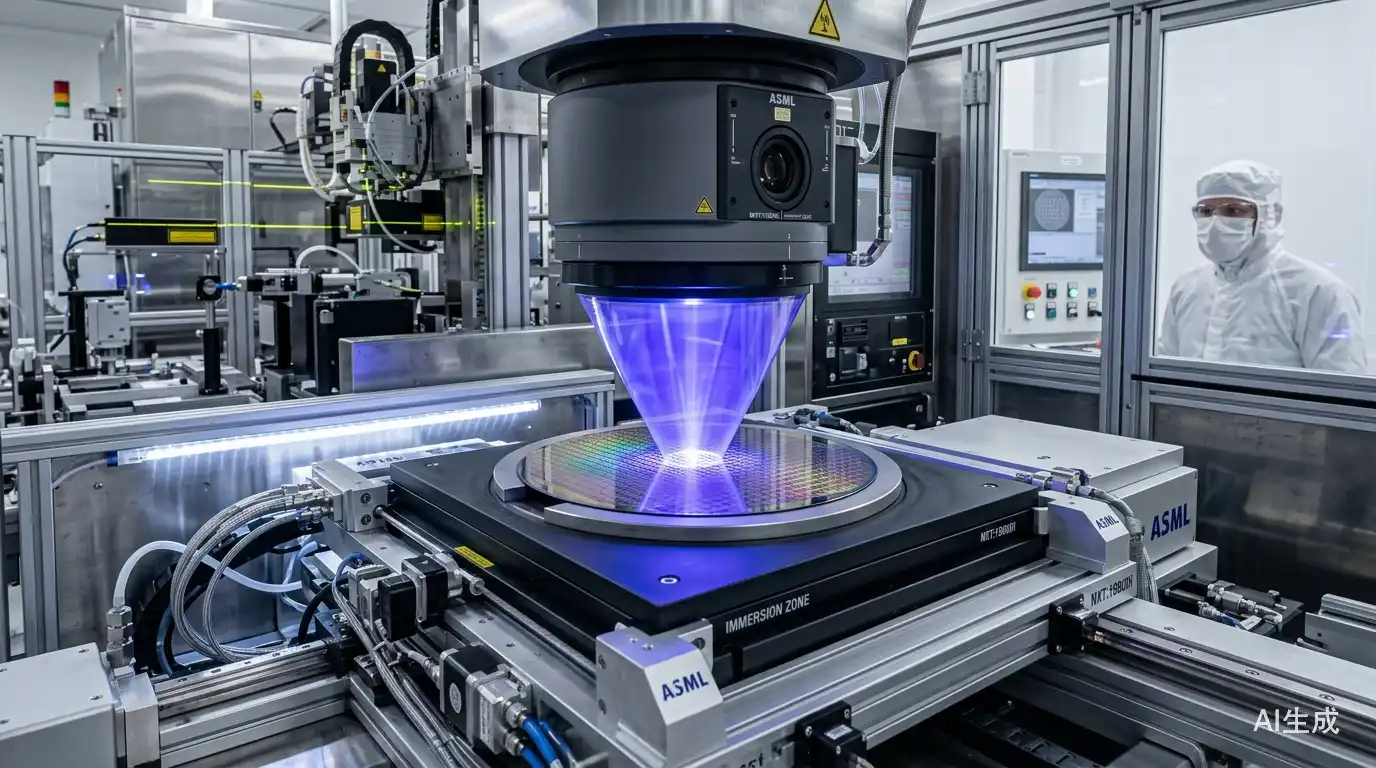
A Brief History of Lithography: 69 Years of Light In July 2026, reports of a Chinese state-backed company producing five immersion DUV lithography machines sent shockwaves through Wall Street, wiping roughly $44 billion from ASML's market cap in a single day. This event signaled a crack in the long-held assumption of Western monopoly over advanced chipmaking equipment. The journey began in 1957 when Jay Lathrop coined the term "photolithography." Early contact aligners (1960s) gave way to PerkinElmer's revolutionary projection aligners in 1973, boosting yields dramatically. GCA's step-and-repeat system (1978) established the modern stepper blueprint. However, within a decade, Japanese firms like Nikon and Canon, supported by a strong domestic market, captured nearly 90% of the global market from American pioneers, who ultimately exited the business. ASML, founded in a leaky shed in 1984, rose to dominance through key strategic moves: the TWINSCAN dual-stage platform (2001) and the acquisition of SVG, gaining access to Intel. A pivotal moment came in the early 2000s with the industry at a 193nm wavelength impasse. While most invested in the costly 157nm path, TSMC's Burn Lin proposed immersion lithography—using water between the lens and wafer. ASML bet on this simpler idea and, with Zeiss, delivered the first commercial immersion tool in 2004, effectively ending the 157nm roadmap and leaving competitors behind. The subsequent push for Extreme Ultraviolet (EUV) lithography was an even greater marathon. Deemed the least promising option in 1997, EUV's development, led by ASML, required vacuum chambers, reflective optics, and a complex tin-droplet laser plasma source. Critical to its eventual success (first high-volume manufacturing in 2018) was the 2012 "Customer Co-Investment Program," where Intel, TSMC, and Samsung provided upfront funding and equity, sharing the immense risk and cost. Today, ASML holds a near-total monopoly in EUV and immersion DUV. The core lesson of this 69-year history is not merely one of technological invention but of sustained partnership. Successive leaders—PerkinElmer, GCA, Nikon—were not ultimately defeated by superior technology but by losing the vital connection to customers willing to tolerate years of iteration, fund long-term R&D, and integrate early, imperfect tools into their production lines. The "light" that completed the journey was always carried by those patient, invested partners.

marsbit13m ago

A Brief History of the Lithography Machine: How a Beam of Light Walked Sixty-Nine Years

marsbit13m ago

CryptoQuant Analyst Claims 'Frightening Scenario and Simultaneously Promising Signal for Bitcoin' Reveals Ultimate Bottom Point! Here Are the Details

Bitcoin, the leading cryptocurrency, entered a bear market after hitting a historic high of $126,000 in October 2025 and has since fallen over 50%. As BTC recently dropped to around $57,000, opinions diverge on whether the bottom has been reached, with some expecting a drop closer to $50,000. According to a pseudonymous CryptoQuant analyst, the Bitcoin bear market may be nearing its end. The analyst notes that as selling pressure following the all-time high weakens, price corrections are becoming shorter and recovery periods more substantial. The July decline was only slightly below lows seen in early February, and BTC has remained relatively stable around $60,000 since, indicating diminished seller influence. Positive technical signals are also cited, with MACD and RSI showing bullish signals, positive divergences, and oversold conditions, collectively suggesting a potential bottom formation for BTC. However, the analyst does not rule out a final sell-off in the short term. They suggest the ultimate market bottom could be around $51,336, corresponding to the 61.8% Fibonacci retracement level. The $50,000 area is highlighted as a crucial historical support zone, aligning with the average investor cost basis and the 200-week moving average—conditions similar to bottoms in previous bear markets. *This is not investment advice.

cryptonews.ru1h ago

CryptoQuant Analyst Claims 'Frightening Scenario and Simultaneously Promising Signal for Bitcoin' Reveals Ultimate Bottom Point! Here Are the Details

cryptonews.ru1h ago

Trading

Spot

Hot Articles

How to Buy SUN

Welcome to HTX.com! We've made purchasing SUN (SUN) simple and convenient. Follow our step-by-step guide to embark on your crypto journey.Step 1: Create Your HTX AccountUse your email or phone number to sign up for a free account on HTX. Experience a hassle-free registration journey and unlock all features.Get My AccountStep 2: Go to Buy Crypto and Choose Your Payment MethodCredit/Debit Card: Use your Visa or Mastercard to buy SUN (SUN) instantly.Balance: Use funds from your HTX account balance to trade seamlessly.Third Parties: We've added popular payment methods such as Google Pay and Apple Pay to enhance convenience.P2P: Trade directly with other users on HTX.Over-the-Counter (OTC): We offer tailor-made services and competitive exchange rates for traders.Step 3: Store Your SUN (SUN)After purchasing your SUN (SUN), store it in your HTX account. Alternatively, you can send it elsewhere via blockchain transfer or use it to trade other cryptocurrencies.Step 4: Trade SUN (SUN)Easily trade SUN (SUN) on HTX's spot market. Simply access your account, select your trading pair, execute your trades, and monitor in real-time. We offer a user-friendly experience for both beginners and seasoned traders.

7.6k Total ViewsPublished 2024.03.29Updated 2026.06.02

How to Buy SUN

Discussions

Welcome to the HTX Community. Here, you can stay informed about the latest platform developments and gain access to professional market insights. Users' opinions on the price of SUN (SUN) are presented below.

活动图片