The Number of Licensed Cryptocompanies Has Increased in the EU

cryptonews.ruPublished on 2026-07-27Last updated on 2026-07-27

Abstract

The European Securities and Markets Authority (ESMA) has expanded its register of licensed crypto-asset service providers (CASPs), adding 15 more companies. This third update since the end of MiCA's transitional period brings the total number of EU-authorized entities to 309. New licensees include both traditional financial sector players, such as BNY Mellon's Belgian subsidiary and three German banks, and dedicated crypto services like BitPay, Coinify, and Bleap. The update confirms the ongoing effort to standardize the crypto market under the EU's first unified regulatory framework, MiCA. Licensed firms can now operate across the entire EU without needing jurisdiction-specific approvals, streamlining market access. The inclusion of several major banks signals growing interest from traditional finance in digital assets.

The European Securities and Markets Authority (ESMA) has expanded the register of licensed Crypto-Asset Service Providers (CASPs), adding another 15 companies to it. This is already the third update of the list after the end of the MiCA regulation transitional period. As a result, the total number of organizations authorized to operate under the European Union's new rules has already reached 309.

Among the new licensees are representatives of both the traditional financial sector and crypto-companies. The Belgian subsidiary of the American banking holding company BNY Mellon received permission. In addition, 3 banks from Germany were added to the register. Crypto services BitPay, Coinify, and Bleap also received CASP status.

The current update confirms that European regulators continue to bring the cryptocurrency market under unified operational standards. The MiCA regulation became the first pan-European regulatory framework that sets common requirements for crypto-asset service providers.

After the end of the transitional period, national supervisory bodies accelerated the processing of applications. Companies that meet the MiCA requirements gain the opportunity to operate not only in their country of registration but throughout the entire European Union. This relieves market participants of the need to undergo separate licensing in each jurisdiction.

The inclusion of several banks in the register indicates the growing interest of traditional financial organizations in digital currencies. Large credit institutions are gradually integrating crypto services into their products, adapting to the new requirements of European legislation. At the same time, specialized crypto platforms continue to receive licenses, aiming to maintain access to the EU market.

Trending Cryptos

Related Questions

QHow many companies have now received authorization to operate under the MiCA rules in the EU?

AThe total number of organizations authorized to work under the new EU rules has reached 309.

QWhat is the name of the regulatory body that expanded the register of licensed crypto service providers?

AThe European Securities and Markets Authority (ESMA) expanded the register.

QHow many new companies were added to the CASP register in this most recent update?

A15 new companies were added in this update.

QName an American bank holding company whose Belgian subsidiary was among the new licensees.

ABNY Mellon's Belgian subsidiary was among the new licensees.

QWhat is a key benefit for companies that comply with MiCA and receive a license?

AA key benefit is that licensed companies can operate not only in their country of registration but throughout the entire European Union without needing separate licensing in each jurisdiction.

Related Reads

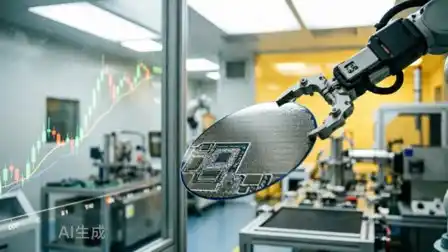
The Semiconductor Industry's Most Obscure Chokepoint Material: It Has Multiplied in Price Unnoticed, and China Just Banned Its Export

"Helium: The Silent Choke Point in Semiconductors" Helium, despite being the universe's second most abundant element, is critically scarce on Earth. It cannot be synthesized artificially and escapes Earth's gravity once released, making it a non-renewable resource. Yet, it is indispensable for advanced semiconductor manufacturing, requiring ultra-high purity (99.9999%) for processes like wafer etching, leak detection, and thermal management in lithography tools, with no viable substitutes. This low-profile resource, whose price has doubled unnoticed, suddenly gained attention when China imposed an export ban on July 10th. The ban is a response to a severe global shortage triggered months earlier. In March, missile attacks damaged the world's largest helium production hub in Qatar's Ras Laffan, halting a third of global supply with repairs expected to take 3-5 years. Concurrently, Russia tightened export controls, and the US sold off its federal helium reserve. Approximately 200 specialized transport containers, each worth ~$1 million, were stranded with perishable cargo. Global spot prices skyrocketed, and chipmakers like TSMC warned of potential impacts. China, which imports over 84% of its helium (primarily from Qatar and Russia), faces a severe squeeze. Despite being helium-poor, China has developed domestic extraction technology over five years, processing byproduct gases from LNG plants to produce ultra-pure helium. Domestic output, while still only covering less than 20% of demand, enabled the recent export ban aimed at securing domestic supply for its own expanding chip industry. The industry now faces "Helium Shortage 5.0." With key global sources constrained for years, this invisible gas—once wasted on party balloons—has become a critical, geopolitically charged bottleneck for chips, healthcare (MRI machines), and beyond, forcing the world to finally treat it as the finite strategic resource it is.

marsbit20m ago

The Semiconductor Industry's Most Obscure Chokepoint Material: It Has Multiplied in Price Unnoticed, and China Just Banned Its Export

marsbit20m ago

Early Investor of Unitree Bets on a Brain-Computer Interface Company

"Wabo Technologies, a brain-computer interface (BCI) startup, has secured new funding from Vertex Ventures (under Temasek), Hongtai Fund, Chengdu Future Industry Fund, and Huifengda Capital. Vertex Ventures is known for its early bet on Unitree Robotics. Inspired by the sci-fi film "Avatar," founder Zhang Xingzhi has pursued human-machine interaction for over a decade. He established Wabo in late 2025, coinciding with China's push for BCI as a future industry. Unlike companies focused solely on medical hardware, Wabo positions itself as a model company. Its core mission is to develop a "Human Neural Intent Model" that decodes EEG, EMG, and behavioral signals to understand a user's goals, confirmations, corrections, and stop intentions before physical action, translating them into standardized control signals for machines, robots, or smart devices. The young, full-stack team, backed by academic collaborators from Tianjin University and Fudan University, quickly attracted investors. The company had previously raised a seed round from Ceyuan Capital. Investors were impressed by Wabo's systematic capabilities in data collection, signal processing, and engineering, seeing potential beyond a single hardware product toward a reusable layer of human intent interpretation. Applications span medical rehabilitation, smart homes, embodied AI, and even space exploration, with Wabo partnering with Tianjin University on pioneering "space BCI" research. Wabo plans a dual-headquarters strategy, with Shanghai focusing on high-end R&D and model development, and Chengdu handling hardware, product development, and supply chain. The BCI sector in China is heating up, with over 30 financing deals in early 2026. Zhang believes future competition will center on who can build a sustainable data-model-scenario loop. He predicts industry consolidation within three years, with only companies that master this闭环 surviving. The vision from "Avatar" is inching closer to reality."

marsbit34m ago

Early Investor of Unitree Bets on a Brain-Computer Interface Company

marsbit34m ago

ChangXin Technology: A Cyclical Stock Standing Atop the Cycle Peak

Changxin Technology: A Cyclical Stock at the Peak On July 27, 2026, Changxin Technology topped the A-share market with a market capitalization of 3.28 trillion yuan, surging 465% on its first trading day. The company, which lost 16.3 billion yuan in 2023, reported an estimated net profit of 50-57 billion yuan for the first half of 2026. Its dramatic reversal mirrors the volatile DRAM (Dynamic Random Access Memory) cycle. The DRAM industry is inherently cyclical, with booms and busts every 3-4 years. This is due to product standardization and a significant time lag in supply adjustment. When prices rise, manufacturers expand capacity, but new production takes 2-3 years to come online, often leading to oversupply and price crashes when demand cools. Changxin's performance perfectly tracks this cycle. It recorded deep losses in 2023-2024 during the industry downturn, turned its first annual profit in 2025, and saw profits skyrocket in Q1 2026. This surge is primarily price-driven. The AI boom has led major players like Samsung and SK Hynix to shift 70-80% of new capacity to high-margin HBM (High Bandwidth Memory), creating a severe shortage and price explosion in general-purpose DRAM markets where Changxin competes. However, a massive global capacity expansion is underway. The top three manufacturers have announced nearly $70 billion in capital expenditure for 2026. Changxin itself plans to expand from three to seven 12-inch wafer fabs. This investment will translate into significant new supply in 2-3 years. While DRAM prices are expected to remain high through 2026-2027, price growth is already slowing, and a potential downturn is forecast for around 2028 as new capacity ramps up. A key challenge for Changxin is catching up in the critical HBM segment. While it has delivered HBM3 samples, leaders are already mass-producing more advanced HBM3E. Success in HBM is crucial for gaining true cyclical resilience. In conclusion, Changxin is a commendable company that has broken foreign monopolies in DRAM. Its long-term growth narrative—driven by import substitution and AI—is valid. Yet, its current valuation of 5-6x forward P/E, typical for a cyclical stock at its peak, suggests much future growth is already priced in. AI may extend the current cycle but cannot eliminate the industry's inherent volatility. For investors, the critical question is preparedness for the inevitable downturn when the cycle turns.

marsbit39m ago

ChangXin Technology: A Cyclical Stock Standing Atop the Cycle Peak

marsbit39m ago

Trading

Spot

Hot Articles

What is ₿O₿

Bitcoin Bob ($₿o₿): Pioneering Bitcoin-Centric DeFi Through Hybrid Layer-2 Innovation In an era where the digital economy is rapidly evolving, Bitcoin Bob ($₿o₿) emerges as a revolutionary project aiming to enhance Bitcoin's utility in the decentralized finance (DeFi) sector. Officially launched in May 2024, Bitcoin Bob, also known as Build on Bitcoin (BOB), represents a hybrid Layer-2 blockchain solution that melds Bitcoin’s renowned security and immutability with Ethereum's programmability. This initiative seeks to fill a crucial gap in the Bitcoin ecosystem by facilitating the integration of smart contracts and decentralized applications while maintaining the core principles of trust and security inherent to Bitcoin. With significant backing from prominent venture capitalists, Bitcoin Bob is positioned to redefine the role of Bitcoin in the DeFi landscape, making it a cornerstone of decentralized financial operations globally. What Is Bitcoin Bob, $₿o₿? At its core, Bitcoin Bob is a hybrid blockchain solution designed to enhance the functionality of Bitcoin. The main objective of the project is to enable decentralized finance on Bitcoin, facilitating swift and seamless transactions while ensuring high levels of security. Bitcoin Bob employs advanced technology, specifically a hybrid layer-2 architecture that combines Bitcoin's security attributes with the programmability and flexibility of the Ethereum Virtual Machine (EVM). This pragmatic approach allows the project to operate effectively without compromising the fundamental values of Bitcoin, making it a monumental step in bridging the gap between traditional Bitcoin holders and the emerging DeFi ecosystem. One of the standout features of Bitcoin Bob is its role in providing a trust-minimized environment through innovative mechanisms, such as optimistic rollups initially relying on Ethereum, transitioning eventually to full Bitcoin integration. This hybrid system is designed to ensure that the vast liquidity present in Bitcoin is not only preserved but also utilized effectively in various DeFi protocols. Who Is the Creator of Bitcoin Bob, $₿o₿? The creative force behind Bitcoin Bob is co-founder and CEO Alexei Zamyatin, who brings a wealth of experience and knowledge from his extensive background in the cryptocurrency space. Zamyatin holds a PhD in Computer Science and has been actively involved in Bitcoin development since 2015. His deep understanding of both Bitcoin and Ethereum ecosystems plays a crucial role in shaping Bitcoin Bob’s vision and technological underpinnings. Alongside Zamyatin is co-founder Dominik Harz, who serves as the Chief Technology Officer (CTO). Together, the duo has cultivated a team of talented individuals with a shared passion for pushing the boundaries of blockchain technology, ensuring Bitcoin Bob's innovative stature in the market. Who Are the Investors of Bitcoin Bob, $₿o₿? Bitcoin Bob has successfully garnered support from a range of prominent investors and venture capital firms that recognize its potential to transform the Bitcoin landscape. In March 2024, the project completed a robust $10 million seed funding round, led by Castle Island Ventures, with notable participation from firms like Coinbase Ventures and Bankless Ventures. Shortly afterward, in July 2024, Bitcoin Bob secured an additional $1.6 million in strategic funding. This round was co-led by Ledger Ventures and featured angels from various prominent firms such as BlackRock, Aave, and Curve. The strong financial backing reflects an industry-wide recognition of Bitcoin Bob’s innovative approach to unlocking Bitcoin’s potential in the DeFi space. This funding is crucial not only for the project’s continued development but also for establishing an incubator to foster Bitcoin-native decentralized applications (dApps) aimed specifically at meeting the needs of a growing user base. How Does Bitcoin Bob, $₿o₿ Work? The operational mechanics of Bitcoin Bob are rooted in its hybrid rollup architecture, which is designed to combine the benefits of Bitcoin's security with the versatility of Ethereum’s EVM. The project employs a phased security model that outlines its interaction with users and developers in the following manner: Phase 1 – The initial phase operates as an optimistic rollup on Ethereum, wherein transactions are processed with a promising expectation of validity, paving the way for future developments on Bitcoin. Phase 2 – As the project transitions, it will integrate Bitcoin finality through Bitcoin Staking, leveraging the Babylon Network to enhance security. This mechanism requires validators to lock up Bitcoin, thus verifying BOB transactions, which not only enhances security but also creates yield prospects for participants. Phase 3 – The forward-looking vision for Bitcoin Bob is to fully integrate with Bitcoin, using innovative technologies such as BitVM and zero-knowledge proofs to facilitate off-chain computation while retaining the security integrity of Bitcoin. Key innovations such as BitVM2, a trust-minimized bridge protocol co-authored by Zamyatin, are critical to the project's functionality, allowing for Bitcoin deposits and withdrawals without the need for extensive network reliance. This enables the ecosystem to efficiently connect with Ethereum and other compatible chains, creating a streamlined and effective interaction model for users and developers. Timeline of Bitcoin Bob, $₿o₿ Understanding the evolution of Bitcoin Bob involves tracking its important milestones: 2019: Alexei Zamyatin and Dominik Harz establish a research firm focused on blockchain solutions, laying the groundwork for future projects. March 2024: Bitcoin Bob successfully raises $10 million in a seed funding round, marking its entrance into the competitive blockchain landscape. May 1, 2024: The official mainnet launch occurs, showcasing the project’s capabilities with significant user adoption and total value locked (TVL). July 2024: The project attracts an additional $1.6 million in strategic funding for establishing its incubator, aimed at fostering Bitcoin-driven innovations. October 2024: Bitcoin Bob releases a “Vision Paper,” detailing its hybrid layer-2 design and forward-looking strategies. 2025: Expected rollout of Phase 2 features, focusing on Bitcoin finality and BitVM bridges aimed at enhancing overall functionality. Conclusion: Redefining Bitcoin’s Role in Decentralized Finance Bitcoin Bob ($₿o₿) is not just another blockchain project; it represents a paradigm shift in the way Bitcoin can interact with broader financial applications. By meticulously combining Bitcoin's security with Ethereum's flexibility, Bitcoin Bob aims to reshape the DeFi landscape, bridging the gap between digital currency and decentralized applications. With a robust technological framework, strong leadership, and strategic funding, Bitcoin Bob is well-positioned to establish itself as a fundamental player in the cryptocurrency ecosystem, unlocking new dimensions of liquidity and utility for Bitcoin. As the project continues to evolve and expand, it promises to usher in a new era of innovation, proving that Bitcoin's potential extends far beyond being a mere store of value, but rather as a cornerstone of the future financial landscape. As the project advances through its anticipated phases, all eyes will be on Bitcoin Bob, particularly regarding its commitment to incorporating decentralized principles and ensuring that users can enjoy the full benefits of DeFi anchored by Bitcoin.

699 Total ViewsPublished 2025.06.30Updated 2025.06.30

What is ₿O₿

How to Buy O

Welcome to HTX.com! We've made purchasing O1 exchange (O) simple and convenient. Follow our step-by-step guide to embark on your crypto journey.Step 1: Create Your HTX AccountUse your email or phone number to sign up for a free account on HTX. Experience a hassle-free registration journey and unlock all features.Get My AccountStep 2: Go to Buy Crypto and Choose Your Payment MethodCredit/Debit Card: Use your Visa or Mastercard to buy O1 exchange (O) instantly.Balance: Use funds from your HTX account balance to trade seamlessly.Third Parties: We've added popular payment methods such as Google Pay and Apple Pay to enhance convenience.P2P: Trade directly with other users on HTX.Over-the-Counter (OTC): We offer tailor-made services and competitive exchange rates for traders.Step 3: Store Your O1 exchange (O)After purchasing your O1 exchange (O), store it in your HTX account. Alternatively, you can send it elsewhere via blockchain transfer or use it to trade other cryptocurrencies.Step 4: Trade O1 exchange (O)Easily trade O1 exchange (O) on HTX's spot market. Simply access your account, select your trading pair, execute your trades, and monitor in real-time. We offer a user-friendly experience for both beginners and seasoned traders.

2.0k Total ViewsPublished 2026.06.19Updated 2026.06.29

How to Buy O

Discussions

Welcome to the HTX Community. Here, you can stay informed about the latest platform developments and gain access to professional market insights. Users' opinions on the price of O (O) are presented below.

活动图片