Euforia Chip Mereda? Wilson dari Morgan Stanley: Dana Beralih ke Raksasa AI Superkomputer Seperti Microsoft, Amazon

链捕手Published on 2026-07-06Last updated on 2026-07-06

Abstract

Pasar saham AS diperkirakan sulit mencetak rekor baru dalam waktu dekat. Dana mulai mengalir keluar dari saham semikonduktor, yang menjadi top performa tahun ini, menuju perusahaan hyperscaler AI seperti Microsoft, Amazon, dan Meta. Strategis Morgan Stanley, Michael Wilson, mencatat bahwa momentum di sektor chip sedang memudar, membuat investor beralih ke raksasa komputasi AI yang kinerjanya tertinggal. Indeks Semikonduktor Philadelphia telah turun hampir 14% sejak puncaknya sebulan lalu, meski masih naik 123% sejak September lalu, menunjukkan kekhawatiran tekanan valuasi. Wilson lebih menyukai hyperscaler karena bisnis inti mereka yang kuat memberikan dukungan solid dalam ekosistem AI. Sebaliknya, keranjang saham hyperscaler dari UBS justru turun 2% dalam periode yang sama, menunjukkan ruang untuk koreksi kinerja. Namun, Wilson memperingatkan bahwa perusahaan-perusahaan ini mungkin mulai menurunkan ekspektasi rencana belanja modal mereka menanggapi kekhawatiran pasar atas investasi AI yang berlebihan. Logika perputaran ini juga meluas ke luar teknologi. Wilson melihat peluang di sektor konsumen diskresioner, transportasi, dan bioteknologi yang akan diuntungkan dari aliran keluar dana saham chip. Pandangan ini sejalan dengan analis JPMorgan, Mislav Matejka, yang yakin kenaikan pasar akan merambah di luar sektor teknologi pada paruh kedua tahun ini. Wilson mempertahankan target akhir tahun untuk S&P 500 di 5400 poin, menyiratkan potensi kenaikan sekitar 7% dari level saat in...

Penulis: Bu Shuqing, Wall Street News

Pasar saham AS sulit mencetak rekor tertinggi baru dalam waktu dekat. Dana sedang mengalir keluar dari saham semikonduktor yang telah meroket tahun ini, beralih ke penyedia komputasi awan hiperskala (hyperscalers) AI.

Kepala Strategis Saham Morgan Stanley, Michael Wilson, dalam laporan terbarunya mencatat bahwa momentum sektor semikonduktor sedang memudar. Investor mulai beralih ke raksasa superkomputer AI yang kinerjanya tertinggal tahun ini, termasuk Microsoft, Amazon, dan Meta.

Dia berpendapat, perputaran (rotasi) ini terjadi di tengah latar belakang pasar saham secara keseluruhan yang berfluktuasi dan cenderung lemah, di mana indeks utama akan terus berada di bawah tekanan. Wilson secara bersamaan mempertahankan target harga akhir tahun untuk S&P 500 di level 8000 poin, yang masih menyisakan ruang naik sekitar 7% dari level saat ini.

Dampak langsung dari penilaian ini terhadap pasar adalah: saham chip yang sebelumnya memimpin kenaikan tren AI kini menghadapi tekanan valuasi, sementara raksasa superkomputer dengan bisnis inti yang kuat berpotensi menjadi tempat pendaratan baru bagi dana. Secara bersamaan, strategis JPMorgan, Mislav Matejka, juga memiliki pandangan serupa, percaya bahwa momentum kenaikan pasar di paruh kedua tahun akan menyebar ke luar sektor teknologi.

Momentum Chip Mereda, Tekanan Valuasi Muncul

Indeks Semikonduktor Philadelphia telah terkoreksi hampir 14% sejak mencapai rekor tertinggi sejarah bulan lalu, mengindikasikan kekhawatiran berkelanjutan akan gelembung valuasi. Meski demikian, indeks ini masih tercatat naik 123% sejak September tahun lalu, menunjukkan besarnya kenaikan sebelumnya.
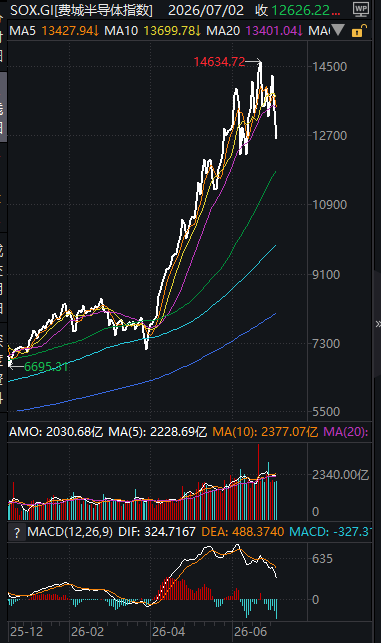
Prediksi penjualan Micron Technology yang melampaui ekspektasi bulan lalu gagal mendorong saham chip terus naik, semakin menguatkan tanda memudarnya momentum sektor. Saat ini, investor menunggu pernyataan dari perusahaan seperti Nvidia untuk mendapatkan petunjuk lebih lanjut tentang permintaan chip AI.

Wilson menunjuk, keruntuhan momentum ini terjadi pada perusahaan-perusahaan dengan bobot besar dalam indeks, yang akan membuat indeks patokan utama AS terus berada di bawah tekanan dalam jangka pendek. Indeks S&P 500 telah turun secara bertahap sejak mencapai puncaknya awal Juni.

Raksasa Superkomputer: Daerah Nilai (Value) dalam Ekosistem AI

Wilson menyatakan, dalam periode terakhir lebih memilih raksasa superkomputer daripada saham terkait semikonduktor. Dia berpendapat perusahaan-perusahaan seperti Microsoft, Amazon, Meta menarik dalam ekosistem AI, dengan kunci utamanya adalah bisnis dasar mereka yang kuat memberikan dukungan kokoh.

Sebaliknya, menurut data Bloomberg, keranjang saham (basket) raksasa superkomputer yang disusun oleh UBS Group telah turun 2% secara kumulatif sejak September tahun lalu, membentuk kontras yang mencolok dengan kenaikan sektor semikonduktor, dan juga berarti kelompok ini memiliki ruang untuk relatif mengejar ketinggalan (catch-up).

Namun, Wilson juga memperkirakan, raksasa superkomputer mungkin mulai menurunkan ekspektasi rencana pengeluaran modal (capital expenditure) mereka, sebagai respons terhadap kekhawatiran pasar baru-baru ini mengenai investasi berlebihan mereka di AI. Prospek pengeluaran modal akan menjadi isu inti yang menjadi fokus investor pada tahap selanjutnya.

Cakupan Rotasi Meluas, Peluang di Luar Teknologi Muncul

Logika rotasi Wilson tidak terbatas pada sektor superkomputer. Dia juga melihat prospek sektor konsumen diskresioner, transportasi, dan bioteknologi untuk mendapatkan manfaat dari arus keluar dana dari saham chip.

Strategis JPMorgan Mislav Matejka sependapat dengan Wilson, meyakini momentum kenaikan pasar akan meluas ke luar sektor teknologi di paruh kedua tahun. "AI kemungkinan besar bukan satu-satunya cerita di pasar," tulis Matejka dalam laporan penelitiannya.

Patut dicatat, Wilson sebelumnya telah secara akurat memprediksi bahwa pasar saham AS akan mempertahankan ketahanannya di tengah risiko geopolitik berkat laba perusahaan yang kuat, yang menambah nilai referensi tertentu bagi penilaiannya saat ini. Target harga akhir tahun S&P 500-nya di 8000 poin berarti masih ada potensi kenaikan sekitar 7% dari level saat ini, namun risiko volatilitas jangka pendek tidak boleh diabaikan.


Trending Cryptos

Related Questions

QApa yang menyebabkan aliran modal berpindah dari saham semikonduktor ke perusahaan hyperscalers AI seperti Microsoft dan Amazon, menurut laporan Morgan Stanley?

AMenurut laporan Morgan Stanley yang ditulis oleh Michael Wilson, momentum di sektor semikonduktor mulai memudar, dan investor mulai beralih ke raksasa AI hyperscalers (seperti Microsoft, Amazon, dan Meta) yang kinerjanya tertinggal tahun ini. Hal ini terjadi di tengah latar belakang pasar saham yang bergejolak dan lemah secara keseluruhan.

QApa yang terjadi pada Indeks Semikonduktor Philadelphia baru-baru ini, dan apa implikasinya?

AIndeks Semikonduktor Philadelphia telah turun hampir 14% sejak mencapai rekor tertinggi bulan lalu. Meskipun masih naik 123% sejak September tahun lalu, penurunan ini menunjukkan kekhawatiran akan gelembung valuasi dan melemahnya momentum di sektor chip.

QMengapa perusahaan hyperscalers AI seperti Microsoft dan Meta dianggap sebagai 'lokasi bernilai' (value spot) dalam ekosistem AI?

APerusahaan hyperscalers AI dianggap sebagai 'lokasi bernilai' karena bisnis inti mereka yang kuat memberikan dukungan yang solid. Selain itu, menurut data Bloomberg, keranjang saham hyperscalers yang disusun UBS telah turun 2% sejak September tahun lalu, menciptakan ruang untuk kenaikan relatif dibandingkan dengan sektor semikonduktor yang telah melonjak.

QSelain perusahaan hyperscalers AI, sektor apa lagi yang diperkirakan akan mendapat manfaat dari perpindahan modal dari saham semikonduktor, menurut Michael Wilson?

ASelain perusahaan hyperscalers AI, Michael Wilson juga melihat peluang di sektor konsumen diskresioner, transportasi, dan bioteknologi untuk mendapatkan manfaat dari aliran keluar modal dari saham semikonduktor.

QApa target harga akhir tahun untuk S&P 500 yang ditetapkan oleh Michael Wilson, dan apa artinya bagi pasar saat ini?

AMichael Wilson mempertahankan target harga akhir tahun untuk S&P 500 pada 8000 poin. Ini menunjukkan potensi kenaikan sekitar 7% dari level saat ini, meskipun ia juga memperingatkan tentang risiko volatilitas jangka pendek di pasar.

Related Reads

MSTR Discloses Sale of 3,588 Bitcoins, Stock Price Drops Over 5% at One Point During Trading

MicroStrategy, the world's largest corporate holder of Bitcoin, has significantly shifted its business model. Between June 29 and July 5, the company sold 3,588 bitcoins for approximately $216 million to fund quarterly dividends for its preferred stock. This marks its largest-ever Bitcoin sale and signals a strategic pivot: Bitcoin is transitioning from a "buy-and-hold" reserve asset to a liquidity management tool for the company. This move follows a recent authorization allowing Bitcoin sales when equity fundraising is less attractive. The announcement contributed to a more than 5% intraday drop in MicroStrategy's stock price, while Bitcoin fell to around $61,800—below the company's average holding cost of roughly $75,700. The sale represents a major departure from MicroStrategy's long-standing "never sell" commitment, which saw its first minor breach in May with a $2.5 million sale. The latest, hundred-times-larger transaction underscores growing financial pressures. Analysts note the company faces about $1.5 billion in annual preferred dividend obligations, far exceeding cash flow from its software business. As of July 5, MicroStrategy holds 843,775 bitcoins. Its current operational logic involves buying Bitcoin during favorable financing conditions and selling portions to cover dividends when needed, creating a flexible capital management cycle amidst a challenging market environment.

华尔街日报14m ago

MSTR Discloses Sale of 3,588 Bitcoins, Stock Price Drops Over 5% at One Point During Trading

华尔街日报14m ago

Q-Day Countdown: Will Quantum Computing End Cryptocurrencies?

Quantum Computing's Threat to Cryptocurrency: A Countdown to Q-Day Quantum computing, specifically Shor's algorithm, poses a fundamental threat to the public-key cryptography (e.g., ECDSA, RSA) that secures blockchain networks like Bitcoin and Ethereum. This critical juncture, known as Q-Day, is estimated to occur potentially within the next 5-15 years. The core vulnerability stems from the public and immutable nature of blockchains. Assets in addresses where the public key is already exposed on-chain (e.g., spent outputs) are at direct risk, as a sufficiently powerful quantum computer could derive the private key. This threatens the very trust model of cryptocurrencies. The response lies in Post-Quantum Cryptography (PQC)—algorithms like lattice-based ML-DSA and hash-based SLH-DSA, which are resistant to quantum attacks. NIST has standardized key PQC algorithms (FIPS 203, 204, 205), providing a migration path. However, the primary challenge is not technical but socio-economic and involves complex governance: * **Bitcoin's** path is constrained by its conservative ethos. Migrating requires a soft-fork to new address types, facing hurdles like significantly larger signature sizes and, most critically, the divisive governance question of how to handle at-risk legacy UTXOs without violating core principles. * **Ethereum** is pursuing a "cryptographic agility" strategy, with a multi-layered roadmap. It leverages account abstraction for user accounts and is developing compressed hash-based signatures (e.g., leanXMSS) for its consensus layer, aiming for a full-stack upgrade over time. In conclusion, quantum computing does not spell an instant end for cryptocurrency but initiates a critical countdown. The industry has a limited "engineering comfort window" to orchestrate a coordinated, ecosystem-wide migration to PQC. The ultimate bottlenecks are the immense coordination efforts and governance decisions required for this foundational transition.

marsbit1h ago

Q-Day Countdown: Will Quantum Computing End Cryptocurrencies?

marsbit1h ago

Trump, the President Who Knows Best How to 'Trade Stocks'

Former US President Donald Trump reported a record-breaking $2.2 billion in personal income for 2025, the highest annual income ever disclosed by a sitting president. This figure, from a 927-page government ethics filing, represented a 3.5-fold increase from his $600 million income in 2024 and boosted his net worth to $6.5 billion. The primary drivers were cryptocurrency (64% of income, approximately $1.4 billion) and real estate (26%, approximately $575 million). His crypto earnings stemmed largely from the launch of his personal meme coin, $TRUMP, generating over $600 million in licensing fees, and substantial profits from the WLFI token and its parent company. Despite a sluggish property market, his Mar-a-Lago resort and associated golf clubs saw revenue surges of 50% and 27%, respectively, attributed to their use as venues for presidential events. Trump's financial disclosure also revealed an unprecedented level of stock market activity, with over 22,000 trades executed in 2025, averaging 87 trades per market day. Media analyses noted several instances where significant trading coincided with major policy announcements, such as proposed tariffs, raising questions about potential conflicts of interest. While the White House stated these trades were handled by a family-managed trust fund and not Trump directly, critics highlighted this as a departure from the blind trusts traditionally used by presidents post-Watergate. The report has intensified debate over the commercialization of the presidency. Supporters view it as a success story of a businessman-president, while critics argue it demonstrates an unprecedented conversion of public influence into private wealth, with policy decisions potentially linked to personal financial gains. The controversy centers on whether Trump's earnings represent innovative entrepreneurship or a fundamental conflict of interest, sparking renewed calls for stricter ethics reforms in US governance.

marsbit1h ago

Trump, the President Who Knows Best How to 'Trade Stocks'

marsbit1h ago

Countdown to Q-Day: Will Quantum Computing End Cryptocurrencies?

The article explores the existential threat quantum computing poses to cryptocurrencies and the urgent need for "post-quantum" migration. It outlines that quantum computers, through Shor's algorithm, could break the elliptic-curve cryptography (ECC) underlying blockchain security, potentially allowing private keys to be derived from public keys. The core challenge is not a lack of post-quantum cryptography (PQC) standards—like NIST's ML-KEM and ML-DSA—but the immense complexity of upgrading entire ecosystems before "Q-Day" (when quantum computers become capable of such attacks, estimated around 2035-2045). Key points include: * **Bitcoin's** risk is concentrated in legacy UTXOs with exposed public keys (e.g., early P2PK outputs). Migration faces massive hurdles: PQC signatures are much larger, increasing transaction size and cost, and the governance dilemma of handling un-migrated assets threatens its "code is law" ethos. * **Ethereum's** strategy focuses on "cryptographic agility," using Account Abstraction for user accounts and developing compressed hash-based signatures (like leanXMSS with SNARK aggregation) for consensus. Its migration is a complex, full-stack overhaul of execution, consensus, and data layers. * The "security debt" is enormous. The comfortable engineering window for a coordinated, ecosystem-wide upgrade is only 5-8 years. High-value infrastructure (exchanges, bridges) may face pressure before mainnet protocols. In conclusion, quantum computing is not an instant "doomsday" event but a forcing function for systemic change. Bitcoin's ultimate test is social consensus and property rights governance, while Ethereum's is technical complexity. Failure to migrate in time could lead to a fundamental re-pricing of crypto assets.

链捕手1h ago

Countdown to Q-Day: Will Quantum Computing End Cryptocurrencies?

链捕手1h ago

Trading

Spot

Hot Articles

Discussions

Welcome to the HTX Community. Here, you can stay informed about the latest platform developments and gain access to professional market insights. Users' opinions on the price of S (S) are presented below.

活动图片