Autor|0xjacobzhao @ IOSG
Imagina una madrugada en el año 203X: las alarmas de monitoreo de la cadena desgarran la tranquilidad. Direcciones BTC tempranas, inactivas durante más de una década, comienzan a transferir activos como fantasmas. Sin hackeos, sin fugas de claves privadas, solo firmas "válidas" generadas de la nada. Cuando UTXOs dormidos de alto valor son vaciados uno tras otro, el mercado finalmente despierta: una entidad con capacidad de cómputo cuántico desconocida ya puede derivar claves privadas directamente desde claves públicas expuestas en el pasado. El pánico instantáneamente atraviesa el mercado. En las profundidades de la dark web, se subastan frenéticamente bases de datos de claves públicas almacenadas durante diez años con el lema "recolectar primero, descifrar después", esperando que el poder de cómputo convierta la riqueza en realidad. Mientras tanto, la comunidad de Bitcoin se sume en una división de fe sin precedentes: ante los bitcoins dormidos saqueados por el cómputo cuántico, ¿deben aferrarse al principio inalterable de que "el código es la ley" o activar un soft fork para congelar esos activos heredados? La colisión entre la narrativa de propiedad y las leyes de supervivencia hace estallar un nudo de gobernanza imposible de desatar. Ese día, los bloques se siguen generando en orden, la red no se detiene ni un segundo. La computación cuántica no es un hechizo apocalíptico que borra todo, pero sumerge a todo el ecosistema Web3 en un largo juego de reconfiguración criptográfica y abismo de consenso.
La computación cuántica a menudo se interpreta como una "espada de Damocles" apocalíptica suspendida sobre la cabeza de blockchain. Reexaminando la mayor "deuda de seguridad" que enfrentará el mundo Web3. Descubrimos que el impacto de la amenaza cuántica en blockchain es esencialmente una prueba de estrés máxima sobre su triple arquitectura subyacente: "libro de contabilidad público, activos irreversibles, autogestión de claves privadas". Con los primeros destellos de las Computadoras Cuánticas a Prueba de Errores (CRQC), la industria enfrenta el desafío de cómo, en la ventana "cómoda de ingeniería" restante de 5 a 8 años antes del Día-Q, sortear el consenso social y la negociación de gobernanza extremadamente complejos.
Computación cuántica: principios técnicos, valor y amenazas
La computación cuántica es un nuevo paradigma de cálculo basado en los principios de la mecánica cuántica. Utiliza el cúbit (qubit) como portador de información, superando la limitación binaria del bit clásico que solo puede representar 0 o 1, aprovechando propiedades cuánticas como la superposición, el entrelazamiento, la interferencia y la medición para lograr una eficiencia computacional difícil de alcanzar con el cálculo clásico:
-
Superposición (Superposición) —— Ampliación del espacio de estados: un cúbit puede estar en una combinación lineal de 0 y 1.
-
Entrelazamiento cuántico (Entrelazamiento) —— Establecimiento de correlaciones globales: fuerte correlación no local formada entre múltiples cúbits.
-
Interferencia cuántica (Interferencia) —— Manipulación de amplitudes de probabilidad: mecanismo esencial de aceleración de algoritmos cuánticos, donde las amplitudes de las respuestas incorrectas se anulan mutuamente (interferencia destructiva), mientras se amplifican las amplitudes de las respuestas correctas (interferencia constructiva).
-
Medición cuántica (Medición) —— Converge un estado cuántico en un resultado clásico. El núcleo de un algoritmo cuántico no es "leer todas las respuestas", sino hacer que la respuesta correcta tenga una mayor probabilidad de aparecer durante la medición.
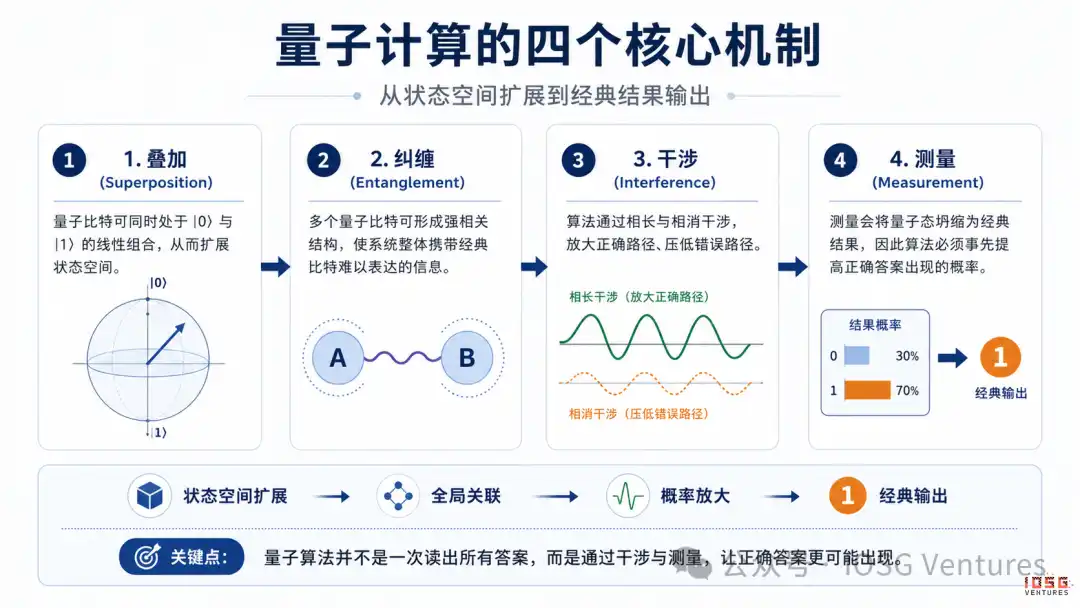
Figura 1: Los cuatro pilares de la computación cuántica
(①) La superposición expande el espacio de estados: el cúbit existe como una mezcla continua de |0⟩ y |1⟩ en la esfera de Bloch.
(②) El entrelazamiento crea correlaciones no locales: medir un cúbit determina inmediatamente a su compañero.
(③) La interferencia es el motor de la aceleración: las amplitudes de las respuestas incorrectas se cancelan, las de las correctas se refuerzan.
(④) La medición colapsa el estado cuántico a un único resultado clásico: la tarea del algoritmo es hacer que el resultado correcto aparezca con probabilidad abrumadora de antemano.
Los dos algoritmos centrales de la computación cuántica: El "golpe de dimensión" de Shor y el "acelerador de fuerza bruta" de Grover
-
Algoritmo de Shor (1994): El "golpe de dimensión" a la criptografía de clave pública: El algoritmo de Shor puede utilizar las propiedades cuánticas para "ver a través" de las regularidades matemáticas de la factorización de enteros grandes y el logaritmo discreto, destruyendo así los cimientos de confianza de la Internet moderna y blockchain como RSA, curva elíptica (ECC), etc.; pero limitado por el costo de corrección de errores cuánticos en la realidad, romper la criptografía principal aún requiere millones de cúbits físicos, y el umbral podría reducirse significativamente con optimizaciones algorítmicas más agresivas.
-
Algoritmo de Grover (1996): El "acelerador de fuerza bruta" de la criptografía simétrica: El algoritmo de Grover no puede romper directamente las estructuras criptográficas, sino que aumenta la velocidad de "adivinar la contraseña" del ordenador de forma cuadrática (por ejemplo, reduciendo directamente la fuerza de seguridad del cifrado de 128 bits a 64 bits); su amenaza está lejos de ser tan mortal como la de Shor, y los métodos de contramedida son simples: generalmente se puede restaurar el margen de seguridad mediante claves más largas, hashes de salida más largos o parámetros de seguridad más altos (como actualizar a AES-256 o SHA-512).
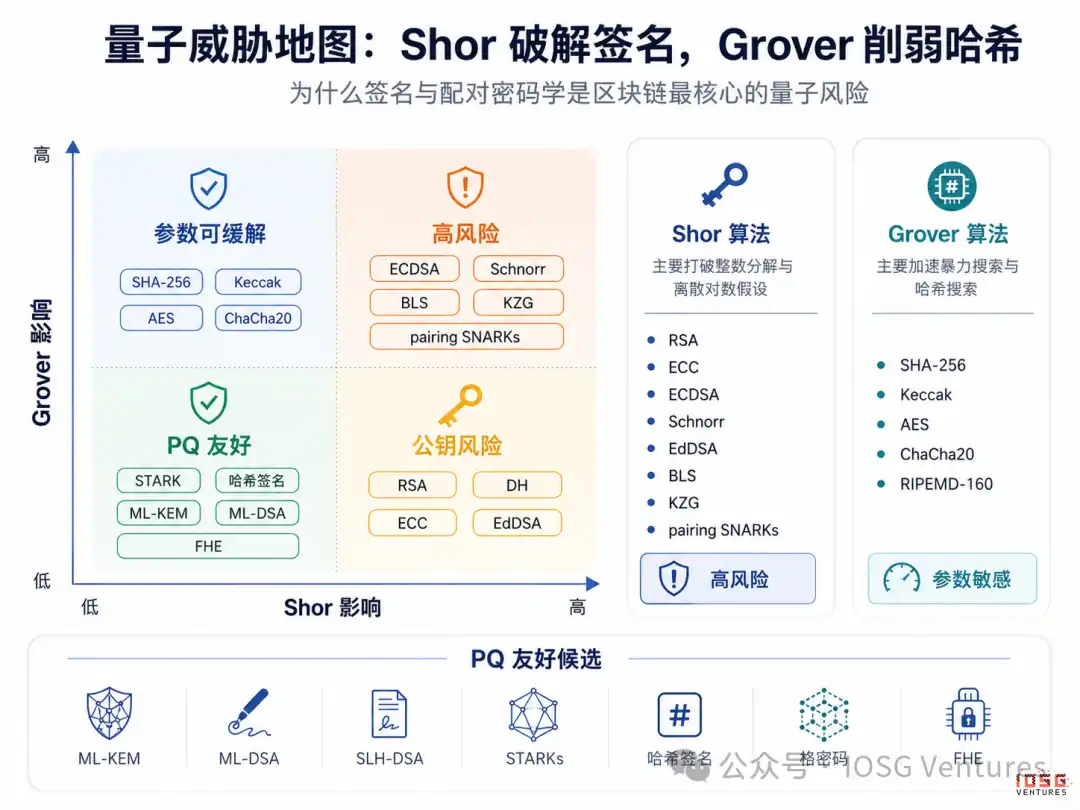
Figura 2: Los dos algoritmos centrales de la computación cuántica: Algoritmo de Shor y Algoritmo de Grover
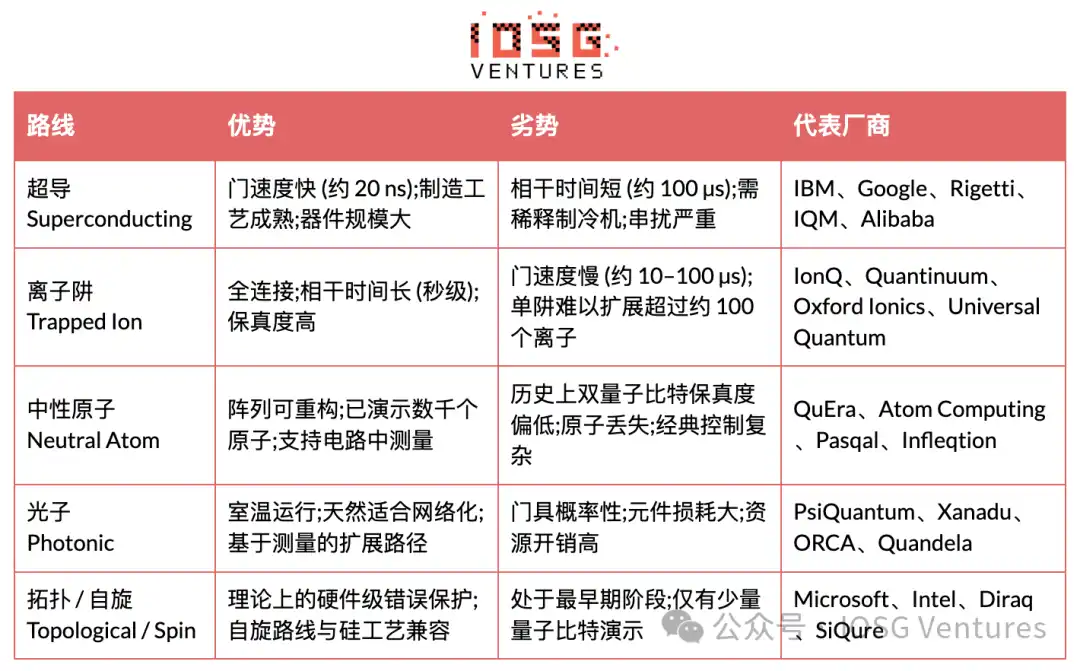
Hoja de ruta de comercialización de la computación cuántica: El "desafío de múltiples contendientes" de los cinco campos técnicos
Aún no se ha establecido una clara ventaja de ingeniería para ninguna tecnología de cúbit. Actualmente hay cinco rutas en desarrollo comercial, cada una con sus pros y contras.
Valor positivo y amenaza negativa de la computación cuántica
El valor central de la computación cuántica radica en superar los límites de capacidad del cálculo clásico para problemas complejos específicos, impulsando un salto de paradigma en ciencia fundamental e ingeniería. Su valor positivo se centra principalmente en dos direcciones: la simulación de sistemas cuánticos complejos, incluyendo química cuántica, desarrollo de fármacos, nuevos materiales y tecnología energética; y la resolución de problemas de optimización de alta complejidad, incluyendo logística, finanzas, cadena de suministro, diseño de chips y planificación industrial. Entre ellos, la simulación cuántica se considera universalmente el escenario de aplicación a largo plazo de mayor determinismo, mientras que la optimización compleja aún está en etapa de exploración y validación. Actualmente, la computación cuántica está en una etapa clave, pasando de prototipos de laboratorio a aplicaciones de ingeniería. La descoherencia, el ruido físico, los costos de corrección de errores y la escalabilidad del sistema siguen siendo las principales barreras para salvar la brecha de industrialización.
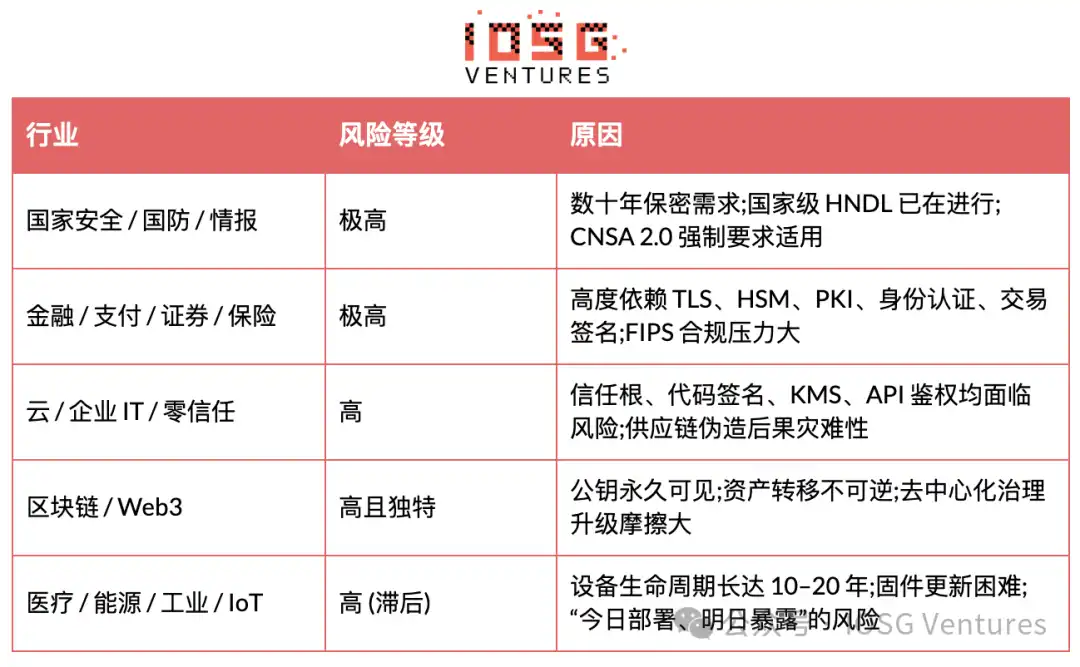
La amenaza cuántica apunta esencialmente a los cimientos de los sistemas modernos de criptografía de clave pública, y se extiende capa por capa siguiendo la lógica de "vida útil de los datos × dificultad de migración × beneficio del ataque": la seguridad nacional, los sistemas militares y de inteligencia son los primeros en verse afectados, enfrentando el riesgo estratégico de "recopilar ahora, descifrar después" (HNDL); la infraestructura financiera y de pagos, profundamente dependiente de TLS, HSM y sistemas de autenticación de identidad, entrará primero en la ruta de migración por cumplimiento; la raíz de confianza de Internet y el ecosistema blockchain/Web3, enfrentan múltiples riesgos sistémicos como firmas de código, gestión de claves en la nube (KMS), irreversibilidad de activos en cadena y migración de gobernanza; mientras que sectores como salud, energía, control industrial e IoT, debido a sus largos ciclos de vida de los dispositivos y estrechas ventanas de actualización, formarán un riesgo de cola prolongado y difícil de eliminar.
Ventana de tiempo y regla de planificación: Día-Q y la desigualdad de Mosca
Día-Q se refiere al punto en el tiempo en que las computadoras cuánticas poseen por primera vez la capacidad práctica de romper la criptografía de clave pública predominante. No es una fecha determinada, sino un intervalo de probabilidad influenciado por el progreso del hardware, la capacidad de corrección de errores, las optimizaciones algorítmicas y la confidencialidad de los proyectos nacionales. Las expectativas principales actuales se concentran aproximadamente entre 2035 y 2045, con escenarios rápidos que podrían adelantarse a 2030–2035, siendo los riesgos de cola de baja probabilidad antes de 2030.
Desigualdad de Mosca X + Y > Z explica por qué, incluso si el Día-Q aún no es inminente, la migración post-cuántica sigue teniendo una urgencia real. Donde, X es el tiempo que los datos necesitan permanecer en secreto, Y es el tiempo requerido para completar la migración criptográfica, Z es el tiempo restante hasta el Día-Q. Siempre que la suma del ciclo de vida de los datos y el ciclo de migración exceda el tiempo restante para el Día-Q, el sistema ya ha entrado en un intervalo de retraso de migración: los datos recopilados hoy pueden ser descifrados en el futuro por la computación cuántica. Por lo tanto, la seguridad poscuántica no es una ingeniería de emergencia para cuando llegue el Día-Q, sino una migración de infraestructura a largo plazo que debe iniciarse con antelación.
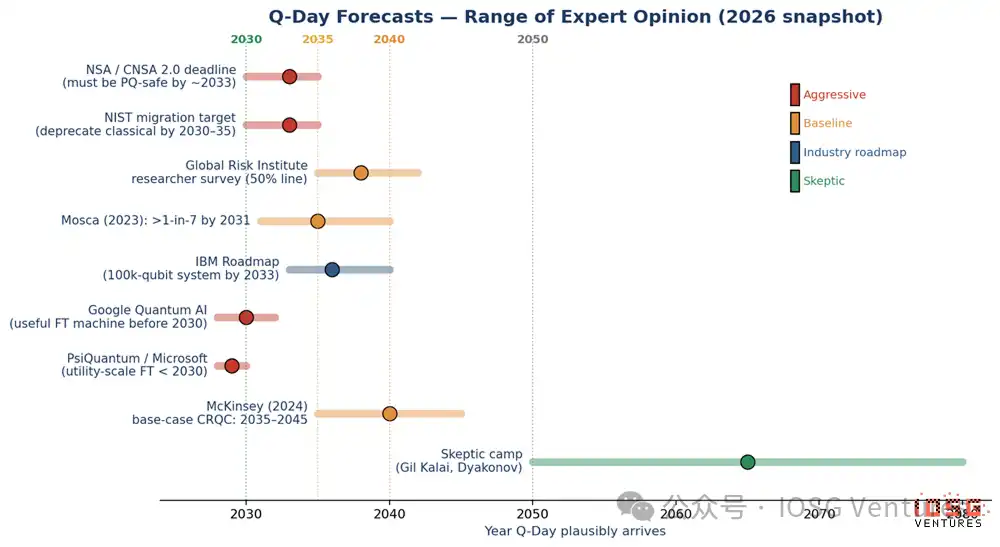
Figura 3: Distribución de predicciones de expertos sobre el Día-Q en 2026. Cada barra muestra una ventana razonable de una sola fuente; el punto marca la estimación central.
El código de color representa la categoría del hablante: Rojo = industria agresiva; Naranja = encuestas de referencia/consenso; Azul = hoja de ruta de hardware; Verde = escépticos.
Criptografía poscuántica (PQC):Hoja de ruta técnica, estandarización y panorama de migración industrial
La criptografía poscuántica (Post-Quantum Cryptography, PQC), también llamada criptografía resistente a cuántica o criptografía segura cuántica, es un nuevo sistema de algoritmos criptográficos diseñado para resistir los ataques de futuras computadoras cuánticas. Su característica central es que aún se ejecuta en la arquitectura de computación clásica existente, pero su seguridad se basa en problemas matemáticos difíciles de resolver eficientemente incluso para computadoras cuánticas. La PQC se ha convertido en la línea principal de migración resistente a cuántica más realista y con mayor potencial de despliegue a escala para la infraestructura digital global.
Hoja de ruta técnica principal: La dualidad entre la criptografía basada en retículos y las firmas basadas en hash
La investigación e implementación actual de PQC se centra principalmente en los siguientes campos matemáticos:
-
Criptografía basada en retículos (Lattice-based): Su seguridad se basa en problemas difíciles de retículos de alta dimensión (como Module-LWE), combinando eficiencia y seguridad. Es la dirección central actual para la estandarización e implementación de ingeniería. Los algoritmos representativos son ML-KEM y ML-DSA.
-
Firmas basadas en hash (Hash-based): Dependen únicamente de la resistencia a colisiones de funciones hash, con supuestos matemáticos extremadamente simples y conservadores. El estándar representativo es SLH-DSA.
-
Otras rutas: La criptografía basada en códigos (HQC) fue seleccionada por el NIST en marzo de 2025 como el quinto algoritmo PQC, como respaldo no basado en retículos de ML-KEM. Se espera que el borrador del estándar se publique en 2026 y el estándar formal en 2027. Mientras tanto, la criptografía multivariante (Multivariate) y basada en isogenias (Isogeny-based) aún no han entrado en la línea principal de estandarización del NIST debido a problemas de seguridad o eficiencia. La ruta basada en isogenias sufrió un gran revés cuando el algoritmo SIKE fue roto.
Hito de estandarización: El NIST establece el panorama de "un encapsulado, dos firmas"
El proceso de estandarización FIPS liderado por el Instituto Nacional de Estándares y Tecnología (NIST) de EE.UU. es un punto de inflexión clave para llevar la PQC de la teoría a la aplicación. En agosto de 2024, el NIST publicó formalmente tres estándares centrales, estableciendo la división básica del trabajo para la migración PQC:
-
FIPS 203 (ML-KEM): Mecanismo de encapsulado de clave (KEM) basado en problemas de retículos, responsable del intercambio de claves.
-
FIPS 204 (ML-DSA): Algoritmo de firma digital basado en retículos, responsable de firmas digitales de uso general.
-
FIPS 205 (SLH-DSA): Algoritmo de firma digital basado en hash sin estado (stateless), como opción alternativa para firmas de alto nivel de seguridad.
Ecosistema de implementación industrial: Arquitectura de tres capas (línea principal, transición y auxiliar)
Además de los algoritmos centrales, la construcción de un sistema de seguridad poscuántica también depende de estrategias de ingeniería en múltiples niveles:
-
Despliegue híbrido (Híbrido): Adopta un modo de firma/cifrado paralelo "algoritmo tradicional (como ECC/RSA) + PQC", como una medida de cobertura de riesgo en las primeras etapas de migración, garantizando que incluso si el nuevo algoritmo tiene vulnerabilidades desconocidas, el algoritmo tradicional aún pueda proporcionar una seguridad básica.
-
Agilidad criptográfica (Crypto-agility): A través del diseño de la arquitectura, permite al sistema reemplazar, actualizar o revertir algoritmos rápidamente, para hacer frente a posibles riesgos de ruptura de algoritmos en el futuro.
-
Tecnologías de mejora auxiliar: Incluyen Distribución Cuántica de Claves (QKD) (aplicable a redes dedicadas gubernamentales/militares, pero no puede reemplazar la verificación de firmas en Internet), Generación Cuántica de Números Aleatorios (QRNG), y Módulos de Seguridad de Hardware (HSM/Secure Enclave), utilizados para mejorar la calidad de los números aleatorios y la seguridad del almacenamiento de claves.
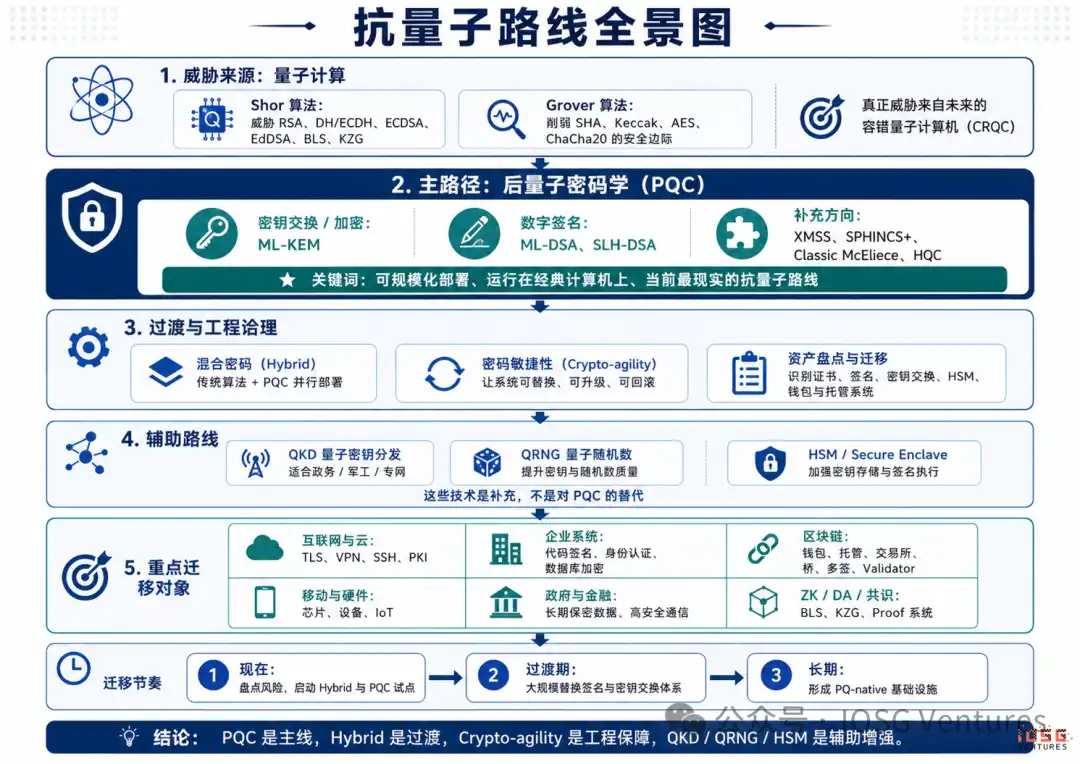
Figura 4: Panorama de rutas resistentes a cuántica
Riesgo cuántico y prácticas poscuánticas en la industria blockchain
Blockchain no es el objetivo principal de la amenaza cuántica, pero es el escenario de "prueba de estrés" más valioso para la investigación. A diferencia del Web2 tradicional, que depende de mecanismos centralizados (como la rotación de certificados, la congelación de cuentas) para amortiguar el riesgo de fuga de datos, blockchain convierte la crisis criptográfica subyacente directamente e instantáneamente en pérdida de activos y bloqueo de gobernanza. Su triple irreversibilidad subyacente: libro de contabilidad permanentemente público, transferencia de activos irreversible y autogestión de claves privadas, significa que los activos con clave pública ya expuesta pueden enfrentar la recuperación de claves privadas y la falsificación de firmas, sin margen para un respaldo centralizado. Más fatal aún, los sistemas de firma de curva elíptica y BLS en los que confían altamente las principales cadenas públicas enfrentan una ruptura estructural ante el algoritmo de Shor; una vez que existan Computadoras Cuánticas a Prueba de Errores (CRQC), los atacantes podrán derivar claves privadas a partir de claves públicas expuestas en la cadena y falsificar firmas, socavando fundamentalmente los cimientos de confianza de blockchain.
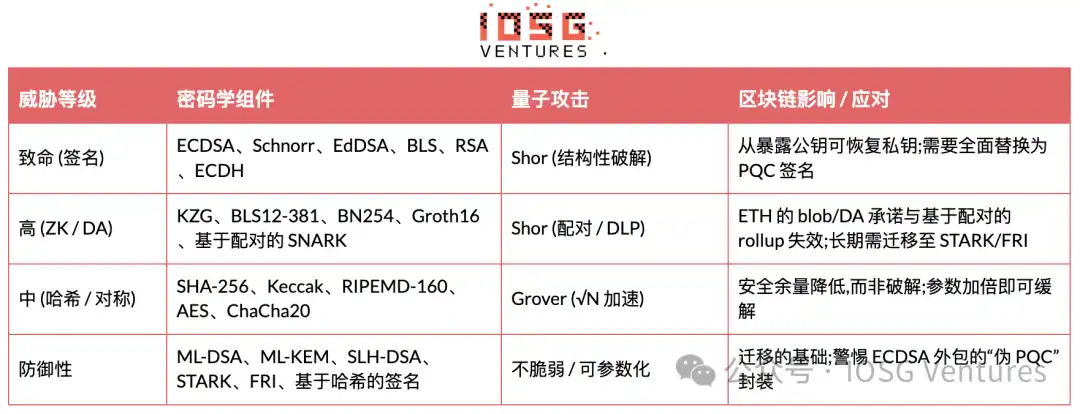
Mapa de amenazas de los componentes criptográficos en sistemas blockchain
Para la industria blockchain, la propuesta central no es enfrentar a los hackers actuales, sino iniciar una "cuenta regresiva de migración" que es una carrera contra el tiempo. La computación cuántica no destruirá blockchain instantáneamente, pero obligará a la industria a pasar por una reconfiguración criptográfica subyacente más difícil que la del Web2. El riesgo real no radica en la falta de algoritmos poscuánticos estandarizados, sino en si todo el ecosistema puede completar una migración coordinada de extremo a extremo, desde el protocolo subyacente hasta los activos existentes, antes del Día-Q (punto crítico en el tiempo en que las computadoras cuánticas a prueba de errores poseen capacidad práctica de ruptura).
En este proceso, la amenaza cuántica no cae de manera uniforme, sino que se transmite nivel por nivel a través de la arquitectura de cinco capas: "activos, protocolo, infraestructura, aplicación, gobernanza". La percepción central más importante es: la capa de infraestructura de alto valor (como exchanges, custodios, puentes entre cadenas) estará bajo presión antes que el protocolo principal de la capa 1 (L1); y el cuello de botella final que determina el éxito de esta migración de extremo a extremo no es el reemplazo de la tecnología criptográfica, sino el consenso social y la negociación de gobernanza extremadamente complejos.
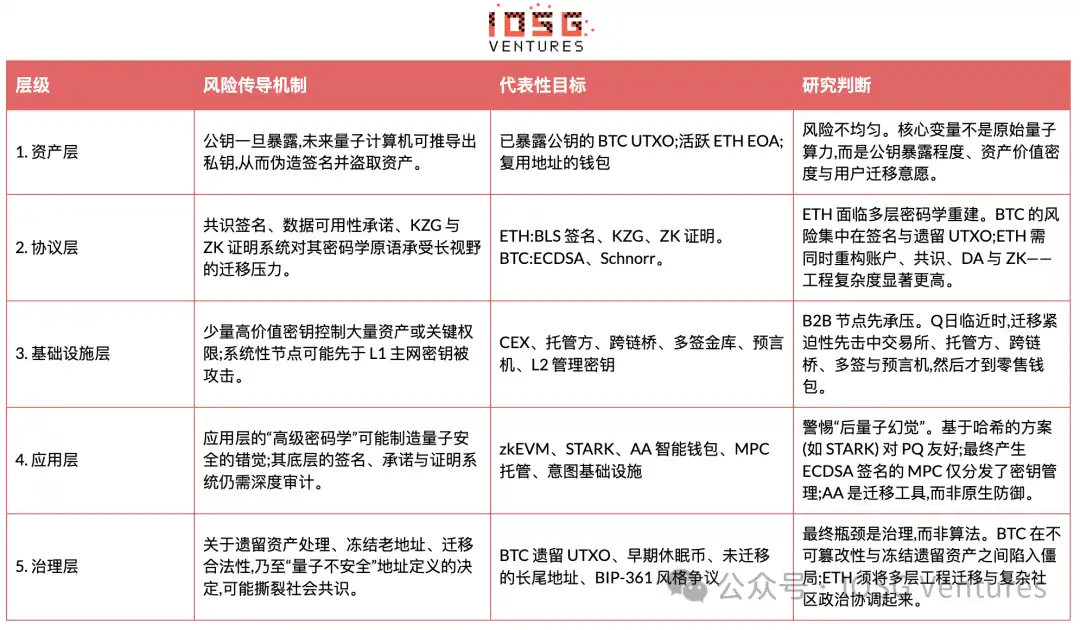
Prácticas poscuánticas de Bitcoin y Ethereum
Riesgo poscuántico de Bitcoin: Exposición de clave pública, inflación de firmas y fricción de gobernanza
El riesgo cuántico de Bitcoin no se distribuye uniformemente entre todos los BTC, sino que depende en gran medida de si la clave pública ya se ha expuesto en la cadena. El verdadero alto riesgo no son todos los UTXO de la red, sino que se concentra en las salidas tempranas heredadas, las direcciones con clave pública ya expuesta y que aún tienen saldo, y los UTXO de alto valor y larga inactividad. Los componentes hash de Bitcoin (SHA-256, SHA256d y RIPEMD-160) enfrentan principalmente una reducción del margen de seguridad debido al algoritmo de Grover, no una ruptura estructural como con ECDSA / Schnorr por el algoritmo de Shor.
-
Alto riesgo: UTXO con clave pública estáticamente expuesta: Salidas tempranas P2PK, Taproot (P2TR), y direcciones P2PKH/P2WPKH que han sido gastadas y reutilizadas, y aún mantienen saldo. Su clave pública completa ya está permanentemente en la cadena, serán los primeros en ser vulnerados directamente por el algoritmo de Shor una vez que existan las CRQC.
-
Riesgo medio: UTXO cuya clave pública aún no está expuesta pero lo estará en el futuro: Direcciones P2PKH/P2WPKH no gastadas y no reutilizadas. Solo el hash de la clave pública está expuesto en cadena, el riesgo existe solo en la breve "ventana de adelantamiento cuántico" entre la emisión de una transacción y su confirmación.
-
Bajo riesgo: Activos ya migrados a direcciones seguras cuánticas: Los activos migrados en el futuro a través de un soft fork a direcciones poscuánticas (PQ) tendrán un riesgo significativamente menor, pero esto depende en gran medida de una actualización coordinada a largo plazo de todo el ecosistema.
Desafíos de ingeniería: Inflación de firmas y camino de "soft fork primero"
Bajo la estructura de gobernanza de Bitcoin, el costo político de un hard fork único para eliminar ECDSA / Schnorr es extremadamente alto. Introducir nuevos tipos de salida seguros cuánticos a través de un soft fork es una de las rutas progresivas más realistas. Actualmente, las discusiones relacionadas incluyen direcciones como BIP-360 / P2MR (Pay-to-Merkle-Root), pero aún están muy lejos de un consenso de red completo y su activación.
Esto debe pagar un alto "impuesto de ingeniería": las firmas ECDSA / Schnorr actuales tienen solo unos 64–72 bytes, mientras que los candidatos ML-DSA (2.4–4.6 KB) y SLH-DSA (7–49 KB) aumentan su volumen decenas de veces. Esta inflación de orden de magnitud provocará una reacción en cadena sistémica: aumentará directamente el peso del bloque y las tarifas, agravará la carga de almacenamiento y ancho de banda de los nodos, empeorará significativamente el conjunto UTXO y la experiencia de usuario (UX) de las carteras, formando finalmente una retroalimentación negativa que aumenta a su vez la resistencia a la migración poscuántica de toda la red.
Más importante aún, Bitcoin carece de capacidad de cambio rápido de algoritmos. A diferencia de los sistemas centralizados donde un solo actor puede actualizar certificados o reemplazar algoritmos, Bitcoin requiere que las reglas de consenso, el formato de direcciones, carteras, grupos de minería, exchanges, custodios y carteras de hardware se adapten de manera sincronizada. Por lo tanto, la migración poscuántica no es una actualización técnica puntual, sino un proyecto de coordinación a largo plazo que abarca todo el ecosistema.
Negociación de gobernanza: El "dilema de valores" de los UTXO heredados
Incluso si las direcciones PQ se implementan con éxito, cómo manejar los UTXO heredados que no migran a largo plazo, incluyendo los BTC tempranos de larga inactividad que el mercado generalmente considera de la era de Satoshi, sigue siendo un problema definitivo. Dos soluciones extremas entran en conflicto con los valores centrales de Bitcoin:
-
No hacer nada: Las monedas heredadas se convertirán en "almuerzo gratis" para el primer atacante con capacidad CRQC, desencadenando pánico en el mercado.
-
Congelación/Invalidación forzosa: Viola directamente el principio de propiedad "Not your keys, not your coins" y la narrativa de inmutabilidad, lo que fácilmente divide el consenso de la comunidad e incluso puede provocar una bifurcación de la cadena.
Una ruta pragmática de compromiso es implementar un mecanismo de "ocaso de legado" (Legacy Sunset) de varios años: emitir advertencias de desuso a largo plazo, aumentar gradualmente la fricción en las políticas de retransmisión (relay) para gastar salidas antiguas, y finalmente, a través de la coordinación de múltiples partes, aplicar restricciones mediante un soft fork. Discusiones como BIP-361 sobre el ocaso de firmas heredadas exploran esencialmente este camino.
Por lo tanto, la migración de Bitcoin no es fundamentalmente un problema criptográfico. Los algoritmos PQ ya existen y se pueden integrar; el verdadero cuello de botella es el consenso social en torno a temas como la inmutabilidad, los derechos de propiedad y la legitimidad de "declarar activos como inseguros cuánticamente". En otras palabras, el riesgo cuántico de Bitcoin no es un escenario apocalíptico que de repente se vuelve cero un día, sino un proceso gradual desde teóricamente factible, económicamente costoso hasta ejecutable en la práctica; lo que la industria realmente necesita lograr es completar la coordinación de migración antes de que la economía del ataque sea viable.
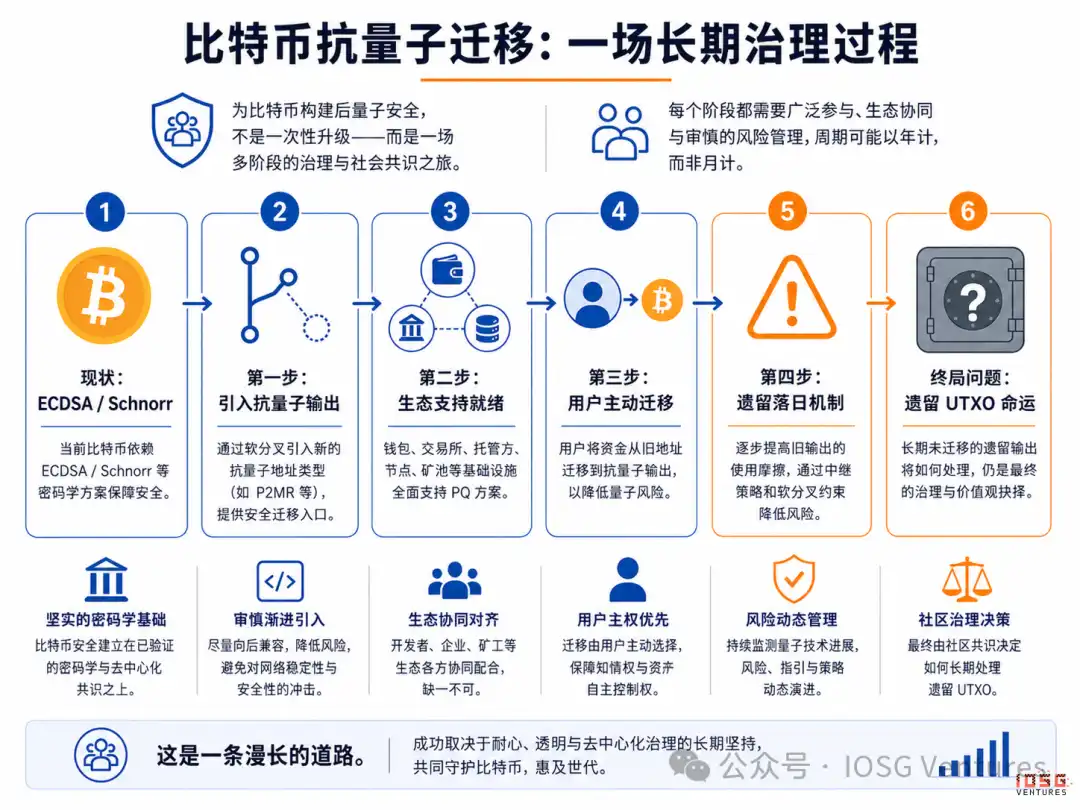
Figura 5: Migración poscuántica de Bitcoin: un proceso de gobernanza a largo plazo
Migración poscuántica de Ethereum – Reconstrucción full-stack y hoja de ruta "Lean"
Ethereum está respondiendo activamente a la amenaza cuántica. Liderada por el equipo de Pos-Cuántica de la Fundación Ethereum (EF) (https://pq.ethereum.org/), la investigación avanza de manera constante a través de procesos de gobernanza abierta como All Core Devs. Su estrategia central no es "apostar de una vez por un único algoritmo poscuántico (PQ)", sino mejorar integralmente la agilidad criptográfica (Cryptographic Agility) de la red: garantizar que la autenticación de cuentas, las firmas de consenso, los sistemas de prueba y los compromisos de la capa de datos tengan capacidad de reemplazo, actualización y verificación a largo plazo.
El riesgo cuántico de Ethereum se concentra en cuatro componentes criptográficos principales: cuentas EOA (ECDSA/secp256k1), consenso de validadores (firma BLS), disponibilidad de datos (compromiso KZG) y parte de los sistemas de prueba ZK. Para ello, la EF ha diseñado una hoja de ruta "Lean" que avanza en paralelo a lo largo de tres vías: ejecución, consenso y datos.
-
Capa de ejecución (cuentas de usuario): Carteras AA como amortiguador y L2 como campo de pruebas
Ante la enorme cantidad de EOA, la resistencia a un hard fork directo es enorme. Ethereum aprovecha la abstracción de cuentas (como ERC-4337 y EIP-7702) para otorgar a las carteras de contrato inteligente "agilidad de firma", admitiendo firmas híbridas y migración progresiva, evitando la coordinación forzosa de toda la red. Simultáneamente, los L2, con su gobernanza flexible, se convierten en campos de pruebas naturales para el despliegue de PQ.
-
Capa de consenso (firmas de validadores): La "combinación" de leanXMSS y leanVM
Su objetivo es reemplazar completamente las firmas BLS que dependen del emparejamiento de curvas elípticas. La estrategia central es adoptar leanXMSS basado en hash, combinado con una zkVM mínima (leanVM) para la agregación SNARK. El avance de ingeniería clave: se espera que leanVM comprima los enormes datos de firmas basadas en hash aproximadamente 250 veces, compensando la inflación de volumen de las firmas PQ, preservando la ventaja de extensión de "múltiples firmas en una" al tiempo que entra en la era poscuántica.
-
Capa de datos (Blob, DA y KZG): Reconstrucción a largo plazo de los compromisos subyacentes
En condiciones CRQC, los supuestos de seguridad subyacentes de KZG aún deben reevaluarse, y se debe migrar a largo plazo a sistemas de compromiso o prueba más amigables con PQ. Su dirección final es evolucionar hacia compromisos basados en hash como STARK o esquemas de compromiso basados en retículos (Lattice). Esta es una reconstrucción subyacente a nivel de protocolo que durará varios años, no una falla inmediata.
Además, el riesgo cuántico de Ethereum no se distribuye uniformemente. Los EOA son el grupo de valor más grande; las claves operativas de alto valor, como exchanges, puentes, carteras calientes de custodia, claves de gobernanza/actualización, secuenciadores de L2 y claves de administración, pueden estar bajo presión antes que el protocolo mismo. En general, la migración poscuántica de Ethereum no es un reemplazo puntual de firmas, sino un proyecto de ingeniería full-stack de varios años en el que participan conjuntamente cuentas, consenso, DA, ZK, L2, puentes, custodia y verificación formal.
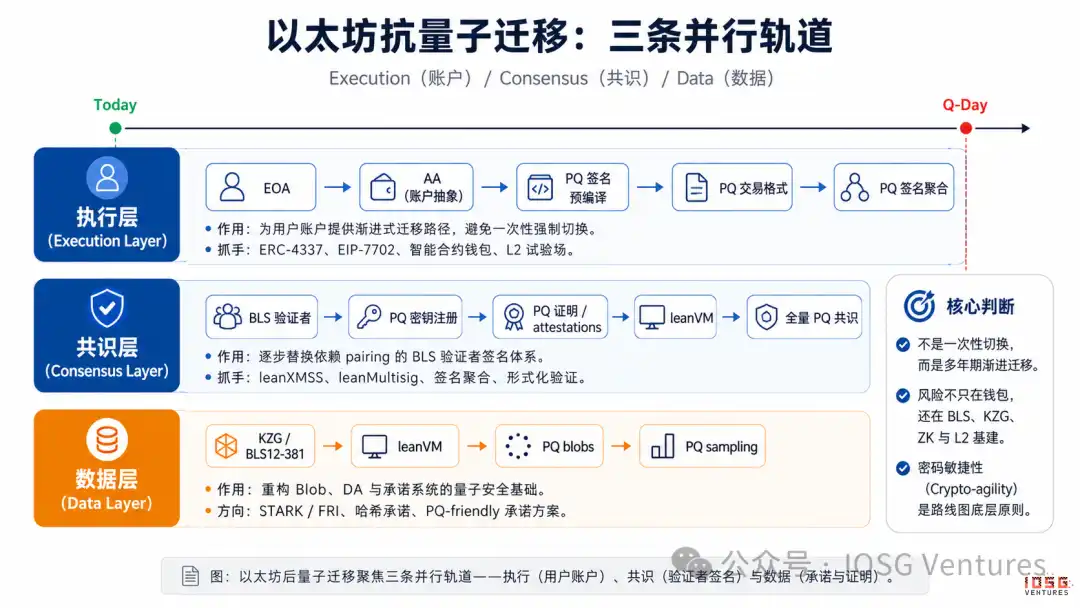
Figura 6: Migración poscuántica de Ethereum: Ejecución (cuentas de usuario), Consenso (firmas de validadores) y Datos (compromisos y pruebas).
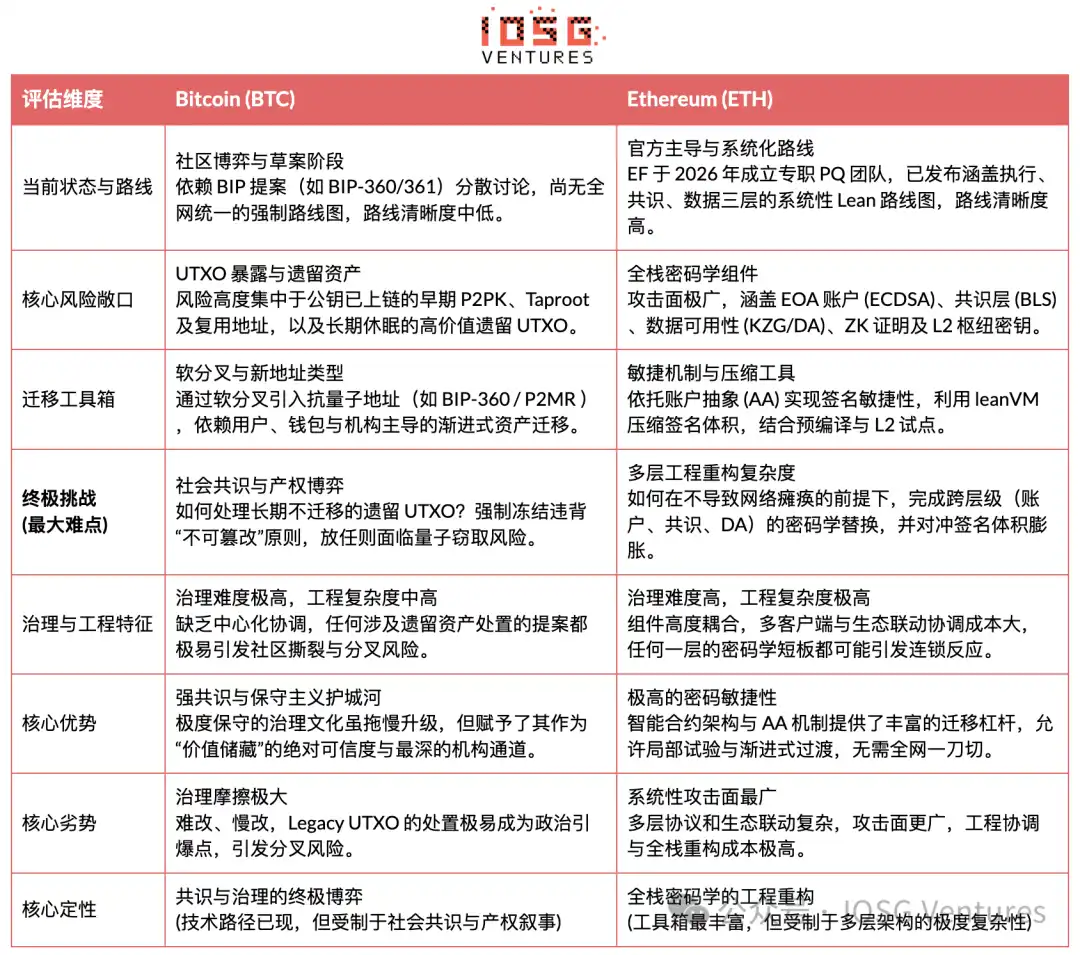
Comparación panorámica de los perfiles de migración poscuántica de Bitcoin y Ethereum
En teoría, todas las cadenas públicas que dependen de criptografía de clave pública tradicional enfrentan riesgos cuánticos. Pero las que realmente constituyen una propuesta de migración sistémica poscuántica siguen siendo principalmente Bitcoin y Ethereum: la primera involucra UTXO heredados, inmutabilidad y gobernanza de derechos de propiedad; la segunda involucra la reconstrucción full-stack de cuentas, consenso, DA, ZK y L2. Otras cadenas públicas son más adecuadas como referencia complementaria para rutas técnicas y escenarios de riesgo.
-
Solana representa la exploración de ingeniería sobre el costo de verificación de firmas PQ en cadenas de alto rendimiento. Su comunidad ha discutido syscalls de verificación para Falcon-512 / FN-DSA, pero esta solución sigue siendo exploratoria y complementaria, no reemplaza el Ed25519 existente, ni representa una hoja de ruta de migración oficial de Solana.
-
Starknet / STARK representa la ruta ZK más amigable con PQ basada en sistemas de prueba hash. En comparación con los sistemas SNARK que dependen de emparejamiento / KZG, el mecanismo de prueba subyacente de STARK es más adecuado como dirección ZK poscuántica; pero esto no significa que toda la red Starknet ya sea segura cuánticamente. Las firmas de carteras, parámetros hash, mecanismos de puente y la liquidación en Ethereum L1 aún necesitan migración sincronizada.
-
QRL, Quantus, Abelian y otras cadenas nativas o casi nativas PQ proporcionan una referencia técnica de diseño poscuántico desde cero (clean-slate): QRL representa una ruta temprana de firmas basadas en hash, Quantus representa una L1 nativa PQ de nueva generación dentro de la narrativa NIST PQC, y Abelian se inclina hacia una L1 que preserva la privacidad basada en retículos. Ofrecen una ruta viable de "construir una cadena resistente a cuántica desde el primer día", pero su efecto de red, liquidez y ecosistema de aplicaciones aún son mucho más débiles que BTC/ETH, siendo más adecuadas como muestras técnicas.
Conclusión: Vencimiento de la deuda de seguridad y la cuenta regresiva del "Día-Q" de todo el ecosistema
La computación cuántica no es un "arma del fin del mundo" que termina con blockchain, sino un reinicio sistémico de los sistemas modernos de criptografía de clave pública. La amenaza central reside en las futuras Computadoras Cuánticas a Prueba de Errores (CRQC) a gran escala con capacidad de ruptura a nivel estratégico. El riesgo real de la industria no es la falta de algoritmos poscuánticos (PQC), sino si todo el ecosistema Web3 puede completar una migración coordinada de extremo a extremo antes del Día-Q (punto crítico de ruptura cuántica). A corto y mediano plazo, el riesgo de falla de los sistemas de firma existentes y el alto costo de actualización full-stack constituyen una "deuda de seguridad" pesada; a largo plazo, la presión de supervivencia se convertirá en un catalizador industrial, dando lugar directamente a nuevas áreas de infraestructura de seguridad como carteras híbridas PQ, custodia institucional resistente a cuántica, radares de riesgo cuántico y agregación de firmas PQ.
Aunque el período de preparación macro puede ser de 5 a 15 años, la "ventana cómoda de ingeniería" realmente desahogada es de solo 5 a 8 años. Esto requiere una coordinación extremadamente alta de toda la cadena (desde propuestas BIP/EIP, implementación de nodos, adaptación de carteras hasta actualizaciones de cumplimiento de exchanges e instituciones de custodia). Más importante aún, la revalorización del mercado puede ocurrir antes del Día-Q en sí: una vez que las estimaciones de recursos cuánticos se revisen continuamente a la baja, las hojas de ruta de hardware se adelanten significativamente, o las agencias reguladoras y grandes custodios propongan primero requisitos de cumplimiento PQC, el mercado puede comenzar a examinar previamente el modelo de seguridad criptográfica de los activos blockchain. En esta ventana de tiempo, los dos ecosistemas centrales enfrentarán pruebas finales marcadamente diferentes:
-
Bitcoin: El desafío central no es la criptografía, sino el consenso social global y la gobernanza de los derechos de propiedad. Cómo manejar los Legacy UTXO de larga inactividad y con clave pública expuesta es una negociación política que toca la línea narrativa base de la "inmutabilidad".
-
Ethereum: El desafío central radica en la complejidad de ingeniería de múltiples capas de protocolo y el ecosistema full-stack. Cómo completar el reemplazo criptográfico en las capas de cuenta, consenso, DA y ZK sin causar la parálisis de la red, y compensar la inflación del volumen de las firmas.
En la asignación de activos a largo plazo, la fricción de gobernanza poscuántica constituye un "riesgo de cola estructural" para BTC, pero no es en absoluto una razón para ser bajista en el presente. Su gobernanza extremadamente conservadora y "difícil de cambiar" presenta un efecto de doble filo: es la mayor resistencia a la migración poscuántica, pero también el principal muro de contención que mantiene su narrativa de depósito de valor y resiste la intervención centralizada. Esto exige a los inversores abandonar la creencia estática de que "BTC nunca necesita actualizaciones importantes". En el futuro, si ocurre cualquiera de los siguientes escenarios: que la línea de tiempo del Día-Q se adelante sustancialmente, que la comunidad se niegue a promover la migración PQ mientras el ecosistema periférico actúa primero, que los UTXO de clave pública expuesta de alto valor desencadenen ventas de pánico, o que la disposición de activos heredados caiga en una división total, el mercado reevaluará el modelo de seguridad y el consenso subyacente de BTC.