印度USDT溢价突破8.5%,监管压力收紧供应

ambcryptoPublished on 2026-06-30Last updated on 2026-06-30

Abstract

印度国内USDT(泰达币)溢价率已飙升至8.5%以上,主要原因是监管压力导致稳定币供应收紧。目前,监管机构通过执法行动和加强监督,抑制了资本流入。 供应紧张使得USDT对印度卢比的价格升至102.88卢比,而官方美元/卢比汇率约为94.65,溢价远超通常的3-4%范围。这表明套利效率降低,合规风险阻碍了资本流入。交易员、跨境用户和企业持续争夺有限的稳定币供应。若监管不确定性持续,高溢价可能维持,并促使市场更多依赖非正式交易渠道。 监管压力正深刻改变印度稳定币市场的结构,而不仅是造成暂时性价格波动。近几个月,监管执法减缓了新的USDT流入,降低了P2P市场、场外交易柜和交易所订单簿的流动性。尽管供应下降,但活跃钱包地址数和交易量保持相对强劲,显示出跨境支付、贸易结算和美元价值存储等需求依然坚挺。 当前,市场效率因监管不确定性而降低,获取美元流动性的成本增加。数据显示,尽管单日交易笔数超过14万,但成交金额因流动性不足而较低,买单量远低于卖单量,做市能力受限。长期来看,若现状持续,交易者可能寻求替代途径或离岸美元流动性。 总之,印度市场对USDT的需求保持韧性,但持续的供应限制可能使国内溢价居高不下。USDT流动性的恢复依赖于更明确的监管框架,需要更强的合规路径来重建高效的市场定价。

由于国内稳定币供应收缩,印度的USDT溢价已攀升至8.5%以上,成为新闻焦点。目前,监管机构正通过执法行动和加强监督,来抑制资本流入该国。

这种不平衡将Tether的价值推至102.88印度卢比,而官方美元/印度卢比汇率为94.65。这一变动也导致溢价远超其典型的3-4%范围。利差的扩大可能表明,随着合规风险阻碍资本流入,套利已变得不那么有效。

与此同时,交易员、跨境用户和企业仍在争夺有限的稳定币供应。如果监管不确定性持续存在,高昂的溢价可能会维持下去,并鼓励更多地依赖非正式交易渠道。

反之,更清晰的法规和改善的流动性可能会逐步缩小定价差距,并恢复更有效的市场状况。

监管压力重塑稳定币流动性

日益收紧的溢价越来越多地反映了印度稳定币市场结构更深层的变化,而非暂时的定价混乱。近几个月来,监管执法减缓了新的USDT流入,减少了点对点市场、场外交易柜台和交易所订单簿的流动性。

由于供应量下降,交易所和链上流动均显示,对本地库存水平的补充微乎其微。尽管如此,活跃钱包地址总数以及交易量仍然相对强劲。

这些指标的韧性可能证明了市场对使用USDT的需求依然存在。这包括用于跨境支付、贸易结算和存储美元支持的价值,而这些需求并未随供应减少而减弱。

这些差异意味着,监管对印度USDT供应的限制程度,超过了对其最终用途或需求的限制。如果合规的流入渠道有限,流动性短缺可能会持续下去。

然而,监管的明确性和更好的市场准入可能会逐步恢复供应,并缩小印度过高的USDT溢价。

印度的稳定币市场能否重获效率?

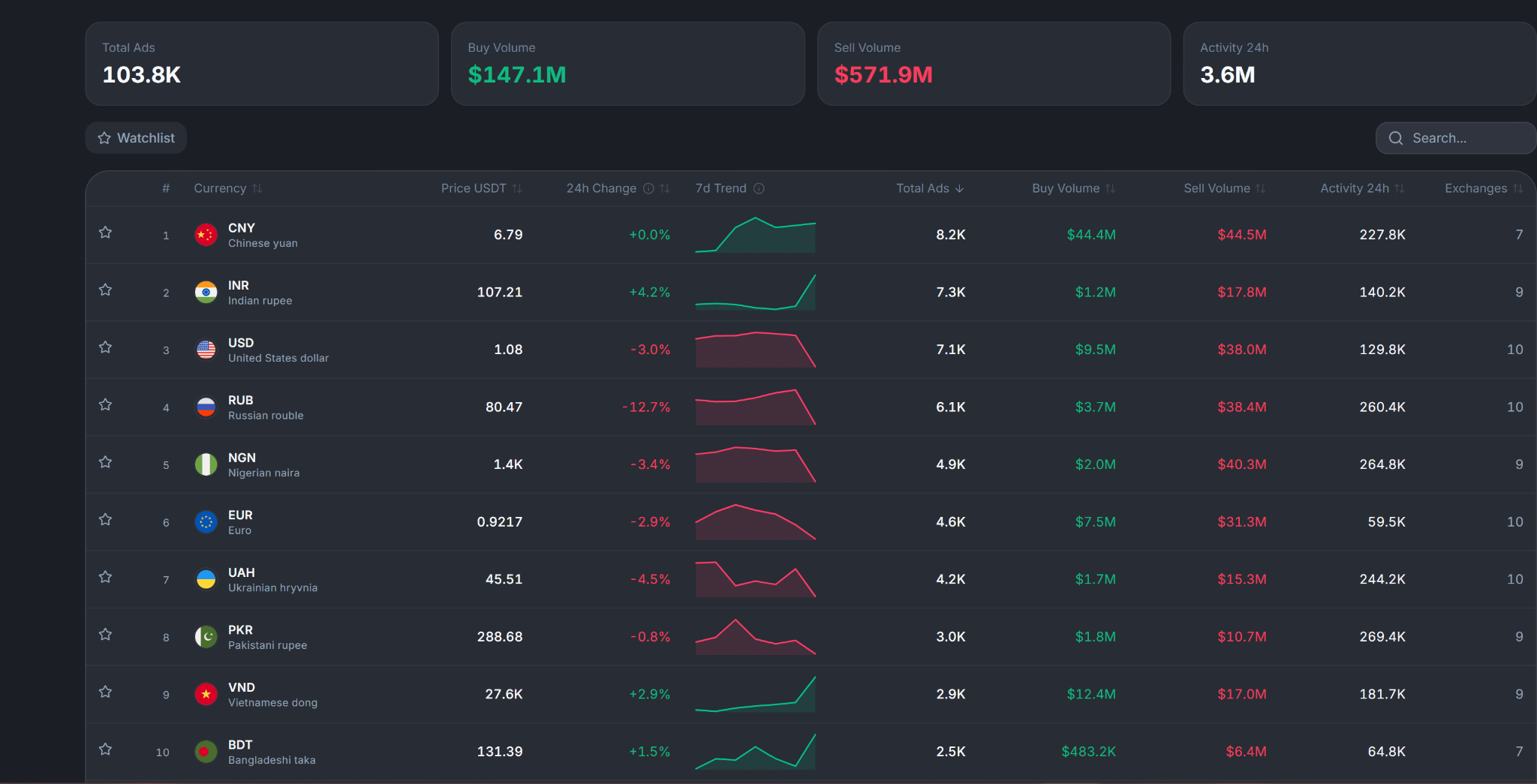
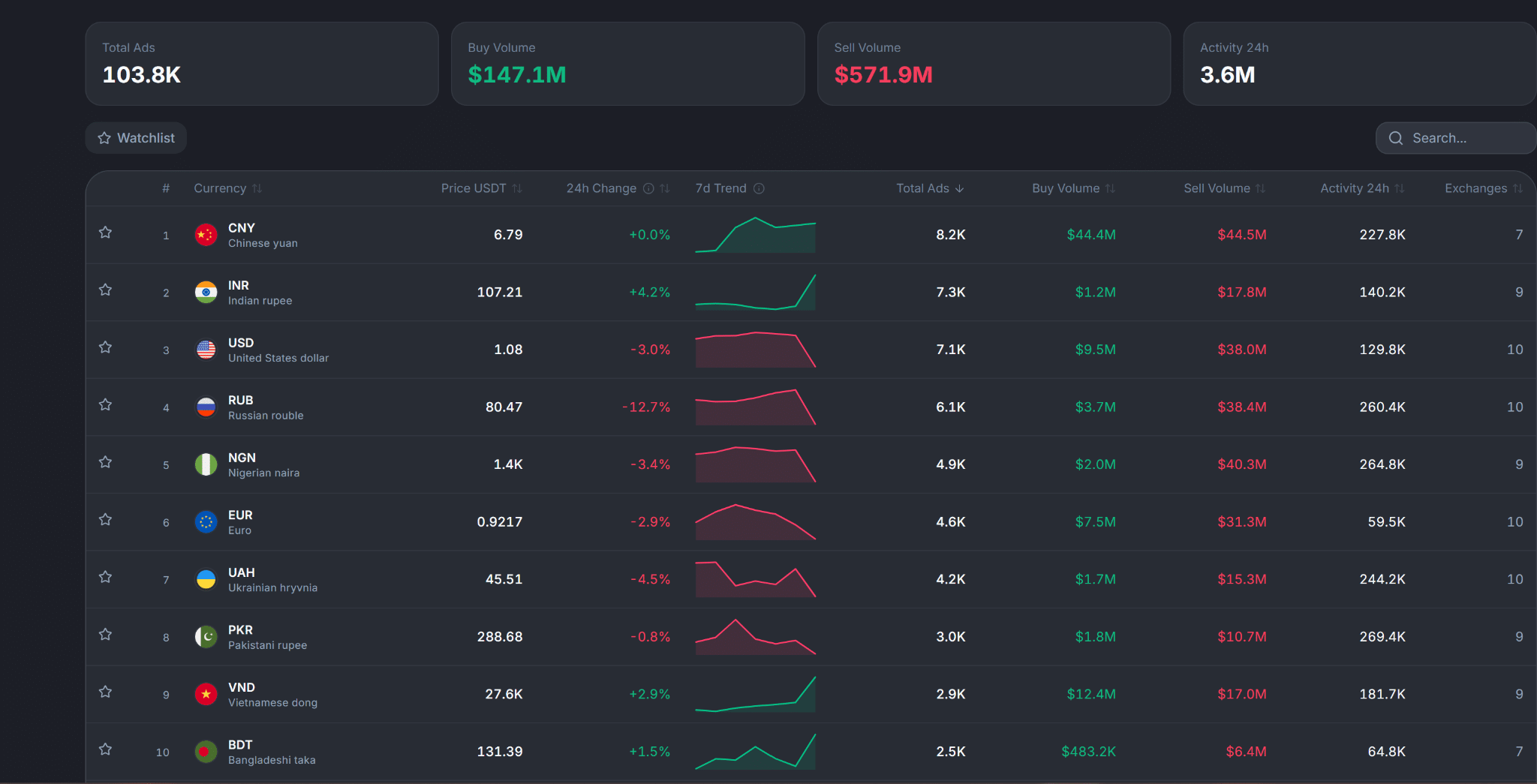
日益增加的监管压力不仅推高了价格,也在影响印度稳定币市场的运作方式。例如,根据点对点交易数据,在发稿时,印度卢比兑USDT的汇率约为107.21印度卢比。

来源:P2P Army

每日交易笔数超过14万笔,但由于流动性减少,交易金额相对较低。同时,买入量仅为120万美元,而卖出量为1780万美元,突显出做市能力受到限制。

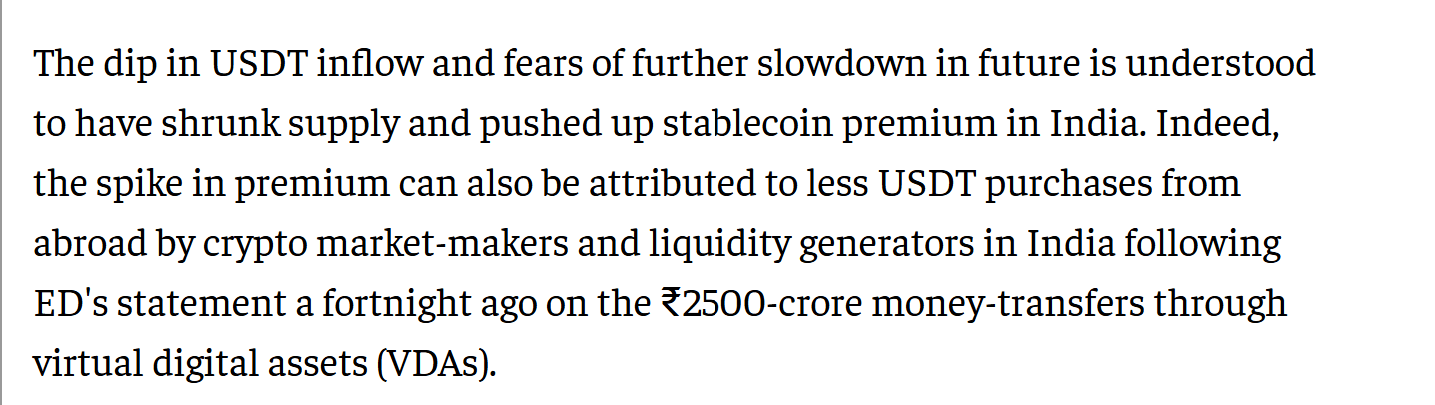
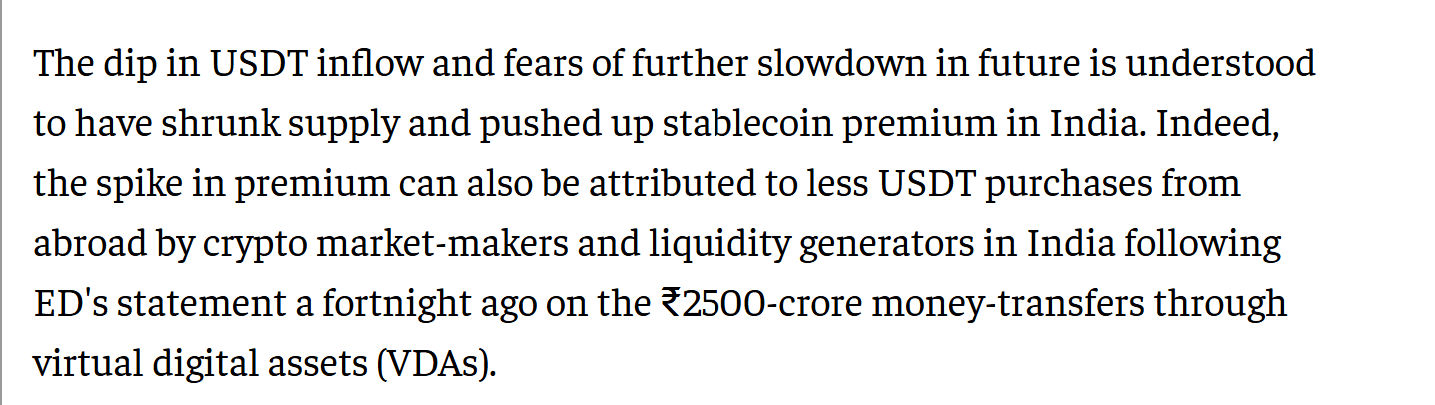
这表明做市商无法在这种环境中有效运作。此外,围绕2500亿印度卢比的虚拟数字资产转移的执法行动和审查,进一步减少了流入印度市场的新USDT,从而维持了持续的供应短缺。

来源:The Economic Times

这些不平衡可能意味着,目前监管的不确定性正在削弱市场效率,并增加了获取美元流动性的成本。从长远来看,如果现状持续,将导致交易员寻求替代方式或离岸美元流动性。

更清晰的法规将有助于恢复套利机会,增加可用的美元流动性,并最终降低印度的USDT溢价。


最终总结

  • 印度对Tether [USDT] 的需求依然强劲,但持续的供应限制可能使国内溢价居高不下。
  • USDT的流动性取决于监管的明确性,需要更强大的合规途径来恢复有效的定价。

Trending Cryptos

Related Questions

Q印度USDT溢价率飙升的主要原因是什么?

A印度USDT溢价率飙升至8.5%以上的主要原因是监管压力导致国内稳定币供应收缩。监管机构通过执法行动和加强监督,抑制了资金流入,造成了供需失衡。

Q当前印度USDT的市价与官方汇率的差距是多少?

A当前印度USDT的市价为102.88印度卢比,而官方美元/印度卢比汇率为94.65。因此,USDT以高出官方汇率约8.7%(≈(102.88-94.65)/94.65)的溢价在交易。

Q监管压力如何影响了印度稳定币市场的运作?

A监管压力不仅推高了价格,还深刻改变了市场结构。它减慢了新的USDT流入,减少了P2P市场、场外交易柜和交易所订单簿的流动性,导致市场成交量下降、做市能力受限,并可能迫使交易者转向非正规渠道或离岸美元流动性。

Q印度市场对USDT的需求主要体现在哪些方面?

A印度市场对USDT的需求主要体现在跨境支付、贸易结算和美元支持的价值储存上。尽管供应受限,但活跃钱包地址数量和交易量依然相对强劲,表明这些实际需求并未减弱。

Q恢复印度稳定币市场效率和降低溢价的潜在途径是什么?

A恢复市场效率和降低溢价的潜在途径是出台更清晰的监管法规,并提供更强的合规资金流入渠道。这将有助于恢复套利机会,增加可用的美元流动性,从而逐步缩小定价差距。

Related Reads

In the AI Era, What's Left for Bitcoin?

As Bitcoin falls below $60,000, the author reflects on the relationship between AI and Bitcoin, seeing them as two sides of the same coin. In the AI era, the cost of generating content has plummeted, making fake text, images, and videos increasingly easy and cheap to produce. This has led to a fundamental shift: while AI dramatically lowers the cost of information production, it also undermines trust and authenticity online. What becomes truly valuable is not more content, but the ability to verify what is real—"verifiability." This perspective offers a new lens for Bitcoin. Its massive energy consumption, often criticized as wasteful, is reinterpreted. While AI burns energy to enhance "capability" and efficiency, Bitcoin burns energy to produce "verifiability." Its purpose is not to be trusted but to enable a system where no trust in intermediaries—banks, platforms, or developers—is needed. Every transaction and the entire ledger's history is secured by cryptography and a decentralized network of nodes, making it independently verifiable. AI cannot forge a transaction on the Bitcoin network because the system is designed for proof, not generation. The author draws a historical parallel to the Renaissance: the printing press drastically reduced the cost of copying knowledge, while double-entry bookkeeping reduced the cost of trust in commerce. Today, AI is the new printing press, reducing content creation costs to near zero. Blockchain, and Bitcoin as its pioneer, may be the modern equivalent of double-entry bookkeeping—a foundational technology for verifying digital asset ownership and historical records without centralized authorities. Thus, AI and blockchain are not competitors. AI lowers the cost of creation; blockchain lowers the cost of verification. In an age where AI can generate anything, true scarcity may lie not in more content, but in independently verifiable facts. Whether the market will reprice Bitcoin accordingly remains uncertain, but its core value proposition as a "machine for producing verifiability" becomes strikingly relevant.

marsbit1h ago

In the AI Era, What's Left for Bitcoin?

marsbit1h ago

In the Age of AI, What's Left for Bitcoin?

Author: Sevclub, Seven Research Amid Bitcoin's recent drop below $60k, the author reflects on a growing sense that AI and Bitcoin are two sides of the same coin. Today, encountering any content triggers a new default question: "Was this made by AI?" The cost of generating convincing text, images, and video is now negligible. While the internet lowered information *distribution* costs, AI is crashing information *production* costs to near zero. The consequence is a flood of content where truth and falsehood are increasingly indistinguishable. In this environment, what becomes truly valuable is not more information, but the ability to verify what is real—"verifiability." This reframes the common criticism that Bitcoin "wastes electricity." AI consumes power to produce "capability" (e.g., more powerful models). Bitcoin consumes power to produce something else: "verifiability." Bitcoin's core purpose isn't about belief or trust in any institution, developer, or even its creator. It's about enabling independent verification. Every bitcoin's origin, every transaction, and the integrity of the entire ledger are secured by mathematics, cryptography, and a global network of nodes. AI can fabricate convincing media, but it cannot falsify a transaction on the Bitcoin network. The expended energy makes篡改历史 (tampering with history) prohibitively expensive, purchasing a globally verifiable ledger. The author draws a historical parallel to the Renaissance. The printing press drastically reduced the cost of copying knowledge, while double-entry bookkeeping reduced the cost of trust in commerce—one enabled creation, the other verification. Today, AI is the new printing press, driving content production costs toward zero. The question becomes: what is this era's "double-entry bookkeeping"? Blockchain appears to be the leading candidate. It doesn't verify which news is true or which image is real, but it provides a foundational layer for independently verifying asset ownership and historical records in the digital realm without centralized authorities. Therefore, AI and blockchain are not in competition. AI lowers the cost of *generation*. Blockchain (and Bitcoin as a prime example) lowers the cost of *verification*. One creates, the other proves. Whether Bitcoin ultimately succeeds remains uncertain, facing potential challenges from quantum computing, regulation, and technical evolution. However, the author now sees it less as a "machine for making bitcoin" and more as a "machine for making verifiability." In an age where AI can generate anything, true scarcity may no longer be "more content," but "more independently verifiable facts." Whether the market will price this accordingly is a separate question.

链捕手1h ago
In the Age of AI, What's Left for Bitcoin?

链捕手1h ago

Trading

Spot

Hot Articles

Discussions

Welcome to the HTX Community. Here, you can stay informed about the latest platform developments and gain access to professional market insights. Users' opinions on the price of S (S) are presented below.

活动图片