波场交易员请注意!这个决定成败的水平将决定TRX的下一步走势

ambcryptoPublished on 2026-06-26Last updated on 2026-06-26

Abstract

尽管今年多数主流加密货币遭遇资金外流,波场(TRX)却保持强势,年内上涨13.44%。目前,TRX正逼近0.318-0.320美元的关键支撑位,此价位曾触发年内两次反弹,但第二次反弹力度减弱,显示买盘可能疲软。 技术图表显示,若价格能在该支撑位反弹并收于0.334美元上方,则可能继续上攻0.353及0.377美元。反之,若跌破0.310美元(近期低点),则可能开启更深跌幅。 指标呈现不同信号:布林带分析显示价格在中轨(约0.313美元)附近获得支撑,且过去两次触及中轨(均为周五)后均出现反弹。资金流量指数(MFI)读数65处于50-80的看涨区间,表明资金持续流入。 总体而言,TRX正处于关键抉择点:守住支撑则涨势延续,一旦跌破0.310美元则趋势转熊。

今年,尽管大多数主要加密货币都遭遇了大幅资金外流,波场 [TRX] 却大体保持着看涨姿态——该资产年初至今已录得13.44%的涨幅,而这份韧性现在即将面临考验。

TRX在价格图表上正接近一个决定性水平,其在该水平上的反应将决定它是继续保持年内看涨表现者的地位,还是会跌破支撑,进入更大幅度的下跌。

TRX逼近决定其趋势的支撑位

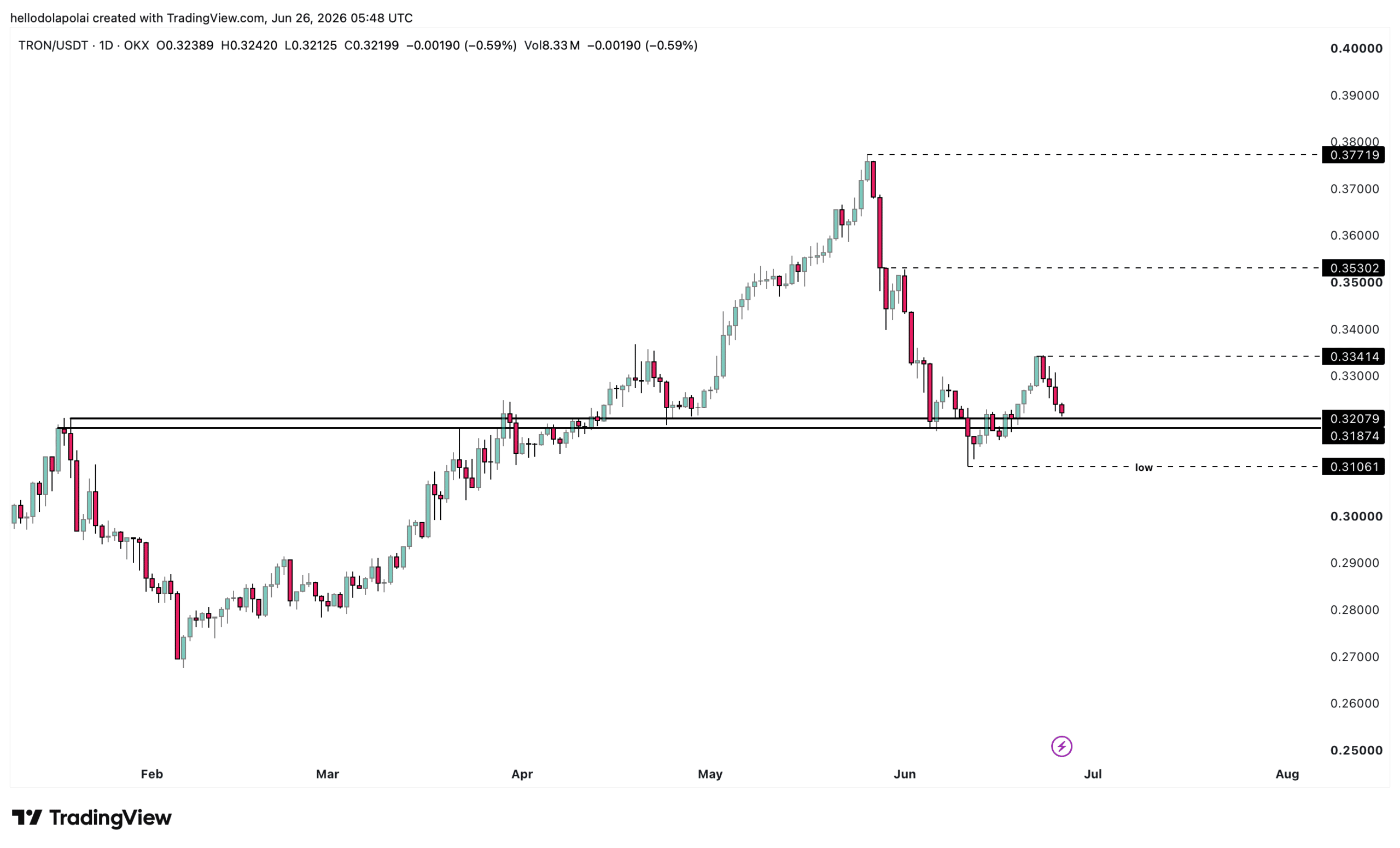
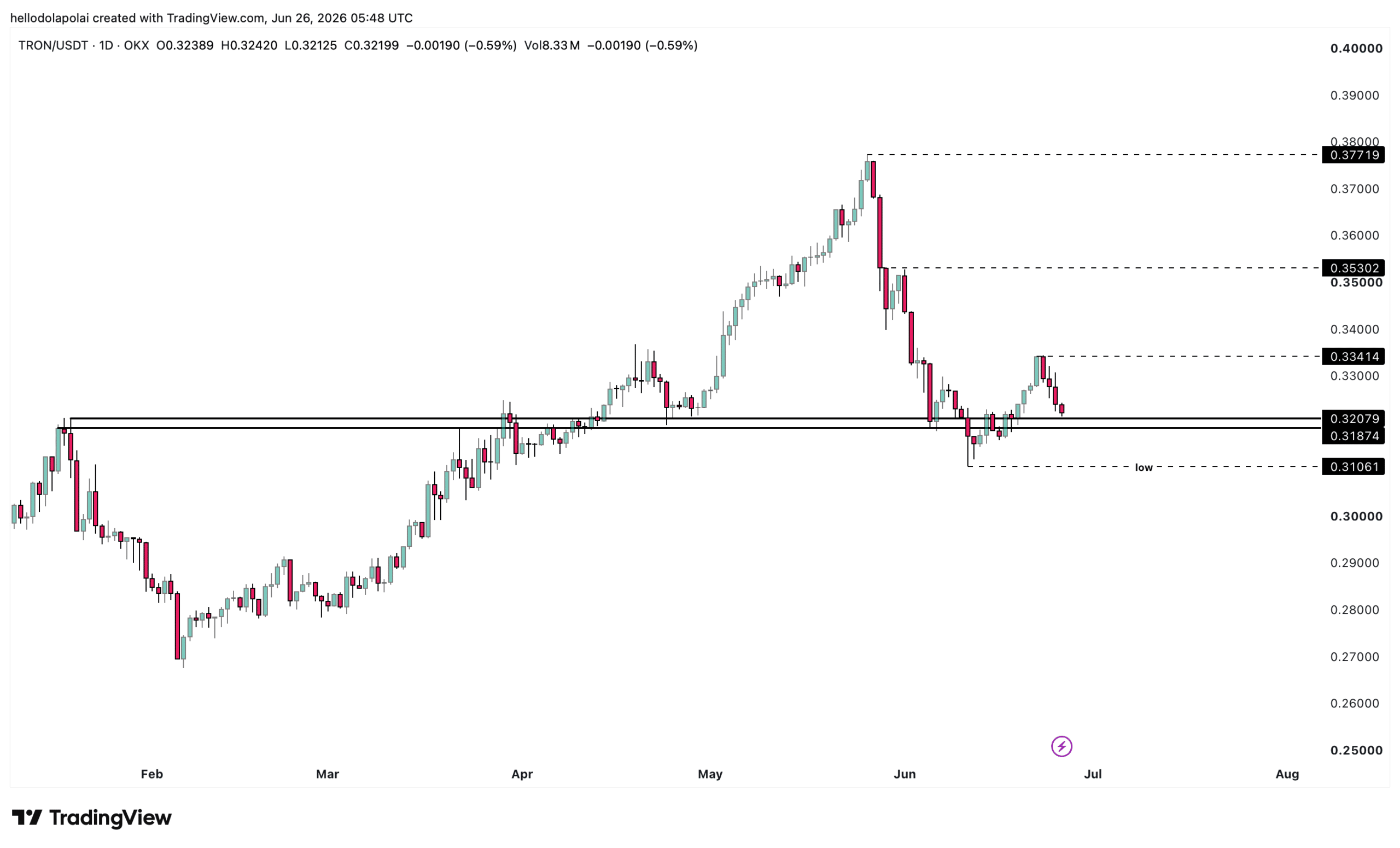
图表分析显示,TRX正逼近一个关键支撑位,该水平将决定该资产是否能维持其上升势头。随着价格接近该水平线,该代币在过去一天内下跌了2%。

该水平曾支撑了两次独立的上涨行情,不过第二次价格回到该支撑位时,涨幅明显收窄。动量在这样一种水平附近减弱,通常表明该处的买盘压力正在减弱。

来源:TradingView

在撰写本文时,该支撑位位于0.318美元至0.320美元之间。这种图表形态引出了两种可能的情景,构成了近期看涨和看跌的逻辑。

若价格从支撑位反弹,收盘价站上0.334美元,并随后在该价位上方交易,将确认多头占据上风,打开通往0.353美元和0.377美元的路径。若跌破0.310美元(图表中标记的低点),则将形成一个更低的低点,表明TRX将进一步扩大跌幅。

相对于图表的谨慎,TRX指标偏向看涨

技术指标描绘的画面与图表所暗示的略有不同。

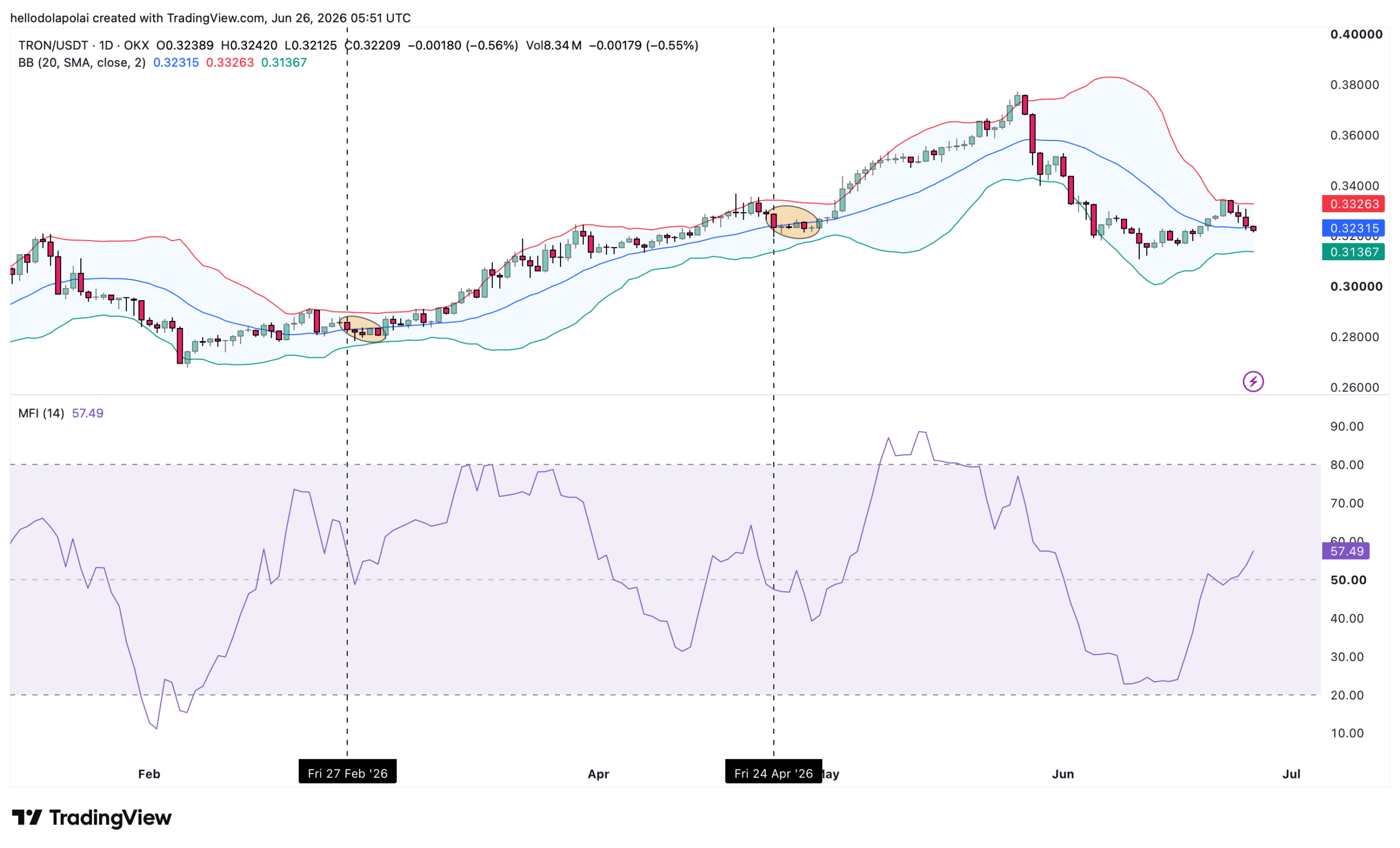
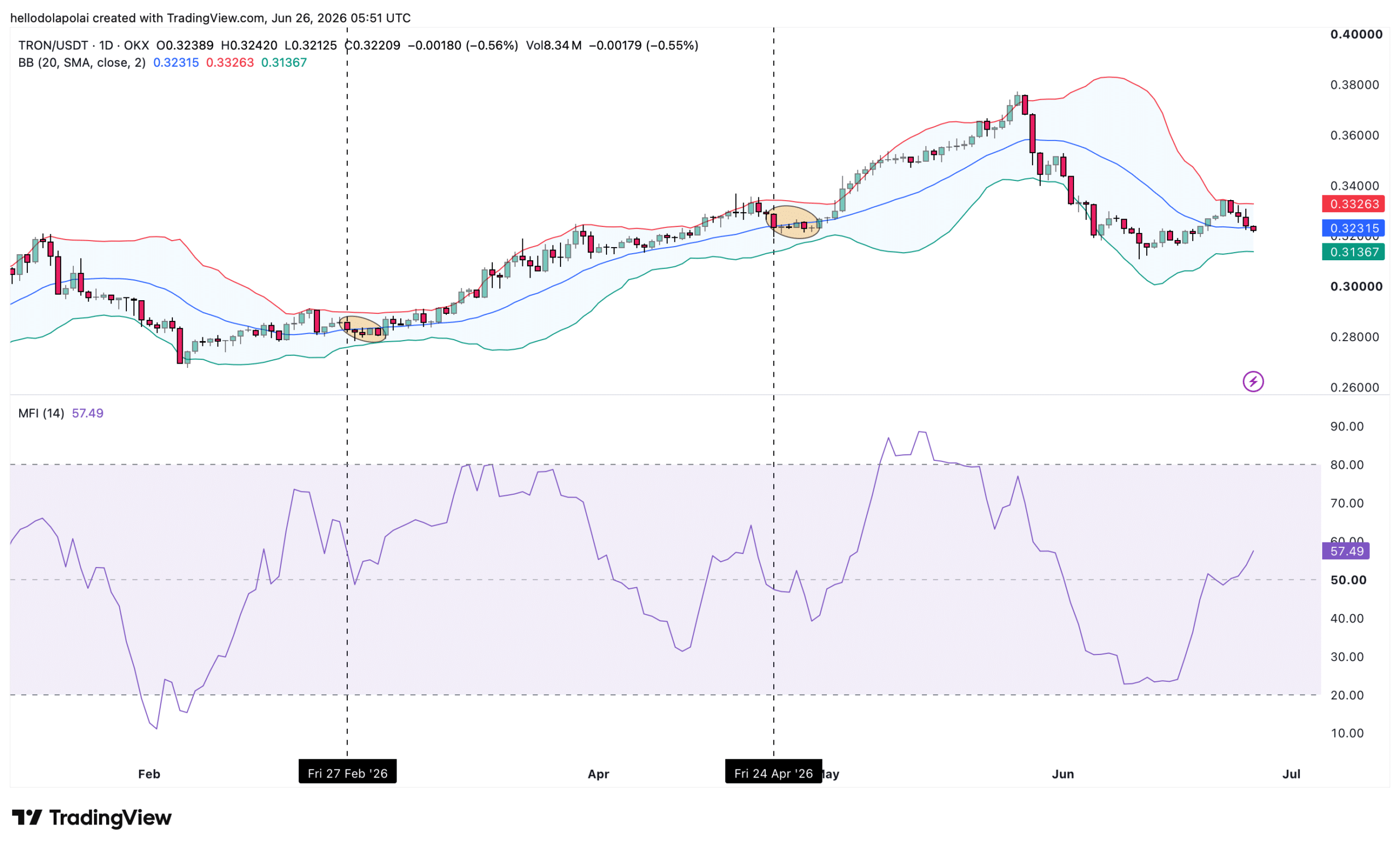
布林带分析指出,只要中轨(蓝色标记)能守住作为支撑位,价格将在当前水平企稳并尝试走高。

来源:TradingView

在之前价格两次跌至该中轨时,它确实守住了——值得注意的是,这两次触及都发生在周五,相隔约两个月,分别是2月27日和4月24日。

现在,在撰写本文时,是6月26日,又是一个周五。

虽然不能保证这种模式会重演,但布林带给出的最坏情况是跌至0.313美元。追踪资金流入和流出资产的资金流量指数强化了看涨解读。

MFI持续攀升,当前读数为65,稳稳地位于看涨区域(50-80),这表明资金正在流入并支撑着本已存在的看涨趋势,该资产很可能会继续沿着这条路径前进。


最终总结

  • TRX目前正维持在0.318-0.320美元的支撑区域上方,该区域今年已引发两次上涨。价格在该区域的反应将决定其涨幅能否延续。
  • 由于资金持续流入,动量仍偏向看涨,但如果跌破0.310美元,前景将转为看跌。

Trending Cryptos

Related Questions

Q根据文章,TRX当前正接近哪个关键价位区间,这个区间对其走势有何重要性?

ATRX正接近0.318美元至0.320美元的关键支撑区间。这个区间在今年已成功引发了两轮上涨行情,文章将其称为“成败在此一举”的水平,TRX在此处的反应将决定它是能延续今年的看涨走势,还是可能转为更深的下跌。

Q文章中提到,如果TRX价格跌破哪个具体位置,其前景将转为看跌?

A文章明确指出,如果TRX价格跌破0.310美元这一关键低点,将形成一个更低的低点,其前景将转为看跌,并可能进一步扩大损失。

Q布林带分析对于TRX的价格走势给出了什么指示?其认为的最坏情况是什么?

A布林带分析指出,如果布林带中轨(蓝色线)能够守住作为支撑,价格可能维持在现有水平并尝试走高。其认为的最坏情况是价格会下跌至0.313美元。

Q资金流量指数目前处于什么水平,这表明了什么样的市场状况?

A资金流量指数目前读数为65,稳稳地位于50-80的看涨区间。这表明资金正在持续流入TRX,支持了看涨的观点,并意味着资产很可能维持当前的上涨路径。

Q文章描述了哪两种主要的潜在价格情景?

A文章描述了两种主要的潜在价格情景:1. 看涨情景:从支撑位反弹,收盘价站稳0.334美元上方并持续交易于该价位之上,这将确认多头占优,并打开通往0.353美元和0.377美元的道路。2. 看跌情景:价格跌破0.310美元的关键低点,形成更低低点,表明下跌趋势将继续扩大。

Related Reads

In the AI Era, What's Left for Bitcoin?

As Bitcoin falls below $60,000, the author reflects on the relationship between AI and Bitcoin, seeing them as two sides of the same coin. In the AI era, the cost of generating content has plummeted, making fake text, images, and videos increasingly easy and cheap to produce. This has led to a fundamental shift: while AI dramatically lowers the cost of information production, it also undermines trust and authenticity online. What becomes truly valuable is not more content, but the ability to verify what is real—"verifiability." This perspective offers a new lens for Bitcoin. Its massive energy consumption, often criticized as wasteful, is reinterpreted. While AI burns energy to enhance "capability" and efficiency, Bitcoin burns energy to produce "verifiability." Its purpose is not to be trusted but to enable a system where no trust in intermediaries—banks, platforms, or developers—is needed. Every transaction and the entire ledger's history is secured by cryptography and a decentralized network of nodes, making it independently verifiable. AI cannot forge a transaction on the Bitcoin network because the system is designed for proof, not generation. The author draws a historical parallel to the Renaissance: the printing press drastically reduced the cost of copying knowledge, while double-entry bookkeeping reduced the cost of trust in commerce. Today, AI is the new printing press, reducing content creation costs to near zero. Blockchain, and Bitcoin as its pioneer, may be the modern equivalent of double-entry bookkeeping—a foundational technology for verifying digital asset ownership and historical records without centralized authorities. Thus, AI and blockchain are not competitors. AI lowers the cost of creation; blockchain lowers the cost of verification. In an age where AI can generate anything, true scarcity may lie not in more content, but in independently verifiable facts. Whether the market will reprice Bitcoin accordingly remains uncertain, but its core value proposition as a "machine for producing verifiability" becomes strikingly relevant.

marsbit52m ago

In the AI Era, What's Left for Bitcoin?

marsbit52m ago

In the Age of AI, What's Left for Bitcoin?

Author: Sevclub, Seven Research Amid Bitcoin's recent drop below $60k, the author reflects on a growing sense that AI and Bitcoin are two sides of the same coin. Today, encountering any content triggers a new default question: "Was this made by AI?" The cost of generating convincing text, images, and video is now negligible. While the internet lowered information *distribution* costs, AI is crashing information *production* costs to near zero. The consequence is a flood of content where truth and falsehood are increasingly indistinguishable. In this environment, what becomes truly valuable is not more information, but the ability to verify what is real—"verifiability." This reframes the common criticism that Bitcoin "wastes electricity." AI consumes power to produce "capability" (e.g., more powerful models). Bitcoin consumes power to produce something else: "verifiability." Bitcoin's core purpose isn't about belief or trust in any institution, developer, or even its creator. It's about enabling independent verification. Every bitcoin's origin, every transaction, and the integrity of the entire ledger are secured by mathematics, cryptography, and a global network of nodes. AI can fabricate convincing media, but it cannot falsify a transaction on the Bitcoin network. The expended energy makes篡改历史 (tampering with history) prohibitively expensive, purchasing a globally verifiable ledger. The author draws a historical parallel to the Renaissance. The printing press drastically reduced the cost of copying knowledge, while double-entry bookkeeping reduced the cost of trust in commerce—one enabled creation, the other verification. Today, AI is the new printing press, driving content production costs toward zero. The question becomes: what is this era's "double-entry bookkeeping"? Blockchain appears to be the leading candidate. It doesn't verify which news is true or which image is real, but it provides a foundational layer for independently verifying asset ownership and historical records in the digital realm without centralized authorities. Therefore, AI and blockchain are not in competition. AI lowers the cost of *generation*. Blockchain (and Bitcoin as a prime example) lowers the cost of *verification*. One creates, the other proves. Whether Bitcoin ultimately succeeds remains uncertain, facing potential challenges from quantum computing, regulation, and technical evolution. However, the author now sees it less as a "machine for making bitcoin" and more as a "machine for making verifiability." In an age where AI can generate anything, true scarcity may no longer be "more content," but "more independently verifiable facts." Whether the market will price this accordingly is a separate question.

链捕手1h ago
In the Age of AI, What's Left for Bitcoin?

链捕手1h ago

Trading

Spot

Hot Articles

Discussions

Welcome to the HTX Community. Here, you can stay informed about the latest platform developments and gain access to professional market insights. Users' opinions on the price of S (S) are presented below.

活动图片