Nhà phân tích từng dự đoán đỉnh chu kỳ cho rằng đáy Bitcoin có thể ở mức 28.500 USD - Đây là thời điểm dự kiến

bitcoinistPublished on 2026-06-06Last updated on 2026-06-06

Abstract

Giá Bitcoin đã giảm mạnh xuống dưới 60.000 USD, mức thấp nhất kể từ đầu năm 2024, giữa áp lực bán tháo trên thị trường tài chính. Một nhà phân tích tiền điện tử nổi tiếng trên X (trước đây là Twitter), có biệt danh CryptoCon, người đã bán Bitcoin ở đỉnh chu kỳ trước, dự báo mức đáy tiếp theo của Bitcoin có thể nằm ở 28.500 USD. Phân tích dựa trên chỉ báo "Bear Bands" của CryptoCon, gồm ba vùng. Hiện tại, giá Bitcoin đã phá vỡ và có khả năng đóng cửa dưới "First Low Bear Band". Nếu điều này xác nhận, giá có thể giảm tiếp về vùng thứ hai khoảng 44.500 USD trong khoảng tháng 8 đến tháng 10. Tuy nhiên, mức đáy chu kỳ thực sự được kỳ vọng nằm ở vùng thứ ba, khoảng 28.500 USD, vào khoảng tháng 11/2026 đến tháng 1/2027. Nhà phân tích nhấn mạnh sự kiên nhẫn chờ đợi các điều kiện mua vào tối ưu là rất quan trọng. Tại thời điểm báo cáo, Bitcoin giao dịch quanh 61.850 USD, giảm hơn 2% trong ngày và giảm khoảng 15% trong tuần. Một mức giảm xuống 28.500 USD sẽ tương đương với mức giảm 77% từ đỉnh kỷ lục trước đó của Bitcoin.

Giá Bitcoin đã tạm thời giảm xuống dưới mốc 60.000 USD lần đầu tiên kể từ năm 2024, chịu sức ép giảm mạnh dữ dội khiến thị trường tài chính toàn cầu chao đảo vào thứ Sáu, ngày 5 tháng 6. Trong khi vụ chào bán cổ phiếu lần đầu ra công chúng (IPO) sắp diễn ra của SpaceX tại Mỹ được xác định là một trong những chất xúc tác đằng sau đợt suy thoái này, thị trường chứng khoán Mỹ cũng không tránh khỏi ảnh hưởng trong ngày, khi các cổ phiếu vốn hóa lớn chính ghi nhận tổn thất hai con số.

Điều thú vị là, một nhà giao dịch tiền điện tử nổi tiếng trên nền tảng mạng xã hội X, người đã bán lượng Bitcoin nắm giữ ở đỉnh của chu kỳ tăng giá gần nhất, đã đưa ra dự báo về đáy của loại tiền mã hóa này sau diễn biến giá mới nhất. Theo chuyên gia này, giá Bitcoin có thể giảm xuống mức thấp nhất là 28.500 USD để tìm đáy chu kỳ.

Liệu việc giảm xuống 28.500 USD có phải là điều không tránh khỏi đối với giá BTC?

Trong một bài đăng gần đây trên nền tảng X, nhà giao dịch ẩn danh CryptoCon đã chia sẻ cái nhìn sâu sắc về một con đường có thể xảy ra cho giá Bitcoin trong vài tháng tới. Nhà phân tích tiền điện tử này xác định 44.500 USD và 28.500 USD là các mục tiêu giảm tiếp theo tiềm năng cho loại tiền mã hóa hàng đầu.

Dự báo này tập trung vào công cụ Dải Bear của nhà phân tích, vốn đã giúp xác định các đáy giảm trong các chu kỳ trước. Như được thể hiện trong biểu đồ bên dưới, chỉ báo này bao gồm ba dải: Dải Bear Đáy Đầu Tiên, Dải Đáy Thứ Hai và Dải Bear Đáy Thứ Ba.
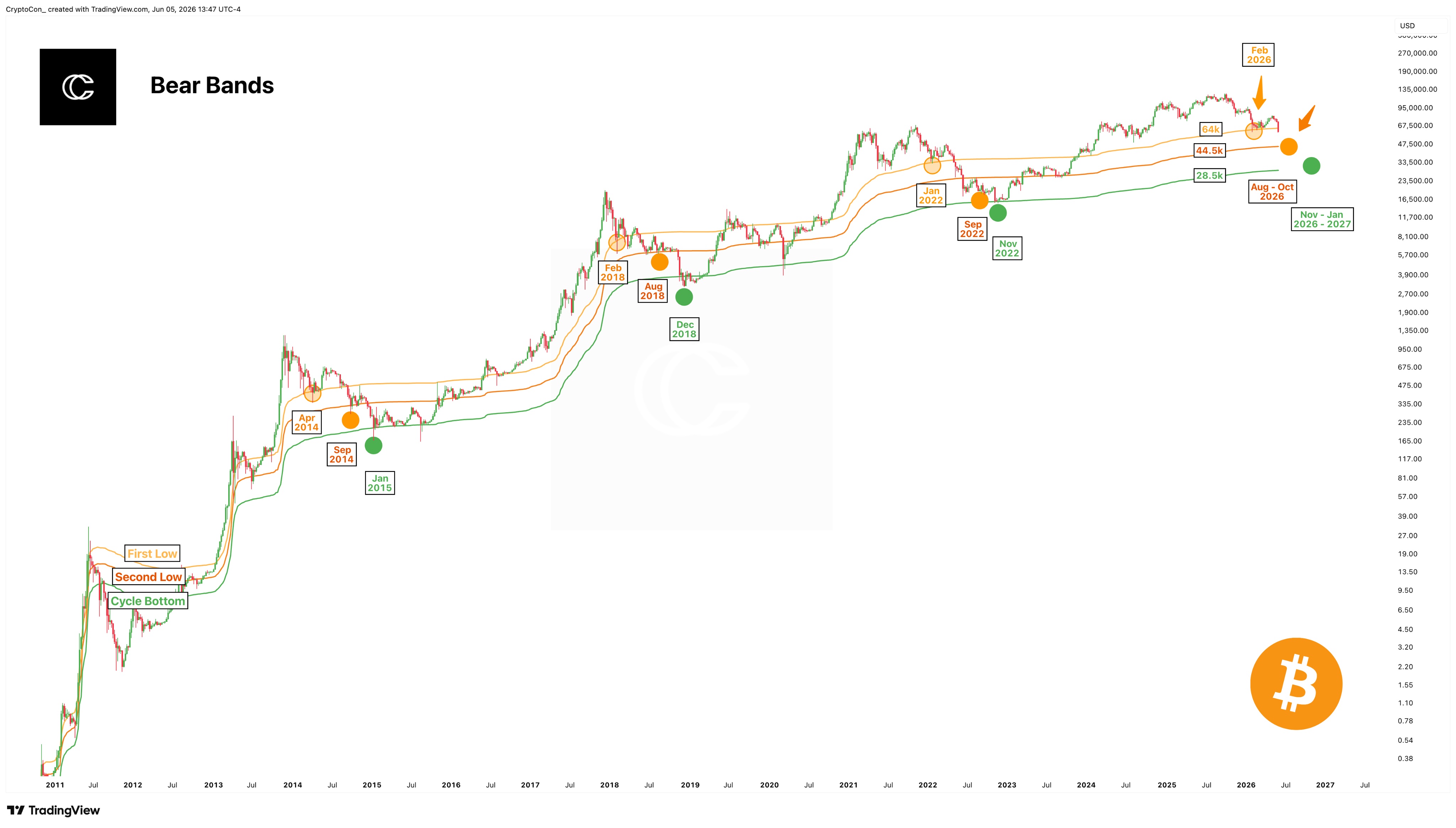
Nguồn: @CryptoCon_ trên X

Như CryptoCon đã nêu bật trong phân tích của mình, giá Bitcoin đã phá vỡ bên dưới Dải Bear Đáy Đầu Tiên sau đợt suy thoái gần nhất và có vẻ như rất có khả năng sẽ đóng cửa bên dưới mức này. Nhà phân tích thị trường lưu ý rằng việc đóng cửa được xác nhận bên dưới dải đầu tiên này có thể có nghĩa là tiềm năng giảm xuống Dải Đáy Thứ Hai ở khoảng 44.500 USD.

Tuy nhiên, CryptoCon nói rằng mục tiêu đáy chu kỳ nằm trên Dải Bear Đáy Thứ Ba và "ở mức thấp hơn trong các dự báo của tôi" ở khoảng 28.500 USD. Nếu lịch sử là bài học, giá Bitcoin luôn giảm xuống dải bear này trước khi bắt đầu một chu kỳ tăng giá khác.

CryptoCon đã viết trên X:

Tôi đang rất kiên nhẫn chờ đợi các điều kiện đáy chu kỳ phù hợp, tôi không sợ 'bỏ lỡ'. Đặc biệt là khi lợi nhuận giảm dần và khả năng một chu kỳ ảm đạm (điều mà hầu hết mọi người cho là không thể) đang lờ mờ hiện ra, việc chờ đợi thời điểm tốt nhất để đầu tư càng trở nên quan trọng hơn bao giờ hết.

Điều đáng lưu ý là nhà phân tích này cũng đưa ra một dòng thời gian cho việc khi nào giá Bitcoin sẽ chạm đến từng mục tiêu giảm này. CryptoCon kỳ vọng loại tiền mã hóa hàng đầu sẽ chạm Dải Bear Thứ Hai vào khoảng tháng 8 đến tháng 10, sau đó giảm xuống đáy 28.500 USD vào khoảng tháng 11 năm 2026 và tháng 1 năm 2027.

Tổng quan về giá Bitcoin

Mức giảm xuống khoảng 28.500 USD sẽ tương đương với việc giảm 77% so với mức cao kỷ lục mọi thời đại của BTC. Tính đến thời điểm viết bài, giá Bitcoin đang ở mức khoảng 61.850 USD, phản ánh mức giảm hơn 2% trong 24 giờ qua.

Mặc dù mức giảm trong một ngày này có vẻ tương đối khiêm tốn, nhưng khung thời gian rộng hơn cung cấp thêm bối cảnh cho những khó khăn của "ông lớn" thị trường trong tuần qua. Theo dữ liệu từ CoinGecko, giá Bitcoin đã giảm hơn 15% trong bảy ngày qua.

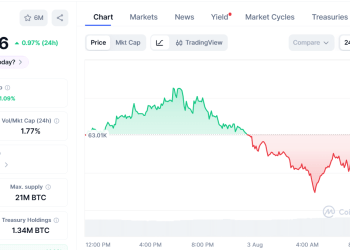
Giá của BTC trên khung thời gian hàng ngày | Nguồn: Biểu đồ BTCUSDT trên TradingView


Trending Cryptos

Related Questions

QTheo bài báo, dự đoán của trader giấu tên CryptoCon về đáy chu kỳ của Bitcoin là bao nhiêu?

ATheo trader CryptoCon, Bitcoin có thể rơi xuống mức thấp nhất khoảng 28.500 USD để tìm đáy chu kỳ.

QNgười phân tích đề cập trong bài sử dụng công cụ gì để xác định các mục tiêu giá giảm của Bitcoin?

ANhà phân tích này sử dụng một chỉ báo được gọi là 'Bear Bands', bao gồm ba dải: Dải Gấu Thấp Thứ Nhất, Dải Thấp Thứ Hai và Dải Gấu Thấp Thứ Ba.

QBài báo nêu ra mốc thời gian nào cho việc Bitcoin có thể chạm mức đáy 28.500 USD?

ABài báo nêu rằng CryptoCon dự kiến Bitcoin sẽ chạm đáy khoảng 28.500 USD vào khoảng thời gian từ tháng 11 năm 2026 đến tháng 1 năm 2027.

QViệc Bitcoin phá vỡ và đóng cửa dưới Dải Gấu Thấp Thứ Nhất có ý nghĩa gì theo phân tích này?

ATheo phân tích, nếu Bitcoin xác nhận đóng cửa dưới Dải Gấu Thấp Thứ Nhất, điều này có thể đồng nghĩa với khả năng giảm tiếp về phía Dải Thấp Thứ Hai ở mức khoảng 44.500 USD.

QGiá Bitcoin tại thời điểm bài báo được viết là bao nhiêu và đã giảm bao nhiêu trong tuần qua?

ATại thời điểm bài báo được viết, giá Bitcoin là khoảng 61.850 USD. Giá đã giảm hơn 15% trong vòng bảy ngày qua.

Related Reads

OpenClaw Founder Peter Steinberg's Latest Speech: The Life and Death Revelation of an Open Source Project, How OpenClaw Emerged from the Eye of the Storm

Peter Steinberg, founder of the wildly popular open-source AI agent project OpenClaw, reflects on its turbulent journey from creation to near-collapse and resurgence. It began in late 2024 from his personal frustration with sending prompts from phone to computer. He built a WhatsApp relay that felt "magical," but initial excitement was limited to friends. After adding Discord support and launching a public server, the project exploded virally overnight, attracting massive attention, rebranding requests (from "Claudis" to OpenClaw), and even praise from NVIDIA's CEO. The intense scrutiny and pressure nearly broke Steinberg. The biggest technical crisis came from over-optimizing for a specific AI model provider, which suddenly canceled subscriptions, forcing a rushed shift to open-weight models. OpenClaw's weekly downloads plummeted before surging to a record high after being "declared dead." Steinberg realized he had stopped enjoying the build process and using his own product, making it a duty rather than a passion. His key lesson: "Fun is speed." Recovery came by refocusing on building for himself, forming a non-profit, and receiving crucial support (e.g., from NVIDIA for security). The team is now using OpenClaw to build OpenClaw itself, emphasizing its core value: a private, open alternative where "your agent, your machine, your life." He shares insights: the first user should be yourself; balance bug fixes with new features to maintain interest; the current bottleneck is reliable toolchains, especially for Mac testing. His story underscores that creation thrives on personal need, endures through storms when the joy of building returns, and persists by "living in the future and building what's missing."

marsbit18m ago

OpenClaw Founder Peter Steinberg's Latest Speech: The Life and Death Revelation of an Open Source Project, How OpenClaw Emerged from the Eye of the Storm

marsbit18m ago

US Stocks and Gold Rise Together, Bitcoin Rebound Absent, Have Bottom Signals Appeared?

While traditional assets like U.S. stocks and gold have rebounded strongly, Bitcoin continues to consolidate without following the uptrend. Since hitting an all-time high near $126,000 in October last year, Bitcoin has remained in a corrective phase, trading between $62,000 and $66,000 over the past month. Although U.S. spot Bitcoin ETFs have seen renewed net inflows recently—with the past week marking the best performance since mid-April—this buying pressure has been insufficient to counter persistent selling from miners and crypto companies. For instance, miner-linked wallets have seen their BTC balance drop by about 72% since late 2021. Some long-term indicators are showing early signs of a potential bottom. Metrics such as Reserve Risk, BTC price relative to its 2-year moving average, and the AHR999 index have entered historically oversold territory, suggesting improved long-term value. However, key indicators like MVRV Ratio, NUPL, and the Fear & Greed Index have not yet reached the extreme levels typically seen at major cycle lows. Furthermore, over 53% of Bitcoin supply remains in profit, and stablecoin liquidity is still contracting, indicating the market may need more time for a full capitulation phase. In summary, while select bottom signals are emerging, Bitcoin lacks the broad-based confirmation needed to declare a definitive cycle low. A sustained recovery will likely depend on continued ETF inflows, a reduction in structural selling pressure, and further deterioration in key on-chain metrics toward historical extremes.

marsbit20m ago

US Stocks and Gold Rise Together, Bitcoin Rebound Absent, Have Bottom Signals Appeared?

marsbit20m ago

After Yushu Got Hot, a 68-Year-Old Auto Parts Boss Bet 1.85 Billion

After staying relatively low-profile for years, Shanghai Bate Technology, a traditional auto parts supplier, has recently been thrust into the spotlight as a leading humanoid robotics concept stock. This shift is largely tied to the impending IPO of robotics company Unitree, with which Bate collaborates on prototype development. Bate's founder, 68-year-old Jin Kun, is making a bold bet on this new frontier. The company is investing 1.85 billion yuan to build a major R&D and production base in Kunshan for planetary roller screws—a key component in robot joints. With an annual capacity of 2.6 million sets planned, plus overseas expansion, this represents a massive, forward-looking commitment from a firm whose 2025 revenue of 2.3 billion yuan still relies almost entirely on its traditional automotive business (over 98%). The investment highlights a strategic pivot. Bate aims to leverage decades of expertise in metal processing, precision manufacturing, and heat treatment from the automotive sector and apply it to the burgeoning robotics industry. However, this move carries significant risk. The company has not yet secured formal supplier contracts or begun mass deliveries for its roller screws. It is essentially betting on future demand in a market that remains nascent. The broader industry context adds to the uncertainty. While multiple Chinese manufacturers are racing to invest in similar robotics component capacity (totaling over 6 billion yuan), the downstream humanoid robot market is still in its early stages. Estimates put 2025 global shipments at only around 18,000 units, primarily for entertainment, education, and data collection rather than large-scale industrial use. This creates a critical mismatch: the speed of upstream component factory construction and capital investment is far outpacing the commercialization and adoption of the robots themselves. Bate's story, driven by Jin Kun's decisive gamble, encapsulates the high-stakes transition facing traditional manufacturers seeking a "second growth curve" in robotics—a future full of potential but currently backed more by market anticipation than concrete financial results.

marsbit24m ago

After Yushu Got Hot, a 68-Year-Old Auto Parts Boss Bet 1.85 Billion

marsbit24m ago

Trading

Spot

Hot Articles

Discussions

Welcome to the HTX Community. Here, you can stay informed about the latest platform developments and gain access to professional market insights. Users' opinions on the price of S (S) are presented below.

活动图片