CertiK Releases Cryptocurrency ATM Fraud Report: Losses Reach $330 Million, AI Scams and Cross-Border Money Laundering Emerge as Major Threats

marsbitPublished on 2026-04-02Last updated on 2026-04-02

Abstract

CertiK's "Skynet Cryptocurrency ATM Fraud Report" reveals that losses from such scams reached $330 million in 2025, a 33% year-on-year increase, making it one of the fastest-growing financial crimes in the U.S. The report highlights that these scams have evolved into a highly organized transnational criminal industry, leveraging social engineering and AI technologies. Cryptocurrency ATMs, with 78% located in the U.S., serve as a rapid channel for fraudsters to transfer funds. Victims, often elderly individuals who account for 86% of the losses, are manipulated via phone calls or messages to deposit cash into these machines. The funds are quickly converted into cryptocurrency and transferred to wallets controlled by criminals, making recovery nearly impossible once the transaction is on the blockchain. AI-driven scams, including voice cloning and deepfake videos, have proven 4.5 times more profitable than traditional methods. Criminal networks use automated scripts and employ "smurfing" tactics to bypass transaction limits. The illicit funds are rapidly laundered through mixing services, cross-chain bridges, and decentralized exchanges, often within minutes. The report emphasizes that the only effective intervention point is at the transaction entry level, before funds are on-chain. It calls for enhanced KYC measures, industry-wide intelligence sharing, real-time risk screening, and stronger cross-border law enforcement cooperation to combat this escalating threat.

On March 12, CertiK, the world's largest Web3 security company, released the "Skynet Cryptocurrency ATM Fraud Report." The report reveals that losses from such scams have reached $330 million in 2025, a year-on-year increase of approximately 33%, making it one of the fastest-growing categories of financial crime in the United States.

The report points out that as the number of global cryptocurrency ATM devices continues to grow and criminal organizations increasingly leverage social engineering and AI technology to upgrade their fraudulent tactics, this criminal model has evolved from isolated cases into a highly organized transnational fraud industry.
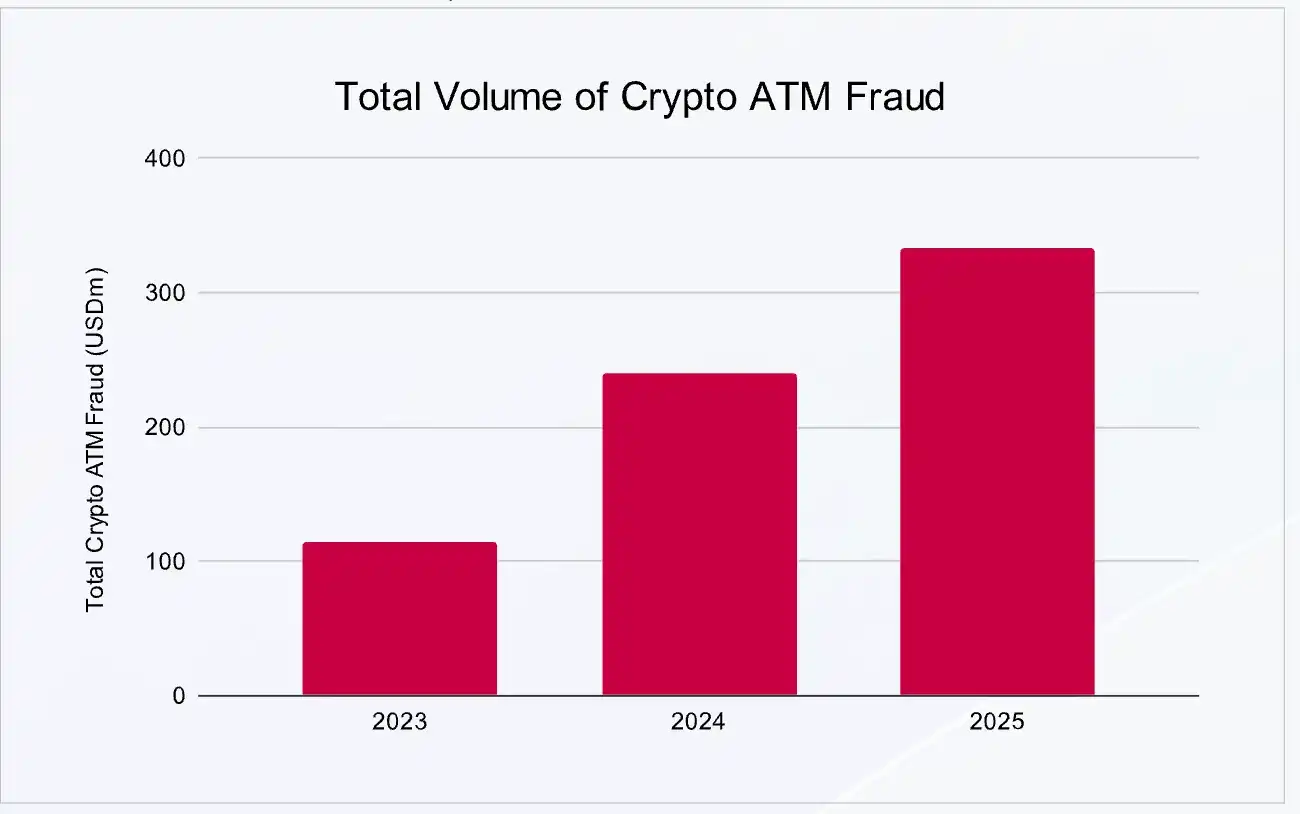
Total Losses from Cryptocurrency ATM Fraud

Cryptocurrency ATMs Become a "Fast Lane" for Fraudulent Fund Transfers

Cryptocurrency ATM fraud refers to a scheme where scammers, via phone calls, text messages, or online social engineering, induce victims to withdraw cash and deposit it into a cryptocurrency ATM. The funds are then converted into digital assets and transferred to wallet addresses controlled by the scammers.

There are currently about 45,000 cryptocurrency ATMs globally, with 78% located in the United States. Users can typically complete the cash-to-cryptocurrency conversion and transfer within 5 minutes, a feature that makes these machines an ideal channel for criminal groups to move funds.
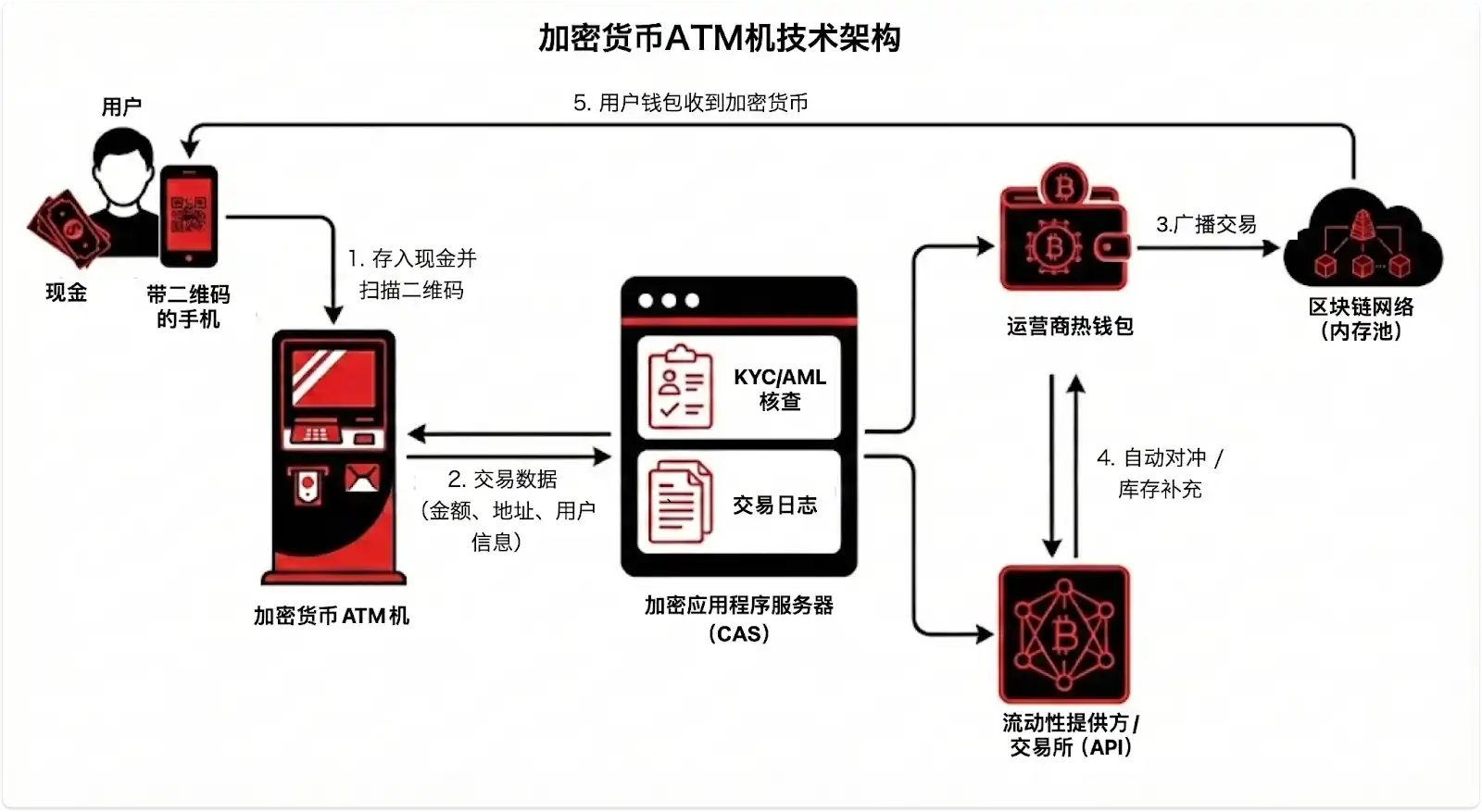
Unlike traditional cryptocurrency attacks, this type of crime does not rely on account intrusion or hacking but instead uses social engineering to trick victims into initiating the operations themselves. Once a transaction is recorded on the blockchain, the funds are almost impossible to recover.

From a technical architecture perspective, cryptocurrency ATMs act merely as front-end terminals connected to back-end crypto application servers (CAS). All transactions are completed through the operator's mixed hot wallets for fund transfers. On-chain records only show transfers from the operator's wallet to the target address and do not record the depositor's identity information. This structure creates a "tracing gap," posing significant challenges for law enforcement investigations.

Elderly Population Accounts for 86% of Total Losses, Protective Warnings Prove Ineffective

The most alarming data in the report highlights the extreme vulnerability of the elderly demographic in this type of fraud. Data shows that 86% of all cryptocurrency ATM fraud losses in the U.S. in 2025 came from people aged 60 and above. A lawsuit filed by the Washington D.C. Attorney General against U.S. ATM operator Athena Bitcoin pointed out that 93% of the deposits at the company's local ATMs were linked to fraudulent crimes, with the median victim age being 71 and the median loss per transaction reaching $8,000.

The report outlines the mainstream types of fraud, whose core objectives are to induce strong emotional fluctuations in victims, impairing their rational judgment; isolate victims from potential helpers; and guide them in real-time through the entire process of cash-to-cryptocurrency conversion.
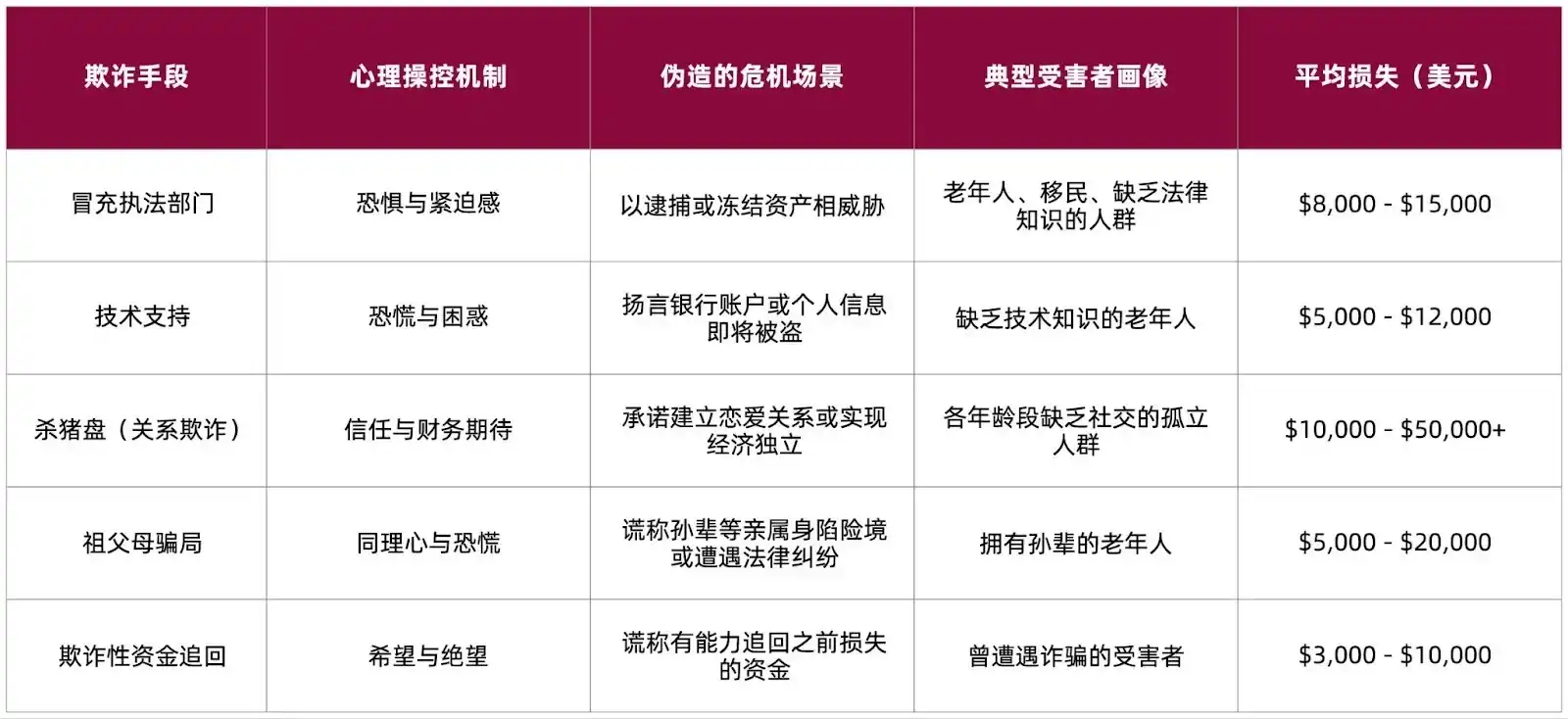
Classification of Cryptocurrency ATM Fraud Methods

"When victims are on a live call with scammers, on-screen warning prompts simply cannot serve as an effective deterrent," the report states. Current protective measures at the ATM level are largely ineffective. Scammers maintain real-time communication with victims throughout the entire process of withdrawing cash and operating the ATM, not only guiding them to bypass on-screen warnings but also prepping them with uniform excuses—such as home renovations or family emergencies—to use in response to inquiries from bank staff, thereby completely cutting off external intervention.

AI Technology is Reshaping Fraud Patterns

The report also notes that AI technology is accelerating the evolution of fraudulent methods. In 2025, AI-driven scams were approximately 4.5 times more profitable than traditional methods. Criminal organizations are beginning to use AI voice cloning, deepfake videos, and automated scripts to carry out more targeted social engineering attacks.

Meanwhile, to evade transaction limit policies gradually being introduced by regulators worldwide, fraud networks are also adopting a "divide and conquer" strategy. This involves inducing a large number of victims to make small transactions across different ATMs, thereby maintaining the overall scale of criminal profits while avoiding regulatory scrutiny.

Industrialized Operations of Transnational Criminal Networks
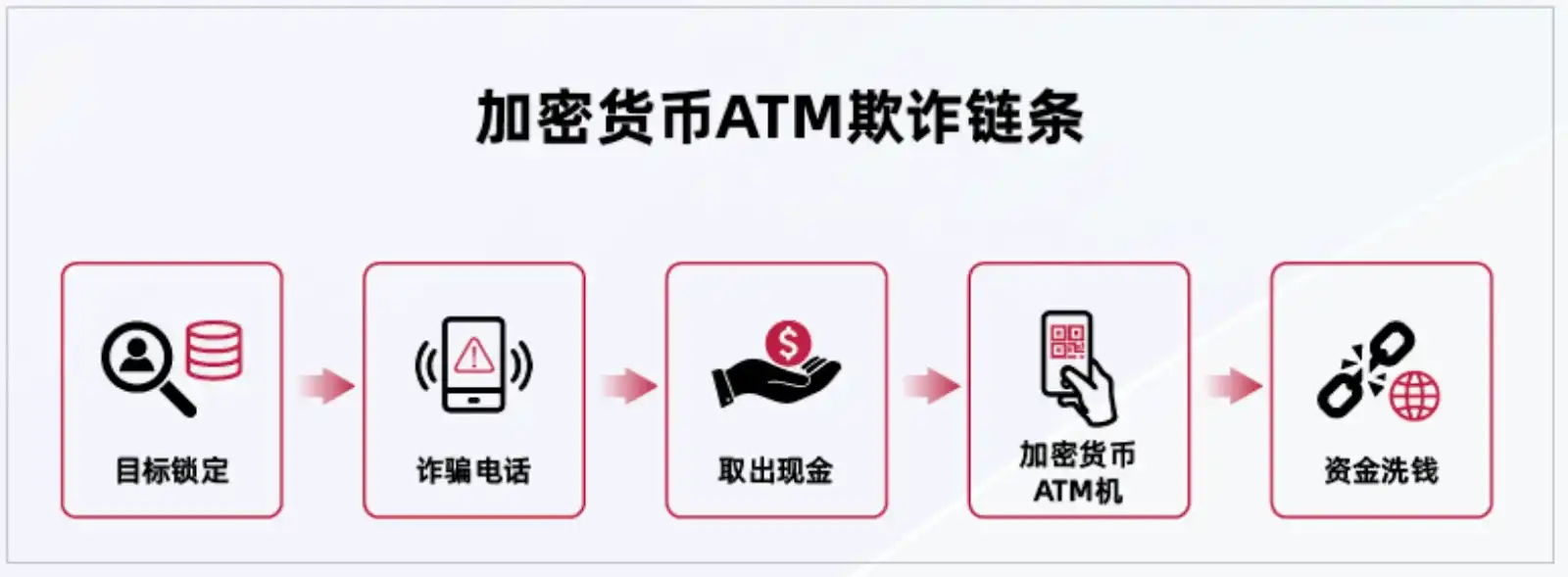
The report reveals that cryptocurrency ATM fraud has evolved from isolated cases into highly organized transnational criminal operations. Criminal organizations employ an industrialized operational model with a detailed division of labor, encompassing data collection, social engineering scams, and fund transfer and money laundering, among other stages.

The increasing efficiency of the money laundering环节 (stage) further amplifies the harm caused by this type of crime. In 2025, Southeast Asian money laundering networks processed approximately $16.1 billion in illicit cryptocurrency funds, accounting for 20% of the traceable global cryptocurrency ecosystem involving illegal activities. These networks operate via Telegram coordination and can settle large transactions within two minutes. After victims deposit cash, the funds are typically routed through mixing services, cross-chain bridges, and decentralized exchanges for multi-layer obfuscation within minutes. Often, the funds have left the traceable scope of the regulatory system before the victim has even ended the scam call.

Transaction Entry Point as a Critical Control Node

In response to the current threat landscape, the report concludes with systematic prevention and control recommendations. It identifies the transaction entry point at the CAS level as the only effective intervention node in the cryptocurrency ATM fraud chain—real-time screening and risk verification of target wallet addresses must be completed before the transaction is recorded on the blockchain.
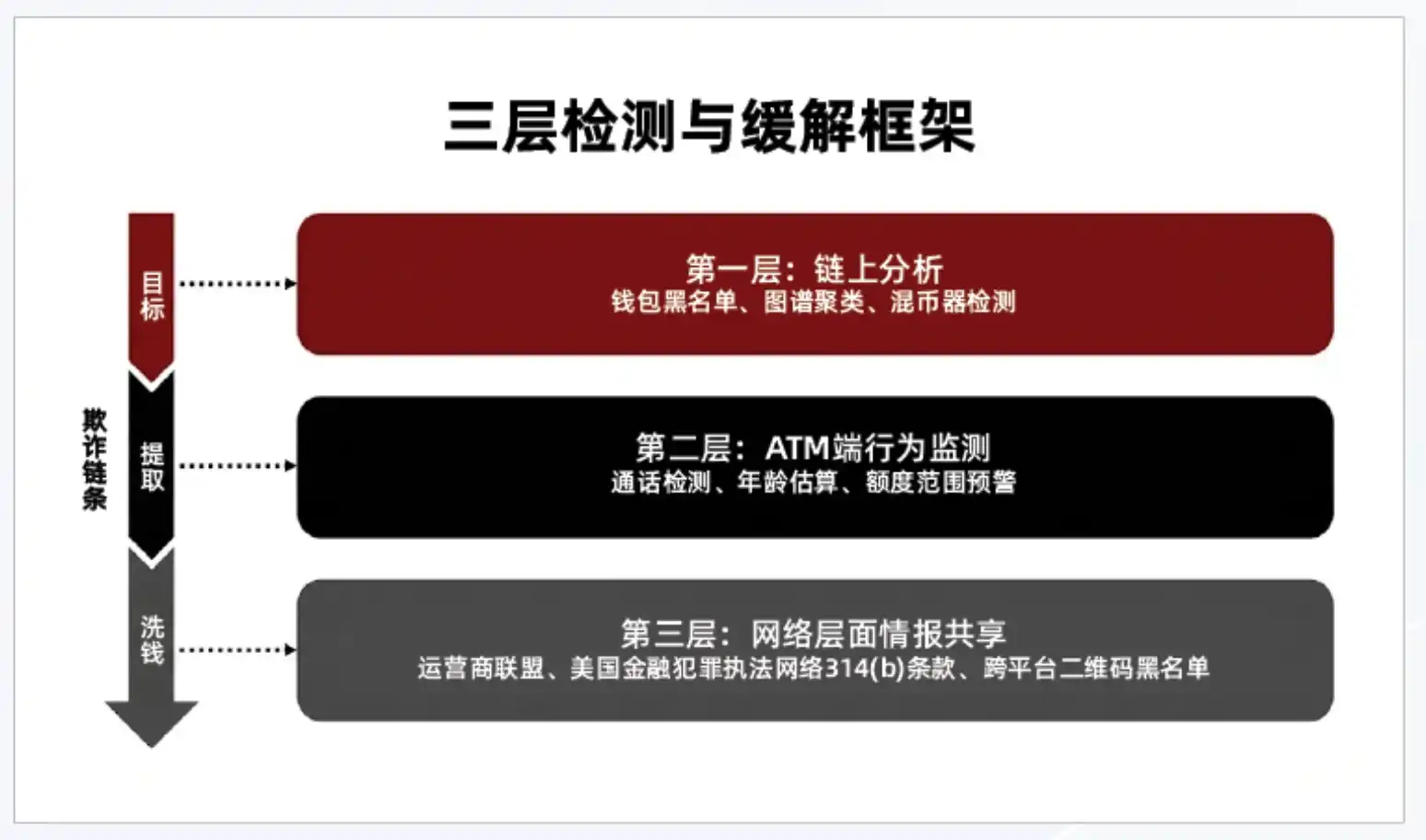
Simultaneously, the report proposes specific measures for consumers, operators, and law enforcement agencies: consumers need to be wary of any陌生来电 (strange calls) requesting payment via cryptocurrency ATMs; operators need to implement tiered KYC, industry-wide intelligence sharing, and pre-transaction risk checks; law enforcement agencies need to enhance blockchain analysis capabilities and promote unified legislation and cross-border law enforcement cooperation.

"The reported $330 million loss in 2025 only reflects the tip of the iceberg of the actual harm," the report warns in its conclusion. As new methods such as AI deepfakes, automated cross-chain money laundering, and "divide and conquer" small transactions become more prevalent, the threat of cryptocurrency ATM fraud will continue to escalate. Only through coordinated efforts in technology, regulation, and law enforcement can the criminal chain be severed within the shrinking intervention window to protect financial consumers, especially the elderly population, from property loss.

Report link: https://indd.adobe.com/view/bfb98f74-c308-4f0d-b9eb-c3bdb86e2785

Related Questions

QAccording to the CertiK report, what was the total financial loss attributed to cryptocurrency ATM fraud in 2025?

AThe total financial loss attributed to cryptocurrency ATM fraud in 2025 was $330 million.

QWhich demographic group was identified as the most vulnerable, accounting for the highest percentage of losses?

AAdults aged 60 and older were the most vulnerable demographic, accounting for 86% of all losses in the US.

QHow is AI technology changing the cryptocurrency ATM fraud landscape according to the report?

AAI technology is accelerating the upgrade of fraud methods. In 2025, AI-driven fraud was about 4.5 times more profitable than traditional methods. Criminal organizations are using AI voice cloning, deepfake videos, and automated scripts for more targeted social engineering attacks.

QWhat is the 'traceability fracture' mentioned in the report, and why does it make investigation difficult?

AThe 'traceability fracture' refers to the technical architecture of cryptocurrency ATMs. They act as front-end terminals connected to a backend Crypto Application Server (CAS), with all transactions completed through the operator's mixed hot wallet. On-chain records only show transfers from the operator's wallet to the target address, not the depositor's identity information. This structure creates a break in the chain of evidence, making law enforcement investigation and forensics extremely difficult.

QWhat does the report identify as the only effective point of intervention to prevent these frauds?

AThe report identifies the transaction entry point at the CAS (Crypto Application Server) level as the only effective intervention node. It states that real-time screening and risk verification of the target wallet address must be completed *before* the transaction is put on the blockchain.

Related Reads

With Daily Active Users Reaching 3-4 Times That of the Industry's Second Place, Which Crack in the Office Agent Market Has Tencent's WorkBuddy Torn Open?

Tencent's AI office assistant, WorkBuddy, has achieved daily active users (DAU) 3-4 times that of the industry's second-place product, primarily driven by non-technical users like HR, operations, and administrative staff. Its rapid growth, starting with a public beta in March 2026, highlights a key strategic divergence from competitors like OpenAI's Codex and Anthropic's Claude Code. Unlike those tools, which originated as developer-focused assistants (in command lines or IDEs) and are now expanding towards office scenarios, WorkBuddy was built from the ground up for non-technical office workers. Its development was user-driven, initiated after腾讯云's team observed non-technical employees using their CodeBuddy coding tool for general tasks. WorkBuddy's design is defined by three core decisions aimed at lowering barriers: 1) Using natural language instead of technical concepts, so users describe their goal without needing to understand prompts or agents. 2) Providing pre-packaged "Skill" templates for common office tasks like data processing, content creation, and research. 3) Natively integrating into existing腾讯 ecosystems like腾讯 Docs and WeChat, making the agent a seamless part of the user's workflow rather than a separate tool. This "scenario encapsulation" approach, prioritizing the shortest path for users to get work done, contrasts with the "underlying capability" focus of Codex and Claude, which offer more flexibility but require more technical setup. Analysts confirm WorkBuddy's leading market position in China by mid-2026, with massive user and request growth following its launch. Recognizing the same trend of surging non-technical adoption, OpenAI and Anthropic are now pivoting their products with features like role-based plugins (Codex) and a simplified desktop interface (Claude Cowork). However, adapting tools built for developers requires significant changes to interaction models and integrations. WorkBuddy currently holds an estimated six-month lead in delivering a complete solution for non-technical office users. Its recently launched enterprise version aims to solidify this advantage. The competition underscores two valid paths: embedding agent capabilities directly into familiar work environments versus building powerful, general-purpose agents that users must learn to access. WorkBuddy's early success demonstrates the effectiveness of the former strategy for mainstream office adoption.

marsbit2m ago

With Daily Active Users Reaching 3-4 Times That of the Industry's Second Place, Which Crack in the Office Agent Market Has Tencent's WorkBuddy Torn Open?

marsbit2m ago

Dalio's Latest Warning: Don't Get Carried Away by AI, Real Returns on US Stocks in the Next 5-10 Years Could Be -5% to -10%

Ray Dalio, founder of Bridgewater Associates, warns investors against excessive concentration in AI stocks. He argues the current market, dominated by a few AI giants, mirrors historical patterns where revolutionary new technologies lead to high risk, volatility, and uncertainty. While acknowledging AI's transformative potential, Dalio emphasizes that most investors fail at this stage of the cycle by over-concentrating in a handful of leading companies. He cites inherent risks: companies cannot accurately forecast investment needs or external shocks (e.g., monetary policy, geopolitics, taxes), face potential disruption from future technologies and international competition (notably from China), and experience significant price swings. Dalio's core advice is diversification, calling it his "Holy Grail of Investing." He presents a mathematical case that a well-diversified portfolio of 15-20 uncorrelated, good bets offers a superior risk-adjusted return compared to a concentrated position. Dalio also offers a cautious outlook, suggesting U.S. stocks may deliver real returns of -5% to -10% over the next 5-10 years based on valuation and bubble indicators. He concludes that in the face of high uncertainty, the prudent strategy is not to avoid betting entirely, but to avoid large, concentrated bets where one lacks sufficient informational edge. Instead, investors should build a strategically balanced, diversified portfolio.

marsbit1h ago

Dalio's Latest Warning: Don't Get Carried Away by AI, Real Returns on US Stocks in the Next 5-10 Years Could Be -5% to -10%

marsbit1h ago

Rain Valuation Approaches $20 Billion: The Battle for U-Cards Extends to Rewards Systems

Rain, a stablecoin payments infrastructure company, is shifting the competitive focus for U Cards from simple issuance to user retention and repeated usage. On June 15, Rain launched "Rain Rewards," an embedded loyalty program capability within its card-issuing infrastructure. This allows partner businesses—like fintech platforms and neobanks—to configure branded loyalty points, earning rules, redemptions, and merchant promotions directly within their card products. The system, built from the 2025 acquisition of Uptop, ensures points are only issued upon final transaction settlement, preventing liabilities from refunds. Trials, such as with Avalanche Card, reportedly boosted spending by 25% among enrolled users. Founded by Farooq Malik and Charles Yoo-Naut, Rain evolved from a tool for managing Web3 company expenses into a full-stack enterprise platform. It is a Principal Member of Visa and Mastercard, enabling partners to issue stablecoin-backed cards and wallets while leveraging traditional payment networks. Notably, the popular U Card Plasma One is issued by Rain under Visa's authority. Rain also integrates with Visa's stablecoin settlement pilot, using USDC for network settlement. Rain's rapid funding reflects growing institutional interest in stablecoin payment infrastructure. It raised a $245 million Series A in March 2025, a $58 million Series B in August 2025, and a $250 million Series C in January of this year, reaching a $19.5 billion valuation. Annualized transaction volume exceeds $3 billion, serving over 200 partners including Western Union and Nuvei. Beyond cards, Rain is expanding into programmable payments. Its June 2026 "Agent Control Layer" allows businesses to set spending rules—like merchant categories, amounts, and frequency—for AI agents before transactions occur. This positions Rain not as a single product but as an operating system for stablecoin payments, handling everything from card issuance and wallet management to rewards, on/off-ramps, and automated compliance. The goal is to enable seamless, often invisible, real-world spending of on-chain assets.

Foresight News1h ago

Rain Valuation Approaches $20 Billion: The Battle for U-Cards Extends to Rewards Systems

Foresight News1h ago

Trading

Spot
Futures

Hot Articles

How to Buy ATM

Welcome to HTX.com! We've made purchasing Atletico De Madrid Fan Token (ATM) simple and convenient. Follow our step-by-step guide to embark on your crypto journey.Step 1: Create Your HTX AccountUse your email or phone number to sign up for a free account on HTX. Experience a hassle-free registration journey and unlock all features.Get My AccountStep 2: Go to Buy Crypto and Choose Your Payment MethodCredit/Debit Card: Use your Visa or Mastercard to buy Atletico De Madrid Fan Token (ATM) instantly.Balance: Use funds from your HTX account balance to trade seamlessly.Third Parties: We've added popular payment methods such as Google Pay and Apple Pay to enhance convenience.P2P: Trade directly with other users on HTX.Over-the-Counter (OTC): We offer tailor-made services and competitive exchange rates for traders.Step 3: Store Your Atletico De Madrid Fan Token (ATM)After purchasing your Atletico De Madrid Fan Token (ATM), store it in your HTX account. Alternatively, you can send it elsewhere via blockchain transfer or use it to trade other cryptocurrencies.Step 4: Trade Atletico De Madrid Fan Token (ATM)Easily trade Atletico De Madrid Fan Token (ATM) on HTX's spot market. Simply access your account, select your trading pair, execute your trades, and monitor in real-time. We offer a user-friendly experience for both beginners and seasoned traders.

2.4k Total ViewsPublished 2024.03.29Updated 2025.03.21

How to Buy ATM

Discussions

Welcome to the HTX Community. Here, you can stay informed about the latest platform developments and gain access to professional market insights. Users' opinions on the price of ATM (ATM) are presented below.

活动图片