Đây Là Mức Giá Solana Sẽ Đạt Được Nếu Chạm Mức Vốn Hóa Thị Trường ATH Của Ethereum

bitcoinistPublished on 2026-03-12Last updated on 2026-03-12

Abstract

Bài viết khám phá khả năng Solana (SOL) có thể soán ngôi Ethereum (ETH) để trở thành tiền mã hóa lớn thứ hai thế giới. Mặc dù Solana đã có mức tăng trưởng ấn tượng từ dưới 10 USD lên gần 300 USD và thu hút lượng lớn hoạt động DeFi, vị thế của Ethereum vẫn vững chắc. Để đạt được vốn hóa thị trường cao nhất mọi thời đại (ATH) của Ethereum là 581 tỷ USD, vốn hóa của Solana sẽ phải tăng lên mức đó. Theo tính toán, điều này sẽ đẩy giá SOL lên khoảng 1.022 USD, tương đương mức tăng 1.178% so với thời điểm bài viết được công bố. Hiện tại, vốn hóa của Solana (~49 tỷ USD) vẫn còn thua xa so với Ethereum (~246 tỷ USD). Bài viết cũng đề cập rằng Solana đã vượt qua Ethereum về số lượng người dùng Tài sản Thế giới Thực (RWA), nhưng Ethereum vẫn chiếm ưu thế lớn về khối lượng giao dịch trong lĩnh vực này.

Sau sự phục hồi đáng kinh ngạc của giá Solana từ dưới 10 USD vào năm 2022 lên gần 300 USD vào năm 2025, nó đã được coi là ứng cử viên thay thế tiềm năng cho Ethereum, đồng tiền điện tử lớn thứ hai theo vốn hóa thị trường. Điều này càng được củng cố bởi thực tế là phần lớn khối lượng tài chính phi tập trung (DeFi) dường như đã chuyển từ Ethereum sang Solana do sự bùng nổ của mùa meme coin trên SOL.

Tuy nhiên, sự đảo chiều này vẫn chưa xảy ra, khi giá Solana lao dốc xuống dưới 100 USD một lần nữa và Ethereum vẫn giữ vị trí là đồng tiền điện tử lớn thứ hai. Tính đến khả năng có thể xảy ra sự đảo chiều, báo cáo này khám phá mức giá Solana sẽ đạt được cao đến đâu nếu nó thực sự đạt được mức vốn hóa thị trường cao nhất mọi thời đại (ATH) của Ethereum.

Giá Solana Với Mức Vốn Hóa ATH 583 Tỷ USD Của Ethereum

Hiện tại, sau khi chạm mức cao nhất mọi thời đại mới vào năm 2025, vốn hóa thị trường ATH của Ethereum đang ở mức 581 tỷ USD, so với 160 tỷ USD của Solana. Tính đến điều này, SOL sẽ phải vượt qua mốc vốn hóa thị trường 581 tỷ USD để hoàn toàn vượt mặt Ethereum.

Sử dụng dữ liệu từ trang web MarketCapOf, nó cho biết giá Solana sẽ cần phải đạt đến mức nào để đạt được mức vốn hóa thị trường ATH của Ethereum. Con số được đưa ra là 1.022 USD, tăng 1.178% so với giá hiện tại. Điều này có nghĩa là SOL hiện đang giao dịch thấp hơn 0,8 lần so với giá ETH.
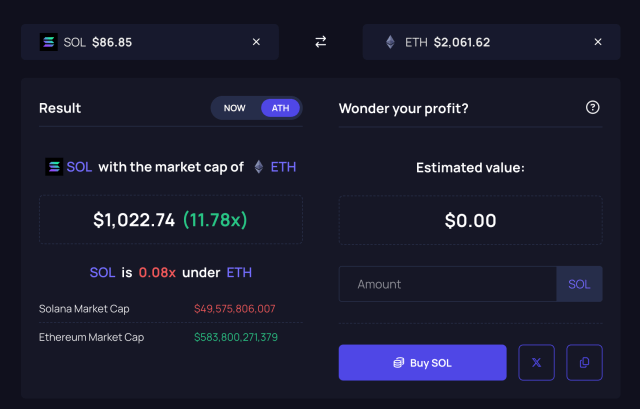
Nguồn: MarketCapOf

Tuy nhiên, sự thống trị của Solana so với Ethereum không chỉ nằm ở hoạt động DeFi. Khi nói đến Tài sản Thế giới Thực (RWA), SOL nhanh chóng trở thành một thế lực hùng mạnh, và gần đây, nó đã vượt qua Ethereum về số lượng người dùng RWA. Nó đã vượt lên trên 155.000 người dùng, so với 153.000 của ETH.

Tuy nhiên, khi nói đến khối lượng RWA, ETH vẫn là chuỗi thống trị. Theo RWA.xyz, có hơn 15,5 tỷ USD Tài sản Thế giới Thực được đặt trên Ethereum, so với 1,7 tỷ USD nằm trên blockchain Solana.

Quay lại thực tại, SOL vẫn còn tụt lại rất xa so với ETH. Ngay cả với sự sụt giảm của thị trường, ETH vẫn có vốn hóa thị trường khổng lồ ở mức 246 tỷ USD, so với 49 tỷ USD của SOL. Trong khi ETH là đồng tiền điện tử lớn thứ hai theo vốn hóa thị trường, thì SOL đứng thứ bảy.

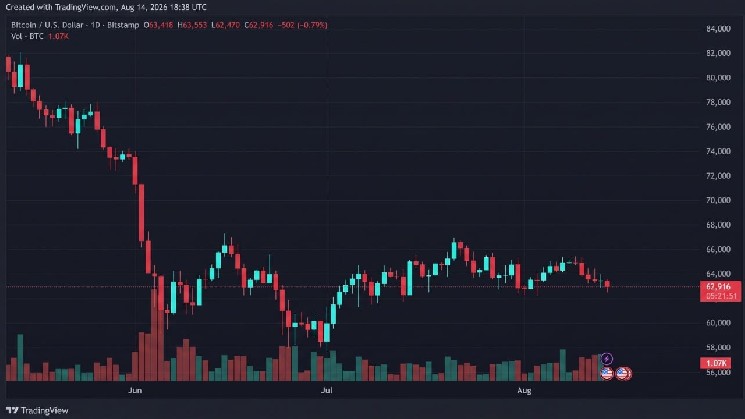
Giá SOL có xu hướng dưới 90 USD | Nguồn: SOLUSDT trên Tradingview.com

Related Questions

QGiá Solana sẽ là bao nhiêu nếu đạt được vốn hóa thị trường cao nhất mọi thời đại của Ethereum?

ANếu Solana đạt vốn hóa thị trường ATH của Ethereum là 581 tỷ USD, giá SOL sẽ cần đạt mức 1.022 USD, tăng 1.178% so với giá hiện tại.

QVốn hóa thị trường cao nhất mọi thời đại của Ethereum là bao nhiêu?

AVốn hóa thị trường cao nhất mọi thời đại (ATH) của Ethereum là 581 tỷ USD.

QSolana đã vượt qua Ethereum về mặt nào trong lĩnh vực Tài sản Thế giới Thực (RWA)?

ASolana đã vượt qua Ethereum về số lượng người dùng Tài sản Thế giới Thực (RWA), với hơn 155.000 người dùng so với 153.000 của Ethereum.

QEthereum vẫn dẫn đầu so với Solana trong lĩnh vực nào của RWA?

AEthereum vẫn dẫn đầu về khối lượng Tài sản Thế giới Thực (RWA), với hơn 15,5 tỷ USD so với 1,7 tỷ USD trên Solana.

QSolana hiện đang xếp hạng thứ mấy về vốn hóa thị trường trong thị trường tiền điện tử?

AHiện tại, Solana là đồng tiền điện tử có vốn hóa thị trường lớn thứ bảy.

Related Reads

With Daily Active Users Reaching 3-4 Times That of the Industry's Second Place, Which Crack in the Office Agent Market Has Tencent's WorkBuddy Torn Open?

Tencent's AI office assistant, WorkBuddy, has achieved daily active users (DAU) 3-4 times that of the industry's second-place product, primarily driven by non-technical users like HR, operations, and administrative staff. Its rapid growth, starting with a public beta in March 2026, highlights a key strategic divergence from competitors like OpenAI's Codex and Anthropic's Claude Code. Unlike those tools, which originated as developer-focused assistants (in command lines or IDEs) and are now expanding towards office scenarios, WorkBuddy was built from the ground up for non-technical office workers. Its development was user-driven, initiated after腾讯云's team observed non-technical employees using their CodeBuddy coding tool for general tasks. WorkBuddy's design is defined by three core decisions aimed at lowering barriers: 1) Using natural language instead of technical concepts, so users describe their goal without needing to understand prompts or agents. 2) Providing pre-packaged "Skill" templates for common office tasks like data processing, content creation, and research. 3) Natively integrating into existing腾讯 ecosystems like腾讯 Docs and WeChat, making the agent a seamless part of the user's workflow rather than a separate tool. This "scenario encapsulation" approach, prioritizing the shortest path for users to get work done, contrasts with the "underlying capability" focus of Codex and Claude, which offer more flexibility but require more technical setup. Analysts confirm WorkBuddy's leading market position in China by mid-2026, with massive user and request growth following its launch. Recognizing the same trend of surging non-technical adoption, OpenAI and Anthropic are now pivoting their products with features like role-based plugins (Codex) and a simplified desktop interface (Claude Cowork). However, adapting tools built for developers requires significant changes to interaction models and integrations. WorkBuddy currently holds an estimated six-month lead in delivering a complete solution for non-technical office users. Its recently launched enterprise version aims to solidify this advantage. The competition underscores two valid paths: embedding agent capabilities directly into familiar work environments versus building powerful, general-purpose agents that users must learn to access. WorkBuddy's early success demonstrates the effectiveness of the former strategy for mainstream office adoption.

marsbit5m ago

With Daily Active Users Reaching 3-4 Times That of the Industry's Second Place, Which Crack in the Office Agent Market Has Tencent's WorkBuddy Torn Open?

marsbit5m ago

Dalio's Latest Warning: Don't Get Carried Away by AI, Real Returns on US Stocks in the Next 5-10 Years Could Be -5% to -10%

Ray Dalio, founder of Bridgewater Associates, warns investors against excessive concentration in AI stocks. He argues the current market, dominated by a few AI giants, mirrors historical patterns where revolutionary new technologies lead to high risk, volatility, and uncertainty. While acknowledging AI's transformative potential, Dalio emphasizes that most investors fail at this stage of the cycle by over-concentrating in a handful of leading companies. He cites inherent risks: companies cannot accurately forecast investment needs or external shocks (e.g., monetary policy, geopolitics, taxes), face potential disruption from future technologies and international competition (notably from China), and experience significant price swings. Dalio's core advice is diversification, calling it his "Holy Grail of Investing." He presents a mathematical case that a well-diversified portfolio of 15-20 uncorrelated, good bets offers a superior risk-adjusted return compared to a concentrated position. Dalio also offers a cautious outlook, suggesting U.S. stocks may deliver real returns of -5% to -10% over the next 5-10 years based on valuation and bubble indicators. He concludes that in the face of high uncertainty, the prudent strategy is not to avoid betting entirely, but to avoid large, concentrated bets where one lacks sufficient informational edge. Instead, investors should build a strategically balanced, diversified portfolio.

marsbit1h ago

Dalio's Latest Warning: Don't Get Carried Away by AI, Real Returns on US Stocks in the Next 5-10 Years Could Be -5% to -10%

marsbit1h ago

Rain Valuation Approaches $20 Billion: The Battle for U-Cards Extends to Rewards Systems

Rain, a stablecoin payments infrastructure company, is shifting the competitive focus for U Cards from simple issuance to user retention and repeated usage. On June 15, Rain launched "Rain Rewards," an embedded loyalty program capability within its card-issuing infrastructure. This allows partner businesses—like fintech platforms and neobanks—to configure branded loyalty points, earning rules, redemptions, and merchant promotions directly within their card products. The system, built from the 2025 acquisition of Uptop, ensures points are only issued upon final transaction settlement, preventing liabilities from refunds. Trials, such as with Avalanche Card, reportedly boosted spending by 25% among enrolled users. Founded by Farooq Malik and Charles Yoo-Naut, Rain evolved from a tool for managing Web3 company expenses into a full-stack enterprise platform. It is a Principal Member of Visa and Mastercard, enabling partners to issue stablecoin-backed cards and wallets while leveraging traditional payment networks. Notably, the popular U Card Plasma One is issued by Rain under Visa's authority. Rain also integrates with Visa's stablecoin settlement pilot, using USDC for network settlement. Rain's rapid funding reflects growing institutional interest in stablecoin payment infrastructure. It raised a $245 million Series A in March 2025, a $58 million Series B in August 2025, and a $250 million Series C in January of this year, reaching a $19.5 billion valuation. Annualized transaction volume exceeds $3 billion, serving over 200 partners including Western Union and Nuvei. Beyond cards, Rain is expanding into programmable payments. Its June 2026 "Agent Control Layer" allows businesses to set spending rules—like merchant categories, amounts, and frequency—for AI agents before transactions occur. This positions Rain not as a single product but as an operating system for stablecoin payments, handling everything from card issuance and wallet management to rewards, on/off-ramps, and automated compliance. The goal is to enable seamless, often invisible, real-world spending of on-chain assets.

Foresight News1h ago

Rain Valuation Approaches $20 Billion: The Battle for U-Cards Extends to Rewards Systems

Foresight News1h ago

Trading

Spot
Futures

Hot Articles

Discussions

Welcome to the HTX Community. Here, you can stay informed about the latest platform developments and gain access to professional market insights. Users' opinions on the price of ETH (ETH) are presented below.

活动图片