Barry Sternlicht Says U.S. Crypto Regulations Are Blocking Starwood’s Real Estate Tokenization Plans

TheNewsCryptoPublished on 2026-02-19Last updated on 2026-02-19

Abstract

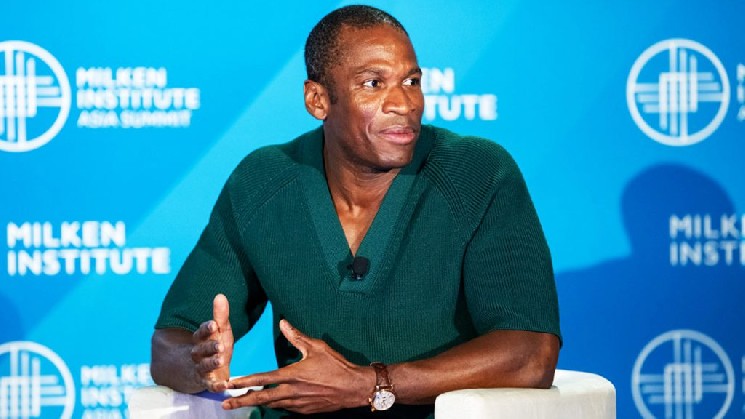
Barry Sternlicht, founder and CEO of Starwood Capital, stated that his firm is prepared to tokenize real estate but is being blocked by unclear U.S. crypto regulations. Speaking at the World Liberty Forum, he described tokenization—converting physical asset ownership into digital tokens on a blockchain—as a "fantastic" innovation that represents the future of finance. It enables fractional ownership, improves liquidity, increases transparency, and allows smaller investors to participate. However, Sternlicht emphasized that regulatory uncertainty is the major obstacle preventing large firms from entering the market. Deloitte estimates that up to $4 trillion in real estate could be tokenized by 2035, signaling significant potential growth if clear regulations are established.

Barry Sternlicht, who was the founder and CEO of Starwood Capital, says his company is ready to tokenize real-world assets, but U.S. regulations are blocking it. His company manages more than $125 billion in assets. He shared his plans on RWA and made comments on the current U.S. rules on crypto at the World Liberty Forum in Florida.

What Tokenization means

Tokenization is a process of turning the ownership of physical assets into digital tokens in the blockchain. Instead of buying an entire building, an investor could buy a small portion in a digital share that can be traded more easily. Supporters say tokenization for the large firms could make it easier to raise money and allow small investors to participate. It also reduces the paperwork and improves transparency.

Currently, the U.S. has not fully adopted tokenization in real estate. Consulting firm Deloitte estimates that $4 trillion worth of real estate could be tokenized by 2035, and Proppy has also announced a plan to expand its blockchain-based real estate services. In 2024, less than $0.3 trillion of real estate was tokenized, which signals that the market could grow significantly over the next decade.

According to Sternlicht, he described tokenization as “fantastic” and said it represents the future of finance. He compared tokenization to artificial intelligence but said it is still at an early stage of development. He said the biggest challenge is the lack of clear U.S. regulation around digital assets and tokenized securities, which creates uncertainty for large financial firms.

Sternlich’s statement shows that the U.S. regulations are the major issue that blocks large firms from entering the real estate tokenization. If the U.S. lawmakers provide clear rules, then tokenized RWA could become a major market in the upcoming years.

Highlighted Crypto News:

CoinFello Unveils AI Smart Contract Agent at ETHDenver with BuffiBot Preview

TagsBlockchainCryptocurrencyUS crypto

Related Questions

QWhat is Barry Sternlicht's main concern regarding real estate tokenization in the U.S.?

ABarry Sternlicht's main concern is that the lack of clear U.S. regulations around digital assets and tokenized securities is blocking large financial firms, including his company Starwood Capital, from entering the real estate tokenization market.

QHow does tokenization work for real estate assets?

ATokenization is the process of converting ownership of physical real estate assets into digital tokens on a blockchain. This allows investors to buy small digital shares of a property rather than the entire building, making it easier to trade, raise funds, and enable participation from small investors while reducing paperwork and improving transparency.

QWhat is the estimated potential value of tokenized real estate by 2035 according to Deloitte?

AConsulting firm Deloitte estimates that up to $4 trillion worth of real estate could be tokenized by 2035.

QHow much real estate was tokenized in 2024, and what does this indicate?

AIn 2024, less than $0.3 trillion of real estate was tokenized, which indicates significant growth potential for the market over the next decade.

QWhat did Sternlicht compare tokenization to, and what stage of development did he say it is in?

ASternlicht compared tokenization to artificial intelligence (AI) but stated that it is still at an early stage of development.

Related Reads

Google TPU Shipments Revised Up by 50%

Recent industry research indicates a significant upward revision in the shipments of Google's TPU (Tensor Processing Unit) chips. Previous expectations for 2027 were set at around 10 million units, but new estimates now point to 15 million units, a 50% increase. This substantial boost directly translates to higher demand across the entire supporting supply chain. Google's TPU clusters utilize a standardized all-optical interconnect architecture. Consequently, key hardware components are deeply integrated and scaled in fixed ratios with the chips. The 15 million TPU target will drive corresponding demand increases for NPO optical engines (roughly a 1:1 match), 1.6T optical modules, OCS optical switches, high-end server power supplies, fiber optics & MPO connectors, and liquid cooling solutions. Among these, liquid cooling is highlighted as the sector experiencing the most significant transformation and offering the most stable potential for excess returns. As next-generation TPU chips reach power levels where traditional air cooling is insufficient, liquid cooling becomes essential. 2026 is forecasted as the first year of substantial adoption for Google's liquid cooling solutions. This shift, coupled with delivery and capacity bottlenecks faced by incumbent overseas manufacturers, is creating a prime window for domestic Chinese suppliers to enter and secure Google's core supply chain. The market size for Google-specific liquid cooling is projected to potentially triple from a baseline of hundreds of billions to around 300 billion units by 2028. The logic for the fiber optic sector is also being rewritten. Once considered a cyclical commodity tied to telecom operator procurement, fiber is now a strategic and scarce resource for AI Data Centers (AIDC). A severe supply-demand imbalance, driven by the long lead time for preform production (18-24 months) and surging demand from cloud giants, is supporting strong performance. Chinese fiber manufacturers are well-positioned to capture a significant share of global AIDC demand, with exports potentially reaching 200-300 million core kilometers in 2026. Overall, the investment focus within the AI computing industry is shifting from pure "chip performance speculation" towards the more certain incremental growth in computing infrastructure and its supporting ecosystem. The upward revision in Google TPU shipments, along with the potential for further doubling by 2028, is seen as solidifying performance visibility for the entire supporting supply chain over the next two years.

marsbit44m ago

Google TPU Shipments Revised Up by 50%

marsbit44m ago

What Wall Street Really Wants After the Crypto Story Recedes

The tide of speculative crypto narratives has receded, revealing Wall Street's true objective: building a controlled, yield-generating, and compliant financial pipeline on distributed ledgers. They are migrating core functions onto blockchains, not for decentralization, but for efficiency and new revenue streams. Key developments include BlackRock's BUIDL fund, a tokenized treasury fund acting as a foundational reserve asset, and the rise of Securitize, which is going public and partnering with the NYSE to build a 24/7 digital securities trading and settlement system. This signals a major shift of securities clearing to blockchain technology. To make volatile assets like Bitcoin palatable for institutional investors, firms like BlackRock and Goldman Sachs are creating "covered call" ETFs (e.g., BITA). These products systematically sell options on Bitcoin holdings, transforming price volatility into stable monthly income, effectively repackaging crypto as a yield-bearing asset. Stablecoins are being positioned not as speculative tools but as efficient payment rails. Companies like Stripe and Mastercard are integrating them for instant, low-cost merchant settlements and cross-border card payments, respectively. Critically, new legislation like the GENIUS Act shapes them as non-interest-bearing, heavily regulated extensions of the US dollar system. In summary, Wall Street is quietly constructing a parallel, blockchain-based financial infrastructure featuring tokenized traditional assets, structured crypto yields, and programmable dollar pipelines—all under its control and fully integrated with existing regulatory and credit frameworks.

marsbit1h ago

What Wall Street Really Wants After the Crypto Story Recedes

marsbit1h ago

Tying Itself to SpaceX: Cursor's $60 Billion Rise

This article recounts the rapid rise of AI-powered coding startup Cursor and its 25-year-old MIT graduate CEO, Michael Truell. Launched in 2023, Cursor achieved explosive growth, reaching over 10 billion USD in revenue by late 2025. However, its journey highlights a central dilemma for AI application companies: dependence on foundational model providers. Cursor initially relied heavily on Anthropic's models but faced an existential threat when Anthropic launched its own competing coding tool, Claude Code. In response, Cursor declared an internal emergency in early 2026 and accelerated development of its own model, Composer. To secure the immense computing power needed, Truell struck a pivotal deal with Elon Musk's SpaceX in April 2026. The collaboration grants Cursor access to SpaceX's supercomputing resources for Composer, while SpaceX's Grok model benefits from Cursor's programming data. The agreement includes a potential 600 billion USD acquisition of Cursor by SpaceX later in the year, though a substantial termination fee is in place if the deal falls through. The story explores Cursor's intense, sometimes controversial hiring practices involving lengthy unpaid "work trials," its complex partnership-turned-rivalry with Anthropic, and its high-stakes gamble to ensure independence through the SpaceX alliance. The core question remains: will Cursor evolve into a defining, independent "generational" software company, or become a key piece in a tech giant's AI arsenal?

marsbit1h ago

Tying Itself to SpaceX: Cursor's $60 Billion Rise

marsbit1h ago

Trading

Spot
Futures

Hot Articles

How to Buy COMP

Welcome to HTX.com! We've made purchasing Compound (COMP) simple and convenient. Follow our step-by-step guide to embark on your crypto journey.Step 1: Create Your HTX AccountUse your email or phone number to sign up for a free account on HTX. Experience a hassle-free registration journey and unlock all features.Get My AccountStep 2: Go to Buy Crypto and Choose Your Payment MethodCredit/Debit Card: Use your Visa or Mastercard to buy Compound (COMP) instantly.Balance: Use funds from your HTX account balance to trade seamlessly.Third Parties: We've added popular payment methods such as Google Pay and Apple Pay to enhance convenience.P2P: Trade directly with other users on HTX.Over-the-Counter (OTC): We offer tailor-made services and competitive exchange rates for traders.Step 3: Store Your Compound (COMP)After purchasing your Compound (COMP), store it in your HTX account. Alternatively, you can send it elsewhere via blockchain transfer or use it to trade other cryptocurrencies.Step 4: Trade Compound (COMP)Easily trade Compound (COMP) on HTX's spot market. Simply access your account, select your trading pair, execute your trades, and monitor in real-time. We offer a user-friendly experience for both beginners and seasoned traders.

3.8k Total ViewsPublished 2024.03.29Updated 2026.06.02

How to Buy COMP

Discussions

Welcome to the HTX Community. Here, you can stay informed about the latest platform developments and gain access to professional market insights. Users' opinions on the price of COMP (COMP) are presented below.

活动图片