¿Qué características y puntos en común tienen los tokens que han tenido un rendimiento después de su TGE en 2025?

Odaily星球日报Published on 2025-12-31Last updated on 2025-12-31

Abstract

Resumen: En 2025, la mayoría de los tokens recién lanzados (TGE) experimentaron una caída de precio tras su estreno. Sin embargo, algunos como ASTER, FOLKS, AVICI y SENTIS mostraron un rendimiento sólido y sostenido. Estos proyectos exitosos compartieron características clave: una distribución de tokens justa (menos tokens internos, más para la comunidad), una valoración inicial razonable, utilidad demostrable o adopción real (volúmenes de trading, préstamos, gastos con tarjeta), estructuras de desbloqueo lineales y predecibles, y listados en exchanges que actuaron como aceleradores, no como salvavidas. La conclusión principal es que el mercado ahora premia la estructura sólida y la utilidad real sobre la mera narrativa o el potencial futuro.

Autor original:Stacy Muur, investigadora de criptografía

Compilado por: CryptoLeo(@LeoAndCrypto)
La semana pasada, compilé una publicación de investigación de Solus Group titulada "Más del 80% de los nuevos tokens alcanzan su punto máximo en el TGE: la raíz del problema y la solución de la falsa prosperidad de Web3", que analizó la situación posterior al TGE de 113 tokens en 2025. La gran mayoría de estos tokens alcanzaron su punto máximo en el TGE, y el precio comenzó a caer al día siguiente de su lanzamiento, pero todos contaban con condiciones como financiación elevada, apoyo comunitario y listado en exchanges.

El artículo de hoy es de la investigadora de criptografía Stacy Muur, quien recopiló varios tokens de 2025 cuyo precio aumentó significativamente después del TGE y analizó qué ventajas/condiciones tenían estos proyectos. En comparación, el artículo anterior partía de datos para obtener un resultado estadístico, mientras que este se centra más en los proyectos mismos. En resumen: en el contexto actual de mercado cripto, excesivamente homogéneo y en expansión, los tokens de los proyectos deben cumplir múltiples condiciones para sobrevivir/sobresalir en el mercado. Odaily Planet Daily lo compila a continuación:

Si has estado interesado en operar con tokens cuyo TGE fue en 2025, el resultado hasta ahora es claro: el token es muy popular durante la primera semana tras su lanzamiento, luego la popularidad disminuye gradualmente y finalmente se acepta por defecto que "el precio de emisión es el punto más alto". La mayoría de los nuevos tokens tienen un rendimiento deficiente, incluso se desploman, porque el mercado siempre considera la economía del token y la liquidez como fundamentales.
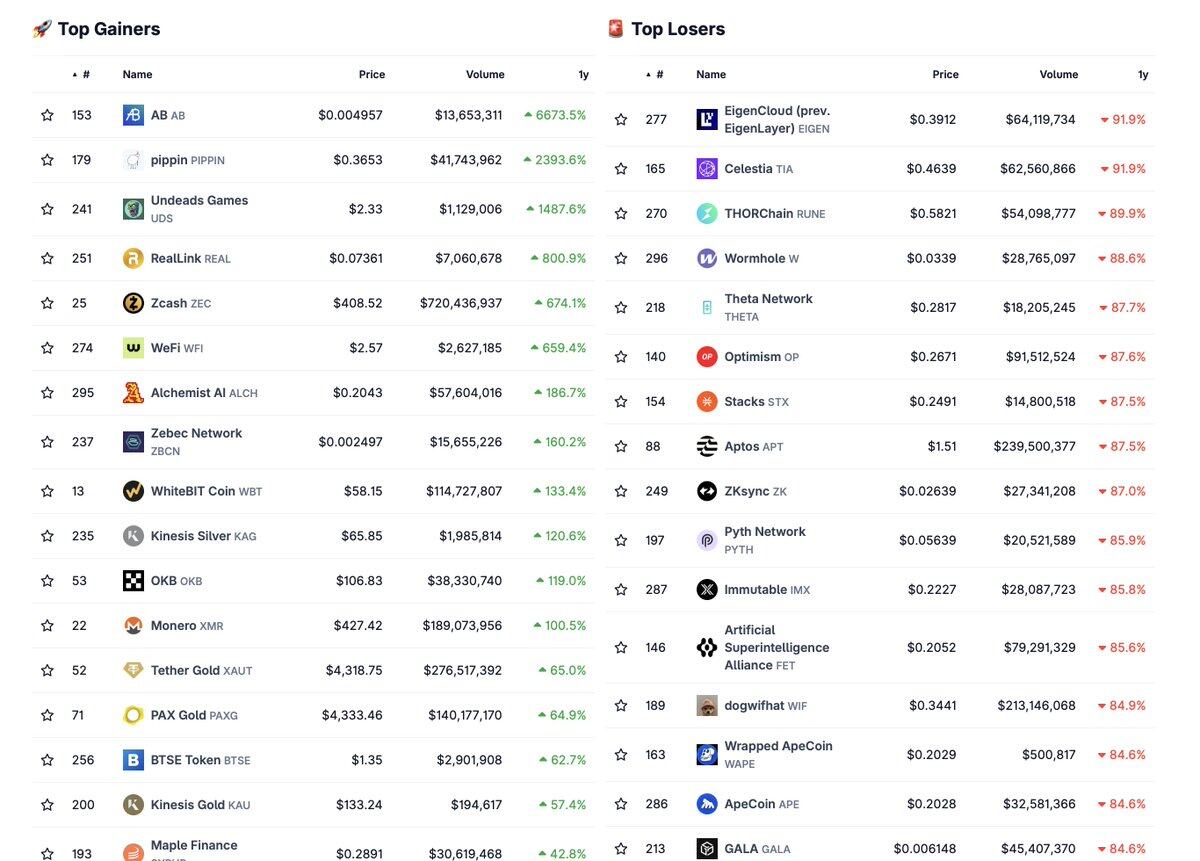
A pesar de esto, todavía hubo algunos tokens en 2025 que mantuvieron un aumento de precio relativo después del TGE. Este aumento no fue un "rebote después de una caída brusca del precio" ni "comprar en el mínimo del mercado", sino que mostró que existía un apoyo real de compra.

Aquí está mi lista de tokens que realmente subieron después del TGE en 2025: ASTER, FOLKS, AVICI y SENTIS (también hay algunos tokens que "apenas aprobaron", como IRYS/FHE/CORN). No se ven exactamente iguales, pero todos comparten ciertas características.

Los mejores tokens en alza con TGE en 2025

Aster es un ejemplo típico. ASTER obtuvo todo lo que el proyecto necesitaba el primer día de su lanzamiento: listado en grandes exchanges, liquidez profunda y la narrativa ampliamente aceptada de "Perp DEX". La historia que circuló durante todo el año fue básicamente: "Perp DEX respaldado por Binance, con privacidad".

La tendencia del precio de ASTER fue controvertida (se podría atribuir a juegos relacionados con ZK, a la sombra de CZ, o simplemente a una mejor estrategia de ejecución). Pero a pesar de todo, sigue siendo uno de los pocos proyectos que no experimentó una "venta inmediata" en el momento del TGE.
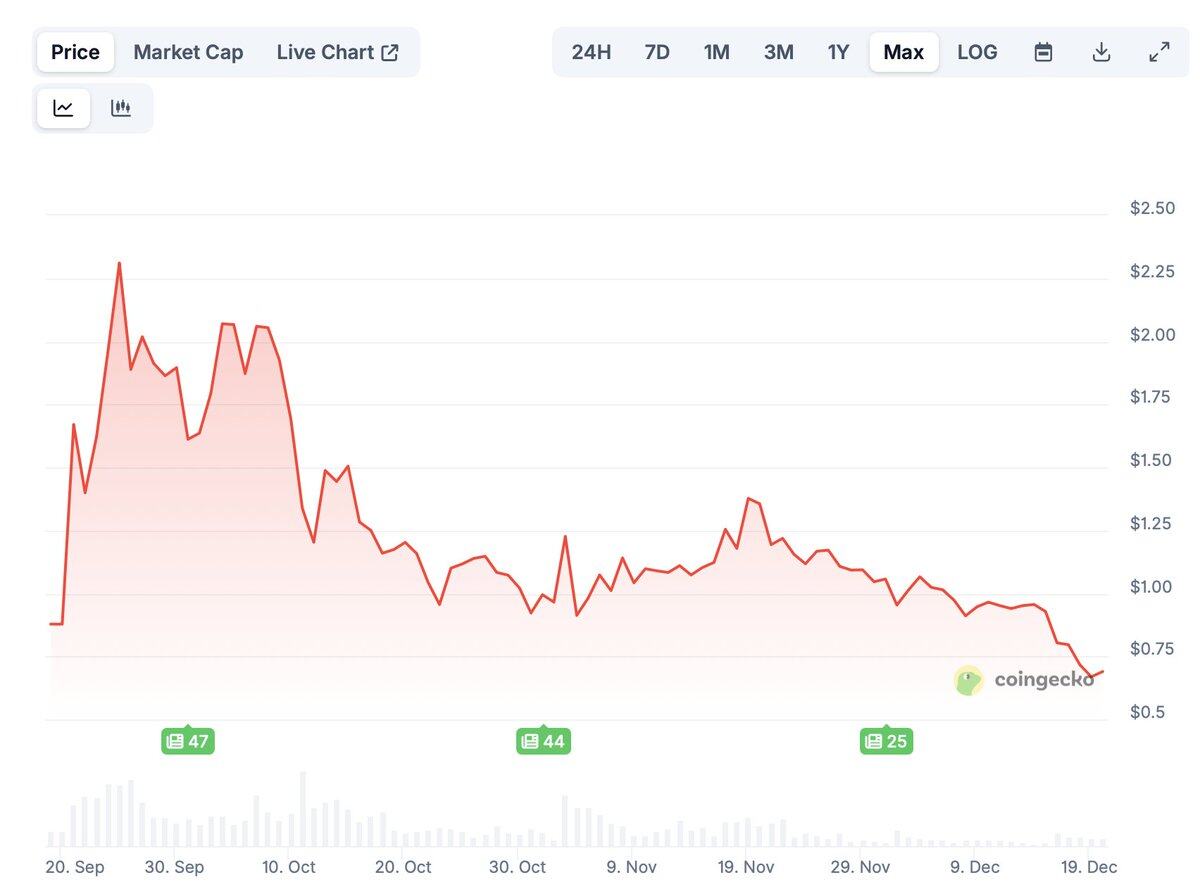
FOLKS es diferente: es un token de préstamo, considerado Alpha en un "año tan basura" para el mercado. La fórmula: "Binance y Kraken mostraron su apoyo desde el primer día, los pools cross-chain crecieron constantemente, sin desbloqueos masivos evidentes". Este último punto es muy importante. Se comportó bien hasta el desbloqueo de tokens del 15 de diciembre.
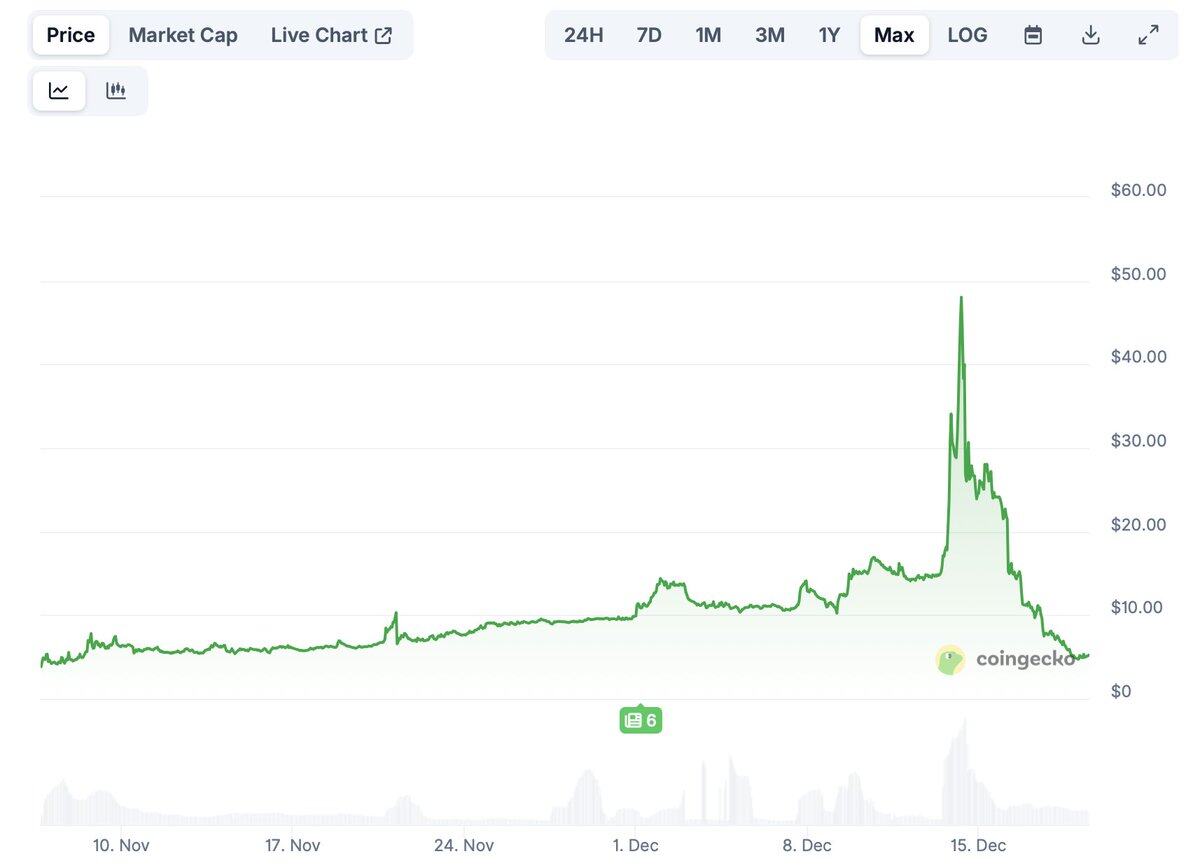
AVICI es diferente a los dos anteriores. AVICI está en la lista no por tener la tecnología más avanzada, sino porque proporcionó la narrativa más clara para CT: "Lanzamiento justo, producto realmente útil". No enfatizó la economía del token, sino su uso: "Buena aplicación neobank, tarjeta Visa, consumo real". En un mercado saturado de "utilidad" endógena, AVICI fue un soplo de aire fresco, saliéndose del pensamiento tradicional y siendo práctico. AVICI podría ser uno de los mejores tokens de TGE del año.
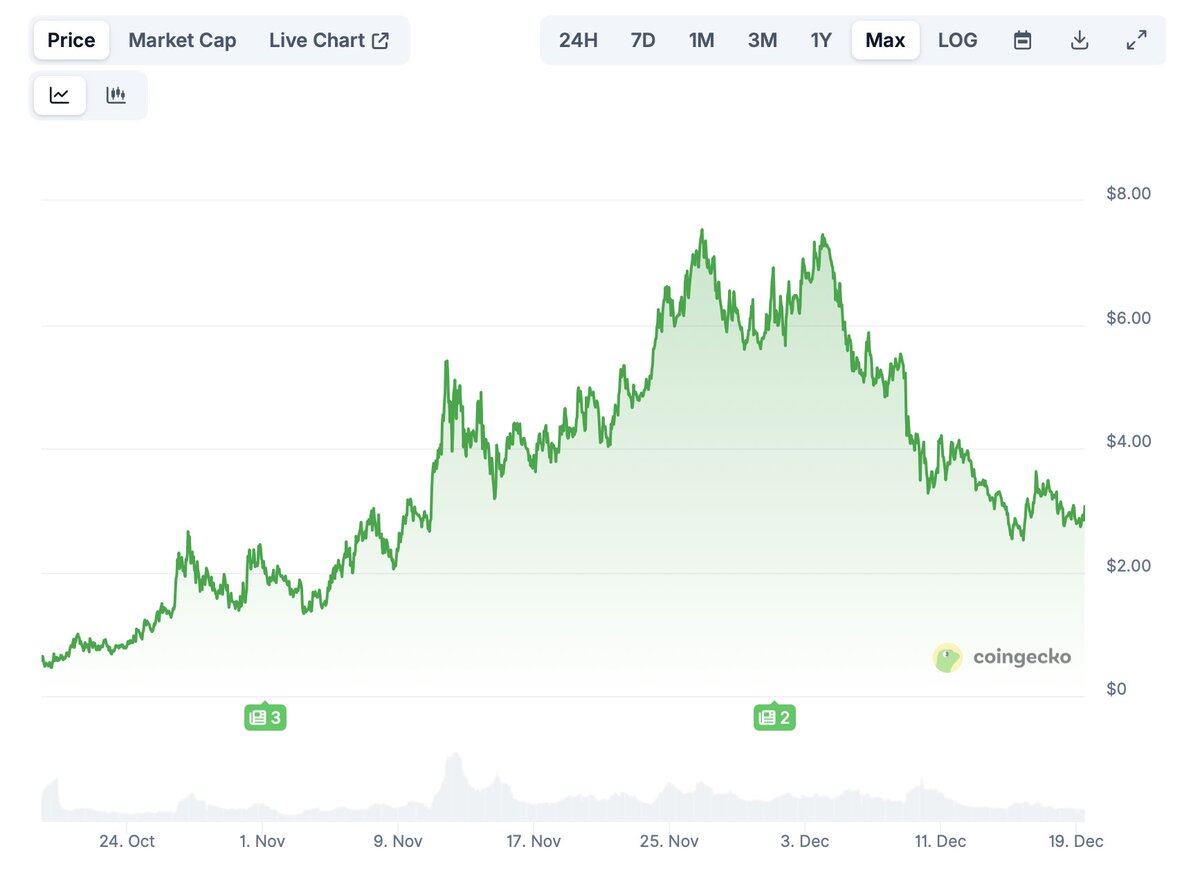
Cuando un token sube por una razón, su precio tiende a ser más estable

Ahora, el token con el rendimiento más sólido después del TGE es SENTIS. Su punto de apoyo es simple y claro: narrativa de Agente de IA + distribución continua de incentivos + listado en exchanges. En CT, el marco dominante se mantiene consistente: "Los Agentes de IA son la siguiente capa de automatización de DeFi", lo que proporciona a los traders un modelo mental simple como punto de anclaje.

Mecánicamente, SENTIS no depende de un único bombeo inicial de lanzamiento. El mecanismo de distribución continua del token (recompensas por misiones/retrodrop/participación) mantuvo un nivel estable de participación del usuario, que tiende a traducirse en una demanda constante al contado, ya que los participantes se preparan para futuras distribuciones e hitos del ecosistema. Esta dinámica puede sostener el precio incluso antes de que se produzca una adopión más significativa en cadena.

Tokens que "apenas aprobaron"

IRYS y FHE pertenecen al campo de la "infraestructura de IA y transacciones privadas": ambos se beneficiaron del auge de la IA, se mantuvieron por encima de su rango inicial y ambos mantuvieron suficiente liquidez para evitar colapsos de precios. Si estos proyectos pueden transformar su narrativa en uso en cadena, podrán sobrevivir. El apoyo solo narrativo no es suficiente.

Luego está CORN. CORN no fue muy volátil, relativamente estable en comparación con productos similares, pero CORN se parece más a un "producto estructural". En 2025, esto no es algo malo. Cuando el mercado "castiga" el exceso, la capacidad de supervivencia se vuelve importante.

¿Qué características tienen los tokens con buen rendimiento en 2025?

Eliminando la narrativa y el ambiente, surgen algunos patrones estructurales claros:

1. La distribución de tokens es más importante que el hype

Los proyectos con el rendimiento más sólido evitaron una gran liquidez interna en el TGE. AVICI (0% en manos del equipo), SENTIS (emisiones basadas en actividades).

Lección: Al lanzar un proyecto, quién posee los tokens es más importante que quién invirtió en privado.

2. Una valoración de lanzamiento razonable supera el momento perfecto para emitir

Muchos de los tokens con mejor rendimiento no se lanzaron en el pico del hype del mercado, sino cuando su valoración era razonable, permitiendo que el mercado reevaluara al alza.

AVICI lanzó un producto funcional con un FDV de aproximadamente 3.5 millones de dólares, mostrando una asimetría potencial entre los ingresos y el FDV.

Lección: Los tokens que suben "a base de esfuerzo" tienen mejor rendimiento que aquellos que comienzan con una valoración alta.

3. El uso del proyecto (o un uso creíble a corto plazo) se refleja en el precio

El volumen de trading de Perp de Aster, el tamaño de los préstamos de Folks, el gasto con tarjeta de crédito de Avici: estas no eran solo promesas en un whitepaper, sino señales observables.

Sentis comenzó antes, pero también vinculó las emisiones de tokens con la actividad en cadena, creando un ciclo de retroalimentación entre el uso y el precio.

Lección: El mercado ahora carece de paciencia, lo práctico > la visión.

4. La estructura de desbloqueo > el tamaño del desbloqueo

La linealidad y transparencia de los desbloqueos de tokens son importantes, lo que hace que su efecto dilutivo sea digerido por el mercado. Por ejemplo, SENTIS libera tokens gradualmente a través de mecanismos de participación.

En otros casos, lo que destruye la confianza del usuario no es la dilución del token en sí, sino los desbloqueos Cliff de alto riesgo.

Lección: Los desbloqueos de tokens predecibles son soportables, los inesperados no.

5. El listado en exchanges es necesario, pero no suficiente

Casi todos los tokens tuvieron un buen acceso a exchanges, pero esto por sí solo no determina nada. Los listados amplifican los resultados: ayudan a los tokens fuertes a acelerar su subida, mientras que los tokens débiles se venden más rápido. Incluso sin el listado en Binance, el token AVICI no se comportó tan mal.

Lección: La liquidez de los exchanges es un acelerador, no una base.

Puntos clave

En general, la situación de los tokens con TGE en 2025 marca un cambio.

El mercado ya no recompensa el "potencial", sino que comienza a recompensar la "estructura":

- Suministro circulante saludable

- Distribución justa de tokens

- Adopción confiable

- Mecanismos de desbloqueo controlados

Los "tokens en alza" de 2025 no son proyectos perfectos, simplemente fueron construidos para sobrevivir después de su lanzamiento. Si 2024 se centró en la narrativa, 2025 fue el diseño de tokens bajo presión. Y esta es una lección que la mayoría de los proyectos aún no han aprendido durante su TGE.


Related Questions

Q¿Cuáles son las características comunes de los tokens que mostraron un rendimiento sólido después del TGE en 2025?

ALos tokens con buen rendimiento compartían características como una distribución justa de tokens (ej. AVICI con 0% para el equipo), valoraciones iniciales razonables, adopción real o uso demostrable (ej. volumen de transacciones de Aster o gastos con tarjeta de Avici), estructuras de desbloqueo predecibles y transparentes, y listados en exchanges que actuaron como aceleradores pero no como base fundamental.

Q¿Por qué el token ASTER se destacó entre los lanzamientos de 2025?

AASTER se destacó por tener el respaldo de Binance como un Perp DEX, narrativa de privacidad, liquidez profunda desde el primer día y una ejecución estratégica efectiva que evitó la venta inmediata post-TGE, manteniendo el interés y compras genuinas.

Q¿Qué hizo diferente a FOLKS en comparación con otros tokens de préstamos en 2025?

AFOLKS se diferenció por el apoyo inicial de Binance y Kraken, el crecimiento constante de sus pools cross-chain y la ausencia de desbloqueos masivos inmediatos, lo que permitió mantener su valor hasta el desbloqueo de tokens el 15 de diciembre.

Q¿Cómo logró AVICI mantener un rendimiento positivo después de su TGE?

AAVICI mantuvo un rendimiento positivo gracias a una distribución justa (0% para el equipo), un producto funcional y tangible (neobank con tarjeta Visa y gasto real), una valuación inicial baja (~$3.5M FDV) que permitió revalorización, y un enfoque en utilidad práctica sobre promesas futuras.

Q¿Qué papel jugaron los listados en exchanges para los tokens exitosos de 2025?

ALos listados en exchanges fueron necesarios pero no suficientes: actuaron como aceleradores que amplificaron el éxito de tokens fuertes (como ASTER o FOLKS) y aceleraron la caída de los débiles, pero no garantizaron el éxito por sí solos, como demostró AVICI, que performó bien incluso sin Binance inicialmente.

Related Reads

From Code to Cognition: A Ten-Thousand-Word Guide to the Evolution of the Robot Brain

"From Code to Cognition: The Evolution of Robot Brains" The journey of robotic intelligence has shifted dramatically from manually coded systems to AI-driven brains. For decades, robots relied on layered software stacks—perception, state estimation, planning, control—each handcrafted. While predictable, they lacked adaptability. The 2010s saw deep learning revolutionize perception (e.g., object detection) and control (via reinforcement learning), but learned skills remained narrow. The arrival of Large Language Models (LLMs) marked a turning point. LLMs acted as high-level planners, interpreting natural language instructions and generating sequences of actions for traditional robotic systems to execute. However, true integration came with Visual-Language-Action (VLA) models, which fused vision, language, and motion prediction into a single network. Pioneered by models like RT-2 and open-source projects like OpenVLA, VLAs enable robots to reason and act directly from visual input and commands. The most advanced humanoid robots now employ a "dual-brain" architecture: a slow-thinking, large VLA (System 2) for reasoning and planning, and a fast-reacting, small network (System 1) for high-frequency motion control, sometimes with an even lower-level System 0 for balance. This split balances cognition with the physics of real-time movement. Computation is split between onboard hardware (e.g., NVIDIA Jetson) for safety-critical control loops and cloud/edge servers for non-critical tasks like learning and interfaces. A crucial driver is the open-source ecosystem—models like GR00T and OpenVLA allow startups to build upon pre-trained brains and fine-tune them with their own data, accelerating development. Despite progress, current systems struggle with recovery from errors, sample inefficiency, and long-horizon tasks. This has spurred the rise of **World Models**—neural networks that predict the consequences of actions. By simulating possible futures before acting (like NVIDIA Cosmos or Meta V-JEPA), robots can plan, recover, and generalize better. This represents the next frontier: shifting intelligence from learned reactions to an internal model of physics and cause-and-effect. The field is rapidly evolving. While not yet at its "ChatGPT moment," the convergence of cheaper hardware, scalable simulation, and world models points toward robots that are increasingly capable, adaptive, and useful. The question is shifting from "what can robots do?" to "what *should* they do?"

marsbit30m ago

From Code to Cognition: A Ten-Thousand-Word Guide to the Evolution of the Robot Brain

marsbit30m ago

AI Bubble Is Bursting

The AI Bubble is Bursting: A Necessary Purge on the Path to Ubiquitous Intelligence Market volatility has reignited debates about an AI bubble, with figures like Ray Dalio pointing to high valuations. However, this parallels the dot-com bubble, which, despite its crash, laid the physical infrastructure for today's internet era. The current AI investment frenzy, with tech giants planning trillions in infrastructure spending far outstripping current AI application revenues, appears similarly imbalanced. This 'bubble' is seen as an inevitable phase for a disruptive technology, paying the "innovation tax." Critically, AI inference costs have plummeted over 99.7% since 2023, making intelligence nearly free at the margin. This hasn't reduced spending but has instead unlocked massive new demand, as seen in enterprise AI cloud expenditure tripling. This follows the Jevons Paradox: efficiency gains lead to greater total consumption. The market is now entering a cleansing phase, weeding out speculative ventures lacking real moats. The deeper shift is a move from capital expenditure (CapEx) on hardware to value creation in operational expenditure (OpEx) through AI applications that solve real industry problems. While infrastructure valuations are high, rapid earnings growth from widespread AI adoption across sectors—from manufacturing and finance to law and healthcare—may digest these valuations over time. Ultimately, this creative destruction will leave behind robust infrastructure and optimized models, cheaply powering an AI-augmented future for all industries, much as the internet became indispensable after its own bubble burst. The core productive potential remains undiminished.

链捕手40m ago

AI Bubble Is Bursting

链捕手40m ago

Trading

Spot
Futures

Hot Articles

How to Buy WELL

Welcome to HTX.com! We've made purchasing Moonwell Artemis (WELL) simple and convenient. Follow our step-by-step guide to embark on your crypto journey.Step 1: Create Your HTX AccountUse your email or phone number to sign up for a free account on HTX. Experience a hassle-free registration journey and unlock all features.Get My AccountStep 2: Go to Buy Crypto and Choose Your Payment MethodCredit/Debit Card: Use your Visa or Mastercard to buy Moonwell Artemis (WELL) instantly.Balance: Use funds from your HTX account balance to trade seamlessly.Third Parties: We've added popular payment methods such as Google Pay and Apple Pay to enhance convenience.P2P: Trade directly with other users on HTX.Over-the-Counter (OTC): We offer tailor-made services and competitive exchange rates for traders.Step 3: Store Your Moonwell Artemis (WELL)After purchasing your Moonwell Artemis (WELL), store it in your HTX account. Alternatively, you can send it elsewhere via blockchain transfer or use it to trade other cryptocurrencies.Step 4: Trade Moonwell Artemis (WELL)Easily trade Moonwell Artemis (WELL) on HTX's spot market. Simply access your account, select your trading pair, execute your trades, and monitor in real-time. We offer a user-friendly experience for both beginners and seasoned traders.

2.3k Total ViewsPublished 2024.03.29Updated 2026.06.02

How to Buy WELL

What is $WELL

WELL3, $$WELL: Revolutionizing Health and Wellness with DePIN and AI Introduction In the rapidly evolving landscape of digital technology, the health and wellness sector stands at the forefront of innovation, striving to enhance patient care and promote healthier lifestyles. A groundbreaking player in this domain is WELL3, a pioneering Web3 project that seeks to revolutionize how individuals engage with their health. By leveraging technologies such as Decentralized Physical Infrastructure Network (DePIN), Decentralized Identity (DID), and Artificial Intelligence (AI), WELL3 aims to foster secure, data-empowered health journeys. This comprehensive article delves deep into the core aspects of WELL3, $$WELL, exploring its functionalities, creators, investors, and unique features. What is WELL3, $$WELL? WELL3 serves as an innovative platform set to redefine the approach towards health and wellness. Focused on integrating DePIN and DID alongside AI systems, the project is designed to create personalized user experiences while ensuring the safety and privacy of individuals' health data. With an impressive figure of over one million pre-registered users, the primary mission of WELL3 revolves around enhancing well-being through secure, data-driven health journeys. At its core, WELL3 employs advanced blockchain technologies to ensure that users have complete control over their personal information. This project not only addresses the challenges of data security and accessibility but also aspires to create a vibrant community connected by a shared commitment to better health. Key Features of WELL3: DePIN and DID: These technologies enable secure ownership and authentication of data, giving users full control over their information. AI Integration: Utilizing AI analytics, WELL3 offers personalized insights and solutions tailored to individual health needs. Community Engagement: Facilitates a supportive environment where users can connect, share experiences, and motivate each other toward healthier living. Creator of WELL3, $$WELL The identity of the creator of WELL3 remains unspecified in the available information. As the project progresses, further details may emerge, shedding light on the visionary minds behind this transformative initiative. Investors of WELL3, $$WELL WELL3 has garnered support from a myriad of influential investment entities, highlighting its credibility and potential in the health and wellness space. Notable investors include: Animoca Brands AWS Samsung The Spartan Group Blocore Fenbushi Capital Newman Group Soul Capital XY Finance Lumoz The backing from these established organizations demonstrates a strong belief in WELL3's mission, providing it with the necessary resources to innovate and expand its offerings. How Does WELL3, $$WELL Work? WELL3 operates by melding cutting-edge technologies in a multichain framework, ensuring a seamless and innovative user experience. Below are some factors that uniquely position WELL3 in the wellness market: 1. Secure Data Ownership With the integration of DePIN and DID, users can maintain complete control over their personal health information. This layer of security is paramount in today's digital age, where data breaches and unauthorized access are rampant. Through WELL3, data ownership is decentralised, enabling users to manage their information proactively. 2. Personalization through AI WELL3 implements AI-driven analytics to provide users with tailored health insights. By harnessing the power of AI, the platform can offer individualised recommendations and solutions, encouraging users to achieve their health goals more effectively. 3. Multichain Framework The WELL3 project is designed to work across multiple blockchain platforms, including Bitcoin, Ethereum, Polygon, Solana, Blast, and TON. This multichain capability ensures that users can interact with the platform seamlessly across different networks, enhancing accessibility and usability. 4. WELL Token Central to the WELL3 ecosystem is the WELL Token, which serves multiple functions including utility, governance, and rewards. The token allows for ecosystem participation, supports health data sharing, and incentivizes users based on their engagement with the platform. Timeline of WELL3, $$WELL The trajectory of WELL3 showcases significant milestones in its development, each contributing to the project's overall success. Here is a brief timeline of critical events in the history of WELL3: February 10, 2024: WELL3 launched its NFT project, quickly rising to prominence as the largest NFT collection on the opBNB chain with over 324,000 owners and reaching 8 million NFTs created by April 27, 2024. Public Sale: The project achieved a remarkable total value locked (TVL) of approximately 15,237.2 ETH within just seven days, indicating robust market interest and backing. WELL ID Launch: The platform saw over 900,000 users sign up for the WELL ID and its corresponding NFT Ring whitelist, marking a significant adoption phase within the ecosystem. Partnership Development: WELL3 established partnerships with leading entities including Animoca Brands, AWS, Samsung, and others to enhance its ecosystem and expand its reach. Transaction Volume: WELL3 has facilitated over $17 million in transactions, reflecting its growing utility and engagement within the health and wellness community. Key Points About WELL3, $$WELL As a progressive initiative shifting towards the wellness market, WELL3 has identified several vital elements that will contribute to its ongoing success. Here are some key takeaways to note: Tokenomics The $$WELL token has a maximum supply of 42 billion, with a significant 71% earmarked for community initiatives. This distribution strategy emphasises the project's commitment to its user base and long-term sustainability. Lock-Up Period To ensure stability within the ecosystem, tokens are released in batches over a 24-month lock-up period, promoting trust and confidence among users. Ecosystem Development WELL3's vision extends toward creating a comprehensive and sustainable ecosystem to encourage thriving community engagement, health-enhancing behaviors, and digital solutions that address the pressing needs of the wellness domain. Market Fit The wellness industry, valued at $5.6 trillion, presents a lucrative opportunity that WELL3 aims to tap into. With an anticipated annual growth rate of 5-10%, the project is ideally positioned amid a rising trend towards health-conscious living. Wearables Introducing the WELL3 Ring, a crypto-incentivized wearable, aligns with the growing demand for personalized health data. This device not only enhances user experience but also redefines what it means to be engaged with one’s health in the context of Web3. Conclusion WELL3 represents a significant advancement in the integration of blockchain technology within the health and wellness sector. By addressing crucial issues around data ownership, personalization, and community engagement, this innovative platform offers a forward-thinking solution to enhance individual well-being. With robust backing from notable investors and a commitment to pioneering technologies, WELL3 stands poised to make a lasting impact in the wellness landscape. For those seeking to navigate the complexities of health in the digital age, WELL3 is certainly one to watch as it continues to evolve and grow.

548 Total ViewsPublished 2024.07.14Updated 2024.12.03

What is $WELL

Discussions

Welcome to the HTX Community. Here, you can stay informed about the latest platform developments and gain access to professional market insights. Users' opinions on the price of WELL (WELL) are presented below.

活动图片