Гарвардский университет почти утроил позицию в ETF от BlackRock

cryptonews.ruPublished on 2025-11-26Last updated on 2025-11-26

Гарвардский университет почти утроил вложения в спотовый ETF на базе биткоина (BTC). Об этом сообщает The Block со ссылкой на отчетность, в которой раскрывается структура активов крупнейшего в мире академического эндаумента.

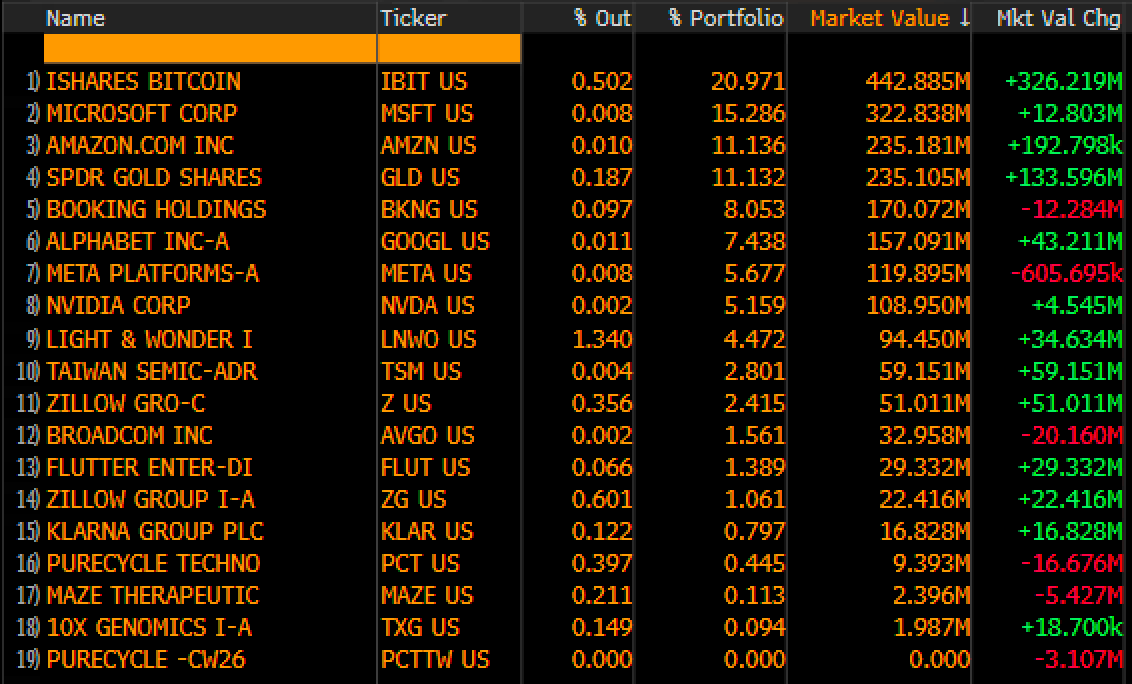
В третьем квартале Гарвард сообщил о владении 6 813 612 акциями IBIT от финансового гиганта BlackRock. Это на 257% больше показателя на конец июня (1 906 000 акций).

Тогда IBIT занимал пятое место в инвестиционном портфеле университета. Сейчас соответствующая позиция стала крупнейшей, обойдя Microsoft, Amazon и SPDR Gold Trust, и показала самый значительный прирост за квартал.

Из данных отчетности не ясно, сколько Гарвард потратил на акции между двумя датами отчетности. Раскрытые позиции составляют лишь небольшую часть эндаумента университета, оцениваемого примерно в $57 млрд.

«Это едва ли не лучший сигнал доверия, который вообще может получить ETF», — написал аналитик Bloomberg Эрик Балчунас.

Он отметил, что вложенные университетом полмиллиарда составляют всего 1% общего эндаумента. Однако этой суммы все равно достаточно, чтобы занять 16 место среди держателей IBIT.
Инвестиции
Структура эндаумента Гарвардского университета. Источник: X-аккаунт Эрика Балчунаса.

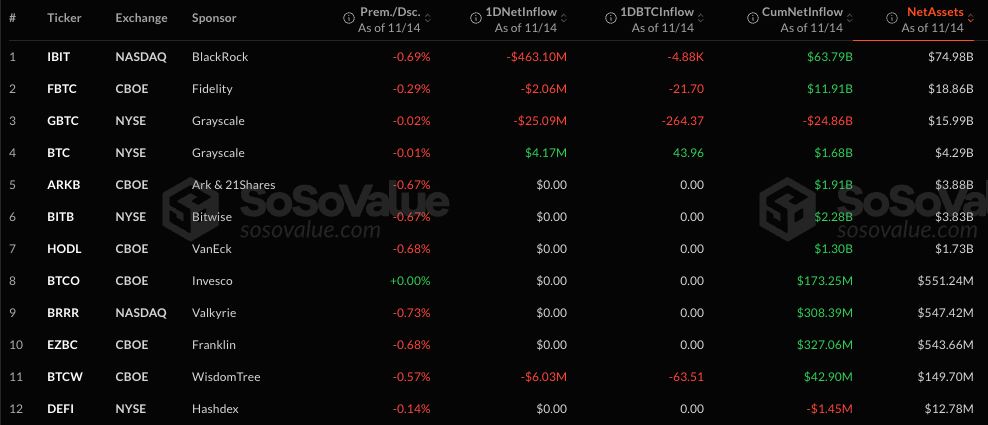
IBIT остается крупнейшим спотовым биткоин-ETF. Под его управлением активы на ~$75 млрд.
Инвестиции
Рейтинг спотовых биткоин-ETF по объему активов под управлением. Источник: SoSoValue.

Не только Гарвард

Частный исследовательский университет Эмори также нарастил вложения в биткоин-ETF, следует из недавно подданной отчетности.

По состоянию на 30 сентября учреждение владеет более чем 1 млн акций биткоин-ETF Bitcoin Mini Trust от Grayscale (тикер BTC) с активами под управлением на $4,3 млрд. Вложения в BTC выросли на 91% с июня.

Организация также держит 4450 акций IBIT, этот показатель не изменился с прошлого отчета. Совокупный объем позиции составляет $42,9 млн.

Университет Эмори стал первым в США вузом, раскрывшим вложения в спотовые биткоин-ETF.

«Самостоятельная работа с такими инструментами связана с рисками», — отметил доцент кафедры учета Мэттью Лайл, комментируя первоначальные вложения в биткоин-ETF более чем на $15 млн.

Он отметил, что компании вроде Grayscale или BlackRock вряд ли могут «просто забрать деньги клиентов», поскольку это хорошо известные игроки.

Суверенный фонд Al Warda Investments из ОАЭ сообщил о владении 7 963 393 акциями IBIT от BlackRock стоимостью $517,6 млн по состоянию на 30 сентября. Это примерно на 230% больше по сравнению с 2 411 034 акциями, о которых структура отчиталась в июне, когда позиция впервые появилась в документации.

По теме: гарвардский экономист признал ошибку с прогнозом обвала биткоина до $100

Related Reads

NVIDIA CPU Advances, China's RISC-V Responds: Semiconductor Deep Dive - Part Four

NVIDIA is set to launch its new Vera AI data center CPU in China as early as August, with high pricing. While this move offers a new option, it highlights China's continued dependence on foreign-controlled Arm architecture. In response, the Chinese semiconductor industry is increasingly turning to RISC-V as a strategic alternative for achieving high-performance computing autonomy. The article explores the concept of the "impossible triangle" in CPU development—balancing prosperity, control, and autonomy—and posits that RISC-V's open-source, modular nature offers a unique path to achieving all three. While RISC-V is already dominant in embedded systems, the focus is now shifting to data centers and AI workloads. China has become a global hotspot for RISC-V development, driven by AI-driven compute demand, supply chain concerns from export controls, cost benefits of open-source, and strong policy support. Multiple Chinese companies have reportedly crossed the key performance threshold of 15 SPECint per GHz, a benchmark for entering the high-performance CPU club. Progress extends beyond single-core benchmarks. Companies are developing complete computing subsystems, including commercial-grade coherent network-on-chip (NoC) technology and server processors with up to 40 cores that strictly adhere to the RVA23 standard to ensure software compatibility. Real-world applications are emerging in areas like video transcoding and edge AI. However, significant challenges remain. The RISC-V ecosystem faces fragmentation, immature toolchains and verification processes, and gaps in single-core performance and energy efficiency compared to mature x86 and Arm architectures. The formidable software moat, epitomized by NVIDIA's CUDA, is a long-term hurdle. In conclusion, while RISC-V cannot immediately replace offerings like NVIDIA's Vera, it represents a viable long-term path for China to develop a self-sufficient, high-performance CPU ecosystem. The journey is acknowledged to be long and arduous, requiring sustained effort to overcome technical and ecosystem challenges.

marsbit4h ago

NVIDIA CPU Advances, China's RISC-V Responds: Semiconductor Deep Dive - Part Four

marsbit4h ago

My Coding Betting Dashboard is Profiting, but Polymarket is Truly Not a Good Place for 'Arbitrage'

The author built a custom monitoring dashboard for Polymarket, a prediction market platform, and tested it with $1,600, achieving over 30% returns. However, the core argument is that Polymarket is not a good venue for traditional arbitrage. The dashboard has two main sections: a "Portfolio Dashboard" for tracking active positions with key metrics like total capital, P&L, and a risk-control module using a tier system (T1, T2, T3), and an "Opportunity Watchlist" for monitoring markets. The article details a critical structural trap in binary markets: a bet with a high perceived probability of success still carries a 100% loss risk if wrong. The author's T1/T2/T3 system is designed to manage this by limiting position sizes based on conviction and time horizon, emphasizing that high confidence should not equal high concentration. A key insight is the danger of "pseudo-diversification"—betting on different markets driven by the same underlying variable. The author concludes that Polymarket offers few true low-risk, arbitrage opportunities. It is instead a high-risk environment where wins can create a false sense of mastery, leading to large losses. The platform is better viewed as a training ground for honing judgment through disciplined, framework-driven betting rather than a reliable income source. The tools help transform intuition into structured, rule-based decisions to mitigate the risk of catastrophic errors.

marsbit7h ago

My Coding Betting Dashboard is Profiting, but Polymarket is Truly Not a Good Place for 'Arbitrage'

marsbit7h ago

WeChat AI Card Hands-On Guide: Has the AI Shopping Era Arrived?

**"WeChat AI Card" Practical Test Guide: Has the Era of AI Shopping Arrived?** WeChat has officially launched the "AI Exclusive Card," a feature integrated into its Workbuddy AI assistant. This card is designed to handle payments for AI-initiated purchases. Our hands-on test reveals it's not yet a tool for fully autonomous AI shopping, but rather a controlled payment layer for AI agents. The AI Card functions as an isolated sub-wallet within WeChat Pay. Users must bind the card and transfer funds into it from their main wallet. Crucially, every transaction requires explicit user confirmation via smartphone scan; AI cannot spend autonomously. Currently accessible through the Workbuddy agent, the card targets specific digital consumption scenarios: purchasing paid content (reports, data), calling paid APIs/tools, and subscribing to services. Its design prioritizes security and control by separating funds and mandating approval for each payment. We tested a real-world scenario: ordering bubble tea via Workbuddy using a "Meituan Life Assistant" skill. The process encountered multiple hurdles: high "skill" usage costs (exceeding daily free credits), and most importantly, while a payment was successfully initiated, the AI purchased an incorrect product (a mismatched group-buy coupon instead of the desired drink). This highlights the current limitation: the **AI Card only solves the payment step**. The broader challenge lies in the **AI agent's execution chain**—accurately understanding intent, navigating third-party platforms, selecting the right product, and ensuring proper fulfillment. The payment succeeded, but the purchase failed to meet the user's need. In conclusion, the WeChat AI Exclusive Card is a cautious, early-step experiment in AI commerce. It provides a secure, user-controlled payment method for agent interactions but is not yet capable of reliable, end-to-end complex purchases. For now, it's best used for low-value, low-risk digital services with careful user verification at each step. The vision of AI handling complete shopping tasks remains a work in progress.

marsbit10h ago

WeChat AI Card Hands-On Guide: Has the AI Shopping Era Arrived?

marsbit10h ago

Trading

Spot
Futures
活动图片