XRP, Solana, And Cardano Hit With SEC Withdrawals – What This Means For ETFs

bitcoinistPublished on 2025-10-02Last updated on 2025-10-02

Abstract

Journalist Eleanor Terrett has revealed that the SEC has requested that XRP, Solana, and Cardano ETF issuers withdraw their 19b-4...

Trusted Editorial content, reviewed by leading industry experts and seasoned editors. Ad Disclosure

Journalist Eleanor Terrett has revealed that the SEC has requested that XRP, Solana, and Cardano ETF issuers withdraw their 19b-4 filings. This follows the commission’s approval of the generic listing standards, under which it plans to approve these funds. 

SEC Asks XRP, Solana, Cardano ETF Issuers To Withdraw 19b-4 Filings

Terrett revealed in an X post that the SEC has asked issuers of XRP, Solana, Cardano, Litecoin, and Dogecoin to withdraw their 19b-4 filings. She explained that this follows the approval of the generic listing standards, which replace the need for these filings. The journalist added that withdrawals could start happening as soon as this week. 

The journalist provided more context, noting that the withdrawal is not a bad thing. She stated that when the SEC approved the generic listing standards, it eliminated the need for exchanges to file 19b-4 forms to list and trade shares of crypto ETFs, thereby streamlining the process. The SEC usually had a 240-day window to approve these proposed rule changes. However, under the generic listing standards, approvals can be obtained within 75 days. 

Terrett further remarked that the SEC’s request to withdraw the 19b-4 filings for the XRP, Solana, and Cardano ETFs signals that the new process is working as intended. She added that as long as the tokens meet the existing criteria, the SEC can approve a crypto ETF at any time with just the S-1 filing. Meanwhile, the SEC could technically decide on these funds at any time now. 

The final deadlines for these XRP, Solana, and Cardano funds were set for this month. The SEC was meant to decide on the SOL ETFs by October 10. Meanwhile, the final deadline for the XRP and Dogecoin ETFs comes up on October 18. Bloomberg analyst James Seyffart said that it is impossible to know exactly when the SEC will approve the S-1s. He added that the delay won’t be in the days required by simply when the Division of Corporation Finance signs off on them. 

Government Shutdown To Delay Crypto ETF Approvals

Market expert Nate Geraci stated that the prolonged government shutdown would impact the launch of new spot crypto ETFs, including those for XRP, Solana, and Dogecoin. He added that the ‘ETF Cryptober’ might be on hold for a bit. The U.S. government had shut down on October 1 following the Senate’s failure to pass a temporary funding bill. 

Notably, Geraci alluded to an SEC document that suggested the SEC would not approve the XRP, Solana, and Dogecoin ETFs while the government shutdown is in place. The commission stated that it will not review or approve self-regulatory organization rule changes, nor will it review or accelerate the effectiveness of registration statements, which applies to the crypto ETFs.

XRP
XRP trading at $2.97 on the 1D chart | Source: XRPUSDT on Tradingview.com
Featured image from iStock, chart from Tradingview.com
Editorial Process for bitcoinist is centered on delivering thoroughly researched, accurate, and unbiased content. We uphold strict sourcing standards, and each page undergoes diligent review by our team of top technology experts and seasoned editors. This process ensures the integrity, relevance, and value of our content for our readers.

Scott Matherson is a leading crypto writer at Bitcoinist, who possesses a sharp analytical mind and a deep understanding of the digital currency landscape. Scott has earned a reputation for delivering thought-provoking and well-researched articles that resonate with both newcomers and seasoned crypto enthusiasts. Outside of his writing, Scott is passionate about promoting crypto literacy and often works to educate the public on the potential of blockchain.

Trending Cryptos

Related Reads

Galaxy Research: Can SEC's New Regulations Usher in a New Era for Token Financing?

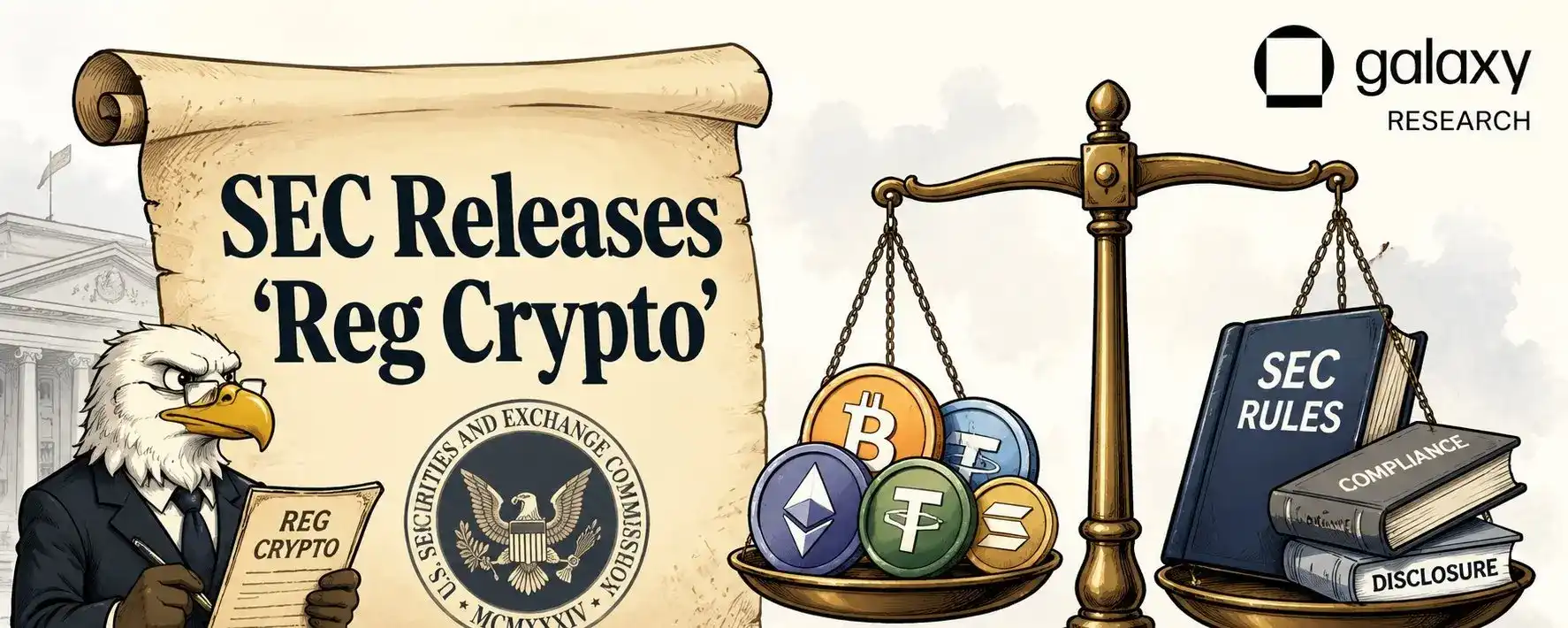
**SEC Proposes New Framework for Token Offerings, Potentially Unlocking Legal Paths for U.S. Crypto Fundraising** On August 18, the U.S. Securities and Exchange Commission (SEC) proposed new rules, dubbed "Reg Crypto," specifically tailored for crypto asset offerings. This framework marks a departure from applying traditional securities rules designed for stocks to tokens. It creates a potential legal pathway for token sales to the U.S. public, including non-accredited investors, without full registration. The proposed rules apply to crypto assets that are not themselves securities but were sold as part of an investment contract where the issuer promised to build a product, network, or ecosystem. It establishes a four-phase lifecycle: Raise, Disclose, Build, and Exit. The "Raise" phase includes two new fundraising exemptions: a startup exemption allowing up to $5 million over four years and a larger, Regulation A-based exemption for up to $20 million or $75 million over 12 months. The "Disclose" phase requires specific token-related disclosures like supply schedules, governance, and development progress. After the issuer completes its promised development work and files a transition report, the "Exit" phase allows the associated investment contract to terminate, even if the token continues to trade. The analysis highlights that the framework's most immediate impact may be providing a formal "exit" path for existing tokens with unclear legal status, rather than immediately sparking a new wave of U.S.-based token offerings. It offers advantages over traditional private placements by allowing public sales and immediate token transferability but imposes ongoing disclosure and reporting obligations. A key hurdle is that the larger exemption requires a substantial U.S. operational presence, which may deter projects with offshore structures. Overall, the proposal is seen as a constructive step toward regulatory clarity, acknowledging that token offerings differ from equity offerings and require tailored investor disclosures. However, it remains a proposal subject to a 60-day public comment period, and its long-term stability may ultimately depend on congressional action.

marsbit3h ago

Galaxy Research: Can SEC's New Regulations Usher in a New Era for Token Financing?

marsbit3h ago

Trading

Spot

Hot Articles

What is XRP 2.0

XRP 2.0: A New Frontier in the Cryptocurrency Landscape Introduction to XRP 2.0 In the ever-evolving realm of cryptocurrency, new projects continuously emerge, vying for attention and adoption. One such promising initiative is XRP 2.0, a novel cryptocurrency project designed to leverage advanced blockchain technology and robust encryption methodologies. While the name draws parallels with Ripple’s XRP, it’s crucial to note that XRP 2.0 operates independently, focusing on enhancing transaction security, privacy, and scalability. As the digital financial landscape increasingly embraces decentralized solutions, XRP 2.0 aims to contribute meaningfully to web3 and the overall expansion of crypto projects. What is XRP 2.0? At its core, XRP 2.0 is a cryptocurrency project that aims to create a secure and decentralized digital currency ecosystem. Its foundational technology integrates sophisticated blockchain principles with cutting-edge encryption techniques. The overarching goal of XRP 2.0 is to establish itself as a reliable and efficient platform enabling swift transaction execution while prioritizing enhanced privacy protections for its users. The project is promoted as a solution to many limitations faced by existing cryptocurrencies, proposing a system that can handle a higher volume of transactions with improved speed and privacy. This versatility positions XRP 2.0 as a significant contender in a marketplace riddled with various digital currencies. Who is the Creator of XRP 2.0? The identity of the creator behind XRP 2.0 has been flagged as ‘Wilbur.’ However, comprehensive details regarding Wilbur or their associated entity remain elusive. The anonymity of many cryptocurrency creators is not an uncommon phenomenon in the industry, often designed to maintain a degree of privacy and security. Who are the Investors of XRP 2.0? As of now, specific information related to the investment foundations or organizations supporting XRP 2.0 is not publicly available. In the cryptocurrency sector, the backing by reputed investors can significantly influence a project's credibility and success, yet the transparency regarding the financial supporters of XRP 2.0 has not been established. How Does XRP 2.0 Work? XRP 2.0 stands out by employing a combination of blockchain technology and advanced encryption algorithms that ensures secure and decentralized transactions. Its innovative structure includes unique features designed to foster user engagement and broaden functionalities beyond conventional cryptocurrency transactions. Among these features, XRP 2.0 incorporates AI-powered capabilities, such as text-to-image and text-to-speech functionalities. These additions are designed to enhance the interactive experience for users, promoting broader applicability across various sectors. By bridging technological advancements with user-centered design, XRP 2.0 aims to capture the attention of a diverse range of individuals and enterprises looking to integrate cryptocurrency solutions into their operational frameworks. Timeline of XRP 2.0 Understanding XRP 2.0 requires examining the milestones that have defined its journey thus far: July 23, 2023: XRP 2.0 is introduced as a novel cryptocurrency project, aiming to revolutionize secure and decentralized transaction capabilities in the blockchain domain. September 8, 2023: The launching of another project, XRP20, occurs, marking the emergence of an ERC-20 token on the Ethereum blockchain that remains unrelated to XRP 2.0. November 13, 2023: The XRP Ledger undergoes a significant update with the release of rippled server software version 2.0.0. It is essential to note that this development is disconnected from the XRP 2.0 cryptocurrency project. Key Points About XRP 2.0 To distill the essence of XRP 2.0, several critical factors emerge: Unique Features: The inclusion of features like AI-powered text-to-image and text-to-speech further diversifies the potential applications of XRP 2.0. Blockchain Technology: The framework utilizes advanced blockchain mechanisms and encryption protocols, ensuring a secure and decentralized environment for transactions. Scalability and Privacy: XRP 2.0 prioritizes enhanced privacy protections in transaction processes and the scalability necessary to accommodate a growing user base. No Affiliation with Ripple: Importantly, despite its name, XRP 2.0 does not have any allegiance or collaboration with Ripple’s XRP, distinguishing its operational framework and objectives within the cryptocurrency ecosystem. Conclusion XRP 2.0 represents an ambitious venture into the cryptocurrency sphere, aiming to offer a combination of security, privacy, and efficiency in digital transactions. By integrating sophisticated technologies and user-friendly features, the project sets out to broaden the horizons of what cryptocurrency can achieve in today's digital economy. While the anonymity of its creator and lack of disclosed investors might raise questions for some, XRP 2.0's focus on advanced functionalities and decentralisation enhances its appeal amidst an increasingly crowded crypto market. As the cryptocurrency landscape continues to evolve, XRP 2.0 may yet emerge as a pivotal player in the expansion of secure and scalable blockchain solutions.

1.6k Total ViewsPublished 2024.04.01Updated 2024.12.03

What is XRP 2.0

Discussions

Welcome to the HTX Community. Here, you can stay informed about the latest platform developments and gain access to professional market insights. Users' opinions on the price of XRP (XRP) are presented below.

活动图片