「买谣言,卖事实」:FOMC 后 BTC 回调 12%,深度降温风险正在累积

marsbitPublished on 2025-09-25Last updated on 2025-09-26

比特币在联邦公开市场委员会引发的上涨后显示出疲软迹象。长期持有者已实现 340 万 BTC 的利润,而 ETF 流入放缓。在现货和期货市场承压的情况下,短期持有者成本基础 11.1 万美元是关键支撑位,若失守则可能面临更深的降温风险。

摘要

· 在 FOMC 驱动的上涨之后,比特币已进入回调阶段,显示出「买谣言,卖事实」的市场迹象,更广泛的市场结构指向动能减弱。

· 8% 的跌幅目前仍较为温和,但 6780 亿美元的已实现市值流入和长期持有者实现的 340 万 BTC 利润,凸显了本轮资本轮换和抛售规模的空前程度。

· ETF 流入在 FOMC 会议前后急剧放缓,同时长期持有者抛售加速,造成了资金流的脆弱平衡。

· 抛售期间现货成交量激增,期货市场出现剧烈去杠杆波动,清算集群揭示了市场双向受流动性驱动波动的脆弱性。

· 期权市场重新定价激进,偏斜度飙升,看跌期权需求旺盛,表明防御性头寸布局,宏观背景表明市场日益疲惫。

从上涨到回调

在 FOMC 驱动、价格接近 11.7 万美元见顶的上涨之后,比特币已过渡到回调阶段,呼应了典型的「买谣言,卖事实」模式。在本期中,我们跳出短期波动,评估更广泛的市场结构,使用长期链上指标、ETF 需求和衍生品头寸来评估此次回撤是健康的盘整还是更深层次收缩的早期阶段。

链上分析

波动性背景

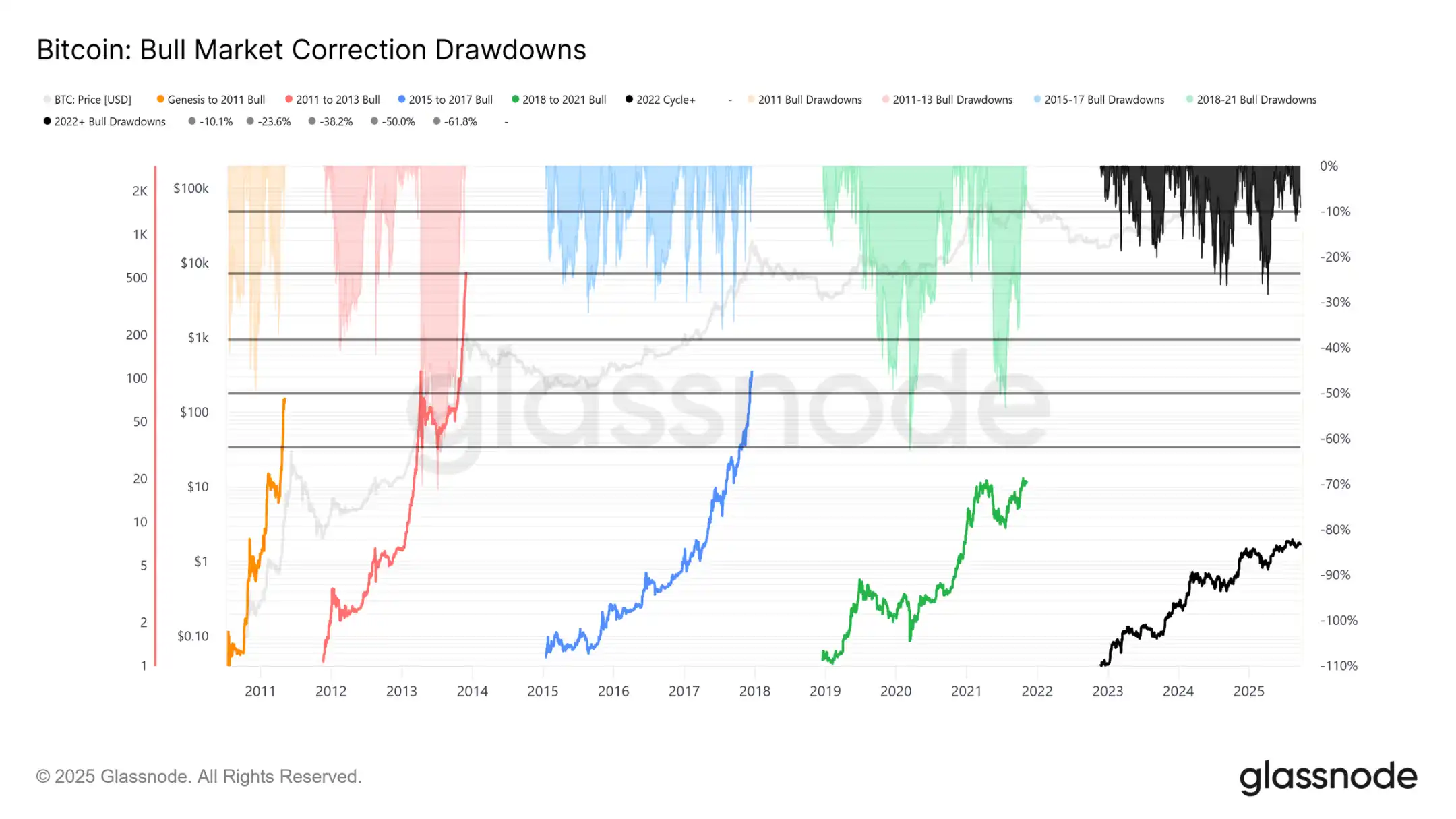
当前从 12.4 万美元的历史高点(ATH)回落至 11.37 万美元的跌幅仅为 8%(最新跌幅已达 12%),与本周期的 28% 跌幅或之前周期的 60% 跌幅相比显得温和。这与波动性减弱的长期趋势一致,无论是在宏观周期之间还是周期内的阶段内,都类似于 2015-2017 年的稳步推进,只是目前尚未出现其末期的暴涨行情。
长期持有者

周期持续时间

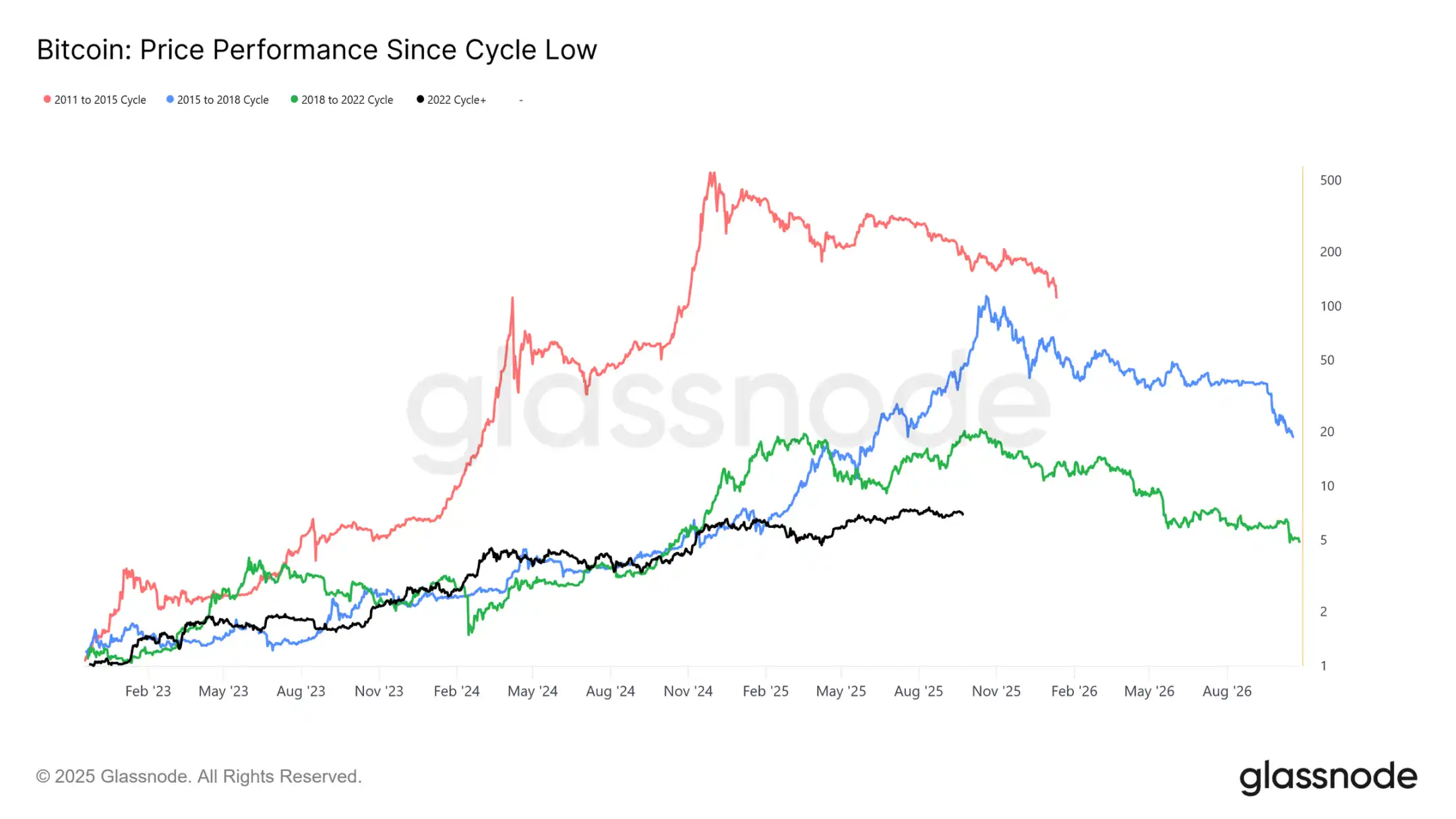
叠加过去四个周期可以看出,即使当前轨迹与前两个周期紧密吻合,峰值回报率也已随时间推移而减弱。假设 12.4 万美元标志着全球顶部,那么本周期已持续约 1030 天,非常接近前两个周期约 1060 天的长度。
长期持有者


资本流入衡量


除了价格走势,资本部署提供了一个更可靠的视角。


已实现市值自 2022 年 11 月以来已出现三波上涨。将总额提升至 1.06 万亿美元,反映了支撑本周期流入资金的规模。
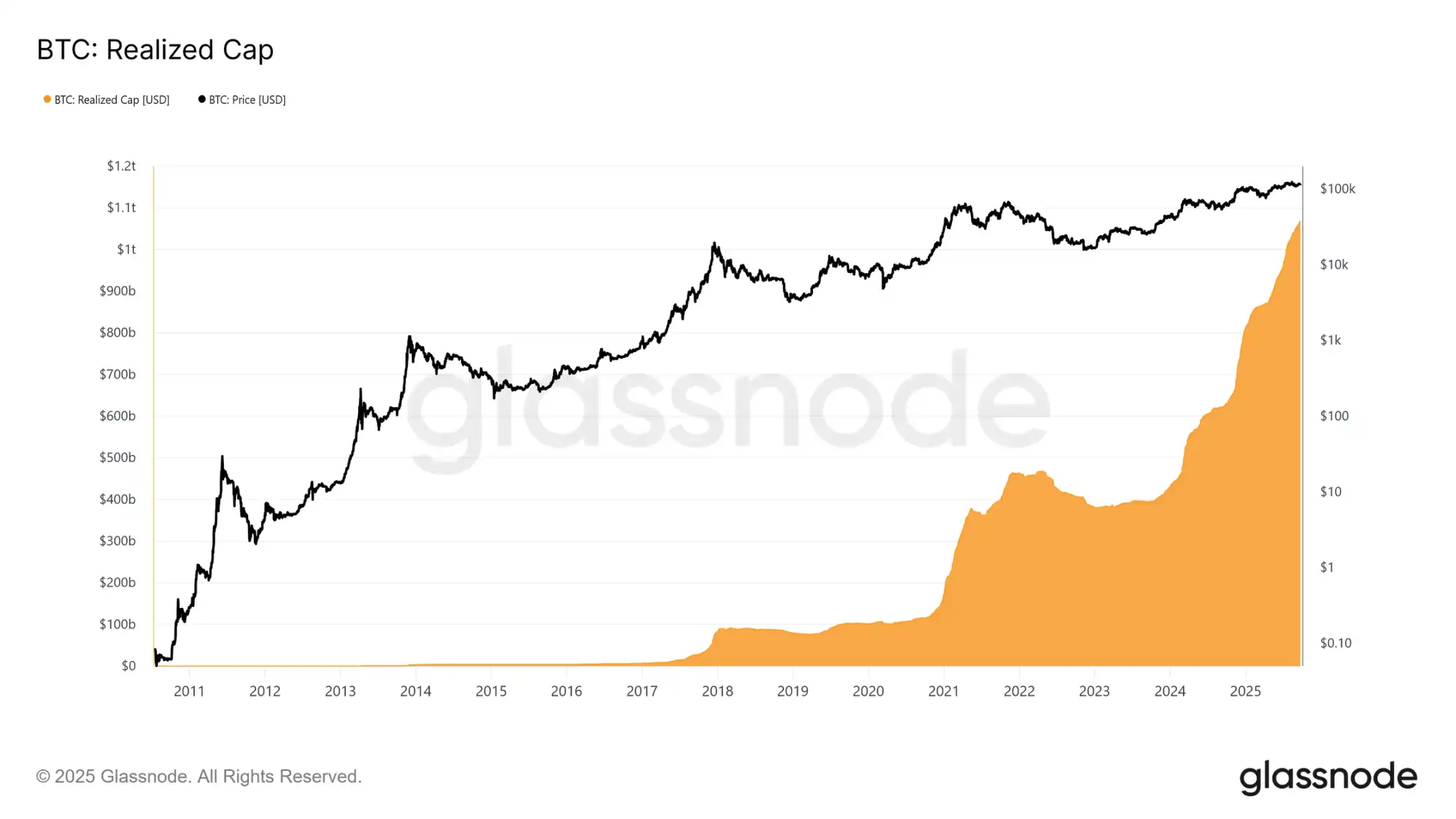

长期持有者


已实现市值增长

背景对比:

· 2011–2015: 42 亿美元

· 2015–2018: 850 亿美元

· 2018–2022: 3830 亿美元

· 2022–至今: 6780 亿美元

本周期已经吸收了 6780 亿美元的净流入,几乎是前一个周期的 1.8 倍,突显了其资本轮换的空前规模
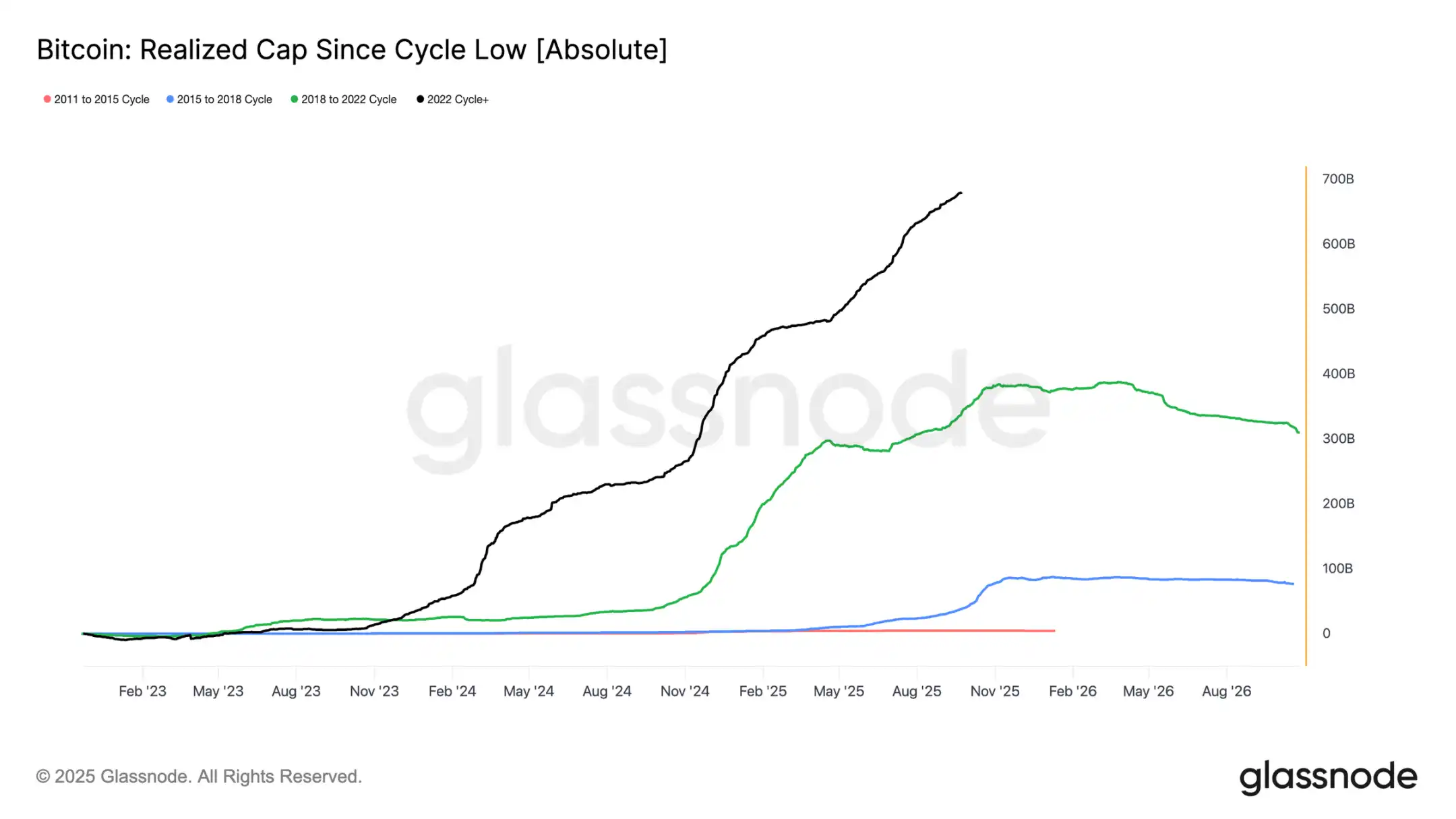
长期持有者

利润实现峰值

另一个不同之处在于流入结构。与早期周期单一的浪潮不同,本周期出现了三次明显的、持续数月的激增。已实现盈亏比率显示,每次利润实现超过移动代币的 90% 时,都标志着周期性峰值。刚刚脱离第三次此类极端情况后,概率倾向于接下来将出现降温阶段。
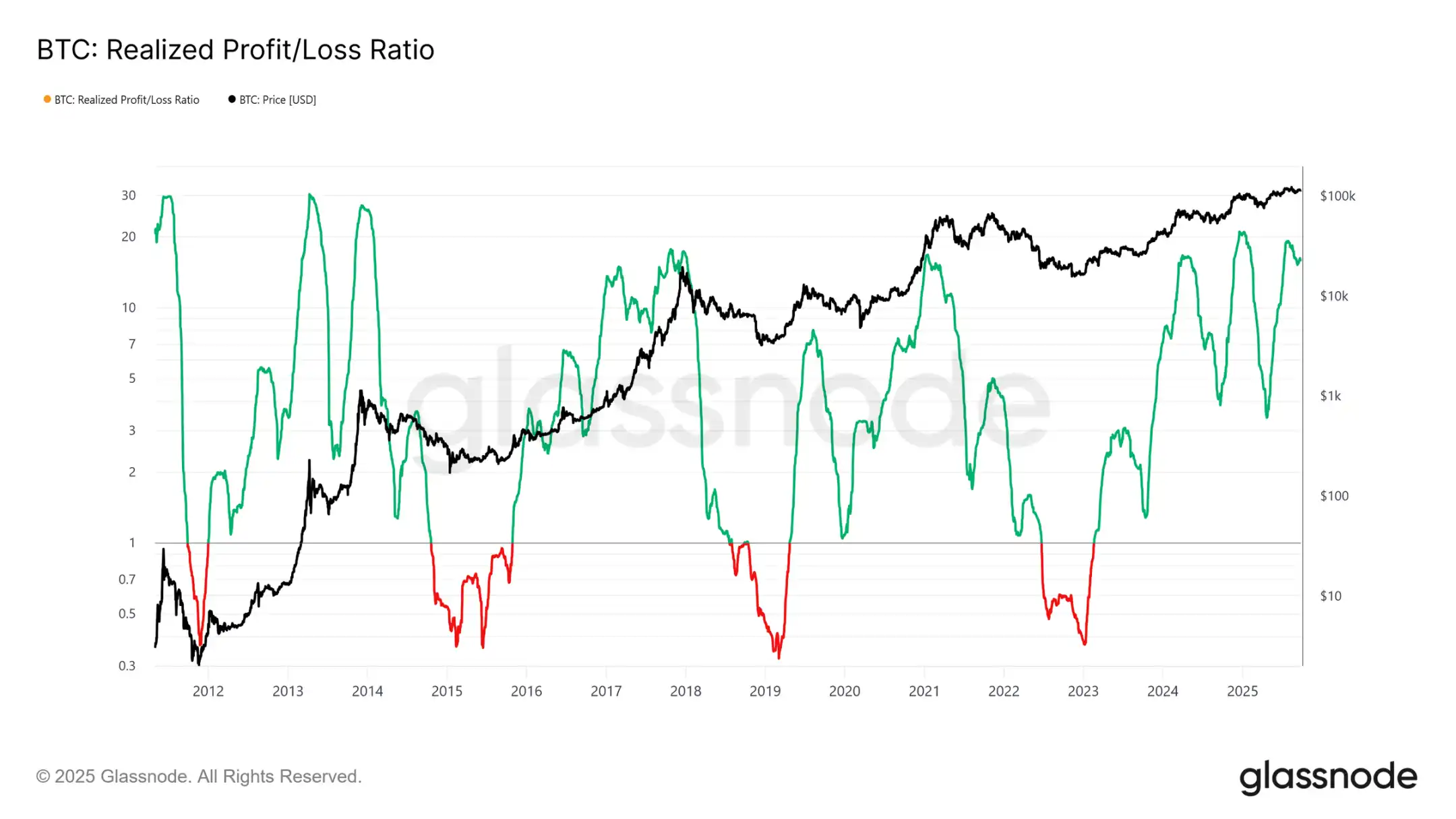
长期持有者

长期持有者利润主导地位

关注长期持有者时,规模更加清晰。该指标跟踪从新的历史高点(ATH)到周期峰值期间长期持有者的累计利润。历史上,他们的大量抛售标志着顶部。在本周期中,长期持有者已实现 340 万 BTC 的利润,已经超过之前的周期,突显了该群体的成熟度以及资本轮换的规模。
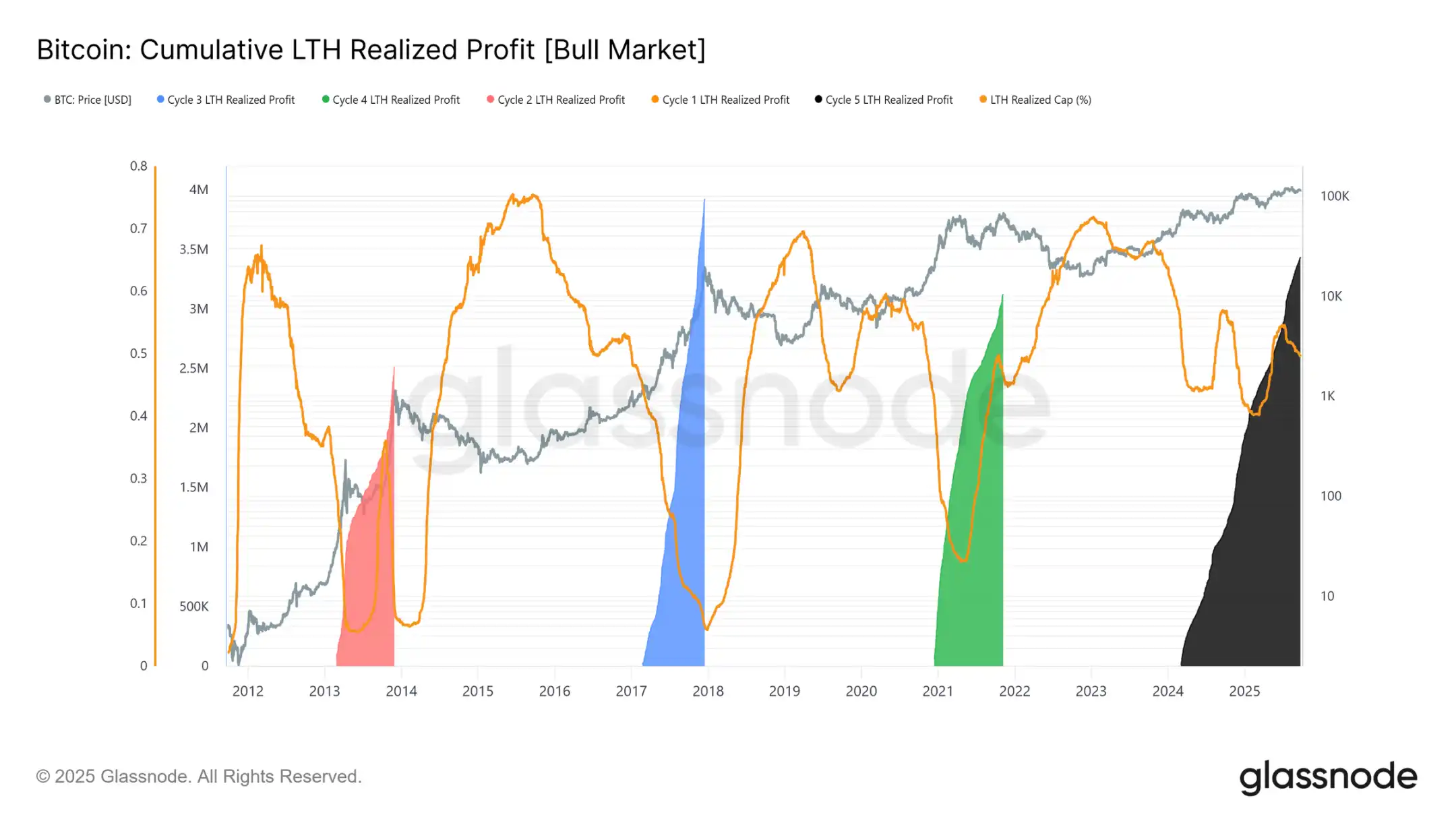

长期持有者


链下分析

ETF 需求 vs 长期持有者

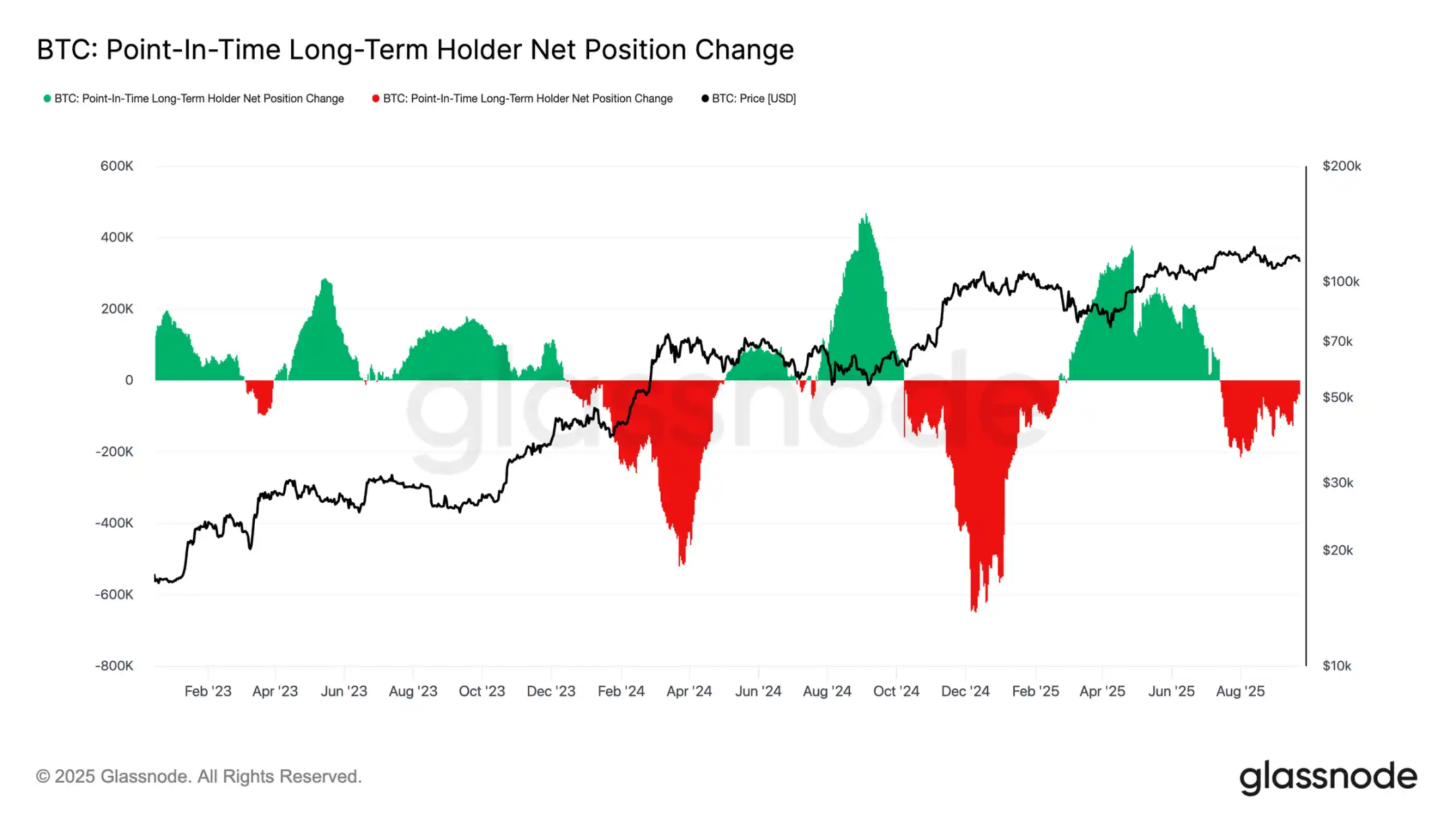
本周期也受到长期持有者抛售供应与通过美国现货 ETF 和 DATs 的机构需求之间拉锯战。随着 ETF 成为新的结构性力量,价格现在反映了这种推拉效应:长期持有者的获利了结限制了上行空间,而 ETF 流入则吸收了抛售并维持了周期的进展。
长期持有者


脆弱平衡

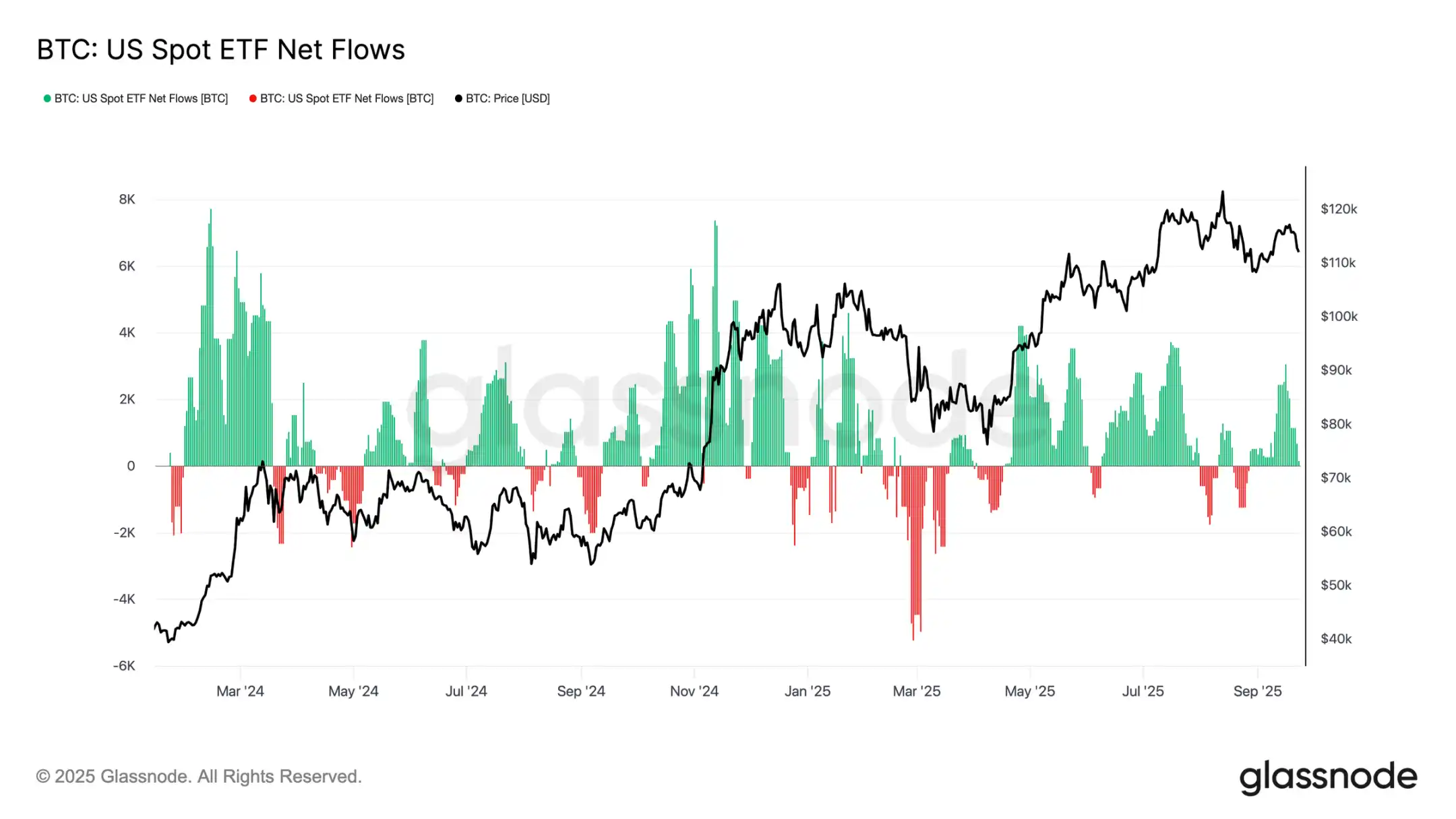
ETF 流入迄今为止平衡了长期持有者的卖出,但误差边际很小。在 FOMC 会议前后,长期持有者抛售飙升至 12.2 万 BTC/ 月,而 ETF 净流入从 2600 BTC/ 天暴跌至接近零。抛售压力增加和机构需求减弱的结合创造了脆弱的背景,为疲软埋下了伏笔。
长期持有者


现货市场压力

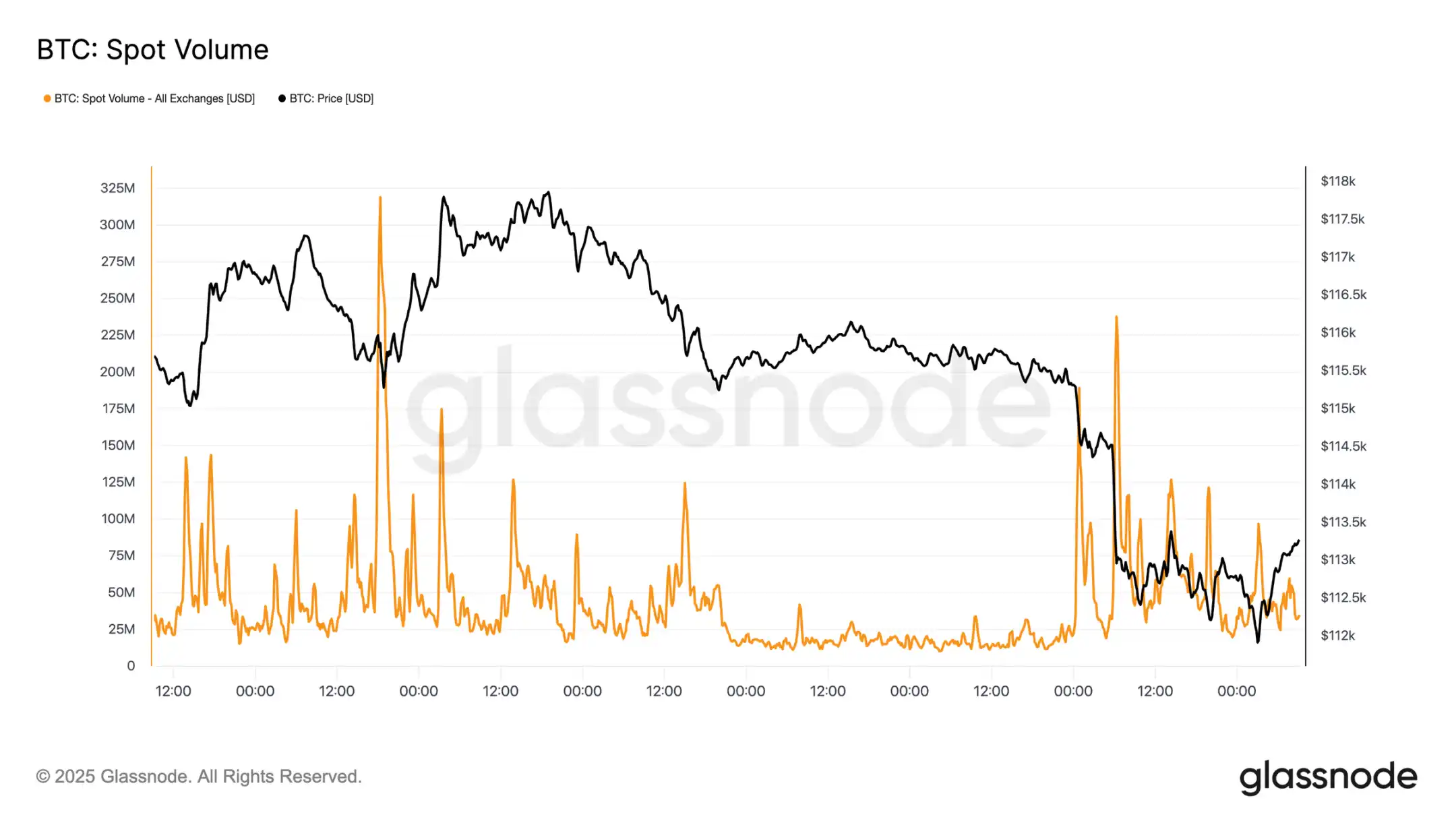
这种脆弱性在现货市场中可见一斑。在 FOMC 会议后的抛售中,成交量激增,因为强制清算和稀薄的流动性放大了下跌走势。虽然痛苦,但在短期持有者成本基础 11.18 万美元附近形成了暂时的底部。
长期持有者

期货去杠杆

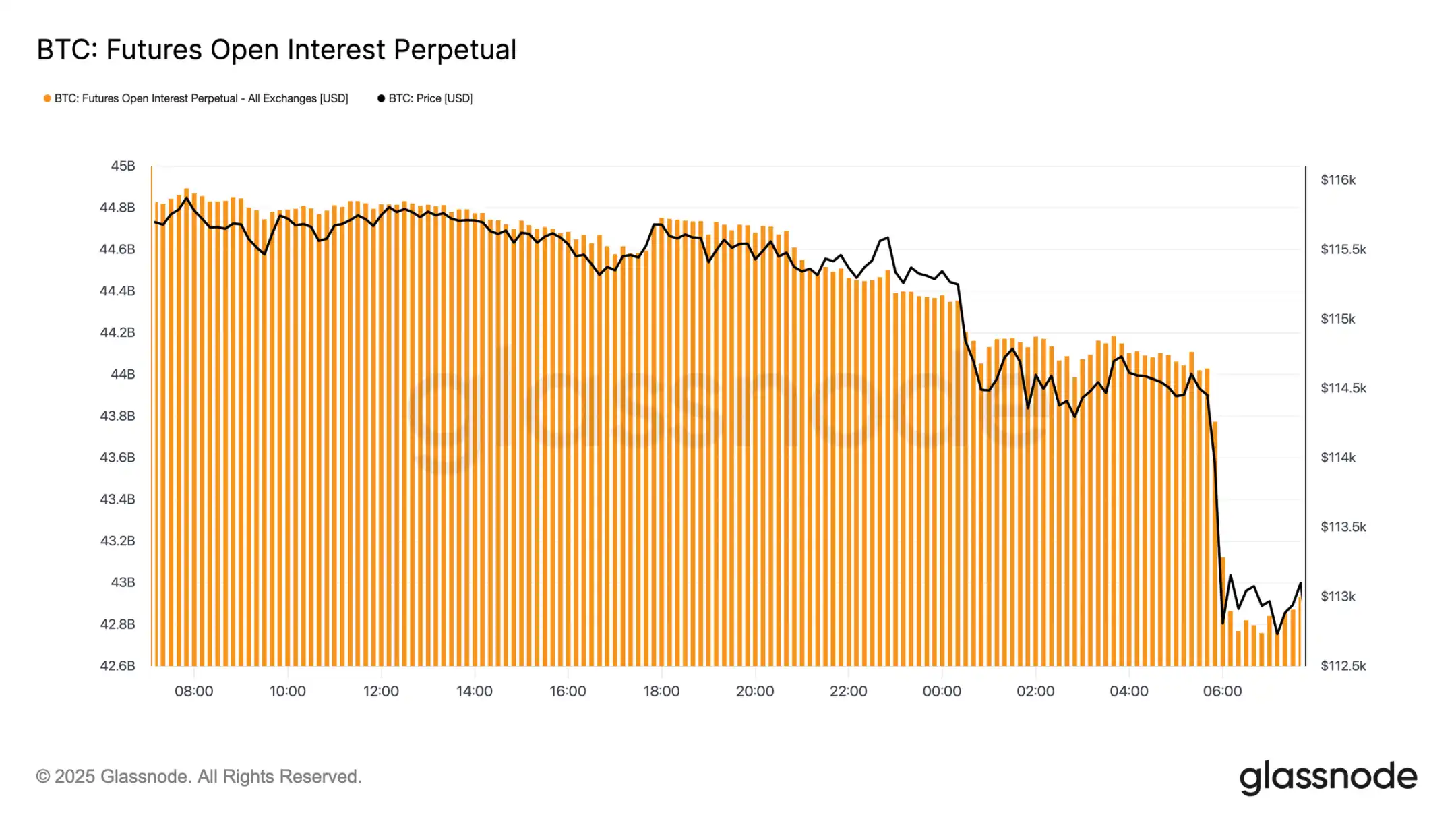
与此同时,随着比特币跌破 11.3 万美元,期货未平仓合约从 448 亿美元急剧下降至 427 亿美元。这次去杠杆事件清除了杠杆多头,放大了下行压力。虽然当下造成不稳定,但这次重置有助于清除过剩杠杆并恢复衍生品市场的平衡。

长期持有者

清算集群

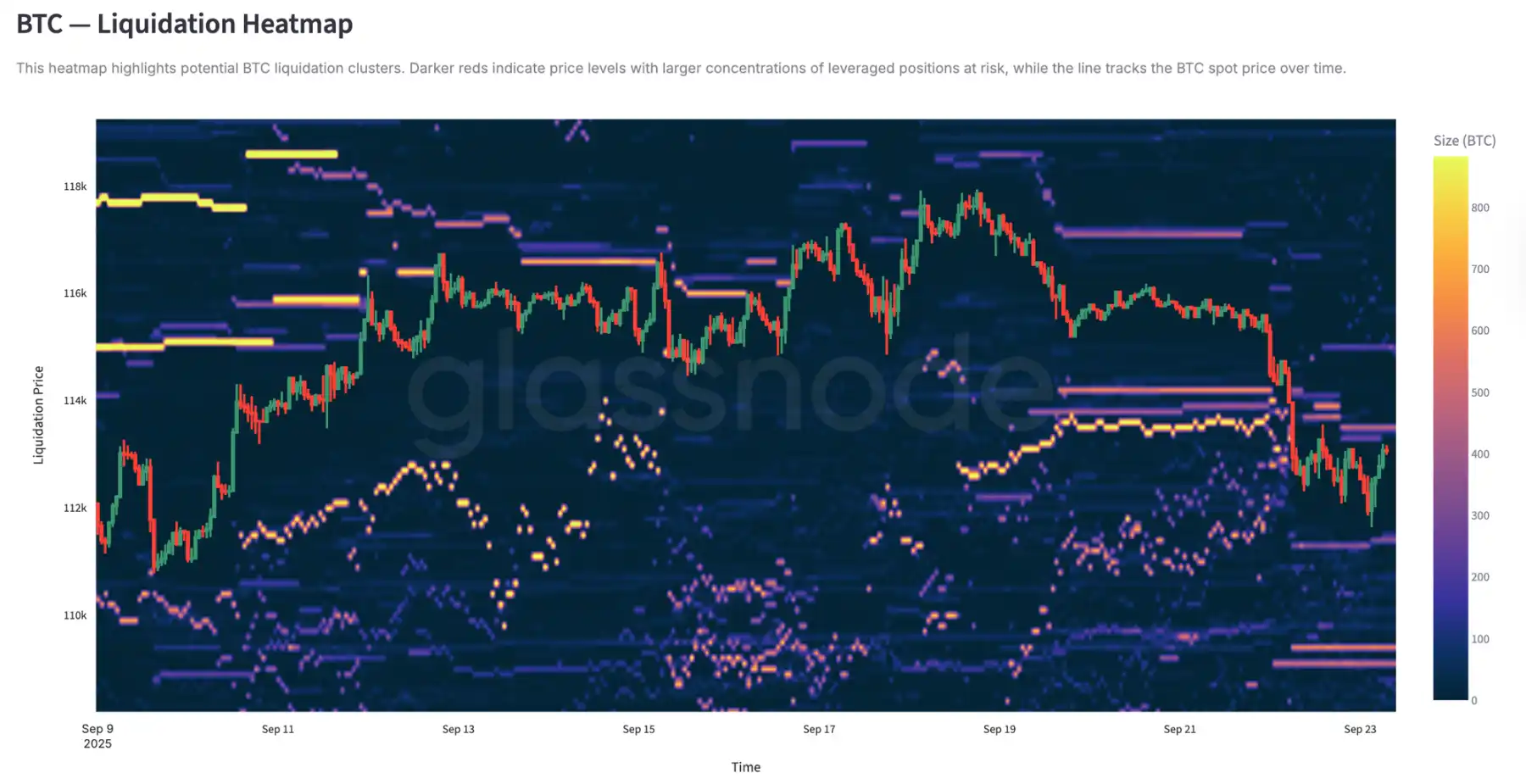
永续合约清算热力图提供了更多细节。当价格跌破 11.4 万至 11.2 万美元区间时,密集的杠杆多头集群被清除,导致大量清算并加速下行。风险口袋仍存在于 11.7 万美元上方,使得市场双向都容易受到流动性驱动波动的影响。在没有更强需求的情况下,这些水平附近的脆弱性增加了进一步剧烈波动的风险。
长期持有者

期权市场

波动率

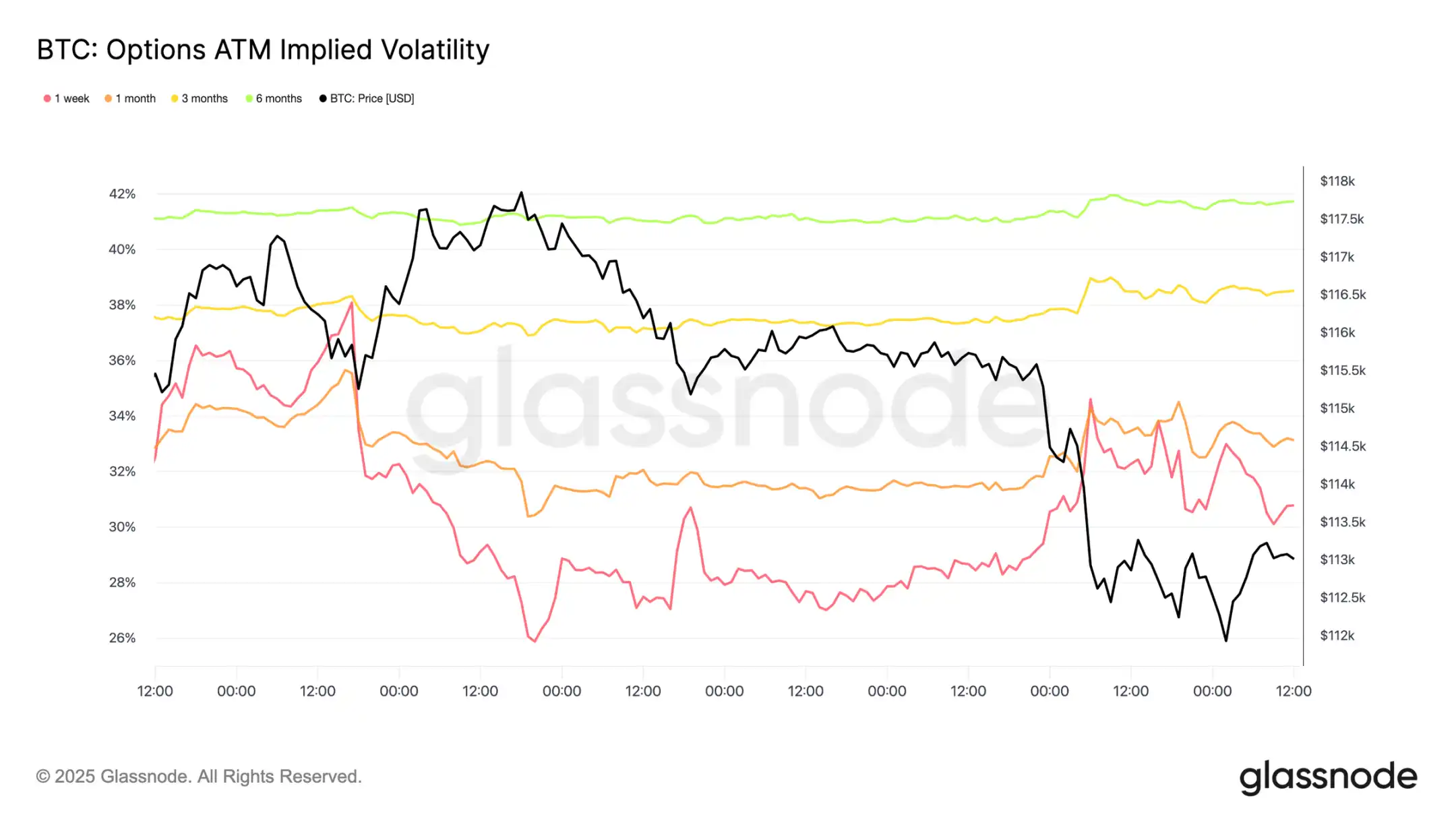
转向期权市场,隐含波动率为交易员如何度过动荡的一周提供了清晰的视角。两个主要催化剂塑造了市场格局:今年首次降息和自 2021 年以来最大的清算事件。随着对冲需求的建立,波动率在 FOMC 会议前攀升,但在降息确认后迅速消退,表明此举在很大程度上已被定价。然而,周日晚上期货的剧烈清算重新点燃了对保护的需求,一周期隐含波动率引领反弹,且强势延伸至各个期限。
长期持有者


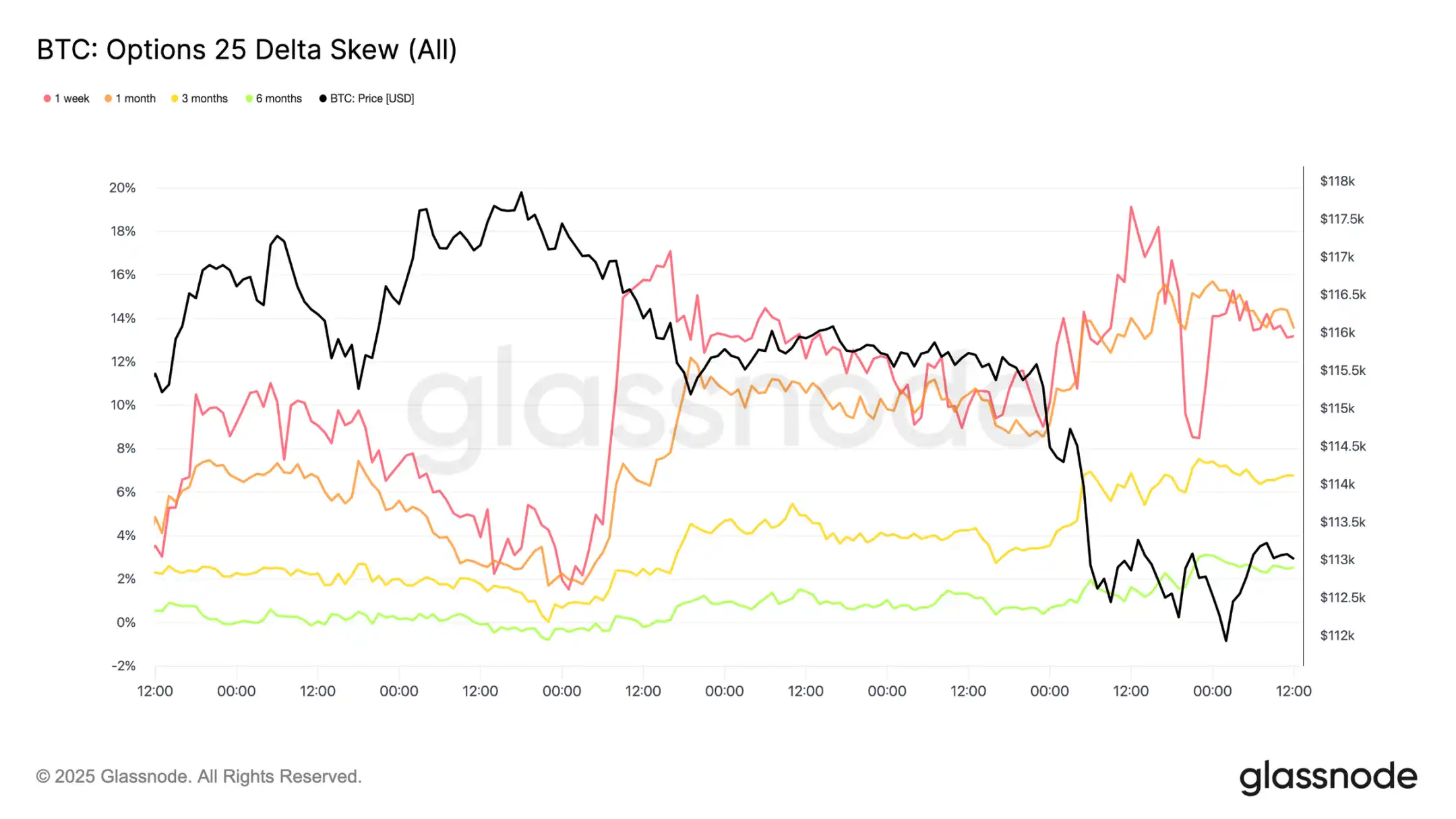
市场重新定价降息

FOMC 会议后,市场对看跌期权存在激进需求,要么作为防范急剧下跌的保护,要么作为利用波动率盈利的方式。仅仅两天后,市场就以自 2021 年以来最大的清算事件兑现了这一信号。
长期持有者

看跌 / 看涨期权资金流

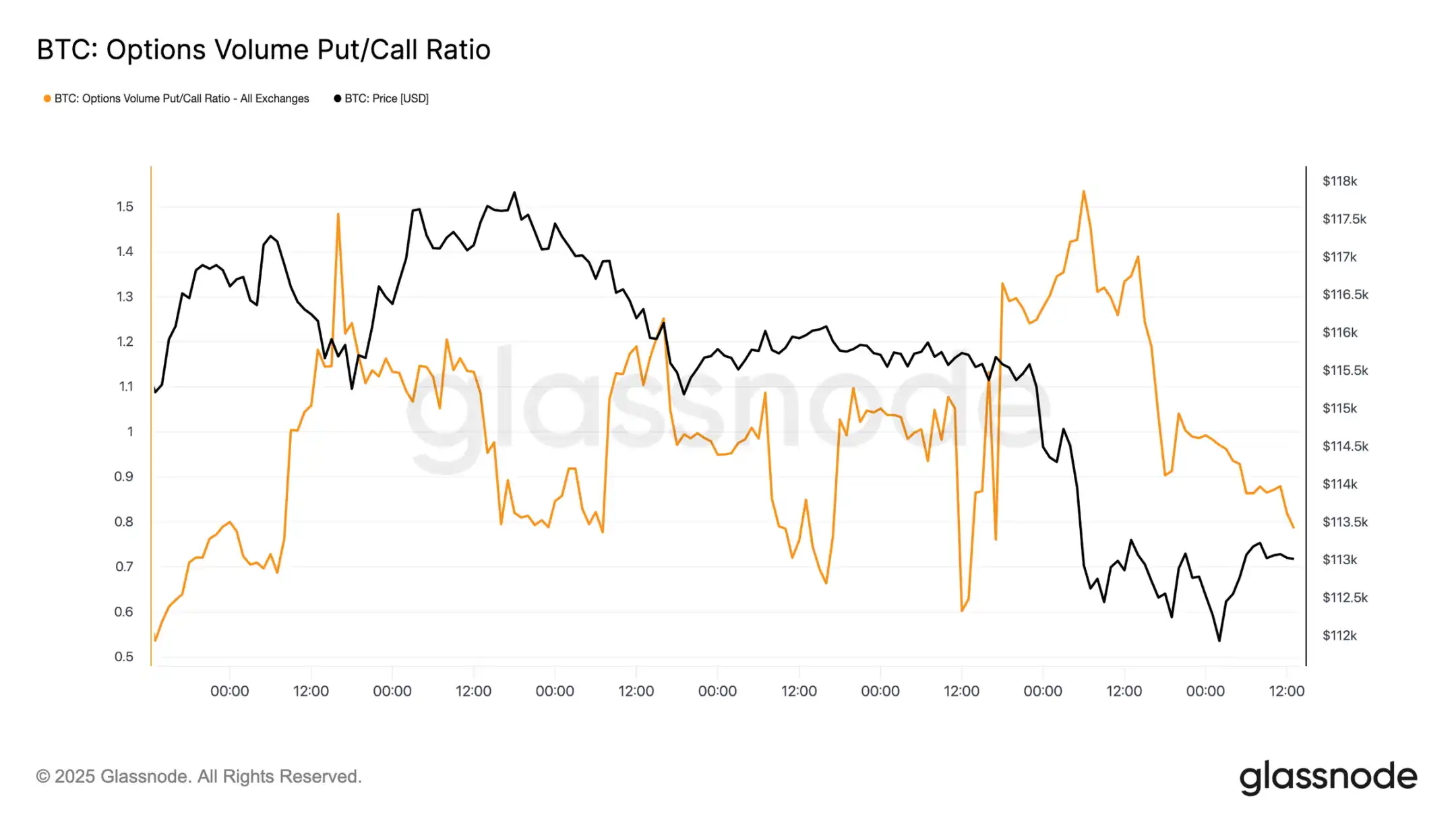
抛售之后,看跌 / 看涨期权成交量比率呈下降趋势,因为交易员锁定了价内看跌期权的利润,而其他交易员则轮动到更便宜的看涨期权。短期和中期期权仍然严重倾向于看跌期权,使得下行保护相对于上行而言成本高昂。对于对年底持建设性观点的参与者来说,这种不平衡创造了机会——要么以相对较低的成本积累看涨期权,要么通过卖出价格高昂的下行风险暴露来为其融资。

长期持有者


期权未平仓

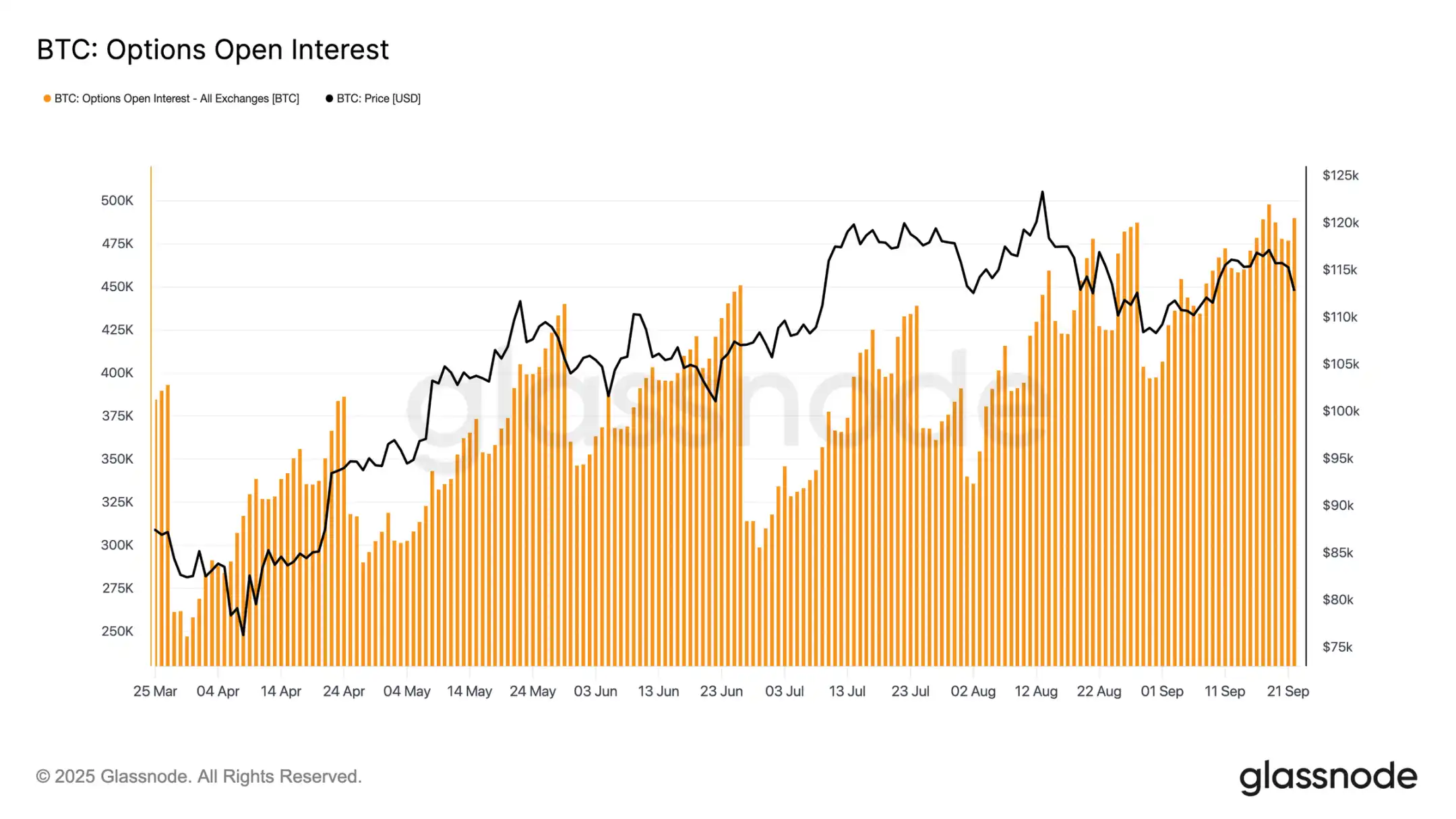
期权总未平仓合约徘徊在历史高点附近,并将在周五早间到期时急剧减少,然后在 12 月之前重新建立市场。目前,市场处于峰值区域,即使微小的价格波动也会迫使做市商进行激进的对冲。做市商在下行方向做空,在上行方向做多,这种结构会放大抛售同时限制反弹。这种动态将近期波动风险偏向下行,加剧了脆弱性,直到到期清除且头寸重置。
长期持有者

结论

比特币在 FOMC 会议后的回落反映了一种典型的「买谣言,卖事实」模式,但更广泛的背景指向日益增长的疲惫感。当前 12% 的跌幅与过去周期相比较为温和,但这是在三次主要的资本流入浪潮之后出现的,这些浪潮将已实现市值提升了 6780 亿美元,几乎是前一周期的两倍。长期持有者已经实现了 340 万 BTC 的利润,突显了本轮上涨的大量抛售和成熟度。

与此同时,此前吸收供应的 ETF 流入已经放缓,造成了脆弱的平衡。现货成交量因强制卖出而激增,期货出现急剧去杠杆,期权市场对下行风险进行定价。这些信号共同表明市场动力正在耗尽,流动性驱动的波动占据主导。

除非机构和持有者的需求再次一致,否则深度降温的风险仍然很高。

Trending Cryptos

Related Reads

30 Years After Being Crushed by AI, People Have Fallen Back in Love with Chess

On May 11, 1997, IBM's "Deep Blue" defeated chess champion Garry Kasparov, marking the first time a machine triumphed in a top-level intellectual game. The narrative of human defeat by AI seemed cemented when AlphaGo beat Lee Sedol in Go in 2016, a game once considered AI's final frontier. Yet, nearly 30 years after AI's dominance began, chess is experiencing unprecedented popularity. Chess.com boasts over 250 million registered users and 10 million daily active players. Its CEO, Erik Allebest, attributes this resurgence to several waves: the pandemic, the Netflix series *The Queen's Gambit*, and viral AI chess bots like "Mittens" on social media. Crucially, each surge left a permanently higher user base. The key insight is that AI liberated the game. When machines unequivocally became the best, the pressure to "win" as the ultimate human was removed. Chess returned to its core: the intrinsic joy of play—the thrill of a tactical combo, the tension of a time scramble, the curiosity of post-game analysis. AI, now serving as an always-available coach and anti-cheat tool, became infrastructure that enhanced rather than killed the experience. In contrast, Go, deeply rooted in East Asian elite culture and often pursued for mastery and status, suffered a "collapse of meaning" at the professional level after AlphaGo. Players began mimicking AI moves, erasing distinctive styles and narrative. While some Go players gained fame as online personalities, it didn't translate to widespread engagement with the game itself. The divergence highlights a fundamental question in the age of AI: is the motivation for an activity about *winning* or *playing*? Activities where the process itself is the reward, like chess, can thrive when the pressure of being the best is gone. AI may rightly take over tasks done purely for outcome, but it cannot replace the human experience of simply enjoying the game.

marsbit14m ago

30 Years After Being Crushed by AI, People Have Fallen Back in Love with Chess

marsbit14m ago

Exiting Top Ten Shareholders of Kweichow Moutai, 'Long-term Capital' Portfolio Adjustments Revealed: National Social Security Fund Enters 12 New Stocks, Invests in Hard Tech Mthreads

With the ongoing release of semi-annual reports, the second-quarter investment moves of long-term institutional investors like the National Social Security Fund (NSSF) and insurance capital are becoming clear. Central Huijin Asset Management and China Securities Finance Corp., often referred to as the "national team," are no longer among the top ten shareholders of Kweichow Moutai. Data shows that as of August 14th, the NSSF held positions in 33 A-share companies, with a total portfolio value exceeding 11 billion yuan. It added 12 new stocks in Q2, spanning sectors like chemicals, food & beverage, and semiconductors. The NSSF maintains its stable investment style, favoring companies with solid performance and attractive valuations. Apart from exiting Moutai, Huijin and China Securities Finance also left the top ten shareholder lists of companies like Ping An Bank and Dahua Technology. Insurance capital heavily invested in 41 companies in Q2, with a total holding value over 26 billion yuan. They showed a continued preference for cyclical sectors like non-ferrous metals and chemicals, as well as high-dividend-yield stocks. Analysts note that these long-term funds act as market stabilizers and investment bellwethers. Their presence is reshaping the market ecology, steering focus towards fundamental corporate value and away from speculative trading. A notable move was the NSSF's new investment in Moore Threads, a loss-making but leading domestic GPU design company listed on the STAR Market, indicating interest in hard technology sectors. Looking ahead, analysts expect long-term capital to continue a dual-strategy: maintaining a foundation in high-dividend-value stocks while gradually increasing exposure to growth areas aligned with industrial upgrading, such as advanced manufacturing and tech self-sufficiency. The market's recovery is seen as gaining a firmer footing after recent adjustments.

marsbit24m ago

Exiting Top Ten Shareholders of Kweichow Moutai, 'Long-term Capital' Portfolio Adjustments Revealed: National Social Security Fund Enters 12 New Stocks, Invests in Hard Tech Mthreads

marsbit24m ago

Data of 54,000 wallet users leaked, Clarity odds just 10%: Hodler’s Digest, Aug. 16

Galaxy Digital has slashed the odds of the CLARITY Act passing in 2026 from 75% to just 10%, citing limited Senate session days. If it fails, the SEC and CFTC plan to issue their own crypto rules, though an SEC meeting was abruptly cancelled. High-profile meetings at the White House are planned to discuss the bill. Amid growing hack fears, crypto companies are urging AI labs to grant developers early access to advanced AI models for cybersecurity, following a $116M Coldcard wallet theft. Data breaches at Trezor and SafePal have exposed over 54,000 users' personal information. The CFTC is clashing with states over regulating prediction markets like Kalshi, ordering it to ignore a New York restraining order to maintain a national market, while a Washington state judge ruled against it. The Ethereum Foundation is revising its post-quantum plan, moving away from the Poseidon hash function, and scoping its next major upgrade, Hegotá, for next year. Tether received its first full clean audit opinion from KPMG, showing reserves exceeding liabilities by $6.814 billion. Marketwise, major cryptos saw weekly declines. Predictions include a possible Bitcoin bottom in October, while analysts dispute the feasibility of BTC reaching $1M by 2030. Glassnode notes Bitcoin is in its longest capitulation phase since FTX's collapse. Three men were charged for an alleged Bitcoin kidnapping plot in Missouri.

cointelegraph1h ago

Data of 54,000 wallet users leaked, Clarity odds just 10%: Hodler’s Digest, Aug. 16

cointelegraph1h ago

50 Billion, Sichuan Brothers Have Struck It Rich

A new king of Sichuan stocks has emerged. This week, Chengdu Chaochun Applied Materials Co., Ltd. (Chaochun Yingcai) debuted on the ChiNext board, with its stock price surging over 700% intraday and its market value exceeding 50 billion yuan. Opening at 450 yuan per share, it surpassed New Easun to become the highest-priced stock in Sichuan's A-share market. This marks the success of a 21-year entrepreneurial journey by brothers Chai Jie and Chai Lin. Younger brother Chai Jie founded the company in 2005 in Chengdu, initially focusing on特种陶瓷. Elder brother Chai Lin, an expert in精密光学 and特种涂层, joined in 2008 to lead R&D. Facing a market monopolized by giants like KoMiCo and TOCALO, the company persisted. A breakthrough came in 2011 when its products entered the supply chain of AMEC (中微公司), a major domestic etching equipment maker. By 2020, its components reached the technical threshold for supporting 5nm process etching equipment. Revenue grew from 169 million yuan in 2023 to 496 million yuan in 2025, with semiconductor coating parts accounting for over 95% of sales. The IPO created significant wealth. The Chai brothers, holding a combined 46.88% stake, saw their paper wealth reach approximately 24 billion yuan. It also became the most profitable ChiNext IPO this year for retail investors. Employees benefited through two layers of持股平台, covering over 200 core technical and business staff. Early investors like SDIC Venture Capital, AMEC, and BYD (which invested 126.9 million yuan and now has a paper gain exceeding 1.8 billion yuan) also reaped substantial returns. The company represents a wave of tech leaders choosing to build their businesses in their hometown of Sichuan. Examples include New Easun in optoelectronics and Baili Tianheng in biopharmaceuticals. This trend shows that inland cities like Chengdu, with talent and industrial patience, can incubate specialized leaders that break foreign monopolies, offering an alternative model to the coastal hubs.

marsbit1h ago

50 Billion, Sichuan Brothers Have Struck It Rich

marsbit1h ago

Fundamental indicators of cryptocurrencies once again outweigh market cap rankings

Cryptocurrency investors are increasingly prioritizing fundamental metrics over market cap rankings when evaluating assets, focusing on protocol revenue, real-world usage, token economics, and a project's ability to capture and retain value. Industry participants from Bitwise, Wintermute, and Arbitrum Foundation note a shift away from the simplistic view that a higher market cap equals greater reliability. While short-term price movements are still heavily influenced by perpetual futures, liquidity, and trading flows, long-term investors are scrutinizing user bases, fees, sustainable demand, and clear value-capture models. Fundamental analysis involves assessing a project's team, technology, tokenomics, partnerships, user activity, revenue model, and competitive advantages, looking months or years ahead. Technical analysis remains relevant for short-term trading. Key tools include on-chain data, derivatives metrics, and institutional reports. Market cap is no longer the primary benchmark. Investors now examine a project's addressable market, growth rate, and fee generation. Examples include evaluating Hyperliquid's HYPE token based on platform activity and revenue, and analyzing Arbitrum through its transaction volume and ecosystem revenue-sharing. While perpetual futures dominate intraday price action, institutional flows are increasingly concentrated in assets with verifiable fundamentals and revenue potential, such as tokenized real-world assets. Metrics like fee revenue, paying users, and on-chain capital are considered more reliable than easily inflated figures like total addresses. Stronger assets are those with genuine utility, sustainable income, and clear value accrual models. Bitcoin remains a distinct macro asset. Ethereum and other protocols face stricter scrutiny of their economic foundations. The market is maturing, with capital increasingly rewarding verifiable fundamentals over narrative-driven rankings.

cryptonews.ru2h ago

Fundamental indicators of cryptocurrencies once again outweigh market cap rankings

cryptonews.ru2h ago

Trading

Spot

Hot Articles

What is $BITCOIN

DIGITAL GOLD ($BITCOIN): A Comprehensive Analysis Introduction to DIGITAL GOLD ($BITCOIN) DIGITAL GOLD ($BITCOIN) is a blockchain-based project operating on the Solana network, which aims to combine the characteristics of traditional precious metals with the innovation of decentralized technologies. While it shares a name with Bitcoin, often referred to as “digital gold” due to its perception as a store of value, DIGITAL GOLD is a separate token designed to create a unique ecosystem within the Web3 landscape. Its goal is to position itself as a viable alternative digital asset, although specifics regarding its applications and functionalities are still developing. What is DIGITAL GOLD ($BITCOIN)? DIGITAL GOLD ($BITCOIN) is a cryptocurrency token explicitly designed for use on the Solana blockchain. In contrast to Bitcoin, which provides a widely recognized value storage role, this token appears to focus on broader applications and characteristics. Notable aspects include: Blockchain Infrastructure: The token is built on the Solana blockchain, known for its capacity to handle high-speed and low-cost transactions. Supply Dynamics: DIGITAL GOLD has a maximum supply capped at 100 quadrillion tokens (100P $BITCOIN), although details regarding its circulating supply are currently undisclosed. Utility: While precise functionalities are not explicitly outlined, there are indications that the token could be utilized for various applications, potentially involving decentralized applications (dApps) or asset tokenization strategies. Who is the Creator of DIGITAL GOLD ($BITCOIN)? At present, the identity of the creators and development team behind DIGITAL GOLD ($BITCOIN) remains unknown. This situation is typical among many innovative projects within the blockchain space, particularly those aligning with decentralized finance and meme coin phenomena. While such anonymity may foster a community-driven culture, it intensifies concerns about governance and accountability. Who are the Investors of DIGITAL GOLD ($BITCOIN)? The available information indicates that DIGITAL GOLD ($BITCOIN) does not have any known institutional backers or prominent venture capital investments. The project seems to operate on a peer-to-peer model focused on community support and adoption rather than traditional funding routes. Its activity and liquidity are primarily situated on decentralized exchanges (DEXs), such as PumpSwap, rather than established centralized trading platforms, further highlighting its grassroots approach. How DIGITAL GOLD ($BITCOIN) Works The operational mechanics of DIGITAL GOLD ($BITCOIN) can be elaborated on based on its blockchain design and network attributes: Consensus Mechanism: By leveraging Solana’s unique proof-of-history (PoH) combined with a proof-of-stake (PoS) model, the project ensures efficient transaction validation contributing to the network's high performance. Tokenomics: While specific deflationary mechanisms have not been extensively detailed, the vast maximum token supply implies that it may cater to microtransactions or niche use cases that are still to be defined. Interoperability: There exists the potential for integration with Solana’s broader ecosystem, including various decentralized finance (DeFi) platforms. However, the details regarding specific integrations remain unspecified. Timeline of Key Events Here is a timeline that highlights significant milestones concerning DIGITAL GOLD ($BITCOIN): 2023: The initial deployment of the token occurs on the Solana blockchain, marked by its contract address. 2024: DIGITAL GOLD gains visibility as it becomes available for trading on decentralized exchanges like PumpSwap, allowing users to trade it against SOL. 2025: The project witnesses sporadic trading activity and potential interest in community-led engagements, although no noteworthy partnerships or technical advancements have been documented as of yet. Critical Analysis Strengths Scalability: The underlying Solana infrastructure supports high transaction volumes, which could enhance the utility of $BITCOIN in various transaction scenarios. Accessibility: The potential low trading price per token could attract retail investors, facilitating wider participation due to fractional ownership opportunities. Risks Lack of Transparency: The absence of publicly known backers, developers, or an audit process may yield skepticism regarding the project's sustainability and trustworthiness. Market Volatility: The trading activity is heavily reliant on speculative behavior, which can result in significant price volatility and uncertainty for investors. Conclusion DIGITAL GOLD ($BITCOIN) emerges as an intriguing yet ambiguous project within the rapidly evolving Solana ecosystem. While it attempts to leverage the “digital gold” narrative, its departure from Bitcoin's established role as a store of value underscores the need for a clearer differentiation of its intended utility and governance structure. Future acceptance and adoption will likely depend on addressing the current opacity and defining its operational and economic strategies more explicitly. Note: This report encompasses synthesised information available as of October 2023, and developments may have transpired beyond the research period.

1.9k Total ViewsPublished 2025.05.13Updated 2025.05.13

What is $BITCOIN

Discussions

Welcome to the HTX Community. Here, you can stay informed about the latest platform developments and gain access to professional market insights. Users' opinions on the price of BTC (BTC) are presented below.

活动图片