Aster 的“特洛伊木马”:如何借道BNB Chain暗度陈仓,剑指Hyperliquid王座?

marsbitPublished on 2025-09-19Last updated on 2025-09-20

对于专业交易者,它提供隐藏挂单以防MEV攻击;对于散户,它允许一键开1001倍杠杆追逐Meme币浪潮——Aster通过一套代码同时满足了两个截然不同的世界。这种创新的双模式设计和一系列产品开发与定位,让它从去中心化衍生品平台的激烈竞争中脱颖而出,在短时间内飞速崛起,成为不可忽视的头部玩家。

强势杀入Perp DEX赛道前列

Perpetual DEX已然成为DeFi市场中增长最快、最具潜力的赛道。相较于传统的现货DEX,Perp DEX允许用户通过杠杆执行多空操作,其交易体验类似于中心化交易所(CEX),同时也保留了去中心化的主要优势:无许可、抗审查、非托管以及无KYC(了解你的客户)/AML(反洗钱)等。

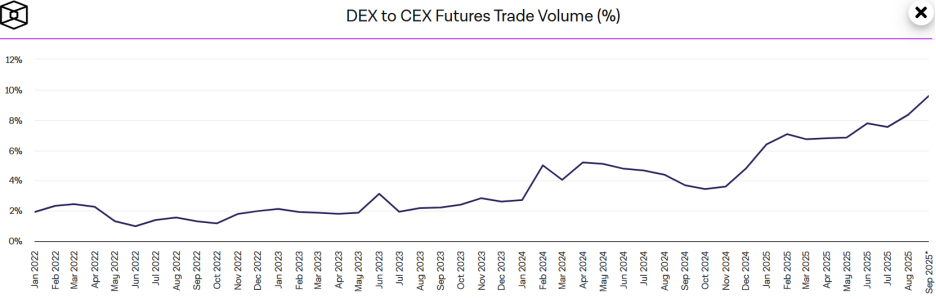
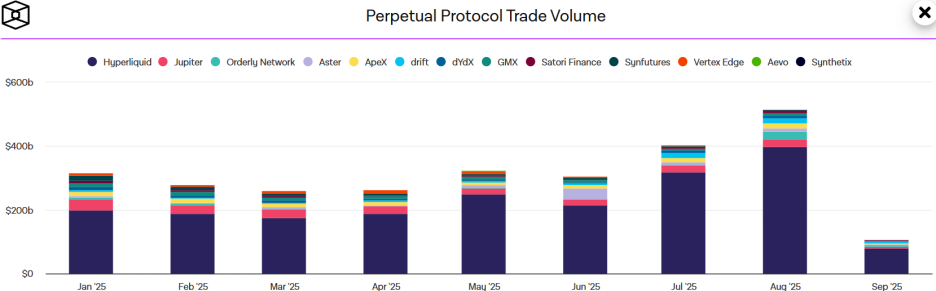
截至2025年9月,Perp DEX的月均交易量已高达3,334亿美元,DEX/CEX期货交易量比率也一路涨至接近10%,其背后是用户对高效、透明且安全的Perp链上交易的强烈需求。
Aster

Aster

不过,该赛道仍然存在一些固有挑战,比如流动性分散、用户体验欠佳以及协议性能受制于底层公链等问题。正是基于此背景,Aster携其独特的解决方案吸引了市场的关注。

Aster 提供Perp与现货交易,致力于为全球加密货币交易者打造一站式链上交易平台,其产品哲学体现在对用户群体的深刻洞察上,通过一套技术架构,同时满足两类用户的需求,在DEX赛道开创了先河。

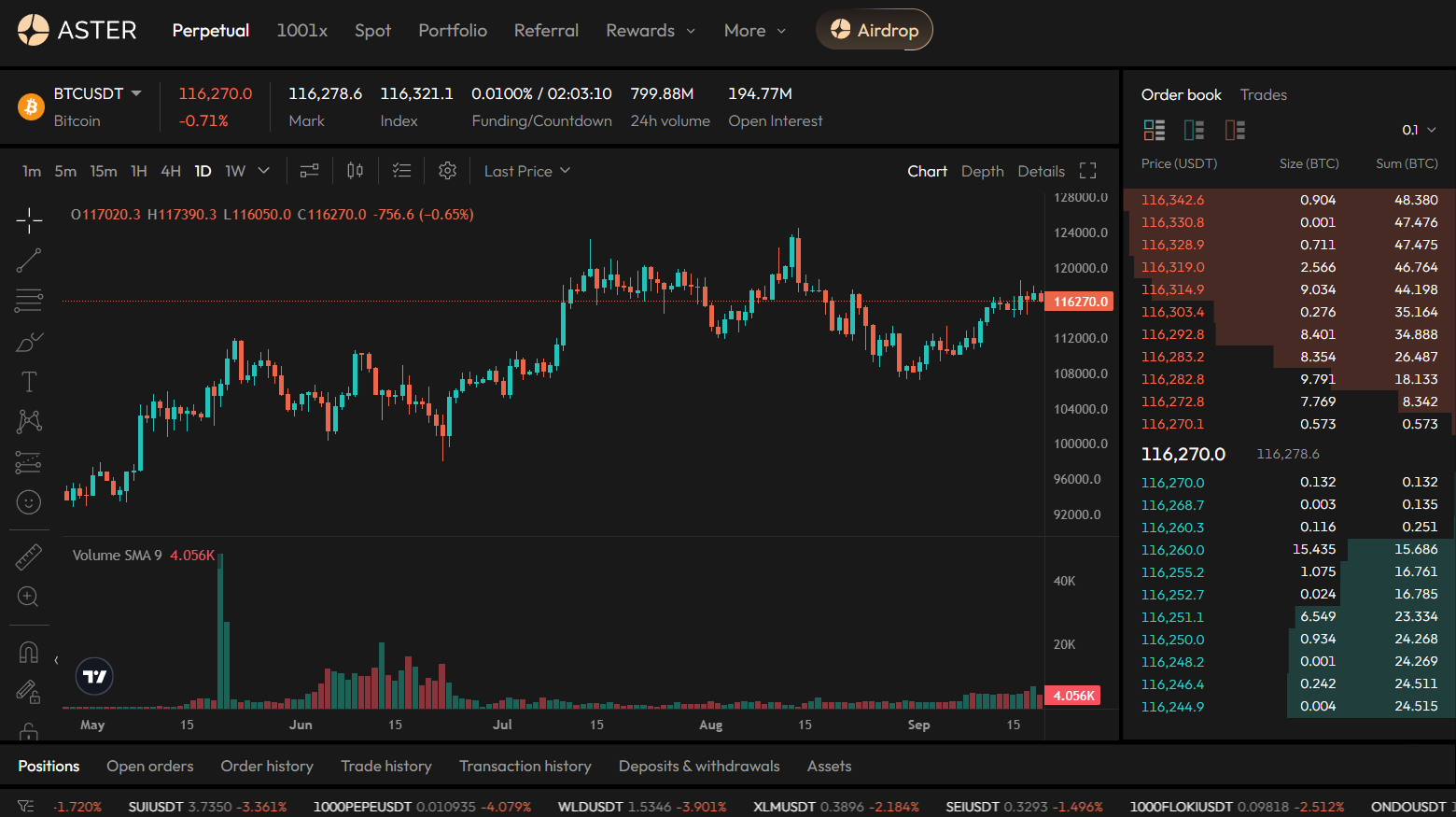
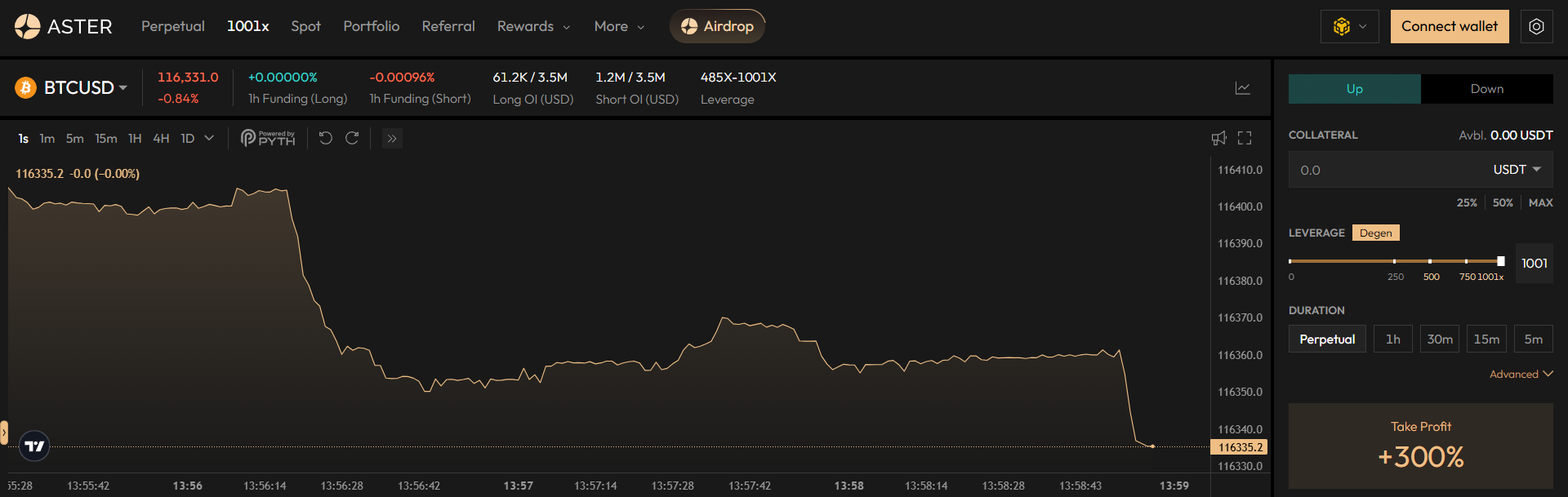
Perpetual是职业玩家的猎场,更聚焦于专业交易者、量化机构与API用户量身定制,其采用了与CEX主流机制相同的中心化限价订单簿(CLOB),带来了深度流动性,将最大限度降低滑点,特别是在交易BTC/USDT等主流币对方面。
Aster

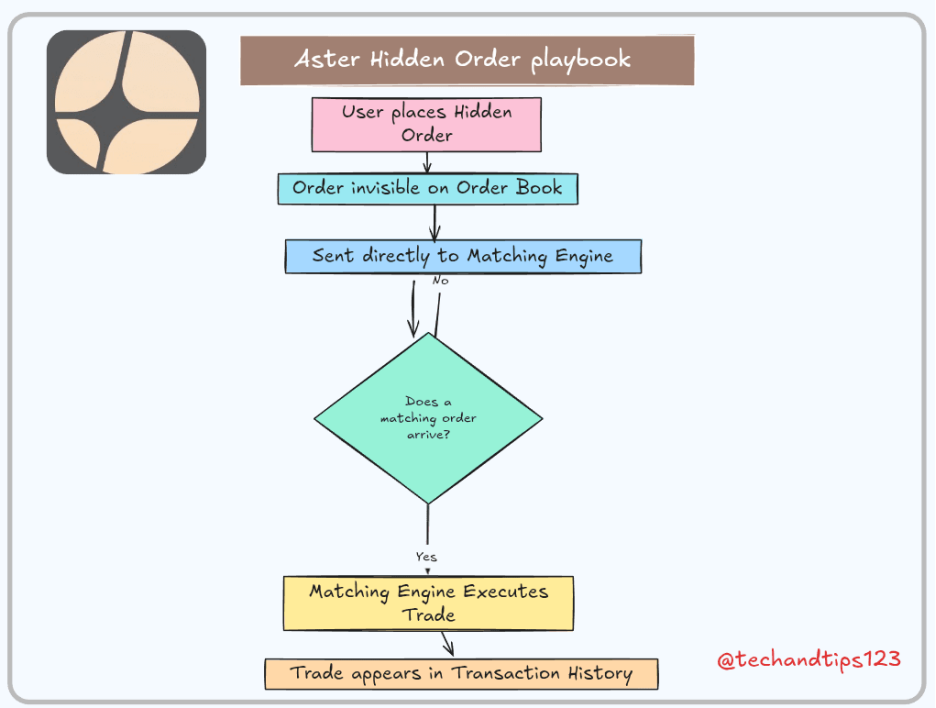
针对高频交易者,Aster也提供了API接入、自动化网格交易自动化等高级工具。值得注意的是,Aster将其“隐私优先”的准则充分融入到了产品构建过程中,开发了“隐藏挂单”(Hidden Orders)功能,辅助交易者在不暴露其策略的情况下执行大额订单,以有效防止链上抢跑(Front-Run)与MEV(最大可提取价值)攻击。该功能在高度透明的链上,为职业玩家们提供了类似CEX的交易保护。
Aster

相比Perpetual,1001x模式则类似于大众游乐场,致力于服务更广泛的散户群体。该模式基于ALP(Aster Liquidity Pool)流动性池,实现了一键交易与无须预存款的流畅体验。另外,其还提供了高达1001倍的“Degen模式”杠杆,适合追求迅速建仓、高风险回报的交易场景,比如在Meme币暴涨时立即参与押注。
Aster

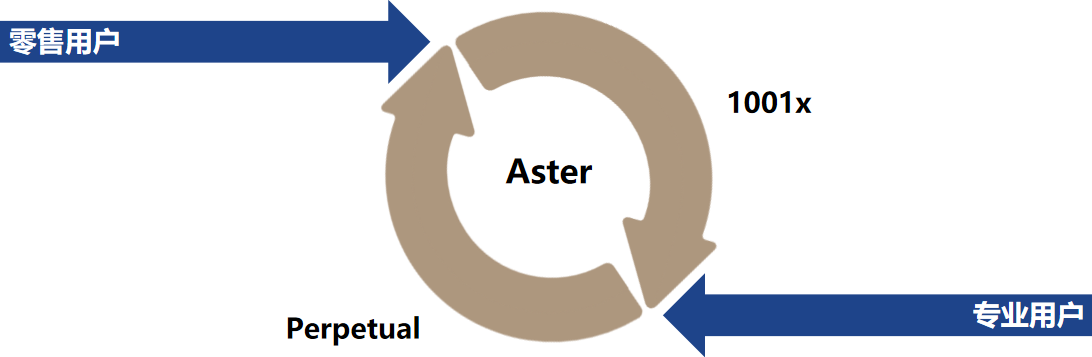
Aster的双模式设计有效解决了Perp DEX在用户增长上的长期困境。传统的Perp DEX通常不得不选择一类用户群体,如dYdX专注于专业用户,而GMX则更聚焦于零售用户。Aster通过融合两类模式,构建起了用户留存闭环:1001x以低门槛吸引新用户,一旦其交易技能成熟,即可无缝切换到Perpetual。该设计不仅大幅优化了用户体验,也反映了项目方对DeFi用户画像日渐多元化的深刻理解。
Aster

Aster可否成为下一个Hyperliquid?

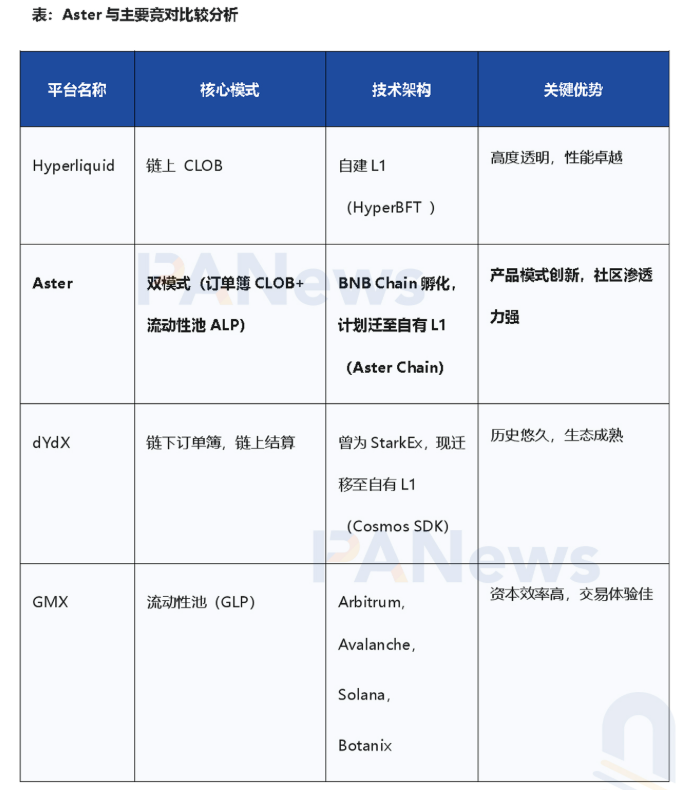
在Perp DEX的战场上,Hyperliquid凭借在性能上的坚持成为龙头,其秘密就在于“主权L1”战略。Hyperliquid选择从头开始构建一条采用HyperBFT共识机制的L1,TPS(Transaction Per Second,每秒交易量)可达20万,能实现亚秒级的交易确认。

Hyperliquid“垂直整合”的模式通过控制从共识到订单簿的技术全栈,实现了高度透明的链上订单簿,每次下单、撤单、成交与清算都可公开验证。

《孙子兵法》有云,善战者,求之于势,Aster的战略就表现出了借势的智慧,其深知构建一条新L1并说服用户迁移难度较高。因此,Aster采取了被称为“特洛伊木马”的高明策略,其选择在拥有庞大用户基数与深厚流动性的BNB Chain生态中起步。

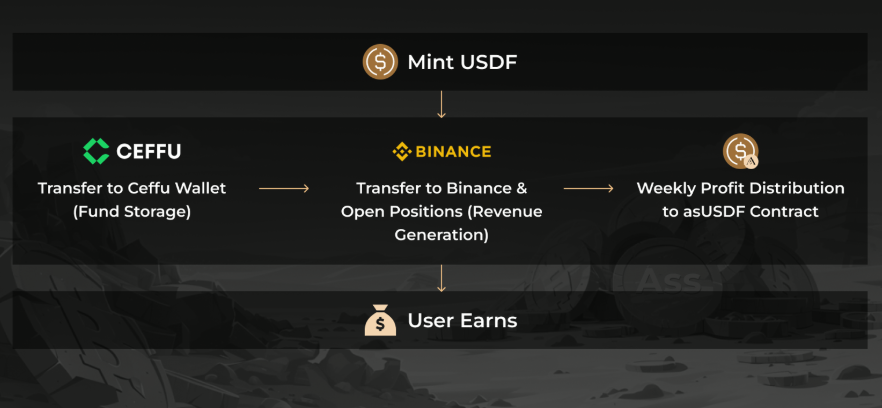
该选择令Aster获得了巨大的GTM(Go-To-Market)优势:首先,其能够立即获得流量扶持,无需经历艰难的用户冷启动;其次,通过与PancakeSwap、SafePal等BNB Chain生态的头部协议合作,Aster迅速建立了品牌信任与分销渠道。例如,其流动质押代币asBNB与原生稳定币USDF就直接利用了BNB Chain的已有基础设施。Aster通过“借势”大幅降低了其初期建设的困难。

7月31日,Aster宣布将推出隐私优先的高性能ZK L1——Aster Chain,再次揭示了其暗藏的战略路线:BNB Chain其实是一个过渡的“孵化平台”,而即将到来的大规模代币空投则是“特洛伊木马”行动的致胜关键,其将为用户从BNB Chain迁至未来的Aster Chain提供充足的经济诱因,进而将“借用”的流量与流动性内化为自身“主权”协议的底层资产。倘若成功,其可被称为DeFi历史上最巧妙的GTM策略之一。

Hyperliquid与Aster代表了两种截然不同的Perp DEX发展路径。Hyperliquid是“技术先行者”,通过极致的性能争夺专业交易者。而Aster则是“策略先行者”,通过社区渗透搭配产品创新,先在成熟的生态系统中建立根据地,再谋求性能上的突破。
Aster

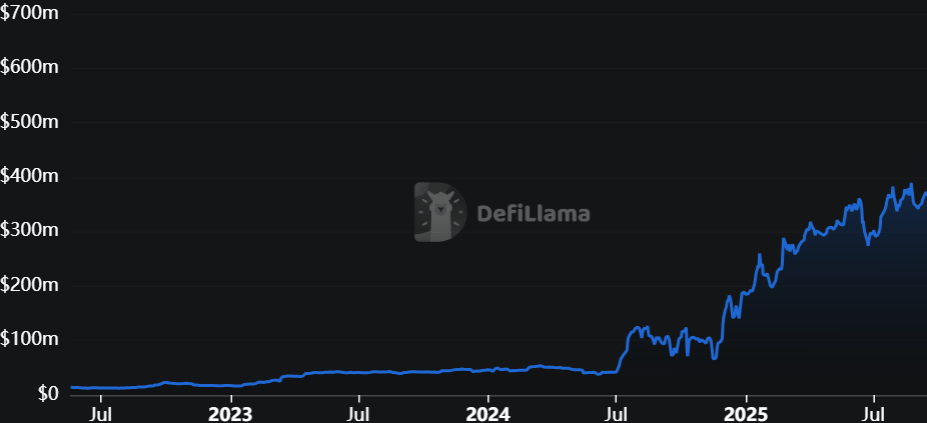
DeFiLlama数据显示,Aster TVL将近6.7亿美元,其中包括原生稳定币USDF的锁仓量、多链资产以及各类流动性池。该现象也反映出了Aster的战略高度:其野望不仅止步于跻身Perp DEX赛道的头部,而是致力于成为“一站式”流动性聚合层。
Aster

产品创新与生态联盟

资本效率低下是大多数DeFi协议普遍面临的痛点。通常,用户在Perp DEX开仓时,其保证金将处于锁定状态,无法产生额外收益。

Aster通过开创性的设计,针对性解决了该问题,其允许用户将流动性质押代币(如asBNB)与原生收益稳定币USDF直接用作保证金,意味着用户能够实现“一鱼多吃”:在赚取质押收益的同时,还能利用生息资产执行杠杆交易。例如,用户持有asBNB赚取生态质押奖励的同时,还能将其作为保证金建仓。Aster对资本效率的极致追求为交易者解锁了另一重收益维度。

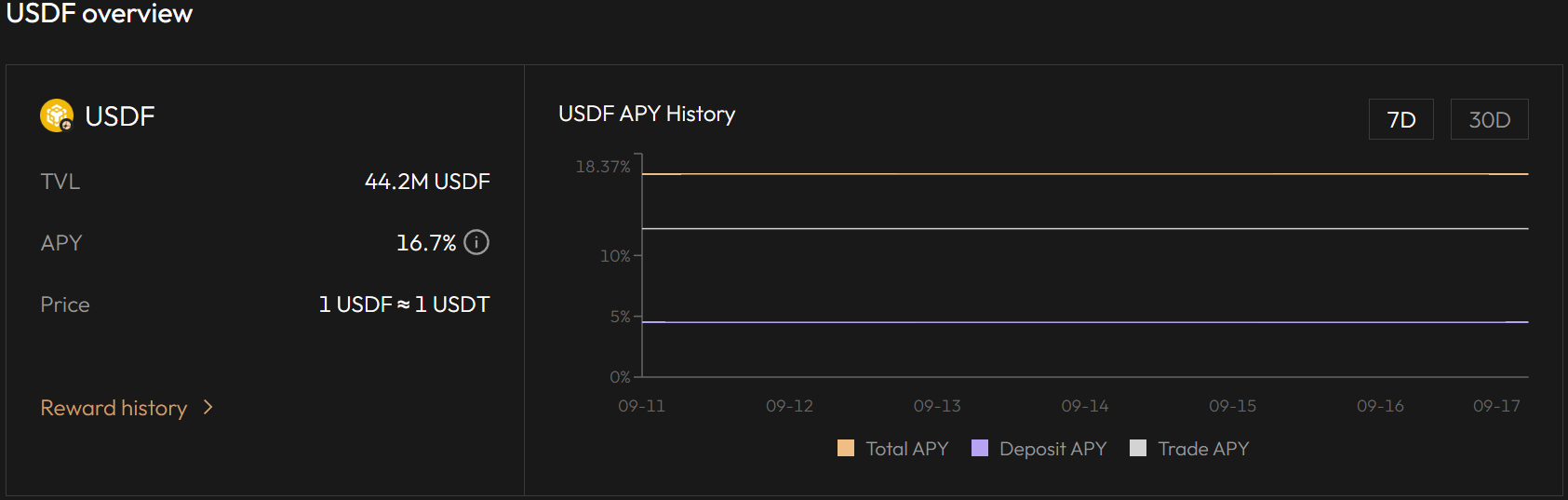
USDF作为Delta中性收益稳定币,进一步锚定了BNB Chain的TVL。Aster特别开发了Trade & Earn功能,鼓励用户使用USDF作为保证金,为其提供了完整的交易理财闭环。根据平台最新数据,USDF的存款APY是4.5%,使用USDF参与交易活动的APY为12.2%,两者合计高达16.7%。在目前的市场条件下,该收益率显然十分诱人。从理论上而言,用户交易得越多,其赚取的收益就越高,财富效应的强化也刺激了Aster TVL的稳健增长。
Aster

该创新再一次呼应了Aster作为DeFi生态“流动性层”的战略定位,其将Perp DEX与LSD-Fi(流动性质押衍生品金融)、收益稳定币两大潜力赛道深度融合,令自身成为一个枢纽,为其它协议提供深厚的流动性与丰富的应用场景。另外,USDF作为一种收益稳定币,通过Delta中性头寸以产生收益,不仅为用户创造了新的收益来源,也赋予了Aster对核心基础设施的自主权,进一步增强了其生态的独立性与稳定性。
Aster

Aster的另一项独有功能是24/7股票Perp ,其允许用户交易传统金融市场的大市值股票(比如英伟达、特斯拉)的链上衍生品。该功能摆脱了传统股票市场在交易时间上的限制,为加密原生用户提供了更多元的交易标的,同时也为传统金融用户开启了一扇链上交易的门户。

Aster将传统金融资产引入链上,为加密市场与传统金融市场的融合开辟了全新的路径。不过,该创新在蕴藏着巨大机遇的同时,也隐含着监管合规风险,这也是Aster等所有类似平台在未来发展中的潜在挑战。

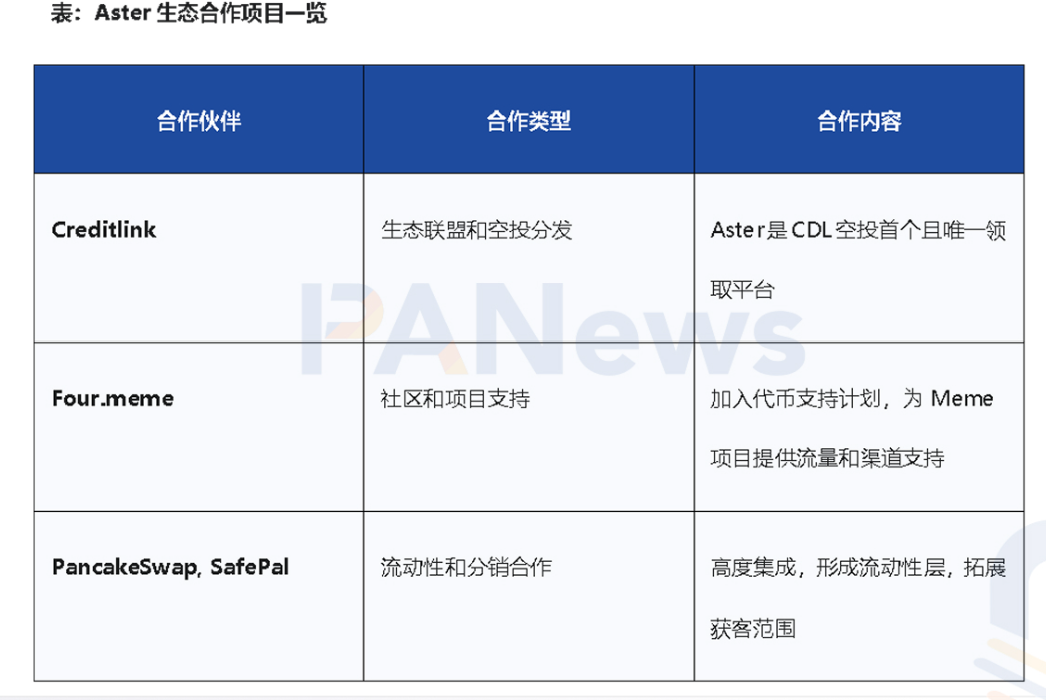
Aster在BNB Chain生态的“孵化期”,通过一系列策略性合作,深度渗透社区,并与其它明星项目组建了强大的联盟。Aster的现货市场一上线就和链上信用协议Creditlink达成合作,是其CDL代币空投的唯一领取平台 ,并借此与新兴的链上信用赛道建立紧密联系。此外,Aster也加入了Four.meme的代币支持计划,为Meme项目提供流量与渠道支持,且三大项目方共同举办了交易竞赛。

Aster利用身处BNB Chain“大本营”的优势,通过捆绑链上信用和Meme文化两大最具潜力和社区粘性的细分赛道,从而打出一套“组合拳”,精准获取流量与用户,其深度的社区渗透与分销策略,亦将为未来的L1迁移积累宝贵的用户基础。
Aster

Related Reads

a16z: How Tokenization is Transforming the Nature of Assets in 7 Charts

"Tokenized Assets: How Tokenization Changes the Nature of Assets" by a16z Crypto The market for tokenized assets, excluding stablecoins, has grown from under $3 billion two years ago to over $340 billion today. US Treasury bonds are the primary growth driver, allowing investors to hold yield-bearing assets digitally and enabling more efficient settlement. Other key sectors include private credit (growing fastest), commodities (dominated by gold), and niche financial assets. However, the market remains concentrated in tokenized US Treasuries and gold. A critical insight is that most tokenized assets currently lack "composability." While the total market is large, only a small fraction is actively used within DeFi protocols. For instance, only about 5% of tokenized bonds and a low percentage of tokenized gold are utilized on-chain. In contrast, assets like reinsurance and private credit tokens show much higher on-chain usage rates (84% and 33%, respectively). This highlights a divide: many tokenized assets are merely digital records on a blockchain without enabling new, programmable financial applications. The Pantera Capital Token Native Index indicates over 70% of tokenized assets have minimal on-chain native functionality. Ethereum remains the dominant blockchain for tokenized assets (over $150B), but the ecosystem is diversifying across chains like BNB Chain, Solana, and Stellar, based on factors like cost and compliance. Major institutions forecast massive future growth, with predictions for the tokenized asset market ranging from $2 trillion to over $30 trillion by the early 2030s. However, compared to the global financial system (e.g., ~$140T bonds, multi-trillion dollar gold market), tokenized assets currently represent a tiny fraction (0.01% or less). The conclusion is that while tokenization has begun by digitizing and streamlining settlement for simpler assets, the next phase involves bringing more complex financial instruments on-chain and deeply integrating them into composable, internet-native financial infrastructure.

Odaily星球日报21m ago

a16z: How Tokenization is Transforming the Nature of Assets in 7 Charts

Odaily星球日报21m ago

The Revived Codex, Carrying OpenAI's Hopes for IPO

This article analyzes the intense recent development of OpenAI's Codex, positioning it as a crucial component for OpenAI's impending IPO. Over the past two months, Codex has seen a rapid series of major updates focused on integrating into real enterprise workflows. Key new features include enhanced context capture (Appshots, file previews, built-in browser), long-running task execution ("Goal Mode"), remote operation (phone control, lock-screen access), and enterprise management tools (plugin sharing, access tokens, automated risk review). These updates aim to make Codex a comprehensive AI workbench that can "see the scene, push tasks, and manage risks." The author argues that while ChatGPT proves OpenAI's massive user base and API provides foundational revenue, Codex represents OpenAI's clearest path to demonstrating tangible, high-value commercial viability. It targets developers and engineering teams—a segment already accustomed to paying for efficiency gains in costly software development cycles. This is critical because, despite higher overall revenue, OpenAI's adjusted operating margins remain deeply negative, highlighting the challenge of outrunning immense compute costs. The pressure is amplified by competitor Anthropic's success with Claude Code, which has shown that a focused approach on high-value enterprise and developer workflows can lead to a path toward profitability. Codex's aggressive evolution is thus seen as OpenAI's strategic move to capture a similar enterprise-ready, revenue-generating narrative essential for its market debut. In essence, "ChatGPT proved OpenAI has users. Codex needs to prove OpenAI is a business that can make money."

marsbit1h ago

The Revived Codex, Carrying OpenAI's Hopes for IPO

marsbit1h ago

a16z: 7 Charts to Understand How Tokenization Is Changing the Nature of Assets

a16z: 7 Charts on How Tokenization is Transforming the Nature of Assets Tokenized Assets, often referred to as "real-world assets" (RWA), are altering the form, flow, and structure of the financial system. The market recently surpassed $30 billion (excluding stablecoins), driven largely by tokenized U.S. Treasuries. These offer investors digital, yield-bearing assets with efficient settlement. Growth varies significantly by asset class. Asset-backed credit leads in speed, followed by niche financial assets, while venture capital and active strategies took longer to scale. U.S. Treasuries and commodities dominate, holding about two-thirds of the current market share. Within commodities, gold tokenization dominates entirely due to its standardization and historical appeal in crypto. The ecosystem is spread across multiple blockchains. Ethereum holds over half the market, with others like BNB Chain, Solana, and Stellar holding significant shares. However, a key insight is that most tokenized assets currently lack "composability." While the total market is large, only a small fraction (e.g., 5% of tokenized bonds) is used within DeFi protocols. Many tokens are simply digital records of off-chain assets, not natively programmable financial building blocks. In contrast, smaller categories like reinsurance tokens see very high on-chain usage. Looking ahead, forecasts for the tokenized asset market by 2030 range from $2 trillion to over $30 trillion, representing immense potential growth from today's ~$340 billion base. Yet, relative to global markets (e.g., $140T+ in bonds), tokenization's penetration remains minuscule (<0.02%). The current phase focuses on digitizing straightforward assets for efficiency. The next major challenge is bringing more complex financial instruments on-chain and integrating tokenized assets into truly composable, internet-native financial infrastructure.

marsbit1h ago

a16z: 7 Charts to Understand How Tokenization Is Changing the Nature of Assets

marsbit1h ago

Trading

Spot
Futures

Hot Articles

How to Buy ASTER

Welcome to HTX.com! We've made purchasing Aster (ASTER) simple and convenient. Follow our step-by-step guide to embark on your crypto journey.Step 1: Create Your HTX AccountUse your email or phone number to sign up for a free account on HTX. Experience a hassle-free registration journey and unlock all features.Get My AccountStep 2: Go to Buy Crypto and Choose Your Payment MethodCredit/Debit Card: Use your Visa or Mastercard to buy Aster (ASTER) instantly.Balance: Use funds from your HTX account balance to trade seamlessly.Third Parties: We've added popular payment methods such as Google Pay and Apple Pay to enhance convenience.P2P: Trade directly with other users on HTX.Over-the-Counter (OTC): We offer tailor-made services and competitive exchange rates for traders.Step 3: Store Your Aster (ASTER)After purchasing your Aster (ASTER), store it in your HTX account. Alternatively, you can send it elsewhere via blockchain transfer or use it to trade other cryptocurrencies.Step 4: Trade Aster (ASTER)Easily trade Aster (ASTER) on HTX's spot market. Simply access your account, select your trading pair, execute your trades, and monitor in real-time. We offer a user-friendly experience for both beginners and seasoned traders.

6.7k Total ViewsPublished 2025.09.19Updated 2025.09.26

How to Buy ASTER

Discussions

Welcome to the HTX Community. Here, you can stay informed about the latest platform developments and gain access to professional market insights. Users' opinions on the price of ASTER (ASTER) are presented below.

活动图片