巨鲸用 22 亿美金投票:为何他们卖出 BTC,却选择质押 ETH?

深潮Published on 2025-08-24Last updated on 2025-08-25

加密世界的价值评估体系,正在发生一场深刻的范式转移。

撰文:Oliver,火星财经

2025 年 8 月 25 日,加密市场见证了历史性的一幕。据 Onchain Lens 监测,一头身份神秘但持仓历史可追溯至比特币创世初期的「远古巨鲸」,执行了一项规模和决心都令人咋舌的操作:卖出近 2 万枚 BTC(价值约 22.2 亿美元),并全数换成超过 45 万枚 ETH,其中大部分(约 11.3 亿美元)已迅速投入以太坊的 PoS 网络进行质押。
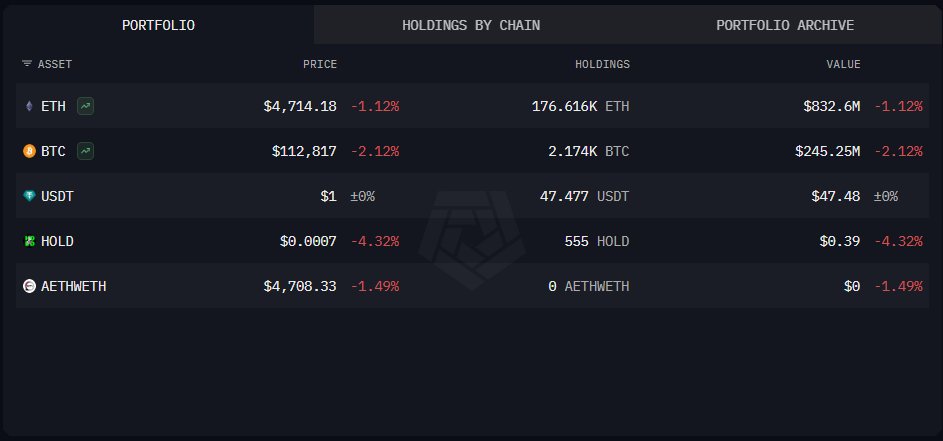
这一行为如同一声发令枪,瞬间引爆了市场的想象空间。它不再是简单的「获利了结」,因为资金没有流出加密生态,而是从生态系统的「价值储藏」一端,精准地注入了「价值生成」的另一端。与此同时,市场的 K 线图也早已给出了回应:ETH/BTC 汇率自今年 5 月以来稳步攀升,显示出以太坊相对于比特币的持续强势。

这头巨鲸的换仓,究竟是独狼式的投机,还是代表着一群「聪明钱」的集体转向?它是否验证了分析师 Willy Woo 关于「比特币成长阵痛」的理论?又将如何与 Arthur Hayes 所预言的「13 万亿稳定币大迁徙」产生共振?本文将从这笔「世纪交易」入手,层层剥茧,探寻加密世界正在发生的结构性范式转移。

一、 惊天换仓:解码 22 亿美元背后的「资产属性」重估

要理解这次换仓的深刻含义,我们必须超越价格的涨跌,深入其资产属性的内核。

首先,这是从「非生产性资产」到「生产性资产」的战略转移。

比特币的价值核心在于其无可争议的数字稀缺性和去中心化,使其成为对抗法币通胀的「数字黄金」。然而,持有比特币本身(不考虑借贷等衍生操作)并不会产生内生的现金流。它是一种被动的价值储存工具,其回报完全依赖于市场价格的上涨。

而质押(Staking)中的以太坊则完全不同。通过将 ETH 质押给网络以维护其安全,持有者可以获得持续的、以 ETH 计价的奖励。这使得 ETH 成为一种「生产性资产」或「数字债券」,能够产生可预测的实际收益率(Real Yield)。这头巨鲸在换仓后第一时间将过半 ETH 投入质押,其意图昭然若揭:他追求的不再仅仅是资产的升值潜力,更是持续、稳定的现金流。这标志着早期加密巨富的财富观念,正在从单纯的资本利得,向更成熟的、类似传统金融的「食利」模式演进。

其次,这印证了 Willy Woo 的「远古抛压」理论,并揭示了资金的最终去向。

Willy Woo 的观点一针见血:比特币本轮上涨缓慢,症结在于 2011 年前后以不足 10 美元成本建仓的巨鲸们正在出售。他们每卖出 1 枚 BTC,都需要市场注入超过 10 万美元的新资金来吸收。这构成了比特币上行的巨大阻力。
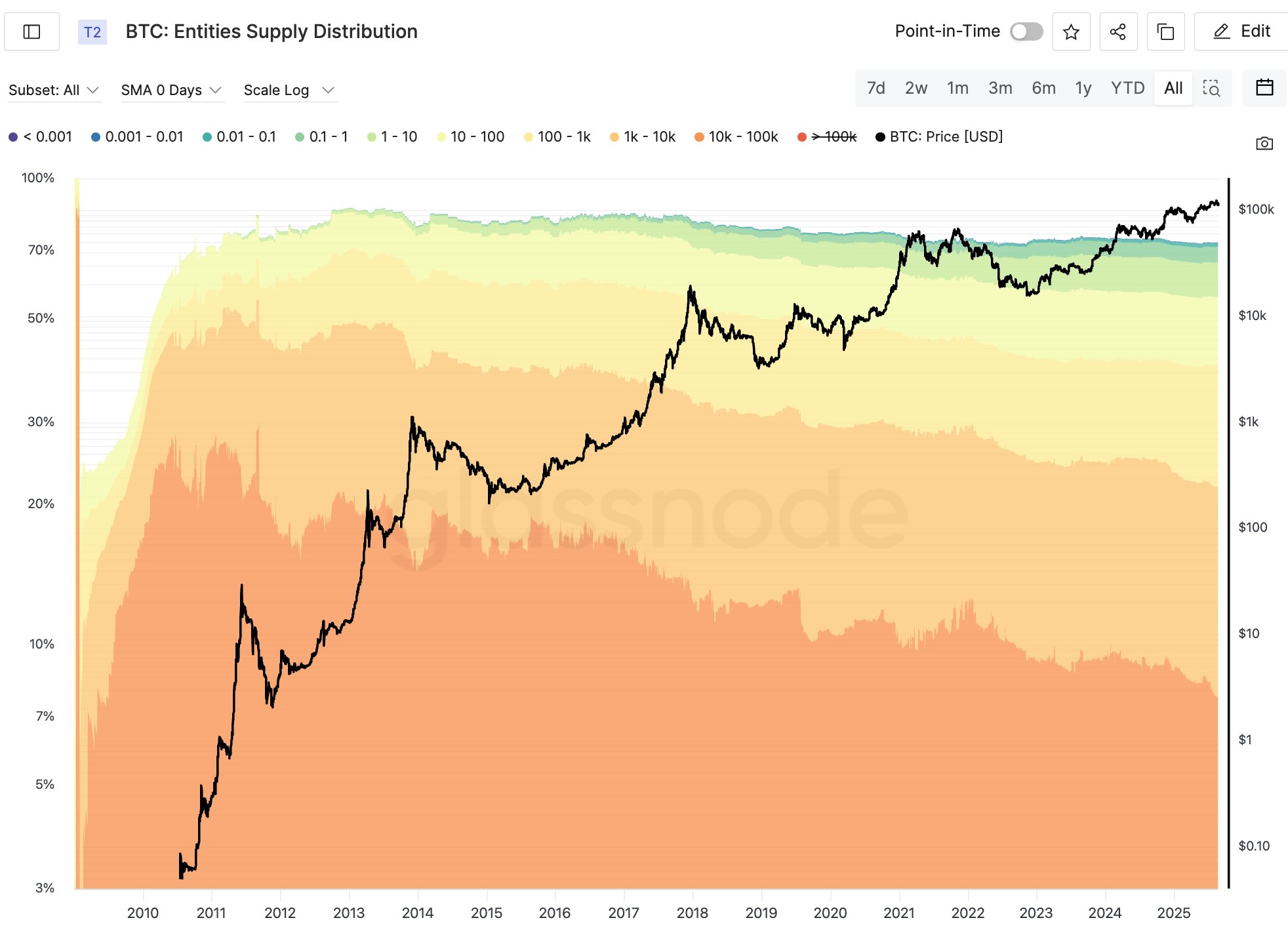
而本次巨鲸换仓,恰恰是这一理论的完美现实演绎。但它比理论更进了一步,它告诉了我们,这些「远古抛压」转化成的巨额流动性,并没有逃离市场,而是选择了以太坊作为新的「蓄水池」。这形成了一个鲜明的对比:

比特币端:远古供应被激活,形成持续抛压,市场需要不断消化「历史包袱」。

以太坊端:吸纳了来自比特币生态的巨额存量资金,并立即通过质押将其转化为网络的「护城河」,减少了市场流通量。

这种「一出一进」的动态,是 ETH/BTC 汇率走强的最直接、最硬核的解释。

二、 一体两面:比特币的「成长阵痛」与以太坊的「生态飞轮」

巨鲸的行动是果,其背后的基本面差异才是因。比特币和以太坊正处在两种截然不同的发展阶段和叙事轨道上。

比特币的「甜蜜烦恼」:消化万倍收益的成熟代价

比特币作为开创者,其最大的成功——创造了人类历史上前所未有的投资回报率——如今也成为了它继续轻装上阵的「甜蜜烦恼」。早期参与者的巨额浮盈,如同悬在市场头顶的达摩克利斯之剑。市场的每一次上涨,都会诱发一部分「万倍收益者」进行套现或资产再平衡。这个过程是比特币走向完全成熟、筹码被充分换手的必经之路,是其「成长阵痛」。在这个阶段完成前,比特币的价格表现必然会显得相对「沉重」。

以太坊的「生态飞轮」:三大引擎驱动的内生增长

与比特币的「存量博弈」不同,以太坊展现出强大的「增量」特征,其价值捕获由三大引擎构成的正向飞轮驱动:

  1. PoS 质押的供应黑洞:最新的 validatorqueue 数据显示,尽管存在获利退出的队列(约 84.6 万枚 ETH),但等待进入质押的队列正在激增(从 15 万枚跃升至 40 万枚 ETH)。这表明,以 SharpLink、BitMine 等上市公司为代表的新一波机构和长期投资者,正在以前所未有的热情拥抱 ETH 的质押收益。质押机制像一个巨大的「供应黑洞」,持续不断地将流通中的 ETH 转化为锁定状态,结构性地减少了市场的抛压。

  2. 稳定币结算层的网络效应:Token Terminal 数据显示,USDC 在以太坊上的使用量已达历史新高,月转账额近 7500 亿美元,规模堪比大型银行系统。这揭示了以太坊的核心价值主张之一:它正在成为全球数字美元经济的底层结算网络。每一笔稳定币的转账、每一次 DeFi 的交互,都需要消耗 ETH 作为 Gas 费,并通过 EIP-1559 机制销毁一部分。这种基于「真实经济活动」的需求,为 ETH 提供了坚实的价值支撑,使其不再仅仅是投机工具。

  3. 「超声波货币」的通缩叙事:在质押锁定和 Gas 费燃烧的双重作用下,以太坊的净发行量在网络繁忙时会变为负数,进入通缩。这种「越用越少」的货币模型,即「超声波货币」(Ultrasound Money),为其提供了比肩比特币「数字稀缺性」的全新价值叙事,且这种稀缺性是动态的、与生态繁荣度正相关的。

这三大引擎相互促进,形成了强大的「生态飞轮」:生态越繁荣 -> Gas 消耗和质押需求越高 -> ETH 通缩越强、供应越紧 -> 币价预期上涨 -> 吸引更多资金和建设者进入生态,循环往复。

三、 宏观之风:Arthur Hayes 的 13 万亿稳定币预言

如果说巨鲸换仓是战术层面的信号,以太坊的生态飞轮是战略层面的基础,那么前 BitMEX 联合创始人 Arthur Hayes 的宏观洞察,则为这场「大轮动」提供了时代背景层面的终极催化剂。

Hayes 在 WebX 大会上明确指出,未来数年加密牛市的核心驱动力将源于美国的地缘政治和财政需求。他预测,美国将主动引导规模高达 10-13 万亿美元的欧洲美元市场,回流至其可控的、基于区块链的稳定币生态系统中。这个论断的意义是颠覆性的,它预示着加密市场即将承接的,将是来自全球传统金融体系的、以「万亿」为单位计算的庞大流动性。

而 Hayes 不仅是预言家,更是行动派。就在上周(8 月 22 日),他公开表示已亲自回购以太坊,并给出了「本轮周期涨至 2 万美元」的惊人目标。这一强烈的看多信号立即得到了机构的响应,我们已知的、正在积极质押 ETH 的上市公司 BitMine,便在第一时间转发了 Hayes 的采访以示认同。
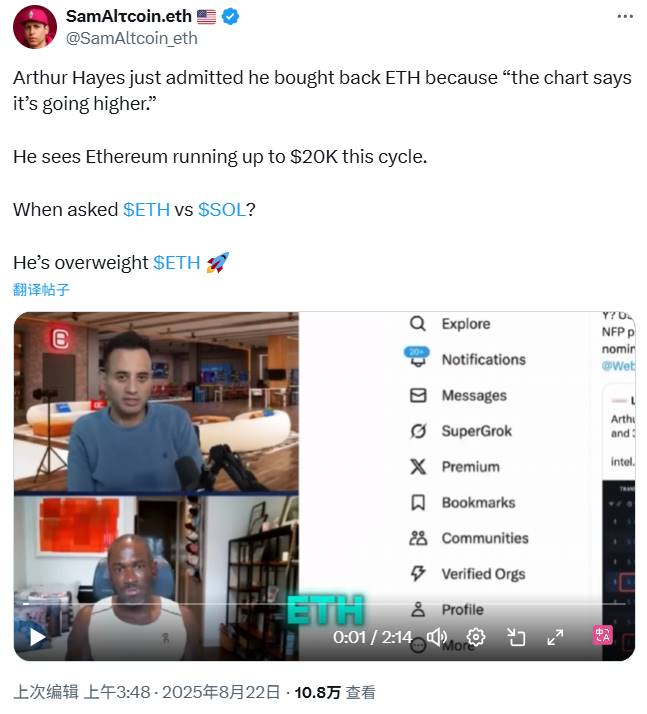
这让答案变得不言而喻:当这股稳定币洪流需要一个高效、安全且拥有深厚金融乐高积木(DeFi)的平台时,以太坊及其繁荣的 Layer 2 网络是唯一的选择。

此刻,所有线索都汇集到了一起:当数万亿美元的稳定币涌入以太坊生态,寻求收益(如 Ethena)和交易(如 Hyperliquid)时,对底层资产 ETH 的需求将被指数级放大。而那头远古巨鲸,不仅将巨额 ETH 投入质押,其后续「在 HyperLiquid 上继续出售 BTC 换取 ETH」的计划,更是精准地踩在了 Hayes 预言的鼓点上。

他的行为清晰地表明:他不仅是在购买 ETH 的质押基础收益,更是在用 22 亿美元的庞大身躯,提前布局一个由稳定币流动性引爆的、确定性极高的全新 DeFi 夏日。

结论:迎接价值累积的范式转移

回归我们最初的问题:一头 22 亿美元巨鲸的惊天换仓,预示着什么?

它预示着,加密世界的价值评估体系,正在发生一场深刻的范式转移。单纯依靠宏大叙事和数字稀缺性的「价值储存」投资逻辑虽然依旧坚固,但资本的天平正在向能够产生真实收益、承载复杂经济活动、并能捕获网络价值的「生产性资产」倾斜。

我们正在从一个由「HODL」文化主导的时代,迈向一个由「Yield」(收益)和「Utility」(效用)共同定义的时代。

这场「大轮动」并非宣告比特币的终结。比特币作为最去中心化、最抗审查的价值储存媒介,其「数字黄金」的地位无可撼动,在宏观避险和资产配置中仍将扮演基石角色。然而,就增长弹性和资本效率而言,市场的聚光灯正不可逆转地转向以太坊。

对于投资者和行业观察者而言,理解这场轮动是把握本轮周期的关键。ETH/BTC 汇率不再仅仅是一个交易对,它是一面镜子,映照出加密世界从 1.0 到 2.0 的演进路径。那头远古巨鲸,用他从比特币诞生之初积累的财富,为这条路径投下了最沉重、最可信的一票。而这,或许仅仅是一个开始。


Trending Cryptos

Related Reads

Kaito Reboots 'Talk-to-Earn Economy', but Many Are Hesitant to Install the New Plugin

Kaito AI has launched a new browser extension called Kaito Pulse, aiming to revitalize what the community terms the "talk-to-earn" or "social-fi" economy on X (formerly Twitter). The plugin displays users' on-chain trading activity, such as positions from platforms like Polymarket, directly within the X timeline. This aims to create a new "attention + behavior verification" system, shifting focus from who generates the most discussion to whose discussions are backed by credible, verifiable actions. However, the launch quickly sparked significant privacy concerns within the crypto community. Critics, led by an analysis from user "Ultra," allege the extension's code enables deep data collection. This includes potential device fingerprinting (using GPU, hardware, and audio data), tracking of X user behavior (browsing paths, clicks, engagement), and verification processes that could access sensitive data from third-party accounts like ChatGPT, Claude, and trading platforms. The debate centers on whether such extensive verification is necessary to combat fake engagement and AI-generated content, or if it constitutes an unacceptable privacy sacrifice. In response, Kaito founder Yu Hu stated the design follows data minimization principles. He claimed Kaito Pulse does not collect or store users' raw data but instead uses verification techniques, including zkTLS, to generate proofs of identity or behavior without exposing the underlying information. Yu Hu acknowledged that some permission descriptions could be misleading and promised improvements in future versions. The controversy highlights a core dilemma for social-fi projects: platforms need more user data to distinguish real influence from artificial hype, but users must decide how much privacy they are willing to trade for potential rewards and ranking within these new incentive systems.

Odaily星球日报9m ago

Kaito Reboots 'Talk-to-Earn Economy', but Many Are Hesitant to Install the New Plugin

Odaily星球日报9m ago

After Two and a Half Years of Entrepreneurship and Full AI Adoption, the Company Has Actually Become More 'Traditional'

"After 2.5 years of running my company, achieving near 100% AI adoption with Agents in roles like finance, HR, and operations, we've paradoxically become more 'traditional.' We learned that establishing a thick AI middle layer creates bottlenecks. Instead, we advocate for a 'thin platform, thick frontline' model, empowering employees closest to problems to use AI tools themselves, fostering ownership and initiative. The true foundation isn't the AI models, but the unique data and context a company accumulates—our most vital, irreplaceable asset, requiring diligent governance. As AI handles repetitive, describable tasks, human roles revert to their core: building genuine relationships, trust, and brand reputation through authentic communication, which AI cannot accelerate. A critical question is where the time saved by AI goes. It must be returned—to clients, to creative work, to employees' own lives—rather than just fueling higher output demands. For managers, AI strips away execution-focused busywork, exposing the necessity to define clear goals, make tough judgments, and take ultimate responsibility. Onboarding newcomers presents a challenge: while AI can generate 80% solutions instantly, we must deliberately design paths for them to develop judgment, understand context, and safely learn from mistakes. Ultimately, AI's organizational value isn't about replacing people but removing unnecessary friction, allowing more meaningful human connection. The real test of an 'AI-era' company isn't its tech stack, but how it treats people: delegating creative power, returning saved time, fostering growth, and upholding accountability. The core luxury and purpose of our work remains authentic human relationships."

marsbit17m ago

After Two and a Half Years of Entrepreneurship and Full AI Adoption, the Company Has Actually Become More 'Traditional'

marsbit17m ago

US Stock Market Trends (August 21): Long-Term Bond Repo Fails, Walmart's Warning Drags Dow Down 700 Points

**U.S. Market Trends (Aug 21): Long-Term Bond Relief Fizzles, Walmart Drags Dow Down 700 Points** U.S. stocks fell sharply, with the Dow plunging over 700 points, as relief from the Treasury's long-term bond buyback plan proved fleeting. Major indexes declined as long-end Treasury yields and oil prices resumed their upward climb, reigniting inflation fears and pressure on high-valuation assets. The key catalyst was the rapid reversal in the bond market. The Treasury's expanded buyback program briefly calmed markets, but 30-year yields quickly rebounded near 5.26%, approaching recent 20-year highs. This signaled that liquidity interventions cannot overcome structural pressures from massive U.S. debt, fiscal deficits, and competing capital demands from AI infrastructure spending. Simultaneously, rising oil prices (WTI +2.3%) on geopolitical tensions renewed inflation concerns, squeezing consumer spending power. This pressure was highlighted by Walmart's 9% stock plunge. Despite beating earnings estimates, its weak U.S. same-store sales growth and lowered annual guidance exposed caution among lower-income consumers. Tech stocks faced broad pressure. The "Magnificent Seven" giants broadly declined, with Moderna crashing over 23% a day after a massive rally on vaccine trial news, exemplifying swift profit-taking. However, select semiconductor names (e.g., Marvell, Micron) gained on specific AI-related catalysts, indicating a more discerning market moving beyond hype to scrutinize real cash flows and capital expenditure sustainability. Bitcoin surged past $72,000, while gold seesawed near $4,500/oz. Alibaba's earnings showed strong AI cloud revenue growth but significant cash outflow due to infrastructure investments. The market's core takeaway is that Treasury actions provide only temporary relief, not a trend reversal. Focus now shifts to whether long-term yields can stabilize below 5.3% and to upcoming Federal Reserve commentary for clues on the rate path. Sustainable equity recovery hinges on the bond market calming and major tech stocks showing concurrent strength.

marsbit18m ago

US Stock Market Trends (August 21): Long-Term Bond Repo Fails, Walmart's Warning Drags Dow Down 700 Points

marsbit18m ago

547 Million OP Tokens Transferred from User Airdrop to Ecosystem Fund: DAO Voting Becoming Sham Democracy

An Optimism governance vote approved the controversial transfer of 546.9 million OP tokens (12.7% of total supply, ~24% of circulating supply) from the remaining "User Airdrop" allocation to the Foundation-controlled "Strategic Ecosystem Fund." The vote passed with a decisive 849,000 OP vote from "Test in Prod," a core development team fully funded by the Optimism Collective, cast just 17 minutes before the deadline. The Foundation argued that broad user airdrops are ineffective for the current institutional expansion phase and that the funds are needed as a flexible "war chest" to secure enterprise clients like Bitpanda and Dunamu. Critics, including L2BEAT and researcher Polynya, opposed the move. They cited the Foundation's overly broad mandate, a lack of clear link to token holder interests, insufficient assessment of past ecosystem fund expenditures (~686M OP spent), and the rewriting of the original distribution promise made to users. The incident highlights deeper governance concerns beyond low voter turnout. It raises questions about the independence of votes from entities financially dependent on the Foundation and the ethical limits of DAO governance—specifically, whether a majority vote can legitimately redefine foundational promises and minority expectations. The move signals a shift from community-focused airdrops to enterprise-driven strategy, eroding user trust amid OP's significant price decline.

marsbit39m ago

547 Million OP Tokens Transferred from User Airdrop to Ecosystem Fund: DAO Voting Becoming Sham Democracy

marsbit39m ago

Trading

Spot

Hot Articles

What is $BITCOIN

DIGITAL GOLD ($BITCOIN): A Comprehensive Analysis Introduction to DIGITAL GOLD ($BITCOIN) DIGITAL GOLD ($BITCOIN) is a blockchain-based project operating on the Solana network, which aims to combine the characteristics of traditional precious metals with the innovation of decentralized technologies. While it shares a name with Bitcoin, often referred to as “digital gold” due to its perception as a store of value, DIGITAL GOLD is a separate token designed to create a unique ecosystem within the Web3 landscape. Its goal is to position itself as a viable alternative digital asset, although specifics regarding its applications and functionalities are still developing. What is DIGITAL GOLD ($BITCOIN)? DIGITAL GOLD ($BITCOIN) is a cryptocurrency token explicitly designed for use on the Solana blockchain. In contrast to Bitcoin, which provides a widely recognized value storage role, this token appears to focus on broader applications and characteristics. Notable aspects include: Blockchain Infrastructure: The token is built on the Solana blockchain, known for its capacity to handle high-speed and low-cost transactions. Supply Dynamics: DIGITAL GOLD has a maximum supply capped at 100 quadrillion tokens (100P $BITCOIN), although details regarding its circulating supply are currently undisclosed. Utility: While precise functionalities are not explicitly outlined, there are indications that the token could be utilized for various applications, potentially involving decentralized applications (dApps) or asset tokenization strategies. Who is the Creator of DIGITAL GOLD ($BITCOIN)? At present, the identity of the creators and development team behind DIGITAL GOLD ($BITCOIN) remains unknown. This situation is typical among many innovative projects within the blockchain space, particularly those aligning with decentralized finance and meme coin phenomena. While such anonymity may foster a community-driven culture, it intensifies concerns about governance and accountability. Who are the Investors of DIGITAL GOLD ($BITCOIN)? The available information indicates that DIGITAL GOLD ($BITCOIN) does not have any known institutional backers or prominent venture capital investments. The project seems to operate on a peer-to-peer model focused on community support and adoption rather than traditional funding routes. Its activity and liquidity are primarily situated on decentralized exchanges (DEXs), such as PumpSwap, rather than established centralized trading platforms, further highlighting its grassroots approach. How DIGITAL GOLD ($BITCOIN) Works The operational mechanics of DIGITAL GOLD ($BITCOIN) can be elaborated on based on its blockchain design and network attributes: Consensus Mechanism: By leveraging Solana’s unique proof-of-history (PoH) combined with a proof-of-stake (PoS) model, the project ensures efficient transaction validation contributing to the network's high performance. Tokenomics: While specific deflationary mechanisms have not been extensively detailed, the vast maximum token supply implies that it may cater to microtransactions or niche use cases that are still to be defined. Interoperability: There exists the potential for integration with Solana’s broader ecosystem, including various decentralized finance (DeFi) platforms. However, the details regarding specific integrations remain unspecified. Timeline of Key Events Here is a timeline that highlights significant milestones concerning DIGITAL GOLD ($BITCOIN): 2023: The initial deployment of the token occurs on the Solana blockchain, marked by its contract address. 2024: DIGITAL GOLD gains visibility as it becomes available for trading on decentralized exchanges like PumpSwap, allowing users to trade it against SOL. 2025: The project witnesses sporadic trading activity and potential interest in community-led engagements, although no noteworthy partnerships or technical advancements have been documented as of yet. Critical Analysis Strengths Scalability: The underlying Solana infrastructure supports high transaction volumes, which could enhance the utility of $BITCOIN in various transaction scenarios. Accessibility: The potential low trading price per token could attract retail investors, facilitating wider participation due to fractional ownership opportunities. Risks Lack of Transparency: The absence of publicly known backers, developers, or an audit process may yield skepticism regarding the project's sustainability and trustworthiness. Market Volatility: The trading activity is heavily reliant on speculative behavior, which can result in significant price volatility and uncertainty for investors. Conclusion DIGITAL GOLD ($BITCOIN) emerges as an intriguing yet ambiguous project within the rapidly evolving Solana ecosystem. While it attempts to leverage the “digital gold” narrative, its departure from Bitcoin's established role as a store of value underscores the need for a clearer differentiation of its intended utility and governance structure. Future acceptance and adoption will likely depend on addressing the current opacity and defining its operational and economic strategies more explicitly. Note: This report encompasses synthesised information available as of October 2023, and developments may have transpired beyond the research period.

2.0k Total ViewsPublished 2025.05.13Updated 2025.05.13

What is $BITCOIN

Discussions

Welcome to the HTX Community. Here, you can stay informed about the latest platform developments and gain access to professional market insights. Users' opinions on the price of BTC (BTC) are presented below.

活动图片