Bitcoin Hyper ($HYPER) Live News Today: Latest Insights for Bitcoin Maxis (August 18)

bitcoinistPublished on 2025-08-18Last updated on 2025-08-18

Abstract

Stay Ahead with Our Immediate Analysis of Today's Bitcoin & Bitcoin Hyper Insights Check out our Live Bitcoin Hyper Updates...

Trusted Editorial content, reviewed by leading industry experts and seasoned editors. Ad Disclosure

Stay Ahead with Our Immediate Analysis of Today’s Bitcoin & Bitcoin Hyper Insights

Check out our Live Bitcoin Hyper Updates for August 18, 2025!

In 2010, Bitcoin was worth a few cents. One year later, it hit $20. In six years, it was $17,000, and now it’s sitting at over $100K, after hitting an ATH of $123K in July.

Historically, if you’d invested in Bitcoin at launch, you’d have an ROI of 188,643,000%. The likes of Mastercard, JP Morgan, and scores of S&P 500 companies are buying Bitcoin in droves. There’s never been anything like Bitcoin before, and investors are waking up to that reality.

However, Bitcoin is getting old for modern standards. No dApps, no smart contracts, and almost non-existent DeFi scalability. It needs an upgrade. And that’s what Bitcoin Hyper ($HYPER) is here to do with Layer-2 technology.

Click to learn more about Bitcoin Hyper

Bitcoin Hyper ($HYPER) is a crypto project planning to launch the fastest Layer-2 chain for Bitcoin. Its goal – to bring Bitcoin’s blockchain to modern standards. This means compatibility with dApps, smart contracts, and seamless DeFi programmability for developers.

The L2 will run on a Canonical Bridge, combined with the Solana Virtual Machine (SVM), for native compatibility with Solana. You’ll be able to build token programs, LP logic, oracles, games, NFT infrastructure, DAOs, and much more. All without reinventing the wheel.

To engage with the L2, you’ll deposit $BTC to a designated address monitored by the Canonical Bridge. The Relay Program verifies the details, and then mints an equivalent number of wrapped $BTC on the L2. You can also withdraw your original $BTC at any time.

If you’re looking for the newest insights on Bitcoin and Bitcoin Hyper, you’re in the right place.

We update this page regularly throughout the day with the latest insider insights for Bitcoin maxis and Bitcoin Hyper fans. Keep refreshing to stay ahead of the pack!

Disclaimer: No crypto investment comes without risk. Our content is for informational purposes, not financial advice. We may earn affiliate commissions at no extra cost to you.

HOW TO BUY $HYPER


Today’s Bitcoin Technical Analysis

Bitcoin has dropped over 7% from its all-time high, signaling that a deeper correction may be underway before the crypto resumes its broader upward trend.

To get a clearer picture of how much further Bitcoin could drop in its correction phase, we can apply the Fibonacci retracement tool, drawing it from the low of $98,242 (i.e. the low of the latest weekly range).

Since the most common assumption is that corrections typically reach at least the 50% retracement level, Bitcoin still has about 3.5% more downside before hitting that mark.

$BTC pulling back toward the weekly 50% Fib levelThis is crucial because it highlights that, despite short-term pullbacks, the broader trend remains bullish. In fact, healthy corrections are often necessary to sustain long-term uptrends, as they shake out excess leverage, reset momentum indicators, and allow for stronger bases to form.

Speaking of momentum indicators, Bitcoin on the daily chart is now resting on the 50 EMA while simultaneously entering its latest support zone.

This is the same zone that fueled an 11% rally just a couple of weeks ago. If this support holds, Bitcoin could make another push toward fresh all-time highs within the next 10-14 days.


Metaplanet Bought $89 Million More Bitcoin as Market Crashes: Bitcoin Hyper Rides $BTC’s Hype Wave with $10M Raise

August 18, 2025 • 10:00 UTC

Metaplanet announced a 775 Bitcoin purchase currently worth ~$89M, with the company holding 18,888 Bitcoins worth around $2.17B.

The company has a $451M YTD gain as of Q3 2025, and it looks primed to surpass Q2’s $604M peak.
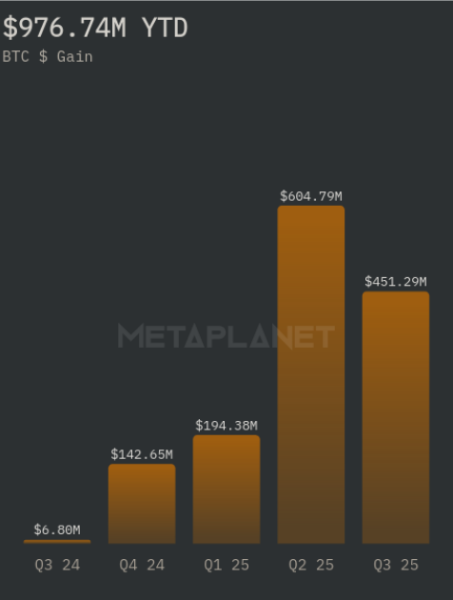
Metaplanet year-to-date Bitcoin gain in dollars

Metaplanet’s aggressive Bitcoin buying strategy has lifted the company up several notches, from a no-name entity to one of the leading institutional Bitcoin holders in the world.

Investors are already calling Metaplanet ‘Asia’s Strategy,’ and the market is gobbling up all this hype. Despite a temporary slump, we believe a recovery is in store.

And once that happens, Bitcoin-centric presales like Bitcoin Hyper ($HYPER) are perfectly positioned to ride this hype.

The project plans a Layer-2 to increase Bitcoin’s transaction speed, bring dApps and smart contracts to its ecosystem, and scale it to modern demands.

With a $10.3M presale raise and a token price of $0.012745, $HYPER is looking ready to explode.

Learn more about what Bitcoin Hyper plans to do in our guide.


$2,200,000 Price Prediction for Bitcoin as Max Keiser Forecasts $BTC Supremacy: Bitcoin Hyper Is the Best But in This Context

August 18, 2025 • 10:00 UTC

Max Keiser just made another Bitcoin prediction, and it’s quite the shock – $2.2M. This new prediction is a 10x from his previous $220K one which, at this point, seems very achievable in the next few years.

His reason: the US ramping up interest rate payments to $1T in the first 10 months of the fiscal year 2025.

At this rate, they’re closing in on the $1.2T annual interest expense. So, interest rate cuts are looking increasingly likely, according to Keiser.
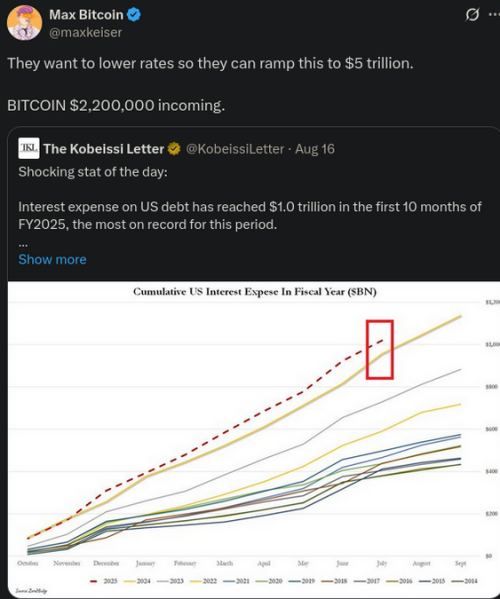
Max Keiser price prediction post on X

He argues that Bitcoin’s price ceiling keeps going up as the US moves toward more interest rate cuts. And this seems reasonable, if not expected.

Investors looking to invest in Bitcoin’s rally should also look at promising presales like Bitcoin Hyper ($HYPER). Due to its L2, SVM integration, and Canonical Bridge roadmap, the project has raised over $10M in presale as investors ramp up purchases.

If you want to learn more, here’s our guide on what Bitcoin Hyper is.


Editorial Process for bitcoinist is centered on delivering thoroughly researched, accurate, and unbiased content. We uphold strict sourcing standards, and each page undergoes diligent review by our team of top technology experts and seasoned editors. This process ensures the integrity, relevance, and value of our content for our readers.

Leah is a British journalist with a BA in Journalism, Media, and Communications and nearly a decade of content writing experience. Over the last four years, her focus has primarily been on Web3 technologies, driven by her genuine enthusiasm for decentralization and the latest technological advancements. She has contributed to leading crypto and NFT publications – Cointelegraph, Coinbound, Crypto News, NFT Plazas, Bitcolumnist, Techreport, and NFT Lately – which has elevated her to a senior role in crypto journalism. Whether crafting breaking news or in-depth reviews, she strives to engage her readers with the latest insights and information. Her articles often span the hottest cryptos, exchanges, and evolving regulations. As part of her ploy to attract crypto newbies into Web3, she explains even the most complex topics in an easily understandable and engaging way. Further underscoring her dynamic journalism background, she has written for various sectors, including software testing (TEST Magazine), travel (Travel Off Path), and music (Mixmag). When she's not deep into a crypto rabbit hole, she's probably island-hopping (with the Galapagos and Hainan being her go-to's). Or perhaps sketching chalk pencil drawings while listening to the Pixies, her all-time favorite band.

Trending Cryptos

Related Reads

You Use Claude and Codex Every Day, but Meta Has Restricted Internal Use

In May, Meta imposed internal restrictions on its engineers regarding the use of Claude Code and Codex, two widely used AI programming tools. Despite being a major client, Meta's guidelines, still in effect, prohibit these external models from being used for specific tasks to prevent potential "escalations with partners." The core concern is "distillation"—the risk that outputs from Claude or Codex could inadvertently contaminate the training data and evaluation processes for Meta's in-house AI coding assistant, MetaCode. If MetaCode is trained or evaluated using data generated by these external models, it risks learning their capabilities rather than developing its own, blurring the line of intellectual origin. The restrictions are precise: engineers cannot use the external models to generate test questions, debug source code, or suggest test cases. AI-generated content is also barred from environments accessible to MetaCode. However, AI can still assist with peripheral tasks like workflow setup and code organization, provided all outputs are manually reviewed. This caution reflects a broader industry dilemma. While distillation is a common technique, using a competitor's model output for training raises legal and ethical questions about the ownership of derived capabilities. Contractual terms from companies like OpenAI and Anthropic explicitly forbid using their outputs to build competing products, putting enforcement power in the hands of rivals. The move is also financially motivated, as Meta seeks to reduce its hefty internal AI spending, estimated in the billions this year. Meta's policy illustrates the delicate balance companies must strike: leveraging powerful external AI tools while safeguarding the integrity and independence of their own AI development. As AI systems increasingly help build other AIs, distinguishing the origin of capabilities becomes a fundamental challenge for the entire industry.

marsbit52m ago

You Use Claude and Codex Every Day, but Meta Has Restricted Internal Use

marsbit52m ago

Why Do We Need an AI Content Perspective Today?

The article "Why Do We Need an AI Content Perspective Today?" explores the complex and often contentious integration of AI into the cultural and creative industries, particularly film and television. It begins with the cancellation of Amazon's AI-generated animation "Punky Duck," highlighting the ethical debates surrounding AI content. AI's rapid advancement is transforming video production, enabling cost-effective, full-length AI films (e.g., "RAPHAEL," "Dreams of Violets") while sparking industry resistance over issues like "synthetic actors." The core debate has shifted from whether to use AI to how to use it responsibly. The article analyzes why AI's entry into film is uniquely unsettling. It distinguishes between "cultural fast food" (short-form, fast-paced content like micro-dramas) and "cultural main courses" (traditional, long-form film/TV). AI currently excels at the former, matching its fragmented narratives, shallow emotional needs, and free-to-consumer models. However, venturing into the latter challenges the human-centric essence of storytelling—creativity, emotional depth, and the unique value of human labor and experience. While AI can generate massive volumes of content and lower costs, it risks devaluing human creativity, leading to homogenized output, and creating unfair competition through potential intellectual property infringement. Its efficiency also amplifies content safety risks, making preemptive governance crucial. To counter these risks, the article proposes establishing clear boundaries guided by a human-centered AI content perspective. It outlines four principles: 1) Amplify, rather than displace, human creative space; 2) Respect and protect human creative output; 3) Ensure human creative control and responsibility remain paramount; and 4) Guarantee transparency and traceability in AI creation. The conclusion emphasizes that humans must act as the "helmsmen" of technology, steering AI development to enhance, not replace, the core human values at the heart of cultural expression.

marsbit1h ago

Why Do We Need an AI Content Perspective Today?

marsbit1h ago

Planck Retracted? The Father of Quantum Tripped by an Algorithm

The recent discovery that two articles (published in 1940 and 1942) by Max Planck, the Nobel laureate and founder of quantum theory, are marked as "retracted" on Springer's digital platform highlights a curious clash between historical publishing practices and modern automated systems. An investigation suggests these retractions are algorithmic errors, not due to fraud or misconduct. The papers, philosophical reflections on science published in *Die Naturwissenschaften*, were likely flagged by the platform's systems. One article, a republished lecture, may have been mistaken for duplicate publication. Another, sharing a title with a prior article by a different author (a common practice for continuing debates at the time), may have triggered a similar automated check. The digital versions have even been replaced with blank pages, contrary to normal practice of preserving retracted texts. This incident underscores how contemporary digital infrastructure, built around concepts like "self-plagiarism" and strict copyright, can misclassify and obscure legitimate historical scholarly communication. It serves as a warning that digital archives are not neutral mirrors of the past but are filtered by platform rules, potentially distorting the scientific record. As AI systems increasingly rely on such databases, such erroneous metadata could propagate, affecting how future tools interpret and access historical knowledge.

marsbit1h ago

Planck Retracted? The Father of Quantum Tripped by an Algorithm

marsbit1h ago

Trading

Spot

Hot Articles

What is $BITCOIN

DIGITAL GOLD ($BITCOIN): A Comprehensive Analysis Introduction to DIGITAL GOLD ($BITCOIN) DIGITAL GOLD ($BITCOIN) is a blockchain-based project operating on the Solana network, which aims to combine the characteristics of traditional precious metals with the innovation of decentralized technologies. While it shares a name with Bitcoin, often referred to as “digital gold” due to its perception as a store of value, DIGITAL GOLD is a separate token designed to create a unique ecosystem within the Web3 landscape. Its goal is to position itself as a viable alternative digital asset, although specifics regarding its applications and functionalities are still developing. What is DIGITAL GOLD ($BITCOIN)? DIGITAL GOLD ($BITCOIN) is a cryptocurrency token explicitly designed for use on the Solana blockchain. In contrast to Bitcoin, which provides a widely recognized value storage role, this token appears to focus on broader applications and characteristics. Notable aspects include: Blockchain Infrastructure: The token is built on the Solana blockchain, known for its capacity to handle high-speed and low-cost transactions. Supply Dynamics: DIGITAL GOLD has a maximum supply capped at 100 quadrillion tokens (100P $BITCOIN), although details regarding its circulating supply are currently undisclosed. Utility: While precise functionalities are not explicitly outlined, there are indications that the token could be utilized for various applications, potentially involving decentralized applications (dApps) or asset tokenization strategies. Who is the Creator of DIGITAL GOLD ($BITCOIN)? At present, the identity of the creators and development team behind DIGITAL GOLD ($BITCOIN) remains unknown. This situation is typical among many innovative projects within the blockchain space, particularly those aligning with decentralized finance and meme coin phenomena. While such anonymity may foster a community-driven culture, it intensifies concerns about governance and accountability. Who are the Investors of DIGITAL GOLD ($BITCOIN)? The available information indicates that DIGITAL GOLD ($BITCOIN) does not have any known institutional backers or prominent venture capital investments. The project seems to operate on a peer-to-peer model focused on community support and adoption rather than traditional funding routes. Its activity and liquidity are primarily situated on decentralized exchanges (DEXs), such as PumpSwap, rather than established centralized trading platforms, further highlighting its grassroots approach. How DIGITAL GOLD ($BITCOIN) Works The operational mechanics of DIGITAL GOLD ($BITCOIN) can be elaborated on based on its blockchain design and network attributes: Consensus Mechanism: By leveraging Solana’s unique proof-of-history (PoH) combined with a proof-of-stake (PoS) model, the project ensures efficient transaction validation contributing to the network's high performance. Tokenomics: While specific deflationary mechanisms have not been extensively detailed, the vast maximum token supply implies that it may cater to microtransactions or niche use cases that are still to be defined. Interoperability: There exists the potential for integration with Solana’s broader ecosystem, including various decentralized finance (DeFi) platforms. However, the details regarding specific integrations remain unspecified. Timeline of Key Events Here is a timeline that highlights significant milestones concerning DIGITAL GOLD ($BITCOIN): 2023: The initial deployment of the token occurs on the Solana blockchain, marked by its contract address. 2024: DIGITAL GOLD gains visibility as it becomes available for trading on decentralized exchanges like PumpSwap, allowing users to trade it against SOL. 2025: The project witnesses sporadic trading activity and potential interest in community-led engagements, although no noteworthy partnerships or technical advancements have been documented as of yet. Critical Analysis Strengths Scalability: The underlying Solana infrastructure supports high transaction volumes, which could enhance the utility of $BITCOIN in various transaction scenarios. Accessibility: The potential low trading price per token could attract retail investors, facilitating wider participation due to fractional ownership opportunities. Risks Lack of Transparency: The absence of publicly known backers, developers, or an audit process may yield skepticism regarding the project's sustainability and trustworthiness. Market Volatility: The trading activity is heavily reliant on speculative behavior, which can result in significant price volatility and uncertainty for investors. Conclusion DIGITAL GOLD ($BITCOIN) emerges as an intriguing yet ambiguous project within the rapidly evolving Solana ecosystem. While it attempts to leverage the “digital gold” narrative, its departure from Bitcoin's established role as a store of value underscores the need for a clearer differentiation of its intended utility and governance structure. Future acceptance and adoption will likely depend on addressing the current opacity and defining its operational and economic strategies more explicitly. Note: This report encompasses synthesised information available as of October 2023, and developments may have transpired beyond the research period.

529 Total ViewsPublished 2025.05.13Updated 2025.05.13

What is $BITCOIN

Discussions

Welcome to the HTX Community. Here, you can stay informed about the latest platform developments and gain access to professional market insights. Users' opinions on the price of BTC (BTC) are presented below.

活动图片