DeSci:AI、Crypto、生命科学的交叉地带

深潮Published on 2025-08-17Last updated on 2025-08-18

生命科学走过 Meme 肥尾。

撰文:佐爷

大模型的黑箱让人抓狂,区块链希望让透明的白盒发生在科研上。

1943 年,量子态的喵主人薛定谔在都柏林进行了一场高难度演讲,从统计物理学的角度论证原子、生命和细胞的关系,彼时,大洋彼岸的少年沃森只有 15 岁,只不过已经是芝加哥大学新生。

沃森在读到薛定谔演讲后成书的《生命是什么》,确定遗传学将是自己的终生志向。

十年后,当已经取得博士学位的沃森提出 DNA 的双螺旋结构时,25 岁的年轻人已经提前锁定诺贝尔奖。

嫁接、克隆到基因编辑

我家门前有两棵树,一棵是枣树,另一棵也是枣树。

上过初中的人类都知道,基因是 DNA 的信息片段,如同代码中的「函数体」,是最基本的功能实现,而 DNA 就像是实例模块,RNA 就像是路由和通信功能,将基因信息传导给特定对象。

沃森发现了 DNA 的结构,但是人类并不知道如何利用,这就像我们知道量子态的猫,但是猫好找,量子通信还要熬很多年。

至少沃森比薛定谔幸运,2012 年夏彭蒂耶(Emmanuelle Charpentier)和道德纳(Jennifer Doudna)发现了 CRISPR 序列和 Cas 蛋白可以组合,通过人为切断特定序列,并插入自身想要的信息片段,最后利用人体修复机制,在不知不觉间完成移花接木。

真的很像园艺剪枝,从肉眼可见的枝干相互对接,在不明白生物机理的作用下,也可知道不同植物间的匹配关系——只需要不断的实验即可。

实验可以继续,克隆也是如此,细胞核和细胞质也可以分离和「对接」,在不断的试验下,克隆可以实现同分异构体的奇妙效果,一如《生命是什么》中所言。

基因编辑并不神秘,克隆的进一步,从尺寸上的进一步微观化,就像原子视角的生命不过是热运动的最终冷寂的不可逆过程,如同时间,或许可以伸展、压缩,但是永远不可逆。

人类可以嫁接果树,人类可以克隆动物,那么人类可以编辑人类吗?

2018 年,疯狂科学家贺建奎成为了夏娃或者那条蛇,对一对患有双胞胎胚胎进行基因编辑,而他们的父母患有艾滋病,人类就此打开潘多拉的魔盒,克隆动物可以人道销毁,基因编辑的人类还是人类吗?

图片说明:CRISPR-Cas9 工作原理,图片来源:@zuoyeweb3

但是基因层面的深入,对于某个人群有致命诱惑——长寿,找到影响寿命的基因片段,像金将军的黑客一样,将其数值从 100 修改至 ♾️,哪怕只能加个 0 也足够了。

2023 年,Paradigm 联合创始人 Fred Ehrsam 决定离开加密行业,成立生物科研公司 Nudge,刚好,Fred 还是 Coinbase 联合创始人,2017 年公司上市后转进加密 VC。

也是在 2017 年,Paul Kohlhaas 进入 Consensys 担任 BD 主管,但是一年后便离职创业,为什么不拿区块链做点更有意思的事?

比如搞科研,2018 年 Molecule 成立,这是较早一批探索区块链和科研,尤其是生物研究的结合,与此同时,Alpha Go 的母公司 DeepMind 的生命科研模型 AlphaFold 已经在 2016 年发布,并且显示出其在蛋白质结构观测领域的威力。

2020 年,AlphaFold2 成功解决蛋白质折叠问题,25 岁的沃森预定了诺奖,这一次 4 岁的 Alphaflod2 也预定了 2024 年的 50% 诺贝尔化学奖。

Fred 2023 转行年甚至不算早,早在 2020 年,Coinbase 另一位创始人 Armstrong 已经发起成立 ResearchHub,用以将大学——论文——基金的体制化研究流程分解,引入激励机制,让大学主导职称,论文出版商获利,基金申请拿捏三座大山从学者头上搬去。

尤其是,学者向出版商的投稿论文费用自担,但是出版商为其选定的审议人往往是无偿劳动,只有出版商在中间赚差价。

一切要素都凑齐,AI、科研和论文都在向生命科学汇集,21 世纪果然是生物的世纪。

币圈送长生,先求不死药

去中心化科研 (DeSci) 是打着生命科学研究的医药研发。

DeSci 是 AI4Sci 运动的币圈改造版,但是高度聚焦于 AI、生命科学和新药研发上,也许中间还走过 Meme 化的「弯路」,还记得 Paul Kohlhaas 的 Molecule 吗,2022 年甚至得到 Balaji 的投资,没人能拒绝长寿诱惑。

再进一步,2022 年 Paul Kohlhaas 成立 Bio Protocol,开始研发能让币圈大佬活的更长的产品,其下分多个子 DAO,兼顾从男性头到尾,人生各方面的科学奥妙。

2024 年,「重生」后的 CZ 和 Vitalik 一起出现在曼谷 DeSci Day 上,那时的小 V 现在的 V 神还向年长的 CZ 推荐了 Bio Protocol 旗下 Vita DAO 的补剂 VD001。

然后,Bio 成功得到 CZ 旗下 YZi 投资,代币顺利也走向币安,并且 Paul Kohlhaas 挺会整活,还跟上时代做了模仿 PumpFun 的 Pump Scicence,Meme 加科学研究有没有搞头?

但是,Bio 冲高之后,便是交付结果的不满意,在传统科研领域,一款新药的研发动辄上 10 亿美元,耗费数年甚至数十年的时间,而 Bio 的二级市场等不了五分钟,拿了钱不拉盘,真去搞科研就是原罪。

故事没有终结,因为 Agent 浪潮来了,AI Agent 真的有望改变科研的效率,更好玩的是 ResearchHub 在 2025 年 2 月获得 Boost 200 万美元投资,DeSci 的 Agent 发文也有人审稿了。

2025 年 8 月,Bio Protocol 发布 V2 计划,打造全新的 Launchpad、BioXP 积分计划,以及 BioAgents,用的还是 ElizaOS 打造,再一次紧跟时代。

短短 7 天内,已经有超过 1 亿枚 BIO 质押,不过 8 月 7 号一天涌入 8000 万枚,所以数据多少还是存在一些问题,除此之外,V2 计划设计的经济学更为合理。

小市值避免抛压,鼓励持续对项目赞助。
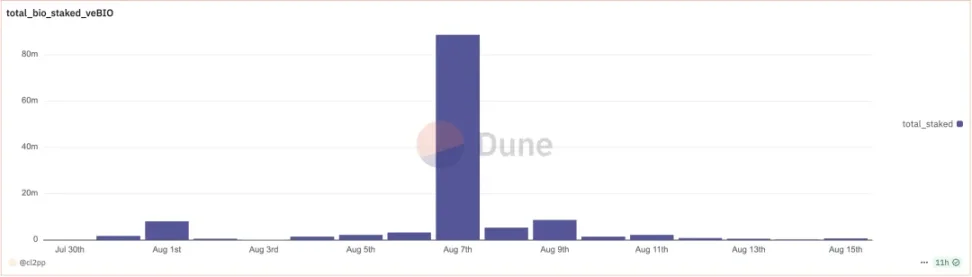
图片说明:$BIO 质押数据,图片来源:@cl2pp

不过,Bio Protocol 代表的 DeSci 要比 AI4Sci 的进度慢,AlphaFold 已经在 2021 年开源数据库,迄今只为已经公布 2 亿个蛋白质结构,基本涵盖已知物种。

深感进度落后,Bio Protocol 一直希望美国药监局 FDA 公布或者整合大型医药公司积攒的数据,用以加速开源科学研究。

除此之外,Bio V2 预计会在阿联酋推动多款新药上市,将传统的研发流程极大缩短,而中东宽松的人体实验限制也会让生命科研的速度提升,只不过是贺建奎还是沃森那就不得而知了。

结语

GPT-5 效果令人失望,但是在细分领域,比如医学、科研领域,我们还能静待 Scaling Law 花开,这些高价值领域的数据潜力还未被彻底挖掘,一旦有所进步,反而会给人类认知带来巨大提升。

也在生命科研领域,硅谷的 Colossal 复活古生物计划一直在推进,用的也是 CRISPR-Cas9 技术,比如将猛犸象和老鼠结合而来的「长毛鼠」,远古巨狼培育的纯白巨大恐狼。

也许有一天,人类会进化,也有有一天,人类会灭亡。

Trending Cryptos

Related Reads

Is RWA Still Meaningful Without DeFi?

The article "Would RWA Still Matter Without DeFi?" argues that tokenizing real-world assets (RWA) alone, like putting a barcode on a container, is not transformative. True value emerges when these tokenized assets are integrated into decentralized finance (DeFi) ecosystems, enabling valuation, financing, hedging, trading, and loss management in a programmable, automated manner. Tokenization provides digital representation, but DeFi provides utility through leverage, liquidity, and composability. The core challenge lies in aligning the different "time clocks" of blockchain (fast, 24/7), traditional markets (limited hours), and asset redemption (slow processes), which creates liquidation risks and gaps. Effective RWA integration requires more than a token; it needs a full stack: legally enforceable rights, reliable data oracles, clear transfer rules, executable secondary liquidity, appropriate collateral parameters, and credible loss resolution paths. Liquidity is defined not by total value locked (TVL) but by the ability to exit a position under stress within a required timeframe. Risk management for RWAs must be modeled as a dependency graph, monitoring interconnected nodes like issuers, custodians, oracles, and liquidity pools for early warning signs beyond just price data. While tokenized government bonds serve as an initial "ping test," the future lies in more complex assets like computing power and energy, which require bespoke risk models. Tokenized stocks paired with perpetual futures present a major test, combining global equity ownership with crypto-native leverage, necessitating robust architectural safeguards like isolation and dynamic collateral rules. The conclusion is that without DeFi, RWA tokenization offers limited value—improving distribution and transparency. The significant opportunity arises when tokenized assets become functional components within open, programmable capital markets, where they can be used as collateral and facilitate complex financial strategies. The token is merely the barcode; the market operating system is the real machine.

marsbit13m ago

Is RWA Still Meaningful Without DeFi?

marsbit13m ago

Government Intervention in the Bond Market: What Does It Mean?

On August 19, 2026, the U.S. Treasury unexpectedly announced it would at least double the size of its long-term Treasury buyback operations, starting September 9. The move triggered an immediate market reaction, with the 30-year yield falling 9 basis points. This intervention came against a backdrop of the 30-year yield hitting a 19-year high of 5.34% the previous day, driven by persistent inflation, high oil prices, deteriorating U.S. fiscal health with public debt surpassing $40 trillion, and a global "buyers' strike" for long-dated bonds. Treasury buybacks involve the government repurchasing older, less liquid bonds from the market via reverse auctions to improve market functioning, not to reduce overall debt. While the action provided tactical relief and signaled the Treasury's willingness to intervene, analysts caution it does not address core structural issues: massive fiscal deficits, high borrowing needs, and fading demand from traditional buyers like foreign central banks. For investors, the announcement offered short-term support for long-duration bond ETFs and boosted assets like gold, which rose 2.7%. However, it's unlikely to significantly lower mortgage rates or alter the challenging environment for long-term bonds. The key takeaway is the distinction between a tactical market operation and the unresolved structural pressures that continue to push yields higher, requiring close monitoring of upcoming economic data, Treasury auctions, and potential signals of more aggressive policy measures.

marsbit17m ago

Government Intervention in the Bond Market: What Does It Mean?

marsbit17m ago

After 'Bessent Put', How Far Is the U.S. from Restarting QE?

Following an unscheduled announcement from the U.S. Treasury Department on August 19th, investor discussions have intensified regarding the potential for future policy interventions in long-term bond markets. The Treasury increased the maximum size of its regular buyback operations for 10-to-30 year bonds from $2 billion to $4 billion, citing a desire to improve liquidity. This move came shortly after a surge in long-term yields, with the 30-year Treasury yield briefly touching 5.34%. Market analysts, rather than focusing on the modest operational size, have interpreted the timing—outside the normal quarterly communication window—as a significant signal. The move has been dubbed the "Bessent Put," implying the market's growing expectation that Treasury officials, led by Deputy Secretary Josh Bessent, may act to prevent a disorderly rise in long-term borrowing costs. This perception represents a potential shift in the market's view of the government's "policy reaction function." The underlying pressures on long-term bonds are multifaceted, including large fiscal deficits, increased Treasury supply, a rise in corporate debt issuance for AI infrastructure (creating a "crowding out" effect), and uncertainty around foreign holdings, particularly from Japan. Geopolitical risks in the Middle East further complicate the policy landscape, potentially creating conflicting pressures between fighting inflation and managing financing costs. However, the article clarifies that this Treasury buyback program is distinct from Quantitative Easing (QE). It is a debt management operation, not a Federal Reserve balance sheet expansion. While the announcement opens the door for market speculation about more forceful tools like Yield Curve Control (YCC) or a return to QE, analysts note that conditions would need to deteriorate significantly for such measures to be implemented. For now, the "Bessent Put" reflects a change in market expectations about possible policy boundaries, not an imminent launch of new monetary stimulus.

marsbit17m ago

After 'Bessent Put', How Far Is the U.S. from Restarting QE?

marsbit17m ago

Is Stablecoin Really Necessary for Cross-border Payments?

"Is Stablecoin Truly Necessary for Cross-Border Payments? While stablecoins are often praised as superior for cross-border transfers—especially if the recipient desires crypto—their advantage is less clear in traditional cross-currency scenarios (e.g., USD to Mexican Peso). The existing correspondent banking system is slow and costly (≈15% fees) due to multiple intermediaries. Modern fintech solutions like Wise have dramatically improved this by using a netting model: they hold local currency pools and settle payments domestically, avoiding actual cross-border fund movement. This offers near-instant transfers with low, transparent fees (averaging ~0.52%). The 'stablecoin sandwich' model (convert fiat to stablecoin, transfer on-chain, convert to local fiat) offers similar user experience but doesn't inherently provide major cost or speed advantages over fintech. Its on-chain transfer is cheap, but fiat conversion spreads remain. Stablecoin's real innovation is 'unbundling' the cross-border payment stack. Instead of requiring a proprietary global network like Wise, businesses only need reliable on- and off-ramps in specific corridors. This lowers market entry barriers, fosters competition among local providers, and can drive down costs, particularly for niche or underserved corridors (e.g., US to Africa). While vertical integration may reoccur, the open, permissionless nature of the underlying blockchain layer makes monopolistic pricing difficult. The long-term benefit is the potential redistribution of value—previously captured as intermediary rents—to consumers through lower costs."

marsbit21m ago

Is Stablecoin Really Necessary for Cross-border Payments?

marsbit21m ago

Ethereum Finally 'Bounces Back'! ETH Returns to the Golden Line, What's Different About This Rally?

Ethereum has surged above $2,300, a level not seen in over three months, marking a significant recovery and technical breakthrough by reclaiming key resistance levels, including the weekly EMA50 for the first time in the current bear market. The rally has been fueled by a combination of factors: improved market risk appetite, positive regulatory sentiment, and a major short squeeze where over 88% of recent ETH liquidations were short positions. The ETH/BTC ratio has also broken its long-term downtrend, indicating renewed strength for Ethereum relative to Bitcoin. Fundamentally, Ethereum spot ETFs have shown strong inflows, outperforming their Bitcoin counterparts in recent months. Wall Street institutions like Morgan Stanley and JPMorgan have notably increased their ETH exposure, while several banks have added or expanded positions in ETH ETFs. On-chain fundamentals remain robust, with the proportion of staked ETH reaching a new all-time high of nearly 33.7%. Data indicates long-term holding sentiment, as small wallet holdings increased while large outflows were often directed towards staking or contracts, not selling. However, potential headwinds include declining staking yields and community debate over proposals to adjust staking rewards at high participation levels. The upcoming Glamsterdam upgrade, featuring improvements to validator exit efficiency, could enhance liquidity and further attract institutional stakers. While the rebound is supported by sentiment, capital flows, and fundamentals, its sustainability hinges on continued positive developments.

marsbit21m ago

Ethereum Finally 'Bounces Back'! ETH Returns to the Golden Line, What's Different About This Rally?

marsbit21m ago

Trading

Spot

Hot Articles

Discussions

Welcome to the HTX Community. Here, you can stay informed about the latest platform developments and gain access to professional market insights. Users' opinions on the price of AI (AI) are presented below.

活动图片