Технический директор Ripple раскрывает ранее неизвестную историю XRP: подробности

cryptonews.ruPublished on 2024-01-01Last updated on 2025-07-01

Иногда достаточно одного случайного твита, чтобы открыть для себя часть истории криптовалют. Технический директор Ripple Дэвид Шварц только что рассказал о происхождении XRP, о котором большинство представителей отрасли даже не подозревали: настоящее дерево коммитов с ранних этапов разработки Ripple, с именами, беспорядком и упорным трудом инженеров, которые сформировали ядро протокола.

Об этом стало известно после того, как кто-то пошутил о смене старого изображения в шапке профиля Шварца в Twitter, на котором по-прежнему была старая цитата о первых конфликтах Ripple с традиционными финансовыми институтами.

Вместо того чтобы просто заменить баннер, Шварц предложил четыре новых варианта, один из которых сразу же вызвал бурную реакцию — хаотичная, похожая на спагетти диаграмма коммитов, которая больше напоминала абстрактное искусство, чем структурированный код.

Это реальная часть дерева коммитов для rippled. Она была тщательно подобрана, чтобы выглядеть как можно хуже. Поскольку мы с Артуром часто координировали свои действия, мы также очень часто отправляли коммиты, даже если они не компилировались, чтобы мы могли обсудить, что делаем в данный момент.

— Дэвид «ДжоэлКац» Шварц (@JoelKatz) 30 июня 2025 г.

Когда компания Ripple только зарождалась, Шварц и Артур Бритто работали так быстро, а иногда и так неформально, что использовали само репозиторий как чат, отправляя код, даже если он не компилировался, просто для поддержания координации.

В журналах коммитов того времени можно увидеть такие имена пользователей, как JoelKatz, Britto и MJK. Они входили в систему и выходили из неё, совершая множество быстрых коммитов, которые меняли всё — от логики транзакций до порядка сериализации.

Сами ветви кода — повсюду и в разных цветах — хорошо передают эту энергию: никакой полировки, никаких пауз, только итерация. Шварц сказал, что показанный фрагмент был особенно неаккуратным, потому что они с Бритто одновременно вносили изменения в соседние компоненты, чего они обычно старались избегать.


Trending Cryptos

Related Reads

Crypto Payment Cards with $1.5 Billion Monthly Transaction Volume, Stuck in the 1990s

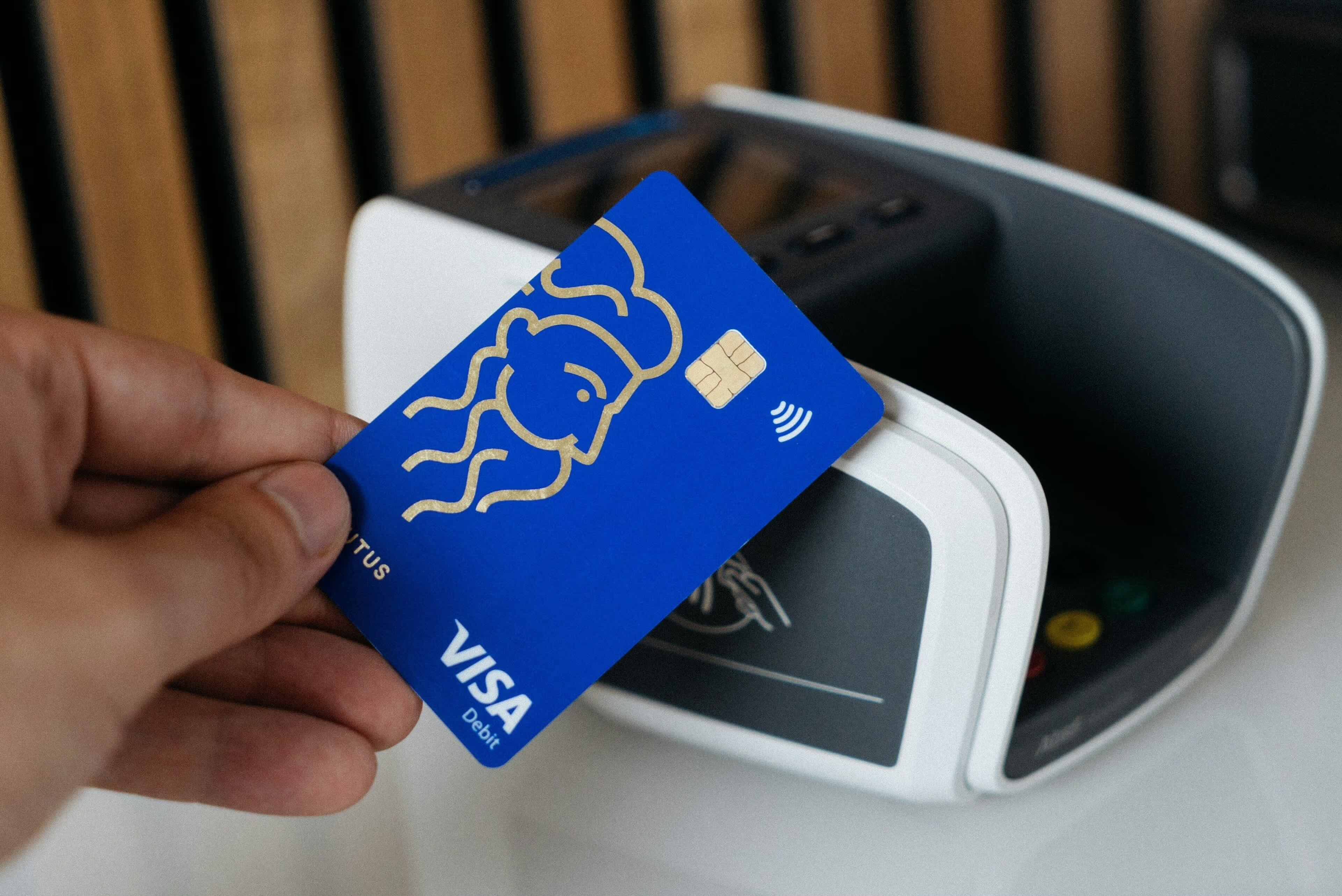
Monthly crypto payment card transaction volume has reached $15 billion, but the industry's development stage is comparable to debit cards in the 1990s, before they became a mainstream financial staple. A key limitation is the lack of established daily financial relationships, such as direct salary deposits and recurring bill payments, with crypto wallets. Despite annualized transaction volumes of approximately $18 billion, the market is concentrated and immature. The leading provider, RedotPay, commands over half the market share. User adoption is heavily skewed towards emerging markets like Bangladesh, India, and Nigeria, where access to USD and stable financial services is limited, rather than developed economies. The sector features four primary business models: 1) Card-issuing infrastructure providers, 2) Exchange-affiliated cards for user retention, 3) Decentralized wallet/DeFi cards with self-custody but high complexity, and 4) Stablecoin-focused digital banks, which dominate transaction volume by offering integrated financial services. The article argues that a pure payment functionality is insufficient for long-term success, mirroring the historical trajectory of traditional debit cards. Future winners will need to: 1) Control the upstream flow of funds, 2) Secure defensible niches in underserved markets, and 3) Most crucially, build core account relationships that integrate into users' daily financial lives. Without this evolution, crypto cards risk remaining niche prepaid tools rather than becoming universal financial infrastructure.

Foresight News5m ago

Crypto Payment Cards with $1.5 Billion Monthly Transaction Volume, Stuck in the 1990s

Foresight News5m ago

$7.8 Billion in Theft and Losses Reveals the Truth: Security Costs Have Become an Unavoidable Liquidity Tax for DeFi

"7.8 Billion in Thefts Reveals the Truth: Security Costs Have Become DeFi's Unavoidable 'Liquidity Tax'" A summary of Q2 2026 data reveals that security risks are now a fundamental capital cost in DeFi, directly impacting user returns and liquidity decisions. DeFiLlama recorded 88 hacking incidents with quantified losses totaling $780.3 million in Q2. April was the worst month with $644.8 million lost. DeFi protocol attacks accounted for $735.8 million, while cross-chain bridge exploits resulted in $354.4 million in losses (note: some event categorizations overlap). Cumulatively, DeFi hacks have reached $7.85 billion, with bridge losses at $3.26 billion. The quarter highlighted two primary risk categories: high-value infrastructure vulnerabilities (e.g., bridges, oracles, admin keys) causing massive single losses, and more frequent contract logic bugs. This signals a critical market shift: from post-incident analysis to preemptive pricing of risk. Users and liquidity providers now implicitly factor in the security of the entire asset pathway—not just pool APY—into their decisions. This hidden "risk premium" manifests through wider spreads, higher liquidity incentives, and capital migration towards perceived safer routes. Cross-chain bridge risks, responsible for over $353 million in Q2 losses, exemplify this change. Asset routing credibility is now part of the transaction. Following incidents like KelpDAO and THORChain, markets are demanding safer bridges, asset insurance, and clearer risk disclosure, increasing the cost of capital for riskier pathways. Consequently, security spending is transforming from a defensive cost into a core distribution cost for attracting liquidity. Protocols must invest more in audits, bug bounties, real-time monitoring, and insurance to remain competitive. Users are increasingly demanding transparency about fund flow paths, associated risks, and contingency plans. The key indicators for the industry's direction will be whether capital continues consolidating in trusted channels, if projects delay launches for enhanced audits, if insurance premiums rise, and if aggregators start displaying security risk metrics. Q2 2026 may be remembered not just as a bad period, but as the point when DeFi underwent a fundamental asset risk repricing, where security became a persistent,隐性 tax on all on-chain activity.

Foresight News34m ago

$7.8 Billion in Theft and Losses Reveals the Truth: Security Costs Have Become an Unavoidable Liquidity Tax for DeFi

Foresight News34m ago

Breaking News: The "Worker's Edition" Claude 5 Is Here, Everyone Can Use It

BREAKING: Claude Sonnet 5, dubbed "Fennec," is now the default model for all Free and Pro users. This mid-tier model boasts the strongest Agent capabilities in the Sonnet line yet, with performance rivaling the flagship Opus 4.8. It features autonomous planning and can utilize browser and terminal tools—capabilities previously exclusive to costly, large models. Key benchmarks highlight significant gains over its predecessor, Sonnet 4.6, in reasoning, tool use, coding, and knowledge work. Sonnet 5 scores 63.2% on SWE-bench Pro (surpassing GPT-5.5's 58.6%), 80.4% on Terminal-Bench 2.1, and 57.4% on Humanity's Last Exam (just 0.5% behind Opus 4.8). It even slightly outperforms Opus 4.8 in some knowledge tasks. Anthropic positions it as delivering ~90% of Opus's capability at a fraction of the cost. Pricing is aggressive: a limited-time promotional rate of $2 per million input tokens and $10 per million output tokens (reverting to $3/$15 after August 31). This undercuts Opus 4.8 ($5/$25) and GPT-5.5 ($5/$30). However, a new tokenizer may increase token counts by 1.0-1.35x, affecting final costs post-promotion. Notably, Sonnet 5 excels in security, with a mere 0.93% browser injection attack success rate, outperforming Mythos 5 and Opus 4.8. Its prompt injection defense matches Opus 4.8 at 0.19%. Launching amid uncertainty around the region-restricted Fable 5, Sonnet 5 is globally available. It targets the mid-market, offering near-flagship performance at a competitive price, effectively lowering the barrier for multi-Agent development and presenting a compelling alternative for cost-conscious developers.

marsbit49m ago

Breaking News: The "Worker's Edition" Claude 5 Is Here, Everyone Can Use It

marsbit49m ago

Trading

Spot

Hot Articles

What is XRP 2.0

XRP 2.0: A New Frontier in the Cryptocurrency Landscape Introduction to XRP 2.0 In the ever-evolving realm of cryptocurrency, new projects continuously emerge, vying for attention and adoption. One such promising initiative is XRP 2.0, a novel cryptocurrency project designed to leverage advanced blockchain technology and robust encryption methodologies. While the name draws parallels with Ripple’s XRP, it’s crucial to note that XRP 2.0 operates independently, focusing on enhancing transaction security, privacy, and scalability. As the digital financial landscape increasingly embraces decentralized solutions, XRP 2.0 aims to contribute meaningfully to web3 and the overall expansion of crypto projects. What is XRP 2.0? At its core, XRP 2.0 is a cryptocurrency project that aims to create a secure and decentralized digital currency ecosystem. Its foundational technology integrates sophisticated blockchain principles with cutting-edge encryption techniques. The overarching goal of XRP 2.0 is to establish itself as a reliable and efficient platform enabling swift transaction execution while prioritizing enhanced privacy protections for its users. The project is promoted as a solution to many limitations faced by existing cryptocurrencies, proposing a system that can handle a higher volume of transactions with improved speed and privacy. This versatility positions XRP 2.0 as a significant contender in a marketplace riddled with various digital currencies. Who is the Creator of XRP 2.0? The identity of the creator behind XRP 2.0 has been flagged as ‘Wilbur.’ However, comprehensive details regarding Wilbur or their associated entity remain elusive. The anonymity of many cryptocurrency creators is not an uncommon phenomenon in the industry, often designed to maintain a degree of privacy and security. Who are the Investors of XRP 2.0? As of now, specific information related to the investment foundations or organizations supporting XRP 2.0 is not publicly available. In the cryptocurrency sector, the backing by reputed investors can significantly influence a project's credibility and success, yet the transparency regarding the financial supporters of XRP 2.0 has not been established. How Does XRP 2.0 Work? XRP 2.0 stands out by employing a combination of blockchain technology and advanced encryption algorithms that ensures secure and decentralized transactions. Its innovative structure includes unique features designed to foster user engagement and broaden functionalities beyond conventional cryptocurrency transactions. Among these features, XRP 2.0 incorporates AI-powered capabilities, such as text-to-image and text-to-speech functionalities. These additions are designed to enhance the interactive experience for users, promoting broader applicability across various sectors. By bridging technological advancements with user-centered design, XRP 2.0 aims to capture the attention of a diverse range of individuals and enterprises looking to integrate cryptocurrency solutions into their operational frameworks. Timeline of XRP 2.0 Understanding XRP 2.0 requires examining the milestones that have defined its journey thus far: July 23, 2023: XRP 2.0 is introduced as a novel cryptocurrency project, aiming to revolutionize secure and decentralized transaction capabilities in the blockchain domain. September 8, 2023: The launching of another project, XRP20, occurs, marking the emergence of an ERC-20 token on the Ethereum blockchain that remains unrelated to XRP 2.0. November 13, 2023: The XRP Ledger undergoes a significant update with the release of rippled server software version 2.0.0. It is essential to note that this development is disconnected from the XRP 2.0 cryptocurrency project. Key Points About XRP 2.0 To distill the essence of XRP 2.0, several critical factors emerge: Unique Features: The inclusion of features like AI-powered text-to-image and text-to-speech further diversifies the potential applications of XRP 2.0. Blockchain Technology: The framework utilizes advanced blockchain mechanisms and encryption protocols, ensuring a secure and decentralized environment for transactions. Scalability and Privacy: XRP 2.0 prioritizes enhanced privacy protections in transaction processes and the scalability necessary to accommodate a growing user base. No Affiliation with Ripple: Importantly, despite its name, XRP 2.0 does not have any allegiance or collaboration with Ripple’s XRP, distinguishing its operational framework and objectives within the cryptocurrency ecosystem. Conclusion XRP 2.0 represents an ambitious venture into the cryptocurrency sphere, aiming to offer a combination of security, privacy, and efficiency in digital transactions. By integrating sophisticated technologies and user-friendly features, the project sets out to broaden the horizons of what cryptocurrency can achieve in today's digital economy. While the anonymity of its creator and lack of disclosed investors might raise questions for some, XRP 2.0's focus on advanced functionalities and decentralisation enhances its appeal amidst an increasingly crowded crypto market. As the cryptocurrency landscape continues to evolve, XRP 2.0 may yet emerge as a pivotal player in the expansion of secure and scalable blockchain solutions.

1.0k Total ViewsPublished 2024.04.01Updated 2024.12.03

What is XRP 2.0

Discussions

Welcome to the HTX Community. Here, you can stay informed about the latest platform developments and gain access to professional market insights. Users' opinions on the price of XRP (XRP) are presented below.

活动图片