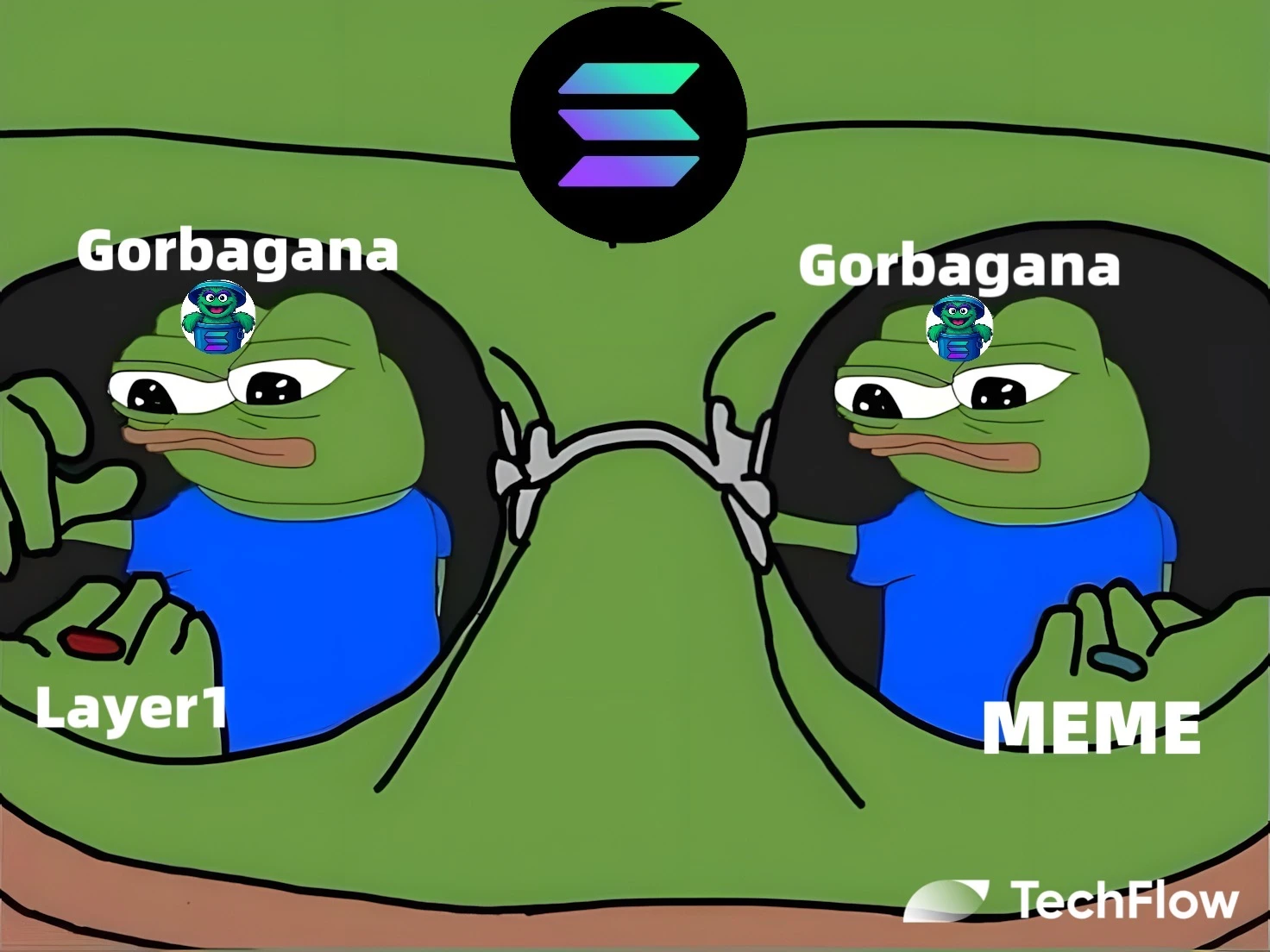
48小时从玩笑Meme到正经L1,Gorbagana要分叉Solana?

Odaily星球日报Published on 2025-06-23Last updated on 2025-06-23

Abstract

在现在这个沉闷的市场中,活跃的草根从未缺席,缺的或许只是激发他们热情的导火索。

原文作者:深潮 TechFlow

48小时从玩笑Meme到正经L1,Gorbagana要分叉Solana?

现在的加密市场,逐渐陷入倦怠。

比特币和以太坊价格在来回波动中挣扎,热点被加密美股和稳定币霸占,以前加密行业那股极客与草根交织的社区精神——玩梗、实验、集体狂欢——似乎已被行情和骗局碾平。

而最近两天,那种久违的社区整活又回来了,还带着一种淡淡的加密文艺复兴味道。

6 月 19 日,Solana 联合创始人 Anatoly Yakovenko(Toly)在社媒上的闲聊讨论,催生了一个叫做 Gorbagana 的 Meme 币 ;

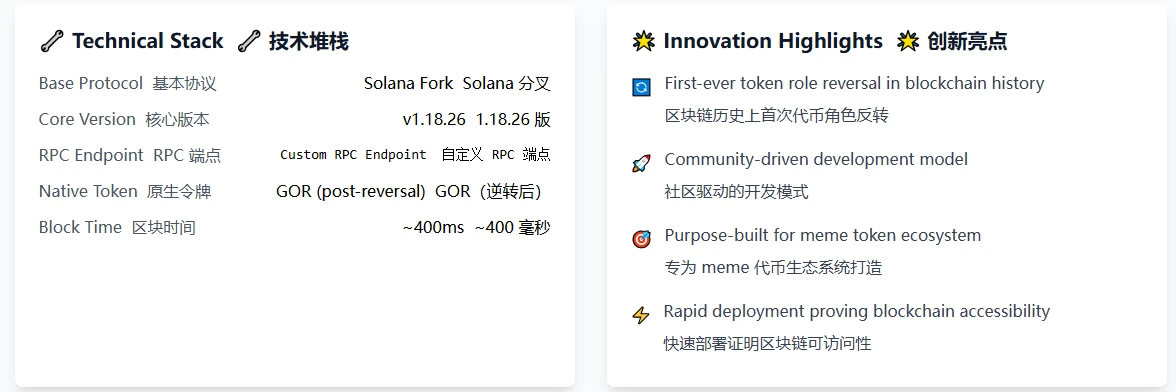
有趣之处在于,仅仅 48 小时后,和该币同名的L1链 Gorbagana Chain 就上线了测试网,并且在技术上对 Solana 进行了分叉。

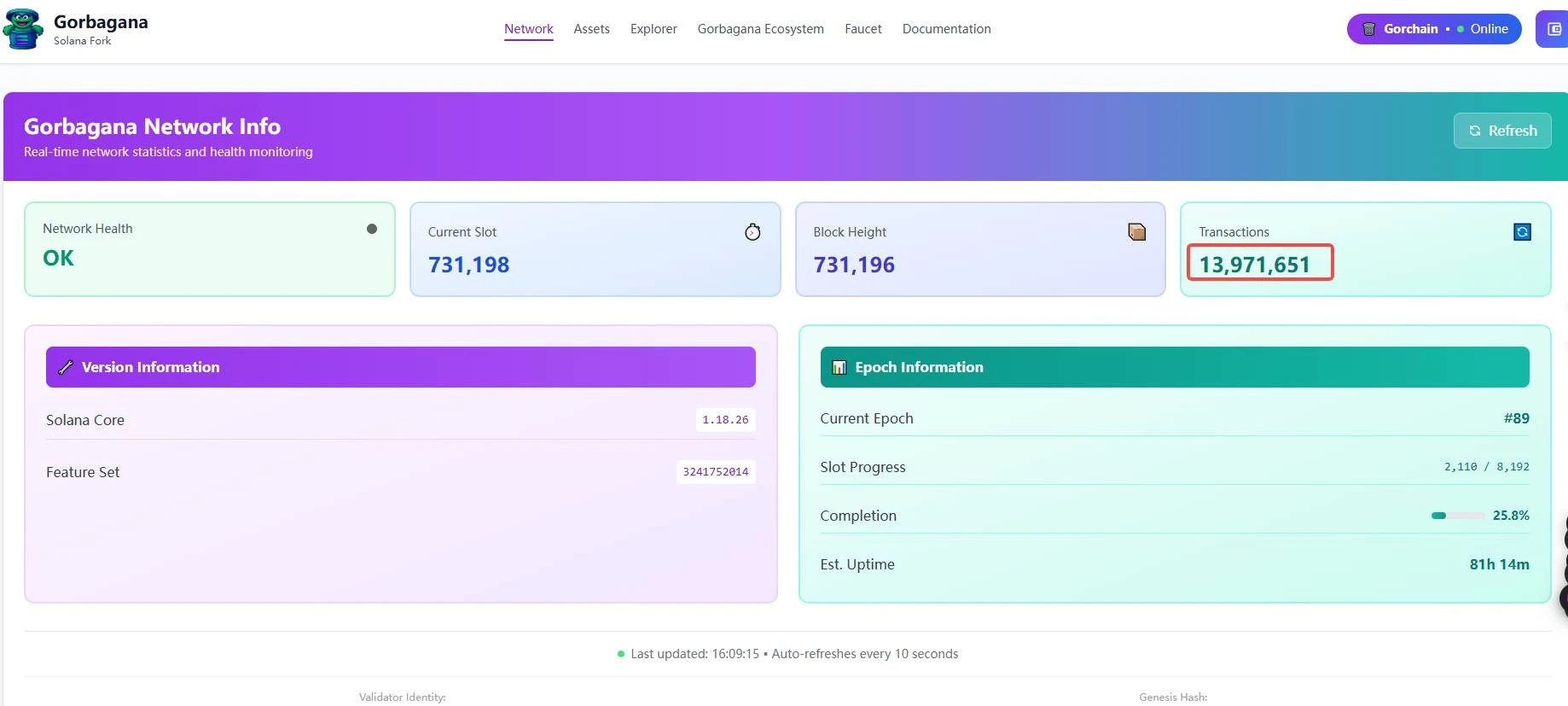
截止目前, Gorbagana 运行稳定,并已经处理了近 1400 万笔交易;代币 $GOR 市值在 4 天内已经来到了 3000 万美金(峰值 6000 万美金)。
48小时从玩笑Meme到正经L1,Gorbagana要分叉Solana?

一个 Meme 本身当然不足为奇,但有趣且讽刺的地方是,从社区发个 Meme 到做一条链只要 2 天;而之前所谓的天王级 L1 项目们,从宣发到上线测试网慢的可能要 1-2 年。

没有线路图、白皮书和营销,这不是那种典型的、精心策划的 ICO,而是一个由 Telegram 群组里的 Degen 和开发者们驱动的即兴行为。

如果你并不了解这一事件,我们也将 Gorbagana 事件始末整理如下。

48 小时,从玩笑 Meme 到正经 L1

和以前的一些经典 Meme 类似,Gorbagana 的诞生也始于一句玩笑。

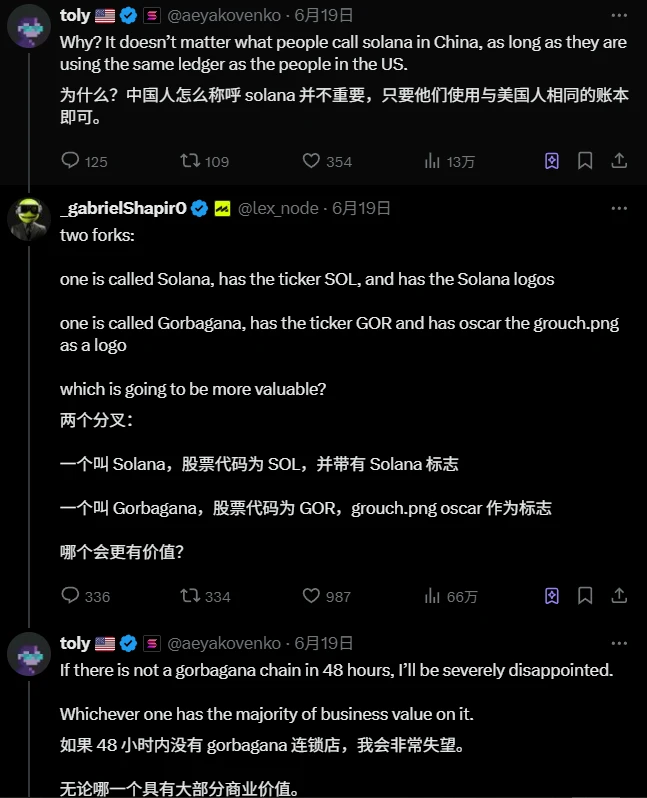
19 日,Toly 在 X 上与其他用户闲聊 Solana 的品牌辨识度等问题时,网友 @lex_node 为了驳斥 Toly 认为“品牌名其实没那么重要”的观点时,随口编造了一个概念:

如果一条链叫 Solana,另一个分叉链叫 Gorbagana,技术都差不多,但显然是 Solana 更有价值。
48小时从玩笑Meme到正经L1,Gorbagana要分叉Solana?

随后 Toly 将计就计,回帖表示“ 48 小时内如果没有一条叫 gorbagana 的链出现,那我还挺失望的”。

显然这个 gorbagana 只是一个听起来像 Solana 但更长更胡扯的名字,不过社区至此开始了整活:

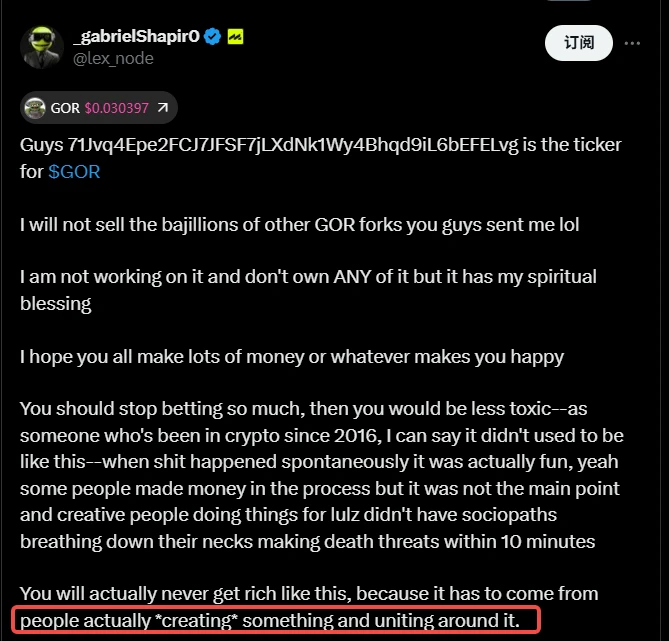
这个讨论贴 6 小时后, @lex_node 就发了一个 gorbagana 的同名代币$GOR,并告诉大家这只是个纯 meme,不要下重注。

的确发个相关 Meme 并不是什么新鲜事,事情到这里也谈不上精彩。

不过,他帖子里的这句话却发人深省:

"你实际上永远不会像这样炒 Meme 致富,因为致富必须来自人们真正*创造*某物并围绕它团结起来"。
48小时从玩笑Meme到正经L1,Gorbagana要分叉Solana?

在这句话之后,社区里的开发老哥们开始当真了。

Solana 之前在 2022 年就有一个陈年老梗叫做 SQL Chain,实际上是社区调侃 Solana 因高性能而被戏称为“SQL 数据库链”,并一直有那种 Solana 分叉出一个“垃圾版” SQL Chain 的想法。

借着这个 Gorbagana 的玩笑,分叉 Solana 的行动真的开始了。

网友 @Sarv_shaktiman 也做过开发,看到 Toly 的讨论贴和 GOR 代币后少量买了点币,并召集 Milady 项目的开发者团队,决定将这个老笑话变成现实。

只是这个从玩笑到现实的速度,过于快了:

帖子发出 6 小时,代币 GOR 上线;

帖子发出 18 小时后,这几个开发老哥就已经着手开始对 Solana 的代码架构进行逆向工程,试图分叉出一条新的 L1;

帖子发出 24 小时后,Gorbagana Chain 的测试网就上线了,并且配备了自定义 RPC 的功能,以及支持 Backpack 钱包。

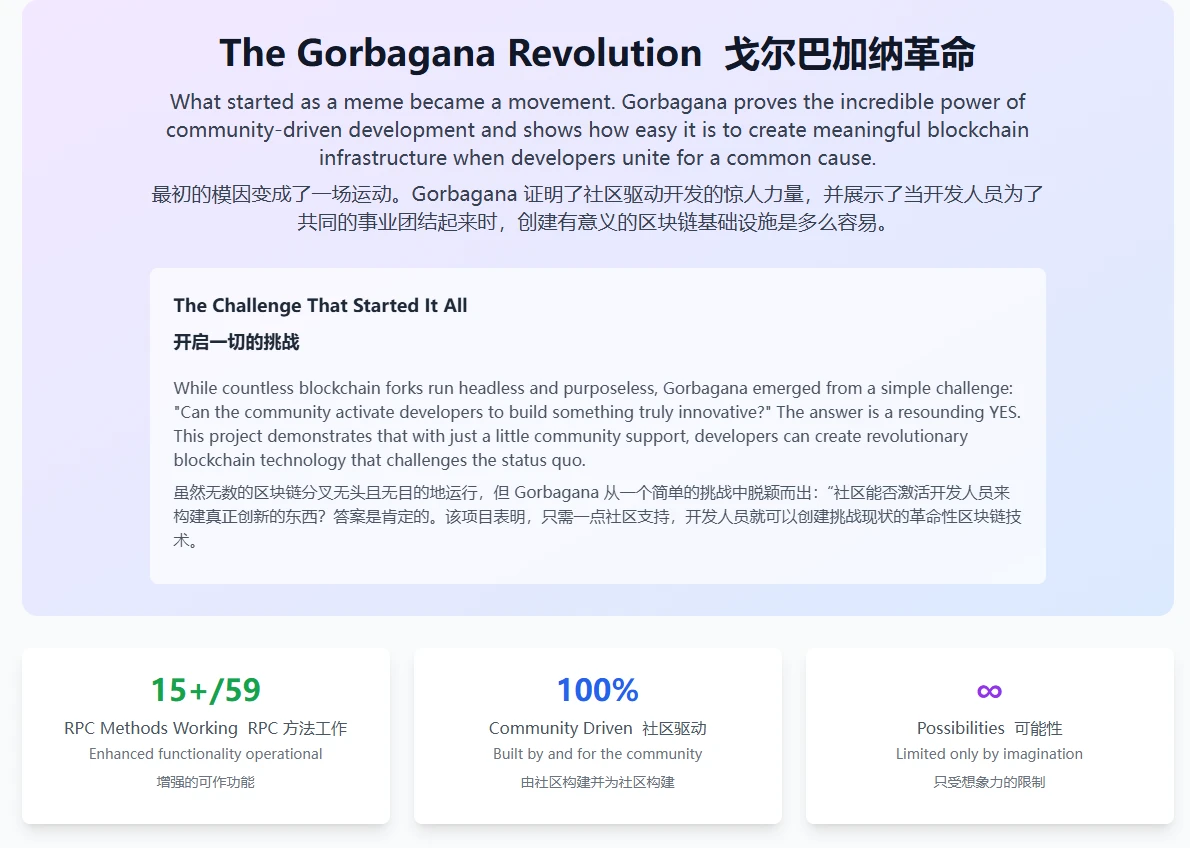
48 小时后,Gorbagana 链交易量突破了 1000 万笔,虽然是测试网,但也证明了社区开发老哥们的技术实力。$GOR 的市值峰值也来到了 6000 万美金。

整个过程,有一种久违的加密娱乐气息 ---社区的 Builder,从购买 Meme,到研究区块链架构,再到运行一条 Solana 的分叉链,买了就干,知行合一。
48小时从玩笑Meme到正经L1,Gorbagana要分叉Solana?

除了分叉了整个 Solana 的代码库做了个新 L1 外,这条链还把 Meme 币 $GOR 当作了原生代币,支持 gas 费的消耗和转账使用。

没有风投、没有营销,只有社区成员们的集体即兴发挥和协作,一个 meme 在 48 小时内变成了一条 L1 的原生代币。

这事算不上多大,但足够有意思。

是那种几年前链上活跃,各种社区项目层出不穷时的有意思。

社区协作 VS 机构孵化

复制一条链,真的那么简单吗?

分叉 Solana 听起来简单,实则有很多让人头疼的事情,比如钱包兼容性。

主流 Solana 钱包如 Phantom 和 Solflare 等因“硬编码”(预设程序只认 Solana 主网和测试网)无法支持 Gorbagana 的自定义链功能,等于把新链孤立在 Solana 的生态之外。

换言之,分叉一个 Solana 可以,但钱包不一定支持。

社区开发老哥们,面临的不是简单抄作业,而是 48 小时内打破这些技术壁垒。

其中,一位叫做 @armaniferrante 的用户,通过使用 Backpack 钱包的“远程过程调用”(RPC,一种让钱包与链通信的协议)自定义功能,让 Gorbagana 在 24 小时内就接入了 Solana 生态,也使得自定义 RPC 功能得以在新链上使用。
48小时从玩笑Meme到正经L1,Gorbagana要分叉Solana?

回头来看,你可以把这件事看作一个“degen”版的黑客马拉松。没有赛事的组织和规划,全靠群组里的老哥们实时头脑风暴提供讨论和解决方法。

虽然带头的开发老哥可能是因为买了 GOR 币而不得不扩大项目的影响力,但这一整套做法充满了技术极客那种久违的能量:

靠热情填补技术空缺,用协作来对症下药,最终完成一个大项目。

虽然 Gorbagana 整活只上了个测试网,但 48 小时相比来说仍然是神速。考虑到某些机构背书、团队豪华、资金拉满的天王级基建项目动辄几年的项目落地周期,Gorbagana 的社区协作就显得更加难能可贵。

同时,我们不禁也要问,如果全速前进,一条完备的 L1 推出测试网真的要花那么久吗?

草根有自己的的灵活性,社区协作只是为了一个娱乐化的项目,没有 KPI,也没有营销和 TGE 的节奏考虑,相较而言当然更加纯粹;

而机构级 L1 的问世,本身就牵涉着不同轮次投资者的利益。何时上线、何时公布测试网、空投预期和交互模式的 管理,不再是搞定技术那么简单。

更不用说,有时天王级项目代币是否 TGE, 还得看市场行情和情绪的好坏。这些基建项目们更像是一艘大船,装载着万千利益,在风浪中难以迅速决策和掉头。

很久之前,加密有意思的地方也正是靠草根创意而非资本堆砌。

Gorbagana 或许热度不会持续很久,但它至少证明了一件事:

在现在这个沉闷的市场中,活跃的草根从未缺席,缺的或许只是激发他们热情的导火索。

Trending Cryptos

Related Reads

Trillion-Dollar Pension Fund Entry? Franklin Bitcoin Dividend Reinvestment ETF Comes with a Built-in Selling Pressure Ceiling

Franklin Templeton has filed to launch two ETFs that embed a "default configuration" logic into Bitcoin investment, aiming to tap into massive pension fund flows. These "Bitcoin Dividend Reinvestment Index ETFs" will initially hold 95% equities and 5% Bitcoin, automatically reinvesting stock dividends to buy Bitcoin. However, a quarterly rebalancing rule forces selling of Bitcoin if its allocation exceeds 5%, capping its maximum holding at 20%. While the product cleverly circumvents advisor reluctance and compliance hurdles by labeling itself as a U.S. equity product, its actual Bitcoin buying power is minimal. Given low dividend yields (e.g., ~1% for broad market indices), annual Bitcoin purchases from a fund the size of Franklin's existing Bitcoin ETF would be a mere $3.6 million—negligible against Bitcoin's daily trading volume. Crucially, during bull markets, the fund becomes a programmed, passive *seller* of Bitcoin, potentially creating sustained sell pressure if many similar funds emerge. The strategy leverages investor inertia and automatic enrollment, similar to the success of target-date funds in 401(k) plans. It also uses an offshore Cayman subsidiary for holding Bitcoin and raises a tax complication where investors must pay taxes on dividends they never receive as cash. Although recent U.S. regulatory changes allow crypto in retirement plans, widespread adoption as a default option faces legal hurdles. The core premise remains: the system doesn't need to convince anyone to buy Bitcoin actively; it simply relies on people doing nothing.

marsbit24m ago

Trillion-Dollar Pension Fund Entry? Franklin Bitcoin Dividend Reinvestment ETF Comes with a Built-in Selling Pressure Ceiling

marsbit24m ago

Bitcoin Hits 20-Month Low as Largest Bull Suffers $15 Billion Paper Loss

Bitcoin Hits 20-Month Low as Major Bull Loses $15 Billion On June 25th, Bitcoin fell below $60,000, hitting a low of $58,030—its lowest level since October 2024. The sell-off triggered over $1 billion in leveraged liquidations in 24 hours, with longs accounting for $788 million. This marks a more than 53% decline from the October 2025 all-time high of $126,198. A critical factor in the downturn is the weakening position of MicroStrategy, the largest corporate Bitcoin holder. With 847,363 BTC at an average cost of $75,651, the company now faces over $14.6 billion in unrealized losses. Its core financing flywheel—raising capital to buy Bitcoin—is stalling. Its variable-rate preferred shares (STRC), a key fundraising tool, have fallen 25% below their $100 target. This raises doubts about its ability to continue providing steady institutional demand for Bitcoin. Simultaneously, U.S. spot Bitcoin ETFs are experiencing significant outflows, with a single-day net outflow of $469 million on June 24th. This represents the most severe sustained capital flight since their launch. The macroeconomic backdrop remains restrictive, with persistent inflation delaying expected Fed rate cuts. Analysts note a shift in capital allocation, with institutional funds moving away from crypto towards AI infrastructure stocks. Immediate pressure comes from approximately $10 billion worth of Bitcoin options expiring on June 26th, which could increase market volatility. The combined effect of these factors—eroding core demand pillars, macro headwinds, and capital rotation—has decisively broken the $60,000 support level.

Foresight News31m ago

Bitcoin Hits 20-Month Low as Largest Bull Suffers $15 Billion Paper Loss

Foresight News31m ago

STRC Falls Below $80, Can Conservative Investors Still Buy the Dip?

The article analyzes whether the STRC (a perpetual preferred stock issued by MicroStrategy) presents a buying opportunity after its price fell below its $100 par value to around $80, offering a seemingly high yield of 13-15%. The core argument is that STRC's discount reflects market skepticism about the sustainability of MicroStrategy's capital structure model, not just temporary panic. This model relies on issuing securities (like STRC) to raise funds to buy more Bitcoin, a "flywheel" that works in a bull market. The recent small sale of BTC to fund dividends, while minor, broke the psychological "never sell" anchor and signaled potential strain. Key risks identified are not a traditional Ponzi collapse but a potential breakdown in the financing narrative: 1) If Bitcoin enters a deep bear market, crushing MicroStrategy's stock premium (mNAV), its ability to raise cheap capital weakens. 2) If STRC remains deeply discounted, it signifies permanently higher funding costs. 3) The high cash dividend yield represents a significant ongoing expense. 4) If selling BTC to pay dividends becomes routine, the bullish narrative reverses. The conclusion is that STRC is not a risk-free high-yield asset. It is a high-coupon bet on whether MicroStrategy's BTC treasury financing model can withstand a bear market. Buying it is a wager that the market will continue to believe in and fund this structure at acceptable costs. The current price asks if this cycle's "casualty" might be a BTC treasury company's融资 model itself.

marsbit46m ago

STRC Falls Below $80, Can Conservative Investors Still Buy the Dip?

marsbit46m ago

Why Do Crypto Projects Keep Changing Their Names?

**Why Do Crypto Projects Keep Changing Names?** In the crypto world, changing a project's name is common—over 16% of projects have done so, including major ones like Polygon (formerly Matic Network). This contrasts sharply with traditional businesses, which fiercely protect brand equity. The core reason is that in crypto, brand loyalty is often weak. Users are frequently investors, airdrop hunters, or yield seekers, not traditional consumers. A name associated with price crashes, hacks, or failed narratives becomes a liability, not an asset. Renaming can be a strategic reset to shed this baggage. Name changes serve as a potent marketing tool. They can signal a genuine pivot in strategy or scope (e.g., EthSign dropping "Eth" as it expanded). However, they are often used to "narrative surf," rebranding to align with hot trends like AI, RWA, or the metaverse (e.g., Elrond → MultiversX). Critically, renaming is also a PR tactic to distance a project from past failures like security breaches (e.g., Anyswap → Multichain). The most significant risk emerges when a name change is coupled with a token migration or swap. This process can allow projects to reset exchange price charts, erase visible historical downtrends, and create an illusion of a fresh start. It often facilitates liquidity resets, where low float can be exploited for pumps. More alarmingly, migrations sometimes mask overhauls to tokenomics, introducing substantial new token supply through "ecosystem funds" or "node rewards," effectively diluting existing holders. The fundamental issue isn't renaming itself, which can be valid for strategic evolution. The problem is when it functions as an escape from history—a way to avoid accountability for past mistakes, failed promises, and poor performance. When a project announces a rebrand, the critical questions are: What tangible new capability or strategy does it represent? Has the tokenomics changed? And what part of its past is it most trying to make users forget?

marsbit53m ago

Why Do Crypto Projects Keep Changing Their Names?

marsbit53m ago

Trading

Spot
Futures

Hot Articles

Discussions

Welcome to the HTX Community. Here, you can stay informed about the latest platform developments and gain access to professional market insights. Users' opinions on the price of MEME (MEME) are presented below.

活动图片