Юрист, выступающий за XRP, опровергает слухи о «юридической неясности» Ripple от Bitcoin Maxis

cryptonews.ruPublished on 2024-11-04Last updated on 2025-06-04

В ходе затянувшегося судебного разбирательства между Ripple и Комиссией по ценным бумагам и биржам США (SEC) судья Аналиса Торрес приняла новое решение, которое вызвало резонанс в криптомире.

Судья Торрес отклонила совместный запрос Ripple и Комиссии по ценным бумагам и биржам на так называемое «рекомендательное решение». Проще говоря, она сказала им, что если бы дело снова оказалось под её контролем, она всё равно не стала бы рассматривать их запрос, потому что он был подан неправильно.

Ходят слухи: не хватает ли XRP юридической ясности?

Сразу после этого в социальных сетях начали быстро распространяться слухи о том, что XRP до сих пор не имеет юридической ясности, поскольку ни один суд официально не классифицировал его — подобно тому, как биткоин называют товаром.

Сторонники биткоина утверждают, что, поскольку XRP не был «классифицирован» как биткоин, это означает, что XRP остаётся в правовом подвешенном состоянии. Но адвокат, выступающий за XRP, Билл Морган вмешался, чтобы прояснить ситуацию.

Билл Морган: аргумент «отсутствие правовой ясности» не имеет смысла

Билл Морган назвал этот аргумент «нелогичной чепухой». Он объяснил, что если криптоактив не был официально признан судом или правительством, это не означает, что ему не хватает юридической ясности.

Морган отметил, что даже в других странах, таких как Австралия, Верховный суд лишь недавно признал биткоин «собственностью». Это не значит, что раньше это было неясно — просто официально это не было обозначено.

По поводу правовой ясности и XRP распространяется нелогичная чушь. Утверждается, что XRP не имеет правовой ясности, потому что ни один суд не «классифицировал» его. Биткоин-максимы говорят, что биткоин был классифицирован как товар, но XRP не был классифицирован таким образом, поэтому…

— Билл Морган (@Belisarius2020) 3 июня 2025 года

Он добавил, что в США дебаты между сырьевыми товарами и ценными бумагами имеют значение главным образом потому, что SEC агрессивно нацелена на криптовалюты. Если актив классифицируется как товар, он избегает регулирования SEC, вот почему так много людей в криптопространстве заботятся об этом вопросе.

XRP уже имеет юридическую ясность в тех вопросах, которые имеют значение

Морган напомнил сообществу, что судья Торрес уже постановил, что XRP сам по себе не является ценной бумагой. По его словам, это решение является своего рода правовой ясностью, поскольку оно отвечает на один из важнейших вопросов о статусе XRP.

Суды, как объяснил Морган, не занимаются классификацией ради классификации. Они выносят решения по конкретным юридическим вопросам, которые им представляют. И в данном случае вопрос заключался в том, были ли продажи XRP компанией Ripple незаконными продажами ценных бумаг, а не в том, является ли XRP товаром, валютой или чем-то ещё.

Подводим итоги: что такое XRP… и чем он не является

Эксперт считает, что если бы судье Торрес пришлось классифицировать XRP, то, судя по обоснованию её решения, она, возможно, склонилась бы к тому, чтобы назвать его товаром. Но, что ещё более важно, мы уже точно знаем, что XRP не является ценной бумагой, и это большая победа.

Он также отметил, что в правовых системах по всему миру многие вещи имеют правовую ясность, даже если они официально не закреплены в законе. Следует сосредоточиться на том, чем что-то не является, а XRP не является ценной бумагой. Уже одно это обеспечивает значительную правовую определённость на данный момент.


Trending Cryptos

Related Reads

A Decade of Change: The Demise of Crypto Startups

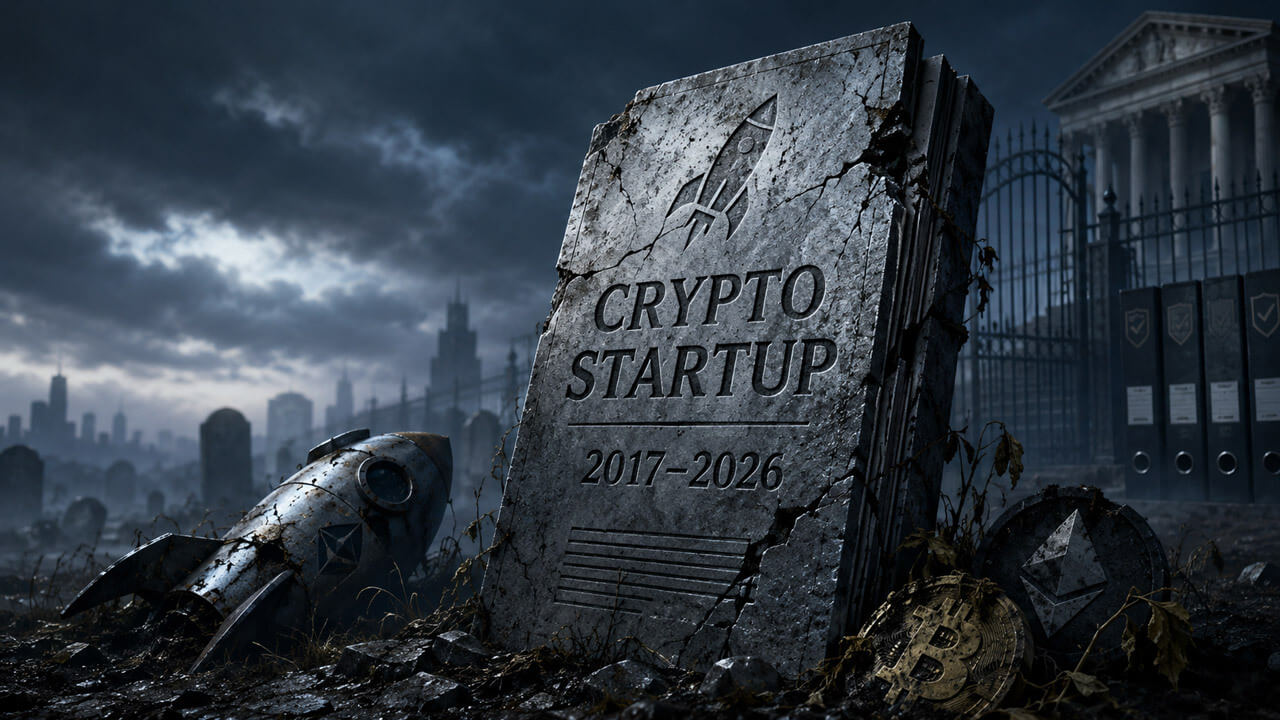
"The Decade-Long Transformation: The Demise of Crypto Startups" The article traces the dramatic evolution of the cryptocurrency industry from its anarchic beginnings to its current highly regulated and institutionalized state. In the early days (circa 2017), launching a crypto startup was remarkably simple: a whitepaper, a GitHub repository, and a Telegram group could attract thousands of retail investors via an Initial Coin Offering (ICO). Founders operated anonymously with near-zero regulatory and financial barriers, enabling rapid, global innovation but also widespread fraud. By 2026, the landscape is fundamentally different. To operate in major markets like the US, EU, and Asia, crypto businesses must now navigate a complex web of regulations akin to traditional finance. Compliance costs are prohibitive: estimates for a US multi-state operation range from $750,000 to $1.2 million in the first three years, with annual costs exceeding $2 million thereafter. Regulations like MiCA in the EU and New York's BitLicense have created high capital and operational hurdles that act as barriers to entry. Simultaneously, venture capital investment has shifted dramatically. Following the collapses of Terra and FTX, funding has concentrated in later-stage, established companies, creating a "barbell market." Early-stage and seed funding has shrunk significantly, while mega-funds like Andreessen Horowitz's $15 billion pool dominate. Most capital now flows to trading platforms, lending infrastructure, and B2B services. This environment favors mergers and acquisitions as the primary path for growth. Companies like Coinbase and Ripple are acquiring firms like Deribit and Hidden Road not for their technology, but for their licenses, banking relationships, and institutional trust—assets far more valuable than code. Distribution channels, compliance, and brand reputation have become the new moats, overshadowing pure technical innovation. The industry's maturation brings benefits: reduced scams, increased institutional participation, and clearer regulatory frameworks. However, it comes at a cost. The low-barrier, experimental ethos that defined crypto's first decade is fading. Entrepreneurs without substantial capital, pre-existing licenses, or institutional connections face immense challenges. Funding for exploratory fields like decentralized social media or novel governance models is drying up. Ultimately, the crypto industry is replicating the consolidation pattern seen in banking and tech after the 2008 financial crisis. While this brings stability and legitimacy, it raises a critical question: in this new, resource-intensive reality, is there still room for the disruptive, from-scratch innovation that gave birth to the sector?

Foresight News32m ago

A Decade of Change: The Demise of Crypto Startups

Foresight News32m ago

Trading

Spot

Hot Articles

What is $BITCOIN

DIGITAL GOLD ($BITCOIN): A Comprehensive Analysis Introduction to DIGITAL GOLD ($BITCOIN) DIGITAL GOLD ($BITCOIN) is a blockchain-based project operating on the Solana network, which aims to combine the characteristics of traditional precious metals with the innovation of decentralized technologies. While it shares a name with Bitcoin, often referred to as “digital gold” due to its perception as a store of value, DIGITAL GOLD is a separate token designed to create a unique ecosystem within the Web3 landscape. Its goal is to position itself as a viable alternative digital asset, although specifics regarding its applications and functionalities are still developing. What is DIGITAL GOLD ($BITCOIN)? DIGITAL GOLD ($BITCOIN) is a cryptocurrency token explicitly designed for use on the Solana blockchain. In contrast to Bitcoin, which provides a widely recognized value storage role, this token appears to focus on broader applications and characteristics. Notable aspects include: Blockchain Infrastructure: The token is built on the Solana blockchain, known for its capacity to handle high-speed and low-cost transactions. Supply Dynamics: DIGITAL GOLD has a maximum supply capped at 100 quadrillion tokens (100P $BITCOIN), although details regarding its circulating supply are currently undisclosed. Utility: While precise functionalities are not explicitly outlined, there are indications that the token could be utilized for various applications, potentially involving decentralized applications (dApps) or asset tokenization strategies. Who is the Creator of DIGITAL GOLD ($BITCOIN)? At present, the identity of the creators and development team behind DIGITAL GOLD ($BITCOIN) remains unknown. This situation is typical among many innovative projects within the blockchain space, particularly those aligning with decentralized finance and meme coin phenomena. While such anonymity may foster a community-driven culture, it intensifies concerns about governance and accountability. Who are the Investors of DIGITAL GOLD ($BITCOIN)? The available information indicates that DIGITAL GOLD ($BITCOIN) does not have any known institutional backers or prominent venture capital investments. The project seems to operate on a peer-to-peer model focused on community support and adoption rather than traditional funding routes. Its activity and liquidity are primarily situated on decentralized exchanges (DEXs), such as PumpSwap, rather than established centralized trading platforms, further highlighting its grassroots approach. How DIGITAL GOLD ($BITCOIN) Works The operational mechanics of DIGITAL GOLD ($BITCOIN) can be elaborated on based on its blockchain design and network attributes: Consensus Mechanism: By leveraging Solana’s unique proof-of-history (PoH) combined with a proof-of-stake (PoS) model, the project ensures efficient transaction validation contributing to the network's high performance. Tokenomics: While specific deflationary mechanisms have not been extensively detailed, the vast maximum token supply implies that it may cater to microtransactions or niche use cases that are still to be defined. Interoperability: There exists the potential for integration with Solana’s broader ecosystem, including various decentralized finance (DeFi) platforms. However, the details regarding specific integrations remain unspecified. Timeline of Key Events Here is a timeline that highlights significant milestones concerning DIGITAL GOLD ($BITCOIN): 2023: The initial deployment of the token occurs on the Solana blockchain, marked by its contract address. 2024: DIGITAL GOLD gains visibility as it becomes available for trading on decentralized exchanges like PumpSwap, allowing users to trade it against SOL. 2025: The project witnesses sporadic trading activity and potential interest in community-led engagements, although no noteworthy partnerships or technical advancements have been documented as of yet. Critical Analysis Strengths Scalability: The underlying Solana infrastructure supports high transaction volumes, which could enhance the utility of $BITCOIN in various transaction scenarios. Accessibility: The potential low trading price per token could attract retail investors, facilitating wider participation due to fractional ownership opportunities. Risks Lack of Transparency: The absence of publicly known backers, developers, or an audit process may yield skepticism regarding the project's sustainability and trustworthiness. Market Volatility: The trading activity is heavily reliant on speculative behavior, which can result in significant price volatility and uncertainty for investors. Conclusion DIGITAL GOLD ($BITCOIN) emerges as an intriguing yet ambiguous project within the rapidly evolving Solana ecosystem. While it attempts to leverage the “digital gold” narrative, its departure from Bitcoin's established role as a store of value underscores the need for a clearer differentiation of its intended utility and governance structure. Future acceptance and adoption will likely depend on addressing the current opacity and defining its operational and economic strategies more explicitly. Note: This report encompasses synthesised information available as of October 2023, and developments may have transpired beyond the research period.

627 Total ViewsPublished 2025.05.13Updated 2025.05.13

What is $BITCOIN

Discussions

Welcome to the HTX Community. Here, you can stay informed about the latest platform developments and gain access to professional market insights. Users' opinions on the price of BTC (BTC) are presented below.

活动图片