Cyber、EigenLayer、Sentient、RootData 等携手推出 Crypto AI Benchmark Alliance,树立 Crypto AI 新标杆

链捕手Published on 2025-06-04Last updated on 2025-06-04

Cyber、EigenLayer、Sentient 等 14 家区块链与人工智能项目方今日共同宣布成立 Crypto AI Benchmark Alliance(CAIBA)。这一开源、社区驱动的联盟将致力于为加密行业的 AI 模型与智能体建立透明、可信的评测标准。

首批发起成员——Alchemy、Cyber、Dune、EigenLayer、Goldsky、IOSG、LazAI、Magic Newton、Metis、MyShell、OpenGradient、RootData、Sentient 与 Thirdweb——会一起合作贡献数据集、工具与专业知识,共同搭建评测框架。每一套基准将包含任务、参考答案及评分脚本,并在 GitHub、Hugging Face 等平台以开放许可证(许可范围允许时)发布。

随着 AI 在加密领域的应用不断扩张,从交易策略到研究助手无所不包,传统 AI 基准已难以反映该行业的独特需求。CAIBA 旨在弥补这一空白,推出面向加密场景的专业评测。

“透明而严格的测试至关重要,”Cyber 联合创始人 Ryan Li 表示,“模型不仅要答对题,还必须可靠执行,让用户在决策时更有信心。”

联盟首个成果 a Benchmark for Crypto AI Agents(CAIA) 现已上线,它从三大维度衡量 AI 能力:

  • 知识(Knowledge):精准回答协议、代币等问题
  • 规划(Planning):制定多步骤任务方案
  • 行动(Action):借助区块浏览器和 API 完成操作

CAIA 覆盖了代币经济学、链上分析、项目研究及交易流程等场景,评测对象包括 GPT-4o、Claude 4、Gemini 2.5、DeepSeek-R1 等通用大模型,以及多款加密原生模型。

通过在真实任务中检验模型,CAIBA 为加密 AI 建立了统一、可复现的衡量标准,助力行业构建更可信的智能应用。联盟已在开发更多基准,并欢迎新成员加入。开发者、研究者和协议团队可提交模型参与评测,或提出全新任务。


关于 Crypto AI Benchmark Alliance(CAIBA)

Crypto AI Benchmark Alliance 是一个社区治理的开放联盟,专注于制定面向加密场景的 AI 评测标准。通过开放数据集、可复现任务与公共排行榜,CAIBA 为开发者、研究者和协议提供工具,衡量并改进区块链应用中的 AI 系统。了解详情,请访问 caiba.ai

Trending Cryptos

Related Reads

Apple and the Power Rebalancing with 'The Microns': Dissecting the Profit Ledger Behind the iPhone

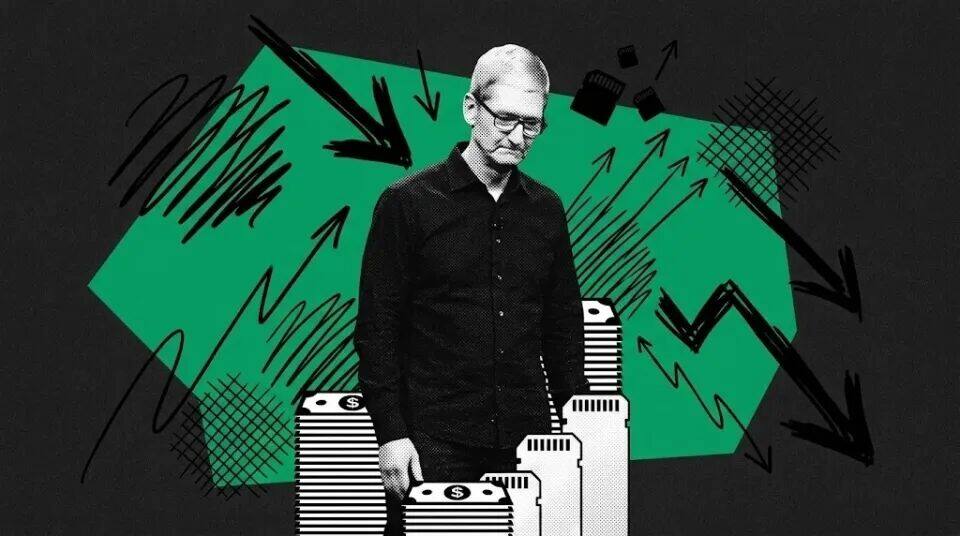
The article analyzes the shifting profit dynamics and power balance between Apple and memory suppliers like Micron within the iPhone supply chain. It highlights a social media post criticizing Apple for raising iPhone prices while blaming memory chip cost increases, despite historically paying suppliers like Micron very little. An estimated iPhone 18 cost breakdown is referenced. Historically, memory was a minor cost component. In 2017's iPhone X, memory accounted for only about 1.6-2.3% of the price, with Apple capturing nearly 50% net profit. Over time, memory's share of the Bill-of-Materials (BOM) cost has grown significantly, reaching an estimated 12-15% for the iPhone 17 series. The core driver of this change is soaring demand for memory from the AI industry, particularly for High Bandwidth Memory (HBM) and AI servers, which is diverting production capacity and squeezing supply for consumer electronics. Memory manufacturers, after enduring periods of low profits, now hold greater pricing power. This is reflected in their recent strong financials, like Micron's 84.6% gross margin. Apple CEO Tim Cook initially described the memory price pressure as unprecedented in his 40-year career, later calling it a "once-in-a-century flood," before Apple announced price hikes across several product lines, causing a significant stock drop. Elon Musk echoed Cook's sentiment about the dramatic cost surge. The article concludes that the era of memory suppliers being at the mercy of Apple's pricing power has temporarily reversed, thanks to AI-driven demand. It notes Apple is reportedly seeking to diversify its supply chain, including exploring chips from China's CXMT.

Odaily星球日报5m ago

Apple and the Power Rebalancing with 'The Microns': Dissecting the Profit Ledger Behind the iPhone

Odaily星球日报5m ago

Conversation with the Founder of 42 Macro: The Fed's 'Boiling the Frog Slowly' and the K-Shaped Economy

In a conversation with Anthony Pompliano, Darius Dale, founder of 42 Macro, discusses the Federal Reserve's monetary policy and the K-shaped U.S. economy. Dale characterizes new Fed Chair Kevin Warsh as a "dove in hawk's clothing," expecting the Fed to signal or enact policy tightening in the coming quarters to create room for later easing. He argues current economic signals, including high deficit spending, debt monetization, and credit growth, strongly indicate inflation is not on a credible path back to 2%, forcing the Fed to act. The discussion highlights the stark "K-shaped" economic reality. While top earners, buoyed by massive cash savings (up ~$8 trillion since pre-pandemic), continue robust spending, those at the bottom face severe financial strain, with delinquency rates on consumer loans reaching crisis-era highs. Dale attributes much of the current social and political anxiety to this divergence, driven by the "Cantillon effects" of monetary expansion, which disproportionately benefits asset owners. He emphasizes that in this environment of "financial repression," individuals must participate in asset markets to avoid being left behind. On equities, Dale notes a rotation from the "Magnificent Seven" tech giants into broader AI-exposed companies, while warning that the tech giants' massive capital expenditure cycles could eventually puncture over-optimistic cash flow projections. Dale concludes by stressing that the core desire across all economic strata is simply the dignity to provide for one's family, a goal currently undermined by systemic policies that act as a "wealth siphon" from the bottom to the top.

marsbit34m ago

Conversation with the Founder of 42 Macro: The Fed's 'Boiling the Frog Slowly' and the K-Shaped Economy

marsbit34m ago

The Domestic Answer to Space Computing Power: Photonics Are More Efficient, Musk and Huang's Approaches Are Too Roundabout

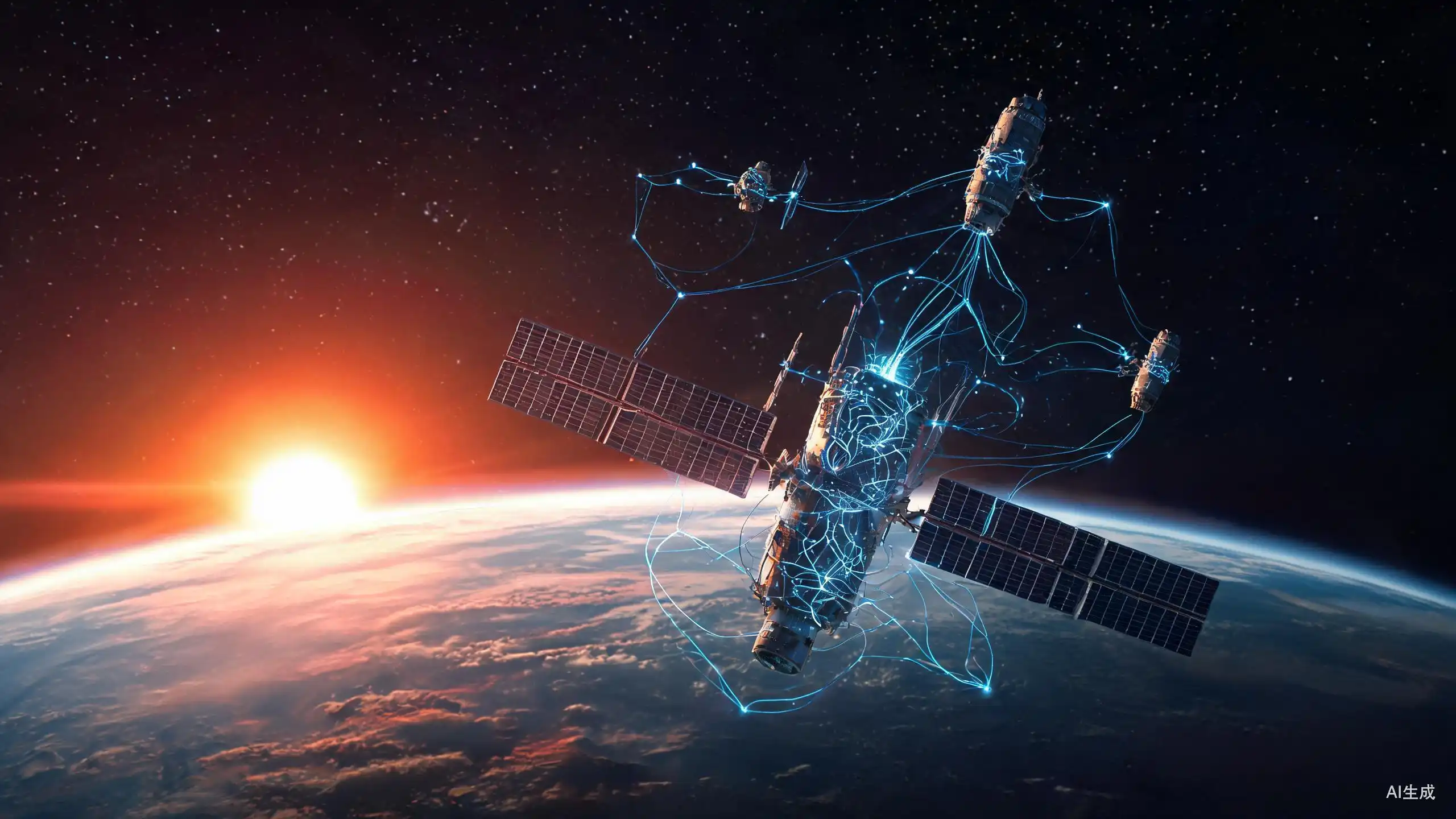
The Space Computing Race: A Photonic Advantage The competition for space-based computing has intensified, with figures like Elon Musk and NVIDIA's Jensen Huang highlighting its potential. Musk predicts solar-powered AI satellites could offer the most cost-effective computing by 2032. However, space presents extreme challenges for traditional electronic chips: radiation from cosmic particles can cause errors, the vacuum environment hinders heat dissipation, and limited solar power constrains energy-hungry systems. Photonic computing, using light instead of electrons, offers a promising solution. Its core advantages for space are threefold: 1) **Radiation Resistance**: Photons are charge-neutral, making them inherently immune to particle interference. 2) **Low Heat Generation**: Light propagation in waveguides generates minimal heat, bypassing critical thermal management issues. 3) **Low Power Consumption**: Photonic chips have near-zero static power draw, aligning perfectly with the energy constraints of satellites. Furthermore, for a given payload weight and volume, photonic systems can potentially deliver higher total compute density. Since they require less bulky cooling and power infrastructure, more space can be allocated to the compute units themselves. While photonic computing holds great promise, current industry approaches face hurdles like the memory-compute bottleneck (separate storage and processing) and challenges in large-scale integration. Engineering for space—withstanding launch vibrations and validating full system operation in orbit—remains a critical step. The path forward resembles the evolution from single GPUs to computing clusters, but via a photonic route. As electronic chips approach physical limits in miniaturization, photonic computing and optical interconnects (光算光联) may provide a key alternative to bypass these constraints and define the next generation of space-based computing capabilities.

marsbit1h ago

The Domestic Answer to Space Computing Power: Photonics Are More Efficient, Musk and Huang's Approaches Are Too Roundabout

marsbit1h ago

Trading

Spot

Hot Articles

Discussions

Welcome to the HTX Community. Here, you can stay informed about the latest platform developments and gain access to professional market insights. Users' opinions on the price of AI (AI) are presented below.

活动图片