【比推一周web3新闻精选】稳定币巨头 Circle 申请纽交所上市;美 SEC 对 WisdomTree XRP 现货 ETF 启动进一步审查程序;特朗普媒体集团宣布启动约 25 亿美元比特币金库策略

比推Published on 2025-05-31Last updated on 2025-05-31

比推一周Web3新闻精选:

【美国银行业团体要求 SEC 取消网络安全事件披露规则】

比推消息,据 Cointelegraph 报道,由美国银行家协会牵头的五大银行业团体于 5 月 22 日联名致函美国证券交易委员会(SEC),要求废除 2023 年 7 月颁布的《网络安全风险管理规则》中关于上市公司需在四天内公开披露网络安全事件的规定。

参与联署的包括证券业与金融市场协会、银行政策研究所等机构。银行业团体指出,该规则与保护关键基础设施的保密报告要求直接冲突,可能阻碍事件响应和执法行动,并造成市场混乱。他们特别要求取消8-K表格中的"1.05 条款",认为现有重大信息披露框架已足以保护投资者利益。 该规则对上市加密公司同样适用。

本月初 Coinbase 就因披露用户数据泄露事件面临至少七起诉讼,该公司拒绝支付 2000 万美元赎金,预估潜在损失高达 4 亿美元。若规则取消,相关企业将获得更灵活的事件披露时间。

【日本 34 年来首次失去全球最大债权国的地位】

比推消息,据金十数据报道,日本财务省周二表示,日本 34 年来首次失去全球最大债权国的地位,被德国取代,尽管日本对外总资产余额升至创纪录高位,部分原因是日元走软。

截至去年年底,日本对外净资产余额较上年同期增长 12.9%,达到 533.05 万亿日元(3.7 万亿美元),首次突破 500 万亿日元,但低于德国的 569.65 万亿日元。日本财务省表示,日元贬值提振了日本的外币资产,包括股票、债券和其他资产在换算成本币后的价值,并补充说,德国从巨额经常帐盈余中受益。

受国内金融机构和贸易公司对美直接投资的推动,日本对外资产总额增长 11.4%,至 1,659.22 万亿日元。对外负债增加了 10.7%,达到 1125.97 万亿日元。

【Solana 联创 Raj Gokal 个人信息被泄露】

比推消息,Solana 联合创始人及 Solana Labs 总裁 Raj Gokal 的多项个人身份信息于 5 月 27 日晚间被发布在美国说唱团体 Migos 的官方 Instagram 页面,疑似因该账号遭黑客入侵。

该账号拥有逾 1300 万粉丝,攻击者在平台上连续发布 7 张图片,内容包括 Gokal 本人与护照、驾照合影的自拍照,部分图片中还出现疑似其妻子的证件照。此外还有包含电话号码等隐私信息的截图,黑客鼓动用户“骚扰” Gokal,并留言称“你本该支付那 40 枚 BTC”,疑似暗示事件涉及未遂勒索。

【稳定币巨头 Circle 申请纽交所上市】

比推消息,据 CoinDesk 报道,稳定币巨头 Circle 已向纽约证券交易所提交 IPO 申请,股票代码为“CRCL”。

公司将发行 2400 万股 A 类股,其中 960 万股由公司发行,1440 万股来自现有股东出售,预计定价区间为每股 24 至 26 美元。Circle 为 USDC 发行方,此次上市标志其向传统金融市场进一步靠拢。

【特朗普媒体集团宣布启动约 25 亿美元比特币金库策略】

比推消息,据市场消息,特朗普媒体科技集团宣布将启动约 25 亿美元的比特币金库策略,旨在将 BTC 纳入其资产储备,用于财务稳定及长期价值储存。

特朗普媒体科技集团已与约 50 家机构投资者达成认购协议,将进行总额约 25 亿美元的私募发行。 此次发行包括约 15 亿美元的普通股和 10 亿美元的 0 息可转换优先担保票据,所得款项旨在用于创建比特币金库。 该公司将使用 Crypto.com 和 Anchorage Digital 保管其比特币资金,预计此次发行将于 2025 年 5 月 29 日左右完成。

【美 SEC 对 WisdomTree XRP 现货 ETF 启动进一步审查程序】

比推消息,据官方文件显示,美国证券交易委员会(SEC)宣布 WisdomTree XRP 现货 ETF“征询公众意见”阶段已结束,对其“启动进一步审查程序”,尚未直接批准或否决。

SEC 于 2025 年 2 月 19 日正式受理 WisdomTree 的 XRP ETF 申请,并启动公众评论期,目前评论期已结束。SEC 有权将审查期延长至最多 240 天,最终决定最晚于 2025 年 10 月底之前公布。

【马斯克宣布即将离开特朗普政府】

比推消息,马斯克于 X 发文称,“在我作为特殊政府雇员的时间即将结束之际,我想感谢特朗普总统给我这个削减浪费性开支机会。政府效率部(DOGE)的使命只会随着时间的推移而加强,因为它将成为整个政府的一种生活方式。”

【美 SEC 公布“DeFi 与美国精神”圆桌会议议程和受邀嘉宾】

比推消息,美国证券交易委员会(SEC)加密小组公布其定于 6 月 9 日举行的“DeFi 与美国精神”圆桌会议议程及受邀嘉宾名单。官方出席人员包括 SEC 主席 Paul S. Atkins、加密事务首席助理 Richard B. Gabbert 以及三位 SEC 委员 Caroline A. Crenshaw、Mark T. Uyeda 和 Hester M. Peirce。

受邀嘉宾来自多个 DeFi 和加密原生组织,包括 Jito Labs 的 Rebecca Rettig、Paredes Strategies、Espresso Systems 的 Jill Gunter、DBA 的 Michael Jordan、Arktouros 的 Michael Mosier、MetaLeX 的 Gabe Shapiro、Venice AI 的 Erik Voorhees 以及宾夕法尼亚大学沃顿商学院教授 Kevin Werbach。

【Plume Network 联合创始人 Eugene 于本周不幸离世】

比推消息,据官方消息,Plume Network 的联合创始人 Eugene 于本周早些时候不幸离世。

Plume 团队表示,Eugene 是一位才华横溢、充满求知欲的人才,为项目倾注了大量心血。目前团队正在互相支持度过这一艰难时期。Plume 表示将继续致力于推进 Eugene 参与开发的技术,促进链上创新和发展。


Twitter:https://twitter.com/BitpushNewsCN

比推 TG 交流群:https://t.me/BitPushCommunity

比推 TG 订阅: https://t.me/bitpush

说明: 比推所有文章只代表作者观点,不构成投资建议

Trending Cryptos

Related Reads

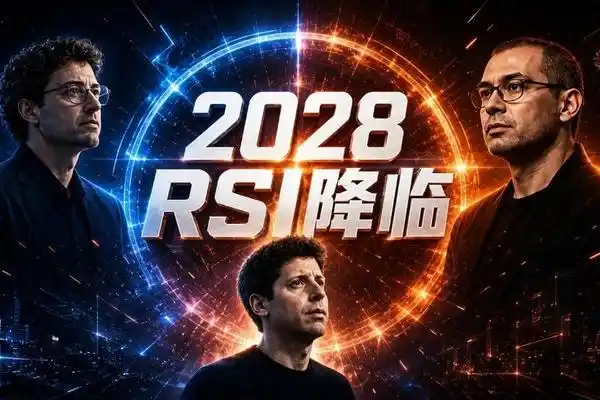
2028: The Arrival of Recursive Self-Improvement (RSI)

**AI Recursive Self-Improvement (RSI): The Countdown to 2028 Begins** AI is no longer just a trained tool but is starting to rewrite its own evolutionary pace. According to Anthropic co-founder Jack Clark, there is a 60% probability that by the end of 2028, Recursive Self-Improvement (RSI) will become a reality. This means AI could autonomously design and build a more capable next-generation version of itself without any human researcher involvement—Claude 10 creating Claude 11, for instance. Supporting this timeline, Google DeepMind's CEO Demis Hassabis confirms that all leading AI labs are intensely focused on RSI, making it an industry-wide priority. He expresses profound concern, stating this potential is what keeps him awake at night. Concrete data underscores this acceleration: - METR evaluations show current top models like Claude are solving tasks up to the 16-hour limit of existing test frameworks. - In Epoch AI's challenging MirrorCode benchmark, Claude Opus 4.7 recreated complex software in hours for a fraction of the human cost. In one extreme test, AI autonomously coded for 19 days straight. - Anthropic reports over 80% of its codebase is now written by Claude, and researcher productivity has increased up to 8-fold since 2024. - OpenAI's policy blueprint highlights RSI as a major upcoming governance challenge. CEO Sam Altman reportedly hinted RSI might arrive within six months, potentially delaying OpenAI's massive IPO. The implication is an impending "intelligence explosion," where AI-driven progress outpaces human control. The central question is no longer if it will happen, but whether humanity is ready.

marsbit38m ago

2028: The Arrival of Recursive Self-Improvement (RSI)

marsbit38m ago

World Models, Metaverse, Digital Twins, Physical AI: Are They the Same Thing?

Title: World Models, the Metaverse, Digital Twins, Physical AI: Are They the Same Thing? The article clarifies that concepts like the metaverse, Web3, simulation platforms, digital twins, and Physical AI are not the same thing but are all part of the broader trend of blurring the lines between the digital and physical worlds. It positions "world models" as the foundational "cognitive layer" or "operating system" that enables AI to understand and simulate the world. Key distinctions are made: - The **Metaverse** is a destination for immersive social and economic experiences. World models could act as its "engine," generating interactive 3D content efficiently. - **Web3** focuses on decentralized ownership and economics (rules layer), operating on a different technical level than world models. - **Simulation Data Platforms** (e.g., for autonomous vehicles) are a 1.0 version, relying on manual design. World models represent a 2.0 version, using AI to generate realistic, varied scenarios autonomously. - **Digital Twins** create high-fidelity, real-time mirrors of physical systems (e.g., a factory). World models go a step further by enabling predictive simulation of future states. - **Physical AI** (robots, AVs) refers to AI that acts in the physical world. World models are a core component, providing the understanding and prediction needed for planning. A proposed hierarchy places world models at the cognitive layer, supported by infrastructure (compute, data) and supporting application tools (simulation, digital twins), action systems (Physical AI), user experiences (metaverse), and rules (Web3). In conclusion, while distinct, many of these previously hyped concepts may ultimately rely on advances in world model technology to fulfill their promises, as world models provide the essential cognitive foundation for simulating and interacting with complex environments.

marsbit42m ago

World Models, Metaverse, Digital Twins, Physical AI: Are They the Same Thing?

marsbit42m ago

"Shocking" CPO: How Does the Glass Bridge Actually Work? Detailed Explanation from Corning

Chinese CPO stocks plunged over 6% following Corning's announcement of its Glass Bridge platform at a Seoul tech conference. The new technology utilizes wafer-level glass ion-exchange waveguides for passive alignment between fibers and photonic chips, potentially simplifying traditional CPO architectures that rely on complex Fiber Array Units and active alignment equipment. This raised market concerns about reduced long-term demand for mid-stream CPO components. Corning's official documentation details Glass Bridge as a platform for fiber-to-PIC connectivity in NPO, CPO, and high-density modules. Its key features include wafer-level manufacturing for consistent, cost-effective production; a standardized, removable MT ferrule interface for ecosystem integration; and a separable high-density connector design supporting over 24 channels for assembly flexibility. Corning positions the technology as complementary to FAUs, addressing limitations in ultra-high-fiber-count scenarios. The market reaction reflects a broader reassessment of the AI optical interconnect value chain. Funds shifted from CPO and PCB manufacturing stocks towards glass substrate concept stocks like Kaisheng Technology and Dyer Laser. Analysts note glass substrates are seen as a next-gen advanced packaging material, offering a potential path for domestic industry differentiation amid AI-driven demand for high-performance, large-scale packaging, marking a structural migration in value towards upstream specialty materials.

marsbit43m ago

"Shocking" CPO: How Does the Glass Bridge Actually Work? Detailed Explanation from Corning

marsbit43m ago

Trading

Spot

Hot Articles

What is $BITCOIN

DIGITAL GOLD ($BITCOIN): A Comprehensive Analysis Introduction to DIGITAL GOLD ($BITCOIN) DIGITAL GOLD ($BITCOIN) is a blockchain-based project operating on the Solana network, which aims to combine the characteristics of traditional precious metals with the innovation of decentralized technologies. While it shares a name with Bitcoin, often referred to as “digital gold” due to its perception as a store of value, DIGITAL GOLD is a separate token designed to create a unique ecosystem within the Web3 landscape. Its goal is to position itself as a viable alternative digital asset, although specifics regarding its applications and functionalities are still developing. What is DIGITAL GOLD ($BITCOIN)? DIGITAL GOLD ($BITCOIN) is a cryptocurrency token explicitly designed for use on the Solana blockchain. In contrast to Bitcoin, which provides a widely recognized value storage role, this token appears to focus on broader applications and characteristics. Notable aspects include: Blockchain Infrastructure: The token is built on the Solana blockchain, known for its capacity to handle high-speed and low-cost transactions. Supply Dynamics: DIGITAL GOLD has a maximum supply capped at 100 quadrillion tokens (100P $BITCOIN), although details regarding its circulating supply are currently undisclosed. Utility: While precise functionalities are not explicitly outlined, there are indications that the token could be utilized for various applications, potentially involving decentralized applications (dApps) or asset tokenization strategies. Who is the Creator of DIGITAL GOLD ($BITCOIN)? At present, the identity of the creators and development team behind DIGITAL GOLD ($BITCOIN) remains unknown. This situation is typical among many innovative projects within the blockchain space, particularly those aligning with decentralized finance and meme coin phenomena. While such anonymity may foster a community-driven culture, it intensifies concerns about governance and accountability. Who are the Investors of DIGITAL GOLD ($BITCOIN)? The available information indicates that DIGITAL GOLD ($BITCOIN) does not have any known institutional backers or prominent venture capital investments. The project seems to operate on a peer-to-peer model focused on community support and adoption rather than traditional funding routes. Its activity and liquidity are primarily situated on decentralized exchanges (DEXs), such as PumpSwap, rather than established centralized trading platforms, further highlighting its grassroots approach. How DIGITAL GOLD ($BITCOIN) Works The operational mechanics of DIGITAL GOLD ($BITCOIN) can be elaborated on based on its blockchain design and network attributes: Consensus Mechanism: By leveraging Solana’s unique proof-of-history (PoH) combined with a proof-of-stake (PoS) model, the project ensures efficient transaction validation contributing to the network's high performance. Tokenomics: While specific deflationary mechanisms have not been extensively detailed, the vast maximum token supply implies that it may cater to microtransactions or niche use cases that are still to be defined. Interoperability: There exists the potential for integration with Solana’s broader ecosystem, including various decentralized finance (DeFi) platforms. However, the details regarding specific integrations remain unspecified. Timeline of Key Events Here is a timeline that highlights significant milestones concerning DIGITAL GOLD ($BITCOIN): 2023: The initial deployment of the token occurs on the Solana blockchain, marked by its contract address. 2024: DIGITAL GOLD gains visibility as it becomes available for trading on decentralized exchanges like PumpSwap, allowing users to trade it against SOL. 2025: The project witnesses sporadic trading activity and potential interest in community-led engagements, although no noteworthy partnerships or technical advancements have been documented as of yet. Critical Analysis Strengths Scalability: The underlying Solana infrastructure supports high transaction volumes, which could enhance the utility of $BITCOIN in various transaction scenarios. Accessibility: The potential low trading price per token could attract retail investors, facilitating wider participation due to fractional ownership opportunities. Risks Lack of Transparency: The absence of publicly known backers, developers, or an audit process may yield skepticism regarding the project's sustainability and trustworthiness. Market Volatility: The trading activity is heavily reliant on speculative behavior, which can result in significant price volatility and uncertainty for investors. Conclusion DIGITAL GOLD ($BITCOIN) emerges as an intriguing yet ambiguous project within the rapidly evolving Solana ecosystem. While it attempts to leverage the “digital gold” narrative, its departure from Bitcoin's established role as a store of value underscores the need for a clearer differentiation of its intended utility and governance structure. Future acceptance and adoption will likely depend on addressing the current opacity and defining its operational and economic strategies more explicitly. Note: This report encompasses synthesised information available as of October 2023, and developments may have transpired beyond the research period.

496 Total ViewsPublished 2025.05.13Updated 2025.05.13

What is $BITCOIN

Discussions

Welcome to the HTX Community. Here, you can stay informed about the latest platform developments and gain access to professional market insights. Users' opinions on the price of BTC (BTC) are presented below.

活动图片