投机还是远见?5月全球企业比特币购买大盘点

marsbitPublished on 2025-05-25Last updated on 2025-05-26

2025年5月,比特币作为“数字黄金”的叙事持续升温,全球范围内多家企业宣布购买或计划购买比特币,试图通过这一去中心化资产对冲通胀、提升估值或重塑财务战略。从瑞典的健康科技公司到中国的纺织巨头,再到印尼的金融科技企业,这些新玩家以多样化的融资方式进入比特币市场,展现了加密资产在传统行业中的渗透力。

企业比特币投资概览

以下表格总结了2025年5月新增的五家企业的比特币投资计划:

企业


1. H100 Group AB:瑞典健康科技的比特币储备先锋

瑞典健康科技公司H100 Group AB在5月25日宣布通过一轮220万美元的融资执行比特币储备战略,成为瑞典首家公开将比特币纳入资产负债表的上市公司。据Cointelegraph报道,此次融资由Blockstream CEO Adam Back领投,他个人出资约140万美元,其余80万美元来自多家投资机构。资金通过0%利率的可转债形式注入,计划购入约20.18枚比特币,加上此前5月22日购入的4.39枚,总持仓预计达到24.57枚BTC。

H100的融资结构颇具创新:可转债将于2028年6月15日到期,期间可按每股1.3瑞典克朗(约0.11美元)转换为公司股份,且若股价连续60日上涨超33%,公司可强制转股。这种设计降低了融资成本,同时为投资者提供了分享公司成长的机会。H100表示,比特币代表“个体自主”的价值观,与其健康科技使命契合。市场反应热烈,自5月22日宣布购币计划以来,公司股价累计上涨超40%。

尽管H100的比特币持仓规模较小,仅占其资产负债表的一小部分,但Adam Back的参与为其增添了可信度。作为比特币领域的先驱,Back通过Blockstream推动Layer-2技术和矿业发展,其背书可能激励更多欧洲企业效仿。H100的策略更像是谨慎试水,而非全面转型,反映了中小型企业进入比特币市场的保守态度。


2. DDC Enterprise:中国服装物流的比特币豪赌

中国上市公司DDC Enterprise在5月16日宣布计划购买5000枚比特币,价值约5亿美元,成为中国企业比特币投资的领跑者。据Bitcoin Magazine和X平台动态,DDC从事服装和物流业务,通过增发普通股筹集资金,旨在建立战略比特币储备。这一计划迅速引发热议,X平台用户指出,DDC可能效仿MicroStrategy,通过比特币投资推高股价,同时对冲全球贸易不确定性。

DDC的动机与其行业背景密切相关。服装和物流行业面临供应链成本上升和关税压力,比特币作为抗通胀资产的吸引力日益凸显。此外,中国香港等地区对加密资产的监管环境逐步开放,为DDC提供了操作空间。宣布购币计划后,DDC股价短期上涨约25%,显示市场对其策略的初步认可。

然而,5000枚比特币的购买需要巨额资金,增发股份可能稀释股东权益。中国大陆对加密货币的监管仍存不确定性,DDC需在合规框架内谨慎操作。尽管如此,其高调布局可能激励更多亚洲企业加入比特币热潮,成为中国市场的重要风向标。


3. Addentax:中国纺织企业的8000枚比特币计划

同在5月16日,中国纺织和物流公司**Addentax(纳斯达克:ATXG)**宣布通过发行新股筹资,计划购买高达8000枚比特币及其他加密货币,总价值约8亿美元。据Cointelegraph和X平台消息,Addentax的这一决定标志着其从传统制造业向加密资产领域的转型尝试,试图通过比特币投资提升估值和市场关注度。

Addentax的策略比DDC更为激进,8000枚比特币的计划若成功,将使其成为中国企业中比特币持仓最大的公司之一。然而,这一计划引发争议。X平台用户质疑Addentax的现金流能否支持如此大规模的投资,担心其可能通过高杠杆操作放大风险。纺织行业利润率较低,受全球贸易战影响较大,比特币可能被视为摆脱业务瓶颈的突破口。

Addentax的购币计划需面对市场波动和监管双重考验。中国对加密货币的监管政策可能限制其操作灵活性,而增发股份可能导致股权稀释。尽管如此,其大胆布局显示了中国企业在全球比特币热潮中的雄心,可能引发更多传统行业效仿。


4. DigiAsia:印尼金融科技的利润再投资模式

印尼金融科技公司**DigiAsia(纳斯达克:FAAS)**在5月20日宣布计划筹集1亿美元用于购买比特币,并承诺将未来高达50%的净利润用于持续增持。据X平台消息,这一计划推动DigiAsia股价短期内飙升近90%,显示市场对其激进策略的追捧。

DigiAsia的策略独具特色。相较于直接融资购币,其将比特币投资与盈利能力挂钩,显示出对长期持仓的信心。公司表示,比特币能对冲印尼盾贬值风险,并吸引全球投资者关注。印尼作为东南亚最大的经济体,加密货币采用率快速增长,DigiAsia的举措可能推动更多本地企业效仿。

然而,DigiAsia通过借贷和质押比特币获取收益的模式可能放大财务风险。比特币价格的剧烈波动可能导致流动性危机,而印尼对加密货币的监管仍较保守,需投入更多合规成本。尽管如此,其利润再投资的模式为现金流充裕的企业提供了新思路,可能成为新兴市场企业的模板。


5. Basel:新加坡医疗集团的10亿美元比特币收购

新加坡骨科医疗集团Basel在5月23日宣布与“比特币持有者联盟”达成协议,通过增发普通股购买1万枚比特币,价值约10亿美元。据@chairbtc透露,Basel的策略与MicroStrategy高度相似,利用投资人资金购买比特币,依靠价格增长回报股东。

Basel的加入为医疗行业对比特币的采用增添了新案例。作为一家专注于骨科医疗的高科技企业,Basel面临高研发成本和市场竞争压力,比特币投资可能被视为分散风险和提升回报的手段。X平台用户将其称为“微策略的亚洲翻版”,认为其可能通过比特币吸引全球资本,弥补行业增长瓶颈。

1万枚比特币的计划对Basel的财务结构提出高要求。增发股份可能导致股权稀释,而比特币的高波动性可能影响资产负债表稳定性。新加坡对加密货币的监管较为严格,Basel需确保合规。尽管如此,其大胆布局显示了亚洲企业在比特币热潮中的雄心,可能引发医疗行业的连锁反应。


热潮的驱动因素

2025年5月的比特币投资热潮由多重因素推动,反映了全球企业和市场的复杂动态:

  1. 宏观经济不确定性:全球通胀、地缘政治和关税政策的不确定性促使企业寻求抗通胀资产。比特币的2100万枚固定供应和去中心化特性使其成为对冲货币贬值的理想选择。例如,DigiAsia明确提到比特币能抵御印尼盾贬值风险。
  2. MicroStrategy的标杆效应:MicroStrategy通过持有超25万枚比特币实现股价飙升220%,为其他企业提供了模板。Basel和DDC的增发购币策略明显受其启发,试图复制这一成功路径。
  3. 监管环境改善:美国特朗普政府上台后,加密友好政策预期增强,例如提议建立国家比特币储备。亚洲地区如香港和新加坡的监管框架日益清晰,为企业提供了合规基础。
  4. 市场情绪与投机:H100和DigiAsia股价的暴涨显示,市场对“比特币概念股”充满热情。企业通过高调宣布购币计划吸引散户资金,推动估值短期内快速攀升。


Jim Chanos的视角:投机与套利的晴雨表

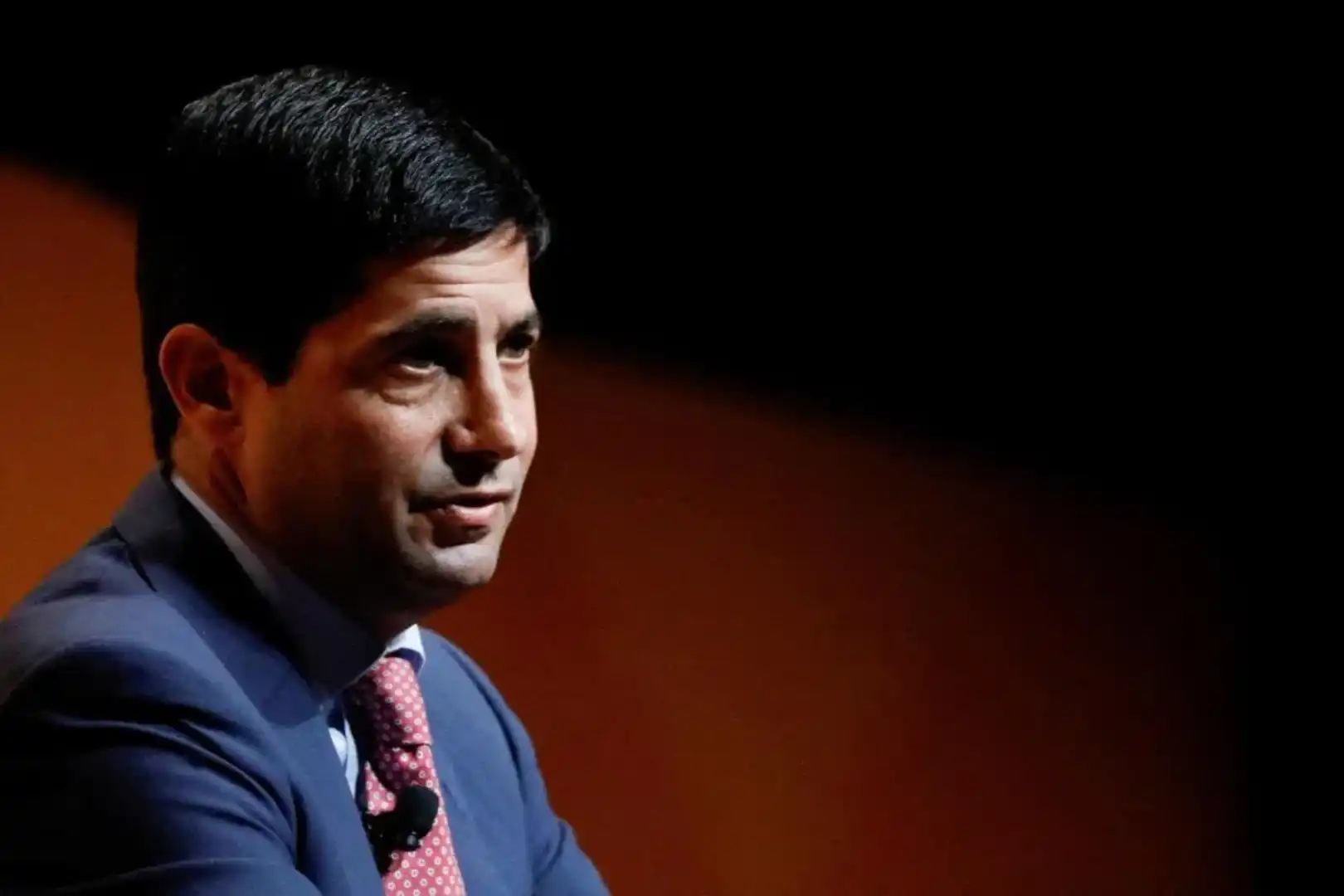
华尔街知名大空头Jim Chanos的观点为这一热潮提供了另一视角。据CNBC报道,Chanos同时押注比特币并做空MicroStrategy,试图通过套利捕捉市场非理性情绪。他将这一交易比喻为“以1美元买入比特币,以2.5美元卖出MicroStrategy股票”,认为MicroStrategy的股价被散户狂热推高,估值远超其比特币持仓的实际价值。

Chanos的逻辑直白而犀利:MicroStrategy过去一年股价飙升220%,远超比特币同期70%的涨幅,显示出估值泡沫。他进一步指出,部分效仿MicroStrategy的公司通过高调宣布比特币投资吸引散户资金,推销“溢价估值”的想法,这种模式“荒谬”且不可持续。Chanos的交易不仅是针对MicroStrategy的估值挑战,也是对整个加密市场投机生态的洞察。他认为,这一策略不仅是套利的晴雨表,也是散户投机情绪的指标。

Chanos的观点揭示了比特币热潮的双面性。一方面,企业购币反映了对比特币长期价值的认可,尤其在特朗普的加密友好政策和关税预期推高通胀的背景下。另一方面,市场情绪的狂热可能掩盖基本面的薄弱,部分公司利用比特币投资作为短期炒作工具,而非基于理性决策。Chanos的做空策略提醒投资者,需警惕“比特币概念股”的估值陷阱,尤其在市场回调时,过度依赖散户热情的公司可能面临崩盘风险。


结语:数字黄金的十字路口

2025年5月的比特币投资热潮是一场全球企业的集体实验。从H100的谨慎试水到Addentax的豪赌,再到Chanos的华尔街博弈,这些故事交织出数字资产时代的复杂图景。企业通过比特币寻求突破,投资者在狂热与理性间寻找平衡,而市场则在波动中寻找方向。这不仅是资本对“数字黄金”的押注,也是对未来金融体系的探索。在这个十字路口,每一步抉择都可能重塑行业格局,也可能成为投机泡沫的注脚。


Trending Cryptos

Related Reads

Continuous Net Outflows from ETFs, Are Institutions Exiting?

US spot Bitcoin ETFs have experienced approximately $6 billion in net outflows over the past six weeks, marking the longest consecutive weekly withdrawal streak since their launch in 2024. The iShares Bitcoin Trust (IBIT) from BlackRock has been particularly affected, accounting for over 70% of recent outflows. On-chain analysis indicates that long-term Bitcoin holders (holding for over 155 days), who control about 83% of the circulating supply, remain steadfast. The selling pressure is primarily coming from allocators who entered through ETF brokerage accounts. This represents the first major collective capitulation since Bitcoin gained mainstream Wall Street recognition, driven more by risk-off portfolio adjustments than a fundamental rejection of the asset. Factors such as rising inflation, a hawkish shift in Federal Reserve policy, massive capital inflows into AI infrastructure, and attractive IPO opportunities have redirected speculative funds. Bitcoin, treated as a high-beta risk asset, was among the first to be sold. While the pace of outflows has slowed significantly—from $1.72 billion in early June to $226.8 million mid-month—the structural issue remains. IBIT's large size means its outflows alone exert substantial market pressure. With spot market volume thin, new capital inflows absent, and ETF buying muted, the market lacks sufficient buying support to absorb this selling. The coming sessions are critical. If IBIT outflows decelerate and Bitcoin reclaims $60,000, this phase could be seen as a healthy reset. However, if heavy IBIT redemptions resume and the price falls below $58,000, it would signal a more sustained institutional exit, requiring non-ETF buyers to shoulder the entire selling pressure alone. The ETF, while lowering entry barriers, has not removed Bitcoin's inherent volatility.

marsbit41m ago

Continuous Net Outflows from ETFs, Are Institutions Exiting?

marsbit41m ago

Introduction to the Concept of World Models: A Story from Psychology to the Main Battlefield of AI

**World Models: From Psychology to AI's Core Concept** "World model" is a trending but often confusing term in AI, describing a system that allows machines to internally simulate, predict, and rehearse potential outcomes before taking real-world action—like a mental "sandbox." While definitions vary—Yann LeCun emphasizes physical understanding, OpenAI's Sora is a video-based "world simulator," Google DeepMind's Genie 3 creates interactive 3D environments, and companies like Alibaba and Tesla focus on practical applications—the core goal is consistent: reduce reliance on vast real-world data by creating an internal, predictive model for safer and more efficient AI. The concept has deep roots, tracing back to psychologist Kenneth Craik (1943). In AI, it was revitalized by researchers like David Ha and Jürgen Schmidhuber (2018). Major technical approaches include: 1) generative video models (e.g., Sora) for visual realism; 2) abstract predictive models (e.g., LeCun's JEPA) for efficiency and physical reasoning; and 3) explicit 3D simulators (e.g., NVIDIA Omniverse) for precision. Fei-Fei Li proposes a classification based on the AI action loop: renderers (output observations), simulators (output world states), and planners (output actions). The emerging "World Action Model" (WAM) paradigm aims to unify future prediction and action generation. An industry framework is forming: upstream (data, compute, sensors), midstream (general and vertical platforms), and downstream applications (autonomous driving, robotics, gaming, etc.). Autonomous driving is currently the most mature use case. The current lack of a unified definition reflects the field's early, dynamic stage, similar to past tech revolutions. Different approaches—focusing on pixels, physics, or behavior—represent parallel explorations of how best to compress and understand the world. This diversity, while seemingly chaotic, signals that world models have moved from an academic idea to a critical industrial battleground, ultimately aiming to give machines the ability to understand, imagine, and reason about the world.

marsbit1h ago

Introduction to the Concept of World Models: A Story from Psychology to the Main Battlefield of AI

marsbit1h ago

Building the Bright Path While Secretly Crossing Chencang: Is Walsh Paving the Way for a September "Rate Cut"?

The title "Building the Plank Road Openly While Secretly Crossing at Chencang: Is Walsh Paving the Way for a September 'Rate Cut'?" suggests Federal Reserve Chair Kevin Walsh's hawkish stance may be a deliberate smokescreen. Academy Securities analyst Peter Tchir argues in a report that markets, currently pricing a 75% chance of a September hike, are missing a potential path to a September rate cut that Walsh himself might be quietly preparing. Tchir posits that Walsh's hawkish rhetoric aims to suppress long-term yield risks (with the 10-year Treasury yield falling recently) while creating room for a narrative shift based on upcoming data. The potential political endgame, according to this view, could be rate cuts in September and October, ahead of the midterm elections. This hinges on a political logic where the Trump administration's preference for lower rates remains unchanged. A core part of Tchir's argument involves redefining inflation metrics. He contends the Fed under Walsh may deprioritize the PCE index, criticizing its lagging components like Owners' Equivalent Rent (OER). Instead, he points to alternative, more real-time indicators like the New Tenant Repeat Rent Index (NTRR) and the Truflation daily index, which shows core inflation around 1.45%. He suggests the Fed could shift its data narrative to justify policy easing. Furthermore, Tchir downplays AI-driven inflation fears. He argues that consumer price sensitivity, evidenced by negative market reactions to price hikes (e.g., Apple), contradicts persistent inflation narratives. He also separates AI/data center spending—which he sees as relatively rate-insensitive—from broader consumer affordability issues, implying rate hikes are misdirected. Based on this analysis, Tchir sees a re-pricing of rate cut expectations as likely, creating opportunities in short-duration Treasuries. He maintains a neutral-to-slightly-bullish view on the long end of the yield curve. For equities, he recommends a significant overweight in energy (especially global nuclear assets) and, within defense/security themes, an overweight in biotech/pharma versus an underweight in semiconductors, expressing caution on AI/data center valuations.

marsbit1h ago

Building the Bright Path While Secretly Crossing Chencang: Is Walsh Paving the Way for a September "Rate Cut"?

marsbit1h ago

Trading

Spot

Hot Articles

What is $BITCOIN

DIGITAL GOLD ($BITCOIN): A Comprehensive Analysis Introduction to DIGITAL GOLD ($BITCOIN) DIGITAL GOLD ($BITCOIN) is a blockchain-based project operating on the Solana network, which aims to combine the characteristics of traditional precious metals with the innovation of decentralized technologies. While it shares a name with Bitcoin, often referred to as “digital gold” due to its perception as a store of value, DIGITAL GOLD is a separate token designed to create a unique ecosystem within the Web3 landscape. Its goal is to position itself as a viable alternative digital asset, although specifics regarding its applications and functionalities are still developing. What is DIGITAL GOLD ($BITCOIN)? DIGITAL GOLD ($BITCOIN) is a cryptocurrency token explicitly designed for use on the Solana blockchain. In contrast to Bitcoin, which provides a widely recognized value storage role, this token appears to focus on broader applications and characteristics. Notable aspects include: Blockchain Infrastructure: The token is built on the Solana blockchain, known for its capacity to handle high-speed and low-cost transactions. Supply Dynamics: DIGITAL GOLD has a maximum supply capped at 100 quadrillion tokens (100P $BITCOIN), although details regarding its circulating supply are currently undisclosed. Utility: While precise functionalities are not explicitly outlined, there are indications that the token could be utilized for various applications, potentially involving decentralized applications (dApps) or asset tokenization strategies. Who is the Creator of DIGITAL GOLD ($BITCOIN)? At present, the identity of the creators and development team behind DIGITAL GOLD ($BITCOIN) remains unknown. This situation is typical among many innovative projects within the blockchain space, particularly those aligning with decentralized finance and meme coin phenomena. While such anonymity may foster a community-driven culture, it intensifies concerns about governance and accountability. Who are the Investors of DIGITAL GOLD ($BITCOIN)? The available information indicates that DIGITAL GOLD ($BITCOIN) does not have any known institutional backers or prominent venture capital investments. The project seems to operate on a peer-to-peer model focused on community support and adoption rather than traditional funding routes. Its activity and liquidity are primarily situated on decentralized exchanges (DEXs), such as PumpSwap, rather than established centralized trading platforms, further highlighting its grassroots approach. How DIGITAL GOLD ($BITCOIN) Works The operational mechanics of DIGITAL GOLD ($BITCOIN) can be elaborated on based on its blockchain design and network attributes: Consensus Mechanism: By leveraging Solana’s unique proof-of-history (PoH) combined with a proof-of-stake (PoS) model, the project ensures efficient transaction validation contributing to the network's high performance. Tokenomics: While specific deflationary mechanisms have not been extensively detailed, the vast maximum token supply implies that it may cater to microtransactions or niche use cases that are still to be defined. Interoperability: There exists the potential for integration with Solana’s broader ecosystem, including various decentralized finance (DeFi) platforms. However, the details regarding specific integrations remain unspecified. Timeline of Key Events Here is a timeline that highlights significant milestones concerning DIGITAL GOLD ($BITCOIN): 2023: The initial deployment of the token occurs on the Solana blockchain, marked by its contract address. 2024: DIGITAL GOLD gains visibility as it becomes available for trading on decentralized exchanges like PumpSwap, allowing users to trade it against SOL. 2025: The project witnesses sporadic trading activity and potential interest in community-led engagements, although no noteworthy partnerships or technical advancements have been documented as of yet. Critical Analysis Strengths Scalability: The underlying Solana infrastructure supports high transaction volumes, which could enhance the utility of $BITCOIN in various transaction scenarios. Accessibility: The potential low trading price per token could attract retail investors, facilitating wider participation due to fractional ownership opportunities. Risks Lack of Transparency: The absence of publicly known backers, developers, or an audit process may yield skepticism regarding the project's sustainability and trustworthiness. Market Volatility: The trading activity is heavily reliant on speculative behavior, which can result in significant price volatility and uncertainty for investors. Conclusion DIGITAL GOLD ($BITCOIN) emerges as an intriguing yet ambiguous project within the rapidly evolving Solana ecosystem. While it attempts to leverage the “digital gold” narrative, its departure from Bitcoin's established role as a store of value underscores the need for a clearer differentiation of its intended utility and governance structure. Future acceptance and adoption will likely depend on addressing the current opacity and defining its operational and economic strategies more explicitly. Note: This report encompasses synthesised information available as of October 2023, and developments may have transpired beyond the research period.

504 Total ViewsPublished 2025.05.13Updated 2025.05.13

What is $BITCOIN

Discussions

Welcome to the HTX Community. Here, you can stay informed about the latest platform developments and gain access to professional market insights. Users' opinions on the price of BTC (BTC) are presented below.

活动图片