Analysts Warn of Regulatory Risks if Russia Is Able to Use Crypto to Evade Sanctions
newsbtcPublished on 2022-02-27Last updated on 2022-02-27

Abstract

“We believe Washington is worried that Russia will use crypto to evade sanctions,” Cowen Washington Research Group analyst Jaret Seiberg reportedly said Friday.

Analysts Warn of Regulatory Risks if Russia Is Able to Use Crypto to Evade Sanctions

Analysts Warn of Regulatory Risks if Russia Is Able to Use Crypto to Evade Sanctions

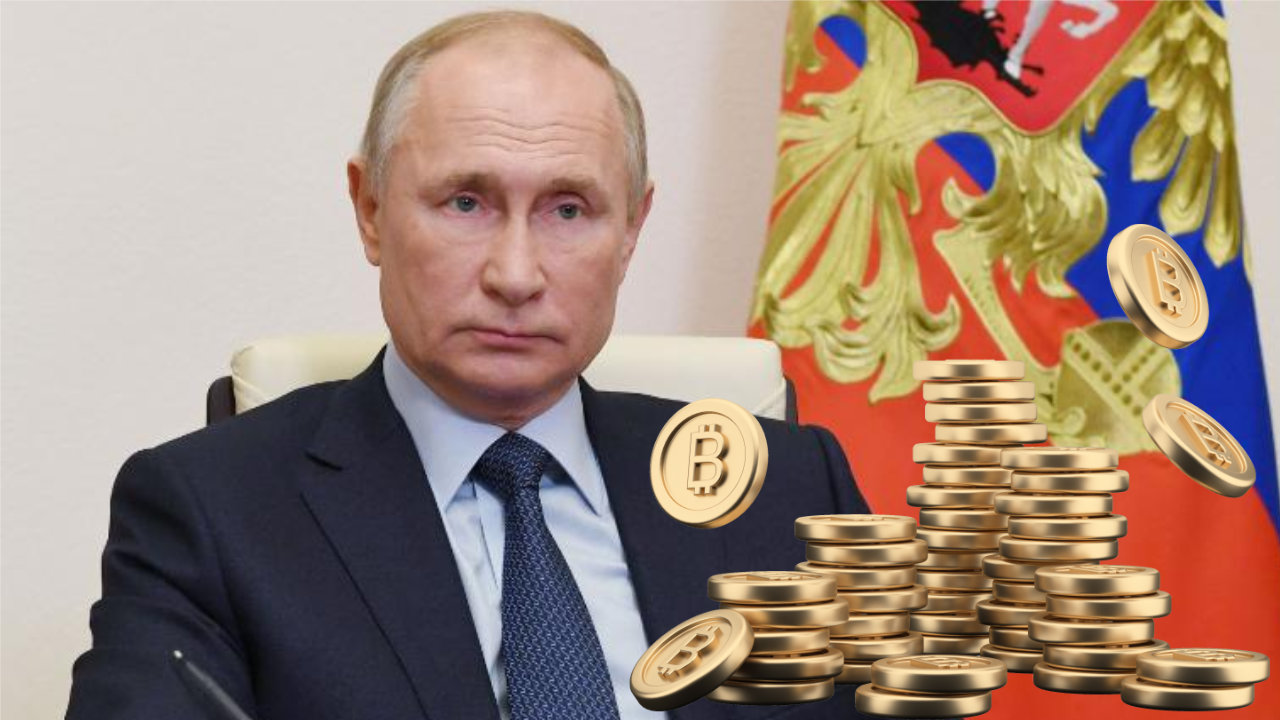
Russia could turn to cryptocurrency if it is banned from the SWIFT payments system. Analysts have warned that if Russia is able to use crypto to evade sanctions, “political support in the U.S. for crypto will fall and regulatory risk will rise.”

Crypto Faces Regulatory Risks if Used by Russia to Evade Sanctions

Amid growing talk of banning Russia from the SWIFT global interbank payments system after its invasion of Ukraine, some analysts have warned that Russian President Vladimir Putin could turn to cryptocurrency to evade sanctions.

“We believe Washington is worried that Russia will use crypto to evade sanctions,” Cowen Washington Research Group analyst Jaret Seiberg reportedly said Friday. He added:

If Russia is able to use crypto this way, then we believe political support in the U.S. for crypto will fall and regulatory risk will rise.

Seiberg believes that since most global trade is still dollar-denominated, it could be challenging for Russia to use crypto to evade SWIFT.

“Paying in bitcoin requires a conversion to dollars, which provides a way to track activity … That also works in favor of crypto,” he said.

If Russia is unable to use cryptocurrency to circumvent sanctions, however, analysts believe that it could boost the viability of crypto in the eyes of regulators.

Seiberg explained that political support of crypto would grow if crypto exchanges help uphold U.S. sanctions and if the government could track evasions using blockchains.

Noting that “For crypto, this could be the crisis that determines how the government treats its use for payments and as a store of value,” the Cowen analyst warned:

Pressure would be on the trading platforms and wallets … This would not just be in the United States. We expect it also would apply in the U.K., EU and in the western allies in Asia.

The U.S. Department of the Treasury sanctioned two Russian crypto exchanges last year. Suex and Chatex were found to have processed transactions tied to ransomware attacks and other illegal activities.

The Treasury Department identified cryptocurrency as a major threat to sanctions programs in a report released last year. “We are mindful of the risk that, if left unchecked, these digital assets and payments systems could harm the efficacy of our sanctions,” the Treasury Department explained.

Tags in this story

Trending Cryptos

Related Reads

AI is Turning Nuclear Power from a 'National Project' into a Replicable Commercial Product

Artificial intelligence is transforming nuclear energy from a "national-level project" into a replicable commercial product. Traditionally, nuclear power has been characterized by massive investments, long timelines, and complex regulations, making it inaccessible to most private enterprises. However, the emergence of AI data centers is shifting this dynamic. Major tech companies like Microsoft, Google, and Amazon, urgently needing large-scale, stable, and low-carbon power, are becoming powerful commercial buyers for nuclear energy. This new demand is driving several key developments. While large-scale nuclear plants remain national infrastructure, small modular reactors (SMRs) are advancing toward commercial validation, offering a more suitable scale for data centers, industrial parks, and energy-intensive industries. Furthermore, innovations in passive safety systems, modular manufacturing, and improved regulatory efficiency are helping to standardize nuclear technology into a more replicable industrial product. The value of nuclear energy is also expanding beyond electricity generation to include applications like industrial heat, hydrogen production, seawater desalination, and power for heavy manufacturing, supported by an entire supply chain. Challenges such as construction delays, cost overruns, waste management, fuel supply, regulation, and project financing remain significant risks. Fusion energy also still requires considerable time for commercialization. AI has not instantly matured nuclear technology, but it is providing unprecedented commercial demand, capital support, and concrete orders. Over the next decade, nuclear energy may become one of the most underestimated yet critical infrastructures supporting the AI industry.

链捕手10m ago

AI is Turning Nuclear Power from a 'National Project' into a Replicable Commercial Product

链捕手10m ago

Decentralization Is Not Idealism

Decentralization Is Not Idealism The core argument is that in the era of programmable, global settlement systems, decentralization is the single most critical feature for long-term survival and success—not an idealistic luxury, but a practical necessity rooted in a cynical understanding of power and incentives. The author, a former crypto expert at Citi, positions himself not as an idealist but as a realist informed by history. He observes that any sufficiently large and valuable network inherently creates massive incentives for its own corruption and capture by powerful incumbents (corporations, governments) seeking to protect profits and power. The pattern is consistent: first try to stop a disruptive technology; if that fails, co-opt it. Therefore, only crypto systems built from day one to be maximally open, neutral, and permissionless have a chance to reach "escape velocity" and resist this inevitable pressure. The essay critiques "permissioned networks," highly centralized "permissionless" Layer-1s, and Layer-2s with single sequencers as fundamentally naive. These are essentially "databases with an off-switch" that will be captured, rendering them inferior to both traditional efficient systems and truly decentralized alternatives. Historical examples like Visa, Mastercard, and Google are cited to illustrate the "platform corruption" trajectory, where networks originally built as neutral utilities evolved into profit-maximizing, gatekeeping entities. The potential market for a general-purpose L1 blockchain (encompassing finance, social, gaming, identity, etc.) is so vast that the incentive for capture is even greater. The piece uses a rhetorical question: if you were the CEO of a profitable payment company, would you embrace a public, permissionless blockchain that gives your competitors equal footing, or would you support a "hybrid" alternative that lets you retain control and pricing power? The answer, driven by competitive instinct, is obvious. While incumbents may temporarily promote "pseudo-decentralized" solutions as a delaying tactic, the author argues these are objectively worse—less efficient than legacy systems and less secure than real decentralization. In the long run, assets and value will naturally flow to the most secure, censorship-resistant infrastructure, just as water flows to the lowest point. Systems like Ethereum, despite their flaws and costs, represent this necessary, realistic defense against capture and are ultimately superior to any corporate-controlled alternative.

链捕手17m ago

Decentralization Is Not Idealism

链捕手17m ago

Trading

Spot

Hot Articles

What is $BITCOIN

DIGITAL GOLD ($BITCOIN): A Comprehensive Analysis Introduction to DIGITAL GOLD ($BITCOIN) DIGITAL GOLD ($BITCOIN) is a blockchain-based project operating on the Solana network, which aims to combine the characteristics of traditional precious metals with the innovation of decentralized technologies. While it shares a name with Bitcoin, often referred to as “digital gold” due to its perception as a store of value, DIGITAL GOLD is a separate token designed to create a unique ecosystem within the Web3 landscape. Its goal is to position itself as a viable alternative digital asset, although specifics regarding its applications and functionalities are still developing. What is DIGITAL GOLD ($BITCOIN)? DIGITAL GOLD ($BITCOIN) is a cryptocurrency token explicitly designed for use on the Solana blockchain. In contrast to Bitcoin, which provides a widely recognized value storage role, this token appears to focus on broader applications and characteristics. Notable aspects include: Blockchain Infrastructure: The token is built on the Solana blockchain, known for its capacity to handle high-speed and low-cost transactions. Supply Dynamics: DIGITAL GOLD has a maximum supply capped at 100 quadrillion tokens (100P $BITCOIN), although details regarding its circulating supply are currently undisclosed. Utility: While precise functionalities are not explicitly outlined, there are indications that the token could be utilized for various applications, potentially involving decentralized applications (dApps) or asset tokenization strategies. Who is the Creator of DIGITAL GOLD ($BITCOIN)? At present, the identity of the creators and development team behind DIGITAL GOLD ($BITCOIN) remains unknown. This situation is typical among many innovative projects within the blockchain space, particularly those aligning with decentralized finance and meme coin phenomena. While such anonymity may foster a community-driven culture, it intensifies concerns about governance and accountability. Who are the Investors of DIGITAL GOLD ($BITCOIN)? The available information indicates that DIGITAL GOLD ($BITCOIN) does not have any known institutional backers or prominent venture capital investments. The project seems to operate on a peer-to-peer model focused on community support and adoption rather than traditional funding routes. Its activity and liquidity are primarily situated on decentralized exchanges (DEXs), such as PumpSwap, rather than established centralized trading platforms, further highlighting its grassroots approach. How DIGITAL GOLD ($BITCOIN) Works The operational mechanics of DIGITAL GOLD ($BITCOIN) can be elaborated on based on its blockchain design and network attributes: Consensus Mechanism: By leveraging Solana’s unique proof-of-history (PoH) combined with a proof-of-stake (PoS) model, the project ensures efficient transaction validation contributing to the network's high performance. Tokenomics: While specific deflationary mechanisms have not been extensively detailed, the vast maximum token supply implies that it may cater to microtransactions or niche use cases that are still to be defined. Interoperability: There exists the potential for integration with Solana’s broader ecosystem, including various decentralized finance (DeFi) platforms. However, the details regarding specific integrations remain unspecified. Timeline of Key Events Here is a timeline that highlights significant milestones concerning DIGITAL GOLD ($BITCOIN): 2023: The initial deployment of the token occurs on the Solana blockchain, marked by its contract address. 2024: DIGITAL GOLD gains visibility as it becomes available for trading on decentralized exchanges like PumpSwap, allowing users to trade it against SOL. 2025: The project witnesses sporadic trading activity and potential interest in community-led engagements, although no noteworthy partnerships or technical advancements have been documented as of yet. Critical Analysis Strengths Scalability: The underlying Solana infrastructure supports high transaction volumes, which could enhance the utility of $BITCOIN in various transaction scenarios. Accessibility: The potential low trading price per token could attract retail investors, facilitating wider participation due to fractional ownership opportunities. Risks Lack of Transparency: The absence of publicly known backers, developers, or an audit process may yield skepticism regarding the project's sustainability and trustworthiness. Market Volatility: The trading activity is heavily reliant on speculative behavior, which can result in significant price volatility and uncertainty for investors. Conclusion DIGITAL GOLD ($BITCOIN) emerges as an intriguing yet ambiguous project within the rapidly evolving Solana ecosystem. While it attempts to leverage the “digital gold” narrative, its departure from Bitcoin's established role as a store of value underscores the need for a clearer differentiation of its intended utility and governance structure. Future acceptance and adoption will likely depend on addressing the current opacity and defining its operational and economic strategies more explicitly. Note: This report encompasses synthesised information available as of October 2023, and developments may have transpired beyond the research period.

1.0k Total ViewsPublished 2025.05.13Updated 2025.05.13

What is $BITCOIN

Discussions

Welcome to the HTX Community. Here, you can stay informed about the latest platform developments and gain access to professional market insights. Users' opinions on the price of BTC (BTC) are presented below.

活动图片