特朗普的比特币政策如何让美国成为全球加密中心?

深潮TechFlowPublished on 2025-04-21Last updated on 2025-04-21

Abstract

放松监管和建立加密资产战略储备的两党努力,似乎正在使加密货币市场免于遭受来自华尔街动荡的影响。


撰文:Leigh Cuen,福布斯
编译:Luffy,Foresight News


美国总统唐纳德・特朗普(右)和萨尔瓦多总统纳伊布・布克尔均推行支持比特币的经济战略,他们在全球加密市场中独树一帜
图片来源:彭博社
特朗普正在全面改革加密货币监管,更新税收政策,并着手建立国家比特币储备战略,使美国走上成为首个全面拥抱加密货币的七国集团(G7)经济体的道路。
《福布斯》作者 Sandy Carter 写道:「特朗普的第二届政府已经在重塑美国加密货币格局。」
像萨尔瓦多这样的小国通过建立战略性比特币储备和加密友好型政策,吸引了比特币企业。国际货币基金组织(IMF)最近限制了萨尔瓦多未来的比特币购买,但其已积累了约 6,101 枚比特币作为战略储备。据报道,全球最赚钱的加密公司之一 Tether 也将总部迁至萨尔瓦多。
与萨尔瓦多总统布克尔类似,特朗普在 2024 年竞选期间吸引了加密领域的选民。去年 7 月,他在纳什维尔比特币会议上向热情的加密人群做出了引人注目的承诺。
出席会议的《福布斯》作者 Susie Violet Ward 写道,特朗普称 「美国将成为‘比特币挖矿强国’,并敦促支持者永远不要抛售比特币」。
Susie Violet Ward 写道:「政治决心与金融创新的结合,标志着特朗普时代的决定性时刻,也意味着比特币在主流政治中获得更广泛的认可。」
尽管特朗普反复无常的关税政策引发了市场混乱,但他推行的加密友好型政策帮助比特币价格避免跌破上一周期约 73,000 美元的高点。加密货币价格的相对稳定,可能部分得益于美国政府新采取的更为温和的监管态度。


共和党看到新加坡通过简约的监管方式取得成功,并正在调整这种加密策略以适应美国的情况
特朗普的加密政策效仿新加坡和迪拜的轻监管模式
新加坡金融科技撰稿人、亚洲证券业与金融市场协会主任 Zennon Kapron 写道,新加坡通过避免复杂监管树立了加密中心的声誉,它甚至无需建立比特币战略储备。
Kapron 表示:「加密公司涌入新加坡,与其说是因为这个国家采取了什么具体措施,不如说是因为它没有禁止什么。」
他补充称,通过极简主义的监管方式,新加坡在 2023 年成为全球第三大区块链投资中心,仅次于美国和英国。
特朗普看到了新加坡凭借轻监管模式迅速崛起的案例,他在自己的政府中建立了类似的监管框架。这种相对自由放任的策略,更接近开曼群岛、香港等其他地区加密投资者所享受的不干预政策。沿着这一思路,特朗普于 4 月 10 日签署了 H.J. Res. 25 法案,简化了去中心化金融(DeFi)经纪商原本复杂(有时在操作上几乎不可能完成)的税务文书工作。
《福布斯》税务撰稿人 Robert Woods 解释称:「纳税人必须知道他们何时购买了加密货币、支付了多少金额以及获得了什么。对于股票和房地产来说,这可能很简单,但对于加密货币来说,可能要复杂得多。许多加密投资者在不同时间、多年内进行多次购买。」
尽管加密用户和公司仍需报告应税事件,但简化文书工作使美国人更容易遵守法律。这一新的税收指南出台前,美国货币监理署 3 月曾致信废止了一项使银行和储蓄机构难以提供加密服务的指引。
本月早些时候,美国司法部备忘录显示,政府已解散了专注于加密公司的检察官团队。《福布斯》撰稿人 Andrea Tinianow 写道,司法部的这一转变可能会对与 Tornado Cash 等加密隐私工具相关的未决法庭案件产生积极影响,这些案件将决定 「开发者是否应对他人用于实施金融犯罪的开源代码承担刑事责任」。根据美国副检察长 Todd Blanche 发出的备忘录,执法部门将不再充当 「通过起诉进行监管」 的 「数字资产监管者」,而是专注于打击 「不良行为者」。
备忘录指出:「司法部将不再针对虚拟货币交易所、混币服务和离线钱包因其终端用户的行为或无意的违规行为进行打击。」 简而言之,司法部不会追究开发加密工具的开发者,以及提供合法加密服务的纳税企业的责任。特朗普政府希望政府不再干预加密行业。
《福布斯》税务撰稿人 Joshua Smeltzer 写道:「此举旨在减轻监管负担,鼓励负责任的创新,并确保无论基础技术是否涉及区块链,银行活动都能得到一致对待。」
这可能是受到了对加密监管采取更宽松态度的小国的启发。迪拜律师、《福布斯》撰稿人 Irina Heaver 写道,数百家加密公司涌入阿联酋,这些公司由迪拜 DMCC 监管。他们现在为阿联酋贡献了 7% 的国内生产总值(GDP)。
Heaver 写道:「监管清晰是迪拜成为加密中心的成功基石。」


最近,特朗普总统之子 Eric Trump 与弟弟 Donald Trump Jr.共同宣布成立新的比特币挖矿公司 American Bitcoin
比特币挖矿主导权
特朗普毫不掩饰他为加密行业扫清障碍的原因:旨在为美国带来高薪就业和加密挖矿的主导权。
根据剑桥比特币电力消耗指数,2022 年最具实力的加密挖矿公司来自中国或俄罗斯。从那以后,数十家公司迁移到得克萨斯州,但这一转变在拜登政府时期停滞了。
现在,特朗普的第二个任期恰逢加密市场四年一次的牛市周期;自特朗普六个月前胜选以来,比特币价格已上涨近 30%。
《福布斯》撰稿人、比特币核心开发者兼风险投资家 Abubakar Nur Khalil 写道:「比特币价格在每个减半周期中,无论是在减半当年还是两年后,都会大幅上涨。与之前的减半不同,现在投资者可以利用越来越多的金融工具和方法来捕捉比特币的价格走势,从直接购买比特币、比特币挖矿公司的股票或资产负债表上持有比特币的上市公司股票,到比特币 ETF。」
宾夕法尼亚州立大学迪金森法学院前教授、《福布斯》撰稿人 Tonya Evans 等法律专家也指出,特朗普家族如何让自己从加密项目中谋取个人利益,这是在任总统的前所未有的举动。除了各种山寨币公司,Eric Trump、和 Donald Trump Jr.本月早些时候宣布了他们新的比特币挖矿企业 American Bitcoin。


特朗普希望将 BTC、ETH、ADA 和 XRP 等资产纳入战略加密货币储备
战略加密储备的两党支持
到目前为止,特朗普的比特币储备战略似乎得到了两党的支持。《福布斯》撰稿人 Sam Lyman 将加利福尼亚州众议员 Ro Khanna 描述为 「民主党核心小组中在加密问题上的重要声音」,而阿拉巴马州民主党众议员 Shomari Figures 和亚利桑那州民主党众议员 Yassamin Ansari 也发表公开声明,表示可能支持该战略。Ansari 承诺,她将 「在区块链和加密创新方面引领道路」。
此外,包括纽约州众议员 Ritchie Torres 在内的 14 名民主党人去年致信民主党全国委员会主席,要求该党 「对数字资产和区块链技术采取前瞻性态度」。甚至特朗普 3 月表示希望将 ETH、ADA 和 XRP 等风险较高的资产纳入战略加密储备。
除了欢迎比特币挖矿公司、在战略储备中持有各种加密货币,以及暂停对小型行业参与者的执法行动外,特朗普政府还利用两党对保护以美元计价的稳定币的兴趣。如果全球流行的加密资产继续与美元挂钩,这可能间接使美国经济受益。
区块链基金会执行董事、《福布斯》撰稿人 Cleve Mesidor 表示:「最近《稳定币透明度和问责制促进更好的账本经济法案》长达 13 小时的马拉松式修订,可能表明需要更长时间的两党合作。」
现在断言这些政策是否会吸引新公司到美国还为时过早,但 Coinbase 首席执行官布 Brian Armstrong 等行业巨头现在正在批评上届政府,他们更喜欢特朗普政府的政策。Coinbase、Kraken、Ripple、Robinhood 和 Circle 等许多加密公司也向特朗普的就职委员会捐款。Ripple 捐款后不久,美国监管机构撤销了对该公司与 XRP 相关的法律指控,特朗普政府还将 XRP 纳入战略储备计划。
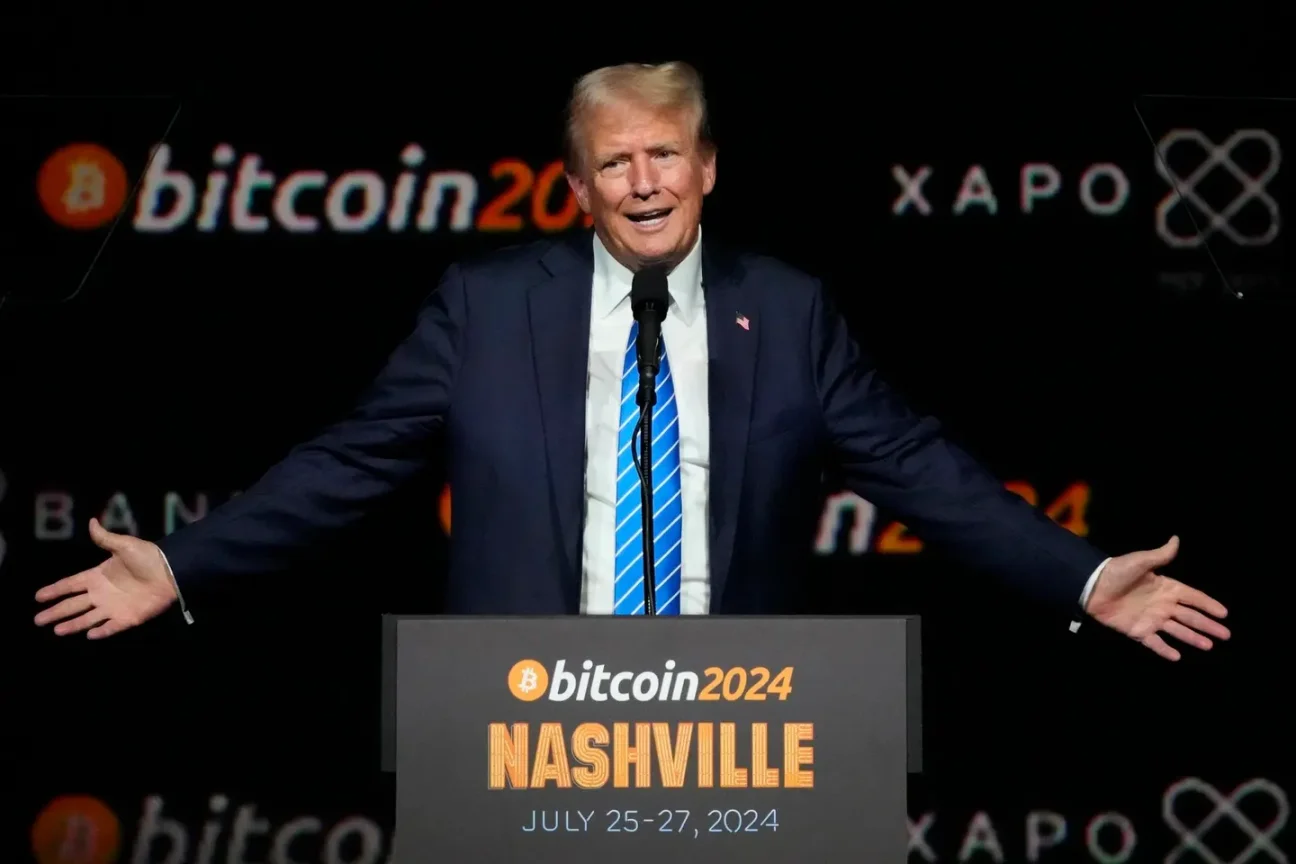

特朗普去年出席在田纳西州纳什维尔举行的比特币 2024 大会
美国加密企业的未来与比特币价格走势
放松监管和建立加密资产战略储备的两党努力,似乎正在使加密货币市场免于遭受来自华尔街动荡的影响。比特币当前的价格走势要比美国股票市场更加稳定。
当前减半周期可能在 2026 年初结束,特朗普政府的政策可能进一步影响比特币市场。这包括利益冲突的正常化。特朗普家族现在积极参与加密业务,以及重新分配执法资源,并赦免丝绸之路创始人 Ross Ulbricht 和 BitMEX 交易所创始人 Arthur Hayes、Benjamin Delo、Samuel Reed 和 Gregory Dwyer 等比特币 「元老」。
展望未来,在美国开展加密业务可能面临更少的法律风险。


Trending Cryptos

Related Reads

UK Crypto Regulation Enters Countdown: What Changes Are in the FCA's New Rules?

UK Crypto Regulation Enters Countdown: Key Changes in FCA's New Rules The UK Financial Conduct Authority (FCA) has published its final crypto asset regulatory policy, marking a shift from consultation to implementation. The new regime, set to fully expand from October 25, 2027, moves crypto businesses from registration to authorisation. A critical window from September 30, 2026, to February 28, 2027, allows existing firms to apply for transitional provisions, enabling them to continue operating while their authorisation is reviewed. Existing registrations will not automatically convert. The rules cover a broad range of activities including stablecoin issuance, custody, trading platform operation, arranging deals, staking, and lending. Authorised firms must meet new prudential capital requirements, with permanent minimum capital ranging from £750,000 for proprietary trading to £75,000 for arranging deals. They must also hold a basic liquid asset buffer for operational resilience. Market integrity rules now apply to trading platforms and intermediaries, covering areas like insider trading and requiring best execution checks against at least three UK-authorised venues. Custodians face enhanced client asset protection rules (CASS 17), focusing on ownership, reconciliation, and private key management. For stablecoins, issuers must provide full backing from issuance and allow redemption at par value within a T+1 timeframe. Reserve assets are categorised into core (e.g., demand deposits) and expanded types, with specific liquidity requirements (ODDR and CBAR) to ensure redemption capacity. Systemically important stablecoin issuers may be jointly regulated by the FCA and the Bank of England. The FCA cautions that the rules do not eliminate the high-risk, speculative nature of most crypto assets but establish a more comprehensive financial regulatory framework for the industry.

Foresight News4m ago

UK Crypto Regulation Enters Countdown: What Changes Are in the FCA's New Rules?

Foresight News4m ago

From Pump.fun to Collector Crypt: Has Solana's Revenue Throne Changed Hands?

From Pump.fun to Collector Crypt: Is Solana’s Revenue Throne Changing Hands? Solana’s on-chain narrative is expanding from meme coins to tokenized trading cards. Previously, Pump.fun dominated consumer revenue on Solana. However, starting in Q2 2026, Pump.fun's quarterly revenue growth slowed, while Collector Crypt shows a stronger recent growth trajectory. Data indicates Pump.fun's Q1 revenue was $108.3M, dropping 36.1% to $69.2M in Q2 so far. Conversely, Collector Crypt's revenue grew 108.8%, from $12.3M in Q1 to $25.8M in Q2 to date, with recent weekly revenue hitting $5.1M. While Pump.fun remains larger in scale, Collector Crypt demonstrates stronger short-term momentum. Collector Crypt's model involves custodying graded physical trading cards, minting corresponding NFTs on Solana, and selling randomized packs. Revenue comes from pack sales, secondary market fees, and royalties. Its profitability, estimated around 4-5%, stems from bulk card purchases at a discount and a buyback system for users. However, a full-scale reversal in rankings hasn't occurred. Year-to-date, Pump.fun's revenue is ~$177.5M (with its ecosystem at ~$466.5M), vastly exceeding Collector Crypt's ~$38.1M. The shift is more about narrative and recent growth dynamics than total historical volume. Pump.fun relies on speculative token launches, while Collector Crypt focuses on collectibility, scarcity, and real-world asset backing. This highlights a broadening of Solana's consumer revenue sources beyond meme coins. The sustainability of Collector Crypt's growth depends on maintaining demand for randomized packs, expanding beyond Pokémon cards (currently dominant) into sports cards, and navigating potential regulatory scrutiny on "loot box" mechanics. In conclusion, Pump.fun remains the larger revenue engine, but Collector Crypt's rise signifies a diversification of Solana's consumer application revenue into tangible, collection-based scenarios alongside speculative meme coin activity.

链捕手5m ago

From Pump.fun to Collector Crypt: Has Solana's Revenue Throne Changed Hands?

链捕手5m ago

EF: Ethereum Is Becoming the Most Needed Neutral Infrastructure for Governments and Institutions

Ethereum Foundation's Global Policy Strategy team released a report titled "Ethereum for Governments and Institutions," positioning Ethereum as critical, neutral public infrastructure. It argues that current digital systems, controlled by centralized intermediaries, create single points of failure and trust risks. In contrast, Ethereum’s decentralized architecture offers a credible, neutral alternative for applications like digital identity, public records, and asset tokenization. The report highlights Ethereum's resilience, noting it has never experienced downtime since 2015. It is secured by approximately $76 billion in staked ETH, features a geographically diverse validator network, and maintains multiple independent client implementations. This design eliminates counterparty risk, as no single entity can alter rules or shut down the network. Compared to other blockchains assessed in a referenced OpenZeppelin report, Ethereum demonstrates superior economic security, lower validator participation barriers promoting decentralization, and a mature ecosystem with over 11,000 developers. Real-world implementations, such as decentralized identity projects in Bhutan and Buenos Aires and land registry systems in India, are cited as evidence of its practical utility for public sectors. The guide serves as a non-technical primer for policymakers, emphasizing the need for infrastructure that preserves sovereignty and enables coordination without reliance on centralized intermediaries.

Odaily星球日报14m ago

EF: Ethereum Is Becoming the Most Needed Neutral Infrastructure for Governments and Institutions

Odaily星球日报14m ago

After Snagging a Nobel Laureate, Anthropic Poaches Berkeley CS Department Head, Recruiting Four Top Talents in Two Weeks

In a stunning move, Anthropic has recruited Jelani Nelson, the chair of UC Berkeley's prestigious EECS Computer Science Division and a leading theoretical computer scientist, on a leave of absence. This follows a two-week hiring spree where Anthropic also secured Nobel laureate John Jumper and two key Gemini researchers from Google. Nelson's expertise in streaming algorithms, dimensionality reduction, and randomized algorithms—fundamentally about processing vast data with minimal resources—directly addresses core challenges in large language models: training efficiency, data compression, and computational complexity. His work on the Johnson-Lindenstrauss lemma underpins modern vector search and embedding compression. Anthropic's recruitment signals a strategic shift in the AI race from merely scaling models to optimizing foundational algorithms for efficiency. This "leave of absence" model, exemplified by figures like Fei-Fei Li, is becoming a mainstream talent pipeline, allowing scholars to retain academic positions while gaining industry access to unprecedented compute and real-world problems. The recent talent war has escalated from poaching between AI firms to raiding top university departments, with Berkeley being a prime target. As OpenAI and Anthropic near potential IPOs, offering pre-IPO equity, they are effectively becoming parallel research institutions. The competition's focus is now descending to the theoretical bedrock of algorithms.

marsbit17m ago

After Snagging a Nobel Laureate, Anthropic Poaches Berkeley CS Department Head, Recruiting Four Top Talents in Two Weeks

marsbit17m ago

Trading

Spot

Hot Articles

What is $BITCOIN

DIGITAL GOLD ($BITCOIN): A Comprehensive Analysis Introduction to DIGITAL GOLD ($BITCOIN) DIGITAL GOLD ($BITCOIN) is a blockchain-based project operating on the Solana network, which aims to combine the characteristics of traditional precious metals with the innovation of decentralized technologies. While it shares a name with Bitcoin, often referred to as “digital gold” due to its perception as a store of value, DIGITAL GOLD is a separate token designed to create a unique ecosystem within the Web3 landscape. Its goal is to position itself as a viable alternative digital asset, although specifics regarding its applications and functionalities are still developing. What is DIGITAL GOLD ($BITCOIN)? DIGITAL GOLD ($BITCOIN) is a cryptocurrency token explicitly designed for use on the Solana blockchain. In contrast to Bitcoin, which provides a widely recognized value storage role, this token appears to focus on broader applications and characteristics. Notable aspects include: Blockchain Infrastructure: The token is built on the Solana blockchain, known for its capacity to handle high-speed and low-cost transactions. Supply Dynamics: DIGITAL GOLD has a maximum supply capped at 100 quadrillion tokens (100P $BITCOIN), although details regarding its circulating supply are currently undisclosed. Utility: While precise functionalities are not explicitly outlined, there are indications that the token could be utilized for various applications, potentially involving decentralized applications (dApps) or asset tokenization strategies. Who is the Creator of DIGITAL GOLD ($BITCOIN)? At present, the identity of the creators and development team behind DIGITAL GOLD ($BITCOIN) remains unknown. This situation is typical among many innovative projects within the blockchain space, particularly those aligning with decentralized finance and meme coin phenomena. While such anonymity may foster a community-driven culture, it intensifies concerns about governance and accountability. Who are the Investors of DIGITAL GOLD ($BITCOIN)? The available information indicates that DIGITAL GOLD ($BITCOIN) does not have any known institutional backers or prominent venture capital investments. The project seems to operate on a peer-to-peer model focused on community support and adoption rather than traditional funding routes. Its activity and liquidity are primarily situated on decentralized exchanges (DEXs), such as PumpSwap, rather than established centralized trading platforms, further highlighting its grassroots approach. How DIGITAL GOLD ($BITCOIN) Works The operational mechanics of DIGITAL GOLD ($BITCOIN) can be elaborated on based on its blockchain design and network attributes: Consensus Mechanism: By leveraging Solana’s unique proof-of-history (PoH) combined with a proof-of-stake (PoS) model, the project ensures efficient transaction validation contributing to the network's high performance. Tokenomics: While specific deflationary mechanisms have not been extensively detailed, the vast maximum token supply implies that it may cater to microtransactions or niche use cases that are still to be defined. Interoperability: There exists the potential for integration with Solana’s broader ecosystem, including various decentralized finance (DeFi) platforms. However, the details regarding specific integrations remain unspecified. Timeline of Key Events Here is a timeline that highlights significant milestones concerning DIGITAL GOLD ($BITCOIN): 2023: The initial deployment of the token occurs on the Solana blockchain, marked by its contract address. 2024: DIGITAL GOLD gains visibility as it becomes available for trading on decentralized exchanges like PumpSwap, allowing users to trade it against SOL. 2025: The project witnesses sporadic trading activity and potential interest in community-led engagements, although no noteworthy partnerships or technical advancements have been documented as of yet. Critical Analysis Strengths Scalability: The underlying Solana infrastructure supports high transaction volumes, which could enhance the utility of $BITCOIN in various transaction scenarios. Accessibility: The potential low trading price per token could attract retail investors, facilitating wider participation due to fractional ownership opportunities. Risks Lack of Transparency: The absence of publicly known backers, developers, or an audit process may yield skepticism regarding the project's sustainability and trustworthiness. Market Volatility: The trading activity is heavily reliant on speculative behavior, which can result in significant price volatility and uncertainty for investors. Conclusion DIGITAL GOLD ($BITCOIN) emerges as an intriguing yet ambiguous project within the rapidly evolving Solana ecosystem. While it attempts to leverage the “digital gold” narrative, its departure from Bitcoin's established role as a store of value underscores the need for a clearer differentiation of its intended utility and governance structure. Future acceptance and adoption will likely depend on addressing the current opacity and defining its operational and economic strategies more explicitly. Note: This report encompasses synthesised information available as of October 2023, and developments may have transpired beyond the research period.

556 Total ViewsPublished 2025.05.13Updated 2025.05.13

What is $BITCOIN

Discussions

Welcome to the HTX Community. Here, you can stay informed about the latest platform developments and gain access to professional market insights. Users' opinions on the price of BTC (BTC) are presented below.

活动图片