Cardano, ApeCoin и Toncoin: что покупали киты на этой неделе

cryptonews.ruPublished on 2022-12-18Last updated on 2025-04-18

На прошлой неделе крипторынок в основном находился в состоянии консолидации, а быки стремились вернуть контроль. Разбираемся, какие валюты покупали киты в этих условиях

Киты активно скупают некоторые альткоины на волатильном рынке. Возможно, так они готовятся к возможному отскоку. На этой неделе их внимание привлекли Cardano (ADA), ApeCoin (APE) и Toncoin (TON).

Киты и Cardano (ADA)

На этой неделе ADA, монета блокчейна первого уровня (L1), привлекла внимание крупных инвесторов. Данные Santiment показывают увеличение числа монет, приобретенных адресами, которые держат от 10 млн до 100 млн ADA.
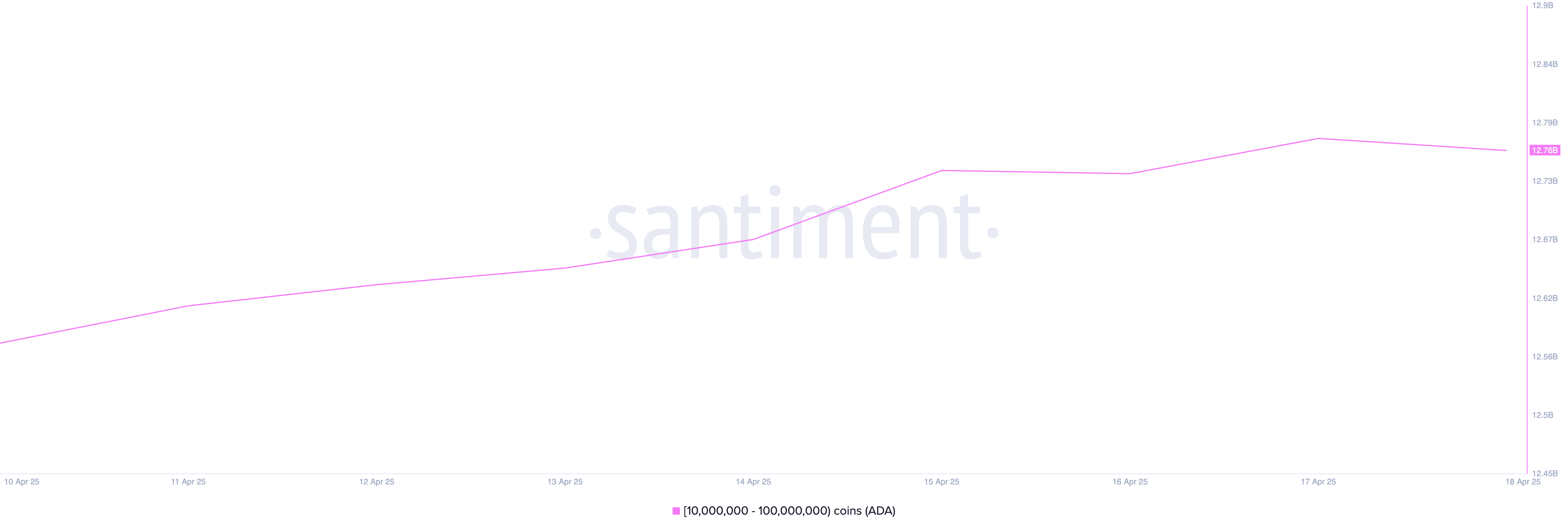
Активность китов Cardano. Источник: Santiment

По данным ончейн-платформы, за последние семь дней эта группа инвесторов приобрела 190 млн ADA (около $2,40 млрд по текущим ценам).

Всплеск покупок произошел, хотя ADA колеблется в диапазоне $0,59 — $0,63. Когда киты увеличивают свои запасы в период консолидации цены, это свидетельствует о доверии к долгосрочной ценности актива.

Такое поведение предполагает возможный бычий импульс, так как крупные держатели ожидают прорыва. Если спрос усилится, ADA может преодолеть сопротивление на уровне $0,63 и подняться до $0,70.

Однако если начнется фиксация прибыли, ADA может снизиться до $0,55.

ApeCoin (APE)

Альткоин APE, связанный с метавселенной, на этой неделе привлек внимание крупных инвесторов. Это привело к умеренному росту его цены на 4% за последние семь дней. По данным Santiment, крупные адреса, которые держат от 100 млн до 1 млрд APE, накопили 11 млн токенов за эту неделю.
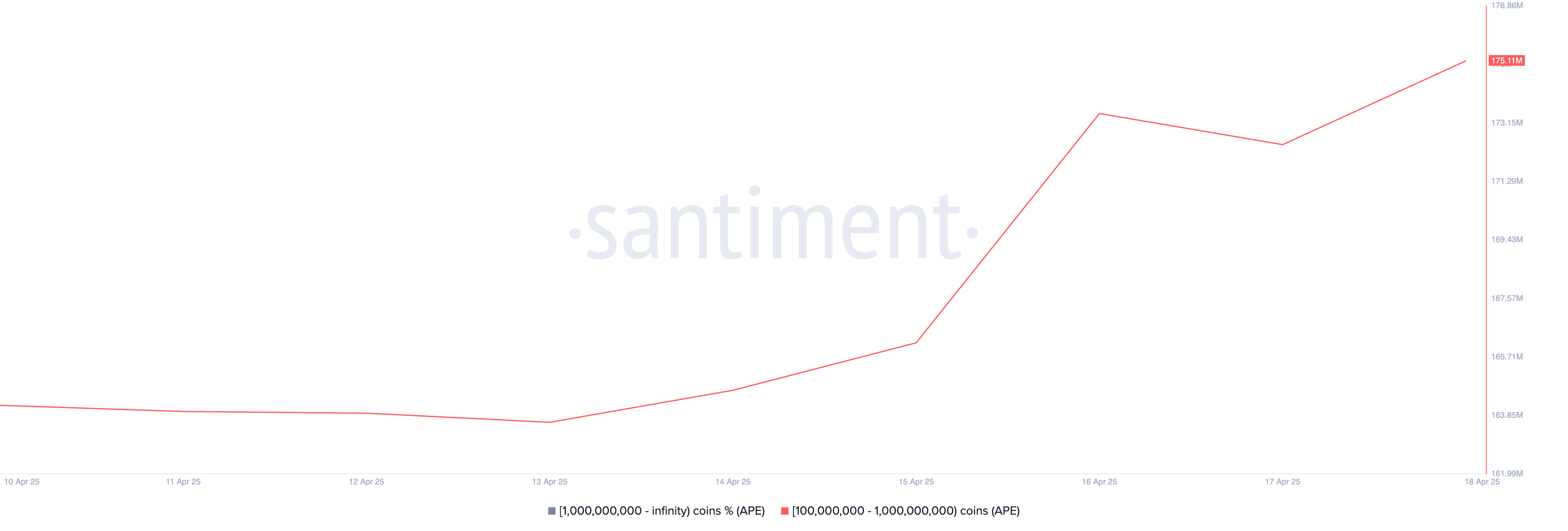
Киты и APE. Источник: Santiment

Эти инвесторы сейчас держат 175 млн токенов на сумму примерно $75,25 млн по текущим рыночным ценам. Это их наибольшие запасы с декабря 2024 года.

APE может продолжить стабильный рост, если спрос со стороны крупных инвесторов увеличится. Если тренд сохранится, токен может достичь $0,59.

Однако если спрос снизится, цена может упасть до $0,34.

Toncoin (TON)

Токен Toncoin, связанный с «Телеграмом», на этой неделе также заинтересовал китов. Это подтверждается чистым потоком капитала в сегменте крупных держателей. Показатель вырос на 164% за последние семь дней.

Киты TON — это адреса, которые владеют более 0,1% его циркулирующего предложения. Чистый поток показывает разницу между количеством токенов, которые они продают и покупают за определенный период.

Когда показатель растет, это указывает на рост интереса со стороны крупных игроков. Это может подтолкнуть к активности и розничных трейдеров. Это, в свою очередь, может привести к росту цены в ближайшем будущем.

Если киты TON продолжат накапливать актив, его цена может устроить ралли к $3,75.
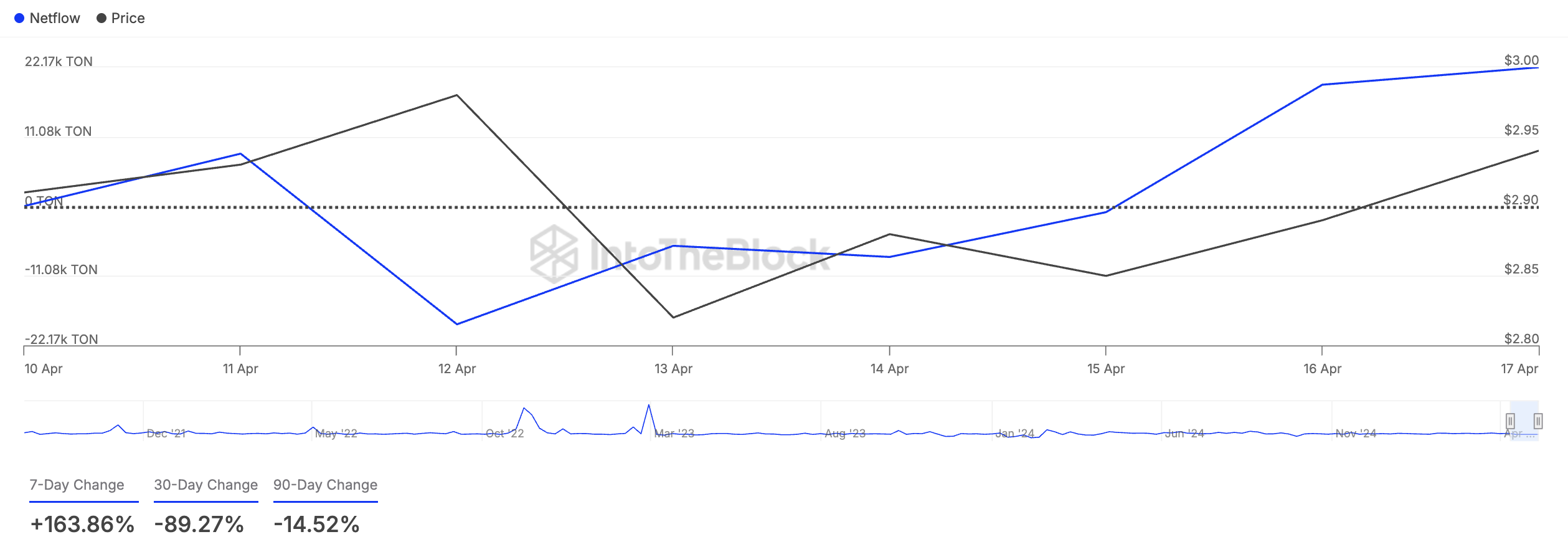
Чистый приток крупных держателей TON. Источник: IntoTheBlock

Однако если распродажи продолжатся, TON может снизиться до $2,35.

Trending Cryptos

Related Reads

Bitcoin Hits 20-Month Low as Largest Bull Suffers $15 Billion Paper Loss

Bitcoin Hits 20-Month Low as Major Bull Loses $15 Billion On June 25th, Bitcoin fell below $60,000, hitting a low of $58,030—its lowest level since October 2024. The sell-off triggered over $1 billion in leveraged liquidations in 24 hours, with longs accounting for $788 million. This marks a more than 53% decline from the October 2025 all-time high of $126,198. A critical factor in the downturn is the weakening position of MicroStrategy, the largest corporate Bitcoin holder. With 847,363 BTC at an average cost of $75,651, the company now faces over $14.6 billion in unrealized losses. Its core financing flywheel—raising capital to buy Bitcoin—is stalling. Its variable-rate preferred shares (STRC), a key fundraising tool, have fallen 25% below their $100 target. This raises doubts about its ability to continue providing steady institutional demand for Bitcoin. Simultaneously, U.S. spot Bitcoin ETFs are experiencing significant outflows, with a single-day net outflow of $469 million on June 24th. This represents the most severe sustained capital flight since their launch. The macroeconomic backdrop remains restrictive, with persistent inflation delaying expected Fed rate cuts. Analysts note a shift in capital allocation, with institutional funds moving away from crypto towards AI infrastructure stocks. Immediate pressure comes from approximately $10 billion worth of Bitcoin options expiring on June 26th, which could increase market volatility. The combined effect of these factors—eroding core demand pillars, macro headwinds, and capital rotation—has decisively broken the $60,000 support level.

Foresight News5m ago

Bitcoin Hits 20-Month Low as Largest Bull Suffers $15 Billion Paper Loss

Foresight News5m ago

STRC Falls Below $80, Can Conservative Investors Still Buy the Dip?

The article analyzes whether the STRC (a perpetual preferred stock issued by MicroStrategy) presents a buying opportunity after its price fell below its $100 par value to around $80, offering a seemingly high yield of 13-15%. The core argument is that STRC's discount reflects market skepticism about the sustainability of MicroStrategy's capital structure model, not just temporary panic. This model relies on issuing securities (like STRC) to raise funds to buy more Bitcoin, a "flywheel" that works in a bull market. The recent small sale of BTC to fund dividends, while minor, broke the psychological "never sell" anchor and signaled potential strain. Key risks identified are not a traditional Ponzi collapse but a potential breakdown in the financing narrative: 1) If Bitcoin enters a deep bear market, crushing MicroStrategy's stock premium (mNAV), its ability to raise cheap capital weakens. 2) If STRC remains deeply discounted, it signifies permanently higher funding costs. 3) The high cash dividend yield represents a significant ongoing expense. 4) If selling BTC to pay dividends becomes routine, the bullish narrative reverses. The conclusion is that STRC is not a risk-free high-yield asset. It is a high-coupon bet on whether MicroStrategy's BTC treasury financing model can withstand a bear market. Buying it is a wager that the market will continue to believe in and fund this structure at acceptable costs. The current price asks if this cycle's "casualty" might be a BTC treasury company's融资 model itself.

marsbit21m ago

STRC Falls Below $80, Can Conservative Investors Still Buy the Dip?

marsbit21m ago

Why Do Crypto Projects Keep Changing Their Names?

**Why Do Crypto Projects Keep Changing Names?** In the crypto world, changing a project's name is common—over 16% of projects have done so, including major ones like Polygon (formerly Matic Network). This contrasts sharply with traditional businesses, which fiercely protect brand equity. The core reason is that in crypto, brand loyalty is often weak. Users are frequently investors, airdrop hunters, or yield seekers, not traditional consumers. A name associated with price crashes, hacks, or failed narratives becomes a liability, not an asset. Renaming can be a strategic reset to shed this baggage. Name changes serve as a potent marketing tool. They can signal a genuine pivot in strategy or scope (e.g., EthSign dropping "Eth" as it expanded). However, they are often used to "narrative surf," rebranding to align with hot trends like AI, RWA, or the metaverse (e.g., Elrond → MultiversX). Critically, renaming is also a PR tactic to distance a project from past failures like security breaches (e.g., Anyswap → Multichain). The most significant risk emerges when a name change is coupled with a token migration or swap. This process can allow projects to reset exchange price charts, erase visible historical downtrends, and create an illusion of a fresh start. It often facilitates liquidity resets, where low float can be exploited for pumps. More alarmingly, migrations sometimes mask overhauls to tokenomics, introducing substantial new token supply through "ecosystem funds" or "node rewards," effectively diluting existing holders. The fundamental issue isn't renaming itself, which can be valid for strategic evolution. The problem is when it functions as an escape from history—a way to avoid accountability for past mistakes, failed promises, and poor performance. When a project announces a rebrand, the critical questions are: What tangible new capability or strategy does it represent? Has the tokenomics changed? And what part of its past is it most trying to make users forget?

marsbit27m ago

Why Do Crypto Projects Keep Changing Their Names?

marsbit27m ago

A Trillion-Dollar Entry Point for Pension Funds? Franklin's Bitcoin Dividend Reinvestment ETFs Come with a Built-In Selling Pressure Ceiling

Franklin Templeton filed for two ETFs on June 18 that embed a "default option" logic into Bitcoin investing. These funds—the Franklin US Equity Bitcoin Dividend Reinvestment Index ETF and the Franklin US Innovative Equity Bitcoin Dividend Reinvestment Index ETF—aim to automatically allocate a portion of investor dividends to Bitcoin, initially with a 95% stock and 5% Bitcoin allocation. The mechanism is designed for financial advisors, not retail investors. By packaging Bitcoin exposure within a standard equity fund label, advisors can bypass internal compliance restrictions against direct cryptocurrency allocation for their clients. Dividends from the stock holdings are automatically used to buy Bitcoin via spot ETFs, futures, or options. However, the structure imposes strict rebalancing rules: if Bitcoin's allocation exceeds 5%, it is trimmed back to 4.5% quarterly, with a hard cap of 20%. This means the fund becomes a systematic seller during Bitcoin price rallies. Realistically, the potential buying pressure is minimal. Based on dividend yields (approximately 1.05% for broad market, 0.52% for innovative equity), the annual inflow into Bitcoin would be a tiny fraction of the fund's assets. For comparison, Franklin's existing Bitcoin ETF ($359 million AUM) would generate only about $3.6 million in annual Bitcoin purchases—negligible against Bitcoin's daily trading volume. The innovative equity fund, heavily weighted in low-dividend stocks like Nvidia, would have even weaker buying power. The product utilizes an offshore Cayman subsidiary to hold Bitcoin, a common compliance tactic for commodity exposure in mutual funds. A key drawback for investors is the tax liability: they must pay taxes on dividends that are automatically converted into Bitcoin, requiring out-of-pocket cash for a gain they never directly receive. For the strategy to scale significantly, such funds would need to become a default or near-default option in retirement plans like 401(k)s. Recent regulatory moves, including a Trump executive order and a Department of Labor proposal offering fiduciary safe harbors for including crypto assets, could pave the way. However, widespread employer adoption likely awaits further legal clarity. Ultimately, the fund's model leverages investor inertia and automated systems, rather than convincing anyone to actively choose Bitcoin. While it creates a new, albeit small, structural buyer, its rebalancing rules also establish a built-in "selling ceiling" that could dampen price upside if similar products proliferate.

Foresight News29m ago

A Trillion-Dollar Entry Point for Pension Funds? Franklin's Bitcoin Dividend Reinvestment ETFs Come with a Built-In Selling Pressure Ceiling

Foresight News29m ago

Why Do Crypto Projects Always Love Changing Names?

This article explores why cryptocurrency projects frequently change their names, a practice uncommon in traditional businesses where brand equity is a core asset. Over 16% of crypto projects have reportedly rebranded, often for strategic, marketing, or defensive reasons. The primary explanation is the weak user loyalty in crypto; many users are investors, airdrop hunters, or narrative traders, not traditional consumers. When a project's token price falls, its narrative fades, or it faces scandals/hacks, its old name becomes a liability laden with negative history rather than brand value. Therefore, frequent rebranding aims to shed this historical baggage. Name changes can be a marketing strategy to align with new business directions (e.g., Matic to Polygon), capitalize on trending narratives (e.g., adding "AI" or "Multiverse"), or distance from past failures like security breaches (e.g., Anyswap to Multichain). However, the most concerning aspect often involves a simultaneous token migration or swap. This process can serve as a "liquidity reset": it wipes historical price charts, potentially eases market manipulation, and is sometimes used to introduce new tokenomics that dilute existing holders' value through hidden inflation. The article concludes that while legitimate strategic pivots can justify a rebrand, many crypto name changes are less about building a new future and more about escaping the past—erasing bad memories, failed narratives, and dissatisfied communities. The key questions for any rebranding project are: what genuine new value or strategy does it bring, how has the tokenomics changed, and what part of its history is it trying to make users forget?

链捕手36m ago

Why Do Crypto Projects Always Love Changing Names?

链捕手36m ago

Trading

Spot
Futures

Hot Articles

Discussions

Welcome to the HTX Community. Here, you can stay informed about the latest platform developments and gain access to professional market insights. Users' opinions on the price of ADA (ADA) are presented below.

活动图片