Solana (SOL) может упасть ниже $110

cryptonews.ruPublished on 2024-09-30Last updated on 2025-03-31

Solana (SOL) потеряла практически 9% за последнюю неделю и с шестого марта торгуется ниже отметки $150. Текущая динамика указывает на явные медвежьи сигналы по многим индикаторам

Разбираемся, что происходит на рынке Solana (SOL) и чего ждать от цены криптовалюты.

Облако Ишимоку указывает на медвежий сценарий

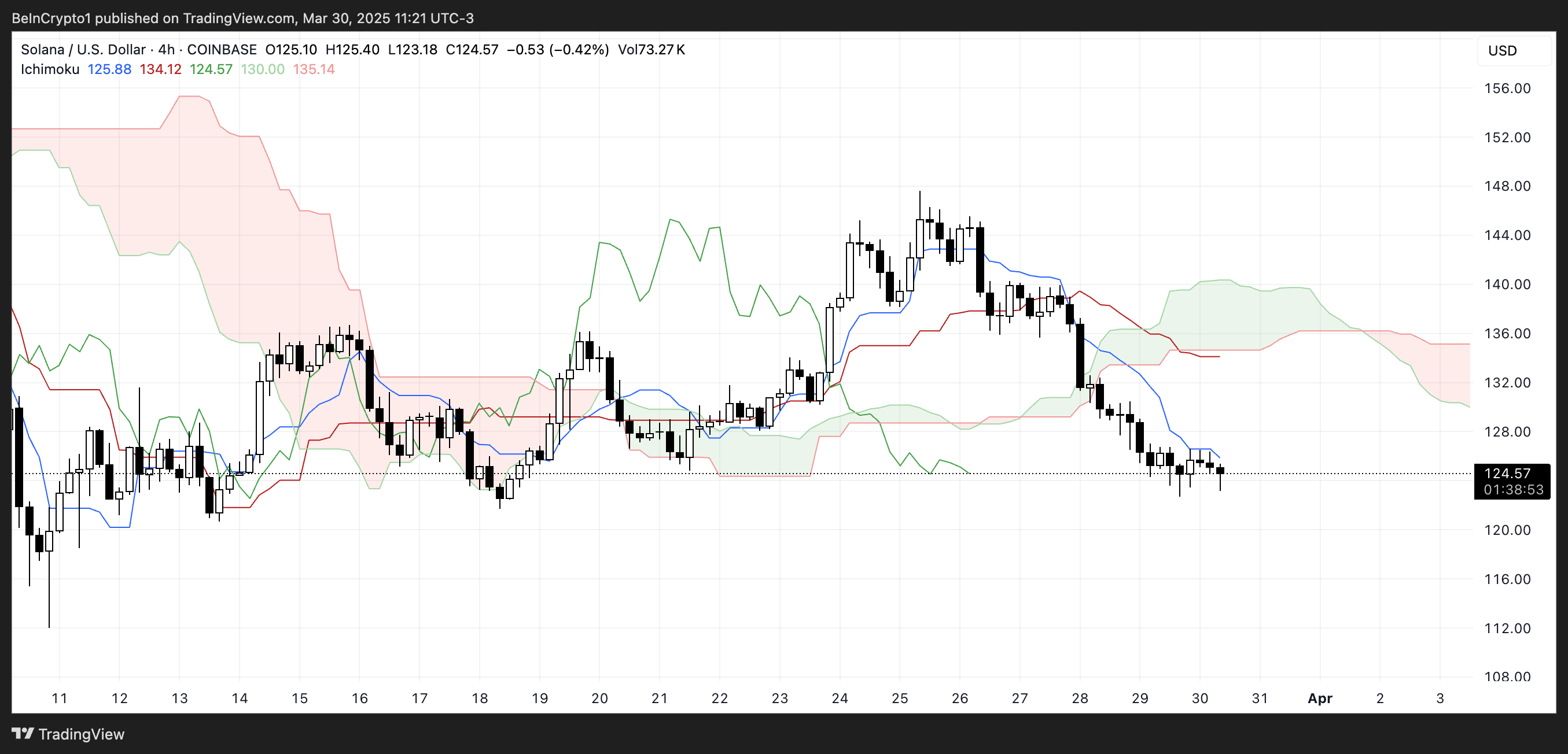
График облака Ишимоку для Solana демонстрирует четкую медвежью структуру: цена находится ниже линий Киджун-сен (красная) и Тенкан-сен (синяя).

Линия отставания (зеленая) также расположена ниже ценовых свечей и облака, что подтверждает негативный прогноз. Облако впереди красное и снижается, указывая на сильное сопротивление в ближайшем будущем.
Облако Ишимоку для SOL. Источник: TradingView

Solana не смогла преодолеть краткосрочные уровни сопротивления и остается в нисходящем канале. Тонкое облако указывает на слабую поддержку, что делает цену уязвимой для дальнейшего снижения, если медвежий импульс продолжится.

Для разворота тренда Solana необходимо пробить уровень Киджун-сен и уверенно двигаться к облаку, но пока тенденция остается нисходящей.

Продавцы доминируют на рынке Solana

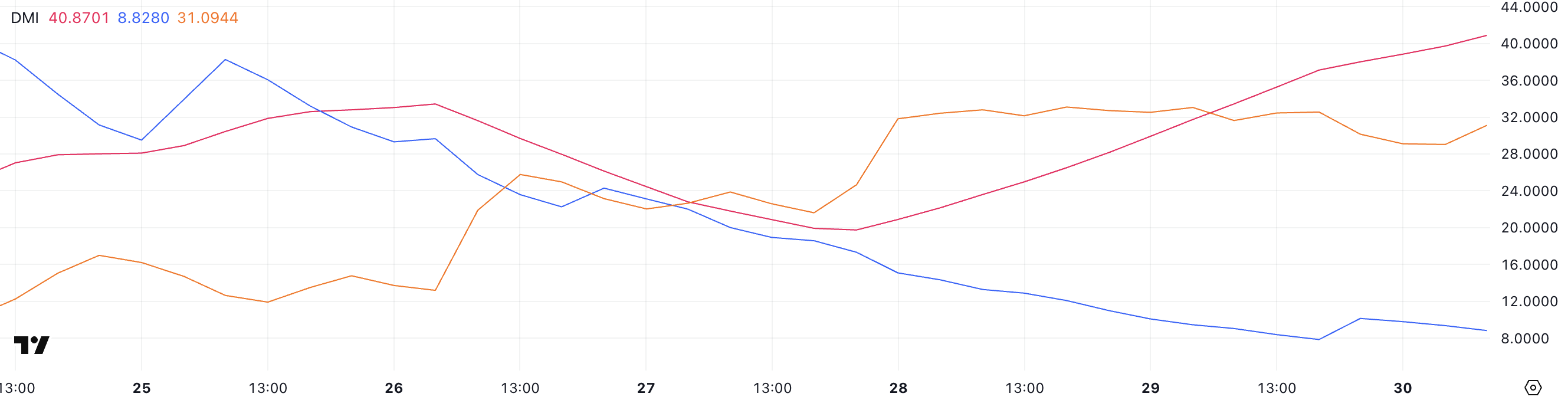
Индикатор DMI для Solana демонстрирует резкий рост ADX, который сейчас составляет 40,87. Всего три дня назад он был на уровне 19,74. Такой скачок подтверждает, что текущий нисходящий тренд SOL усиливается.
Индикатор DMI для SOL. Источник: TradingView

При этом +DI снизился с 17,32 до 8,82, а -DI вырос до 31,09 и остается на этом уровне последние два дня. Эта конфигурация указывает на доминирование продавцов и усиление нисходящего тренда.

Пока -DI доминирует на графике, а ADX остается высоким, давление на SOL в краткосрочной перспективе будет оставаться сильным.

Прогноз SOL: возможна просадка ниже $110

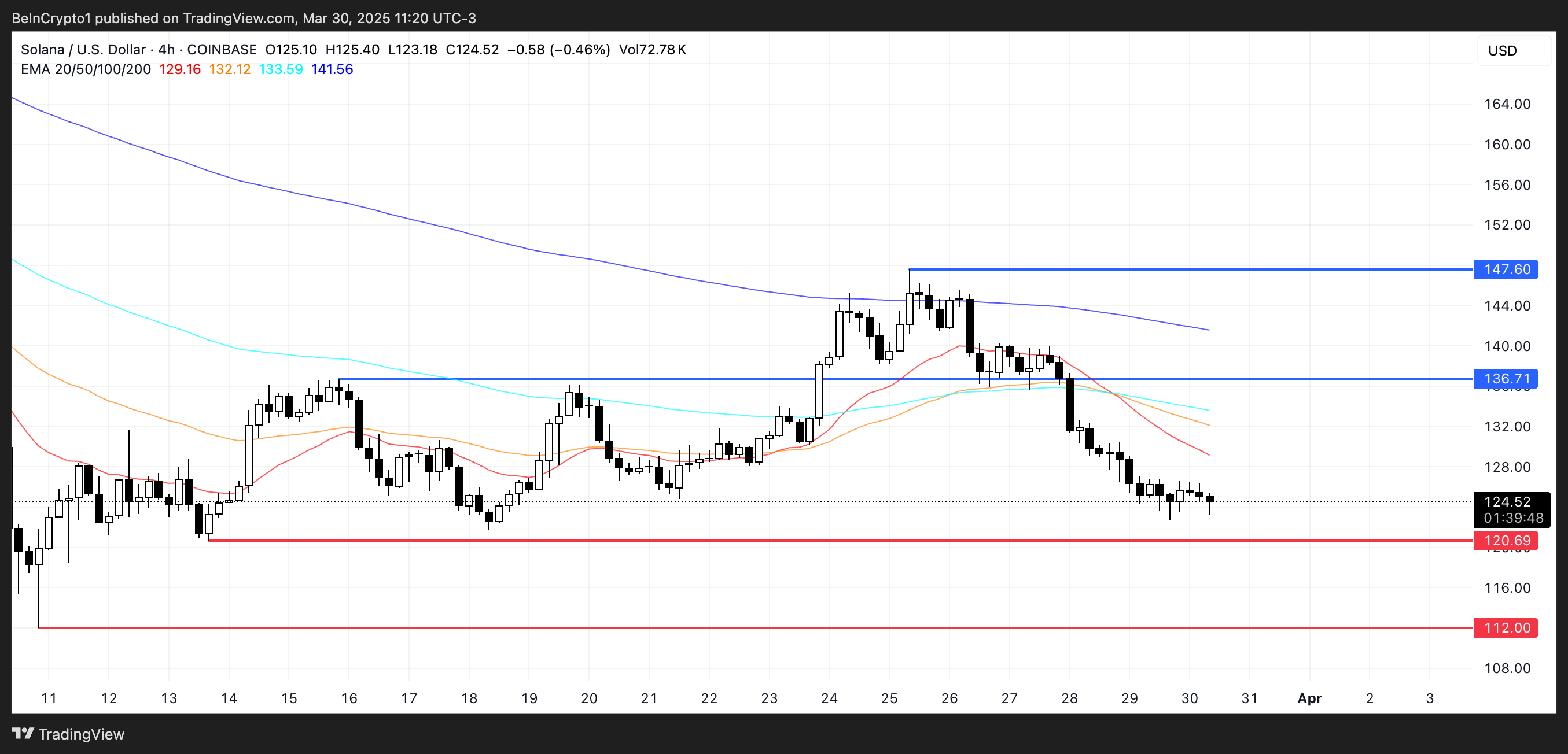
На графике Solana появился «крест смерти» — медвежий сигнал, когда краткосрочные скользящие средние пересекают долгосрочные снизу вверх.

Сейчас цена приближается к важной поддержке на $120. Если этот уровень не выдержит, стоимость Solana может снизиться до $112 или даже ниже $110. Этот минимум будет достигнут впервые с февраля 2024 года.
Анализ цены SOL. Источник: TradingView

Если покупатели активизируются и спрос начнет увеличиваться, то у SOL появится шанс подняться до сопротивления на $136. Успешный пробой этого барьера откроет дорогу к $147 — еще одному важному сопротивлению.


Trending Cryptos

Related Reads

Collateral Dollars: How Does a 'Second-Layer Dollar' Above Stablecoins Form?

Collateral Dollars: How Does a "Second Layer of Dollars" Form on Top of Stablecoins? Most assume stablecoins replicate Eurodollar functions, expanding the offshore dollar system. However, stablecoins primarily replace specific functions like operational dollar balances for settlement. They do not inherently create new dollar credit; they substitute existing claims. The key question is: what happens when financial intermediaries use stablecoins as collateral to create a new layer of dollar-denominated claims? This "collateral dollar" channel operates through secured lending, not direct money creation. A money-like event only occurs when a liability issued against the controlled stablecoin is funded, rolled over, or accepted at near-par value by another balance sheet. The discount (haircut) prices the gap between "effective control over the token" and "reliable convertibility to bank dollars." Elasticity stems not from the stablecoin itself but from the liability issued against it and the willingness of third-party balance sheets to treat that liability as a near-par asset. Compared to the traditional Eurodollar system—where elasticity originates from bank deposit creation—the stablecoin collateral chain is structurally different. Eurodollar deposits are credit-expansive from inception. Stablecoins are initially substitutive; elasticity emerges later if an intermediary's liability against them gains monetary acceptance. Stablecoins disrupt specific tiers of the offshore dollar system, mainly replacing operational settlement balances. They do not replace the need for full dollar balance-sheet capacity (credit lines, hedging, maturity transformation). For systemic impact, the second-layer liability must pass three tests: transferability, funding capacity, and monetary acceptance (being fundable or held at par by others). Pressure transmission also differs. In the Eurodollar system, stress moves up a hierarchy of claims. In a stablecoin collateral chain, the second-layer liability can lose its money-like status well before the underlying stablecoin faces a run, often triggered by haircut increases and margin calls that create a dynamic spiral of falling token prices and rising discounts. In conclusion, the "collateral dollar" is not the stablecoin itself. It is the second-layer liability issued against a controlled token balance that is willing to be funded and maintained at near-par value. Its existence depends on that liability surviving the leap from "token liquidity" to "bank dollar liquidity."

marsbit1h ago

Collateral Dollars: How Does a 'Second-Layer Dollar' Above Stablecoins Form?

marsbit1h ago

Trading

Spot

Hot Articles

Discussions

Welcome to the HTX Community. Here, you can stay informed about the latest platform developments and gain access to professional market insights. Users' opinions on the price of SOL (SOL) are presented below.

活动图片