分析:神秘巨鲸囤积 3.4 亿美元 BTC,但最佳抄底时机还没到?

深潮TechFlowPublished on 2025-02-28Last updated on 2026-07-06

Abstract

社交媒体上的交易员看似热衷于抄底,神秘巨鲸也已出手,但链上数据分析平台Santiment认为这未必意味着最佳买入时机已至。

综编:Tim

市场暴跌之际,社区抄底热情高涨

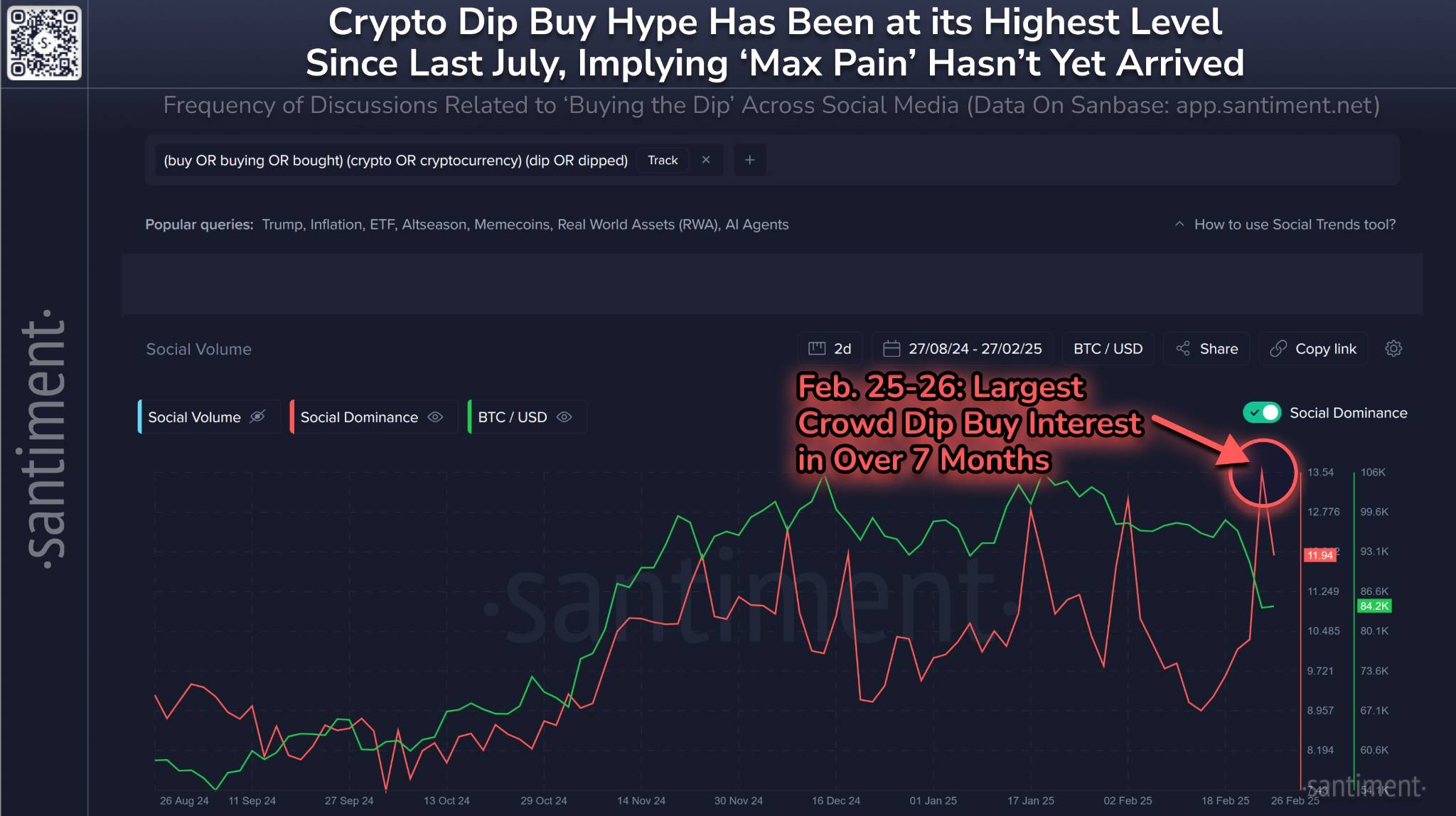
加密货币市场近期持续暴跌,在比特币跌破8万美元关口之际,社交媒体上关于抄底的讨论量已飙升至去年7月以来的最高峰值。

链上分析平台Santiment于2月28日在其X平台账号发文指出,通过监测2月25日至26日期间X、Reddit及Telegram等社交渠道的交易者讨论发现:市场情绪显示出对本次抄底的强烈信心。

市场抄底兴趣已攀升至七个月来的峰值。

神秘巨鲸出手,囤积3.4亿美元BTC

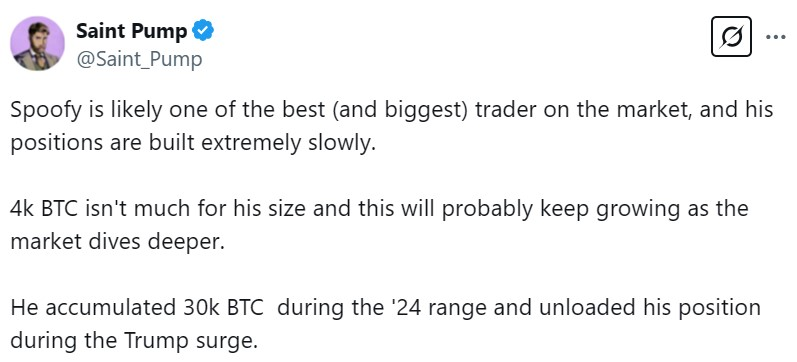
根据社区成员2月27日披露的数据显示,某神秘巨鲸地址在比特币价格于8.2万美元至8.5万美元美元区间震荡期间,累计囤积了4000枚BTC。以当前比特币市价计算,该头寸价值约3.44亿美元。

加密货币分析师Saint Pump证实,该巨鲸地址正是业内公认的最大操盘手之一——“Spoofy”。

Spoofy在2022年Luna稳定币崩盘与FTX交易所暴雷引发的漫长熊市中,持续逆向增持BTC。链上数据显示,该巨鲸在比特币价格从4万美元暴跌至1.6万美元的过程中,累计购入7万枚BTC。

祸不单行,宏观经济再传利空

2月25日比特币跌破9万美元关口,正值美国总统特朗普宣布将对加拿大和墨西哥实施25%关税政策第二天。

随着特朗普于2月28日威胁对中国加征10%关税叠加其他宏观经济不确定性,比特币持续回吐大选后的涨幅,最终跌破8万美元心理支撑位。

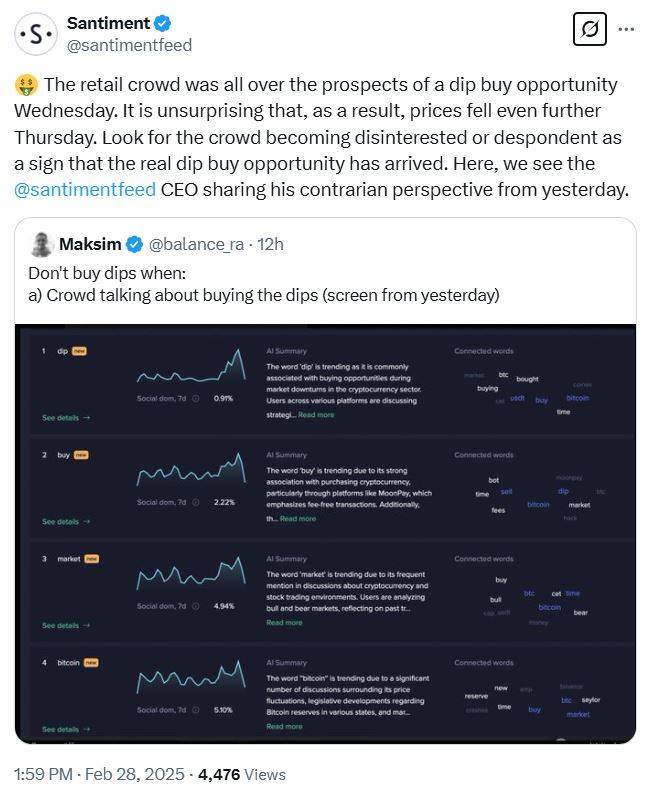
Santiment的舆情追踪系统通过筛选加密货币垂直社交媒体渠道,抓取过去14天内提及量增幅最为显著的十大关键词

​​​​数据来源:Santiment

市场具有反身性,未必是入场最佳时机

然而分析平台Santiment指出,市场高涨的抄底热情未必是最佳入场信号,因为资产价格通常会与预期反向波动。

Santiment在分析中指出:“理想情况下,我们正等待市场群体的亢奋情绪消退,这标志着散户已承受足够损失,从而为技术性反弹创造条件。”

“市场走势常与群体共识背道而驰,因此当市场乐观情绪逐步降温、抄底的呼声持续减弱时,反而应视为潜在的看涨信号。”

Santiment的舆情监控系统依据其方法论,通过扫描X(原Twitter)及Telegram等加密货币垂直社交媒体平台,抓取过去两周内提及量环比增幅最大的前十大关键词。

根据CoinMarketCap数据显示,比特币在过去30个交易日内累计跌幅超21%,过去24小时内再跌5%,当前报价约80400美元;以太坊同期跌幅突破30%,24小时下挫7.54%,现报2139美元附近。

Santiment在后续分析中指出:“在散户群体蜂拥进行抄底机后,当前加密资产的价格如果进一步下挫,这并不会令人意外。”

来源: Santiment

什么时候是抄底良机?

Santiment在最新分析中强调:“真正的抄底良机往往出现在市场群体兴趣消退乃至陷入绝望之时,此时需特别关注交易量异动与链上大额转账信号。”

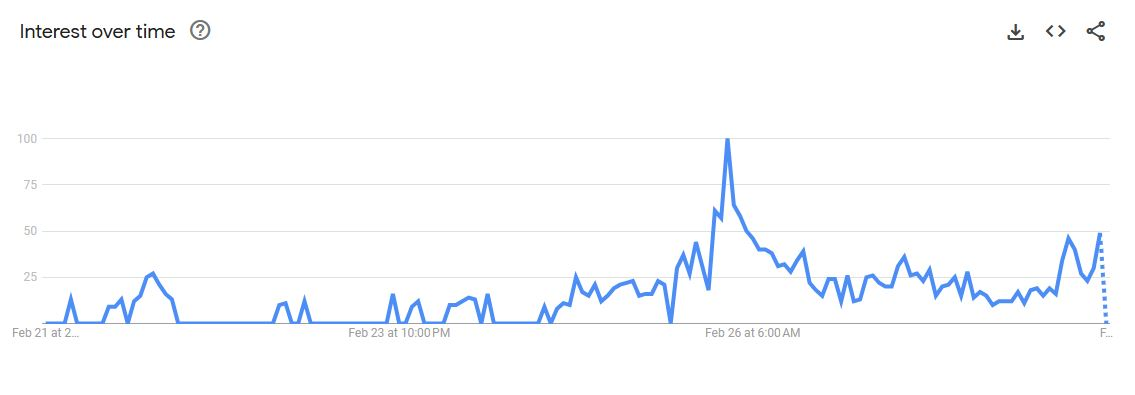
根据谷歌趋势数据显示,在截至2月28日当周内,“抄底”的搜索热度呈现典型的市场情绪反转特征。该关键词关注度于2月26日飙升至100的峰值后,目前已回落至49分(100分制)。

谷歌趋势数据显示,“抄底”这一投资术语的搜索关注度近期出现激增PANews

Trending Cryptos

Related Reads

A Decade of Change: The Demise of Crypto Startups

"The Decade-Long Transformation: The Demise of Crypto Startups" The article traces the dramatic evolution of the cryptocurrency industry from its anarchic beginnings to its current highly regulated and institutionalized state. In the early days (circa 2017), launching a crypto startup was remarkably simple: a whitepaper, a GitHub repository, and a Telegram group could attract thousands of retail investors via an Initial Coin Offering (ICO). Founders operated anonymously with near-zero regulatory and financial barriers, enabling rapid, global innovation but also widespread fraud. By 2026, the landscape is fundamentally different. To operate in major markets like the US, EU, and Asia, crypto businesses must now navigate a complex web of regulations akin to traditional finance. Compliance costs are prohibitive: estimates for a US multi-state operation range from $750,000 to $1.2 million in the first three years, with annual costs exceeding $2 million thereafter. Regulations like MiCA in the EU and New York's BitLicense have created high capital and operational hurdles that act as barriers to entry. Simultaneously, venture capital investment has shifted dramatically. Following the collapses of Terra and FTX, funding has concentrated in later-stage, established companies, creating a "barbell market." Early-stage and seed funding has shrunk significantly, while mega-funds like Andreessen Horowitz's $15 billion pool dominate. Most capital now flows to trading platforms, lending infrastructure, and B2B services. This environment favors mergers and acquisitions as the primary path for growth. Companies like Coinbase and Ripple are acquiring firms like Deribit and Hidden Road not for their technology, but for their licenses, banking relationships, and institutional trust—assets far more valuable than code. Distribution channels, compliance, and brand reputation have become the new moats, overshadowing pure technical innovation. The industry's maturation brings benefits: reduced scams, increased institutional participation, and clearer regulatory frameworks. However, it comes at a cost. The low-barrier, experimental ethos that defined crypto's first decade is fading. Entrepreneurs without substantial capital, pre-existing licenses, or institutional connections face immense challenges. Funding for exploratory fields like decentralized social media or novel governance models is drying up. Ultimately, the crypto industry is replicating the consolidation pattern seen in banking and tech after the 2008 financial crisis. While this brings stability and legitimacy, it raises a critical question: in this new, resource-intensive reality, is there still room for the disruptive, from-scratch innovation that gave birth to the sector?

Foresight News32m ago
A Decade of Change: The Demise of Crypto Startups

Foresight News32m ago

Trading

Spot

Hot Articles

What is $BITCOIN

DIGITAL GOLD ($BITCOIN): A Comprehensive Analysis Introduction to DIGITAL GOLD ($BITCOIN) DIGITAL GOLD ($BITCOIN) is a blockchain-based project operating on the Solana network, which aims to combine the characteristics of traditional precious metals with the innovation of decentralized technologies. While it shares a name with Bitcoin, often referred to as “digital gold” due to its perception as a store of value, DIGITAL GOLD is a separate token designed to create a unique ecosystem within the Web3 landscape. Its goal is to position itself as a viable alternative digital asset, although specifics regarding its applications and functionalities are still developing. What is DIGITAL GOLD ($BITCOIN)? DIGITAL GOLD ($BITCOIN) is a cryptocurrency token explicitly designed for use on the Solana blockchain. In contrast to Bitcoin, which provides a widely recognized value storage role, this token appears to focus on broader applications and characteristics. Notable aspects include: Blockchain Infrastructure: The token is built on the Solana blockchain, known for its capacity to handle high-speed and low-cost transactions. Supply Dynamics: DIGITAL GOLD has a maximum supply capped at 100 quadrillion tokens (100P $BITCOIN), although details regarding its circulating supply are currently undisclosed. Utility: While precise functionalities are not explicitly outlined, there are indications that the token could be utilized for various applications, potentially involving decentralized applications (dApps) or asset tokenization strategies. Who is the Creator of DIGITAL GOLD ($BITCOIN)? At present, the identity of the creators and development team behind DIGITAL GOLD ($BITCOIN) remains unknown. This situation is typical among many innovative projects within the blockchain space, particularly those aligning with decentralized finance and meme coin phenomena. While such anonymity may foster a community-driven culture, it intensifies concerns about governance and accountability. Who are the Investors of DIGITAL GOLD ($BITCOIN)? The available information indicates that DIGITAL GOLD ($BITCOIN) does not have any known institutional backers or prominent venture capital investments. The project seems to operate on a peer-to-peer model focused on community support and adoption rather than traditional funding routes. Its activity and liquidity are primarily situated on decentralized exchanges (DEXs), such as PumpSwap, rather than established centralized trading platforms, further highlighting its grassroots approach. How DIGITAL GOLD ($BITCOIN) Works The operational mechanics of DIGITAL GOLD ($BITCOIN) can be elaborated on based on its blockchain design and network attributes: Consensus Mechanism: By leveraging Solana’s unique proof-of-history (PoH) combined with a proof-of-stake (PoS) model, the project ensures efficient transaction validation contributing to the network's high performance. Tokenomics: While specific deflationary mechanisms have not been extensively detailed, the vast maximum token supply implies that it may cater to microtransactions or niche use cases that are still to be defined. Interoperability: There exists the potential for integration with Solana’s broader ecosystem, including various decentralized finance (DeFi) platforms. However, the details regarding specific integrations remain unspecified. Timeline of Key Events Here is a timeline that highlights significant milestones concerning DIGITAL GOLD ($BITCOIN): 2023: The initial deployment of the token occurs on the Solana blockchain, marked by its contract address. 2024: DIGITAL GOLD gains visibility as it becomes available for trading on decentralized exchanges like PumpSwap, allowing users to trade it against SOL. 2025: The project witnesses sporadic trading activity and potential interest in community-led engagements, although no noteworthy partnerships or technical advancements have been documented as of yet. Critical Analysis Strengths Scalability: The underlying Solana infrastructure supports high transaction volumes, which could enhance the utility of $BITCOIN in various transaction scenarios. Accessibility: The potential low trading price per token could attract retail investors, facilitating wider participation due to fractional ownership opportunities. Risks Lack of Transparency: The absence of publicly known backers, developers, or an audit process may yield skepticism regarding the project's sustainability and trustworthiness. Market Volatility: The trading activity is heavily reliant on speculative behavior, which can result in significant price volatility and uncertainty for investors. Conclusion DIGITAL GOLD ($BITCOIN) emerges as an intriguing yet ambiguous project within the rapidly evolving Solana ecosystem. While it attempts to leverage the “digital gold” narrative, its departure from Bitcoin's established role as a store of value underscores the need for a clearer differentiation of its intended utility and governance structure. Future acceptance and adoption will likely depend on addressing the current opacity and defining its operational and economic strategies more explicitly. Note: This report encompasses synthesised information available as of October 2023, and developments may have transpired beyond the research period.

627 Total ViewsPublished 2025.05.13Updated 2025.05.13

What is $BITCOIN

Discussions

Welcome to the HTX Community. Here, you can stay informed about the latest platform developments and gain access to professional market insights. Users' opinions on the price of BTC (BTC) are presented below.

活动图片