Dogecoin Price Warning: Analysts Predict a 50% Crash in 2025—Meanwhile, XYZVerse Goes Viral

bitcoinistPublished on 2025-02-24Last updated on 2025-02-25

Abstract

Experts anticipate a significant drop in Dogecoin's value by 2025, with predictions of a 50% decline. At the same time,...

Experts anticipate a significant drop in Dogecoin’s value by 2025, with predictions of a 50% decline. At the same time, XYZVerse is gaining immense popularity and spreading rapidly. What factors are leading to Dogecoin’s possible downturn? Why is XYZVerse capturing so much attention? This article delves into these unfolding events and their potential impact.

$XYZ Targets 99,900% Growth, Unlocking G.O.A.T. Status

XYZVerse ($XYZ) has brought a brand-new concept to the memecoin niche by blending the excitement of sports with the fast-moving energy of crypto. Designed for hardcore fans of football, basketball, MMA, and esports, this project goes beyond just being another token—it’s a growing community built around passion for the game.

With the bold Greatest of All Time (G.O.A.T.) vision, XYZVerse is aiming higher than the average meme coin. And people are taking notice—it has recently earned the title of Best New Meme Project.

What sets $XYZ apart? It’s not a short-lived trend. This project has a clear roadmap and a dedicated community focused on long-term growth.
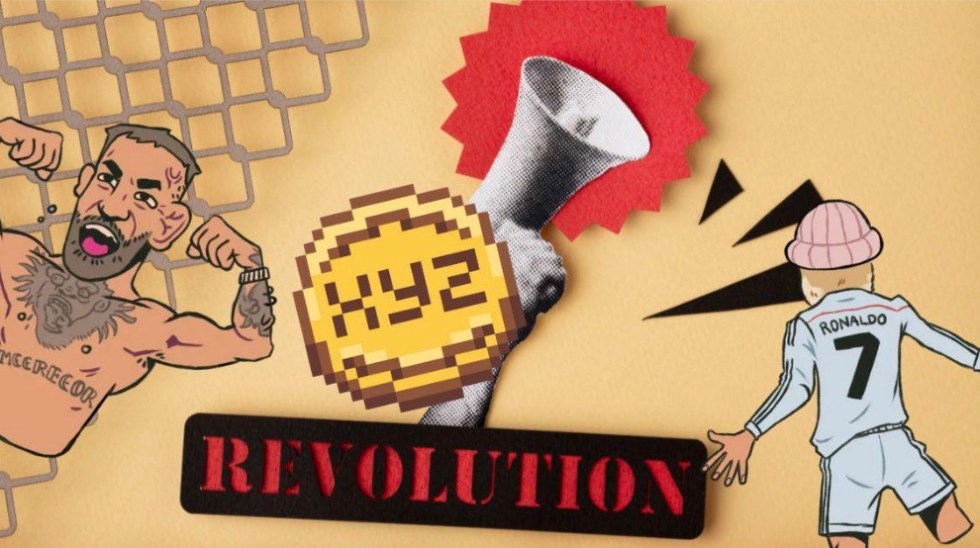
XYZVerse Revolution

Fueled by the sports mentality, the $XYZ token has emerged as the ultimate contender ready to crush competitors. $XYZ is on its way to the winner’s podium to become a badge of honor for those who live and breathe sports and crypto.

$XYZ Already Delivers Even Before Hitting the Market

The $XYZ presale is underway, providing access to the token at a special pre-listing price.

Launch Price: $0.0001

Price Now: $0.0025

Next Stage: $0.003333

Final Knockout Target: $0.1

From launch to the token generation event, $XYZ is targeting a mind-blowing 99,900% surge!

If you’re not in, you’re out. The $XYZ presale is already smashing through stages with the speed of a champion’s knockout blow.

Join $XYZ Presale Now and See Your Pennies Grow Into Millions!

Dogecoin Unleashed: How a Meme Became a Crypto Powerhouse

Dogecoin started in 2013 as a joke. Its creators, Billy Marcus and Jackson Palmer, wanted to make a fun alternative to Bitcoin. They chose the Shiba Inu dog meme as its logo. Unlike Bitcoin, which has a limited supply, Dogecoin does not have a maximum supply. Every minute, 10,000 new Dogecoins are mined. In 2021, its value skyrocketed. Dogecoin became one of the top ten cryptocurrencies, with a market value over $50 billion. Social media buzz, especially from Elon Musk, helped fuel this surge. What began as a joke showed the power of community and social media in shaping financial markets.

Dogecoin’s technology is simple and straightforward. It uses the same basic code as Bitcoin, but with some differences. Transactions are fast, and fees are low, making it practical for everyday use. In the current market, some see Dogecoin as an accessible entry point into crypto. Others are cautious, noting its origins and unlimited supply. Compared to coins like Bitcoin and Ethereum, Dogecoin lacks advanced features. However, its strong community and widespread recognition give it potential. As the crypto market evolves, Dogecoin remains a unique player to watch.

Conclusion

As the 2025 bull run unfolds and Dogecoin faces potential decline, XYZVerse emerges as a promising sports memecoin, uniting fans and aiming for remarkable growth.

You can find more information about XYZVerse (XYZ) here:

Site, Telegram, X

Related Reads

DeFi Has Reached Its Most Dangerous Moment: The Real Vulnerabilities Are Not in the Code

DeFi in Peril: The Real Vulnerability Isn't in the Code April 2026 marked a paradigm shift in DeFi security, with over $625 million lost across 30 incidents—the worst month in crypto history by event count. Crucially, none of the major exploits (Drift Protocol: $285M, KelpDAO: $292M, Wasabi Protocol: $4.5M) resulted from smart contract vulnerabilities. Instead, failures occurred in the operational "plumbing": social engineering to compromise multi-signature councils, a single-point-of-failure 1-of-1 bridge validator, and stolen admin private keys. These events expose a fundamental misalignment: the industry's security model has long focused on code audits, while the actual attack surface has shifted to privileged access points and off-chain infrastructure. The article introduces the term "OpenFi" to describe this reality: permissionless, on-chain, yet operationally dependent on trusted third parties (admins, validators, oracles) at key junctures. The KelpDAO exploit vividly demonstrated asymmetric "contagion risk." A configuration error in a smaller protocol triggered a panic, causing approximately $13.2 billion in outflows from larger, unaffected protocols like Aave within 48 hours, as users fled uncertain collateral. The core dilemma is the double-edged sword of centralization. Operational levers like emergency councils (e.g., Arbitrum freezing stolen funds post-KelpDAO) enable crisis response but also create catastrophic attack surfaces if compromised (e.g., Drift). The path forward demands radical honesty: protocols must clearly disclose their trust assumptions, operational levers, and failure modes. The industry must treat operational security (key management, configurations, incident response) with the same rigor as code security. Survival depends on building systems whose risks can be understood, priced, and insured, moving beyond the outdated "code is law" mantra to a mature model of disclosed and managed trust.

链捕手4h ago

DeFi Has Reached Its Most Dangerous Moment: The Real Vulnerabilities Are Not in the Code

链捕手4h ago

Vitalik's Article Emphasizes Ethereum Must Be 'Amazing', But Foundation Is Not the Center

Vitalik Buterin has published a lengthy response to recent community criticism directed at the Ethereum Foundation (EF). Acknowledging a sense of "unease," he addresses concerns about the EF's strategic direction, its perceived disconnect from ETH's price performance, and calls for its reduced central role. Vitalik rejects the notion that the EF should be the central governing body of Ethereum, framing it instead as one "node with a clear mandate" among many within the ecosystem. He highlights the EF's limited ETH holdings (≈0.16% of supply) compared to other blockchain foundations and states it will no longer sell significant amounts of ETH. Its future focus will be on long-term, critical projects that align with Ethereum's core values of censorship-resistance and decentralization, which might not otherwise happen. A core argument is that Ethereum must be "amazing," but not by merely chasing higher transaction speeds at the cost of decentralization. He proposes focusing on the "CROPS" dimensions: creating a Cryptographically provable, Reliable, Open, Private, and Secure network. This includes pursuing goals like a formally verifiable, bug-free Ethereum client and minimizing protocol-level reliance on intermediaries. The article concludes by noting that while Vitalik clarifies the EF's refocused role, he does not directly address community suggestions for creating a new organization explicitly aligned with ETH's economic interests. This "alignment gap" is presented as a key challenge for Ethereum's future.

链捕手4h ago

Vitalik's Article Emphasizes Ethereum Must Be 'Amazing', But Foundation Is Not the Center

链捕手4h ago

Galxe: How a Quest Platform Evolved into Web3's Growth Infrastructure

Galxe, once perceived as a simple Web3 quest platform, has evolved into a core growth infrastructure within the Web3 ecosystem. It addresses a fundamental Web3 growth dilemma: the lack of a mature, systematic user acquisition and retention system akin to Web2's advertising and analytics platforms. While users complete quests (social tasks, on-chain interactions) for rewards, Galxe's true innovation lies in transforming these fragmented, one-off actions into lasting, verifiable identity credentials. This process of *behavioral assetization* creates a persistent record of a user's activities across projects and chains. For users, their wallet accumulates a valuable history that can unlock future access and rewards, fostering a "profile-building" mentality. For projects, Galxe provides a pre-screened user pool with rich behavioral data, enabling targeted outreach to users based on their specific on-chain history and community engagement. Galxe employs a gamefied growth path, guiding users from low-friction social tasks into deeper, valuable on-chain interactions through a structured progression of quests. This solves the incentive-behavior mismatch common in Web3, filtering users by their willingness to engage. Beyond quests, products like Passport (identity verification) and Starboard (community analytics) position Galxe as a comprehensive growth operating system. The platform's defensible advantage is its self-reinforcing data and network flywheel: more projects attract more users, enriching behavioral data; richer data enables better user targeting, attracting more projects. Ultimately, Galxe is shifting Web3's growth logic from short-term "reward-driven" traffic towards a long-term "identity-driven" relationship model, where a user's accumulated on-chain履历 becomes a core asset.

marsbit4h ago

Galxe: How a Quest Platform Evolved into Web3's Growth Infrastructure

marsbit4h ago

Trading

Spot
Futures

Hot Articles

Discussions

Welcome to the HTX Community. Here, you can stay informed about the latest platform developments and gain access to professional market insights. Users' opinions on the price of S (S) are presented below.

活动图片