当市场崩盘时,区块链的自我救赎:从$LIBRA暴跌到原生做空工具的革命

Odaily星球日报Published on 2025-02-16Last updated on 2026-07-07

Abstract

每一次危机都是技术跃迁的催化剂。

一、$LIBRA 暴跌:一场由内幕收割引发的信任危机


2025 年 2 月 15 日,阿根廷总统哈维尔·米莱(Javier Milei)背书的迷因币$LIBRA 上演了一场史诗级崩盘。代币价格从峰值 4.61 美元暴跌 96% ,市值从 45 亿蒸发至 2 亿美元,而短短 4 小时内竟创下 12 亿美元交易量。


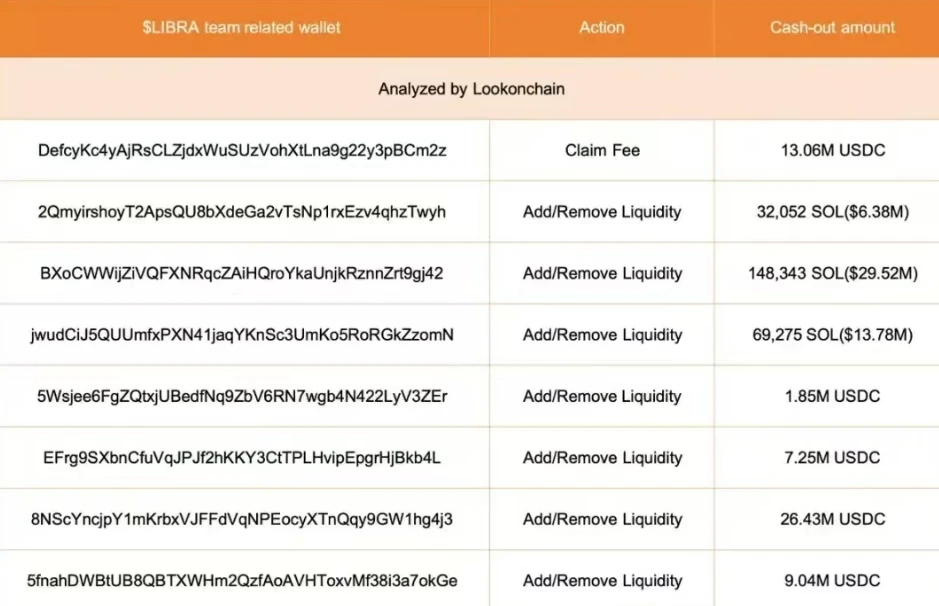
据 Lookonchain 监测,在中午 12 点之前,与 LIBRA 团队相关的 8 个钱包在推文发布前数小时从交易所提取 USDC 和 SOL,接着在代币上线瞬间狙击筹码,随后分批抛售,并通过增加流动性、移除流动性和索取费用获得了 5760 万枚 USDC 和 249, 671 枚 SOL(约合 4970 万美元),共计套现约 1.07 亿美元。

当市场崩盘时,区块链的自我救赎:从$LIBRA暴跌到原生做空工具的革命


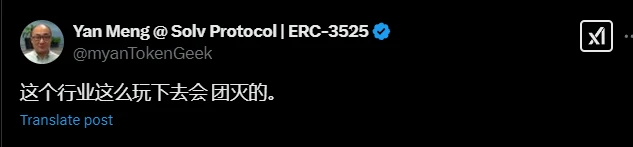
这场崩盘导致大量 KOL 亏损,部分人呼吁通过法律维权,更有行业 OG 认为行业会"团灭"。但作为区块链原教旨主义者,我们更应思考:技术能否根治人性的贪婪? 当监管滞后于创新,唯有更先进的工具才能重建市场公平。

当市场崩盘时,区块链的自我救赎:从$LIBRA暴跌到原生做空工具的革命


二、Rug Pull 肆虐下的行业悖论:危机催生创新


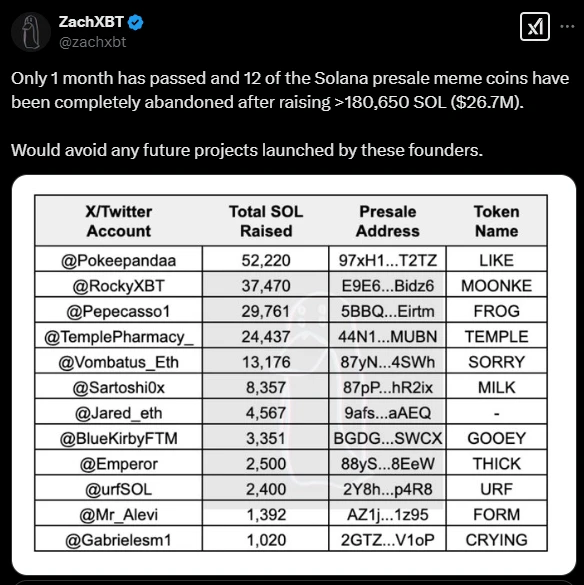
2024 年 4 月在 SOL 上就有 18 个 presale meme rug pulls,金额达到$ 26.7 M,到了 5 月是 41 个项目总共$ 102 M。

当市场崩盘时,区块链的自我救赎:从$LIBRA暴跌到原生做空工具的革命


讽刺的是,行业并未因此消亡,反而催生了 Pump.fun——一个因“池子无法被撤出”而爆红的发射平台。其核心逻辑简单却致命:通过技术锁死流动性,让 meme 没有 rug 行为。


到了 6 月,因为 pump.fun 的爆火,容易发生 rug pulls 的 ol presale meme 已经基本绝迹。


到了 7 月,Pump.fun 交易量就达到第一次高潮, 7 月的单日收入为 231 万美元,甚至超过了以太坊的日收入(229 万美元),成为本轮牛市最大引擎之一。
这揭示了一个残酷真相:市场从不排斥风险,但痛恨不公。当欺诈横行时,用户会用脚投票,而真正解决问题的协议将获得超额回报。


三、美股启示:做空工具如何让市场更健康


传统金融市场的发展史为我们提供了重要启示。美股之所以成为全球最稳健增长的市场,与其允许做空的机制密不可分。以**浑水(Muddy Waters)**为代表的做空基金,通过深入调研揭露公司造假(如瑞幸咖啡),挤出了市场的“脓疮”。

  • 做空的价值:
  • 价格发现:空头力量平衡市场情绪,抑制泡沫。
  • 市场净化:做空者通过揭露欺诈行为,淘汰劣质资产。
  • 长期稳健:美股允许做空后,市场透明度与投资者信心显著提升。

区块链市场同样需要这样的制衡机制。Likwid 可以为Web3版的“浑水”的出现提供基础设施——通过原生做空工具,让内幕玩家无处遁形。


四、破解之道:原生做空工具如何终结内幕霸权


若想根治$LIBRA 式崩盘,需从机制上瓦解内幕玩家的垄断优势。目前现存的 DEFI 杠杆交易产品因为依赖预言机,导致仅支持主流资产,无法覆盖长尾代币。
Likwid 的答案:基于 Uniswap v4构建无需许可的原生做空协议。

  • 技术内核:通过公式**(x+x')(y+y')=k**,将借贷与交易统一,允许用户在代币发射瞬间建立空头头寸。
  • 抗操纵设计:
  • 截断式预言机:每个区块内设定价格涨跌幅上限,杜绝闪电贷狙击(Uniswap 2020 年提出,Likwid 首个落地)。
  • 双重清算模型:结合“基于偿还”和“基于 Swap”的清算机制,解决代币大规模清算的难题,保护 LP 利益。
  • 动态费率:将套利利润重新分配给流动性提供者(LP),而非 MEV 机器人。

效果验证:

  • 狙击内幕玩家:若 Likwid 存在,用户认为价格高估就可在$LIBRA 内幕玩家大规模抛售前建立空头头寸,如果内幕玩家抛售,用户就可以赚取空头盈利。
  • 健康价格发现:空头力量天然抑制泡沫和恶意操纵,降低“拉盘即砸盘”的恶性循环。
  • LP 收益革命:手续费、杠杆利息、爆仓罚金三重收益,吸引资金沉淀。

五、Web3市场的终极形态:工具即秩序


从 Pump.fun 到 Likwid,区块链的进化史证明:每一次危机都是技术跃迁的催化剂。当传统金融依赖法律与监管时,Web3选择用代码重建信任。
目前 likwid 测试网已经上线,并且给予用户大量测试网激励,可以关注 likwid 推特获取相关信息吧。点击下面链接马上探索web3首个无审核杠杠交易平台: https://d1x7dwosqaosdj.cloudfront.net/images/2025-02/994e8ecb1c4a45f296a3a52a370620a4.jpg


结语:无需等待救世主,代码即正义


$LIBRA 的崩盘不是终点,而是新范式的起点。当工具足够强大,内幕霸权终将被瓦解——这不是理想主义,而是 Pump.fun 日均 2 亿交易量与 Likwid 获得 Uniswap Grants 所预示的必然。

Trending Cryptos

Related Reads

IOSG: Q-Day Countdown, Will Quantum Computing End Cryptocurrency?

IOSG: The Q-Day Countdown – Will Quantum Computing End Cryptocurrency? This analysis explores the looming threat quantum computing poses to blockchain technology. Quantum computers, leveraging Shor's algorithm, could theoretically break the elliptic curve cryptography (ECC) underpinning cryptocurrencies like Bitcoin and Ethereum. The article outlines a hypothetical "Q-Day" scenario where exposed public keys from dormant assets are compromised, leading to fund theft and a deep governance crisis. The core risk is not the complete erasure of blockchains but a systemic reset of public-key cryptography. Bitcoin faces significant challenges due to its "code-is-law" ethos and the immense social consensus required for migration. Its primary vulnerability lies in legacy UTXOs with publicly exposed keys. Ethereum's path involves a more complex, full-stack cryptographic agility upgrade across execution, consensus, and data layers. The industry has a limited "engineering comfort window" of 5-8 years to coordinate a migration to post-quantum cryptography (PQC), such as lattice-based or hash-based signatures. While the existential threat is often overstated, the real bottleneck is the immense coordination required across protocol developers, node operators, wallet providers, exchanges, and custodians. Market repricing of crypto assets may occur well before an actual Q-Day if quantum hardware roadmaps accelerate or regulatory pressure mounts. The article concludes that quantum computing is not a doomsday weapon but a severe stress test for blockchain's foundational security model and governance structures.

marsbit15m ago

IOSG: Q-Day Countdown, Will Quantum Computing End Cryptocurrency?

marsbit15m ago

Why 2026 could redefine Ethereum, Solana, Base and Avalanche

Blockchain infrastructure is undergoing a major coordinated transformation, driven by institutional demand for reliability, compliance, and predictable settlement. Over $30 billion in Real-World Assets (RWA) on-chain has exposed network weaknesses. Major blockchains are responding with foundational upgrades, moving beyond incremental speed improvements. Ethereum's "Glamsterdam" upgrade, planned for H1 2026, will significantly increase gas limits and introduce features like PBS (pre-blocked state) for enhanced settlement and parallel execution. Solana's "Alpenglow," targeting a mainnet launch in H2 2026, focuses on reducing finality time dramatically and freeing network resources to improve reliability. Beyond speed, compliance is critical. Base's "Beryl" upgrade in Q3 2026 will introduce a standardized, regulatory-compliant token framework (B20). Avalanche's "Octane" upgrade aims to boost transaction processing and reduce costs for enterprise applications. Even Bitcoin is evolving with the potential activation of OP_CAT by late 2026/early 2027. The competition is shifting. While technical upgrades are widespread, institutions will ultimately allocate capital based on proven execution, operational resilience, and regulatory compatibility during market stress. Ethereum currently leads in tokenized assets, while networks like Base and Solana are strengthening their institutional offerings. The blockchain that best delivers reliable, compliant, and uninterrupted service is poised to attract the greatest share of future institutional capital.

ambcrypto53m ago

Why 2026 could redefine Ethereum, Solana, Base and Avalanche

ambcrypto53m ago

Tiger Research: Take RWA Tokenization Overseas First

This article discusses the strategic choices facing financial institutions in jurisdictions lacking mature regulatory frameworks for Real-World Asset (RWA) tokenization. With the market growing rapidly, institutions must choose between waiting for local legislation, using regulatory sandboxes, or—the recommended priority—expanding into overseas markets to gain early experience. Successfully launching cross-border RWA tokenization requires meticulous preparation across six key areas: establishing an overseas base (e.g., Hong Kong, Singapore, the U.S.), securing necessary licenses, defining the tokenized asset (with bonds being simpler than non-standard assets), defining the target investor scope, deciding on settlement currencies/payment flows, and designing operational requirements like custody and on-chain governance. The article outlines two primary strategic paths: a direct "onshore" path and a "native on-chain" path. The direct path involves setting up a legal entity and obtaining licenses in a mature jurisdiction like Hong Kong, Singapore, or the U.S., leveraging existing platforms (e.g., DigiFT, Securitize) for efficiency. The alternative native on-chain path involves partnering with compliant, decentralized platforms (e.g., Ondo, Plume Nest) that use structures like offshore SPVs to facilitate tokenization and access DeFi liquidity, offering speed and broader reach but with greater structural complexity. The core argument is that institutions should not wait for perfect domestic regulation. A detailed hypothetical case study illustrates the multi-step, 6-12 month process of launching an overseas tokenized bond. The key takeaway is that the essence of a tokenization business lies not in the technology but in successfully executing the entire sales and operational process. The market is moving forward, and the time to act is now.

marsbit1h ago

Tiger Research: Take RWA Tokenization Overseas First

marsbit1h ago

Trading

Spot

Hot Articles

What is $BITCOIN

DIGITAL GOLD ($BITCOIN): A Comprehensive Analysis Introduction to DIGITAL GOLD ($BITCOIN) DIGITAL GOLD ($BITCOIN) is a blockchain-based project operating on the Solana network, which aims to combine the characteristics of traditional precious metals with the innovation of decentralized technologies. While it shares a name with Bitcoin, often referred to as “digital gold” due to its perception as a store of value, DIGITAL GOLD is a separate token designed to create a unique ecosystem within the Web3 landscape. Its goal is to position itself as a viable alternative digital asset, although specifics regarding its applications and functionalities are still developing. What is DIGITAL GOLD ($BITCOIN)? DIGITAL GOLD ($BITCOIN) is a cryptocurrency token explicitly designed for use on the Solana blockchain. In contrast to Bitcoin, which provides a widely recognized value storage role, this token appears to focus on broader applications and characteristics. Notable aspects include: Blockchain Infrastructure: The token is built on the Solana blockchain, known for its capacity to handle high-speed and low-cost transactions. Supply Dynamics: DIGITAL GOLD has a maximum supply capped at 100 quadrillion tokens (100P $BITCOIN), although details regarding its circulating supply are currently undisclosed. Utility: While precise functionalities are not explicitly outlined, there are indications that the token could be utilized for various applications, potentially involving decentralized applications (dApps) or asset tokenization strategies. Who is the Creator of DIGITAL GOLD ($BITCOIN)? At present, the identity of the creators and development team behind DIGITAL GOLD ($BITCOIN) remains unknown. This situation is typical among many innovative projects within the blockchain space, particularly those aligning with decentralized finance and meme coin phenomena. While such anonymity may foster a community-driven culture, it intensifies concerns about governance and accountability. Who are the Investors of DIGITAL GOLD ($BITCOIN)? The available information indicates that DIGITAL GOLD ($BITCOIN) does not have any known institutional backers or prominent venture capital investments. The project seems to operate on a peer-to-peer model focused on community support and adoption rather than traditional funding routes. Its activity and liquidity are primarily situated on decentralized exchanges (DEXs), such as PumpSwap, rather than established centralized trading platforms, further highlighting its grassroots approach. How DIGITAL GOLD ($BITCOIN) Works The operational mechanics of DIGITAL GOLD ($BITCOIN) can be elaborated on based on its blockchain design and network attributes: Consensus Mechanism: By leveraging Solana’s unique proof-of-history (PoH) combined with a proof-of-stake (PoS) model, the project ensures efficient transaction validation contributing to the network's high performance. Tokenomics: While specific deflationary mechanisms have not been extensively detailed, the vast maximum token supply implies that it may cater to microtransactions or niche use cases that are still to be defined. Interoperability: There exists the potential for integration with Solana’s broader ecosystem, including various decentralized finance (DeFi) platforms. However, the details regarding specific integrations remain unspecified. Timeline of Key Events Here is a timeline that highlights significant milestones concerning DIGITAL GOLD ($BITCOIN): 2023: The initial deployment of the token occurs on the Solana blockchain, marked by its contract address. 2024: DIGITAL GOLD gains visibility as it becomes available for trading on decentralized exchanges like PumpSwap, allowing users to trade it against SOL. 2025: The project witnesses sporadic trading activity and potential interest in community-led engagements, although no noteworthy partnerships or technical advancements have been documented as of yet. Critical Analysis Strengths Scalability: The underlying Solana infrastructure supports high transaction volumes, which could enhance the utility of $BITCOIN in various transaction scenarios. Accessibility: The potential low trading price per token could attract retail investors, facilitating wider participation due to fractional ownership opportunities. Risks Lack of Transparency: The absence of publicly known backers, developers, or an audit process may yield skepticism regarding the project's sustainability and trustworthiness. Market Volatility: The trading activity is heavily reliant on speculative behavior, which can result in significant price volatility and uncertainty for investors. Conclusion DIGITAL GOLD ($BITCOIN) emerges as an intriguing yet ambiguous project within the rapidly evolving Solana ecosystem. While it attempts to leverage the “digital gold” narrative, its departure from Bitcoin's established role as a store of value underscores the need for a clearer differentiation of its intended utility and governance structure. Future acceptance and adoption will likely depend on addressing the current opacity and defining its operational and economic strategies more explicitly. Note: This report encompasses synthesised information available as of October 2023, and developments may have transpired beyond the research period.

656 Total ViewsPublished 2025.05.13Updated 2025.05.13
What is $BITCOIN

Discussions

Welcome to the HTX Community. Here, you can stay informed about the latest platform developments and gain access to professional market insights. Users' opinions on the price of BTC (BTC) are presented below.

活动图片