9.2 万美元,比特币短期内的铁底?

MarsBitPublished on 2025-02-11Last updated on 2025-02-12

Abstract

除了 MVRV 指标,流动性区域是大量订单集中的区域,通常起到支撑或阻力作用。比特币近期多次下探低点以吸收流动性,目前价格徘徊在 9.4 万美元以下,这也是一个重要的流动性区域。

在美国总统唐纳德·特朗普宣布对进口钢铝征收 25% 关税后,加密货币市场周二出现小幅下跌。


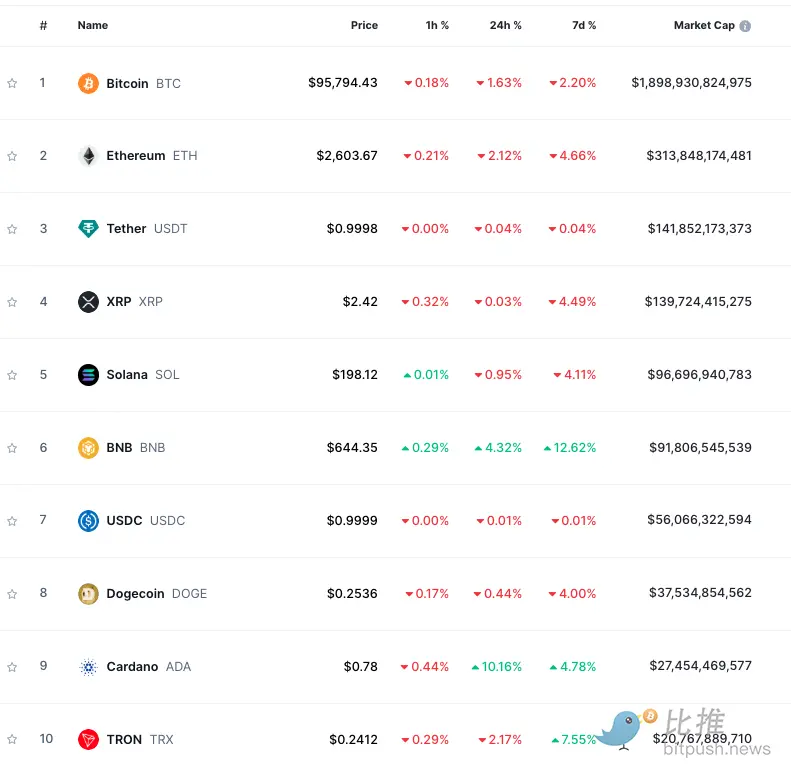
比推数据显示,比特币在过去 24 小时内下跌 1.63%,目前交易价格徘徊在 96,000 美元以下,以太坊下跌 2.12% 至约 2,600 美元。XRP 和 Solana (SOL) 波动不大。

支撑位


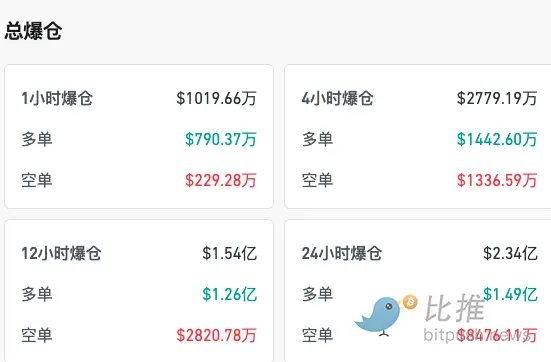
过去 24 小时内,加密货币总市值下跌 0.98% 至 3.15 万亿美元。 CoinGlass 数据显示,同期加密全网爆仓总额达 2.33 亿美元,以多单为主,约合 1.49 亿美元。

支撑位


特朗普关税以及宏观经济不确定性


加密货币交易所 MEXC 副总裁 Tracy Jin 将市场的走势主要归因于美联储最近决定维持利率不变,以及更广泛的宏观经济担忧,在不确定的情况下,投资者往往会寻求更安全的资产,比如黄金或者美元,并通常伴随着对风险资产(包括加密货币)兴趣的下降。


Hargreaves Lansdown 高级股票分析师 Matt Britzman 在周二的一份报告中指出,历史表明,关税威胁引发的贸易战担忧往往「来得快,去得也快,但这一次,聪明的投资者并不那么确定;货币、债券和大宗商品交易商正在对冲他们的赌注,随着紧张局势升温,美元、美国国债收益率和黄金价格上涨」。


LMAX 集团货币策略师 Joel Kruger 认为,这更多的是市场重新熟悉特朗普的策略,而不是与极端关税措施相关的任何实质性风险。


Joel Kruger 认为:「虽然新公告可能会带来短期波动,但我们认为这种风险不会引发任何重大动荡,并且预计加密资产将继续受到寻求逢低买入的中长期参与者的良好支持。」


9.2 万美元支撑位成关键


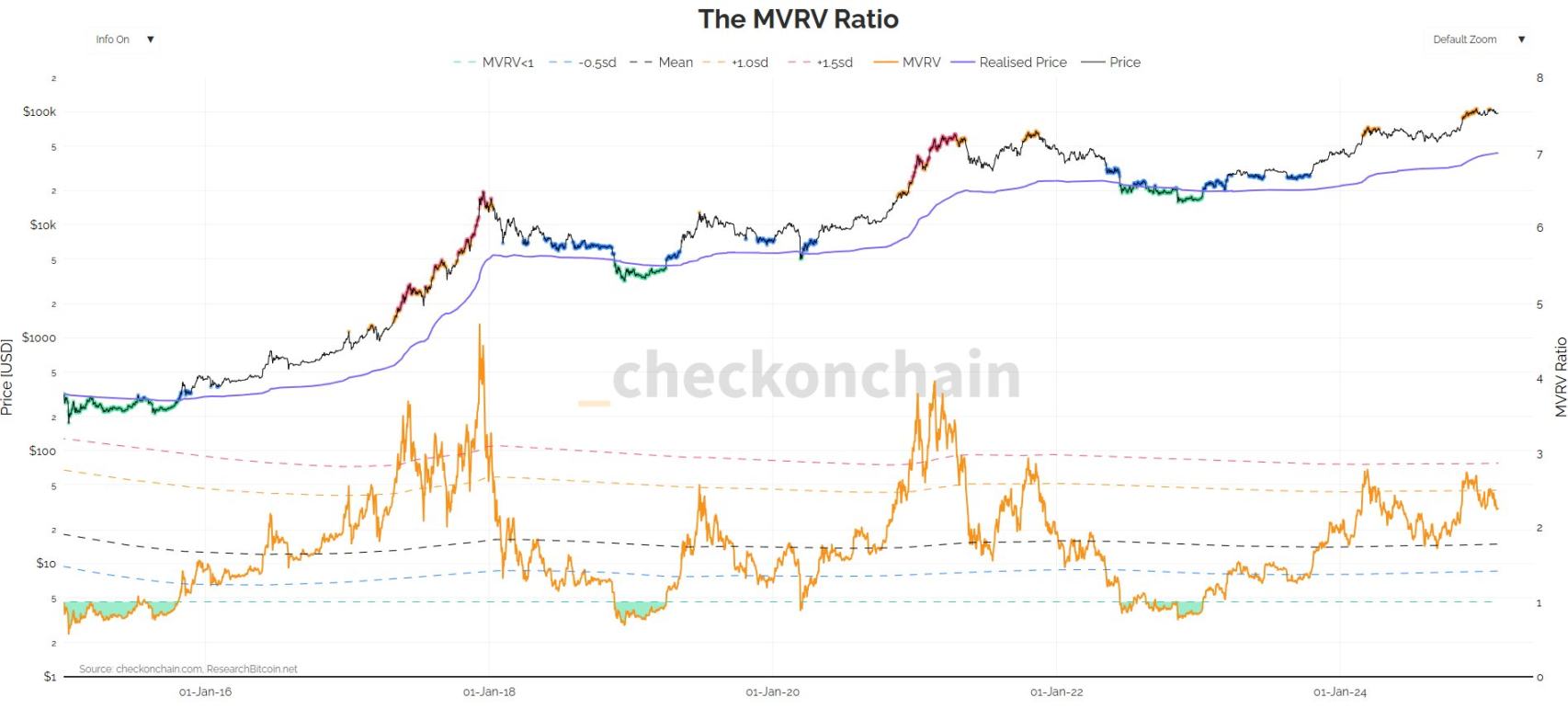
Checkonchain 数据显示,短期持有者(STH)的市场价值与实现价值比率(MVRV)降至 1.05。

支撑位


MVRV 是衡量比特币持有者盈利能力的关键指标。当 MVRV 高于 1 时,表明投资者仍处于盈利状态;低于 1 则意味着投资者处于亏损。当前 MVRV 降至 1.05,表明短期持有者的盈利空间正在缩小。如果 MVRV 进一步下降,可能会对比特币价格形成更大压力,因为这意味着更多短期持有者接近盈亏平衡点。


目前 MVRV 仍高于 1,表明短期持有者的抛压尚不显著。然而,需重点关注短期持有者的成本基础,即约 9.2 万美元的水平。这一价位是比特币价格的关键支撑位,反映了短期投资者购买 BTC 的平均成本。如果比特币价格跌向 9.2 万美元,可能会引发更多抛售,因为短期持有者可能选择止损离场。若跌破这一支撑位,市场情绪可能进一步恶化,导致价格加速下跌。


除了 MVRV 指标,流动性区域是大量订单集中的区域,通常起到支撑或阻力作用。比特币近期多次下探低点以吸收流动性,目前价格徘徊在 9.4 万美元以下,这也是一个重要的流动性区域。如果这一模式持续,比特币可能进一步下探至 9.2 万美元。若无法守住这一关键支撑位,短期持有者的抛售行为可能加剧下行压力。

Trending Cryptos

Related Reads

Founder of Baixing.com: The Notion That Large Language Models Will Devour Everything, I Believe Half of It

Founder of Baixing.com: I Only Half-Believe the Saying “Large Language Models Will Devour Everything” Author: Wang Jianshuo, Founder of Baixing.com Many proclaim that large models are everything, but the author is skeptical. He argues that such sweeping claims often stem from a limited understanding of the future. Drawing parallels to past technologies like electricity and the internet—which were predicted to “devour everything” but didn’t—he suggests that large language models (LLMs) are better seen as a foundational base. Like electricity, this base is essential for modern development, but its real value emerges only when applied to specific scenarios through various “machines” or “tools” (e.g., Claude Code for programming, Claude Design for design). The author acknowledges that LLMs may indeed replace many existing software systems built on rigid rules, workflows, and forms (e.g., CRMs, SaaS tools), as these are precisely what LLMs excel at processing. However, he emphasizes that beyond software, elements like customer data, execution capabilities (e.g., booking a flight), trust, and physical-world interactions will not be “devoured.” Instead, he foresees that after streamlining existing software, LLMs will open up a larger space for innovative, next-generation applications. These new tools will likely feature fluid interfaces and rely less on fixed rules, unleashing greater creativity. The author cautions against short-sightedness, recalling how in 2004 many believed internet giants like Sina, Sohu, and NetEase would monopolize the market—only to be proven wrong by subsequent disruptions. In conclusion, while LLMs are a crucial foundation and a current focal point, the true mainstream of this wave lies in the diverse applications built atop them to solve concrete problems. The phrase “devour everything” is imprecise; the real opportunity lies in identifying and leveraging the areas where LLMs do bring transformative change.

marsbit1h ago

Founder of Baixing.com: The Notion That Large Language Models Will Devour Everything, I Believe Half of It

marsbit1h ago

Founder of Baixing.com: I Only Half Believe in the Notion that Large Language Models Devour Everything

The founder of Baixing Wang states that while large language models (LLMs) are an extremely important foundational technology—akin to electricity or the internet—he only "half believes" the notion that they will "consume everything." He argues that LLMs provide a base layer of intelligence, but real-world value and transformation come from integrating this intelligence into specific applications and devices designed for particular scenarios—like how electricity powers various appliances from washing machines to TVs. He agrees LLMs will likely consume or replace a significant portion of existing rule-based, workflow-driven software (e.g., many SaaS systems, CRMs), as these are precisely what LLMs excel at handling. However, numerous other elements—such as customer data, execution capabilities (e.g., booking a flight), trust, and physical-world interactions—will not be consumed. Wang emphasizes that after LLMs absorb certain software layers, they will open up a much larger space for innovation: new types of "streaming" software with less rigid interfaces, where fixed rules are managed by AI. This next wave of applications built on top of the stable LLM foundation is where the true mainstream opportunity lies. He cautions against the short-sightedness of declaring any technology as all-consuming, drawing parallels to past premature predictions about internet giants monopolizing the web. The key is to find opportunities within the areas LLMs do transform.

链捕手1h ago

Founder of Baixing.com: I Only Half Believe in the Notion that Large Language Models Devour Everything

链捕手1h ago

Trading

Spot

Hot Articles

What is $BITCOIN

DIGITAL GOLD ($BITCOIN): A Comprehensive Analysis Introduction to DIGITAL GOLD ($BITCOIN) DIGITAL GOLD ($BITCOIN) is a blockchain-based project operating on the Solana network, which aims to combine the characteristics of traditional precious metals with the innovation of decentralized technologies. While it shares a name with Bitcoin, often referred to as “digital gold” due to its perception as a store of value, DIGITAL GOLD is a separate token designed to create a unique ecosystem within the Web3 landscape. Its goal is to position itself as a viable alternative digital asset, although specifics regarding its applications and functionalities are still developing. What is DIGITAL GOLD ($BITCOIN)? DIGITAL GOLD ($BITCOIN) is a cryptocurrency token explicitly designed for use on the Solana blockchain. In contrast to Bitcoin, which provides a widely recognized value storage role, this token appears to focus on broader applications and characteristics. Notable aspects include: Blockchain Infrastructure: The token is built on the Solana blockchain, known for its capacity to handle high-speed and low-cost transactions. Supply Dynamics: DIGITAL GOLD has a maximum supply capped at 100 quadrillion tokens (100P $BITCOIN), although details regarding its circulating supply are currently undisclosed. Utility: While precise functionalities are not explicitly outlined, there are indications that the token could be utilized for various applications, potentially involving decentralized applications (dApps) or asset tokenization strategies. Who is the Creator of DIGITAL GOLD ($BITCOIN)? At present, the identity of the creators and development team behind DIGITAL GOLD ($BITCOIN) remains unknown. This situation is typical among many innovative projects within the blockchain space, particularly those aligning with decentralized finance and meme coin phenomena. While such anonymity may foster a community-driven culture, it intensifies concerns about governance and accountability. Who are the Investors of DIGITAL GOLD ($BITCOIN)? The available information indicates that DIGITAL GOLD ($BITCOIN) does not have any known institutional backers or prominent venture capital investments. The project seems to operate on a peer-to-peer model focused on community support and adoption rather than traditional funding routes. Its activity and liquidity are primarily situated on decentralized exchanges (DEXs), such as PumpSwap, rather than established centralized trading platforms, further highlighting its grassroots approach. How DIGITAL GOLD ($BITCOIN) Works The operational mechanics of DIGITAL GOLD ($BITCOIN) can be elaborated on based on its blockchain design and network attributes: Consensus Mechanism: By leveraging Solana’s unique proof-of-history (PoH) combined with a proof-of-stake (PoS) model, the project ensures efficient transaction validation contributing to the network's high performance. Tokenomics: While specific deflationary mechanisms have not been extensively detailed, the vast maximum token supply implies that it may cater to microtransactions or niche use cases that are still to be defined. Interoperability: There exists the potential for integration with Solana’s broader ecosystem, including various decentralized finance (DeFi) platforms. However, the details regarding specific integrations remain unspecified. Timeline of Key Events Here is a timeline that highlights significant milestones concerning DIGITAL GOLD ($BITCOIN): 2023: The initial deployment of the token occurs on the Solana blockchain, marked by its contract address. 2024: DIGITAL GOLD gains visibility as it becomes available for trading on decentralized exchanges like PumpSwap, allowing users to trade it against SOL. 2025: The project witnesses sporadic trading activity and potential interest in community-led engagements, although no noteworthy partnerships or technical advancements have been documented as of yet. Critical Analysis Strengths Scalability: The underlying Solana infrastructure supports high transaction volumes, which could enhance the utility of $BITCOIN in various transaction scenarios. Accessibility: The potential low trading price per token could attract retail investors, facilitating wider participation due to fractional ownership opportunities. Risks Lack of Transparency: The absence of publicly known backers, developers, or an audit process may yield skepticism regarding the project's sustainability and trustworthiness. Market Volatility: The trading activity is heavily reliant on speculative behavior, which can result in significant price volatility and uncertainty for investors. Conclusion DIGITAL GOLD ($BITCOIN) emerges as an intriguing yet ambiguous project within the rapidly evolving Solana ecosystem. While it attempts to leverage the “digital gold” narrative, its departure from Bitcoin's established role as a store of value underscores the need for a clearer differentiation of its intended utility and governance structure. Future acceptance and adoption will likely depend on addressing the current opacity and defining its operational and economic strategies more explicitly. Note: This report encompasses synthesised information available as of October 2023, and developments may have transpired beyond the research period.

656 Total ViewsPublished 2025.05.13Updated 2025.05.13
What is $BITCOIN

Discussions

Welcome to the HTX Community. Here, you can stay informed about the latest platform developments and gain access to professional market insights. Users' opinions on the price of BTC (BTC) are presented below.

活动图片