Ethereum Foundation снова продает, несмотря на негативную реакцию

cryptonews.ruPublished on 2024-04-27Last updated on 2025-01-27

Последнее решение Ethereum Foundation о продаже огромных объемов ETH вызвало шок во всей криптоиндустрии. На фоне более широкого спада рынка, наблюдавшегося в понедельник перед FOMC и ростом DeepSeek, EF продал 100 ETH, что вызвало опасения относительно будущей ценовой траектории актива. Цена ETH упала на 7% за последние 24 часа, что соответствует более широкой тенденции и массовой распродаже.

В свою очередь, инвесторы пристально следят за токеном, размышляя о будущих колебаниях цены.

Ethereum Foundation продает 100 ETH, несмотря на негативную реакцию

Согласно данным Spotonchain на X , по состоянию на 27 января Ethereum Foundation продала 100 ETH за 307 893 DAI. Примечательно, что эта распродажа еще больше усилила негативные настроения на рынке, что соответствует предыдущей негативной реакции криптосообщества на меры функционирования EF.

EF постоянно продает монеты в рамках своей модели структурирования и поддерживает развитие сети. В соответствии с этим соучредитель Ethereum Виталик Бутерин также недавно изложил планы по крупной реструктуризации NPO через серию постов на X. Однако криптосообщество отразило неприятные настроения в связи с функционированием NPO. Несмотря на значительную негативную реакцию, организация была зарегистрирована для продажи в общей сложности 300 ETH за 980 388 DAI в 2025 году.

Крах рынка усиливает опасения

Между тем, усиленная продажа Ethereum Foundation сопровождается более широким крахом рынка криптовалют в свете FOMC и роста DeepSeek, что, по-видимому, вызвало волатильность цены ETH. Более широкий рынок тревожно упал, поскольку инвесторы оставались осторожными перед FOMC 29 января.

Кроме того, рост китайского стартапа ИИ с открытым исходным кодом DeepSeek также существенно повлиял на рынки. Стартап ИИ, превзошедший Meta и OpenAI сразу после своего создания, поставил под угрозу американские технологические акции с высокой капитализацией, монеты ИИ и рынок криптовалют. В свою очередь, Bitcoin, ETH, XRP и большинство монет торговались преимущественно в минусе.

Сможет ли цена ETH восстановиться?

На момент составления отчета цена ETH упала на 7% и в настоящее время торгуется на уровне $3066. Внутридневной минимум и максимум монеты составили $3024,09 и $3343,15 соответственно. Как упоминалось выше, текущее падение соответствует более широким рыночным тенденциям и распродажам Ethereum Foundation.
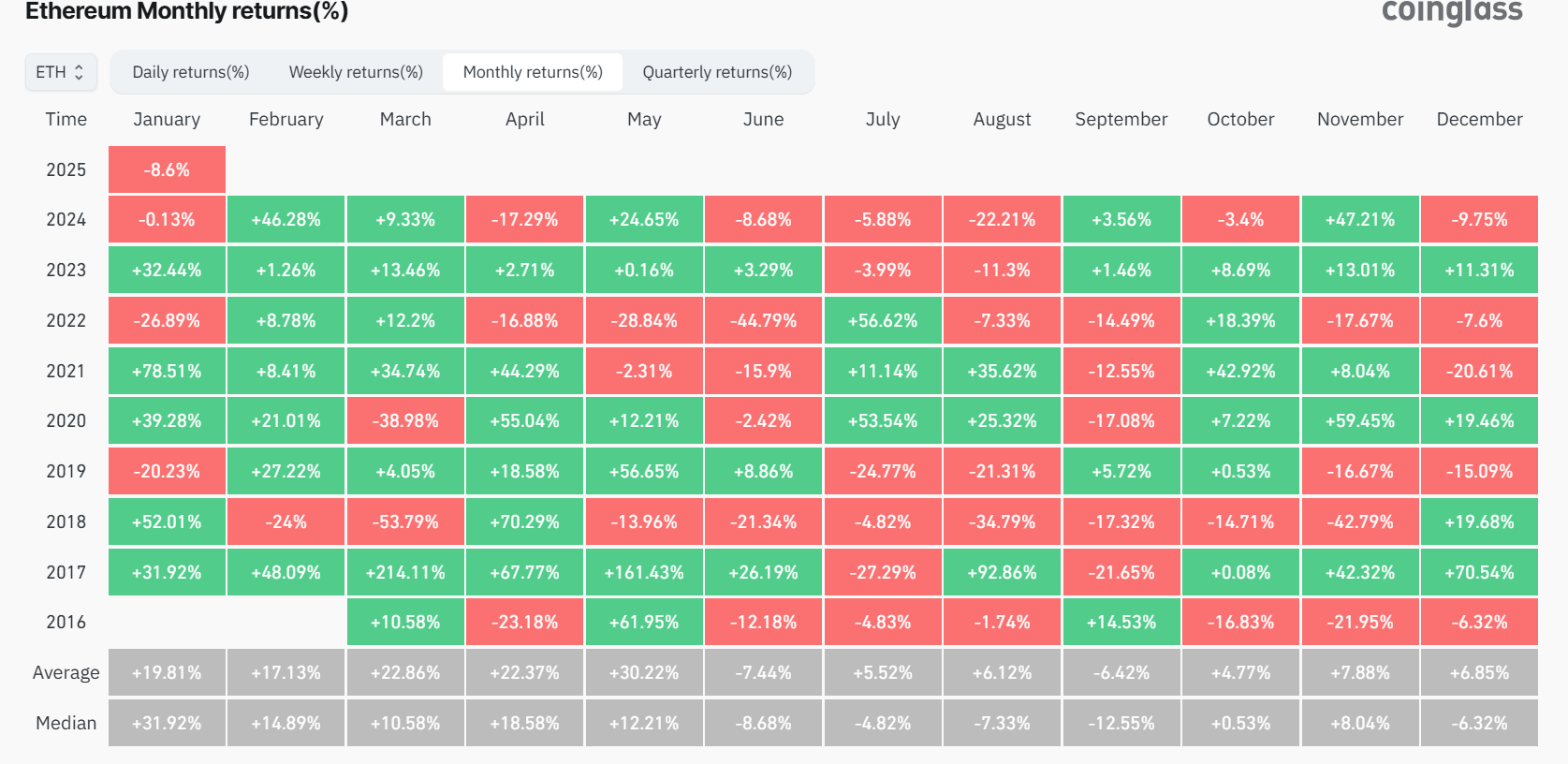
Как показывают данные CoinGlass, Ethereum показал доходность +46% по состоянию на февраль прошлого года, тогда как по состоянию на февраль 2023 и 2022 годов он показал прирост почти на 2% и 9% соответственно. В свете прошлых результатов актива в феврале наблюдатели за рынком размышляют о том, может ли предстоящий месяц оказаться многообещающим для криптовалюты.
Источник: CoinGlass

Trending Cryptos

Related Reads

The Impact of OUSD on Circle, Tether, and Paxos: Not a Simple Negative, but a More Complex Competitive Landscape

OUSD's Impact on Circle, Tether, and Paxos: A Nuanced Competitive Reshuffle The launch of OUSD, a new stablecoin initiative, has complex implications for the stablecoin market. For Circle (CRCL), the initial 15-20% stock drop reflects legitimate competitive concerns but is not a "death sentence." Circle retains deep liquidity, existing integrations, and first-mover advantages. A potential restructuring or termination of its Coinbase partnership could even double its net revenue in the short term, providing more competitive freedom. However, OUSD, backed by Stripe's engineering and product strengths, could become the default stablecoin within the Stripe ecosystem for new adopters, challenging USDC's position. OUSD does not solve the core barrier for corporate adoption: it remains a credit exposure to its issuer (likely a Bridge-related entity), which, like Circle, is not an investment-grade entity. Large banks and asset managers could still capture the most lucrative enterprise use cases. Circle must accelerate its payment/fintech product development and consider defensive M&A. For Tether, OUSD targets a different market segment. Tether will continue focusing on distribution channels not prioritized by Stripe or Circle. Its market share may decline over time, but within a significantly growing total market. Paxos faces the greatest pressure. OUSD undermines the key selling points of its USDG stablecoin, and Paxos's regulatory advantages may diminish as frameworks mature. This poses a more existential challenge, explaining Paxos's recent shift back to its brokerage-as-a-service business.

marsbit52m ago

The Impact of OUSD on Circle, Tether, and Paxos: Not a Simple Negative, but a More Complex Competitive Landscape

marsbit52m ago

OUSD's Impact on Circle, Tether, and Paxos: Not a Simple Negative, but a More Complex Competitive Reshuffle

This article analyzes the impact of the newly announced stablecoin OUSD, backed by a consortium including Stripe, on major incumbents like Circle (USDC), Tether (USDT), and Paxos (USDG). For Circle, the announcement is not a simple negative. While the initial market reaction was rational, it's not a "death sentence." Circle retains deep liquidity, existing integrations, and first-mover advantage. A potential restructuring or termination of its exclusive revenue-sharing deal with Coinbase could even near-double its net income in the short term, providing more competitive flexibility. However, within the Stripe ecosystem, OUSD, with its strong engineering and product focus, could become the default choice, displacing USDC for new integrations. Circle must accelerate its own fintech product development and consider defensive M&A. OUSD does not directly threaten Tether's core markets, which focus on different distribution channels. Tether's market share may decline over time but within a significantly growing overall market. Paxos faces the greatest pressure. OUSD undermines the primary value proposition of its USDG stablecoin, and Paxos's regulatory advantages may erode as frameworks mature, posing a more existential challenge. This explains Paxos's recent strategic pivot towards brokerage-as-a-service. A fundamental unresolved issue for enterprise adoption remains: if issued by a Bridge-related entity, OUSD, like USDC, still represents a credit exposure to a non-investment-grade issuer, unless a parent company guarantee is provided. Large banks and asset managers entering the space later could still compete for the most lucrative enterprise use cases.

链捕手53m ago

OUSD's Impact on Circle, Tether, and Paxos: Not a Simple Negative, but a More Complex Competitive Reshuffle

链捕手53m ago

Trading

Spot

Hot Articles

Discussions

Welcome to the HTX Community. Here, you can stay informed about the latest platform developments and gain access to professional market insights. Users' opinions on the price of ETH (ETH) are presented below.

活动图片