狗狗币ETF即将问世 这币要上Coinbase 马上翻倍 AVAX更新来袭 Neiro和PNut还有救吗

金色财经Published on 2024-12-27Last updated on 2024-12-27

家人们,不得了啦!狗狗币极有可能要推出 ETF 了,一旦实现,它很可能会再涨 50%!这绝对是一个令人振奋的消息。

与此同时,下一个黑马币也即将出现!这个即将登录 Coinbase 的土狗币已经有了一些眉目,消息十分可靠。赶紧跟我一起埋伏一波吧。

那么,Sol、AVAX 以及 ETH 又有哪些最新消息呢?一起跟着来一探究竟吧。

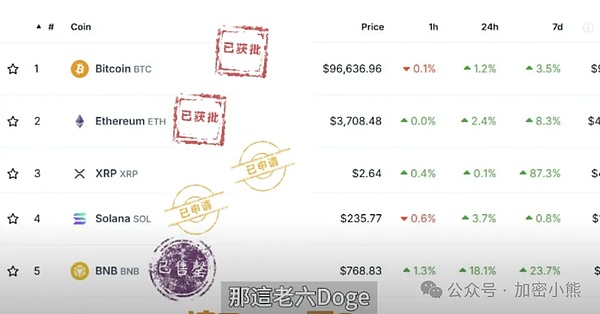
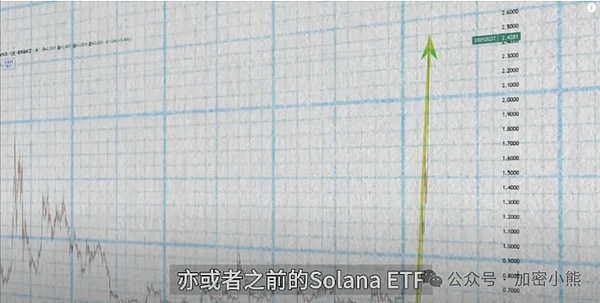
最近,ETF 拉盘的现象非常火爆。像 XRP、LTC 以及之前的 Solana ETF 都成功地让它们各自的代币价格涨上了天。如今,市值排名靠前的币种都已经有机构递交了 ETF 申请,那这一向低调的 Doge 会不会成为下一个目标呢?让我们拭目以待。
图片

据彭博社著名消息人士 Eric(其曾准确预言了比特币和以太坊 ETF)表示:“今天的讽刺就是明天的 ETF。” 他觉得 Doge ETF 极有希望。他认为总是会有机构尝试申请的,毕竟他们为什么不呢?

而机构 Two Prime 的 CEO 也表态,Doge ETF 的申请一定会发生,显得非常自信。也十分赞同这个观点,因为 ETF 的申请谁都可以进行,我们也不苛求它一定能通过,只要有人愿意递交申请就足够了。
图片

你瞧,XRP 基本上没什么人实际使用,可人家就是擅长炒作,找人申请 ETF,结果这个币就一飞冲天了。所以啊,炒币炒币,重点就在于这个 “炒” 字。我觉得肯定有机构在筹备 Doge 的 ETF 了,毕竟他们也有拉盘的需求嘛。那咱们散户只能提前埋伏,不然等消息出来了你再去买,那就真的来不及了。

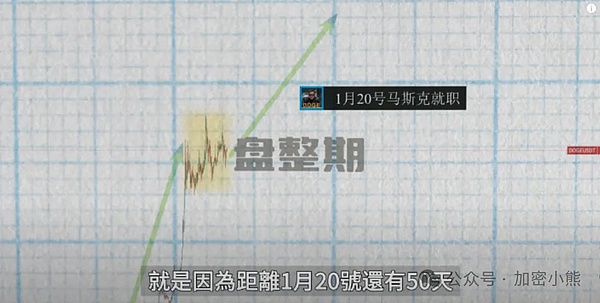
而且提前埋伏 Doge 也不会亏,可以非常明确地告诉你,狗狗币将会在 1 月迎来暴涨,然后在 1 月 20 号达到一个新高。因为到那时,马斯克将会正式上任 Doge 部部长,这些市场游资们肯定会操作一波。
图片

那现在他不怎么涨就是因为距离1月20号还有50天,还没到涨的时候,所以现在这几周就是你最好的建仓机会,咱们之前抄底的仓位还浮盈不少。而比特币也是,他也会在1月20号川普就职时达到一个顶峰,差不多是12到14万美金。

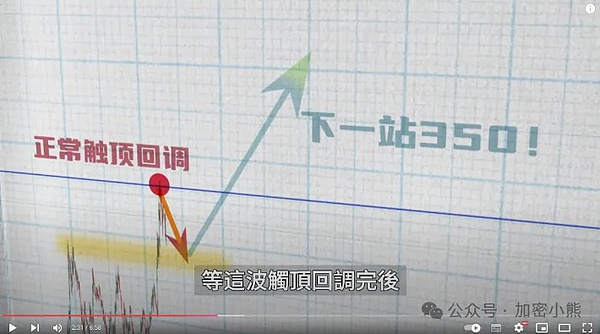
另外,Solana 近期的跌幅确实不小,但我认为这恰恰是一个入场的好机会。它这次的回调是符合技术调整规律的,因为在 11 月的时候它触碰到了历史前高 260。这种情况通常会出现假突破,然后大幅回调,之后再继续上扬。

所以我对 Solana 完全不担心。等这波触顶回调结束后,下一次它再上涨,那很可能就是直接突破了。我估计不少小伙伴都会因此发大财。更不用说现在比特币都突破到 10 万美金了,各个币种也会在接下来的几周开始重新补涨。
图片

以太坊,我坚定地看好它能涨到 8000。明年 3 月的坎昆升级将会让它腾飞,这是一个必然事件。在 11 月的时候,ETH 处于 2300 的位置,喊出了 8000 的目标,当时没什么人相信。而现在它接近 4000 了,我依旧看好 8000,你现在信了吗?可以开 2 倍杠杆,没有爆仓风险,而且收益其实并不输很多小币种。

另外,咱们在开头讲 Doge ETF 的时候,有位机构的分析师提到,他非常相信 Sol 的 ETF 将会在明年上旬通过,而 Doge ETF 获批的概率将会小一些。其实我觉得 Doge ETF 获不获批真的无所谓,只要有人申请就行。有机构递交狗狗币 ETF 申请,它就一定会暴涨。而 Sol ETF 的截止日期是在明年 3 月,所以它有望在那时开始发力,涨到 500 甚至更高。这个关键时间点你一定要记好了。

图片

另外,AVAX 也有一个关键的利好日期,那就是 12 月 16 号。在这一天,AVAX 将会升级到 AVAX 9000 主网,这将是它史上最大的一次升级。此次升级允许开发者搭建基于主网的扩容链,从而扩大其生态。从 10 月就开始报道这件事了,那时候它还处于测试网呢,币价也才 20 美元,现在都翻了一倍还多。

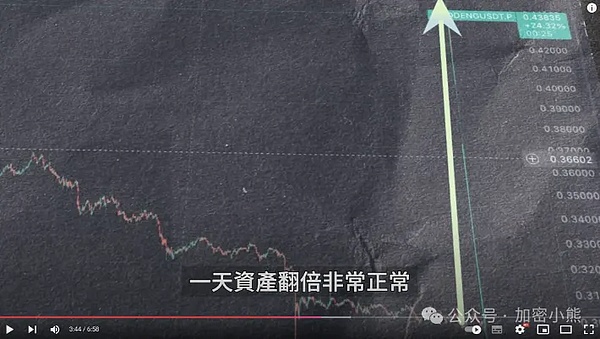
此外,咱们上周节目中讲到的 Moodeng 河马币有机会上币安现货,结果它没上币安,反而在昨天上了 Coinbase。不管怎么说,反正大家赚到就好。埋伏个热点币,一天资产翻倍是非常正常的事情。
图片

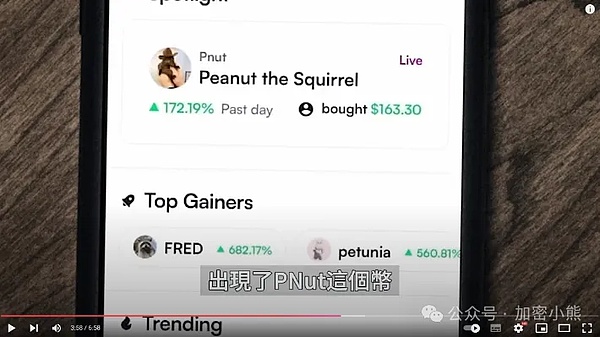
而下一个可能要上线 C 所的土狗币,已经找到了一些蛛丝马迹。大家请看这幅图。这是 C 所在本周发布的关于其苹果支付兑换法币的一个视频,在视频结尾的展示里,出现了 PNut 这个币,要知道这个币可是还没上 Coinbase 的呢!这个可是 C 所的商业广告,每一帧镜头都不是随意选取的,所以这个暗示应该不言而喻,下一个上线的目标很可能就是 PNut。
图片

那个币目前回调幅度非常大,在美国的共识也很不错,还是川普胜选的功臣呢。等到 1 月川普就职的时候,这个币说不定也会拉一波。

另一方面,Doge 的继任者 Neiro 也很有机会上线 C 所的美国版,因为它现在已经上了 C 所的国际版。

从 C 所近期的上币情况就能看出,它正在积极拥抱 Meme 币。从 Pepe、WIF 以及 FLoki 再到昨天的河马币,这四个币种我们可是全部都成功埋伏到了,每个都有两到三倍的涨幅。而近期我们埋伏的 ENS、Uni 以及 Puffer 也都表现不错,涨幅惊人。

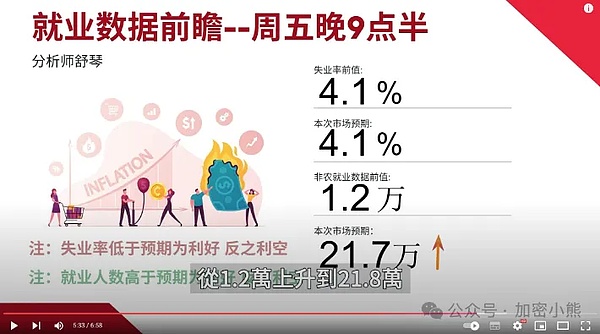
另外本周币圈另一个重要事件就是周五的就业以及失业率数据了,这会直接影响美联储12月议息会议的决策,非常关键。那尽管本次失业率预期与前值一样 都是4.1%,但是就业人数会较前值大幅增加,从1.2万上升到21.8万。
图片

不过,实际增幅可能并没有这么多,因为前两次的数据由于大选等因素,或许被优化过了。所以,尽管本次数据会给市场带来一定的动荡,但是应该不会出现大幅回调的情况。

另外,川普新的证监会主席提名已经出炉,是保罗・阿特金斯。他对币圈非常友好,所以前面提到的 Sol 和以太坊的质押 ETF 极有可能通过。阿特金斯之前曾在 SEC 任职,在离职后还多次直言不讳地表示支持加密货币,并且从 2017 年开始就在币圈各大公司担任要职。

图片

不过目前这个只是川普的提名,阿特金斯最后会不会接受这个offer还不好说,但是就算他拒绝了,咱们也能看出  川普都是倾向选择加密友好人士,所以其他人来也是一样的,因此Sol和以太坊的可质押ETF很可能就会在今年3月获批,这俩币到时涨个翻倍我觉得问题不大。

毕竟XRP就是活生生的例子,上千亿市值一样翻好几倍,所以币圈缺的从来都不是激情,而是引发激情的这个热点,大家只要拿住这些优质资产,过两个月本金翻个三四倍,是大概率的事情,你觉得呢?

Trending Cryptos

Related Reads

Vitalik's Algorithmic Stablecoin Vision: Interpreting the Mechanism and Challenges from an Options Perspective

Vitalik Buterin's recent algorithmic stablecoin proposal envisions using an option-like mechanism to create a stablecoin without the liquidation risks inherent in traditional collateralized debt position (CDP) models. The design splits one unit of ETH into two components: a 'stable' leg (P) that maintains value up to a certain strike price, and an 'upside' leg (N) that captures any appreciation above that price. Together, they always sum to one ETH, eliminating the need for debt or liquidation mechanisms. From an options perspective, the stable leg essentially functions as a synthetic, covered call position. However, significant challenges exist. For the stable asset to maintain its peg, it must continuously roll deep in-the-money call options, leading to potential rollover slippage, predictable trading paths vulnerable to front-running, and liquidity issues. Crucially, the system's scalability depends on a constant demand for the upside leg—a form of leveraged ETH long position without funding rates or liquidation risk. It's unclear if such persistent, specific demand will materialize from speculators or market makers who have simpler alternatives like perpetual swaps. The author, drawing from experience with Rysk, argues that DeFi options have struggled as standalone trading products due to complexity and fragmented liquidity. Their potential lies instead as foundational infrastructure underpinning more complex financial primitives like stablecoins, structured yields, or index products—transforming from a direct product into a core pricing and risk distribution engine for the next generation of on-chain finance.

marsbit8m ago

Vitalik's Algorithmic Stablecoin Vision: Interpreting the Mechanism and Challenges from an Options Perspective

marsbit8m ago

GPT-5.6 Countdown: Abandon the Illusion of a Single API, Computational Iteration Can't Outpace a Single Page of Compliance

In mid-June, three seemingly independent industry events—the compliance-driven throttling of Fable 5, the open-sourcing of GLM-5.2, and the leaked release timeline for GPT-5.6—are pushing the global AI industry toward a watershed moment. These shifts signal a fundamental restructuring of the industry's underlying logic. First, **"usability" has substantially overtaken "advanced capabilities"** as the primary weight, pushing the global large language model (LLM) supply chain into a "dual-track" phase of controlled closed-source and local open-source coexistence. Second, **the competitive moats of closed-source giants are shifting**. Their technical focus is moving from "language intelligence" toward "spatial intelligence (world models)"—a domain heavily reliant on computing power. Third, faced with常态化 transnational compliance risks, **a "model-agnostic" decoupled design has become a survival necessity for application-layer developers to maintain business continuity.** The article details how Anthropic's Fable 5, despite its advanced engineering feats, was restricted for non-U.S. citizens within 72 hours of launch, highlighting how geopolitical compliance can instantly limit even the most advanced models. In response, the open-source camp, exemplified by Zhipu AI's MIT-licensed GLM-5.2, is gaining market share by offering stable performance improvements and significant cost advantages (up to 70% savings for enterprises), while achieving full adaptation with domestic semiconductor platforms. Meanwhile, closed-source leaders like OpenAI are pivoting. The anticipated GPT-5.6 reportedly shifts focus from language to spatial intelligence and world models, aiming to rebuild a generational gap in areas like 3D understanding, simulation, and industrial design that demand immense compute. The core conclusion is that the LLM supply chain's logic has changed. Enterprises must now evaluate infrastructure based on a composite of technical performance and policy compliance. For developers, complete reliance on a single closed-source API poses unacceptable risk. Implementing a truly model-agnostic architecture—enabling swift switches to compliant, locally deployable open-source alternatives—is no longer just good practice but a fundamental baseline for business continuity.

marsbit2h ago

GPT-5.6 Countdown: Abandon the Illusion of a Single API, Computational Iteration Can't Outpace a Single Page of Compliance

marsbit2h ago

Is the 'Token Subsidy War' Among AI Giants Almost Over?

The article discusses the ongoing "token subsidy war" among AI giants like OpenAI and Anthropic, questioning whether it's nearing its end. It reveals that current AI subscription prices are heavily subsidized, with some plans offering tokens at up to 70 times the actual cost to attract and retain heavy users, especially developers and enterprises. This strategy mirrors past internet-era subsidy battles, but with a key difference: AI tokens lack "lock-in" effects. Unlike ride-hailing or food delivery apps, users can easily switch between AI providers as APIs become standardized, making it difficult for companies to raise prices post-subsidy. The piece highlights a structural asymmetry in the competition. Giants like Google, with massive advertising revenue, can afford to subsidize tokens indefinitely, akin to using "tokens as a weapon." In contrast, venture-backed companies like OpenAI and Anthropic face pressure to become profitable, especially as they approach IPO. The article cites Google Ventures founder Bill Maris, who suggests Google could slash token prices by 80%, putting immense pressure on competitors. Two potential endgames are presented: the "internet service" model (subsidize, monopolize, then raise prices) and the "utility" model (tokens become a standardized, low-margin commodity like electricity). Given the low switching costs, the latter seems more likely. The competition may not have a single winner but could instead accelerate AI's evolution into a foundational, infrastructure-level technology, akin to a public utility. For now, users continue to benefit from heavily subsidized token costs.

marsbit3h ago

Is the 'Token Subsidy War' Among AI Giants Almost Over?

marsbit3h ago

Beyond the Stadium: The Profitable Games Surrounding the World Cup

"Beyond the Pitch: The Profit Game Around the World Cup" The FIFA World Cup transcends being a sporting spectacle, evolving into a massive global arena for speculation and profit-seeking. The 2026 tournament has amplified this dynamic, creating a multi-layered ecosystem of financial opportunism alongside the football. **Prediction markets** have surged into the mainstream. Platforms like Polymarket and Kalshi saw trading volumes for World Cup contracts soar, attracting new users with their financial trading model and high-profile, chain-based wealth stories that overshadow traditional sports betting in terms of growth and narrative. However, **traditional sportsbooks** remain the dominant force, leveraging established user habits, legal markets, and comprehensive product offerings to handle the vast majority of speculative wagers, with projections suggesting record-breaking betting volumes. Capital markets also react. **"Concept stocks"** in countries like South Korea and Japan experience volatile price swings based on team performance and anticipated fan spending on items like chicken, beer, and viewing parties, effectively becoming a stock market reflecting fan sentiment. The **ticket resale market** has become a sophisticated arena for arbitrage. Prices fluctuate wildly based on team draws and star power, with sellers sometimes listing tickets they don't yet own in a practice akin to short-selling, while FIFA's own "Right to Buy" tokens add another layer of speculative trading. **Collectibles and merchandise** offer another avenue. Panini sticker albums, with their inherent scarcity and nostalgic value, can become high-value collectibles. Limited-edition or locally themed jerseys command significant premiums on secondary markets, and even counterfeit vendors profit from fans' desire for affordable match-day identity. The **cryptocurrency** space has seen a frenzy of speculative, unauthorized World Cup-themed meme coins on chains like Solana. These tokens, often exploiting team names and player imagery, experience extreme pump-and-dump cycles, creating stories of massive gains for a few early entrants and steep losses for many others. Finally, an entire industry thrives on **providing information and tools** to other speculators. Developers create platforms like SeatSidekick to track ticket inventory and prices, while paid Telegram groups and subscriptions sell betting tips and predictions, monetizing the widespread desire for an informational edge. In essence, the World Cup has become a compressed, global laboratory for speculation. While the games determine champions on the field, a parallel, complex network of financial transactions—spanning prediction contracts, bets, stocks, tickets, collectibles, crypto, and information services—settles its own scores in the global market.

marsbit3h ago

Beyond the Stadium: The Profitable Games Surrounding the World Cup

marsbit3h ago

Trading

Spot
Futures

Hot Articles

What is DOGE M

Doge Matrix ($doge m): The New Breed of Community-Driven Cryptocurrency Introduction In the ever-evolving landscape of cryptocurrency, new projects constantly emerge, each aiming to capture the interest of investors and enthusiasts alike. One of the latest entrants to this domain is Doge Matrix, represented by the ticker symbol $doge m. This project has attracted attention thanks to its roots in the popular meme culture surrounding Dogecoin, establishing its place within the web3 space. This article aims to provide a comprehensive analysis of Doge Matrix, covering its overview, creator, investors, functionality, timeline, and notable aspects. What is Doge Matrix ($doge m)? Doge Matrix is a community-driven cryptocurrency project that seemingly builds upon the widespread appeal of Dogecoin, a digital currency known for its Shiba Inu mascot and its meme origins. While the overarching objectives of Doge Matrix are not extensively defined, it is characterized by a commitment to harnessing community involvement and support. Unlike traditional cryptocurrencies that often emphasize utility or intrinsic value through underlying technologies, Doge Matrix positions itself within a space that embraces the cultural phenomenon of cryptocurrencies, particularly appealing to those who resonate with the ethos of meme-based assets. Drawing on the strengths of the Dogecoin community, Doge Matrix operates as part of a broader ecosystem, inviting participation and engagement from users who share an interest in cryptocurrency and the digital landscape. Who is the Creator of Doge Matrix ($doge m)? The identity of the creator of Doge Matrix remains unknown. This lack of transparency is not an uncommon occurrence in the cryptocurrency space, where some projects are launched without revealing the identities of their founders. The absence of information regarding the founding team can raise questions among potential investors about the project’s accountability and direction. Who are the Investors of Doge Matrix ($doge m)? As it stands, there is no publicly available information detailing the investors or investment foundations that back Doge Matrix. The project appears to rely primarily on community support rather than institutional investment. This model aligns with the community-driven nature of the initiative, fostering an environment where the direction of the project is shaped by its participants rather than being dictated by a select few financial backers. How Does Doge Matrix ($doge m) Work? The specifics regarding the operational mechanisms of Doge Matrix are somewhat vague, reflecting a broader trend of projects in the meme coin space where innovative functionalities are not always clearly articulated. Nonetheless, Doge Matrix seems designed to tap into the existing cryptocurrency ecosystem by encouraging user participation while tapping into the familiar cultural references associated with Dogecoin. Its potentially unique characteristics derive from community interactions rather than technological advancements, emphasizing shared experiences and collaboration among token holders. While the exact innovations have not been explicitly outlined, the project appears to create a space where community members can engage, share ideas, and propel the project's potential forward. Timeline of Doge Matrix ($doge m) Reflecting on the project’s timeline reveals notable events that have defined its journey thus far: November 25, 2024: Doge Matrix reached its all-time high value, marking a significant milestone in its early history. January 1, 2025: Conversely, Doge Matrix hit its all-time low value, illustrating the volatility often associated with cryptocurrencies, especially in the early stages of a project's lifecycle. Ongoing: The project continues to be actively traded and supported by its community, although specific future milestones or objectives have yet to be disclosed. Key Points About Doge Matrix ($doge m) Community Focus At the heart of Doge Matrix is a commitment to community engagement. The project thrives on the premise of collaboration and shared objectives among its members, emphasizing the importance of collective effort. Unlike centralized projects that often have a defined leadership structure, Doge Matrix at present showcases a more fluid approach to governance, where every community member's voice matters. Volatility The cryptocurrency market is notorious for its volatility, and Doge Matrix is no exception. Its price history reflects significant fluctuations between high and low values, which is typical of many new cryptocurrencies but underscores the risks associated with investment in emerging tokens. Lack of Detailed Information One of the most striking features about Doge Matrix is the scarcity of detailed information regarding its technological underpinnings and operational mechanisms. This ambiguity necessitates that potential investors conduct thorough due diligence before engaging with the project. Conclusion In summary, Doge Matrix ($doge m) illustrates a new wave of cryptocurrency projects that lean heavily on community engagement and cultural relevance. While lacking in certain specifics—such as clear leadership, defined objectives, and detailed functionality—the project has managed to generate interest within the crypto community, leveraging the established appeal of meme culture. As with any investment in the cryptocurrency space, understanding the inherent risks and conducting comprehensive research is essential for potential participants. Doge Matrix stands as a reminder of the dynamic, sometimes unpredictable nature of the crypto industry, marked by constant evolution and enthusiasm for community-driven initiatives.

3.8k Total ViewsPublished 2025.02.03Updated 2025.02.03

What is DOGE M

Discussions

Welcome to the HTX Community. Here, you can stay informed about the latest platform developments and gain access to professional market insights. Users' opinions on the price of DOGE (DOGE) are presented below.

活动图片