本周Meme重点关注BAN、MAX,附赠4条大牛经验

Odaily星球日报Published on 2024-12-03Last updated on 2024-12-03

Abstract

相较上期文章,ai16z上涨近60%,ELIZA上涨近55%。

原创 | Odaily星球日报(@OdailyChina

作者 | Asher(@Asher_ 0210 

本周Meme重点关注BAN、MAX,附赠4条大牛经验

受昨晚 Coinbase 将 MOODENG 加入上币路线图消息的影响,今日热门“动物系”Meme 有着不错的涨幅,其中表现不错的就是上周重点提的 FRED,日最高涨幅近 100%,这波收益你赚到了吗?

近日,跟一些炒 Meme 的大牛交流,得到以下几点心得,分享如下:

  • 目前 Meme 有三个板块值得重点关注并值得都配置些仓位,分别为 AI、动物、科学;

  • 炒 Meme 千万别碰合约,涨跌 10 个点就是分分钟的事情;

  • 不适合 PVP 就别总想着能抓到“大金狗”一波暴富,老老实实研究二次“上车”机会;

  • 认真调研看好的项目,要“分配加仓猛干”。

在本轮牛市行情中,Meme 币作为最受关注的板块之一,“该关注哪些项目”、“适合买入的价位是多少”、“何时是合适的卖出时机”等问题成为群友每日讨论的热点。为此,我将每周为大家分享值得重点关注的 Meme 项目,并复盘上周关注的项目表现。让我们一起拥抱 Meme 热潮。

上周持有 Meme 总结

ai16z系(ai16z、ELIZA、degenai)

价格表现:

对于 ai16z 系的三个项目,我们上周重点分析了 ai16z与 ELIZA,据 GMGN 数据,经过一周时间,ai16z 相较于上周推荐上涨近 60% (2.4 亿美元市值上涨至 3.8 亿美元);ELIZA 相较于上周推荐上涨 55% (2000 万美元市值上涨至 3100 万美元)。

项目动态:

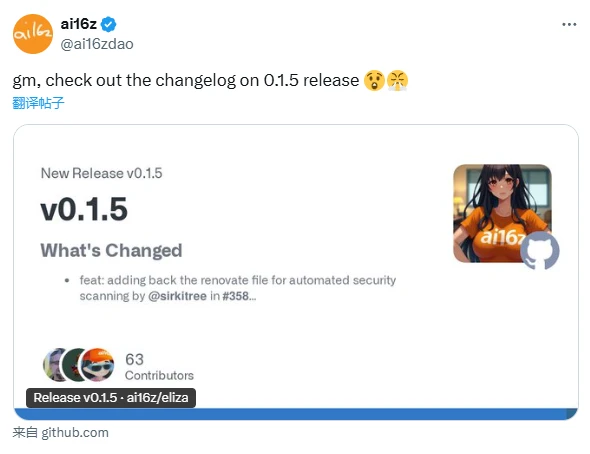
1. 昨日,ai16z 的 ELIZA 框架 v 0.1.5 已更新并发布,本次更新为 ELIZA 代理带来了约 300 项新变化与功能。
本周Meme重点关注BAN、MAX,附赠4条大牛经验

2. 上周末,ai16z 在上海举办了一场 Hacker House 活动,参会者对此次活动评价很高。

本周Meme重点关注BAN、MAX,附赠4条大牛经验

当前看法:

ai16z 越跌越买,ELIZA 长线持有,目前一亿美元市值。AI+Meme,或者说 AI Agent + Meme 概念是当下我最看好的方向,若在这个概念中选择最看好的项目,非 ai16z 莫属。虽然之前出现过“ELIZA 大小写事件(上期文章中也有解释社区的一些误解)”,但目前无论是社区讨论氛围,还是 ai16z 团队的更新速度,均有着成为龙头的潜质。

FRED

价格表现:

据 GMGN 数据,受昨晚 Coinbase 将 MOODENG 加入上币路线图消息的影响,FRED 日内最高涨幅近 100%,目前出现回落,暂报 0.08 美元,市值 8000 万美元。

项目动态:

除了社区持续炒作上线币安外,对于动物系 Meme 项目本身并未重大动态。但从持仓方面来看,上周仍会出现 PNUT 头部持仓地址减仓加仓 FRED。

当前看法:

坚定持有,下跌加仓。对于动物系 Meme 来说,目前 FRED 小浣熊的市值不足 1 亿美元,值得博一个“大几倍”的收益。并且,PNUT 与 FRED 地址关联性极强,若看好 PNUT 后续的价格,FRED 或许会有更亮眼的表现。耐心等待,静待佳音。

本周重点关注清单

Ban

本周Meme重点关注BAN、MAX,附赠4条大牛经验

项目介绍:

Ban 是一个“香蕉贴墙上”图像的 Meme 币(具体项目分析可参考:香蕉贴墙,艺术与水果组合概念 Meme 币 Ban 能上车吗?)。

看好理由:

1. 艺术品概念+水果概念的 Meme 币,并且图像本身容易传播;

2. 马斯克与孙宇晨的加持,无论是马斯克此前于 X 转发了由 Polaris 内容总监发布的大型 Banana 摆件与 SpaceX 星舰同框的照片,并回应“笑哭”表情,还是孙宇晨以 620 万美元的价格买入 Maurizio Cattelan 的标志性作品“Comedian”并吃掉该“香蕉”,都会为 Ban 持续不断的制造热度。

由于 Ban 上线币安合约,由大部分上线币安合约的 Meme 相似,上线后价格持续下跌且 Ban 仍没看到明显的价格反转信号,因此有考虑在 0.1 美元附近(对应 1 亿美元市值)分配买入。

价格表现:

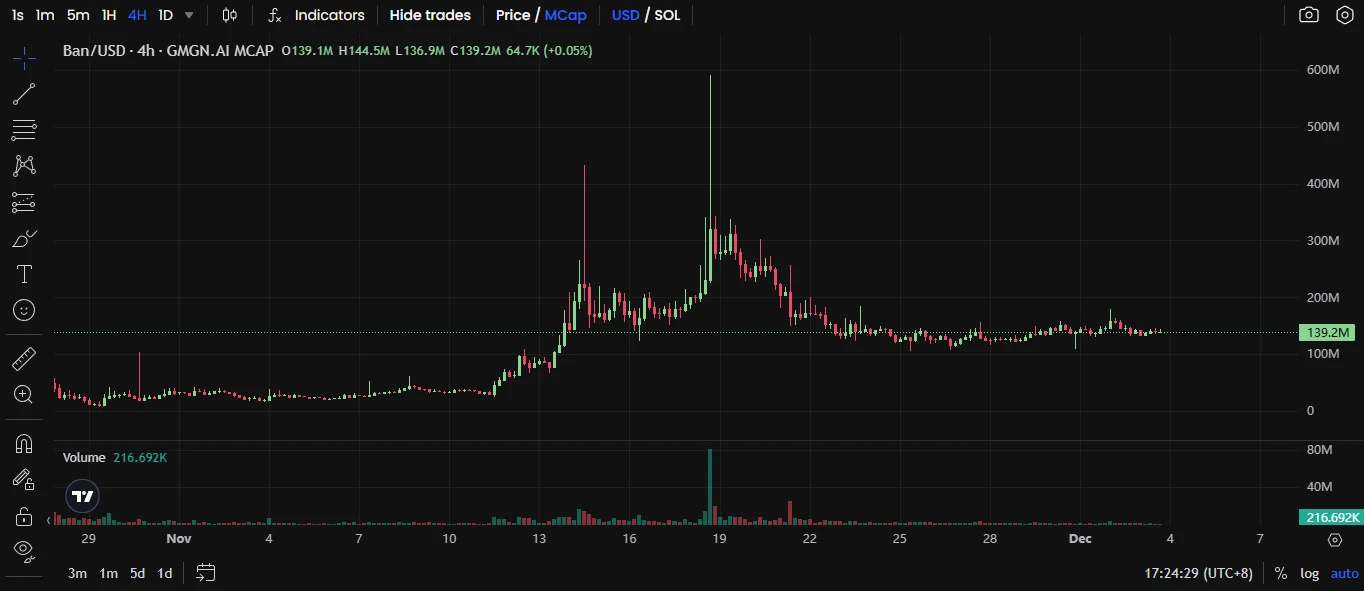
据 GMGN 数据,BAN 市值从最高一度突破 3.2 亿美元后下跌,最低触及 1.14 亿美元,目前市值 1.4 亿美元。
本周Meme重点关注BAN、MAX,附赠4条大牛经验

合约地址:

9PR7nCP9DpcUotnDPVLUBUZKu5WAYkwrCUx9wDnSpump

MAX

本周Meme重点关注BAN、MAX,附赠4条大牛经验

项目介绍:

Oraichain 团队发行的比特币主义者 AI Agent。Eliza 对应的虚拟形象如上图所示,是一个手臂印有 BTC 标志的黑色长发女孩形象。

看好理由:

1. 正规 AI 项目 Oraichain 团队发行的 Meme 项目,目前市值近 2 亿美元(Odaily星球日报注:Oraichain 是一个针对 Web3、可扩展 Dapps 和去中心化 AI 的智能和安全解决方案,其技术与采用策略的主题为:具有高交互操作性的 AI Layer 1、Scale-up with Layer 2 解决方案、可验证和无信任的 AI 执行、去中心化数据和 AI 平台以及高适用性的标准化协议)

2. MAX 代币发行当晚 Oraichain 官推主持的 Space,累计超 7200 人收听, 24 小时交易量超 6300 万美元;

3. ORAI 代币目前已支持跨链到 Solana 链,MAX 作为其官方发行的 AI Agents 有潜在炒作空间。

本周Meme重点关注BAN、MAX,附赠4条大牛经验

价格表现:

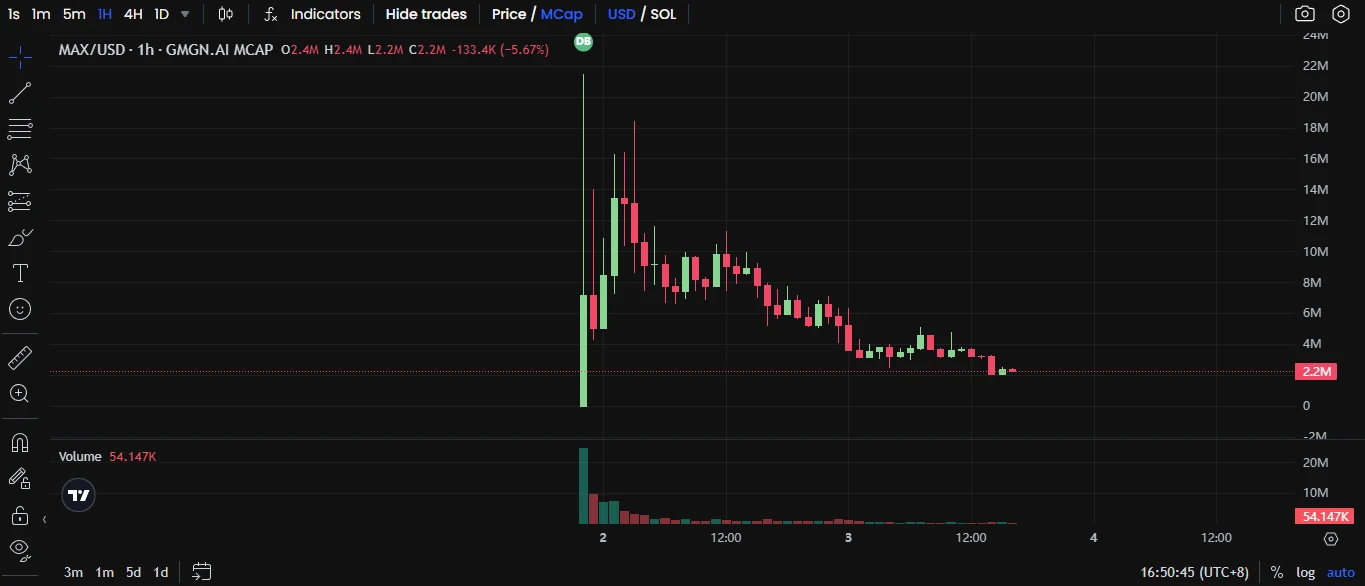
据 GMGN 数据,MAX 市值从最高一度突破 1500 万美元后下跌,最低触及 190 万美元,目前市值 220 万美元。(由于市值相对较低,归零风险大。)
本周Meme重点关注BAN、MAX,附赠4条大牛经验

合约地址:

oraim8c9d1nkfuQk9EzGYEUGxqL3MHQYndRw1huVo5h

往期清单

上周 Meme 抄底清单:FRED 头部持仓增持、ai16z系释放利好消息

介绍一种手慢党 Meme 冲法:如何在大跌后埋伏下个暴涨币?

Trending Cryptos

Related Reads

Behind Robinhood's Launch of Its Own Chain, the Beautifully Packaged "Tokenized Stocks" Still Have No Equity Rights

Robinhood has launched "Robinhood Chain," an Ethereum-based Layer 2 built with Arbitrum technology, and introduced "Stock Tokens." This article clarifies that these tokens are not actual on-chain equity. They are tokenized debt securities issued by Robinhood Assets Jersey Limited, offering economic exposure to reference stocks or ETFs but lacking direct ownership, voting rights, or other shareholder privileges. The legal structure is conservative, relying on traditional financial intermediaries, custody, KYC/AML controls, and specific jurisdiction rules, even though the tokens are transferable on-chain. The move is part of Robinhood's broader strategy to evolve from a retail brokerage into a global financial ecosystem, integrating services like banking, retirement, crypto, and DeFi. Robinhood Chain aims to provide a programmable settlement layer, making financial products more portable and accessible while masking underlying complexity. However, the "brokerage chain paradox" lies in balancing a simple user interface with the intricate, regulated reality of the wrapped assets. The success of this model depends on users and regulators accepting this structured approach without misunderstanding the tokens as direct stock ownership. Key components supporting this strategy include the Bitstamp acquisition (expanding institutional crypto capabilities), the Robinhood Wallet (bridging brokerage and self-custody), the Robinhood Earn program (integrating DeFi lending), and the Lighter perpetual contracts platform. While ambitious, the initiative is still early, facing challenges in achieving liquidity, developer adoption, and regulatory clarity across jurisdictions.

marsbit5m ago

Behind Robinhood's Launch of Its Own Chain, the Beautifully Packaged "Tokenized Stocks" Still Have No Equity Rights

marsbit5m ago

Strategy's Accounting Gimmick: The Cap on BTC Sales Far Exceeds $1.25 Billion

The article, originally from Bankless, discusses how MicroStrategy's (MSTR) recent Bitcoin (BTC) sales reveal a much larger potential selling capacity than the widely reported $1.25 billion "reserve-building" cap. On July 7, MicroStrategy disclosed a sale of 3,588 BTC (~$216M) to pay dividends for its STRAT (STRC) preferred shares and replenish its USD Reserve. Crucially, the company stated this sale did not count against its stated $1.25 billion "reserve-building capacity." The analysis explains that MicroStrategy's "BTC Monetization Plan," part of its broader "Digital Credit Capital Framework," actually outlines three main purposes for selling BTC, only one of which has the $1.25B cap: 1. **Building the USD Reserve** (capped at $1.25B). 2. **Covering preferred share/ debt costs** (replenishing the reserve after payments). 3. **Funding buybacks** (up to $10B for preferred shares and $10B for MSTR common stock). The key nuance is the accounting distinction between "building" the reserve (selling BTC before making payments) and "replenishing" it (selling BTC after using reserve funds for payments). While functionally the same—converting BTC to cash for obligations—only "building" counts against the publicized $1.25B limit. This means sales for "replenishing" and the $20B+ buyback pool allow for total potential sales exceeding $30B. The article frames this as part of MicroStrategy's shift from a simple "buy and hold" Bitcoin narrative to an "active capital management" model, where BTC becomes a balance-sheet tool to manage pressures between its common stock, preferred shares, dollar reserve, and Bitcoin holdings. This creates complex trade-offs and potential conflicts of interest. The conclusion warns investors that the $1.25B figure is not a total sales ceiling. Understanding terms like "build," "replenish," and "repurchase" in MicroStrategy's disclosures is now critical, as the company navigates a new, more complex role as an actively managed entity rather than a passive Bitcoin accumulator.

Odaily星球日报20m ago

Strategy's Accounting Gimmick: The Cap on BTC Sales Far Exceeds $1.25 Billion

Odaily星球日报20m ago

The Networking Game in Silicon Valley's Elite Circles: Those with Connections Get $50 Million, While the Truly Talented Can't Raise Money?

"Silicon Valley's Meritocracy to Relationship Game: How Networks Now Trump Talent." The article argues that Silicon Valley has shifted from a meritocracy to a "kingmaker" system where connections and background outweigh true ability. Key factors driving this change include: 1. **AI-Distorted Expectations:** Unprecedented growth curves (e.g., Anthropic) have led VCs to seek only "sure things" or pattern-match against past successes. 2. **Capital Concentration:** LP funds are concentrated in a few large, multi-stage funds, pushing VCs to overpay for hot deals to secure capital. 3. **VC Professionalization:** The industry has become a standardized career path, attracting conformist "NPCs" rather than independent thinkers. The long IPO timeline incentivizes safe, consensus bets for career advancement over risky, fund-returning outliers. This consensus capital fuels consensus founders. Startups are now a standard career option, with accelerators pressuring uniform ideas (e.g., 81% AI). Founders from elite schools (Stanford, OpenAI) easily raise millions based on pedigree, not proof. Large funds preemptively back "centrally cast" teams with $10-50M war chests to dominate categories, sidelining outsiders. The "kingmaker" strategy has downstream effects: it encourages aggressive, sometimes fraudulent, revenue reporting and allows founders to sell significant secondary shares early, attracting grifters. The author predicts a mean reversion. History shows the hottest trends rarely produce the most valuable companies. They advocate backing underestimated outsiders with "a chip on their shoulder" over anointed insiders, believing true meritocracy will ultimately win. "Those chasing the herd are set up for slaughter."

marsbit36m ago

The Networking Game in Silicon Valley's Elite Circles: Those with Connections Get $50 Million, While the Truly Talented Can't Raise Money?

marsbit36m ago

From 2 Million Monthly Active Users to Zero: Zapper's Demise in the "Maturation" of DeFi

From 2M MAU to Zero: The Demise of Zapper in a Maturing DeFi Landscape On July 8, 2026, Zapper co-founder Seb Audet announced the platform's full shutdown. Once a DeFi star with 2 million monthly active users, $13B in processed transactions, and $16.5M in funding, Zapper's journey ends. Born in 2020 from the merger of DeFiZap and DeFiSnap, Zapper rode the "DeFi Summer" wave. It became essential for users to track complex, multi-protocol yield farming positions across chains. At its peak, it supported 14 chains, 450+ protocols, and 7000+ tokens, with its signature "Zap" feature simplifying multi-step DeFi actions. However, sustainable revenue never materialized. Its primary model—taking small fees from DEX aggregation—faced fierce competition and squeezed margins. Meanwhile, maintaining its extensive, real-time data indexing system was costly. Crucially, the DeFi ecosystem matured, with activity and liquidity concentrating in fewer top protocols. The core demand for a complex, multi-protocol dashboard waned as user behavior simplified. Zapper attempted multiple pivots that failed to gain traction: an NFT-based points system (2021), a social app called Chainchat (2023), and plans for a ZAP token and open protocol (2024). These efforts reflected a persistent "blockchain-native" mindset focused on creating new C端 (consumer) needs rather than addressing existing pain points or bolstering its revenue-generating products. The article contrasts Zapper with DeBank, which successfully narrowed its asset-tracking focus while developing Rabby Wallet—a revenue-stabilizing, competitive product. Zapper's story serves as a cautionary tale for tooling projects: over-immersion in a purist vision, coupled with an inability to adapt business models to market shifts—like the consolidation of DeFi activity—can be fatal, even for once-dominant platforms.

marsbit1h ago

From 2 Million Monthly Active Users to Zero: Zapper's Demise in the "Maturation" of DeFi

marsbit1h ago

Trading

Spot

Hot Articles

Discussions

Welcome to the HTX Community. Here, you can stay informed about the latest platform developments and gain access to professional market insights. Users' opinions on the price of MEME (MEME) are presented below.

活动图片